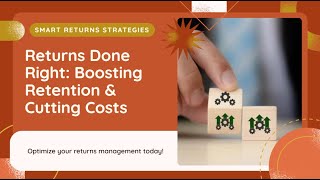
Manish shows how to turn returns from a cost center into a growth tool. Clear policies, automation, and better data on why customers return can cut costs while keeping them coming back.
Welcome back to Kahoot Commerce Brief. Let's talk about the elephant in the warehouse. Returns. Most brands see returns as unnecessary evil, a cost center, a margin killer. But what if I told you returns are actually a growth opportunity if you manage them right?
Here's the key insight. Returns don't just happen after delivery. They begin the moment a customer clicks buy. And how you handle returns from that moment on can either build loyalty or destroy it. The best brands don't just process returns. They manage the entire return experience. Let's walk through your recipe what that means first. It starts with clarity. Unclear return policies create friction, frustration, and customer churn. Your return policy should be easy to find, easy to understand, and easy to act on. No one wants to dig through legalese.
To find out if they're eligible.
Next, automation is your friend. Manual return handling is a death sentence for scalability. Use software that lets customers initiate returns without calling or emailing. Offer prepaid labels, QR codes, or better yet, printerless options. And while you're at it, make exchanges the default path. Why give up the revenue when you could just swap to size or style instead? Now here's where it gets interesting. Returns are a data goldmine. Most retailers ignore the return reason codes or worse, don't collect them at all. That's like flying blind. Return data tells you what products underperform, what sizes mislead, what customers are abusing the system. Use that intel to update listings, retrain support, and improve future sales. And don't forget the post return experience. The moment a customer drops off their item, the clock starts ticking fast. Refunds matter. Real time notifications matter. Branded tracking matters. You wouldn't ghost a customer after purchase, so don't do it after return. You know here's the bottom line. If your returns process feels like a punishment, you're training customers not to shop again. But if it feels like a continuation of your brand, promise you win trust and repeat business. Returns don't have to be a loss. Handled right, they're a competitive edge. Thanks for tuning in to Kahoot Congress Brief. I'm Manish until next time shift smarter.