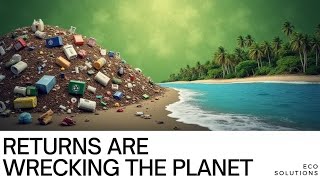
This is a YouTube video titled "Sustainable Returns That Actually Save Money" created in August 2025. It features a monologue by Manish discussing the environmental impact of product returns in retail and advocating for peer-to-peer returns as a smarter, more sustainable solution to reduce waste and emissions in e-commerce logistics.
Welcome back to Kahoot Commerce Brief. Let's talk about sustainability and why most brands are doing it wrong when it comes to returns. Retailers love to say they're green. But when you peel back the sticker, what you really find is green washing. Here's the truth. You cannot fix returns with recycling bins and PR statements. The real environmental crisis is return shipping. Every round trip package burns fuel, wastes packaging, and dumps usable goods into liquidation streams. And yet, most retailers still think the solution is just make it easy. But easy for who? Your customer or the planet? Because they're not the same. Here's the key insight. The average return travels 1,000 miles only to sit in a warehouse and get marked down, discarded, or destroyed. That is not a reverse logistics strategy. It's a reverse growth strategy. Now for the good news. There is a better way. And it doesn't involve planting trees or writing a check to some carbon offset fund. It's called peer to peer returns. Instead of sending returned items back to a centralized warehouse, reroute them to the next buyer. The item stays in motion, stays local, and skips the waste entirely. That's not just greener, it's smarter. Retailers save money on shipping and restocking, customers get faster refunds, and the planet avoids another unnecessary truckload of emissions. It's the rare win, win, win. Here's the contrarian truth. If you're still measuring sustainability in recycled cardboard and electric delivery vans, you're missing the forest for the trees. The biggest lever in sustainable E commerce isn't the last mile. It's the reverse mile. Peer to peer returns. Eliminate that waste at the source. So here's your challenge. Don't just say your brand is eco conscious. Prove it in your operations. Skip the slogans. Fix the system. Because in the next wave of commerce, the brands that win will be the ones that are both profitable and planetary. Thanks for tuning in to Kahoot Commerce Brief. I'm Manish. Until next time, ship smarter.