Detox Your Home | Women to Women Podcast with Marcelle Pick ft. Stephen Ezell
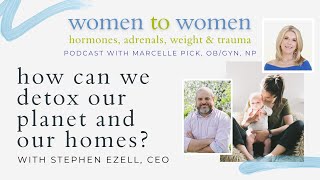
A podcast interview (May 31, 2021) in which Marcelle Pick and Stephen Ezell discuss reducing household chemical exposures, emphasizing laundry products as a major chronic contact source. Ezell relates a personal story (infant skin reaction) that prompted ingredient-focused research, explains labeling gaps (the "fragrance"/trade-secrecy loophole, UV brighteners, SLS/SLES and 1,4-dioxane), and gives practical steps: start by replacing laundry and dish products one at a time, use vinegar/citric acid as rinse agents, and prioritize safer brands. The discussion also addresses skincare, produce washing (a fruit & veggie wash claim), and consumer action (vote with your dollars).
Questions this video answers
May 31, 2021
mygreenfills.com
287 chemicals
Five children
Started with 8 products; later expanded to over 80 products (across cleaning and skincare)
Chapters
Welcome to our podcast series and today I'm going to introduce you to somebody who's really, in my opinion, one of the entrepreneurs in the space with regards to how do we have a healthy life and what are some of the things we can do to make our lives healthier. And Steven Azzell is the CEO of my Greenville and founder of a member box. A passionate entrepreneur, which I adore, a philanthropist and sustainable living enthusiast, which we're going to talk a little bit more today through some divinely orchestrated events. In 2012, he met his business partner today. Environmentally friendly laundry products. And I use them and I love them. Thank you very much. Flying out the door to markets, hotels and homes everywhere, especially during these kind of crazy times. I'm absolutely thrilled to have you on podcast today so we can talk a little bit more about your programs, what you offer and why it's so important, especially when it comes to detoxification of the homes. I think a lot of people don't understand why that's so important and how many toxins they actually introduce in their world. So get out your pen and paper, get ready to kind of take some notes and let's begin.
Awesome.
Many years ago, I was being aware. I've been doing this for a long time, unfortunately since 1985. And I would start to talk to people about their clothes and laundry detergent and all those kinds of things. But how did you get involved in this? What kind of started your journey and why do you think it's so important?
The story started with a sick kid. So I am the proud father of five. We have five kids, so we have a busy home. My oldest is 13, youngest is about to turn 2. And when my oldest son, right. So I was first time dad, was a three week old baby. He, I was in charge of one of his like second or third baths and I forget it. We had like this kind of green tub that sat in the sink, if you know what I'm talking about, like the little fish net in there. And I was like, hey, I told my, hey babe, I'll give you a hand with this one. Let me, let me do this. So I was like, and I was super excited. Like it's my first giving a kid a bath. And when you're first time dad, like everything's like a really big deal. And you know, I took off his onesie and like from his neck, like it looked like he was like whipped. Like he had like streaks and skin and like he was screaming and I thought he was just like mad pissed off. To get a shower, get undressed. But no, he was like, this kid was in pain, and I was, like, taking a gas. I'm like, oh, my gosh. Like, what's going on? So I call my wife from inside, and my wife is a NICU nurse. So she, you know, neonatal icu, you know, nurse used to, like, really sick babies. And when I saw her freak out, I freaked out even more. Because when I see someone that's used to seeing sick things, sick kids. So I was like, oh, I get dressed. Let's go. So we, you know, we ran to the pediatrician and then. Pediatrician. Oh, you got to see the dermatologist. We went to a, you know, pediatric dermatologist. And they're like, oh, get all these prescriptions and these steroid creams and this and that and the other thing. And I'm like, oh, my gosh. Like, he's only. What could. How can this be? And on my way home, you know, I called, you know, my aunt, and she's. We kind of call her Buffalo Medicine Woman because she's like, the eco makes medicine, like, forages plants. Like, she's amazing. And she's like, hey, what do you. And I was telling her what's going on, and she goes, what do you use for laundry detergent? I'm like, well, the. You know, the big bright bottle, the one that grandma always use, and the fabric softener that Grandma always use. Oh, no, you cannot use that stuff on babies. They can get. They can have really bad allergic reaction. I was like, how's that possible? Like, how is it possible that laundry detergent can make my kids sick? And she goes, well, before you, like, load them up with all of these steroids and possible antibiotics and all these things, before you do that, why don't you first, like, strip his clothes and use vinegar and borax? Gave his whole home recipe, and this is how you clean his clothes. And I made this castile soap thing, and I. All of his bedding, all of his towels, the onesies, everything. And the next day we woke up, and it was, like, almost completely gone. And then two days later, he was fine and never turned back and was like, so if laundry detergent can make my kids sick. And I was completely obtuse to this, right? Like, what else is in the laundry room? And then what's under the kitchen sink and what's in the garage and then what's in the refrigerator and then what's in the pantry? And I became, like, a full blown eco conspiracy theorist, right? And I was like researcher. Like, I want to know every single ingredient. And for years I just would research and only make purchases based on ingredients. I could pronounce things that I could find. If things weren't hidden on a label, I would buy. If not, I wouldn't. And so that's how I started my journey. And that was 13 years ago.
So you and I are on the same page. I've been doing that for my entire since my kids were little and I had a son who we built a new house, did indoor outdoor carpeting in their playroom because I thought they're going to get it dirty and all this stuff. He developed eye ulcers the day he went in the room.
Oh my gosh.
And I did exactly the same journey. So I think people don't understand. So let's kind of pull it back a little bit, because when you have this many chemicals in your body, it also contributes to significant adrenal issues. And I talk about that on many other podcasts. But let's help people understand. What is it we're concerned about? What are the labelings of some products in which they really, really shouldn't have them?
Here's the major problem is.
You can't research them.
And that's kind of like a crazy answer, but I'll explain. You see, in the US we have under the uspto, the United States patent trademark. There's this thing under trade secrecy laws where if in the chemical industry, if you have a product, an ingredient that is under 1% concentration, you actually don't have to list it on the label, you can just call it fragrance. So in the industry it's called like the fragrance loophole, because you can have 400 ingredients in a product and as long as they're under 1% concentration, you legally don't even have to put it on the label. So broad brush, if you're. Especially when we talk about endocrine disruptors and hormone disruptors and adrenals and carcinogens, things like that. If you can't, if the company doesn't list all the ingredients where you can actually research them, then don't support them. That's one thing. If you see parfum or fragrance on a label, well, they don't legally have to tell you what's in it. So you're literally guessing. And the thing with the perfume industry, which is really fascinating industry, and I use that with the utmost sarcasm, is something that may smell like toxic sewage in its raw form in a parts per million may smell like hazelnuts. So Again, that's really how perfumers, like, create things is in these very, very tiny concentrations. And they may be regarded as safe. But when you put all these different perfumes in concert together, we don't know the human effect. I mean, there's no way to research the bioaccumulative effect of all these chemicals on the human genome. There's just. There's. There's not enough time in the cosmos to understand what these things do. So, number one, you see perfume, parfum fragrance, stay away. Because you don't know. There's no way to find out. Another thing is if you see a product that has lots of colorant, like in the laundry, you probably know that most laundry detergent fabric softeners are blue or green. And the reason why they're blue is because those are UV brighteners, ultraviolet brighteners. So under UV light, artificial light, fluorescent lighting, it gives the optical illusion of brightness. So they're actually chemically engineered to leave a blue film, a blue haze on your fabrics to trick your eyes into believing that they're brighter. And most UV brighteners, you just need just a tiny, tiny amount. So they don't even list. Again, they don't have to list which UV brighteners are listing a label. And many of them are documented carcinogens, hormone disruptors, endocrine disruptors. And they don't have to tell you what they are. So you really just have to trust your eyes right into thinking into seeing what those are. Also things that are very goopy, that are thick and viscous. People think, oh, my gosh, this must be super efficacious because it's really thick. Well, those chemicals, again, they're thick. And these products, these suds makers called surfactants, are designed to leave a film on your clothes. And you know as well as anybody, the largest organ of your body is your skin, and you're literally living and living in your laundry chemicals full time. So hopefully that answers your question.
But those are the things that I look out for and encourage our community to do so.
So let's talk a little bit about something else which is important. I think a lot of people don't understand that what you put on your skin actually gets into your body. And when we think of things like some of the patches we use for cardiac diseases or cardiac problems, nitroglycerin, for example, they have patches for that. They're very effective. They work very quickly. This, the same is true of anything we put on our skin. So using a good laundry detergent, especially for children, but for all of us that we're going to get absorbing into our tissue. So that's why it's so incredibly important to know what you're putting in your laundry. And so where do people begin if they're wanting to kind of detoxify their home? Where do they even start and kind of give us some guidance as to how to begin with this?
That's a great question. And I think you do start in the laundry room and I'll tell you why. And by, you know, I'm not even like, you don't even have to support my green fills to do so. Like, find plant based non toxic companies. You can research the products. There's a lot of great companies out there. We're just one of them. So I, and here's why I say laundry. Laundry is laundry. Chemicals are the single largest consumable in the chemical industry, right? In the supermarket. If you think about your neighborhood supermarket, you have an entire line of laundry detergent, you have an entire aisle that's 90% fabric softeners and the rest is like bleach and stain treatments. Then you go to the aisle next to it and that's everything else, right? There may be only like a couple things here for like oven cleaner, a little bit of window cleaner and hand soap, but laundry is the largest consumable. And I believe that laundry is the single most toxic category in the entire industry. And people say, well, Stephen, how can that be right? Because clearly, like, you know, these aerosol oven cleaners, there's warnings all over them about if you spray them on, you should go see it. Like, you should go to the hospital right away. How can laundry detergent be more toxic? Well, here's how many times do you spray, you know, oven cleaner under your armpits? Well, never, right? And let's be honest, how many times do you really deep clean and scrub your oven, right? If you, if you're a clean aholic, maybe you do it once a month, right? So the environmental toxicity and the acute human toxicity is very minimal because you don't use that product that much. And when you're doing so, most of it may be wearing gloves or you're using paper towels or a rag and you're not getting all that stuff on your skin. But laundry, you're wearing these chemicals, you're sleeping in these chemicals, you're putting your head on your pillow. I mean, the most sensitive porous areas of your body, like your crotch, your groin, your armpits, the back of your knees, these areas that you're supposed to be detoxifying. Right. I mean, Marcel, I've listened to you. I mean, you're such an amazing thought leader when you talk about, like, women being, you know, detoxifying their mammary glands through their armpits, and yet they're being taught through propaganda message that they need to stop sweating with antiperspirants, aluminum and all these crazy things. No, you're supposed to be sweating, you're supposed to be toxifying. And when you're wearing laundry detergent, Right. And fabric softeners and these dryer sheets and all these things in your body, you're creating micro suds on your skin. And you have an immediate pathway for these chemicals to enter right into your body. So that's why I always just start with laundry and laundry. Eco laundry technology like ours has come a long way where it has in the past, where now it's like the same price as the toxic crap and works as good or better. Because green chemistry has in technology has grown so much over the last decade. And yes, we're on the forefront of, like, cleaning and doing a good job that you don't have to spend 4, 5, 10 times more than the nasty stuff to get the job done.
Absolutely. So if they're going to be kind of doing their laundry room, you know, what are some of the things that they can kind of start with? I mean, what I love about some of your products, and this is not meant to really push your products.
Sure.
Products in general, I love the more natural. You know, they, they do have fabric softeners, they do have laundry detergent. You do have things you can put in the dryer that smell amazing. But it's the context of what we put in those that's going to be so important for everyone out there. And I, you know, I women every day, all day. And the letters that I'm getting now is, you know, flooding my inbox because people are so desperate with hormonal dysregulation, which comes from estrogen disruptors, which can come from the things we put on our skin.
Yeah. So we started in laundry. We started with eight products, you know, when we started my greenfield six years ago and now have over 80 products in the whole cleaning category and even natural skincare with a company we adopted called True Self Organics. And.
What we did was, you know, everyone has different, you know, laundry needs. You know, again, we have five kids.
That laundry machine never stops running because our kids are making a disaster all the time. So we need stain treatments. We need, you Know, an oxy, like a bleach alternative, we need pretty much everything because our kids make a total mess. Now if you're just used to like, hey, I'm throwing a scoop of this thing in and doing laundry, then just systematically replace one thing at a time with what you usually do. So if you use bleach, use a safe bleach alternative. If you use a detergent, which everybody does, switch to something that's more non toxic and safer. If you're used to using a fabric softener, if you're dealing with really hard water and you need a fabric softener to get in that final rinse cycle and not leave your towel super crunchy, then find something. You know, the thing is, there's actually really no good alternatives on the market except for hours.
So if you want to use something that's, you know, in your final, in your rinse cycle, use vinegar, right? So vinegar or citric acid, if you can, you know, you can get that in the canning aisle, are great softening agents. And we actually use citric acid, a high concentration of it, in our final rinse, our fabric softener alternative. Because if you have hard water or if you have crunchy towels, it drops the ph and it gets all that hard water out naturally. Versus what other companies do in fabric softeners is they leave a silicone film on the, on your fabrics. And that's how like fabric softeners work, right? They're designed to make your fabric slippery. That's why if you have people that use fabric softener, you get out of the shower and you like drying yourself, but you're not getting dry. That's because the towel is completely consumed with all these chemicals. And yeah, you're rubbing them into your skin too, but that's another story. All right, hopefully that answers your question.
No, absolutely. So one of the things that I've been talking about for a long time when it comes to even food packaging is that, and also for skin care products for women, the average newborn has 287 chemicals in its cord blood. We've got some significant problems that we don't see. We can't taste, we can't smell. But certainly with the notion of labeling with food, there's exactly the same that you're talking about. And even unfortunately, with some of the nutrients that we have, they don't have to always report if it's within these very minute amounts. What about labeling for detergents? How do you kind of navigate that?
So the usda, which governs the food side of our in the United States, every food manufacturer has to list every single ingredient in the order in which it manufactured the chemical industry, again by the very loosely regulated laws, you also have to list what.
The highest concentration to lowest.
But you have the ability in the chemical industry to take some liberties that you can't take in food. Meaning you can just say proprietary surfactant blend anionic non ionic surfactants.
Okay. And not have to tell you what those are. You can say fragrance parfum, not say what those are. You can put UV brighteners under your fragrance category because it's under 1%. So there's really no good way. Many companies do, you know, because of such high concentrations, do list some of their surfactants. And some of the most popular ones is SLS Sodium lauryl sulfate. It is the most widely manufactured non ionic surfactant in the industry. It's derived from coconuts. So you have coconut oil and then that gets highly synthesized to create a surfactant. And that's come under a lot of scrutiny because it's extremely irritating to the skin, very drying. It's found in most toothpaste.
It'S found in cake mixes. It's found in so many things. Right. That you can to lower the surface tension to make things wetter. Right. And there's another product that even the EWG regards at the same class as SLS and that's sodium laureth sulfate. We have sodium lauryl and you have sodium laureth. Sounds the same, right? No. So the SLS is sles. And I'm going to nerd out for a second. That E basically stands for a foxylated means there's another synthesized process that that one ingredient goes through. And the byproduct of SLES is 1,4 dioxane. 14 dioxane is a Class 3 carcinogen.
So yes, it's based on coconuts. Coconut base surfactant sounds really eco, but the process that they take that, that poor coconut through literally kicks off a documented carcinogen. And it's found in the leading dish soap, it's found in toothpaste, it's found in laundry detergent, it's found in surface cleaners, it is found in so many, many different products and it's listed on the label. And about how many people on here can say, yeah, hit the like button comment. Yeah, you knew that SLES had a carcinogenic byproduct, but that's the reality. So that's definitely one to look out for, especially in, you know, cosmetics and Toothpaste and things like that.
So the average consumer, you know, that's looking at some of this material might be more sophisticated because of the articles that I've written. So what are the top five things they absolutely should not have on their skin or in some of the products?
Wow. So top five, I would say any type of laundry care product that is slimy, it's goopy, it has perfume, it has UV brighteners. So there's a bunch right there. The next thing are skincare products, moisturizers, things like that, that you cannot actually research every single one of those ingredients, especially the mass. Majority of all of the companies that sell skincare products have perfumes on there. And the reason being is we as humans now over the last 60 years have been completely brainwashed into thinking that things work based on how they smell. So that's. So skincare products, laundry products, and then dish products.
Normal dish detergent products. You have an automatic dishwasher and these little jelly pod type things, or the powders or the gels and all these types of products, they're actually chemically engineered to leave a film on your glasses, on your plates for that squeaky clean. So when you feel that squeaky clean, those, those rinse aids, those detergents are engineered to leave a film so that, you know, they dry nice and you, you know, you don't leave hard water deposits and so forth.
But you can't see it. Sometimes you could smell it, sometimes you could smell the soap on, on those plates and glasses. But think about. You get your favorite cup of tea, favorite cup of coffee, it's hot and it's acidic. And now you take that hot, acidic beverage and put that in your favorite coffee mug, you're literally rehydrating and rinsing all of those laundry, those detergents off your mug, and you're drinking them. So there's another category that is super overlooked. Not only are those chemicals ingestible, but, you know, like a laundry. You know, you know when your neighbors doing laundry and they're using these crazy toxic things because you could smell the exhaust coming out of the house. Well, dishwashers don't exhaust outside the house. They exhaust through the front of the washer. So all of those things are being hydrated and exhausted inside your kitchen, and you're breathing all these things in. So that's another category, right, that you should really be cognizant of.
And I think the last is something that very few people talk about, and that's their food, their produce. You know, we go through great lengths to hopefully, if we can afford it, to buy organic or find it like organic or local, you know, produce. But the reality is, you know, most produce is not organic and some of even the organic stuff has farm waste on it because even if it's organic, they still spray different things that are organic to rid away pesticides and different things like that. So we created a plant based product that's with all organic ingredients that you can spray and soak your vegetables. And we did that because we want to protect people and we have an obligation to do so. We created a fruit and veggie wash. And there are a couple other companies that do some really good things in that category too. Not many. And what we found is that our product removes 99% more surface level pesticides, herbicides and waxes, et cetera, than just washing or rinsing with water alone. And over 50% more residuals get rinsed away with like our product than soaking with like vinegar and baking soda. Because we think, oh, I'm just going to take my kale or take my broccoli and just rinse it under the sink. Here's a problem with that. There's a farm and on a farm there's rain. So these chemicals that are manufactured for farming are designed to repel rain water. So you need something to cut that surface tension so you can rinse away all that stuff. So I think I gave you more than five, but that's in order how I would start.
So I think the parts that are so important about what you're talking about is we need to certainly of the food that we eat, because I talk about that all the time on everything I do. And then there's another layer to that. And I think a lot of times people when they come to see me and they're sick and they're like, what happened? Why now? And it's accumulation of things that have happened over the years. And I see it a lot in perimenopause when the immune system's a little bit more non resilient because estrogen is not on board as much. So you know, I can't reiterate enough how important these things are. Believe it or not, the, the things that you have in your house, the carpets that, the cleaning good things, the cleaning products, the things you put on your skin. And also the laundry because it is something you wear every single day that's kind of touched by the things that we clean up our laundry things with. So thank you so much for this. Now what have I Missed what did I forget to ask you in regards to this? Because we know there's such a connection between toxicity and adrenals and how people feel and we have so much stress right now that it's really important. And did I miss anything big that we really need to teach people about?
Well, you know, I'm actually in the process of writing a book about this and like how to Live a Green Life. And I think that there's kind of three major components to living an eco sustainable life. And it starts with what goes in you, then what goes on you, and then what's around you. And you know, clearly you're an amazing thought leader on what goes in you, right? And people should be listening to what you have to say on that. And really we don't help a whole lot of what goes in you except for like our fruit and veggie wash, right? So we don't, we're not, we don't do supplements or nutraceuticals or food, but we've really taken a stake on what goes on you, right. So you know, your laundry products and things like that. And then we're also taking a stake on what goes around you, right? So from people using room fresheners and plug in type things and you know, these, again, these perfumes, they don't have to tell you what's in them. And so many of them are really dangerous. I get to see that industry because I can see behind the veil. But the people on the other side of this camera, you are not entitled to see what's behind the veil. You just don't have to. And by legally you're not, you have no way of doing so.
And that's the priority, right, is what goes in you, then what's on you and just take it, take your time, don't get overwhelmed. I know it sounds like, oh my gosh, I have to do. You don't have to do this all overnight. You don't have to break the bank, you don't have to go in debt. You don't have to. You just one thing at a time, Just make a conscious effort, do your research and you know, be the CEO of your own health. Like be the leader of your own home. And you know, one thing at a time as you can start replacing one thing every day or once a week or once a month, then you do that and it's a small victory. So you know, don't be overwhelmed. Just take one step at a time and vote differently with your dollars. I mean, Marcel, in closing, I I've shared this message from stages all over the world and I say it as often as I can because I think it still is like the most relatable metaphor and parable is years ago, organic spinach was five, ten times more expensive than the pesticide, herbicide, fungicide ridden relative. It was so expensive. But enough people said, this is what we want to buy. Enough people took out their wallets and swiped their credit cards and they bought organic spinach. And the reason why organic spinach is pretty much the same price as the toxic stuff is not because a bunch of farmers became philanthropist. It's because enough people voted with their money and businesses had to pivot. Agriculture had to find a way to scale the production of organic spinach or they were going to lose market share to these hippie farmers. Well, those hippie farmers that started selling organic spinach at the farmer's market, they created a tidal wave that changed an industry. So we have a responsibility and an opportunity to vote differently with our dollars. And that's why I started memberbox, which is another story, another podcast for a different day. Because there needs to be a way for consumers to vote more responsibly so that either businesses that are currently not doing right by people have to pivot or they go out of business.
And that power is in the consumer's hand. So you listening and watching on the other side. You have a lot of power in this game to change the game. And those are the votes that matter every single day on the companies and the products that you support. So anyway, that's my final piece. I'm sticking to it.
I love it. We have a question from somebody. I'm allergic to sodium benzoates in many products. Can you talk about that just a bit?
Yeah. The benzoates and benzaldehydes and the benzo family, the phenol family. So there's phenol whatevers, benzo whatevers, those, you know, can give people reactions. Some people have reactions to coconut oil and coconut based products as well. So, you know, a lot of those, you know, the benzo, the phenol type derivative products typically create a very aromatic experience. And they're mostly, they give people reactions because they smell them, passes blood, brain barrier, headaches. So a lot of people, hey, you walk into the leading, you know, department store and you walk right through the perfume aisle and people just start like getting knocked over. You walk down the laundry aisle at the big box store, at the club or whatever and you just, oh my gosh, like it just, it throws you off. And that's because through the nose, it's the easiest thing, right, to trick, to basically, you know, trick you into thinking what, what those companies want you to think. So number one, the fact that you know that that group of products you have like, like Bravo, like most people don't drill down to that level of granularity, you know, so that like the sodium benzoate classes is actually a very. Of all of that, that class of chemicals is actually not as wicked as some of the others. But if you know that that is something that you react to, then absolutely stay away. It's used a lot as a preservative in food. It's used as a preservative in cosmetics. It's a very, very mass produced kind of broad spectrum preservative. Hopefully that answers your question.
I think kind of just sum it all up is really important to understand that what you put on your skin, what surrounds you, the food that you eat, even the thoughts that you think all these things can be toxic to some degree. And just starting with baby steps and just even the recognition that you say, huh, never thought of it that way, is an amazing first step for those of you this is new to. So thank you so much.
You're so welcome.
And if they want to learn a little bit more about your products, how can they do that?
Well, I'm pretty sure there'll be a link in the descriptions. You can head over to mygreenfills.com and we'll make sure you guys have a special link for your community, give you a really great deal, get your fans hooked up with some, some free stuff over at my greenfields.
Thank you so much, Stephen. Have a great day.
I appreciate you. God bless you.