Emotional Eating: How Women Can Identify and Heal It For Lasting Health | Tricia Nelson
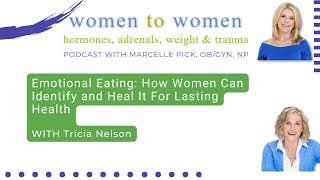
Interview (YouTube podcast) featuring Marcelle Pick and Tricia Nelson about emotional eating: definitions, causes, and practical healing approaches. Nelson frames emotional eating on a spectrum from normal emotional connection to food up to food addiction/binge eating; key differentiators are level of control and number of consequences. Causes discussed include trauma/abuse, people-pleasing, stress/adrenal fatigue, neurotransmitter imbalances and habit. Practical tools Nelson offers: a website quiz to self-assess, 'Three Meal Magic' (three meals/day with nothing between to learn true hunger), the 'PEP test' (Painkiller, Escape, Punishment) to link cravings to emotions, retraining intuitive eating after stabilizing habits, and boundary/self-care work. Resources: Heal Your Hunger (book), healyourhunger.com, Heal Your Hunger Show (podcast).
Chapters
Foreign.
Welcome everyone to another podcast, Women, Hormones, Adrenals, Trauma and Weight. So today I'm really excited to have somebody on board with me. Her name is Tricia Nelson and I've actually known Tricia for a number of years. She has family in Maine, so I know her from that as well. So let me tell you a bit about her. So Trisha lost £50 by identifying healing the underlying causes for emotional eating. Through Trisha has spent over 30 years researching the hidden cause of addictive personality. Trisha is an emotional eating expert, a TED Talk speaker and author of the number one best selling book Heal youl Hunger. Seven Simple Steps to End Emotional Eating. Now Trisha is the host of popular podcast the Heal youl Hunger show and is a highly regarded speaker. Trisha has been featured on NBC, cbs, K L, T, A L, A. Sorry, never heard of that, Fox and the list. So I'm so excited to talk with her about it today because it is an issue that many people have and I wanted her to bring light to this subject. So let's welcome Trish.
Welcome Tricia.
Thank you again today to an issue.
That I think a lot of people have and that is, you know, if somebody thinks they're an emotional eater, how do we know if they're a food addict emotional eater or if they've just been spent the whole life dieting and they don't kind of know how to kind of take care of themselves? What's the difference?
Yeah, so my experience is that it's really a continuum and a spectrum. And so, you know, and I was on the high end of the spectrum. So on the low end I think it's your baseline emotional eater. And I think, honestly I think we're all hardwired to have an emotional connection with food. Right? Like we can all go overboard now and then. So, so I think everybody's gutted in them. So they're maybe on the low end of the spectrum if they don't have any other troubles. But as the troubles increase and as the control decreases, we get into, you know, more of an emotional eater if not a food addict. And so that's the high end of the spectrum. That's where I was. I was a binge eater. You know, I could pack away 2,000 calories in a sitting, 3,000 calories with ice cream and chips and get up salty with the sweet after all, and then, you know, the cookies and carbs. So my experience is it's really where somebody ends up on that spectrum. And I actually have a quiz on my website that helps people determine that. But the two qualifiers are the level of control that someone has and the number of consequences someone has. So let's say somebody goes on a cruise, right? We go on a cruise. It's like, well, I paid for it. I might as well eat the cheese and the wine and all those desserts. And we come home from the cruise and we've gained five pounds. You know, our pants are snug and we're like, I don't like this. So, so then we go and jog extra for a couple weeks, cut out sweets and boom, you know, the, those five pounds are off. That's somebody with not too much, you know, too many consequences and with a good amount of control because they can course. Correct. That was not me. So once I, once I, you know, I was 50 pounds overweight and, and that was because once I started to eat, like once I veered off my healthy eating plan, I could easily slide down the rabbit hole into a dark place where I just was in this binge, binging at night in front of the tv. And then the next day I'm like not eating breakfast, not eating lunch because I want to course. Correct. But I, but then I binge again because I set myself up by not eating. So, so that kind of binge eating pattern, you know, is an evidence of lack of control and mounting consequences. Because if you live that way for long enough, you know, which I know, we, we, we know plenty of women who are in their 50s, 60s and 70s and they have literally been dieting with, for decades. You know, it takes its toll. You know, our bodies are like, you know, I'm not taking this. And our joints are in pain, our bodies are in pain. We've got diabetes, we've got gut issues, autoimmune issues, you know, not to mention heart issues. So, so our bodies take the beating the longer we've been doing this. And so I would just say, you know, take a quiz, find out where you are in that spectrum. And, and, and that's going to determine sort of especially what steps you need to take to overcome it. So it's a, but it's a, it's a bummer. Like I was on the, I was like by age 21, I was just an all out food addict, you know, very little control to course.
Correct.
So let's talk about something that you might not know I was going to ask you about. And that is that we have many programs out there. Food Addicts Anonymous, we've got over Eaters Anonymous. And I, I was one of the people that my whole practice was eating disorders for the first two years of my existence. And I did all the health pieces and all that stuff, and then many of them were at OA or went to rehabs. The part that was so distressing to me is it never really dealt with the deeper issues and it made them have so much control over food that they had to weigh and measure everything. And to this day, there is someone in my dance community, she still weighs and measures everything after 22 years. And what I worry about with that is because there were times that I would say, look, I need them to have some fat, some healthy fats, and they need to have more than you're giving them. And they wouldn't allow it. And it was really hard for me. I think it's beneficial for some people initially, perhaps. What are your thoughts about all this?
I love that we have had a conversation about this in the past. And my experience is I started in Overeaters Anonymous, you know, and I'm grateful for that because I needed to start somewhere and. And it was at least not all out diet mode. Right. You know, and unfortunately there are so many offshoots now of Overeaters Anonymous that are. And they're all based on different food plan. Like, there's not a whole lot of difference. It's just based on, no, our food plan is better than your food plan or my. Our food plan has grains, your food plan doesn't. You know, whatever. You know, my experience is that. And basically just to finish that thought, I, I was a flunky. Like, I couldn't do it. So I would get absent and then I blow it. Get absent and blow it. And for the very reason you're talking about is I needed to go deeper, you know, and for me, I just couldn't do that there. And so. And not to knock it, there are lots of people who get benefit from that. I agree. Yeah. But the thing is, for me, first of all, I don't think it makes any sense for somebody or for, for just a universal diet to work for bodies, you know, like, you can't tell me what's going to work best for my body. Like, only I can determine that based on my reaction to food, my reaction to amounts. Right. Like all our. We're all snowflakes. Like, we're all different. So. So I do, I do have a problem with saying, no, we're all going to eat this many carbs, this many, you know, whatever, grams or whatever. And. And it doesn't work for everybody. And so It's, I don't even think that's healthy to tell everybody that they should eat dairy if maybe they shouldn't, you know, or you can'. You can't stray off of that. So I prefer. What I prefer and what I do with my work is I help people clear away that emotional baggage, like really address the underlying causes so they can get in touch with their bodies. Now, I don't think intuitive eating or mindful eating works when your signals are all off right when you're a binge eater. I mean, I intuited that I should eat all the time. So that was my. My intuitive eating is if there's food, I'm going to eat it. So what I had to do is I had to walk it back and start addressing my stress, you know, because so much of our eating is stress eating for emotional eaters. I had to start like getting connected to my emotional self, which I was like, I was from the neck up, I was a different person from the neck down, then the neck down, you know, and so I wasn't in touch with my emotions. I was terr of my emotions. Like I didn't want to feel, I want to feel. And so I was busy on the run, you know, obviously snacking all the time. So. So we have to kind of pull it back and start to address. To me, it's addressing the emotional eating, you know, the emotions, the stress, and also the habit, because it is a habit to just eat every time you're just bored or lonely or discouraged or you know what? I'm tired. And so there's some habitual eating in there too. But if you start to address those things and get more balanced around food, then you can hear the signals like your, I like to call it your, your divine spirit or you know, your, your inner dietitian. You know, like your body will give you signals, but you got to stop overeating to hear them. But you also have to stop running so fast. So, so you can be connected to what's really going on inside of you. So it's, you know, it's not bad to have some kind of food plan, but the whole rigidity and making that plan your higher power to me, I want to get, I don't want, I don't want those signals to come from outside of me. I want to get acquainted with myself where I can hear them inside.
I so agree with you. And I saw it in practice for so many years. There's another piece to the puzzle too, and that is, I'm sure you Know the book by Julia Ross, Diet Cure.
One of the things that I also do in practice is I look at neurotransmitters because when the neurotransmitters are off, they're going to use sugar as a substitute and it increases, you know, helps the emotion for a moment and then the blood sugar dips down. So you're wanting more and more sugar. You know, I think it's all of those pieces and running away and not taking time and you know, all of those kinds of connection actions as well makes a difference.
Absolutely. Yeah. No, that, that's using. I mean to me that's why sugar and carbs are the primary go to for emotional eaters, you know, is like they do give us that serotonin hit, you know, they do calm us down, you know, momentarily, obviously.
Absolutely. Things I want to pick up on that you said that I so agree with and that is that we are all different. You know, what you need dietarily, what I need dietarily and also our kind of our, our stories. You know, if your mother was pregnant with you and didn't have a lot of food, you're going to have the, what I call conservation gene, meaning that you won't need a lot of food to kind of keep your body habitus at a certain weight. And we know that from the studies that were done in Holland actually during Second World War. So that's kind of interesting. So we are different and the whole notion of Hollywood doesn't help us very much. Right.
Yeah, they're airbrushed and everything else that goes along with it too. So that is another part. So how do you know the difference between physical and emotional hunger? That's a question that a lot of people kind of really struggle with. How do they know the difference between the two?
What's worked best for me and what I recommend to my clients is something that's very simple. It's called three meal magic, which is eating three meals with nothing in between. And as you know, there's a lot of benefits of just having that space between meals just for your digestion, let alone anything else. You know, just like let's give our bodies a break, let them do their job packing more food in. But what I like most about it is that that space between the meals enables me to get in touch with my emotions. You know, and I mentioned earlier on that we need that we need to start becoming acquainted with our emotional selves. You know, most of us have been on in full flight, like from any kind of acquaintance with our Emotional selves. So that space between the meals, there's going to be some hunger there. Like some, like you're going to start getting hungry as it gets closer to your second meal, to lunchtime. But that's not a bad thing. Like getting acquainted with hunger signals is important.
And the other thing I like about the three meal magic idea is that in between the meals you, if you have the three meals rather then you know you're going to be okay if there is hunger. Like I know for emotional eaters and this was true for me, you know, because food saved our life once upon a time, right? Like once upon a time it's all we had to deal with dysfunction in our family, with abuse, with sexual abuse, with whatever trauma is going on which so many of us have, you know, or have had. We didn't have much to lean on. Like we certainly weren't talking to our parents about this function. So we're like trying to just get through it. And food is one of the few ways we had to get through it. So what started out as an amazing coping tool obviously ends up not working for us later on. But there's that because of that early on survival skill of eating, there tends to be a trigger inside of us if we don't eat for, for a long period of time. Kind of like a danger dange, you know, warning sign. And that's when we tend to go overboard and binge eat. That's why, you know, intermittent fasting can be hard for emotional eaters because they feel like they're gonna die, you know, because they have that old programming, right. Even though it's not true, it just feels like a dangerous signal. And so I find that when we do feed ourselves three times a day, even if you put 12 meals, you know, 12 hours, like do the minimum of the intermittent fasting, 12 hours between dinner and breakfast. But having the three solid meals where you're nurturing your body like you're in, you're letting your body know it's going to get more food. I find it to be so kind and gentle and that's what we need to do. We have so many years of crazy diet, so many years of erratic eating and all these diet hacks that have not been good for us on any like, on any level. And so I find that there's really beautiful spiritual self caring messages that come when I'm like, I'm going to feed myself, I'm going to get my next meal, it's going to happen. I'm going to put effort and time and care into that meal. And so I find that it's sort of retraining us and helping us move beyond that diet mentality, which is so beautiful on so many levels. So I find that that 3 mil magic. It helps us get in touch with our emotions because part of the hung could be emotional hunger. Right. So, so but if, you know, you've eaten, if, you know, you fed yourself a good healthy breakfast, then at 10 o' clock when you're like, I think I should eat, which I get, I still will sometimes be like, oh, is it lunchtime yet? But then I can say, no, Trish, you actually had a good breakfast. You know, lunch is at 12. So what's going on there? Like, what is that about? You know, and then you can ask that question and explore. You know, maybe it's time to do my taxes and it's the last thing I want to do. Or maybe there's a phone call I need to make and I just Dr. Facing that uncomfortable situation. So that's where the emotional hunger comes in. But we can't know if it's hung like physical or emotional unless we are appropriately feeding ourselves, you know, and then that space between the meals is where we can do some exploration. Is it just it's getting close to lunch or is it not at all close to lunch? In which, in which case maybe there's something emotional going on.
And if somebody's listening to this and they're saying, you know what, I don't know if this is true for me or I think she's got a point. I think this is me. Where do they begin? How do they start to kind of make some changes?
Yeah. So I want to talk about.
The pep test. So the pep test is a way for people to start connecting their cravings with their emotions. And it's a very simple way because. Because I think we've all heard, oh, you have to deal with the underlying causes. And then people think, oh, that means I have to go to therapy for 20 years before I figure this all out. But that's not my experience. You know, we can, we can make it much easier and quicker than that. So the pep test is a way of determining, you know, what, like, we already know what food does to us. Unhealthy choices do to us. This is a way of determining what, what, what those foods are doing for us. And so PEP is an acronym, pep. And the first P stands for painkiller. So food is a painkiller. Like, it works when you feel bad and you eat, you feel Better immediately. So, so when there's painful things going on in life, which there's no shortage of pain, right? There's no shortage of upset on any given day, whether it's somebody, somebody's words to you or needing to uproot your family to go move for a job or a death in the family, there's so much pain. So, so the fact is we use food to soften the edges of pain. So we use food as a painkiller. That's the first P. The E stands for escape. So we use food as a form of escape. And what are we escaping from? We're trying to escape our minds. Okay, so, so the truth is, and we got that definitely happens with neuro when our neurotransmitters are off. But my experience is overall overeaters are overthinkers. Okay. Like we are, we have racing minds. We're overthinking everything. What does she mean by that? Why did he look at me that way? I shouldn't have said that. Instead I should have said this. I mean my mind would never stop, you know, and we use food to just slow it down, you know, and, and to escape how crazy making it is to be, you know, having these barrages of self critical thoughts. And so we use food as a way of escaping our minds. The last P&PEP stands for punishment. And this seems a little counterintuitive because we think of food as a reward. But you know, when we go overboard, you know, like I was like I said at my bench foods and I was gonna have a little, I was gonna have one bowl ice cream, but I ate the whole pint, right? Like or a few cookies, but I ate the whole package. But for me, my eating turned self abusive. Like I would binge and it would hurt. I would, I would physically hurt, you know, and then the next day I would feel so mad at myself, I'd have all these self recriminating thoughts and then I wouldn't want to hang out with girlfriends because I was all bloated. And so I'd pull the curtains and do little sheet therapy. Well, that's no reward. That sounds a lot more like a punishment. So you know, and so the fact is, and we don't think of it that way, but the truth is the way we eat, you know, the way we gain weight and, and suffer with this problem is more of a punishment. And my experience is as overeaters, we're also over feelers and we tend to feel guilty about everything, you know, so we do use food to Beat ourselves up. And so that's another thing that we need to take a look at. Like, why do I feel bad? What am I. What am I beating myself up about? Let's. Let's go there. Let's address that to where we feel worthy. Let's start working on feeling worthy of good treatment, especially by ourselves, you know, so that's the pep test. Pep, painkiller, escape punishment. That is a great way to start making the connection. Okay, so next time you're like, I got to go check the refrigerator, see if some elf has put more food there, because you got to check, you know, something might have happened from an hour earlier. So, so when you find yourself going to the refrigerator yet again, just check in. Do the pep test. Like, am I looking for a painkiller? Am I trying to escape something, you know, that just won't shut up in my mind? Or is this something, Is there something I feel bad about that needs to be addressed? And when you take the pep test, you start to do that exploratory work, you know, and that's what we need to do. It's not like, I want chocolate. I want chocolate. Well, sure, chocolate's yummy, but there's more to it than that. And so that's what we need to do is start going deeper, like looking, looking into this. And, you know, even though we spent a lifetime trying to not look at it, it's. It's a worthy exploration, you know, it's a way to get to know ourselves. So that's the very first thing. I would also say that, you know, in my book, I talk about the anatomy of the emotional eater. And these are 24 personality traits that make up the emotional eater's personality. Like a composite of personality. Composite. And, and I'm telling you, I mean, I've been researching this for over 30 years, and if you've met one of us, you've met all of us. And the number one trait of an emotional eater is people pleasing. So I mean, I just. It's rare that, I mean, emotionally or not a people pleaser. And, and the thing about that is the people pleasing first of all comes from not having our own self acceptance. You know, we don't have our own validation, and we're seeking it from outside of ourselves. Again, it does go back. Like, it goes back to early, early years where we didn't get a strong sense of ourselves. I didn't, you know, and so we're seeking it outside ourselves. But the problem with that and the reason why, it has something to do with food, even though it doesn't seem like it is that when we're breaking our neck trying to please everybody, trying to be all things to all people, you know, we burn out our adrenals as, you know, like we burn our adrenals. We create, you know, issues, gut issues, stress and everything. And then not only that, but nobody's ever as pleased as we plan on them being. So then we're like, screw them. I'm going to reward myself. Like they didn't even notice that I pulled an all nighter for this project. So, you know, screw them. I'm going to go have my favorite meal. And, and that's where it ends up with food it time and time again because it's the perfect storm when you're tired and your adrenals are shot, you know, and, and you, and you feel left out, you feel like nobody cares, you know, and so, but that's an example of how it's not, it's not an eating problem. It's really a living problem. And that's where people aren't putting their focus and where they should put their focus. Like, how are you living such that you end up eating? Like, we just were always looking at the caboose on the train. We don't look at the beginning of the beginning cars and how they get, they, they, they lead to the caboose, to the caboose. So people pleasing is something we can all work on, you know, getting in touch with. What's yes for us, you know, if you're invited to a party or to, to do some project, you know, additional work at work or, or whatever at home or for the soccer team or whatever, you know, check in with yourself first. Say, let me check my schedule and get back to you. Like, don't say yes right away. Like, that's a big adjustment right there. Don't say yes right away. Say thank you, let me check my schedule and get back to you and then check in with yourself. Can I do this without paying a high price? Like, can I afford this time and stress without it ending up with me not getting enough sleep, me being tired and resentful and then eating, you know, and if you can, then you can get back to them and say yes. But if you can't, it's time to learn the word no, you know, and so just that in and of itself can give you more time in your day. It can help you be less resentful, it can help you feel like you're standing for yourself for once. Like we're so used to giving everything away, you know, and putting ourselves last. But that. That has to change. And that's the living part. That's the living problem that needs solving. Not. Not as. I mean, everybody knows what to eat. Like, we're not stupid in that area. Like. Right. If we've been dieting for decades, we know that salads are probably better than hot dogs. And so it's really important that we start looking at what else we can change because we know what to eat. It's just a matter of not being able to follow through on what we know.
Hands down.
So what about the distinction between somebody that is eating too much at a meal versus an emotional eater? Because there are people that just, you know, they have three meals a day, but they eat too much.
Yeah. And that's where the habit comes in. So I feel like the compulsion to eat is made up of buried emotions, stress and habit. Pure habit.
And I think that. But I will say this. You know, so. So. So we have to break the habit. You know, we have to start learning how to eat differently. And if somebody doesn't know how, obviously there. There's things you can do. You. A million YouTube videos you can watch. But my experience is we eat too much because oftentimes we're eating heavier foods. And I do think our heavier food choices do come from emotions. So, you know, if we're just eating salads, we're. We're going to feel lighter and we're going to have more feelings. And again, this is not conscious for people. They're like, you know, nobody's like, I'm going to have more feelings by eating a salad. No, we don't have that conversation. But the reason why we like potatoes, the reason why we like fries, the reason why we like heavy meats and sauces and carbs, you know, macaroni and cheese and bread, is because it does. It's got more weight to it, and it does deaden our feelings. Like, we just. We're like, happy. Like, we're happy in the moment. We're in that carb coma. But what, again, people need to start connecting with is there's a fear around eating lighter foods. Like, there's a fear there. And the fear is, like, not consciously, but I guarantee if somebody digs into it, the fear is like, I'll waste away. Like, I won't have my grounding. I won't have support.
Support.
And I won't feel good. I'll feel bad. And that could be. That absolutely could be. But those are the feelings you're snuffing out with carbs. And those are the feelings that need to start to be addressed, you know, by writing, by talking, by praying, by meditating. You know, we. We do have to have new coping school tools instead of eating to kill those uncomfortable feelings. And we also need to acclimate. They're not terrible feelings or informative feelings. You know, why do you feel bad? Well, let's take a look. You know, what am I. What am I doing in my life that's not working for me? Like, where am I continuing to hang out with people I don't even like? You know, maybe we can change that. So there's a lot to. There's a lot to unpack, obviously.
Absolutely. You know, it's interesting if we look at the ACE study that was done by Felitti, you know, in 19. In the late 19 what? 1996, 98 or was around the time it came out. And he had, I don't know if you know, the beginning of the study that he did. Do you know the story of it? It's interesting.
I'm not sure.
He was working with only women that were about 100 pounds overweight. And he had them on diet and the liquid diet. They were all very successful, all losing enormous amounts of weight. And he had one of them come back and he said to her, instead of saying to her, how old were you? He said, how much did you weigh when you're first sexually active? And she said, 30 pounds. So he had many of them come back and about 85% of them had been sexually abused.
So it's, again, it's the notion of protection and padding and not, you know, not being able to kind of look at some of those deeper emotions. And for good reason. For some of them, it's just. It's so painful to go back.
Yep, no question.
But the good news is that it's possible. The good news is that there are solutions. The good news is that you can learn to trust yourself. The good news is that there are also so many programs now that don't involve years and years of deep grief and therapy, which is amazing. So that's.
And I think that there's also a distinction, which I love what you say is that there are people that are emotional eaters, hands down, and there are people that have had poor choices or went into menopause or whatever, and hormones change, adrenals changed, and they need a whole different approach versus the people that really need to dig deeper for what their. Their story is. Because what I say to people is if you don't deal with your story, your story at some point in your life will deal with you. It's not a question of if, it's a question of when.
Yeah, no question. Absolutely.
That makes a big difference. So if people want to learn a little bit more about your program and find out a little bit more about you, how do they do that?
My website is a great place to start. It's healyourhunger.com H E A L healyourhunger.com that quiz I referred to, that emotional eating quiz to determine if you're an emotional eater or a food addict is on my home page of my website. So that's super helpful. And I do, you know, I have my book out called heal your hunger, and on Instagram, I'm Trishanelson. Score. So. And I have a podcast called the heal your hunger show. So. Yeah, but the website's always a good place to start, and everything's kind of resourced from there.
Awesome. Yeah. And it's very different than the people that I see in my weight loss program. My people are really menopausal, hormonal, food allergies, food sensitivity. So it's very, very different. And this is a wonderful place for people to go if emotional eating is the issue, because if it doesn't get healed, it will never resolve.
Amen. That's true. It doesn't get up and go away on its own. It comes back. It rears its head, you know, and it's. And it's never pretty.
Well, thank you so much.
I appreciate it.
Yeah. And pleasure.
Thank you for having me and thank.
You for the work that you do.
Thank you. Back at you. I love what you're doing for people to help them feel better.