Pete Worrell interview by Joe Polish at the 2023 Annual Genius Network Event
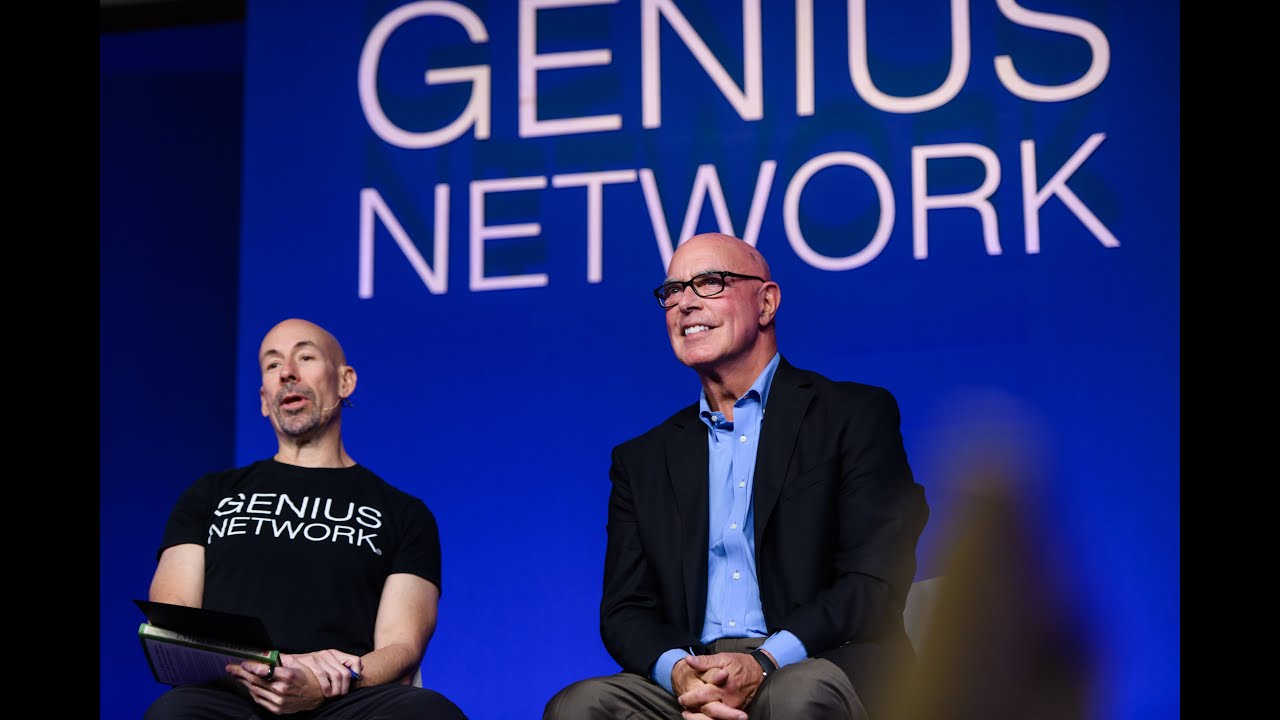
Pete Worrell, founder of M&A advisory firm Bigelow, walks through how owner-managers build and sell businesses for maximum value. Start with the end in mind, create a senior-team equity pool around 10% of deal value, and treat EBITDA margins as a proxy for customer love. Real examples include Wilson Language Training and a synthetic-lubricant family business sold to Fuchs.
Chapters
Well, your first formal presentation is about to start. Randy Long has been a member of Genius Network for 8 years. His company helps prepare business owners for an exit, whether they sell it outright or transition it to their children. With Randy's guidance and direction, owners learn to run their business so it is always ready for sale. And it operates at the highest level of productivity, and that way it can be sold for the highest price. Please help welcome Randy Long.
Good morning, everyone. If you were to advise a young wannabe entrepreneur on how to start their own business, most likely you would tell them these 3 things: first, how to set up the business; secondly, how to run the business; and thirdly, how to exit that business. Of course, there would be many key elements and examples you'd have to give for each of those 3 main subjects. Unfortunately, that is one of the most often neglected by the entrepreneurs creating a business, is how to create a positive legacy so that when you exit the business, you create an enterprise value far beyond your wildest dreams. This is what Pete Worrell has done for decades with many high-level entrepreneurs— how to build a fortune, how to capture the fortune, and so important, how to keep that fortune. To help you build your positive legacy, please welcome with me Pete Worrell.
Thanks, Randy.
And me. No, no, no worries. Thank you, Randy.
You're welcome.
Thank you.
You prefer side?
I don't care. Do you? Is that one all right?
That's great.
Okay, awesome. First off, thank you for being here. So fantastic. And we've had several conversations over the last couple weeks to prepare to talk about some of the stuff that I think is the most valuable for a lot of people in the room to think about the future of their business. You wrote a book, Enterprise Value: How the Best Owner-Managers Build Their Fortunes, Capture Their Company's Gains, and Create Their Legacy. So one of the chapters you have in here is Start with the End. What do you mean by that?
First of all, let me say that, Joe, that maybe this comes from working with entrepreneurs for the last 40 years, but most of us would be characterized by Dan Sullivan as being in most rooms, but that we're the weird kids in the room. And if we're working with high-performing entrepreneurs, they're frequently independent critical thinkers who don't really fit into the mass general population, right? Can you identify with what I'm saying? But when we're all together in this room, none of us are the weird kids in the room. So I just want to say thank you for pulling us together and for curating this, because I think for me it feels really warm to be here.
No, and I always like the analogy. Analogy of it's like a bunch of characters in the Star Wars bar.
Yeah.
If you guys remember that, everyone's kind of like, yeah. Give a background on you though. Let me, before we get into it, because there's so much I can, you know so much about business. You've helped with massive business acquisitions, positioning, all levels of growing a company, and I know you're going to go through that, but if you could just give a quick version of how you would describe who you are and what you do.
Our firm, I lead a firm called Bigelow, which would be most widely known for being the merger and acquisition advisory firm that deals exclusively with entrepreneur-owner-managers. Those are high-performing private business owners. Half are founders, half are family businesses. And usually, Joe, where they start a conversation with me or with us is asking the question, how do I get my business to succeed beyond me? How do I get my business to succeed beyond my personal ownership of it? So Barbara and Ed Wilson, 35 years ago were teachers in northern Massachusetts who were tutoring kids, dyslexic kids, how to read. And they realized that they had a way that they were teaching dyslexic kids how to read that was having better outcomes than anyone else that they knew about. And they had a moment where they said, my gosh, if this is true, we actually need to teach teachers how to teach dyslexic kids how to read so that we can 10x what we're doing. And they formed a company called Wilson Language Training. 3 years ago, Barbara and Ed came to me asking, how are we going to have this business succeed beyond us? Because now we're in our early '60s. We really wrote the curriculum. We now have 1,000 employees. If the business is as valuable as you say it is, wise guy Pete, then it's too valuable for our employees to buy. What are we going to do? And how are we going to make sure that the business succeeds for the long term? No, for the really, really long term. And so Joe, that's why we start with the destination in mind, because if those of us in this room who are business owners, like all of us, could start with the thought that might we want to have a capital gain someday? You don't have to be interested in selling your business to want to optimize enterprise value. From increased enterprise value in a business, all good things come. If you want to have a bigger success-sharing plan for your team, build enterprise value. If you want to have enough capital to go to the bank and build a wing on your manufacturing plant, build enterprise value. And building enterprise value is knowable, which is why I wrote Enterprise Value, the book, because I had so many friends who came to me and said, "Oh, Pete, you know, if I'd known then what I know now." And I would say, "Actually, we could have known then what we know now. It's knowable." It's not rocket science. So that's what I mean by starting with the end in mind.
Great. Let me ask you this question exactly the way I have it here. So when it comes to entrepreneur-owner-managers, why should they build enterprise value, and what do you mean by that term enterprise value? And I'm asking this question because there's a lot of stuff, and you have a couple slides I want to show people and have you explain it, but I want you to define what that means and then maybe describe the— the slide that you have, the arc of the entrepreneur, owner-manager.
So most of us, and all entrepreneur-owner-managers actually that I've ever met, with a few exceptions, really didn't start their enterprise to like startup to sell out. They identified a niche. They had a unique ability in the niche. And they began to develop something, a product or service, that provided great value to their customers in the niche. And over time, as they did that, they created great value, and the enterprise value grew. So what I mean by enterprise value is the gross value of the enterprise. And we can talk about some rules of thumb of how to measure that. And we typically— those of us in this room typically only measure it like once in our lives, right at the end. But we would do well if we sort of thought about What are the drivers of enterprise value in our domains, in our industries? Are we interested in knowing that? Do we want to optimize those drivers of enterprise value? Because if we do, it ends up with a more valuable enterprise to everyone, to ourselves, our employees, our families, our customers, our communities.
Yeah, so maybe let's go through, because it might be hard to read from back there, but maybe you could go through the arc and explain sort of— because when you had— first taking me through this, I was like, wow. I mean, so let me just frame it this way. We all have our businesses, we all have customers, and we all have clients. We have teams, we have insurance, we have technology, we have all the things that we have. And some people can be in the same exact businesses as you and they could have infinitely more enterprise value. And there is going— just like me and John Ratliff have spoken about many times, you know, everyone here is going to exit at some point. You're either going to exit strategically and intelligently and bring in— it might be the most important sale you ever make, or the company could go bankrupt, or it could be handed off to friends or family and you could get nothing for it based on the value of it, or you can really start positioning it now, if you haven't already, to have enormous value. And so, but going through this whole process, I think, could be a really game-changing. I want this— I'd like to leave everyone here with a domino of a different way to think about the value of their business and so that they can build— they can make the most of what they got and what they're doing.
Randy Long and I were just talking backstage about how when you— if you teach entrepreneurship or if you're a student of entrepreneurship, actually it's curious that what they teach and what you learn about is only about the first third. Of your business. It's capital raising, writing a business plan, getting started, right? So I just want to point to you on this slide— go to the right-hand side with me for a second— and I will ask you, are you driven by the past or are you called to the future? And I'm going to come back to the right-hand side after I leave you that question and say that the way that this— that Entrepreneur Arc was created was with a group very similar to this. And actually, I had my back to the group. I was writing on a whiteboard. And I was talking about the arc. As you can see, the vertical axis is the gross value, enterprise value, and the horizontal axis is time. And so all entrepreneurs, even when they are founders or if you succeed into a family business, start down at the bottom left and you start out with no assets, no image, no name, no reputation, no nothing. And what do we do? We do something crazy. We go to the bank and borrow money. Or we go to our friends and our family and we try to get them to invest in us. Well, we had no image, no name, no reputation, no nothing. But we— it's crazy, but we do it. And you know what happens? We grow the business a little bit. We struggle. We take on revenue from anywhere we can get it. And we have to make a big decision. Can we make the transition from a rugged individual to a unique team? That's language that comes right from Dan Sullivan. Can we make the transition from rugged individual to unique team? The US Labor Department says that there are 6 million private businesses in the United States. I will tell you, most do not make that transition. That's why there's so many 1 and 2 and 3 person firms. The firms we deal with all make that transition, and then they grow, and they provide great value to the customers. And that you, the entrepreneur, has this unique ability. Most of you in this room would have a unique ability of seeing a— a customer's issue and then selling to the issue, providing a solution or persuading. That's number 1 ability for entrepreneurs, seasoned successful entrepreneurs. The number 2 most common ability is technical skills. So there you are going to focus on unique abilities. So you hire a new CEO and you give away some of the management responsibilities. And when I had my back to the group that I was creating this with, I said, what comes next after you hire a new CEO? And they all burst out laughing and said, fire the new CEO. Unfortunately, that is what a lot what happens. And when I talk to those separated CEOs about what happened, they consistently say, she wouldn't give me responsibility. And when I talk to the owner and I say, what happened? She says, he wouldn't take responsibility. As you go along, great things happen. You hopefully build a team. Years go by maybe, and actually something happens that you never expected. The enterprise value of the business, you start having this feeling, is exceeding what you ever thought was going to be. And somebody like in my business comes along and says, I've done this many times with clients over the years, I know them, what do you think my business is worth, Pete? Oh, I think it's worth $15 million. What do you think it's worth a few years later? I think it's worth $35 million. I remember one year saying to a guy, He said, what do you think it's worth? And I said, Bob, I think it's worth between $100, $110 million. He said, oh, that's horrible. And I said, horrible? Why? And he said, because I could fuck it up because I got it here. And so we need to figure out what to do with it. And so that's what you see where risk aversion sets in, right? Dan Kahneman, the Israeli psychologist, won a Nobel Prize in economics for talking about risk aversion, which is where you actually would take on more risk to avoid a loss than you would to continue to have a gain. Are you with me? Mm-hmm. You take on more risk to avoid a loss than you would for the same amount of gain. So that gets to be a scary place because then you start thinking, well, you know that bank debt I took on? We ought to pay that down. And the industry is changing. It's just happened to me with a business in West Virginia that's the largest manufacturer of popsicles in the country, bigger than the Popsicle Company, family-owned business. And they had 3 plants. And they were kind of at that point of the curve, really scary point of the curve. Why? Because they were in such demand, they needed to build a new manufacturing plant. They thought it ought to be in Texas or Florida or somewhere where the population eats a lot of popsicles. It was going to cost $25 million. And the 63-year-old woman who's the CEO said, of whose money? Like, really? I have to bet the farm again? So this is where, up at that top part of the curve, maybe there's a wish for some liquidity. In her case, it was, gee, I have some siblings who are stockholders. I'd love to have them have some liquidity. My family's biggest investment in the world is in this company, and it's kind of scaring me that I feel like I want to go on and go back to my painting, which is what she did before she came to the company. And I've got some things, as you can see, in thinking about the next chapter for me personally that I want to do. The question then becomes, then, when you started in this business, Lisa, what you wanted to do and what the business needed was completely parallel. And now what you want to do and what the business needs is at a crossroads. And that's a place where we would say, gee, wouldn't it be great if that business had a new owner who was going to take it into the next chapter just as enthusiastically as you did? 25 or 30 years ago.
Great. So let me also mention, if there's any burning questions, we can take a couple of them. Then just raise your hand and we'll grab a side. So one of the questions I wrote for you, because I wanted to get your perspective on this, is not something I talked to you about before, is why would an entrepreneur sell a successful business that they love working in? And what are the key elements that need to be in place for a business to properly and profitably run without its owner? And I say this layered on the fact that one of the scariest things for me is to ever give up— control's not the right word, but just because I do give up a lot of control. It's like that thing with Dan Sullivan, I don't want to be in control, I just want to be in charge. And I went on a 1-year sabbatical last year, and that really required me to have the business run without me, and it was profitable and it did work, and that was fascinating to me. And that's why I don't think I'd probably be sitting here right now with you, having you talk to everybody about this, had I not had the experience of stepping away from my business and realizing how amazing that is to be able to step away from your business and actually let— give your brain a chance to decompress or do other things. And so I'd love to have anyone here that feels like they cannot walk away from their business to start down this path of setting up your business so one of the conditions is it can profitably run with either out you or at least with minimal or reduced amounts of your capacity. Because how many of you feel like you're at capacity right now? You're just at capacity.
You mean personally?
No, no, not you, Devwin, in the audience. I don't know about you. How do you feel about it?
No, I meant, do you mean personally?
Yeah, personally. How many of you feel, yeah. I said me personally. Pete, are you at capacity, my friend?
No.
So yeah, how many of you just feel like really stretched? Again, raise your hands.
Yeah.
And look, I get in those positions all the time. So yeah, so my question is what needs to be in place?
So look, you don't have to be a student of world history to know that it's an extraordinary time to be an entrepreneur in North America, extraordinary time. When I started in my career, there was no such thing as private equity firms. Today, there are thousands of private equity firms, each of whom has raised more than $100 million to invest in private businesses. There is not an abundance of capital in our world. There is a super abundance of capital in the world. Public companies are brimming with cash and have paid off debt. Private equity firms have raised, according to Prequin, which keeps the statistics, $1 trillion more than they have invested. So this is a wonderful time to be thinking about how the power has shifted from where I started my career. The power was with the capital providers. The power has now shifted to you. What the capital providers have is a commodity, and you can rent it at the same price from any one of them. And what you have, which is a superior performing private business serving a niche, is what is rare and valuable. So I really hope you can make this change of this mindset that it's what you have that's rare and valuable, and that's why someday We ought to be asking the question, is there an investor out there who deserves the opportunity to be a majority owner of your business? So it's not about selling the business. And I would ask you all, ban those words from your vocabulary. You're not selling anything. You don't have to. If you're a good business, you know, you get 2 or 3 overtures a week. Some of them are from business brokers who don't represent anybody, but some of them might be actually for real. So I would just urge you that we're in this environment where once in a while we run up against an entrepreneur who says, jeez, I feel kind of guilty. I'm in my 60s. I've created something of great value. What are people going to think of me? I would just ask you, since we're in this time of abundance of capital, go to the right-hand edge of the slide and ask yourself, what's in your next chapter? Brooke Castillo yesterday talked about unlocking your potential. And it seems to me you can't unlock your potential if you keep holding tightly onto what you already have. So we ask our clients, what would you like to do in your next chapter? There's a woman who owns a business in central Pennsylvania that we recently completed a successful engagement with. And she told me the story of how she— I told somebody this the other night at a dinner here— that her father was diagnosed with a terminal illness and her mother called her. At graduate school in Chicago and said, can you come home to help? And she came home to help, she thought temporarily, and her father's business had 9 employees. Today it has between 800 and 1,000 employees. She's been running it for 31 years. She makes high-tech castings for nuclear submarines and nuclear aircraft carriers. And I asked her, so, Jan, why now? Why not a year from now? Or why not a year ago? And she said, who said this is supposed to be a life sentence? She said, like, I got some things I want to do. And so we started our businesses as entrepreneurs because we were seeking freedom. And sometimes along the way, you know, we give up some of that freedom in our responsibility to others. And this might be a way to get your freedom back.
Yeah, no, I mean, I've always found the analogy a lot of— People build prisons with golden bars.
Yeah.
Yeah.
Yeah.
So all right, well, so let's talk about how does an entrepreneur build and capture enterprise value?
Can we go to the next slide? Mm-hmm. So I promised Joe that if we had this brief discussion that I would try to give you something that you could take home and immediately use. And so—
Let me also mention this too. Dan Sullivan has a person in his group that has had the largest sale of anyone in Strategic Coach, a billion-dollar sale, and I was not aware of it, but you were the person involved in putting that deal together. So the fact is Pete has done very big things. So I just want to give you that context too. I don't know if I framed that well enough.
Yeah, I'm sorry. So you can go to our website, BigelowLLC.com, and you can look at all of our materials. All of this IP that I'm sharing with you this morning is all on the website. Happy to share it freely with you or anyone you want to give it away to. We give away all of our IP as freely as we possibly can. And I told Joe that I wanted to give you some tools to immediately bring home. And so the question I had for myself is, if I wanted to have a capital gain someday, what are the handful of things, if I went home, I could do right now? So the most important thing in that sentence to me is the word someday, because it doesn't mean today. It doesn't mean— it's not fixed at all. So what did he say? Yeah, I said if you want to have a capital gain someday, there's like 6 things you can do right now. So let's start with number 2, strategy. Is your strategy in your firm so simple that you can say it in one sentence? No, no. Is it so simple that your employees can say it in one sentence? No. Is it so simple your customers can say it in one sentence? Because if not, why not? Because if you want to build enterprise value, what kills stockholder value is diversification within a business. All intelligent investors want to own pure-play businesses. If they want to own— if they want to have diversification, they'd like to have a portfolio of multiple pure-play businesses. So is your strategy so simple you can say it in one sentence? Do you have a management team that the next investor is going to want? I'm sorry, I don't mean to sound like a hard-ass, but I'm going to ask you again. If not, why not? Because we're all owner-managers, and part of our goal is going to be to transition out of our businesses eventually, right? I mean, we're terminal. Summer comes to an end. The Beatles broke up. I mean, it's going to happen sooner or later, so we can either— let that happen to us, or we can responsibly make the decision of how am I gonna put my business in the hands of someone who's gonna take care of it? And that involves partially thinking about your management team. Now look, uh, we, we all have management teams that we made decisions about hiring and, and recruiting, hiring, training them, and we made those decisions for good reasons at the time. But I would just ask you, is that the team that's gonna get you to the next 3 to 5 year go-forward plan? You know, this is very controversial, what I'm about to tell you. But I can show you data. And for anyone in this room, I wouldn't— this is not on our website. But if anyone in this room, I will happily give you this data. It's anonymized. It goes back— we've closed hundreds and hundreds of transactions. I think the data I'm going to tell you about goes back 100 deals that we can show you. How much our clients gave away to their senior managers and their employee groups in a transaction. And the variability is from 0% to 33%. And the average is about 7%. And the median is about 10%. So in our business, we do— our average transaction in the last 10 years has been about $100 million, just a little bit less. So that means they gave away $10 million. To their employees and their management team. Well, if you're going to give away $10 million to your employees and your management team anyway, why wouldn't you bring those senior managers into this discussion now? Like what? Like getting your senior managers— I'm talking about 4, 6, 8 people, how many of a small group you have— and getting them in a room and saying, hey, you know, I really want to have the opportunity to have a capital gain someday. My spouse and I do. And they're going to go like, no shit. And then you say, I really want your help. And in order to get your help, I'm not going to ask you to do for nothing. I'd like to align our incentives. I'm going to create a pool of 10% of the transaction value, and you're in the pool. Why wouldn't you do that? Because that go-forward management team is going to be the team that the next investor is going to want. And if I were advising you, I might not even have you in the room when the new investor comes there because I know what happens when you're in the room. When somebody asks a question, all the heads go down to the end of the table and look at you. We don't want that because we want you to be able to transition out. So we want to bulk up our management team with people that the new investor is going to say, they're awesome. World-class advisory team. What I'm talking about here is outside advisors. Look, we all have— trust and estate attorneys. We all have attorneys, accountants, wealth advisors who have been our friends and they have served us well. Great. If you're going to do a $50 to $100 million transaction in your business, I would just ask you, are those same people the ones who are going to help you do that? Because the people on the other side of the deal, they're going to do $50 to $100 million transactions every month. So we need to make sure we've got— match strong with strong, right? Here's another controversial recommendation. Why wouldn't you bring those people together in the same room and say, someday I want the opportunity to have a capital gain. I don't know when. I might even change my mind and not do that, but I want the opportunity. So I want my T&E attorney, my trust and estate attorney, my corporate attorney, my accounting, my tax, my wealth advisor, my whoever. I want you all to know each other. There's an infinite amount of data that would show when people know each other like that, they work better together.
Is that not the truth? Yeah, absolutely. It is amazing how people keep things in islands with other individuals that are all, you would hope, working together as a team.
I came out here on American Airlines. I'm not criticizing American Airlines, but on the way out of the plane, I noticed that the pilot and the co-pilot were very chummy, and I said, I said, do you guys fly a lot together? They said, no, first time we met. And I thought, hmm, I wish he hadn't told me that. But I was already on the ground, so I'm good. How profitable is your prophet? What's he saying? Look, we're all capitalists here, but that's not what drives me to ask you about profit. I don't really care. What profit shows me is that your customers love what you do. So if you have a business that has a 20% pretax profit— we'll use the term EBITDA for a minute. Everybody knows what that is. It's a proxy for cash flow. That tells me, wow, your customers really love and value what you're giving them. That's important for enterprise value. If your EBITDA is 3% and you plead with me that I can't get it any higher, that tells me your customers don't really love what you're giving them. And so that business is not as valuable. So do you have metrics that you are keeping track of so that you understand that you're driving enterprise value in the way you should in your industry? I hope you'll ask yourself, what time is it? What time is it? What time is it for me? As an entrepreneur, owner, manager, what time is it for my business, my enterprise? Does the enterprise, for example, does the current performance reflect the intrinsic value of the business? And number 3, what time is it in my industry? And if you want to think about timing, that number 3, that's the most important question, right? And the way we measure that is, is institutional investment going in or going out of your industry. So just to make a ridiculous example, I had a friend who in 2009 called me and said, Pete, it's James. His family has this business that makes automotive interior parts. Last year we did $200 million. We make 10% every year. We made $20 million. I want to get out. I know it's not worth 10 times EBITDA, but what do you think it's worth? And I said, there are no buyers. And he said, no, I know there's no buyers at 10 times, but what about 6 times? I said, no, no, there are no buyers. He said, what are you talking about? I said, look, GM and Chrysler are in bankruptcy. The private equity world runs as a herd. They all think the world's coming to an end. There's nobody going into the automotive components business right now, right? And of course, you know the answer, that a couple of years later, he did a transaction that was in the multi-hundred million dollar transaction, because he really does make valuable interior components, just not at that time. And I guess I would leave you with this question about the next chapter. Could we go back to the prior slide? Yeah.
Can you move the slide back, please?
And on that right-hand side, the reason we have that t plus 10, that's transaction plus 10 years up in the top. The legend is t minus 10. That's 10 years before the transaction. A capital gain transaction, a wealth creation event. The reason we have that is because I have seen a lot of my very good friends create very significant enterprises. And we help them to get extremely liquid. And 3 months later, they were in a clinical depression because their sense of meaning and purpose, structure of their world, the structure of their relationships were all woven together with the business. Does that resonate with you at all?
Yeah.
It does for me. And so we actually found that they go through stages, and the stages are so systematic that we could name them. In fact, they're so predictable that we can name them, which is stages we call realization, hibernation. I called one of my friends the other day and said, Ford, I have a client in Chicago who's putting together an advisory board. You'd be a great member of the advisory board. Would you come into Chicago? He said, Pete, I don't want to listen. I'm just after the transaction. I'm trying to get my files in order. I'm working out twice a day. I'm doing things I put off for 30 years. He's in hibernation. What happens in nature after winter? Spring. You want to run outside and throw your clothes off. That's experimentation. That's what happens when Ford's going to call me and say, Pete, I'm going to put $1.5 million into my daughter's college classmate's software and I'll say, "What are you doing?" And they'll say, "I gotta do something." That's experimentation. And then, of course, repurpose is where we all hope to end up. So I just point these out to you to say they're very systematic, very predictable, this is what happens, but if we can be called to the future as opposed to being driven by the past, maybe we can get to the place that we are attempting to get to as opposed to finding ourselves there by surprise. Yeah, sorry to be so wordy.
No, no, that was great actually. And so here's what I would like the takeaway to be is I wanted to plant a seed. And now that a seed has been planted, how many of you got the message here with— okay, how many of you are— it's great. That's a lot. It's more than I expected. How many of you are still like, I'm not sure what to do?
Any in there?
Okay, well, there's a lot to do. There's a lot to do because there's a setup process and certainly there's no just talk or interview that's going to do all that for you, but what we did want to do is make you aware. So what next steps should they take from reading your book to looking at your website, or if someone just wants to start having a conversation with you, what, what are ways that people can then start building it? And, and part of 2023 Genius Network is we will be having these conversations and looking at the setup. That's one thing that I want to create the environment to help everybody with so that you can build value in your companies And there will be times where you can tap into that and get some of that value out.
I met a business that was started in 1840. And they started out by chasing whales with their sailboats, getting the whales for the oil in the whales for lubrication. They now make synthetic lubricants. And when I met George and his brother, the business was worth about $20 million. And it had been in their family since 1840. George is a very, very accomplished guy. He's a Princeton chemical engineer. So it's not just like kidding around. He really understands synthetic lubrication. And they had a 28% ESOP. So an employee stock ownership plan owned 28% of their business because 20 years before, they had bought out an uncle or something with an ESOP. And his question to us was, how do I get ready to do something someday, but while I'm getting ready, I want to build the value of the business? So what we recommended him to do was to get, in his case, a third-party market study. So if you did a transaction with a private equity firm someday, every single one of them today is going to do a third-party market study when they do a due diligence on your firm, because it's a little bit CYA, and they're checking a box. But if they're going to do a third-party market study and due diligence, and you thought you were going to have a capital gain someday, why wouldn't you do one now? So that's what we did with George. We didn't know how many years out we were going to be, but we commissioned— he commissioned with our help a very expensive $150,000 third-party market study. And what it basically said was— I mean, I don't know why we needed people to tell us this, but what it basically said was, gee, you've got 20 products that you're focusing on. You're selling synthetic lubricants to Ford Motor Company in 55-gallon drums that have like a 20% margin, and you're selling synthetic lubricants and hypodermic needles to SpaceX that have an 80% margin. Do more of this and less of this. And basically, George's team took it down from how many other products they were starting to make down to 8 products. I'll always remember this because the team came to every meeting thereafter with the third-party market studies executive summary, and they would kind of hold it like this and say, here's our roadmap. And over those years, George then hired a COO out of the industry. He separated some people painfully who were great people at one stage in the business, but couldn't grow where they were going. He made some changes in their comp structure of their sales team, and he did a bunch of other things you can imagine. And we just closed a transaction at $120 million— this is 4 years later— with a company called Fuchs, which is a German public company, but it's controlled by the Fuchs family. And George and his brother are now going to run the North American operation for Fuchs. The point is that Fuchs had a library of 4,000 synthetic lubricant formulations, and they took our client, which is called Nye, and added that to the library. And in a way, George basically said, it gets me to where I wanted to go, it just got me there faster. And it got him there with $120 million in his pocket. Here's something interesting. The ESOP, when we met, their point, their part was worth 28% of $20 million. They just got 28% of $120 million and 15 people became millionaires.
Yeah. It's, you know, there's all kinds of different ways to play the game.
Yeah.
Yeah. And you know, the thing that even makes me aware of, like Succession, so that's a whole nother discussion we can have, you know, making that transition to hiring people. The thing you just said similar to Dan Sullivan's line of the skills that get you out of Egypt are not the The same skills that get you to the promised land. The people that get you to one stage are not the same people that get you to the other stage, to the next stage. Also, me and John in our program that we recorded, there's a whole session on what happens to the entrepreneur after they have an exit. I mean, so many people's identities— if you ever read The Culture Code, which is one of Michael Fishman's favorite books. I can never pronounce, how do you pronounce his last name? Dr. Clotaire Rapaille. Clotaire Rapaille, okay, and he says like when someone asks who you are in America or what do you do, I'm sorry, when they ask you what do you do, in America the code for that is who you are. So in this country, our identity is what we do for a living, it's our career, and when that shifts, if people don't, if they're not prepared for that mentally, 'cause it's not just you, it's the culture, right? And a lot of people go into depression and addiction and all kinds of crazy stuff, even with a big check.
For sure.
And if you give a big check to somebody or they get a big check or crypto or whatever form of money, if you want to call it money, that exists, currency, and they are not prepared for that, they can go fricking off the rails. I mean, they truly can go off the rails. And that's a whole nother discussion. But the thing, the last thing I'll say is that My brain is so wired to throw everything that I'm doing together in one big pot, and your whole point of the, you know, what is this, the strategy, do you know it, do your, does your team know it, and I could throw everything together in the pot, and I'm really thinking like, wow, every, all of this stuff that I have and that my brain can create is a separate track instead of all these intermingled spider webs and try to integrate in it all together. I can integrate a lot of things together, but for enterprise value, simple, laid out, you can actually piece it together. And so, yeah, that's— and I know so many people in this room are like that, because, you know, that's— yeah, that's—
So let me finish by saying that I'm— you know, our firm works on many, many clients at a time. Our transactions are typically $50 million and larger. But if there's anyone in this group who wants to talk about their business, I'm happy to talk to you. You can email me or call me directly. My cell phone number is on the list, I think. And I'm just happy to try to share my scar tissue with you.
Yeah, that is great. And we have— it's so great to have you here too and adding to this brain trust of Genius Network. Randy, who introduced you, John Ratliff, Rob, there are people that help all different types of areas and there are different experts and people constantly ask me, you know, I want to think about selling my business or I need to do this or I need to raise capital and it's so great to get different perspectives and seeing, you know, who do you resonate with, where do you learn from and that's how, you know, genius networking, you know, the whole your network is your net worth, everyone's kind of heard that saying. What a lot of people that don't have the network often don't realize about that statement, your net worth is your network, is network means you actually have to work the network. You have to, it's work. You have to do something, you have to participate. And oftentimes this what you laid out is really easy to not even be aware of while you're busy doing your thing, doing the doing sort of thing. But this is the important stuff. This is the thing that's gonna make all the efforts become extremely valuable. So any other famous last words, or I didn't ask anything I should have asked you that I didn't?
The biggest thing that I see entrepreneurs like us do is we have a negativity bias where we think that the power is in the hands of the investors. I'm here to tell you, it used to be that way. It ain't that way anymore. What you have is what's scarce and valuable. So go back to your businesses and raise your prices.
Love it. That's actually great advice. So give it up, Pete Worrell. Thank you, sir.
Thank you.
Awesome.
Good to be here. Wonderful.
Thank you.