Transform or Reset? The Future of Education
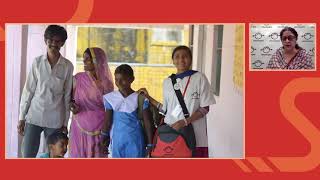
Safina Hussain from Educate Girls and Johan Roos from Hult International Business School discuss how education is shifting from knowledge-focused to skills-focused models. Hussain's grassroots program in India achieved a 92% return-to-school rate for out-of-school girls within three years. Both warn that scaling education through technology risks eroding holistic learning and widening equity gaps.
Chapters
Welcome everybody. Today our panel is entitled Education 2.0: How Will It Work? That is probably an impossible task for an hour unless I was fortunate enough to have Safina Hussain, who is Managing Director of Educate Girls, and Johan Roos, Chief Academic Officer of the Hult Business School. They both come from very different backgrounds. They both focus on very different audiences. They both live in different parts of the world. And what we decided to do with this panel is to hear their stories of how they view education, what their purpose and mission is in their respective institutions, and then dig a little deeper into those narratives to understand a little bit more about the patterns that we might see, the common patterns between what might be happening in India and what might be happening on a global scale for a university institution. And as we examine those patterns, we will observe that there are some commonalities there. There are some threats. There are some risks. And we're going to end the session with analyzing those patterns to understand what do we think about Education 2.0, and what is it going to mean for us moving forward as a global society. Society. So, first and foremost, I'd like to introduce Safina Hussain. She's the founder and executive director at Educate Girls, and I think the next few minutes that she's going to be sharing her story, you'll be quite moved and quite motivated about the work that she is doing. Safina.
Hello, good evening. My name is Safina, and I started Educate Girls about 12 years ago. It is very linked to my own personal journey. I grew up in a lot of poverty and violence and abuse, and my life changed when, because of a lot of wonderful things happening, I happened to go to London School of Economics and graduate from there, and my life was never the same again. And, and that's what's really motivated me to kind of come back to India and work on this on this particularly difficult issue. And today I'd like to kind of talk to you about that journey, and then also how COVID, the pandemic, has really impacted girls' education, and how can we really imagine, you know, the future. So, you know, I work really far away. I work in very rural, remote tribal areas of India. So I'm actually going to use some photographs just to be able to give you a sense of where I work and what does it really look like for me at ground zero. So even before the pandemic, you know, the world has had many, many problems. We've been battling with, you know, unemployment, we've been battling with malnutrition, so many children's issues. And I truly believe that girls' education, not just because of my own personal experience, but I truly believe that girls' education is that one kind of silver bullet that can help us change the world and help us solve some of the most complex problems that we're facing today. And you really don't have to take my word for it. The World Bank says that girls' education actually impacts 9 of the 17 Sustainable Development Goals. Everything from malnutrition, child marriage, all of these are impacted when girls are educated and impacted very, very positively. Recently, climate scientists have actually rated 80 actions to reverse global warming, and girls' education has been at number 6 out of those 80 actions. And at number 6, girls' education becomes rating— its rating is higher than solar panels and electric cars. So, it's a truly transformative medium if you want to fight poverty, if you want to improve health, literacy, employability, income, any of those pieces, and climate change. And it's something that we just have to do once, you know, just like my own education. Because I am educated, and data shows this, that educated mothers are 200% likely to educate their own children. So it's a problem of our lifetime. If we educate her, she will educate her own children, and we will solve— we will close this gender and illiteracy gap forever. So I work in India, where we have over 4 million out-of-school girls, which is one of the highest in the world. And girls are out of school because of what I call the two Ps: poverty and patriarchy. And wherever you have these two pieces intersect, where poverty and patriarchy meets, you have an exponential number of out-of-school girls. So what do we really do? So at Educate Girls, we essentially work at the ground level, and we work in some of the most rural, remote tribal areas. That also happen to be some of the poorest and most socially marginalized. And once we go into a village, we first find what I call Team Balika. And Team Balika— Balika just means the girl child. So there's a team that we create, an army of volunteers that we create for the girl child. And these are young, passionate individuals from the same village. They are hyper-local. They do want to bring about a change in their village. And what we do is that we find them, we train them, we mentor them, and handhold them very, very deeply. And then with their support, we actually go door to door in a village, and we find every single girl who's not going to school. And this is an image of one of our door-to-door surveys. And you can see the little children peeping out from the doorway. And what you can't see here is that we do the door-to-door survey in a really smart way, because most of our field staff have smartphones, and we have our own app. And the data that we're collecting is actually very clean and comes to us in real time. And so because of that data, we're able to actually map where the hotspots are, where exactly are the out-of-school girls located, because each of our villages is also geotagged. And based on that, we're able to build plans to bring them back into school very, very quickly. And essentially, how do we bring them back to school? It's a lot of meetings. It's village meetings, neighborhood meetings, individual counseling of parents, and it can take anywhere from 3 weeks to 3 months to actually convince a parent to send their daughter back into school. And we continue to do that. We don't let it go, and we actually stay in a village for almost 3 years minimum to make sure that that level of the enrollment gap actually gets closed. And it's not just about the community mobilization meetings, but we also then handhold the entire process of enrollment. Whether it is the documentation that's required, because these are all first-generation learners. Their parents have never been to school. So you really— it's a very intense approach in terms of being able to bring them all back into school and make sure that that enrollment actually happens and takes place. But enrollment is really the first step. We then work with the school administrations to make sure that the school is girl-friendly. Does it have a toilet, a separate toilet for girls? When I first started working, only 40% of the schools that I worked in had a separate toilet for girls. And really, I have two daughters, and I wouldn't send them to school if there wasn't a bathroom for them to be able to use. So sometimes there's a huge gender lens missing. You know, there's infrastructure which is not very girl-friendly. So we work deeply with the administrations to make sure that the schools actually are in a shape that the girls will stay in school. And then finally, all of that would be absolutely useless if we didn't focus on learning. And so our Team Balika volunteers are trained in running our supplementary learning curriculum. We're building foundational skills in Hindi, like literacy, numeracy, Hindi, English, and math. And everything is done in a very play and activity-based way to make sure that our children are actually learning to read and write more than just attending school. So our outcomes that we follow are identification of out-of-school children who may not be on the radar, and then making sure that they are enrolled, they are attending and retained, and that they are learning. And over and above that, what we also do is we do a life skills program for our adolescent girls. These are girls in the grade 6th to 8th grade, and also have a program working on secondary completion. So it's kind of like an end-to-end holistic program. And that's essentially the model. It's really finding this Team Balika volunteer and with their support finding out-of-school girls, connecting them back into school, and make sure that they are staying and learning. And what do we know after— you know, I've done this for like 12 years, and we know that this model works. And our last third-party evaluation report, when it came out, the evaluators said— I mean, they showed that Educate Girls' model is able to bring 92% of all out-of-school girls back into the school system over a period of 3 years. And which is really— because we are working in the hardest areas, it's a big validation. And secondly, in terms of learning, our children actually gained almost an additional year of schooling compared to the average student. So we know that the model works and works really well. I mean, our evaluation was a gold standard RCT. And we also know that the model is scalable because we are already working in over 14,000 villages. We know that it is smart because of the heavy use of data and technology. And we know that it is sustainable because it is community-owned. Our team balikas are from the community. So the entire model is owned by, by the community volunteers themselves. And secondly, it's sustainable because it— we work in partnership with the government. So it's a very systemic model. We're not creating a parallel delivery system. We're actually working in the same rural government schools that are there and then making sure that they're actually, you know, working much better for our children. And so over a 12-year period, having built this model, knowing that it can scale, knowing that it has a very, very high impact, we actually wanted to take all of our data and analytics and really dream big. And we were like, what can we do? What is, what is all of this information really telling us? And what we saw was that India, you know, India is a very, very large country. I mean, you can call it a subcontinent. It has 650,000 villages. And, but we had a great insight. We knew that 5% of villages in India actually actually have 40% of the out-of-school girls. So we built this big audacious dream. We said, you know what, in 5 years, we're actually going to get to all of these 5% of these villages, which have this largest chunk of the problem. We're going to saturate these villages and then make sure that we can actually close the gender and literacy gap forever. We'll work here, and we'll deliver the results that it takes for our girls, which will mean that we would bring back 1.6 million out-of-school girls back into the system and make sure that they're staying and completing their education. And so this was this big dream, big dream. And it was all kind of going well. And then the pandemic hit. And it was crazy for us. And I wanted to show you 3 more, 2 or 3 more pictures, and just to give you a sense of what it really did for us. First and foremost, the pandemic actually makes girls' education much worse. It's going to set us back in a big way. Here we were dreaming such big dreams, and we know the data from Ebola, the number of out-of-school girls after Ebola, the data that came from Africa said, you know, that number tripled. We know that gender-based violence goes up. In the first 11 days, our helplines had almost like 92,000 SOS calls from women and girls. We know that, you know, so many— because the pandemic has made the two Ps, poverty and patriarchy, much, much, much worse. And so the first thing that we did as the pandemic hit is, you know, what I call, you know, to tackle the two Ps, we use the three Rs. And I'm only going to describe the first couple of Rs. But the first R was about relief. And that relief was really critical for us because we know— and the relief was about hunger because the pandemic, we had a very, very strict lockdown and we had extreme hunger in some of our villages and for some of our children. And the thing, you know, not many people realize is that because of patriarchy, women and girls are some of the last people to eat in a house. You know, again and again and again we see this, that they'll serve everybody and then they will sit and eat. So when you have a situation of hunger, when you know that food availability is an issue, we know that our women and girls would go hungrier. So first and foremost was relief and was really the big focus was on relief. And you can see the picture here, we actually did not just delivering food to the most remote villages, but in many cases we hired even like boats to make sure that we could get food to that last most remote household. And really dropping food off at somebody's home. And we covered almost half a million individuals just with our relief effort. And this was the first 3 months of the pandemic when it hit. Between like, you know, starting March, we were like, this is what we really, really need to focus on. The second piece, as we— after the relief phase of the first 3 months, we actually focused on recovery. And recovery for us is that, you know, our children will disappear. They will never come back into the school system because they haven't been. Anywhere close to teachers, to learning, to the school since March. And so the other big piece that we did was that we held actually community-level learning camps. And this is just in your neighborhood. And obviously, these are only held if and when it is safe to do so. So we have all of this criteria for mapping. You're in a red zone or in a green zone or whatever. And wherever it is possible, only with the permission of the government, the community, and given the COVID situation on the ground, we've actually been running— very neighborhood-based learning camps. And the main reason being that we want to be able to support our children in this very, very anxious time. This is a difficult time. There is unemployment. It's, you know, financially difficult. Emotionally, it's very hard for the children. And, and I remember the first time I started teaching in my village, and I, I teach tribal kids and You know, I didn't know where to go. It was the rainy season, and one of the tribal ladies, Kashi, she gave me her home. So I would sit in her home, and I would teach the children inside the home. And she kind of felt like the room was too small and we couldn't do social distancing, so she actually moved her bed and everything out and put it where she cooks food, like in the area next to the little room. And that's how we taught, like, you know, day after day after day, just to make sure that the children were actually getting— stimulation, the children were engaged, the children felt like there was somebody to talk to. And currently our Camp Vidya's, these kind of community-based learning is actually running for almost, you know, over the next few weeks it will get to about 100,000 children in the hardest to reach villages. And so this is, I just wanted to give you a sample of this is what we were thinking in terms of relief and in terms of recovery. But I think the big job for us is really going to be, how do we reimagine? How do we kind of sit back and look at everything that's happening and say, how can we build back better? And so on that note, I will hand it back to Tony.
Well, I promised you a moving story. And Safina, that was incredible. I think it brings to light just the passion around education and the purpose of education. And it struck me when you were speaking, it's kind of like you were rethinking schooling, you figured out a way to do it at scale, you're leveraging technology to get smart about doing it, you're building it in a sustainable way because the community's involved. Somebody who's literally moving their bed so that you can create space, socially distant space, for education. It's something we all believe in, and it feels like you've tapped into that belief and created an ecosystem that could really move. And we'll get on to, so what do we do now about COVID afterwards? But thank you for sharing your story. So now, Johan has worked at many, many schools and is— I've known him for a long time— and is quite the innovator. And if you know anything about educational institutions, they tend to move slowly, except when Johan's there. And so he's now going to share his story coming from a different place, a different angle, a different audience, a different part of the world. In fact, he's all over the world. But he's going to share with us a little bit of a perspective on how education, you know, might be changing when we're talking about university education. So with that, I will pass you to Johan Roos.
Thank you, Tony. Yes, I have worked at many schools, but before I get into the schooling part of it, let me just say that I'm brought up in Sweden in a pretty homogeneous society at that time, but I was part of a family which was always welcoming and receiving a lot of foreigners from all kinds of places in the world and all kinds of skin colors and all kinds of background. And I really— that made an imprint on me. So it was perhaps not surprising that eventually I choose to get a doctorate in international business and then had a career in, in sort of academia working in different countries. But that idea of international being the default and the national being more of a special case has lived with me since my upbringing and my education. So that's sort of more of a reflection on me. I love international, I love global, and I try to walk the talk. Over the last 5 years, I've had the privilege to work with Hult International Business School. It's a very different school from what Safina talked about, but Hult is aiming at attracting students and educating students from all over the world, all over the world. We have campuses in major business cities such as Shanghai, Dubai, London, Boston, and San Francisco, and occasionally New York during the summers as well. The idea is to take people and make them even more global. The school was set up and really founded by one of the most successful entrepreneurs of Europe, Mr. Bertil Hult, hence the name. He founded Education First, also an education company, but we are a non-for-profit foundation. So the idea for us is to bring in people, and we have people from about 150 nationalities across the world, and take them even further in their idea of being global citizens. Now this is our web page and it says a business school ready for anything, and that is in a sense our promise also to the students. We should educate you to be ready for any— anything. And we have a bachelor program, we have specialized master program, we have MBA, EMBA, and we also have a doctoral program as well. So we're a full-fledged business school, about 4,000 students School of Significance accredited and all of that, but a lot of people still don't know us, and I think it's because they've heard of HALT in a different way, namely the HALT Prize. And this is our attempt also to work for the benefit of the world, broader than educating some of these people that are very global. This is a photo from the HALT Prize final ceremony where President Clinton is handing out a prize of $1 million, which which is given out by Mr. Holt to a winning team. This year we have 3,000, 300,000 students competing in the Holt Prize competition. And this is about social entrepreneurship. This is about making money while doing good. And this is an outstanding competition. It's the world's largest student competition. And as you can imagine, it has students from all over the world, from all kinds of disciplines coming together to solve the problem, such as for instance, congestions in major cities in developing world, solving energy problems, solving water problem, solar energy on the countryside in Africa, etc. So a lot of people know the Hult Prize, but it's actually part of the, you can say, the family of Hult International Business School. We are a business school like many other schools, but this is how a classroom would, would look like before the pandemic. We would have people, as I said, from all over the world meeting, talking, doing some exciting things. And of course, we, like everybody else, and in particular us, you could say, who are catering to international students, we're of course dramatically hit when the pandemic struck us all. So the— today we have to change, and the center figure here is a finger of somebody, of a professor, looking out over a partly empty classroom but with also big screens behind there. And this is just to illustrate, of course, the idea of hybrid learning, that you have some people in the classroom distanced from each other and other people, for instance, on Zoom coming in from anywhere, but also being part of the education at the same time. The background is really again our student promise to— for, for anyone coming on board, namely learn without limits. We call it that way, limitless learning, and that is the idea that you should be able to have education even if you're from home or you're in the city where our campus is or you're in the dorm wherever, to come together and do this. And like other schools, we had to shift very quickly in March, and we shifted before we were allowed to do it because we knew where it was coming. But within a week, all our campuses were online, and we were immediately investing in very advanced cameras and microphones to develop a student experience that is high quality, which is also our promise to our students. So things changed indeed. Now, our mission to start with was to be the most global business school in the world. That was really the, the mission from Mr. Holt, because he felt there's— all schools are regional or local, we need to be global. What has happened over the last decade is that that was sort of fulfilled more or less. So we shifted that a couple of years ago to become the most relevant business school, a business school that was relevant for employers and students wanted to get employment. And behind here you'll see one of our alumni magazine which says Future of Work. It's a couple of years ago. So we've been at this for quite some time and to think about how do we make our education more relevant so that students know what to do and they know some stuff that is appreciated by the job market and they then could thrive based on that. So what we did was to ask in a sense a different kind of questions because it's very easy if you ask students, we ask ourselves, the first question often, what did you do in college, or what did you do at university, or what did you do at business school? So what did you do? And then possibly you could say, what did you learn? What did you know more of right now? What, what kind of knowledge do you have now? But really, what did you do? The question we wanted to ask was, what skills did you learn? So not only what knowledge did you have— and believe me, we professors love to teach knowledge— But it's more tricky to answer the other question. What skills did you learn and what skills are in demand from the job market, which is a relevant question to ask if you want to be relevant. So what we did was to team up with one of these amazing big data companies in the US, this one called Burning Glass Technologies, and they analyze job ads. So we used, you can say, current job ads as a manifestation or as an indicator of what skills students should be needing. And this is, for instance, a— this circle here is a— the synthesis of about 100 million job ads asks for skills. And Burning Glass have put this together in a wonderful sort of building block approach here. So if you look at the center, it says that across the board of education, higher education, you need of course some human skills. You need to communicate, creativity, critical thinking, collaboration, all of this, what some people call soft skills. I, I don't like that, I prefer human skills. I think it's a much better term. Then you need to have some kind of business enablers. You need to be about communicate— this is very interesting— digital design, communicating data, project management, very strong business processes. And then you need also now more and more in the job ads, you can say, for students looking for more management type of jobs or project management type of job, you also need much more, almost like a separate digital skills. You need to be able to analyze, managing, develop, visualize data. You need to have developed some software. You need to be able to understand a lot of software tools now. As well, even cybersecurity. And this is emerging as like skills you need to have no matter almost what education you have. For instance, whether you're an engineer or whether you're a business student, and sometimes even if you're in the liberal arts, you need to have this too. So this is a very strong signal for us. So we started to look at millions of job ads for, you can say, for jobs that our students typically would like to have when they graduated. And we started to work through an elaborate scheme, and this is another one, not only what skills do you want to have, but also what levels do you have. And this is taken from the Lumina Foundation, another big non-profit in the US that has set itself out to understand, let's talk about levels of skills. It turns out there's 8 levels of skills in their framework, but that you start as a novice and then you become an expert and a master. It should be the other way around, you go up. But then it's like within knowledge, you know something, but also your skills, you have specialized skills, you have certainly interpersonal skills, you have a whole range of skills that we cannot see on this board here, but it's just to give an idea of how we started to think about curricula to be even more relevant. So we started to sketch down what about our BBA, what about our master program, what about our MBA program, what should be the core skills for these people? What should be some of the domain skills or specialized skill? And we started to sketch this. And what we found out by doing this was to say that people who want to hire somebody with an MBA certainly expect them to understand, for instance, what business strategy is all about and also have an idea of what macro, perhaps, and macroeconomic or microeconomics and all that. That's what you need later on, not really when you're a young graduate from business school. Why do we teach them strategy? Why do we teach them macroeconomics? Well, you can say from a liberal art perspective, yes, but it's really not about any skill nobody asked for. So that's why a lot of employers are saying great people, wonderful students, but they really— they know some stuff, but they're not able to do a lot. So we need to teach them ourselves the skills. That's what we're doing now. We're changing that, and that is our mission to become, you can say, more relevant. So this is a school that is totally focused on this, and I'll be happy to go back to you and talk a little bit about what happened when COVID struck and how has that changed our thinking now.
Thanks, Johan. As a strategy professor, I have to smile a little bit because, you know, somebody who's going to become a chief strategy officer at a company, it's going to be a long time. And so, so this notion of relevance, I think, is really important. It struck me that in Safina's story, um, the relevance of education is, is almost about transformation. And, and, and, and that, you know, um, particularly in, in a place like India, the opportunity through educating girls to address all of these world issues is massive and really important. And it also strikes me that, you know, sometimes when we get into the educational world and we get wrapped up into our own kind of institutional constructs, we are over-rotating on knowledge at the higher level. I'll speak for myself, I won't put words in Johan's mouth. And we're not— we're kind of missing what's really relevant, what's really important for business and global business and society today. And so in a way, sometimes we get out of phase because we think too much about topic and not enough about task. And it struck me that in both contexts, even Safina, you mentioned particularly during the, the kind of the recovery aspect, that, that there's a life skills piece and there's a— education can play a role in getting back on track. Now, you teased us and you gave us two of the ORs, but I'm wondering if you could reimagine with us a little bit, uh, um, where are things going to go from now? We're all very captured by the story and by the audacious goal that you had set, and that you'd set up the 5 S's, right? So everything was there in terms of the the schooling and the systemic and the sustainable, et cetera. And yet I think it's fair to say that the two Ps are being exacerbated by COVID. So can you reimagine with us how the goal we all wish you will achieve can happen through reimagination?
Tony, thank you. Thank you so much. Yes, I didn't mean to tease, but yeah, I know I covered the relief and the recover because the recover is really the present right now. But you're right, I think we are spending a lot of time at the team level and even with my board just kind of reimagining what will it be like when schools reopen or, you know, post-pandemic. And there are a few things. So we actually did an exercise to say, you know, what is COVID? Because COVID is also showing us, it's actually teaching us, it's an incredible time because it's making a lot of things visible that were there in the world but we were not seeing them in the right way. And I'll give you some examples. So at least just in our experience, what we're seeing is the opportunities, as it were. And I have to say, a lot of these opportunities are very relevant for our experience because of the huge scale that we work at. And it's showing us a way that we could scale much deeper quality, even when we get to thousands and thousands of schools and villages. With the increased use of technology, for example, you can make your training just in time. If I need to run a camp, I'm actually running very modular training bits, you know, because my community volunteers are essentially, you know, 12th pass, just very passionate individuals. But now I'm actually, you know, earlier I used to bring them in, we would do a few days of training and then they would go back. And by the time they had to implement a camp, a lot of it they would have forgotten. But now with WhatsApp, with so many of these instruments, I'm actually able to do very bite-sized work saying, listen, I'm going to help you tomorrow. Let's teach this. This is how we're going to do it. And I can do it at scale because of technology, because of the use of data. So I think just being able to do just-in-time training. I think we're also getting very good at using all of this data and analytics in terms of precision targeting, precision targeting of where the intervention needs to be and what intervention needs to go into which which village, for example, even for our relief, because we had a lot of data, we were able to pinpoint those villages that were really at highest vulnerability when it came to hunger. So I think there's this just-in-time piece around training. There is this modularization, making everything bite-sized. I also feel that for our children, even though we're doing, you know, when we're doing Hindi, English, and math, there is room to really teach, you know, what we call teaching at the right level, which has shown again and again and again. To be highly effective in terms of being able to build learning outcomes for first-generation learners. And technology allows us to do that. So actually, even at very large scale and for very poor children, you can do much more of this sort of personalized learning and bring to that child what that child needs today, which is fantastic, which is just so brilliant and aspirational for us, you know, that we're able to actually kind of to do that. And I think it's also shown us on the other side of it, like I was giving you Kashi's example, there were people in the community that we were not really building, you know, as allies for what our children need. And just like Kashi gave me on home, so many people walk by my classroom today. There's a monk who walked by and he said, you know, give me a topic, I'll teach. There's so many people. There's a guy who runs a small stationery shop, and he's like, "Let me print all the material for you." And there's all this other stuff at the community level that we had never really tapped into, but that we're seeing that there's so much opportunity to take people along this journey and really tap their energy to bring it for our children's future. And the other piece that I feel— there are two other pieces. One is I think we're also listening to each other more. You know, the pandemic, when we were doing relief work, we actually had a lot more conversations with the government because we were jointly doing relief. We were jointly because it was just so unprecedented. And the last thing I think, you know, is that it's also making assessments kind of really— we can do a lot more rapid assessments and therefore do sort of immediate digital remediation for that child. So we can also move away from this kind of high-stakes end-of-the-year kind of assessment for the child, but really make it— so I think these are some of the brilliant, brilliant, brilliant opportunities that we're seeing that I think will allow us to get to deeper scale, sort of depth and breadth. It will allow us to do for the future of our children. But I don't think that they come without risks. And I think we have to also be aware of the serious risks that some of these approaches, as we reimagine, will pose. So I'm going to bring it back to you and say, do you want me to talk about the risks now, or would you like me to, you know, hold that for a little bit?
So maybe we'll hold on risks for a sec because you've kind of highlighted some of the key learnings and how we're reimagining. And Johan, where we kind of left your story was, in seeking to become the most relevant business school, it became about skills and doing maybe more than knowledge and knowing, if we will, which is what we think about the traditional higher institution. So, so could you, could you round out that story, you know, in a COVID world? Obviously now we're in a hybrid. I could very much resonate with the picture looking at a series of screens as opposed to a classroom. How is this playing out for you now when you're saying, okay, we're going to orient ourselves towards skills that matter now. How does that play out in the institution? You know, do you still have a strategy class? Do we learn in more small bite-sized learning, as Safina alluded to? Can we personalize learning more? Can we work at different levels? You highlighted 8 different skill levels. How does this operationalize for you, and how has COVID perhaps accelerated some things and you've learned more? But also, we'll then get to the risks afterwards. How's it working out?
I think, first of all, it's working out very nicely, if I may say so, because we are pretty fast and we do what we like to do and we don't have to ask for permission a lot. But, um, having said that, everything I've talked about requires a lot of rethinking, and this is also pre-COVID. It's rethinking on what kind of content should we teach, what kind of pedagogy should we use, and what kind of assessments are meaningful, a little bit like Safineh was working on some of these things. So shifting from sort of a knowledge at the forefront to a skills at the forefront perspective actually changes everything in education. And now I haven't talked about online. It is just that shift. And you could say, even if we have been hit by the pandemic now, this still holds up very nicely. And, but again, professors will have to work harder, you can say, to make this happen, that's for sure. But let me just mention also that I just read this report from my good friend, the CEO of Burning Gas Technology, Matt Siegelman, called Good Jobs in Bad Times. And it turns out, if you look at the data now, and I just got this last night, look at the data, it's so obvious now that there's you know, a lot of people want to have a bachelor degree, but there's very few openings, at least in— you can say in the industrialized world, very few job openings. And those jobs that require less education do not really value experience. So it's a little bit tight for those two tracks. So we have to think differently, and then the skills perspective is accentuated. And I just talked to a friend before this event saying that it seems like his daughter will have to study anything plus computer science something, you know. So there is the whole digital is just taking on a new dimension and it's skill-based. Then it's perhaps not surprising where you have a totally new phenomena, namely that Google is entering into the higher education market with Google Career Certificates with, you know, 6-month short, you know, bit-sized type of skillspilling. You have LinkedIn doing all— everybody's running into bite-sized skills education. So, so that's clearly one, one trend. Adding to this, there's another trend which is about big corporations wanting to have their own higher education degree. And we just formed a partnership with Ernst Young, which is hundreds of thousands of employees getting access to sort of what we call a tech MBA. It's a totally new thing. And it's sort of, you can say, a manifestation or an illustration of what will become stackable degrees. It will become a number of badges and certificates being stacked, checked for quality, and then eventually you can take a degree in this more traditional sense. So those are some of the things that are happening. Of course, that's online. So there is a lot of things happening right now, but I'll stop there.
Great. So the pattern here— we said we'd have two stories with patterns— is that education really matters, that it's changing, its nature and its form are changing right before our eyes, perhaps accelerated by COVID. And I think when we think about a big disruption like COVID, there's kind of two types of change that happen. There's the accelerated/decelerated change, so things happen faster and people do things more online digitally faster, you know. So we, we thought my mother now orders groceries online, she would have never done that before. And now she wonders why she never did it before, because she had to get over the hump, right? And there's other things that will slow down, like travel is an issue at the moment, right? And then there's paradigmatic. So it's almost like while you're busy dealing with the accelerated change, the actual nature of education itself might be changing before our very eyes, right? So there's clearly opportunities, and you both highlighted it in kind of this unbundling of the traditional curriculum. There's the modularization and the bite-sizing. There's the community aspect, Safina, that you said is I don't need to kind of bring educators into a massive 5-day training in Mumbai. We can do a 15-minute prep, you know, with a monk over Zoom ahead of he or she, you know, doing something 5 minutes later. And so there's this kind of, in one way we're disaggregating things down into bite-size, in another, we're organizing it in context. So if content was king, context is the kingdom. People need to know this now. So let's emphasize that and let's spin that out. So what I'm seeing is it's, you know, I still joke about why do we have summer breaks? Well, we have summer breaks because in the old days, that's when people tended to the to farm. So we have this institutional legacy of— that doesn't make sense anymore. And Johan, I can see on your side, you're really pushing the same kind of concept with bite-size, with kind of badging, learn as you go based on what you need to know and do. And then suddenly your portfolio adds up to, you know, a recognition from an accredited institution. And a place like Ernst Young seeing value in the fact that you see it that way, as opposed to No, come to the ivory tower. We will put you through school. And then when you're done, you can go off and work. And so we're seeing this kind of atomization. So that all sounds fantastic. That's like great. Safina, what are the risks? What are you worried about? So this all sounds very good, but are there things we should worry about around the corner that you're seeing?
Yes, I worry. I worry about a lot of things, especially because I work with really vulnerable children. And so I think there is a risk of making education too modular and too transactional and not holistic. And I think our children need holistic education. I think if you had to even talk about our own children, We need children to go into school to really learn how to be a human being, how to interact with others, to have that socialization, to have empathy, to have values, because that is what will really build a civilized society, not necessarily just having the skills. And I worry because also, like, I mean, we did, you know, the world's first development impact bond, and we got some fantastic results, and we dug deeper, and some areas we were seeing very high results. Compared to others. And we dug in and we dug in. We said, what is different about these villages and these classrooms versus others? And you won't believe this. And this has happened to me in program after program after program. I've just done another— first time we did a pilot for secondary completion for girls who have been dropped out or out of school. We do camps for them so that they can actually pass the 10th grade. It's kind of a remediation through residential and other bridge camps. And what we would find is that where the tutor was from the same village, you will get a higher pass rate. It's as simple as that. You know, wherever it was a local resource, it was hyper-local, the person was invested in your success in a, in a human way, right? It's just before the exam, they knock on the door and say, come, let me help you. And you, you actually saw much greater. Um, and so I don't I think too much modularization and too much transactional skill-based stuff, you're going to lose a lot of things. And our children learn by modeling other people's behavior, by having role models, by, you know, and it is incredibly, incredibly important that education doesn't become just about skills and competencies, but at the root of it is values, is equity, is It's inclusion. It's all of these things that will make them whole human beings is what I think, right? It will build internal emotional resilience to be able to deal with, you know, future pandemics and future, you know, things that may come at them. And just making it about skills is actually going to take us, our children, away from that. And it's going to take them away from being able to build that internal strength. And how do we make sure that we continue to kind of— and I also worry a lot about this increased digitization. We already see it in our society. It's about polarization, right? Everybody's realities are so kind of hyper to their sort of little echo chamber. Will these stackable degrees run by corporates also make that problem worse? And also, is the job of education— I think this is a fundamental question for me— is the job of education building cannon fodder for the corporates, or is it about building strong individuals who are going to be able to look at humanity's problems that are coming up, that are currently there, and find human-centric solutions to those problems? So that's, I think, really the kind of big risk. And I also see, will it exacerbate the divide between the haves and the have-nots? We're already seeing this. In the Western world, a lot of Children have gone back to school in private schools and charter schools. And the government schools, they haven't. I know that most of my children don't have access to devices. So is it going to further completely in a way that they'll never be able to bridge that kind of a divide? So those are things that I really, really worry about. And I also really worry about that the universities of tomorrow are not going to be competing against each other and their own Ivy League They're going to be competing against WhatsApp University. And what is going to be the role of education in helping our children to realize what is right from wrong, what is true versus false? I mean, all of us fall for that today, right, in terms of what we see on fake news and WhatsApp news. And those are core pieces that I think we need to teach our children and build their resilience and build that inclusion. And by inclusion, I mean special needs kids, I mean girls, I mean poor, you know, below poverty line children, first generation learners, and we will have to reimagine keeping all of them in mind.
Wow.
I was just reminded of Alvin Toffler, the futurist who wrote a number of books, Future Shock being one, and in that he talked a little bit about, you know, we used to think about education as the three Rs: reading, writing, and arithmetic. 'apostrophe,' for goodness' sake. And he said, well, actually what it really is, is rules, regulation, and role. It's a training device for you to figure out where you're going to fit in society and what your lot will be. So, in a way, education kind of becomes the machinery, if you will, to kind of spit people out. And I know, Johan, this is right up your alley because we've talked about this a lot before, is on the one side, we are all nothing without education. However, if all we educate is what people need to do right now, and we incentivize that through the bite-sized, modularized, etc., etc., we, we miss the empathy human piece. And it seems almost in a world where we're AI-organized and we can analyze a million jobs and we we can spit out the skills and we can spin up some e-learning and we can slap on some VR goggles and we can do all of that, that we might actually be accelerating even faster than the first time around. Do you have any thoughts on that? Well, I know you have thoughts on that. So share your thoughts on that with us.
Well, it will not be a lot different from what Safina said. When you say cannon fodder for the corporate, I come to think of the Pink Floyd video of The Wall. If you haven't seen it, you can watch it. It has a good illustration of exactly that. But, but of course, there is a— it's a really tricky balance to strike. On the one hand, there is a demand for skilled and knowledgeable people who are also good and decent humans, right? That's— we know what the role of education is. On, on the other hand, you can say there is also a demand for even more reflective, less stressed people who can take on some of the bigger questions, of course. And this is not a new problem, this is not a new balance we need to strike, you know, even— yeah, this is, I'm sure, in Vedic readings as well, but in the Greek reading of philosophy, you'll find this in Aristotelian ethics, you know, the whole idea that you need a good education is to become a— or leaders will have to have good education, and that means they should know about the natural world, you know, you can say the laws of nature, episteme. They need to be cunning and smart, street smart. They need to have the skills to survive, right? That's metis. And then, but they also need to have sort of the capacity to go beyond their own egoism. And make decisions and take actions that are good not only for them but for the community and world they are part of. This is sort of an extreme simplification, and of course we must not forget that one. And the purpose— and that's why universities were organized the way they were before— and a good education was a little bit of everything, a little bit of the natural sciences, social science, the humanities, and a lot of sports and all that, because that practiced some of the moral judgment you have to and we, of course, every school and every university trying to retain that and keep that and is keeping it. For instance, in our curriculum, we pay an extraordinary amount of attention to how do we kind of work that other part into with projects and what kind of pedagogy and how do we do that. So develop, we develop these people that are not just the first two, but also have this what's called practical wisdom part. Of it, of the education as well. It's very different, it requires very different pedagogy, and but it's important to do with the girls in your school, Safina, and with the future business leaders in my schools and in other schools as well. So of course it's tricky, but we have to do it, and I've written a lot of this, and I take an active role in the idea that yes, STEM, STEM technology, all of this stuff, but don't forget the humanities. And other people have written about this, you know, there's, you remember Yuval Harari's book Homo Deus? He talks not about, not only dismantles the humanities or humanism, he brings about an idea about dataism where everything is controlled by the big tech firms. They know our feelings before we know it ourselves. What kind of world is that? Well, I wrote this piece about techno-humanity, human is. If algorithms know all the answers and make all decisions, who is the leader then? Or who is the person?
Yeah, I couldn't agree more. I think that, um, you know, I feel we're running an even higher risk today than we might have in the past, uh, of, of losing, of losing our humanness to automaticity. Because the algorithms today, as they are working, are kind of about commanding our attention to control our consumption kind of thing. That's the algorithm. The algorithm is really a commercial algorithm, and that's understandable. They're business people. However, if that becomes— if that same algorithm is what drives education, and the unit is a bite of skill, and we're just kind of little mice taking bites of skills without any acknowledgement of the fact that there's a maze, we are in trouble. So I feel we have, for Education 2.0, we have a remit to remind ourselves that we are the entity on the planet that has the capacity to have language to reflect on our past and to project to the future and to make that real. And that part of what we as educational institutions, whether that's in the most rural village in India or the most shining building in Shanghai, that we never lose sight of that. Because if we do, we've missed the point of what Education 2.0 is. And we will lead to more polarization and haves and have-nots. Nots for sure. So perhaps I could close this with a wish, and the wish is that maybe 5 years from now post-pandemic, one of Safina's village girls ends up in one of Johan's programs. Wouldn't that be good? With that, I'd like to thank Safina Hussein and Johan Roos for a stimulating discussion, both coming from different places. Lots of patterns of similarity in terms of how we can do— leverage technology to kind of automate things. But let's not forget, at the end of the day, it's all about the human being. Thank you all very much.
Thank you, Tony. Thank you, Safina.
Thank you, Tony. Thank you, Johan.
More from Mark



Stanford Professor Omer Reingold on what it really takes to build fair AI systems

Stanford Professor Andrew Maas explains why the future of AI will rely entirely on humans


260225 0840 Opening keynote Understanding the future as it unfolds the power of megatrends




