10 Mistakes That Made Us Successful
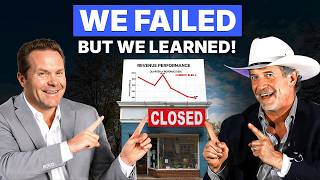
Mark J. Kohler and Matt Sorenson share ten mistakes that led to their success: mismanaging tax deposits and owing the IRS, shutting down a title-insurance business, hiring and firing missteps, and reinvesting all profits instead of funding retirement accounts. They stress that recognizing when to cut losses and living below your means matter more than avoiding failure.
Chapters
So many of us feel like we're losers. We make all the mistakes no one else does.
We see all these perfect lives on social media and you don't want to feel like you failed. The last escrow officer we let go and she was like, "Matt, I was been waiting for you to lay me off so I can just go get unemployment. What took you so long?" I was like, "Oh my gosh." I owe the IRS.
I had to do a payment plan and I was so embarrassed with my dad. I was like, "Uh, I was supposed to be better than this." Start strong.
And by strong, I mean bad mistakes. Welcome everyone to the Main Street Business Podcast. This is Matt Sorenson joined by the incredible Mark J. Kohler live at Main Street 360, baby, in Dallas, Texas.
Yeah, we, we found a room where no one was and we thought we'd pull it off.
Yeah. Yeah. Let's just do, let's get on the stage.
Give no idea. Show up.
Yeah.
Yeah. This is gonna be good. So this is a, this is a very difficult podcast because we have to tell you mistakes we made. This is a tough one.
Yeah.
You've got to be very vulnerable.
Yes.
Yes.
We're going to go deep on this.
Yeah.
So we're going to go in 10. And are you going to want to be the leadoff hitter? I know you've got 10 over there. I've got 20.
All right.
So we had to whittle your list down here.
Yeah. The biggest mistakes.
All right.
All right, so 10 mistakes that made us successful, because that's where you learn. Yeah, you know, you learn in the, in the fur— the fur— the fire. The fire is fire. Okay, I will go— wait, are we leading up to the worst? So we go with the—
I think start strong. Start strong. And by strong, I mean bad mistakes.
Okay, I— all right, I'll do a bad one. Okay, I gotta— this is A lot of people, those listening here, and let me say this too. The point here is that so many of us feel like we're losers. We make all the mistakes. No one else does. And we see all these perfect lives on social media and Mark Kohler, Matt Sorenson, everything they touch turns to gold. Not true. So you have to give us some grace and just, and the beauty is you get to know that You're not alone. So first one for me is tax deposits. I, um, there we were, we were rolling, we were making money. I think you remember the year we were just killing it. And I was like doing some investing. I thought, okay, I'll just catch up on my fourth quarter tax deposit in the next quarter. And, and, uh, of course I get going, I get crazy. I'm like, oh yeah, things are rocking. Then a couple quarters go by and all of a sudden, the business takes a little turn, I don't have the extra cash, and all of a sudden I'm like, ugh, I owe the IRS. And so I had to do a payment plan, for like a 3-year payment plan, keep making new deposits, but it caught up on me, and a lot of people, they think IRS problems only happen to them. We've had so many successful clients that just, Get behind the 8-ball with the IRS.
So yeah, I mean, we all hate the IRS. No one likes sending them money. Yeah, but I think they are the last creditor you want. Actually, I think they're second to last. I think the last creditor you want is the state you didn't pay. Yeah, the state tax enforcement agencies are gonna move swifter and be on your ass faster than the IRS. But the IRS comes knocking, and of course, and I've known business owners, you know, close business owners that I know that like haven't got their passports reissued and they've had to miss like family things and things like that.
That's right. You can't get a passport when you're behind.
Yeah, because of that, those types of issues.
So I don't know how Jason Bourne makes it all over the world, but you know, he's in, he's in Treadstone, bro.
Yeah, he's got to get Treadstone. You get, you need someone in the CIA pulling for you.
Blackbriar, all of it. Yeah. Yeah. Um, and the moral of the story, so with each one we'll have a moral of the story. My moral story is Take that 10% of your gross, 20% of the net, whatever it is, have a bank account. If you've got your bank you normally bank at, so if you bank at Wells Fargo, open a bank account at Chase, and that's where your tax deposits go and send 10% every month. Just forget about it. Then when it's time for quarterlies, you'll be okay. So even if you're like, uh, I need to do this or do that, do not Pay the IRS first. Ooh, who was it? It was Chris Rock that has that one. That's so funny.
No, it was Kevin Hart.
Oh, that's right. Kevin Hart. He got in trouble with the IRS.
Yeah. He got in trouble with the IRS. Yeah. He explained that he just takes half of what he makes and he's like, that's my money. The other half of the money, that's not my money. You just made $1 million. You made $500,000. You did not make $1 million.
Yes. So get it out of sight.
Yeah. And I think that's hard for business owners. We, you know, especially you're starting, you're new to this. You've been scraping by, you're starting to have success. You want to reward yourself or even that money has been reinvested in your business, like, but it's not an expense yet. And so that, but that cash flow is gone. They could otherwise pay the IRS. So it's very common for sure. So if you're in that situation, like Mark was, and I've done that too, I've had to do installment agreements at the end. And I've, I always like, I love like that. What is that? The 180-day-to-pay one. I've had to do that a number of times where they just like, you just get it automatically. It's 180 days and they'll let you pay. Without any like collection stuff.
So don't call Farrah. That's the rule.
Yeah. You do not want to have to talk to her.
Yeah. Yeah. It's bad. So no, she's sorry.
If you get to Farrah, it's bad.
Yeah. Our IRS fighter.
She's awesome.
Okay. Number 2, what do you got?
All right. I'm going to go on the business side here. So I'm going to talk about a business we started and closed. So we had a company called Investor Quality Title. We had the URL for IQ Title.
It's pretty good.
Um, so this is back in 2006, I want to say. We know, probably 2007.
If you could walk and chew gum, you could make money in real estate.
Yeah, it's 2007, is a great time. We had so many real estate clients at the time, real estate investors, developers, and a lot of them were like, you know, we were dealing title questions, and I remember I was talking to some people that had a title insurance agency, and I actually worked at one part-time while I was in law school. I don't know if you know this. And I learned that the title insurance premium, when you make, when you get a, like, when you buy a home, right, there's title insurance. There's what's called an owner's policy, and there's a lender's policy if there's a loan. So there's two policies of insurance, and this is covering title, right? And let's say you buy that policy for $2,000. Well, 70% of that premium that you pay, that $2,000, it's a one-time premium for that insurance policy. 70% of that premium, $1,400 in that example, is a commission to the insurance agent, to the title company doing the closing. Only 30% actually goes to the insurance company for the actual policy and risk.
Excuse me, there's not that many problems with title? Yeah.
Well, that's the thing is title insurance is one of those industries that has like the lowest loss rate. Like how many of you have ever made a claim on a title policy here versus, you know, auto policy or all these other policies you might have in your life, but we've all probably bought numerous title insurance policies. And so I was like, on the surface of it, I'm like, this is an incredible business. You get to keep 70% of that as a commission. And, and people have to buy a title policy when they buy a home. Um, and the lenders make you get it. So I was like, I need to get into this business. So hence we have this opportunity. And I think anybody starting a business, your first thought is, how am I going to get customers? Right? That should be the first thing you're solving for. Once you figure out what you're trying to sell, how do I get customers? Well, I'm like, our law firm has these, we're talking to them every day. Let's just do their closings. So we ended up hiring 2 escrow officers, one in Salt Lake City.
We were.
Both in Utah at the time, and then one in southern Utah in Cedar City where we were, and, um, started running that business. Now we started making money pretty fast, actually. Yeah, real estate market was great. We had good connections. We were networking with realtors, and the market took a tank. Yeah, and the real estate market, we went through the GFC. Now at first we were super nimble because, and we, and we actually did well because we were doing short sales. And, um, and a lot of the big title companies like Fidelity and First American, they would be like, we don't do short sales. They're a pain in the butt. We don't do short sales. And that's where the, you know, the, the bank is, or the bank is basically letting the property go short of the mortgage. Like they're letting the property sell and they're taking a loss. Um, but we're like, we'll do short sales. We know they're more work, but we'd have investor clients. That's kind of the deals they love to do. So, we started doing those.
So, what's the moral of the story?
I'm getting there. I want it. It's too much?
No, I'm just saying. Okay. We've got 9 more to go.
I'm billed by the hour for a lawyer, as a lawyer, for 15 years, okay? I don't think this— you're going to get the full experience.
All right, get it.
Okay.
I love it.
Suspense. Yes. Okay. All right. There's a point to this. Okay. So, what happened in the economy? I'm just giving the backstory because it helps with the point. Is they started getting very competitive, right? The real estate market's cyclical. And I was thinking of that business, and at that time, Mark had a CPA firm, we had a law firm that we were working on together, and then I was trying to do something else too. I was a little jealous, you know. I was like, I need something else, you know. I was trying to keep up with Mark. So, I thought this title thing would be the thing. And I think the best decision in business, and this was, this is the moral story, this was the learning experience, was to actually close the business. Sometimes it's hard to do, but the decision to know when to throw in the towel is sometimes just as important.
That's a good point. Now I see your point because the story went, we tried to keep this damn thing on life support for 3 or 4 years. It was just dumb.
Yeah.
And we could have just saw, as soon as we saw The Big Short, yeah. Pull the trigger.
And at that time I was still in that quandary of, well, what am I going to do? Because we had done that. We were running that business for 2 years. I remember the last escrow officer we let go, Lacey. Lacey. And I remember going to her telling we were going to close it down. And I was like, I felt so bad for her. I recruited her from another title company. Like I gave her big promises and I was feeling terrible. And she was like, "Matt, I was been waiting for you to lay me off so I can just go get unemployment. What took you so long?" I was like, "Oh my gosh." I'm like, I was like, "Oh, I just delayed this for nothing." So here's, I think the lesson, let me, so, so knowing when to throw it in. But for me, I was doing that because I knew, I knew that my time invested in that, cuz we all have capital. We get to invest in things, but ultimately the most important thing you have in a business venture is your time. That you're gonna put into something. And I knew our law firm was growing and we were having success there. I wanted to do something in addition to it. And that's where I frankly decided to do self-directed IRAs. At that, at that point, I'm like, that's a better business. It's not cyclical. It has recurring revenue. I had a niche in that where we weren't just commoditized. We had an edge instead of just the thousands of title companies that are out there in a cyclical industry. That's a one-time payment. And so it was looking strategically about the business opportunity, even though this one is already far along, and saying, I need to reset and do something else. So that was the lesson. So after the—
several points in there. I like the knowing to throw in the towel. We get, we get emotionally attached to businesses and, and you don't want to feel like you failed.
Like I felt like I failed to some employees, to family, like my reputation.
And that's been a lesson learned because we have cut bait on other projects like the 1031 accommodation.
That's true.
We did. We cut bait on that. We realized, hey, that's not— we, we learned some hard lessons. Okay, number 3, time to pay for our sponsor, Rockstar Recovery. No sugar.
Yeah, if you want to be a CPA tax lawyer rockstar like me, drink Rockstar Energy Recovery by Rockstar. I'm like, who makes this? I don't know.
God makes it.
Yeah. Yeah.
It comes right out of the ground.
Okay.
It's really good. Okay. Number 3. I'm going to stick with an employee one. I jumped over to this as soon as you said Lacey, when you let her off, let her go. So, I had this employee that was putting in a lot of extra hours, and I really didn't ask him to. I was kind of like, it's okay. It was studio work. It was editing. We were trying to do some new things on YouTube. But he loved being in the studio, and he was like, Mark, it's okay. I'll da da da. And I was like, okay, I'm not gonna be able to pay you overtime, time and a half. If you wanna stay, it's on you, but I'm not asking you to do it. He's like, it's okay, it's okay. Well, of course, about 2 months later, we started to have some problems with accountability and production and quality of work. And I was like, ugh, gotta let him go. And so just was like, hey, it's not working out. And he's like, he was a little upset. And of course, within 2 days I got a letter from a lawyer. We want all this overtime paid, time and a half plus penalties. I'm like, what the hell? And no matter how you shake hands on it, you have to pay time and a half. And so I learned the hard, hard lesson that with employees, doing the PIPs, performance improvement plans, documenting, paying time and a half, even if they say you don't have to, all that crap, it will come back to haunt you. I mean, just a month ago, well, 5 months ago, 5, 6 months ago, time flies. We had this employee that we thought was just best friends, whatever, and it was time to move on. We thought it was obvious. It was not obvious to him. And man, he filed, was about ready to file a lawsuit, and it just turned into a mess 'cause we didn't follow the little protocol 'cause we thought, ah, he's a good guy, you know, been with us for years. Nope. So do not make assumptions with employees. Follow the employment law to the T. It will come back to bite you in the butt. Yeah, for sure.
Okay. Okay, let me, I think another mistake that we had that cost us a lot, but, but we learned from, and it's now a part of, uh, some of our success actually, is in our law firm during COVID You guys all remember like the COVID bump? Boy, if we had Trifecta back then on the market, you know, everybody was setting up entities like crazy. We called it the Great Formation. Yes, it was the Great Formation, and that was in the headlines. People were setting up LLCs and corporations like crazy, which is starting side hustles. Yeah, yeah, everything. And, you know, they're buying real estate, like all these different things were happening, and it was a big boom time, right? The government's sending out money. There's— it was a great time if you were a business owner, no matter what industry you're in, you're probably doing great that year. And, um, but also we had a very tight labor market., it was hard to get good people. And we kind of got in this scaling situation in our law firm where we started having some challenges with employees. And, you know, you get so busy, you're just like trying to throw bodies at it, right? You're just like, let's just get people here, let's just get people that can help the clients, you know, make us have a good reputation, get the work done. And we realized— and this is probably the biggest revelation in the last few years in the law firm was employee retention is like a superpower. The, the ability to retain employees is highly valuable. The cost of employee turnover is dramatic. It doesn't show up on your P&L, but if in your business, if people are leaving regularly, you're retraining, you're rehiring, you're getting people up to speed. It's not months. And so what, what we did is we started focusing more on employee retention, and then also how are we onboarding those employees. And so like, what, what is the— making sure we're interviewing better, but also when we onboard them. Like, if you're, if your training program in your business sounds like this, you have a problem. Oh, shadow this person for a week, you'll see what they do, and then you do their job.
Good luck.
Yeah, yeah. If that's your like onboarding and training program, that's Not great, okay? Especially once your business gets to bigger size and you have more individualized roles. And so we really incorporated like some more procedures, training, written systems. They had to like— you had to demonstrate what something is. They have to observe it. Then they have to be able to do it themselves. And that's monitored and approved. And there's a manager. And there's a process for it. Getting that in line. And I'll say actually one of the second things that Mark was a big piece of was training our new lawyers. One of the cool things about the Main Street Tax Pro program is our lawyers have to do it.
Yeah, yeah, yeah.
Our new lawyers have to go through it. And it's so good because it's just a formalized way to learn. Yeah. And it brings our lawyers up to speed so much faster and makes them so much more valuable to their clients. And so, Um, so just how we're like onboarding, focusing on retention, and then really training people up, um, in the workforce. And when you do that, they actually stay longer. They have more job fulfillment. They understand their job faster.
So yeah, I, I think, uh, we talked about employee development yesterday, that term, developing them, training them, the whole process. But I think to put another way of saying it, our mistake was not really realizing the cost of turnover. Like, we were new business owners, you get busy, oh, that employee left or whatever, uh, okay. And, um, it's like currency, it's a capital. And, and I've seen stats, right? Like, it's like 3 times this, that, or whatever cost to, to fire and rehire and, and the downtime and the inefficiency, loss of— no, there's just so much. And I don't think we took that serious the first 10 years of our business. We really didn't develop. All right, okay, that's number 4. Number 5, I'm gonna go back to personal for a minute. Ugh, I hate this one. And I'm gonna combine 2 of them. Loan documents. My dad, who was, as you know, microbiologist, doctor, He was an investor. He would take his money and buy real estate. And when I became a lawyer and finally was out on my own, he was so excited. Well, let's do some projects together. And I was really honored. And so, 2 deals. Oh my gosh. Probably my first 5 years of practice. And one of them was we were going to buy a sixplex. And we got a killer deal on it from the seller. What was his name? Deborah would know it. I can't remember. Kyle? Anyway, total freaking cheapskate. And the loan documents had a poison pill in there with a huge prepayment penalty if you tried to refi. Like, you basically were stuck with this loan forever. And that's very, it's quite rare, but they were, it was just, Ugh. So we bought this place and immediately I was gonna start the process of refinancing it, increasing the revenue. It got stuck and it was a deal breaker, like this loan. And, and then second point on the heels of that, we did a hard money loan within a couple years and I was promised, we were first trustee and the, it was through a financial advisor and everything. There was family involved at a twist and turn. And whenever there's family involved or someone that's licensed or credentialed, you put your guard down, just kind of, you put your guard down and you, and, and when you're a professional yourself, you think, oh, this won't happen to me. I'm smarter than this. Uh, and so we were in third position. So between these two loans, what I learned, if we probably lost 200 to 300 grand. Between these two deals. And I was so embarrassed with my dad. I was like, ah, I was supposed to be better than this. And I made up for it with some other better, you know, good deals. I don't know, better or not, but it was just really embarrassing. And so I learned to, no matter how smart you think you are, no matter what your, how many times you've done it, how many deals, how your reputation is, you can get taken advantage of. You've got to read the fine print. And I'm just focusing on loan documents, but obviously any contract, but those loan, those two loan deals, they were heartbreakers. They, the money was not as painful as the embarrassment. Yeah. It was brutal. I learned so much. Now I read the fine print more and more, Patty kind of hates that because I'm very skeptical. Like I'm always, I presume first we're getting ripped off and then I look to prove we're not.
To be convinced we're not. That's good. That's good. Yeah, well, I'm sorry, I don't think that's a bad, you know, that's great.
That's, I mean, everybody's like, oh, this is such a great deal, I'll look for a problem. And then they, because they've already talked themselves into the deal. I, I want to anyway.
Yeah, take that. That's how you protect yourself.
Yeah, you're, you're a fine print guy.
Yeah, I'm already a fine print. Yeah, I already don't trust anybody, you know.
I know. Um, okay, that was number 5.
Okay. Yeah, I was going to talk about branding since we're trying to be personal here about stuff. There's a good tip in this.
I think it was— I want to hear about this mistake. I love how we start these shows. We don't know where we're going.
This is not— yeah, I think— let me just preface this and then I'll get in the example and try to make a point. But I think business advice is very— needs to be nuanced. And I really struggled with my own YouTube channel. So, you know, my YouTube channel—
I struggle with it too.
Go ahead.
It's embarrassing. I was going to say something about to bring this up.
Yeah, yeah, he's doing great now. But, you know, for a while I had like 10,000 subscribers and I wasn't putting much time into it, and I was pretty frustrated with the outcome of it. Mark was like at 300,000 by then or something, I don't know, you know. And I'm like, geez, what is he doing? You know, he's definitely doing better and more, and I wasn't, I wasn't hyper-focused.
Yeah, the size matter jokes were prevalent. Yeah, they're brutal.
Yeah. So what were those 10— who are those 10,000 subscribers? Same, you know, what you're doing with it. Yeah. Um, so I, I was pretty frustrated with it. I didn't know what to do. Was I going to give up on YouTube? Right. And I just seen the Mark's channel, the value of it and the reach we were getting., and it was super helpful in our business. And so I was like, I need to figure this out. And I, on the one hand, I had this piece of advice in my head that we've all heard probably, which is keep the main thing the main thing. All right? How many of you have heard that piece of advice? Okay, and another one that's kind of like that, well, let me just stick to this one first for now. Okay, keep the main thing the main thing, right? Okay, yeah. And I was like, all right, I was self-directed IRA guy on YouTube. I was talking about self-directed IRAs. Every video was about that, and that was my branding, right? That's what I was going out there with. But I had a— that has a very small, narrow audience, and it just, it just wasn't working. But I was like, I got to keep the main thing the main thing. I can't pivot. Pivot's like giving up. There's no plan B. And then I decided maybe there's a different way to do this. Maybe if something's not working, what— if you're not getting the result you want, you should change your approach. That's So weird. I know, but I'm just saying, you know, and so, but I was having a ton of success as like self-directed IRA guy, you know, even like directed IRA was flourishing very well and we were growing fast and scaling. I became like the guy in the self-directed IRA industry and I had a great like accolades again, in this little narrow area. So I— Really narrow. Yeah.
Very, very narrow.
All right. So I eventually pivoted and, um, and there's— I pivoted and I thought, I need to go to a bigger audience. I need to talk about just building wealth in general, and self-directed IRAs is one thing about that. And I had a lot of conversations with Mark and some other people, influencers, that, that helped, um, get me to that spot. Um, but that's when I started having success on my channel and where I got my silver play button and actually started having success there was Changing my approach and be willing to change, be willing to be like, okay, years of trying this way is not getting the result you want, despite that's your passion, that's what you love, it makes sense, maybe you should try something else. And, and that's what I did. But, but I think that the, the tricky part on this one was we— there's so much contradictory business advice out there, like keep the main thing the main thing. You know, there's no plan B. Yeah, you know, like, like, burn the boats, you know, like the, like, Cortés thing, you know, like, like, we're gonna go conquer Mexico or whatever, and let's just, like, burn the boats so no one can go back. And we're really doing this, we're all in, right? And a lot of people ascribe to that, but sometimes you need to pivot. And I, and I, I remember hearing the story of Instagram Everyone in here probably has Instagram, right? Okay, well, Instagram, I don't know if you know this, Instagram started as a location sharing app to say, hey, I'm at Tom's Bar, and you just tell that to your friends. And it just told people what your location was. That was the whole idea of the app. And then they added a feature to the app that was share a picture of what you're doing at Tom's Bar or whatever.. And so then people would like upload a picture and then all of a sudden they're like, Instagram was like, oh my gosh, people are just posting pictures at their house. They're just, 'cause everybody's got a camera on their phone now. They're posting pictures just sitting in their damn car. Mm-hmm. They're like, what's the location you're at? And you know, and they're like, oh my gosh, this is the business. The business is not location. We need to pivot over here. And I remember hearing that story and I was thinking about that for like, I need to maybe rethink some of my decisions. And it's okay to pivot when what you're doing is not working or circumstances change. Yeah.
Well, wow. Great. Well said. Well said. Because you're—
but two themes— Am I going long?
No, no.
Am I going too long? No, no, no.
I'll tell a little longer one here. This is a good one. No, but your two themes here—
Some of us last longer.
I'm going to just add a point to your theme. Two of your points have been you are a determined guy that when you set out to do something, you're freaking going to do it. You just stick to it. Like IQ Title, I'm going to freaking do this. YouTube, I'm going to stick to this. And so for you, having to pivot has been in both those instances kind of a learning experience.
Well, and say that that's not success. It wasn't failure. You know, like neither of those things were failure, but they were also things that you're like, I was wrong. You had to admit that what you're doing was wrong.
Thank you. Let me tell Michelle you finally said it. Yes, this is really good.
Okay, Matt said he was wrong.
Finally said that he was wrong.
We got that recorded, right?
All right, so here is mine, which will be number 7. We've got just a couple more. Um, This one was, okay, so background. I've always been an entrepreneur, surprise, surprise, love it. In college, I had multiple businesses. And to get my CPA back then, the 2,000 hours, had to sit for all 4 parts at the same time. Thank you. Those CPAs, you gotta take them in pieces. However, Bobby, congrats if you're hearing, listening. You just got past his fourth. Oh, nice. But it was so much work to get my CPA license, to get through law school, worked for 3 law firms, 3 accounting firms, la la la. I was just like a caged animal. I was like, ah, I gotta get outta here. And then I worked at my first law firm for not even a full year. I was like, and the story there is so good. Oh my gosh. It's like The Firm with Tom Cruise. Taking files out in the middle of the night. Oh, it's the best story. There's 3 parts to that miniseries. We'll cover it sometime. But I was so anxious to get out on my own, open my own firm, hang my shingle. I wanted to just get out and hit it. And so when I did, as a new lawyer, what you find out too is a lot of people come in and they're like, hey, I won't pay you, how about, I give you 5% of the company or I'll give you 10% of this, or you could be an equity partner. And why don't you do the, you know, be on the board and all this. And that's a pretty common thing we hear. And so of course I was like, this is awesome. I'm like, okay, yeah, I'm in. I'll take 20%. Yeah. Oh yeah. I mean, I've always wanted to do it. I mean, gosh, probably started like 7 different businesses the same 2 years I started the law firm. And I was just like, squirrel, squirrel, you know, just pew pew pew. And so what I ended up doing was not keeping the main thing the main thing. I was just going in all these directions and not doing anything well at all. And I was spread way too thin. Now, some of you laughing now are going, Mark, you're pretty spread thin now. Well, I was even more spread thin then. And I didn't have the stable income or foundation that I do now to allow for some of that. I just was like, bing, out there. And so whether you're young or old, some of you that have been in a corporate job forever and you're like, just can't wait to get off on your own and start your own gig and put in for retirement. Many guys are out of the military or they've been teaching in the school system and now they're out and they're like, okay, I'm going to start my own thing. You can just go after too much too fast. So I mean, obviously you're hearing the moral of the story. Choose one thing and get it going well. Like, get that, spin that plate. My team members hate my example of spinning plates. You can go to YouTube and search spinning plates with Johnny Carson. There's a guy that's out there that spins plates. Get that first pay really spinning well. And then, okay, then I can come over and start this one, or I could come over and do that one. But get one really rocking, like get your feet under you. And I know some people have the problem of analysis paralysis. They don't take action at all. They're so frustrated that they're not taking action. My problem is stop taking action. Like just focus and get it done, you know? So that was a huge learning lesson for me. Took a business consultant, which I might come to, that may be my last one. It was Rulon that told me that. Rulon had sat down and was like, dude, I mean, I could tell you some of the businesses, it was bad, just all over the place. They're all good businesses if I just dedicated myself to one of them. But anyway, so don't overextend yourself too quickly as an entrepreneur. Get that one core business working well and use it as a jumping off point for others.
Yeah, all right, like it. Good. Um, okay, next business mistake. Uh, how close are we?
Um, this will be number 8.
I'm gonna go faster on this.
Okay, so you have 2 more, I have 1 more.
Okay, all right. Um, this was— I, I actually struggled to hire an assistant. Oh, I remember that. Okay, I went first, just the decision of hiring like a executive assistant type person.
You mean you weren't going to let anybody in your email?
Yeah, exactly. Yeah, I was like, I got this. I love— I'm a big emailer, okay? I love email. I'm like, don't text me, just send me an email, you know? And, um, I'm pretty good at it. Yeah, well, you're just saying, you know, this is my problem. This is right— this is where your strengths are actually your weakness.
Yeah. Okay, well, there's nothing salacious in your email. They're pretty boring to me, but You're like a ninja with your email and you don't want anyone else screwing them up.
Yeah, and that's just one thing.
That's the tip of the iceberg, okay?
So, I like things in a certain way. Like if you come into my office, it's very neat. I have a few stacks of things, but they're—
You mean like a table like this?
Yeah, it's very— okay, I'm like, I like things in a specific way. And I hired some good people, actually. We made some hires of some employees that were actually good employees. And it was not a good experience being my assistant, let me just say that. Not because I was like bad to them or something, it's just like I didn't let them do their job. I was so like— and so then they end up doing other duties in the company. That was not my— be my assistant. All of a sudden, they're like a salesperson. I'm like, huh, how'd that happen? I'm like, oh, I didn't give them—
I'm like starting to delegate stuff.
Yeah, yeah, Mark's got them doing shit. I'm like, oh my— okay, all right, so maybe I do want you to get me lunch if you're getting Mark lunch, you know.
Please, someone get me lunch. Where's my assistant?
Yeah, and, um, but it was really holding me back. It really was, and it was causing a little dysfunction, like What am I scheduling stuff? Oh my gosh. I still would do my own travel and things. This was only a few years ago I finally turned the leaf on this. And so I think— and this is— we already had over 100 employees, mind you. This is not like— I knew how to delegate tasks, but an actual assistant for me, I don't know what it is about it, but I just didn't— didn't lock for me. So, in fact, a number of these people that were my assistant have other roles in our company.
They just kind of burned through. What was the book that said your first hire should be your assistant?
What was that? Yeah, I mean, I don't know what book it is.
Is it good or great?
I can't— But that's absolutely like the very first employee you should have should be an assistant. Take all the administrative tasks off your plate. That is definitely not your highest and best use as a business owner. You're either providing the service or creating the products, or you're in the sales and relationship side of the thing, those are definitely higher uses than all that administrative crap. But I got stuck in the minutia. Anyways, that was probably, I think, and that was a decade longer than it should have been of me rejecting it, being a dipshit. I don't know. What do we got? I got some— what does it say? We got some— oh, Buy Back Your Time. OK, that's a good— that's a Dan Martell book. That's a good one about— yeah. That's definitely in there. I'll say the other thing because this is—
okay, because I made it—
yeah, this is the con— this is a contradictory thing, and this is the business— the paradox. Okay, okay. A lot of times people think, oh, my first— and this is what happens, I've seen it in so many small businesses— the— my first assistant I hire turns into my office manager, who is then the president of my company. Is that really the right person that should be running the business? Or are they just the one that was there? And that business doesn't grow and doesn't get to the next level because it doesn't have the right leadership team on the other side of it. Yeah.
So— Ooh, that's such a good one. We should save that really and tell the story with her name starts with B. You know what I mean?
Yeah.
We ruined her. It was our fault. We put her on rolls, but she thought she deserved them after all that time. Yeah, that's a hard one. That's a good one. Okay, so anyways, well, the moral—
the moral of the story is don't get rid of the little crap. Like, you— is the biggest mistake I made was not hiring an assistant and letting them truly— like, I was— I don't know why I had a conversation like— they— like, my assistant now, I don't call myself— he's chief of staff. 'Cause he's like so much more. Jake's awesome. Jared.
Jared. Yeah. Damn it. Okay.
All right. Let's share this. You got one more.
I got to get my last one. And this one is poignant 'cause I have to give you kudos here. Damn it. Number 9 for me. And I alluded to this yesterday in our opening session here at 360 was in, there's a phase in your business when you're scaling and you finally systemized, you're finally making some money. And, uh, Mark Kohler will have shiny object syndrome and start taking profits and put them on another business idea or back into the business when the safe and secure thing to do is put them in your IRA. Do your Roth contribution every year like clockwork. Do your 401 contribution every year like clockwork. Every year, every year. And I, back then, and I fell prey to this for a good 10 years when you were doing that. And I mean, I don't think I was ever rude or, it was like, you're so dumb, why are you doing that? But I would, you know, like we just had a different approach to it. And I was building up value in businesses, which was, and I think is going to still pay off. And, but it was super risky when I should have diversified in the sense that not what I was investing in, but that I wasn't putting all my eggs in one basket. And so I have seen so many entrepreneurs that I'm like, okay, so tell me about your business. And they're like, okay, we're making money doing this and, and la la la, and we're just putting everything back in. And I'm like, whoa, whoa, whoa. Okay, tell me about your rental property. Well, I haven't done that or anything.
Do you have any other sources of it? No.
Do you are you doing? Stocks, bonds, mutual crypto, what? Oh, nothing. It's just like everything is our business. And I immediately take time to tell that entrepreneur, stop what you're doing. This is way too scary because you never know what the industry could do, uh, a bad employment arrangement, a partnership, something goes wrong, your health. You cannot have all your wealth in that business alone. So That was probably one of the biggest things that I, it clicked for me about 5 years ago that I've got to start really peeling out enough money into my retirement accounts. So that's, and now I'm religious about it. HSA, Roth, 401k every year, just, so. All right, your last one, you get number 10.
Okay, last one. I'll go back to investing here and kind of on the personal finance side. I don't think I've had one of those yet. I took— this is going back again to like '07, the GFC, the Great Financial Crisis. And enjoy. How's your cholesterol?
It's pretty good.
I told everyone, you know, I have a life insurance policy on Mark. We have keyman insurance. If Mark dies, I'm okay. You're like, either way, I just paid the premiums. It's worth just as much dead or alive. It's okay.
For those listening, I'm enjoying a great Chicken nugget.
Chicken nugget. All right, okay, okay. Investing, going back, um, essentially I increased my lifestyle, okay? I bought my first new car.
Okay, okay, wow, this is going to take a twist.
All right, living in Cedar City, okay, my first— my—
okay, I remember.
Let's be fair here, this first new car was a Toyota.
You're gonna go out to it, you're gonna refer to it as a new car. That's good.
I've never owned a new car before, okay? Yeah. It was a Toyota Camry.
Off the hook. I was like, dude, you weren't expecting that.
I was like, I went crazy, guys. Yeah, okay. SE though. Oh, that's the Sport Edition.
All right, didn't we go race them at the airport after at night?
That was my Passat Turbo. That's right. That was actually, I think that was after that, and that was used. That was certified, certified pre-owned.
I was cool in Cedar City. You could just get onto the airport at night. It was good old days.
Mark had this BMW and I had this little VW Passat and I smoked him.
Well, actually, your car weighed like 100 pounds.
Yeah, it had a turbo in it and he was so, he was so frustrated.
Yeah.
Anyways, okay, so I had this Toyota Camry SE, brand new. We just bought a nice house and in this in Ashdown Forest. That's right. It was this like— You were moving up. Private community. I moved out of this like twin home that we were in. I was like making money. I'm a lawyer driving a Toyota Camry.
Living large.
I definitely increased my lifestyle. Mind you, I was a dad at 18, broke as you can possibly be, supporting my family and going through law school. I learned how to be cheap. All right, so this was like, this is, you know, so, but I got a little ahead of myself, and then the real estate market collapsed, the economy went into a tailspin, and we were like struggling to get clients, right? No one's making money, so they don't have tax problems. They're like, I don't, I don't need to talk to you guys. I'm not, definitely not starting a new business. The economy sucks. So I did divorce cases.
Oh my gosh, that's right.
I did personal injury cases. We had a billboard on I-15.
Okay. Oh my gosh, that's right.
If we did not put our faces on it.
No, we didn't.
And I did—
I mean, I actually had one case.
Yeah, I had one case. It was a plane crash case. We actually had a— killed it, made a lot of money on that.
Good work.
Anyways, Anyway, so, but it was a hard couple years and a lot of stress and pressure on me because I had increased my lifestyle.
That's when I was on my IRS payment plan.
Yes, about the same time. And now I contrast that a few years later, so at the same time living in Cedar City, Mark and I were both there at this time. Maybe you left by— A few— a couple years later. Okay, so I had this band, okay, this band in Cedar City. We played a bar every Thursday night called Toads, okay? And, um, and the band's name was, um, Spilby Dog. Spilby Dog. Okay, Spilby Dog. Any Spilby Dog fans here? No? Okay.
Um, yeah, I don't even know what a Spilby Dog is. You gotta tell them what a Spilby Dog is.
So A Spilby dog. So when I was in high school, you guys remember the short in front, long in back, the mullet?
Party in the back?
Yeah, short in front, party in the back, or short in front, long in back. So SF, short in front, LB, long in back. SFLB. So all my friends, we called anybody that had it, we called that a Spilby. SFLB. Anyone that wore that, that had that haircut, we called those guys Spill Me Dogs. Anyways, it's just a thing, so it stuck with me. So that was my band name. Yeah, okay, where do I put the band together?
How you talked him into it, I have no idea, but hey, it was a cool name.
It was a cool name. No one had that name. We got the URL and everything.
Yeah, you know, surprise, surprise.
So, all right, anyways, so the lead singer in my band was actually a dermatologist.
Okay, um, it was like a lawyer.
Yeah, there's a lawyer, an accountant, a college football coach, like the head coach, um, a dermatologist, and a financial advisor.
Yeah, that's right.
Yeah, it was an interesting group. Um, anyways, great times, great times. So, so, but I remember talking to him years later. We became very close friends, and he was taking all of his money out of his medical practice and going and buying real estate. That's right. And then I remember him retiring, and I talked to him. It was maybe a few years ago. He's my age. I'm 46. He's like my age. He's retired. I was like, did you sell your— He's like, no. I just saved all my money and invested it. I don't need to work anymore. And now he's doing volunteer medical work across the world, which he's always wanted to do. I was like, "Dang." And we started to talk, and he's, we've always talked like money and taxes and finance stuff. But he really said one of the really key things was he always lived 5 years below his means. He did not adjust his lifestyle for 5 years. Mm. And it avoided the risk of getting ahead of yourself and having that financial stress, but also it gave him the opportunity to put more money away. Into investments. And as we talk about the trifecta, you know, on the left side of the trifecta, it's our operation, our business, our job, right? We're earning money. And on the right side is the assets. We're trying to generate income over here to get enough over here that we don't need this, right? Everything over here is going to produce income for us. It's going to appreciate over time. But you don't get that. You don't automatically just have assets unless you like marry into it or inherit it. But otherwise, we got to go freaking earn it. Yeah, we're doing over here on the left side. And he was just adamant about building crap over here. So finally, he could just say, even though Termite All-Star paid a lot of money, it was like, I don't need to work. And so, um, so that was a good lesson and a reminder. And as I reflected back at my time with him and, and the stresses I had when I got ahead of myself and my lifestyle. I think that's a huge mistake.
So that was— yeah, that's a great moral of the story. Live within your means, but he would even live with it 5 years.
Yeah, that was his strategy. He said, we did not increase our lifestyle. We waited 5 years.
And I'm sure if we talk to so many people, they'll be like, yep, soon as you start making money, you buy something nice. You make more money, you buy it even nicer and keep up with the Joneses. All right, I'm going to finish with my final point. Okay. Okay. Here's the moral of the story of this show. You are going to make mistakes. You are not unique. What you can learn from these mistakes is what matters most. And do not beat yourself up. We could do another show of 10 more screw-ups, you know? And yeah, I think a lot of our strength today is being able to admit it. Figure out what we could do better and learn from it. And, uh, so it's not, it's not the end of the world.
Yeah. And I would say the one thing is like, be aware of it, learn from the mistake, but just look forward. There is zero value and like put zero energy towards the mistake and like what happened. Like, don't cry about it, dwell about it. That you were just wasting energy. That has already happened. Just look forward, focus on it, learn from it so you don't inflict that same pain later on. But yeah, just move forward and don't be like Matt and Mark.
Yeah, that's right. You now will never make any of those mistakes.
Yeah, that's a new tour. Yeah, we're going to go with that.
Thanks everybody for listening to another episode. Oh, we have a live audience now. Yeah.
Thank you.
Thank you for listening, everyone at home as well. And if you like the show, please give it a two thumbs up, 5-star, 10 out of 10. And share with your friends, share it with your friends if you will. And we'll see you next week for another episode of the Main Street Business Podcast.
More from MARK




The secret to managing your family's future #financialfreedom #estateplanning #shorts



Moving Property to an LLC: What They Don't Tell You #realestate #investing #tips


