398: The Trifecta Will Change Your Life - Here's Why...
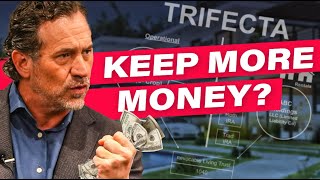
Tax attorneys Mark Kohler and Matt Sorensen break down the Trifecta, a three-part structure for small-business owners: a revocable living trust, an operating LLC that can elect S-corp status, and separate LLCs for passive assets. An LLC taxed as an S-corp saves roughly $9,000 annually on $100k in net profit by reducing self-employment taxes.
Chapters
This is about keeping more of your hard earned money.
We just want to make life easier for the planners and the planees by
putting stuff in the right categories, using the right tax strategies for the right type of income.
Welcome everybody to the Main Street Business Podcast. My name is Mark Kohler and I'm here with the illustrious Matt Sorensen. Both of us are tax lawyers helping small business owners around the country. And you may be wondering, what the hell is this trifecta? Well, let me tell you, the trifecta is going to make your life better. Better because it makes things simpler. It brings it all together. We love explaining the trifecta to business owners because they understand how their entity works with their tax return, works with their trust, works with their rentals, works with all of it to just save taxes and make life easier. It's so hard to freaking understand a lawyer, accountant. We're going to break it down right here.
Yeah. And this is about keeping more of your hard earned money. Okay. By putting stuff in the right categories, using the right tax strategies for the right type of income.
It's.
It's also about protecting your assets, making sure you don't mix up your liabilities with your assets so the stuff can blow up and you lose it all. Okay. It's about asset protection, but you gotta organize it right and structure it right. But then of course, we wanna make sure your estate passes on to your loved ones the people you want it to go to. And that's the estate plan. And those are the three pieces of the trifecta.
And I freaking love it. And we're gonna break it down now. Let's go to the whiteboard. Guys, please don't go anywhere. Give this video a shot. Cause you're gonna wanna share this with your attorney or train attorneys and CPAs around the country as well. We respect the industry, we're not dissing on it. We just want to make life easier for the planners and the planees. So whether you're one or the other, we're going to show you how this works.
If there was an easy button, this is the closest thing to the easy button in tax and legal planning. All right?
All right. We kick butt at Pictionary. Watch out on a Saturday night. So, Matt, I'm going to start drawing the trifectas. You tell you explain this foundation.
World Championships of Pictionary are next month. You might see us there. Say hi if you're there. All right, let's get started here. Okay. The foundation of your trifecta is the easiest part. It's your revocable living trust, or rlt. Now this is a trust we're doing for estate planning. Say who gets what in your estate, what conditions you want to put on it. This is not asset protection trust. A lot of people think, oh, I need a trust for asset protection. No, no, no, no, guys, we're doing a trust for estate planning.
And I like this for privacy because what we can do is create a trust name that's very anonymous, creates anonymity, whatever you want to say. And I don't want your name out there on public record. And this is a great way to create some camouflage versus a bulletproof vest. Now there are asset protection trusts out there and irrevocable trusts that we can implement at higher levels. But remember, we're going to start with the basics, the trifecta. So it starts with your revocable living trust and the water runs downhill into your 1040. That's where the money goes.
Now your 1040 being your personal tax return. For you non tax geeks, just throw an IRA form number out there. Everyone knows that. That's your personal tax return.
That's your personal tax return. Now here's where the trifecta comes alive. We're going to create the three legs of the stool with an entity for your small business. This is your side hustle or your big hustle. You might have 50 employees, 100 employees. It may just be you working part time, driving Uber, it doesn't matter. This is your small business. You may W2 off to the side. That's cool. That's going to drive into your 1040 your tax return. But your small business is on the left, your assets are on the right. So we're typically going to have an LLC over here to hold rental property notes, crypto stocks, you know, whatever you're investing in. And we can build upon this, folks, but these three legs are the trifecta. Now, Matt, explain the sides here because I'm going to just keep talking here. I get paid by the hour, so I'm just not. I can't shut up.
Yeah, we've built by the hour for years. It's kind of hard to take a while. We're going to get to the. There's so planning and years of experience into this trifecta and clients, their, their viewpoints and how they like to learn. So, okay, on this left side over here, this is you working. Okay, this is you working, making money. And I don't care what you're doing, you're selling goods and services, whatever it may be but you pay income tax over here and you also have to pay self employment tax. That's Medicare and Social Security. Now this type of tax planning you're doing over here, that's different than what's on the asset side because it's different. We use different entities and different structures. We're going to use entities over here that save you taxes that are going to save on this type of tax over here.
I like this because this is where we take a lot of folks and they graduate from the LLC into the S corporation when the time is right. So I'm going to erase this little small business icon right here. For those of you that are listening on a podcast, we've got an LLC that graduates to an S corp on the left and then on the right hand side we have an LLC and we might have multiple LLCs as you build a variety of assets or create partnerships, but we have this firewall down the middle and this firewall protects the assets on the right from the operations on the left.
Yeah. For example, let's say you own some rental properties and you drive Uber. Okay. On the left. I don't want you driving around the car getting in an accident and that all being in the same llc. Well, I have an LLC for driving Uber and I got an LLC that has my rental in it. No, no, no, no. We don't want to put assets, a rental property into the same entity that has operations and activity. We want to split up those assets. So it's not just tax planning. Those types of incomes are tax different. We're also having this left and right side for asset protection planning, separate out assets from liability producing businesses.
Yeah, and there's going to be accountants and attorneys out there that go, yes, we get it. Mark and Matt, you're not telling us anything new. It's just the way you lay it out, it makes sense. Like when a client comes to our law firm and says, hey, I need to restructure, I need to get a cleanup, I need to get organ. We're going to build a diagram in color, whether it's PowerPoint or some other cool program and we're going to build a little diagram and give it to you and go, oh, it makes sense. Now I'm going to have one entity on the left. I might do Uber, I might do drywall, I might be a dentist, I might be an electrician, I might be a chiropractor, but I'm going to have one entity over here and run as much of my income through one entity.
I can yeah, you could be an importer exporter. You know, it doesn't matter what you name.
Bandalay Industries. I like the ring of that. Yeah. You know, I like them. I always wanted to be architect. I want to be an architect.
An architect, too, would be over on this left side.
That's right.
And they should also an S Corporation. All right? And so Mark said that's usually an S corp, and you can convert an LLC to be taxed as an S corp. Maybe you're a sole proprietorship. And you need. And you kind of need to up your game. You're like, all right, I'm starting to make money at this. I'm making more than 30, 40 grand a year net. I need to graduate here. I need to get into this S Corp game. And we've got other episodes and videos on that S Corporation topic and the tax money. But let me just say this. If you're making 100 grand a year, you're making 100 grand a year in your small business. You will save around 9,000 bucks doing this corporation every year. Every year.
Yeah.
Instead of just being a sole proprietorship or just having an llc.
And for you naysayers out there, where your account goes, oh, you can't take that aggressive of a low W2. You got to take a reasonable salary, folks. For 23 frick years, I've been teaching this. I've helped clients through countless inquiries or letters from the IRS. I've never had a client audited in 20 plus years that had to reclassify their amount of salary. We have a matrix to help you choose the right reasonable salary and be aggressive, but cautious with that. And it works every freaking time.
Yeah. And this is just say on this strategy, the S Corporation strategy. This is one of the. The most common small business strategies out there that still many people don't know about. I hate to say it. You don't learn about it on Legal Zoom or all these other places, but even the irs, his best friend right now, Joe Biden, used an S Corporation.
Yeah.
Okay. It's not like you're thinking, oh, that must be some aggressive position you guys are taking there.
No. Yeah. Joe Biden, with his book deal before he came president, ran it all through his S Corp and he took a salary allocation that would make many of you CPAs run and hide under a rock. This is. Okay, quit freaking out and learn about it. I've got. I'm going to hold my book, Tax Legal Playbook, right here. Get it on Amazon. One of the best selling books for small Business owners. It's in a second edition, updated after the Tax Cuts and Jobs Act. I've got the diagrams and resources in there now. I want to say another important point. I want to give an example. My daughter Sydney, she's a realtor. Love it. She's a. She was built to be a realtor. She's amazing with people. She can. Anyway, I'll keep talking about her and how amazing she is down in Southern California. If you're looking for a home, ocean, Orange county, give me a buzz. Okay. Anyway, she's down there. She's like, dad, dad, I've been going to your workshops for years, working, you know, selling books at the table, whatever. What should I set up? I go, weren't you listening all those years? No, not really. Okay, so I said this last year, she's starting, she's with Sotheby. She's killing it. We set up an LLC because we don't know where her income's going to be yet. But we want to convert to the S Corp when the time is right. So what we did is we got her LLC going, this baby. Many of you selling products on Etsy or ebay or an online marketplace or just doing some Uber or some Turo or whatever. And she's just a brand new Realtor. Start out as an llc, boom, then convert to the S Corp when the time is right. And Matt said that net, when you're taking home around three to four grand a month, you better be thinking S Corp, that's the time to make that transition.
Yeah, and we say that because that's where the tax savings start paying off. Because having an S corporation, that's an entity you got to set up. You know, we charge like 800 bucks to set up an S Corp in our office, which includes a consult with the attorney. And also you got a tax return though, so we know there's some cost to this. You're gonna have a tax return you gotta do every year for the S Corporation. It's called an 1120s and you gotta start doing a quarterly payroll. But once you're at those numbers, the tax savings alone pay for that. And after there, it's all tax savings. It's all tax savings on top now.
I love it. Now let's jump to the asset side. Let's go over here. So if you're on the podcast, listening, riding on your bike, want to give a shout out to some of my. Matt's bike rider. What do you call them? They're cyclists. When you guys are cycling down the road, at 30 miles an hour, you
could call them members of the bike gang.
Members of the bike gang. Okay. All right.
Like Hell's Angels. A little different club, though.
Okay. Yeah. They're not. They're not driving a Harley. They're driving some Cannondale. Okay. A little shout out to those guys. So if you're listening on the podcast, what we're doing now is moving to the right side. Now, what do we do with our Astro assets? Do we set up one LLC for every freaking rental property? No, we look at the risk level of each property. We look at how many properties you have, we look at how much equity is involved. If you're going to build a $2 million building, it's got its own LLC. You're going to buy three little meth labs and rent them out in low income housing, put them all in one llc. Boom. So we're going to try to find the right balance of entities for these different assets. Over here, we have clients with Metaverse projects going on crypto holding notes, doing crowdfund projects, doing small business. As a passive investor, you might put these assets over on the right side because we're trying to protect those assets. And that's when the LLC comes into place. We don't want an S corp over here.
Yeah, think on the left side of the equation here. What am I doing to produce income now with my time? I'm trading my time for money on the left side. Over on the side, my money's working for me. All right? I've bought some real estate. It's going up in value, it's cash flowing. I bought some crypto. That's appreciating. I've. I've invested in another business. And that's why we said that's the word passive here, which is important from a tax standpoint, is I'm letting my money work for me. And we want to build that right, we want to build that right side so that I have more on the right side, passive working for me than my butt working over here on the left.
See, I don't like the way Matt explained it. Here's how you explain it. On the left side, your ass is doing the work. On the right side. Right side, your assets are doing the work. I mean, was that. Was that pg? Was that too much? Am I going to get in trouble?
Okay.
I'm okay.
I was trying to set up for the joke, you know, I was trying to lay it up for you and not steal it. You gave me the alley joke.
Okay, thank you.
I was your Jokes.
I appreciate that. Okay, now again, back at the bottom,
consent of Mark J. Kohler. And I know that, so I just stayed away.
Well, I'll steal Matt's jokes. He's trying, he's, he's laying some groundwork here because he's going to sue me later for infringement on his jokes. Okay, now at the very bottom here again, everything flows down into your trust. I want your trust to own your LLCs. I want your trust to own your home, your private, your personal home. I want the trust to own your S corp. We don't want your personal name as the owner of anything. Now that's a privacy strategy and an estate planning strategy. But all the income flows downhill as well into your 1040 tax return, where that's where we massage it, we fix it, we clean it, we net it, we try to figure out short term capital gains against long term capital gains and ordinary income against passive income and self employment income and ordinary income and all these little types of income. This is where a real tax advisor can rock your world. But with this picture of the trifecta, you're, you're a weapon now. You're sitting at the table with your advisor going, I get it. What are we doing here? Where are my kids on payroll? What home office am I using? Am I renting to my own business? And you really start to see how it comes together.
Yeah. And the trifecta here is it's a foundation and a framework of how to build empire. A lot of people think, oh, this, you know, I'm going to build these, all these assets and these businesses and ventures and we see clients run into us and they're, you know, entrepreneurs and they've got 10 entities and 15 different things going on and it's a mess. And they don't understand it. And their accountant doesn't understand it. Their lawyer sure as heck doesn't understand it. So what this does is it's going to also save you time. Okay? We're talking about protecting your assets, we're talking about saving taxes. Those are two pretty big things. But it is going to save you time in explaining stuff. Trust me, if you're successful as a small business, owner, entrepreneur, investor, you're going to have a lot of these bubbles over here that we're diagramming here. There's going to be a lot going on and if you get too far along and this is all jacked up because you didn't understand the framework, it's going to be very, very painful. Now we're talking about turning whatever Legal structure you have, that's a truck and trying to make it into a car. We'd rather build it to be the right structure for you ahead of time. So the trifecta is very simple. You know, assets on the right, business entities, operations on the left. We know what types of income goes where. Now I can have multiple streams of income on that S Corp. I mean, if you're like, man, I'm doing five different things to make money over here. I got way different types of businesses. I got an online store. I'm selling these products.
Cool.
Let's all run it through that one side. On that right side.
I love it. Now we're going to bring this all together. This video is almost finished. Don't go anywhere. Here's the last major point. Time is money. And when you start setting up entities online and you get more of these little bubbles every which way and you don't know what the hell they're doing, it costs you to get them reorganized or dissolved or cleaned up. And. But. But you can start fresh. It's not the end of the world. At our office down in the description below, you can check out our law firm. We have a special every year where we're trying to get everybody rehabbed and reorganized for the fall and turn the corner into 2023. That's great. Go build it. You do a consult, build a trifecta, and then take it to your own lawyer, your own accountant. The nice thing about walking away with a trifecta, even if you build it yourself and figure it out, is you can take it to your insurance agent, you can take it to your accountant, your banker, your attorney, and everybody gets on the same page. And when you have everybody, all your planners on the same page, you save money. So, yeah, get it done, folks. This is your intervention.
Yeah. Now, think of this as the blueprint almost for how you're going to build your financial life. Okay? Now, much like a blueprint, there's a lot of detail in there. These are things that you're going to use professionals for to help figure out. For example, what state do I set up my entity in? How many LLCs do I need, depending on how many rentals I have? What do I do when I have a partnership scenario? How do I structure that differently than if it's me, 100%. What if I want to involve my kids in my business? What if I want to pass on the business? All these little details here are stuff that gets colored in or kind of added into the detail. But we have this framework to work on. And this is the framework you have as the trifecta. The detail is what you get from the consults and working with our office or your professional that understands your structure and then just knows how to implement that little piece you need.
Okay, last teaser right here. We start putting 401ks. We start putting IRAs, we start putting health savings accounts. Then we can. And then we can start adding second homes, RVs, we can start adding a little management company to hire the children under age 18. Are we going to do a health reimbursement arrangement? So what Matt's just talking about is all these bells and whistles that we can create this massive structure that's based on a simple trifecta. So, people, please get over to Main Street Business podcast. We got so many different podcasts on all these little topics and more. You can get catch us on YouTube by just searching our names easily. And our firm, and we have a sister podcast. Matt, tell me about that because you kind of lit up when I mentioned IRAs and 401ks.
Yeah, yeah. I mean, this is just. I mean, how many people's wealth is in their retirement accounts? And this is a big piece of the trifecta. It's kind of on the asset side, right? Because we're building. Those are investments. But it's. We fund it from our work, from our earnings. And so it's kind of in this middle here of the assets because it's funded from our earnings, but it's an asset we're going for long haul. But that's the directed IRA podcast. Retirement saving and investing in the stuff. You know, you don't just have to buy stocks, bonds, and mutual funds. You can buy real estate, small business, all this stuff with a retirement account. That is a critical piece of the. Of the trifecta. Retirement accounts are the number one asset people rely on in retirement.
Okay, well, there you have it, folks. The trifecta will change your freaking life. Thanks for watching this. We're here every week recording a podcast and YouTube videos to help you better live your America American dream. If you love Main street business, we're out there with you, building rental property and small business ourselves. We'll be here next week. Please tune in.
More from MARK




The secret to managing your family's future #financialfreedom #estateplanning #shorts



Moving Property to an LLC: What They Don't Tell You #realestate #investing #tips


