ACCOUNTANT EXPLAINS: 5 Tax Strategies To Beat The IRS
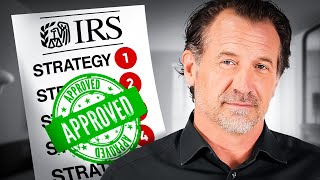
In this live YouTube session, accountant Mark Kohler walks viewers through five core tax‑saving strategies and fields a rapid‑fire Q&A. He begins by reframing the IRS as a neutral enforcer of tax laws that reflect congressional intent, urging viewers to understand the government’s policy goals to “game” the system. He then outlines five actionable strategies: (1) grasp the IRS’s purpose and align actions with legislative intent; (2) maximize tax‑advantaged retirement accounts (Roth, traditional IRA, 401(k)), emphasizing that these can hold real estate, crypto, or other assets and grow tax‑free; (3) leverage Health Savings Accounts (HSAs) for tax‑free contributions, growth, and qualified medical withdrawals; (4) start or expand a small business to unlock a broad range of deductible expenses; (5) master specific small‑business write‑offs such as travel, meals, home‑office, equipment, hiring family, and real‑estate transactions. Throughout, Kohler stresses that the IRS is not an adversary but a mechanism for policy implementation, and that savvy taxpayers can use the rules to build wealth. The Q&A segment covers practical questions: how a W‑2 employee can combine an LLC side‑hustle; 401(k) withdrawal taxes and Roth conversions; the difference between write‑offs, deductions, and tax credits; tax treatment of owner‑financed real‑estate deals; 529 beneficiary changes and ownership; whether a traditional IRA can own real estate, crypto, or need an LLC; handling unsold inventory losses; paying children or family members through an LLC; hiring a girlfriend via 1099; and S‑Corp home‑office reimbursement via an accountable plan. Kohler repeatedly promotes his directed‑IRA service, tax‑advisor network, and encourages viewers to vote for better tax legislation.
Chapters
Tonight with you. I know it's the NFL draft, but this, that's okay. You can take a break for a minute. Just, you know, record it. You can go rewind back over after the commercials. Okay, now today we're going to talk about five ways to really take advantage of the irs. Now this is really important. I actually have a concept I want to share that I usually don't on lives. It's a deeper conversation. I really want you guys to. This isn't just flowery, nice information for a live. I was thinking deep about this. In fact, I was driving to Stagecoach. I'm here in Southern California for the big country festival of the year and set up here at the Airbnb, ready to go with you guys. So excited to be with you. So let's talk about how to beat the irs. Now, number one, if you're going to take on someone and you're going to like get in a battle or you're going to try to game the system or whatever, you have to know the game. You have to know where is your opponent coming from. So let's talk number one strategy here is you got to know what the IRS is really trying to do here. If we want to save taxes, we got to know where the IRS is coming from. Okay? So hang with me. This is super important. The IRS is us. We are the irs. The IRS is not some institution that's out to get you. The government and Congress and the laws that we've passed, we've passed in a democracy and we've said, hey, government, if we're going to pay taxes to have this amazing country that we live in, what, what does that mean? And so we motivate ourselves through tax legislation. Give to charity, get a write off, put it in handy hat, handicap access in your restaurant, get a deduction, go do research and development, go do buy an electric vehicle. We motivate each other with the tax system that we voted for. That's what the IRS is. It's only implementing what we freaking passed as laws. So if we understand what the government is trying to get us to do through tax legislation, then we can game the system. That's deep point here. So if we know what the IRS is trying to do, then we can take the tax strategy to the next level. So number one, what does the IRS want to. Okay, so number one strategy is we got to know where the IRS is going from. Coming from. Okay, number two, the IRS does not want us to live on Social Security. We remember the IRS is us as a government. We don't want Americans to live on Social Security. We want them to save, save. We want them to provide for themselves. So what do we do for a tax strategy? We say, hey, if you put money in a Roth IRA or a traditional IRA or 401k and you can invest it in anything you want, it doesn't have to be Wall Street. A 401k is not stock. A 401k can be real estate, a note, or crypto. You can invest your 401k in anything you want. But the point is, we as a country have said if you put money into a Roth or a traditional or a 401k, you don't pay any tax as it grows. And if it's a Roth, you don't pay any tax when it comes out. We don't want each other living solely on Social Security. I love Social Security. I want Social Security to be there, but it's not going to provide for everything we need. So strategy one, know where the IRS is coming from and take it in the first place. So the second strategy is simply use a tax free structure ira. Put money away, let it grow tax free and have it come out tax free. If you're into crypto, find the token you love, put money in your Roth and invest in it. If you love real estate, put money in your retirement account, go buy real estate, invest in what you know and let the game bless you. Use the game against itself. Right. Third, we as a country have decided that health care is a mess. Trying to pay for health insurance is super expensive. And trying to pay with these escalating health care is even worse. The government us has told the irs, let's implement a health savings account. A health savings account that grows tax free. You get a tax deduction to put money in it and it comes tax out, tax free. For medical see, notice the IRS set up a system to help us save taxes. Just go use it. That's the point. Now I want to take a break here and say I'm going to answer any questions you have on this and if you want to vent, you want to come at me, you do it. We're going to answer questions here in a moment. I love it. I'm director here, Kirby. She's going to be giving me the questions. We're going to hit it. We've got to just remember it's a bigger game. Don't hate the player, just understand the game. So if we can save on health care costs, we also save taxes. So funding a health savings account is a tax Strategy that can save us thousands and thousands of dollars. We get a tax write off to put money in, we can invest it however the hell we want and it comes out tax free. That's strategy number three. Now number four, what does the government said? We the people have said if you go out and start a business and stimulate the economy, we're going to let you take all sorts of kick ass write offs. We're going to let you build a business, create jobs, create more wealth. Because we as a country have said if you make more money, we get a tax that if you help the economy, we have more tax base to build revenue. So small business owners get tax benefits. We have decided that that's a good thing and told the irs enforce it. See, the IRS is not some bad guy. They're just enforcing the laws we decided on as a people. So starting a small business is number four. If you have a side hustle, if you have a little side business, you want to make a main hustle. Let's learn how to make more money at it and take all sorts of great write offs. And the government has said we want to help you build your business by giving you write offs or of any expense incurred in the production of income. That's code 62. Any expense you have as you build your business to help the economy will give you a write off. Congress, Republicans and Democrats, we've all agreed that's a good thing. Take advantage of it. Which brings me to number five. Number five is know what strategies you can use as a small business owner. I love dining, electronics, auto, home, office, travel, real estate, buying rental property to rent to your own business. I want to write off any expense related to the production of income in my business. I can put my kids on payroll. I can go buy equipment and supplies and pay for software and education and any expense that's going to help me build my business. Now for fun, I wanted to talk about travel for a moment. I'm here traveling to Palm Springs, beautiful part of the country, to go to Stagecoach. Now this is a business trip for me. I've got several meetings with employees and vendors that work for with me. We are going to be advertising while we're here, we're giving away swag. I'm trying to be interviewed everywhere I can. I'm doing broadcasts from Stagecoach and I'm able to write off my travel expense, expenses and all of my dining and maybe some of the partying. I can write all of that off while I'm at Stagecoach. That is a write off. The government we have said, go build business. Go make money. Go make America awesome. And we're going to give you a write off for that. Now, right now, I can't write off entertainment. That was a law passed in the tax cuts and jobs act about six years ago. I would love to write off all my entertainment, but I can still write off dining, travel, auto and all the expenses to get here to build business, to help America and help you, the small business owner. So those are five very, very insightful, deep ways to build wealth and save taxes. I hope they impacted you in some way. Now, before I jump in the pool here, which is part of my plan today, because it's hot out here, It's Palm Springs, it's like freaking 100 degrees. I want to answer questions. I want to help you out. I want you to build your American dream. I want you to know what type of write offs you can take advantage of. Anything on the IRAs or 401ks, anything on the health savings account, starting your small business and which write offs are available. I'm here for you. So, Kirby, let's hit it. Do we have any good questions?
Yes, we have a couple. If you want to encourage everyone from other platforms and Facebook to head over to YouTube to ask their questions.
Okay, so if you heard that we're taking questions on YouTube. So if you're on Instagram or Twitter or Facebook with our setup here remotely, I can only take questions on YouTube. Please head over there. I'm live on YouTube. And while you're there, subscribe. Hit the bell, icon. Every time I go live, you'll hit it. Okay, question number one.
Awesome. Echo asked. Hi, Mark. I'm a W2 employee and I'm opening an LLC for my side hustle. How do I work W2 and LLC together to reduce tax?
I love this. Having a day job, W2 and having a side hustle is the freaking American dream. I love it. Echo, I love what you're doing. Now the balancing act is as you have the day job that provides benefits and security for your bills and expenses. What are we using the side hustle for? To get out of debt and build wealth. Girl, you are on it. Is that a girl? I hope that's a girl's name. Anyway, so how do you balance this? You have to realize you're wearing two hats in the morning. You get up, you do your morning ritual, you work out, you get ready, you're primping your head to work. That's hat number one. Then at lunch maybe or at five o', clock, Boom. You put on your other hat. Now you're building your wealth. You're not working for anyone else but you. What is that side hustle? Are you selling real estate? Are you doing consulting? Are you doing an online business? Are you selling a product or service anywhere down the street or at a farmer's market? What are you passionate about? So whatever that side hustle is, now, we want to scale it. We want to duplicate ourselves, we want to sell more of that product or service and take write offs along the way. Any expense you have related to that side hustle is a write off. So now you're paying less tax, making more money. Now meanwhile, the day job's paying the bills. The side hustle is building your wealth. And I want to take all that money and invest it. Real estate, crypto notes, stock bonds, mutual funds. Let's get that money working while you're sleeping. Keep doing what you're doing. It's a process. It's a journey. It's not a get rich quick, quick scheme. You can do this.
Next question, Kirby Christy asks 401k. You still have to pay taxes when you withdraw in an extra 10% for California. What if we are 65 and haven't done that?
Okay, so the question is, if I have a 401k mark, that sounds great. But when I pull out the money, I got to freaking pay federal tax and I live in California and that's an extra 10% or more. What the hell? That doesn't sound too good. Well, let's look at it from a different lens. While you were putting money in that, there's several points here. This is deep. First, while you were putting money in that 401k, you didn't pay tax on that money. You got a write off. That's a cool point. You were building the 401k, getting a tax deduction to do it. Number two, as you invested that 401k, you didn't pay tax either. You could buy Tesla stock, you could buy real estate, you could buy bitcoin. And as it grew, you didn't pay any tax. Now it's time to pull it out. Well, holy crap, you're complaining about that. It's not a bad thing. You got two out of the three squares, the tax deduction and tax free growth. But yeah, you're paying tax on the way out. But that's okay. That's why you did it, because it is enhancing and building upon your Social Security. Now you want to go next level. For some of you that are maybe a little younger than 65. And I'm not saying you still couldn't do this at your age. Convert to a Roth. You can do a Roth 401k, the gross tax free and comes out tax free. You never pay tax in that Roth. But you don't get a deduction on the front end. So you have to pick and choose and decide what works for you. So don't be dismayed, don't be frustrated that 401k is a blessing in your life. But use it smartly and wisely. Maybe convert some of it to Roth, keep investing it and grow it and keep building that side hustle. All right, next question.
Sam asks, is there a difference between a write off versus deduction?
Is there a difference between a write off and a deduction? No, they're same thing. I call them the same thing. Now, some people say, is there a difference between a write off and a tax credit? That's very different because a tax credit reduces your tax. A write off or a deduction reduces the income before you're taxed. One example. Let's say I'm a landscaper and I'm going to go buy a new lawnmower and hire a kid down the street to help mow lawns. Well, when I buy the lawnmower, that's a write off or a deduction. When I hire the kid, that's a write off or a deduction. Now I go out and bring in an extra thousand a month selling lawn mowing. But by the time I pay off the lawnmower and the loan payment on that maybe or the kid, I have $500 in deductions or expenses. But I made $500 at after that. That's why we become an entrepreneur. Hiring the kid duplicated you. It's a write off, it's a deduction. It's a good thing.
Next question we invest asks how can I save on taxes if I owner finance and get a 40k down payment? Wow.
Okay, so how can you save on taxes if you owner finance with $40,000 as a down payment? Now, their first name. We invest. Okay, so we invest. Handle. What I'm going to presume you're talking about is buying a rental property. Look at where I'm sitting. This is a rental property. I actually have some rental Airbnbs. I love it, but I'm using someone else's. I'm stimulating the economy. So I'm sitting here at this person's rental and they put down a down payment to go buy this rental property. When they pay the loan back, they get to write off the interest. That's a tax deduction. And then they bring in rental income from guys like me that stay at their rental property. So I'm hoping I'm answering that, because when you go get a loan and do. Now you said you did owner financing, and then you said get a loan. So if you're going to be the owner of this property and sell it to someone down the road, you're now the bank. That's called owner financing. You're going to play the bank for someone else. Now. Now you're getting interest income. So I'm not sure what angle you're coming at, but you're in the real estate genre. Either you get to hold the paper or you get to pay the interest. To have the paper, you got to decide what side of the table you want to be on. Next question.
Awesome cowboy in Korea asks, once I die, can I pass ownership of my 529 account to my child without being taxed? Can they continue to contribute to it, eventually pass on ownership to their child or grandchild tax free?
Okay, so the question is about 529 accounts, which is a college savings account. There's different ways to save for college. This is one of them. I like using a combination of the education savings account, the roth and the 529. So don't think the world revolves around 529. That's point number one. Now the question is if I am the creator of the 529 or the owner of the 529, I get to choose a beneficiary. Do you know you could actually choose yourself as a beneficiary? And in this example, it kind of sounds like that's the case. So you open a 529 and then you want to change the beneficiary to one of your kids, and then that kid uses some of the money, but they don't use all of it. Oh. You can then move the beneficiary to another child or a grandchild. So as the owner of the 529, you can change the beneficiary. Now, the rules are actually fairly complex. You got to do a little bit of study on this. I would Google changing the beneficiary of a 529. You'll get up to speed on it with a little bit of research. But I want to just tell you the answer is, yes, you can change the beneficiary, but you can't change the owner. If you die, then it's Going to change the whole equation. You get to own the 529 and choose the beneficiaries, but you're not going to transfer the 529. It's ultimately got to come out at some point. So do your research on it. You're on the right track. And I like the 529, but don't put all your eggs in that basket.
Next question Ron asks, could a traditional IRA loan money or buy real estate, precious methods, metals and crypto, or do I need the IRA to own an llc?
Okay, the question is, can I have a traditional IRA own real estate, or do I have to have an LL or crypto or do I have to form an LLC to do it? Would that be a fair I need
an IRA to own an llc?
Yeah. So does the IRA need to own an LLC to do it? The answer is you can do both. You get to choose now@directed ira.com and I would recommend all of you that want to maybe invest your IRA or 401k into something. You know, get over to directed ira.com we have so much educational information there for free. We're the fastest growing custodian in the country with over 505 stars. Please get over there and check it out. So you now have an ira, a traditional ira, and you want to buy crypto or real estate. You have two choices. One, you can go over here and just buy it directly in the name of the ira. It works. It's okay. It's more clunky because you've got to work with us or whoever the trust company or custodian is to do the deal for you. We're going to buy the real estate, buy the crypto. We have a crypto IRA account where you can use a Gemini platform. But if you want to go into defi wallets, you're going to have to have an llc. So point number one, like I said, is your IRA can own those investments directly, but you're going to be working very closely with a custodian to do it. Option two, you can form an llc, which gives you more autonomy, which means control. You get to call your own shots. You get the bank account, you can have a Metamask wallet. It's easier, but you got to pay for the cost of an LLC and know how to maintain it. So I want to say you could do both. It depends on what's best for you. So you kind of work on it. And I would recommend a consultation with one of our lawyers@kkoslawyers.com that law firm is. Specializes. Our law firm specializes in helping investors choose the right path. We're not going to charge these big five or $10,000 freaking packages or whatever. Just call up and schedule an hour. We want to save you 10 times whatever you pay us. So get a consult and then tailor the structure to you so you know what path to go down. Maybe a couple more questions. Yeah. All right.
All right. David says, what happens if I end up not selling inventory that I purchased for my business? Can I claim the loss?
Okay. So he has inventory in his business, but he doesn't sell it. And that's what he's saying. He's kind of stuck with some inventory.
Yeah.
And then he's like, can I claim the loss? Yes, in a sense. Here's the deal. Let's say. Let's give everybody an example. Let's say you open up a little convenience store and you go buy everything for it, from snicker bars to milk to rock stars to chargers to beef jerky. And you fill out this convenience store, and for some crazy reason down the street they put in a new overpass and your convenience store goes out of business. Do you get a write off all of the inventory you bought to equip the store? Yeah, absolutely. Now, does that mean you have a loss? Maybe. How much money did you make that year? You may have been kicking ass before the overpass went in. The point is, you get a write off absolutely. For all that inventory because you invested in it to stimulate the economy. We as a society said that's a good thing. We go out and start a convenience store, buy inventory. If the business fails, you get to write off the inventory because you tried. Now it's going to be a deduction against your income. But I don't know what your deduction. I don't know what your income is yet. So we're going to just have to see how that goes. But it's a write off. That's what matters. And it could result in a loss. Or maybe not. All right, maybe our last question. This pool is just. Don't you just want to jump in this pool? I think I should jump in this pool.
Cool.
If you guys are feeling it, I mean, I will jump in there with my clothes on. Should I do that? I could. I could just take off my shirt. I know I. The ladies usually request that, but I don't know. You know, I don't want to get over the top. Okay, next question. Okay. Should we. Or two more. You can make the call. There's some Good questions. Okay, Kirby's here. All right, let's do it. A couple more. I'm having a good time.
Okay, we'll do two or three more questions.
Okay,
you like this one? How can I pay my kids and use as a write off if we just have an LLC holding company that manages multiple long term rental llcs? Oh, my accountant says it's not worth it, but why wouldn't we?
Oh, my hell. Freaking accountants, they drive me crazy. All right, the caller says, viewer says here on YouTube, Mark, we have a bunch of long term rentals. I want to pay my kids to help with the rentals. My accountant says it's not worth it. What, is your accountant on Mars? What the hell? Of course you want to pay your kids to help with the business. And of course it's a freaking awesome write off. Now, what your accountant may be saying, and some of you accountants are, well, they're not a real estate professional. They make too much money. So it's a carry forward loss. They don't get the write off. Did you miss the word in there? Carry forward. So, yeah, let's pay the kids. Let's take a write off. Now, if you don't get a direct deduction this year because your income's too high and you're not in the business of rental property, it's a side business. These long term rentals, you'll get the write off. Someday when you sell the rental, you'll get the write off. It may be delayed gratification, but holy crap, pay the kids and take the write off. Whoever this accountant is saying this, tell them to either get certified at main street tax pros or they're fired. I have a certification program helping accountants and enrolled agents, CPAs, attorneys, financial advisors all over the country. It is growing like wildfire. I have a 1% attrition rate. Everybody's loving it. The community, the tribe. I train accountants how to think outside the box. And I know it's hard. We don't learn this in school. We don't learn it in the CPA exam. We don't learn it as an enrolled agent. We have to go out and figure it out on the street. Well, guess what? I'm bringing the street smart tax strategies to you. So if you're a tax advisor or you have one that's got a stick up their butt, boom. Call me. Get over to markjcolder.com and check out our certified tax advisor network. All right, all right.
Two more questions. What about hiring your girlfriend and paying her through 1099?
What about hiring your girlfriend and paying her a 1099? What are they hiring her for? I mean, who knows, right? Well, if it's a business purpose deduction, I love it. There's no problem with that. Hire your mom, hire your dad, hire your adult children, hire your girlfriend, your boyfriend. People, if you're building a small business and you're supporting a family member, quit paying taxes and giving them money. Give them a 1099. Give them a W2. If they are an employee, you have to decide are they a subcontractor or employee? And go through those rules. But take a write off. Holy crap, I love it. Make sure it's a legitimate write off. Want to hear more about this? Email me. Okay, next.
Okay, last one, Christy. Where do I reimburse home expenses? Electricity, gas, Internet, etc? I'm an S Corp. Owner and an employee of my own company.
Okay, this is a great question. What's her first name?
Christy.
Christy. God bless you, man, you're in the next level. So Christy has an S corporation, as in small corporation. Wonderful strategy for millions of business owners. And forgot her first name again. Christy. All right, Christy, sorry. Thinking ahead on the question. So Christy says, mark, I want to write off my home office. I got a home office. I want to write it off, but I'm an S corporation. An S corporation can't have an home office because it, it's a corporation, it's not a person, it doesn't have a home. But you're an employee of the S corporation. So how. Now you may say, well, it's an unreimbursed employee expense. Well, those aren't allowed anymore as this itemized deduction. So how are you going to do this? Everybody, this is a great question. Christy says, I'm an S corp. I want to write off my home office. I can't do an unreimbursed employee expense. I love my S Corp. I'm saving on Social Security and Medicare. What do I do? You're going to do a rental reimbursement deduction. So you're going to write off rent in the S corporation, which is a tax free reimbursement to you, the employee. Now that expense is going to be calculated as if it was a home office. You're going to want to meet with your accountant and come up with a number for utilities, rent, mortgage payment, mortgage interest, HOA fees, whatever. And you're going to come up with a number and the company is going to reimburse you. Now the second part of this, that's super important is you've got to have a accountable plan provision. So you're going to go to the minutes of your corporation and say, hey, you know what, as a board of directors, as a shareholder, we're going to reim. We're going to reimburse. Not reimburse, but yeah, we're going to reimburse employees that turn in the receipts for home, the use of their home office. And you can do this through an accountable plan. It's not a Schedule 8 itemized deduction. It's an accountable plan within the S Corporation and it's allowed. So I've got articles on this. Go to Google, type in Mark Kohler home office and then scroll down to the S Corporation piece and again, talk with your accountant. And if they don't get it, you got the wrong accountant. Now everybody, let's review this for a minute. If you showed up late, five ways to take advantage of the irs. Five ways to just save more taxes. Number one, know where the IRS is coming from. We are the irs. We've set up rules to motivate ourselves through congressional laws and told the IRS to enforce them. Don't think the IRS is evil. Change the laws. Vote for someone that has better laws for business owners. Number two, the government, us the people have decided that saving on Social Security or relying on Social Security is not a great thing. So let's save more money with a Roth IRA or a 401K or a traditional IRA. Number three, we've said relying on the health care system and insurance is not a good thing. Let's use health savings accounts, flexible savings accounts, health reimbursement arrangements to take deductions to help us be more efficient with our health care costs. Number four, we the people have decided that if you go start a small business, that's a good thing. Stimulate the economy and you get all sorts of great write offs. And number five, know those write offs. Travel, dining, home, office, computers, electronics, the kids, real estate. Any expense incurred to start your small business people. This is how you build wealth. This is how the rich get richer. I love you. I love small Business America. I love Main Street. I'm so grateful you're here. If you've enjoyed this video, please share it with others. Give me a five star review, a two thumbs up, whatever, and I'm gonna go jump in the pool. Thanks everybody. I'll see you. Bam.
More from MARK




The secret to managing your family's future #financialfreedom #estateplanning #shorts



Moving Property to an LLC: What They Don't Tell You #realestate #investing #tips


