Answering the Difficult Questions When Estate Planning
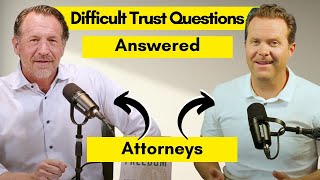
Mark Kohler and Matt Sorenson tackle seven estate-planning questions that derail most projects: naming a revocable living trust, deciding who inherits (including explicitly disinheriting a child), choosing a successor trustee, naming an executor, picking a guardian for minor children, arranging pet care, and setting up healthcare directives with a power of attorney.
Chapters
Never name a couple. Always name the person you want to be the guardian of your kids. Some of you out there are like, man, why screw up my kids? I'm not going to leave with my family. Just know you have a lot of flexibility on who gets what, and you can really play with it, and that's a good thing. Welcome, everybody, to this week's episode of the Main street business podcast. My name is Mark Kohler, and I'm here with the illustrious Matt Sorenson. I'm coming live from this beautiful lake in mountain in Idaho. Matt is in front of the beautiful city of Phoenix. And we're going to throw down today an incredible topic on estate and legacy building.
Yeah.
Yeah.
This is Legacy month. We're talking about building and planning your legacy, and we are getting into your estate plan. And there are seven questions we've identified that trip people up, that get clients confused when they go to do their estate plan or going to break them down, answer them for you, give you the framework to start thinking about them so you can make these decisions and get your freaking estate plan done.
Wasn't it a Brad Pitt movie? Seven deadly sins or seven. I didn't. I don't know. We didn't want to use the word dead in our title, so I don't know. Seven. Seven something. Seven. I don't know.
You're more than Brad Pitt.
It's just seven. Okay. We're sticking with that. All right, well, hey. What? What? You're a hater. What? Unpack this after the show. Okay. All right, everybody, let's get to it. Well, I just love Jennifer, you know, and I knew there was a bond there, you know, Jennifer Aniston, Brad Pitt. I just, you know, I'm staying tuned. Okay. All right, so let's have a good time here. It's not.
I liked Angelina Jolie, so maybe that's why.
Oh, oh, you're on that team. Okay.
Maybe that's why I'm not a big old Brad Pitt. Yeah, that's probably why I'm all sour on Brad Pitt.
I guess this is like Eclipse or whatever. We got a team Joshua or whatever. I can never keep them straight. Okay. All right. So everyone, let's get into it. Have a good time. We want to keep it light because no one likes to talk about their estate plan. They love legacy. They love building wealth. They just think they're never going to die or don't want to think about it. But people having a plan and making sure that your wealth that you've worked so hard to build is going to leave a legacy with community, family, friends, and your loved ones. It's critical you get involved, you get engaged. So we're gonna hit these seven questions that need to be answered in order to finish the process. And that way you can start thinking about them. This weekend. You can go out to dinner and have a great conversation and talk about some of these items. So, Matt, you get to choose number one. I got maybe a particular order that I like. But you know what? I can, I can be flexible. What do you got?
I. I'm like, I like to flow with how we do it in our estate planning questionnaire with our attorneys here at KQS lawyers. Let's talk about. What do you want to call your trust? Oh, what's going to be the name of the trust? This is going to actually be on some of your assets. For example, the deed on your home is going to be in the name of your trust. It's going to be on some other publicly available assets too, possibly. And so we want to think of that now for some people, they want to be very private about what's on what. And so they may want to have a more generic name of their trust, not the Matt Sorenson Revocable Living Trust. You could do that, too. Let's not throw my name in the actual naming of the trust itself. So you might want to come up with a more unique name for privacy purposes. It could be whatever you want. The green trust, the red Trust, whatever. It could be whatever you want to call it.
And I talk about privacy a lot. There's a whole chapter in my book on privacy, privacy. So let's, let's get a little candid here in when you name your trust, let's call it Purple rain Trust, dated June 1, 2023, whatever. In a lot of instances, people are just going to see Purple Rain Trust, da, da, da, da, da. But if you're recording on real property, you're going to have to add a comma trustee. So, and so in a lot of situations, the trustee, the primary trustee, which is probably you or your spouse or both of you, are going to have to be named. And so that frustrates a lot of clients because they're like, whoa, I thought I was being private. Now you're putting my name out there. What the hell? So you can start to get creative with maybe naming an investment trustee or getting some sort of structure in place where your name's not listed as the trustee. We don't provide a service where we get to can be your trustee. But we can show you the way to go if you want to go down that path. Some people are really searching for complete anonymity and they go down the land trust route. But with the revocable living trust, just realize that your trust name is going to be very anonymous. We want that. But your name as trustee could be out there. So just understand there could be some hurdles in that area and it's okay. I wanted to bring this up because some folks call up and they're very frustrated when they're like, well, my name's still floating around out there. Well, that's another battle for another day. But we want to have a trust name that may resonate with you, be exciting for you. And it can be anonymous as well, because in a lot of instances it will be completely anonymous without your name there. So it's just a tricky topic. Matt, do you want to add to that? I know it's challenging.
No, that's the full spectrum of it. You can come up with the name you want. Some instances, it gives you privacy. A lot of states, the trustee still has to be listed. So in many instances, you're going to be the trustee during your life. And that's going to be one of the other seven questions we're going to get to here. So that means your name gets thrown on there as you're moving assets into your trust.
All right, so that's number one, start thinking of a name for your trust. Number two, what do you like?
Let's talk about who's getting your stuff. I mean, that that's a critical decision. Who's going to get your stuff, obviously. And so let me kind of go through a common framework of how this works. Typically in estate plan, for those of you that are married, what you're generally going to say is, upon my spouse, upon my passing, my surviving spouse is going to inherit my estate. Upon my surviving spouse passing away, then it goes to our children, if you have them, or other beneficiaries you may want to include. So a general way is your spouse inherits, and then upon your spouse, the second to die, a married couple's passing, the assets go down to kids or whoever else the beneficiaries may be. There's a lot of nuance in there. We want to go through a couple other considerations that'd be standard vanilla way of distributing assets.
And that's probably maybe at best a third of you out there, another third of you out there might have his, hers and our children. You're on a second marriage, they have children, you have Children, the equation could be a little different upon the second to die. Could be a little different on the first of you to die. We oftentimes call those kind of an ABC type trust, where we've got three different buckets. The other third of you out there are single. And you're like, well, I don't have kids or I'm not married. I don't need to worry about this. Frankly, yours could be the biggest pain in the butt because we're trying to figure out, where does everything go? Do we call mom and dad? Do we call your best friend? Who do we call? And so no matter where you're at in the station of your life, married, single, kids, no kids, his, hers, ours. Who gets what? Is a big question. And so really know that you've got a lot of flexibility and you can unpack it in a lot of different ways. And that's okay. You get a lot of flexibility.
Now, I'll say this on the who as well, is if you have a child that you want to disinherit, that you don't want to receive anything, you specifically need to disinherit them. So you can't just do your will. Let's say you have three kids, you know, Peter, Paul and Mary. And you can't just be like, well, I don't like Peter, but Paul and Mary can get their share. You can't just say, paul and Mary get 50% of my estate when I die. You can't do that. You got to say, peter's not getting anything. You got to specifically disinherit children. Lots of states have lots of confusing rules on this, and people end up, you know, not properly disinheriting a child. So make sure that you specifically disinherit children if you're not intending them to receive an inheritance. And you even see this sometimes, you know, and this is, I know, dramatized. Sometimes it's like the child gets like, $1. You know, it's like, oh, they got like $1. That's their inheritance. It's kind of like a slap in the face.
Yeah. Ugly. I love that you led with that one. I will say you can get really creative instead of disinheriting kids, obviously, we have like two pages of ideas. We give clients literally two pages of ideas, give them money in stages, give money for college, a wedding, start a business, buy a home, continue to fund retirement accounts. They get a dollar forever. They earn. We've seen everything. And every time we hear a client with a good idea, we're like, that makes the list and we'll throw it on that two pager and we'll kind of give it out to clients as a, as a brainstorming idea. So just know you have a lot of flexibility on who gets what and you can really play with it. And that's a good thing. Yes. All right. Can I mention number three? I think number three. I got a good three. Number three is who's going to make those distributions? Who's going to be the one that writes the checks and carries out the provisions. This, my friends, is your backup trustee. Who do you like as backup trustee? Matt, what would you say?
Now, this could sometimes be considered successor trustee. That's another word for it. But batting backup, who do I like now? Let's say during your life, your trustee. Okay. I want to make sure everybody understands that. So when we're saying backup or successor trustee, we're talking about after you've passed away. I think one of the most common is going to be your most financially responsible child. It's a common one people will use.
Well, hold it. We're starting with spouse. If you're married, your spouse. If you're married, your spouse is going to be first. Okay.
Correct. Yeah, that's, that's. And if, you know, for those of you married, if you don't do that, that might not look good. And again, we do have the, you know, yours, mine and ours situation where you might, upon your passing, it might break up into different buckets as we talk about, and you could even have different trustees over different parts of your estate.
So.
But yeah, spouse, your surviving spouse would typically be the trustee after your passing. Now you have a decision to make there too, though, right, Mark, like you may want to say, upon the first of. For a married couple to die, you want the trust to be terms to be locked in. The surviving spouse can't go remarry and give, you know, at 70 years old and give their, you know, new spouse the whole estate and not let it drop down to your kids. And so you may, you can put in some, some restrictions on that if you want, as it's passing to a surviving spouse.
Yeah, yeah. There's so many options there. And the beauty of the trustee position is it can be a team effort as well. So you can say, upon my passing, my spouse is back up, whether you lock it down or not. Can that surviving spouse make changes on certain issues? Great. And then you can say, now, I want a team. I want a legal advisor, I want a financial advisor and my oldest child, or I want my Two, These two children and this trusted friend there. I would recommend three or one. Don't ever appoint two people as co trustees because if they don't agree, it's a freaking mess. So make sure that you've got at least a team of three as a backup and then kind of an alternate that's sitting out there as the juror number four, you know, that can jump in if the, if they need them. So I kind of like that approach. So you're getting a well rounded group that are carrying out what back to number two, all the rules that you write out now, the trustees are the ones to carry it out. And when they're subjective determinations, they're going to get to get their heads together and go, yep, Johnny's ready for this or Susie's ready for that. We can distribute money. So the trustee role can be a team effort as well.
Yeah, I love it. And it's very common if you just have one. I know Mark mentioned having a team of three. So it is common for you to just have one person still serving as successor trustee as well. Sometimes that if you have the right person that can be, well, nice and simple and it can get things done in an effective manner. But you can do the team approach too, depending on your state and your situation. I've kind of like just letting one person, if you got that person in your life that can handle it, sometimes it makes it easier for them, quite honestly.
Yep. Okay, so brings us to the fourth of our seven decisions that you can start kind of mulling over thinking about so that you don't procrastinate any longer. I'm going to go with executor. Some of you may be thinking that we're talking about the executor. When we talk about someone making decisions we're not. The trustee runs the trust and the trust is really the receptacle of all your assets. And we've got other podcasts. Last week we talked about the trust in this legacy series. But the executor is this unique person that may not be great with money. In fact, you don't even want them to raise your minor children, but boy, can they throw a party. They live locally, they can go put together a wonderful flower arrangement for your funeral. They can put together a nice spread for lunch. They can do a great eulogy. You know, they're going to welcome everybody into town. They're going to be doing rides to and from the airport. I mean, really, this is your go to person that it could be that perfect child of yours that's like, oh my gosh, I have a role to play, da, da, da, you know, or whatever. So the executor is really that boots on the ground person that's local. Typically they can help with the personal property, cleaning out the garage, and you can leave some money for the executor. You can tell your trustee, give my executor five grand. When everything's taken care of, they get five grand. Don't pay them in advance, they'll skip town. But make sure that the executor can be compensated. And to do all the messy work, you know, of just kind of cleaning up house and goods. And they really serve as a helper to the trustee in a lot of ways too. So that's your executor. What other ways might you describe it, Matt?
Yeah, and they're always going to get those costs paid for by the estate. So the estate typically is paying for all those things. They're not, you know, responsible for covering those bills themselves. Or if they are, they can get reimbursed sometimes this is called the personal rep or personal representative. It's the same thing. Executor. But when you have a trust, like Mark said, this doesn't have to be someone good with money. Your assets are all in the trust. The trustee has control and authority of your assets. The executor is just kind of there, gets them a little bit of authority for funeral decision making. Can maybe kind of help with moving a car, title or something like that. Like they get a little bit of authority but they don't have the big financial controls that the trustee has. So now this is typically your surviving spouse as well, if you've got one. And then this next person we're talking about, Mark talked about, maybe it's your kid that's like great at throwing the party or very social one that's terrible with money that could be your perfect one for your personal rep. Executor on your will.
Love it. Okay, so the next person in the lineup that's got to be on the field here is the guardian. And this is going to be the one that's going to raise the kids. Could be terrible with money, terrible at throwing a party, but you know, they're going to get your kids to school on time with a packed lunch, PB&J, maybe some Cheetos, little Hostess cupcakes. I mean, they're going to take care of your kids. And luckily I'm an empty nester now. I don't have to worry about a guardian for minor children anymore. I just get grandkids. I can spoil. Matt, you've got some kids under age 18. What do you do? Who are you going to point as a guardian? Do you have some flexibility? How's it play out?
Yeah, I'm going to point. Star Lord from Guardians of the Galaxy. I think that's the name of the character. Chris Pratt. I don't know, I forget his name, but that's who I'm going to appoint. But no, I think what I've done and my own is appointed a sibling of mine, one of my brothers that I think would be good at raising my children under age 18. That's my choice of who I wanted to do it. So I think a sibling is one of the best options. If you have one that might have kids the same age as your minor children, just really think of yourself gone and who do you want to take care of your kids? Is it really a friend? You probably want them to stay with family, but it might not be your parents. Your parents are older. They're in grandparent mode now. They may not be able to keep up with your little kids. So I like thinking of a sibling. If you've got one that might have kids around your same age, that's a great place to consider for guardian.
And there's so many caveats here. I want to add a couple tips. Let's stick with siblings for a minute. So say Matt's going to name his brother. Does he say, my brother and sister in law shall raise my kids? Whoa, whoa, whoa, whoa. What happens if they get divorced? Which one is it now? They're having a custodial or guardianship battle in court because they're getting a divorce over your kids. It'd be crazy. So never name a couple. Always name the person you want to be the guardian of your kids. Also, for years, we never named family. We didn't. Some of you out there are like, man, why screw up my kids? I'm not going to leave in my family. So you find a couple that you love that are the ones that you want to bless the lives of, and you can tell your trustee, leave them some money. You know, give them money every month. Give them money annually so the trustees can compensate the guardians for dumping three kids on their doorstep. You might say, buy, you know, here's 50 grand to upgrade your house or another car, get an suv. But the point is, your trustee is there to not make it painful for your guardians financially. And choosing godparent, I don't like godparents. Again, because who knows what's going to happen in their relationship. So stick with a godparent who's going to raise those kids and have two or three backups. And please do not name your mom, for crying out loud. Do not ruin her golden years. If any of my kids dropped off their grandkids and said, hey, will you raise them? I'd be like, hell no. They're here on the, you know, limited hours only. That's how we operate.
Yeah.
And I don't overdo it.
Yeah. The guardian one is the tough one. I think this is one people do get stuck on. This is also one that married couples tend to argue about a little bit. Well, I think they should go to my sister, I think they should go to my brother, you know, whatever. And there's sometimes there's disagreement on this. What I would say for those that are married that come and disagree, if you're in a situation where both of you are disagreeing on someone, that's probably a good thing. That means you've got good options. Some people are struggling just to pull a name and it. And it ends up being mom, because that's the only one around that will actually get involved and do it. And so for those of you that do have that scenario, you know, list them in the order you want and you can do that. You can name someone as backup to your backup in case that they're not willing. If you got to flip a coin to settle the dispute, flip the coin. This is one of the things, and I want to say this on all the seven here, making a decision that you're not 100% certain about is better than making no decision. This is revocable. You can change it. We see a lot of people stall out and not complete an estate plan and do absolutely nothing because they got stuck on one thing. Don't let it be the guardian or some of these other areas. Just make a decision. Think if it happened tomorrow, who would I want? If you're married to someone, come to a resolution on it, get it done. And no, if you change your mind in a month or six months from now. These are revocable estate plans, revocable living trust. You can change it. It's a one piece of paper that just says, amend this one little thing, change it to this person. Easy done.
Well, and I thought when you. You were going to say that, hey, if you're arguing with your spouse on this, that's a good thing. You have options. I thought you were going to say one word. Adoption. There's some, you know, boys homes and girls homes. Those kids would go great. They could be asking for food, you know, at night. Can I have another cup of porridge, please? You know, it really teach them some humility. An orphanage, you know, that could be a good fit. So just go from there. And by the way, if you don't make a decision, a judge gets to decide. So, yeah, you want some bonehead judge deciding where your kids go, listening to crazy sister and nut job or brother in law, Are you not good?
The crazy sister, that's the one that steps forward and is the most vocal that wants to raise your kids, but is the one you knew you definitely didn't want, but you got stuck and didn't make a freaking plan. So that's what you're setting yourself up for.
Yeah. Well, all right, we've got two more left. And since we're dealing with appointing people to take care of something for you, I'm going to go with your animal guardian. It is now estimated over 60% of Americans have either a cat or a dog and oftentimes love this animal more than their own children. I can see that reasoning when you have teenagers. So if you have animals, you want to think, who's going to raise this animal? Is this going to be someone down the street? Again, a family member? And we interviewed a few years ago, literally, a director at the Humane Society back in Washington, D.C. that said euthanasia is very, very common. When grandma dies and no one wants little Fido and they end up at the shelter because grandma didn't have a plan. And I'll tell you, if grandma said, hey, I want so and so to take care of my dog, and they get a thousand dollars every quarter or every year to take care of my dog, I think someone's going to step up and say, I'll take Fido. How much do I get? All right, again, don't make it a lump sum. Make it regular payments upon the proof that Fido is still alive and well. Maybe I bring up the Fokkers with Ben Stiller. But anyway, so the point is, get someone appointed to take care of those pets. Horses, cats, dogs, snakes, whatever. They're going to end up at a shelter if you don't appoint someone and the trustee can again dish out cash based on the provisions. So, yeah, have fun.
All right. Yeah. Do not forget about the pets. Easy little thing to throw in the estate plan. Easy little. Couple sentences there on what you want and how you're going to help the person who gets them provide for that Pet. And sometimes I'll say this on the stream of payments just because I think some people in your estate plan, particularly if your kids are adults and stuff, you want your estate to get done and get settled and assets distributed and stuff done. Your trustee gets to move on. If you have monthly payments for a pet for 10 years and da, da, da, da, da, and they got to cut a check for a thousand bucks, it kind of becomes a pain. The trust has to stay open. But you might have minor kids, and that's going to need to happen anyways. So everybody's situation a little different. But a lot of times I like to just think of, hey, if we can. If you got the right person, take care of your pet, give them 2,500 bucks, give them whatever it is. Do you think they're the right person? They'll really take care of them.
Oh, if you have. Are you saying you're.
I'm disagreeing.
You're saying your dog is only. Hold it. You're saying your cat. Yeah, you're. In fact, I should say your cat.
Yeah.
What's your cat's name again?
Duffy.
Duffy. You're saying Duffy's only worth $2500 to you?
No, what I'm saying.
You're saying.
What I'm saying is it's a gift for whoever gets Duffy. They should owe my estate 2500 bucks. All right, they don't need money. They're getting Duffy. All right, you're welcome.
This is a. This is a cat we're talking about. All right? A cat.
It's not just any cat.
I just, you know, I just. I felt bad for Duffy getting. That's not a cat. Well, you know, Duffy's price tag is 2500, apparently, so. I feel bad for Duffy. I. I would hope some of you might value your.
Well, it sounds like whatever. What's your talk's name? Oh, my gosh.
What's. Winnie?
What was it? Sounds like Winnie's like, like three easy payments of 99. What are you. You got monthly payment plan that you're willing to throw out for Winnie?
It's not what Winnie's worth. It's what's going to cost me for someone to take her. That's it. They're like, did she run away again? My gosh, she is like an escape artist here in Idaho. She would get out on a regular basis and just if I was around, she'd follow me. If I go, winnie, get over here. Boom, she's by my side. But the minute I get distracted, she's like, I'm going to wander around. So three hours later, I get a call from the police station every Friday night. Hey, Officer Jones has Winnie in the backseat. Can you meet him down at Taco Bell? I'm like, all right. And I feel like I'm picking up a kid for drunk driving. I get there, and all the policemen know Winnie. There's only like, four on beat on the weekend around here. And so he's like, hey, Mr. Kohler. He opens up the back door, and Winnie's sitting there, and I'm just looking up at me. Sorry, dad. So that's Winnie. So I got to pay big bucks. Winnie taken care of. All right. Okay, Number seven, health care. Health care. What do you say about health care? What decision do I have to make there?
Well, there's a couple decisions within health care, and there's a couple documents that go with it. There's a health care power of attorney, and this is one that comes up quite a bit, especially as people get in their older years. We've seen it. I've seen it with my grandparents and even parents. They need to have a healthcare power of attorney. We all need one. We might be in situations where we cannot make healthcare decisions for ourselves. Someone might get into assisted living or memory care facility, things like that, where they. Someone's gonna need to come in and make some decisions for them sometimes while they're still living. And so this healthcare power of attorney becomes really important. We even see it like a family member goes to surgery, right? The hospital's like, is there a healthcare power of attorney in place? We're putting them under. They're going into surgery. So the hospital wants to know, do you actually have some stuff? Have you thought about this? Are you prepared? You know, so this is your healthcare power of attorney, and you can pick someone who can help make healthcare decisions for you. If you're married, this could be your spouse. Some people will pick, you know, maybe they got a nurse or a doctor or someone with some medical experience in their family that they want to list to help make those decisions. But that's part one of this. There's a couple pieces that is just a healthcare power of attorney should you need to have someone make a medical decision for you if you're unable to
do so for yourself, you bet. When it comes to medical issues in your estate plan, you have to remember there's two pieces to this. There's the health care power of attorney that says this is the person that can make decisions regarding the surgery. The hospital do this. Don't do that. The other one is if I'm a vegetable or they can't, I'm in a coma, pull the plug. Don't make anyone make that decision. Now in that situation though, you can appoint someone to pull the plug. And usually an ex wife or ex husband is a great one. They'll step right up, they'll rush to the hospital, they'll get that cord and they'll kind of do one of those things you did as a kid with the vacuum. You're going to get the cord, wrap it around and then just pull it from like 30ft away and just, you know, high five. That's the person you appoint for, you know, the healthcare directive. That living will just, just pull the plug. Call this person, they'll come right over, there won't be any complaint, they'll sign anything you want, help me very fast. That person. The healthcare directive. Yeah, they're gonna be really efficient. The healthcare directive. That's someone where they're like, you want them to choose the best doctor. You know, someone not with the southern accent. You know, you want someone that like sounds really smart. Sorry, did I just offend at least a third of our listeners around the country? But I just want to say y' all come back to me like they're from BO and they just know what they're doing. Yeah, they'll come back, they'll come back. So really plan those two issues out. When you're working on your estate plan,
there's a couple of things in there. Do you want to be an organ donor? And little things like that, little color of the details, those are easy decisions, make those and it's nice because it's already made for you, you know, and so one of the things that does cause a lot of heartache is, you know, and I, I've had it in my own family, I've had it with a friend recently. People have to pull the plug. They literally have to do that and take someone off life sustaining support. That is a very difficult decision to make. But if you've made it already ahead in advance, and usually what our documents will say, for example, is, hey, if two physicians say, I'm, I'm on, you know, I'm in a vegetative state and there's no chance of recovery. If two physicians sign off on that and say that I want the plug pulled and that's just, it just takes the responsibility off your surviving family and those that would have to make that crucial decision to say, let's let Matt go here, you know, so that's the. I know Mark was joking about it, but it is this, this comes up. We've all seen the headlines and the cases on it. A lot of us have seen it in our own families where the plugs had to been pulled. And so it's just nice that that burden and that responsibility sometimes people feel is taken away because you're just carrying out what they wanted.
Wow. Well, if Matt's going to say I'm insensitive joking about such a, a topic such as this, I'm going to throw down. I just want to say, people, you don't know how ostentatious Matt is and proud. I saw his estate plan and when they went to organ donors, he went a step further on his and checked the box. Donate my body for science, for study. Because it's. I'm such a specimen. And I was like, really? That's how you feel, huh? So I mean I was pretty impressed. You know, the bodies, the bodies research
facilities, all the top research universities and medical facilities have been asking.
So they're gonna throw down. I think it was the bodies show in Vegas where they, they cross, you know, do the cross section of the bodies are like, you know who we need on our, on our show here, Matt Sorensen. So they're first in line. Matt's made that clear in his estate plan. I thought it was a little bold, but if you're gonna get personal here, I'm gonna, I'm gonna have to say what has to be said. I'm just gonna say I thought that
was attorney client privileged information, but I guess not. But I'll be coming to a body show near, near you. You can see me in Vegas.
Well now everybody, as you can see, we want you to have a real perspective about this topic. Life happens, death happens. And having a plan doesn't have to be miserable. You can change it. No decision at all is far, far worse than making some decision. These seven topics are ones that people struggle over. So with a little bit of fun and humor here, we want to just say get it done, have some fun, plan it, get it written up, sign it and put it behind you. It's going to save your money in the long run that you've worked so hard for. And keep it out of those dirty rotten scoundrel lawyers hands, blood sucking lawyers as they were referred to in Jurassic park, first movie.
Yeah.
All right.
Yeah. And guys, the cost to have your estate probated because you don't have an estate plan is, is five times the cost to just get an estate plan done. And speaking of saving money, right now you can save 200 bucks on getting your estate plan done. Get over to kkoslawyers.com that's our law firm. We've been doing estate planning for decades, helping clients across the country. You can save 200 bucks for the next few weeks to get your estate plan in and get it done. We'd love to be of service to you and help you build this legacy. It's all these critical questions you got to answer, but it's also about how your estate and all those assets and the things you've worked so hard for over your life are going to pass on to your loved ones and make an impact after you've already passed on.
Love it. Well said, my friend, everybody. Thank you for being a part of our show and listening through this. I know it may have been a difficult topic with some of you that may have had some the passing of some loved ones this recently or this year. But just try to come at it with a healthy perspective and we wish you the best. We're excited to be here of service with you and help you through this planning process so you can just, you know, sign it, pack it, put it on the shelf and be done with it. Thanks, everyone. We are going to continue our legacy month with a couple more interesting topics on leaving a legacy. We're going to be talking about building a charity into your estate plan and some other creative strategies that can really go to the next level and they don't have to be expensive. You don't have to be super uber wealthy to leave something creative. Whether it's an educational trust, a charitable trust or some fun things. We're going to be talking about that further in your estate planning during this estate planning special in our legacy month. Thanks so much for listening. See you next week.
More from MARK




The secret to managing your family's future #financialfreedom #estateplanning #shorts



Moving Property to an LLC: What They Don't Tell You #realestate #investing #tips


