Biden's New Proposal Will DAMAGE The Economy
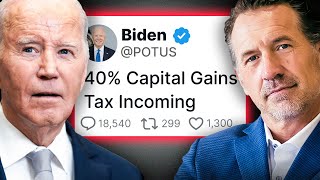
Mark Kohler breaks down five major tax changes in Biden's proposal: higher capital gains rates, taxation of unrealized gains, limits on 1031 exchanges, crypto wash-sale rules, and elimination of stepped-up basis. He weighs the tradeoff between taxing the wealthy and keeping money in Main Street businesses.
Chapters
Is calling. I am trying to send you a message and ask for your help. We want to stimulate the economy. We want our businesses to grow. And we have this new tax bill in front of us that you proposed. And, and frankly, everybody, I don't want to be Republican or Democrat in this conversation. If the government proposes a tax bill, I want to break it down and figure out if it's a good idea for Main street, for us middle income America, small business owners, is this going to help us or hurt us? I don't care if it's Trump that's proposing it or Biden proposing it. And you know what? This bill is creating red meat for everybody to fight about. The Democrats are like, oh, we need to tax the rich. And the Republicans are like, you're taxing the rich too much. And it gets polarizing. So I want all of you to know I'm going to talk right in the middle to all of you about basically what this bill is about. Now, there's a lot in here of new tax increases and ways to spend money. Some make sense, I get that. Let's put money where it needs to go. But to just increase taxes arbitrarily for the wealthy because they need to pay more, is that going to help us? Well, I'm going to break it down and I want you to vote here in just a moment. So I want to just lay forth the five biggest tax changes in this bill that would impact all of us. We may think, oh, it's just going to, you know, hit the rich. Well, we'll see. So I'm going to hit five of these changes or tax incentives that the Biden administration is proposing. And then I want to break it down with two scenarios and I'm going to let you vote and you get to decide and we're going to send this message, send it to the government, help us. We are, we are dying here. Inflation and increasing costs are killing us. What do we do? So here's the five biggest changes in this bill. Number one, we are going to increase capital gains rates, which may be max of 20% for the wealthy. And then we've got the tax cuts, I mean the ACA Affordable Cares act tax on that top of that and state taxes and all that. But federally has been capped generally at 20%. Now the Biden administration says it needs to go to 39.6. So 40% tax rate on capital gains, the highest increase in capital gains taxes in 102 years. Okay, so that's number one. Number two, we're going to tax any unrealized gains in cryptocurrency in real estate, in small business and stocks. If you've got gains and you're just sitting on them and you're like, I don't want to sell yet. I'm not ready to sell my stock in Tesla. Well, you're going to get taxed at a certain income level. If you make too much money, you're going to get taxed a 25% rate on all of these unrealized gains because you're not willing to sell. We don't get to tax you, so we're going to tax you anyway. Now, there's some constitutional arguments there, but that's point number two. Number three, 1031 exchanges. You real estate investors out there, you love the 1031. I love the 1031. You can buy. I'm sorry, you can sell a property and buy a new one of equal or greater value. You can sell a property and buy a new property and then sell the other one. You can exchange. You can exchange real estate and pay no tax as long as you reinvest that money into real estate. It helps stimulate the real estate economy, which could bring down interest rates, which we all would love. Well, if you make too much money, no 1031 exchanges. What? No 1031s. And the limit is not as high as you think. Number four, no wash sales for crypto traders. Now, if you're trading cryptocurrency and you have a big loss, you're allowed to take that loss and redeploy your money into more cryptocurrency. You can't do that with stocks. You can't sell a stock, take a loss and buy the stock the next day. But currently you can do that with cryptocurrency. And what happens? You have to pay tax. When you have a gain and you get this loss, you can harvest this loss and move forward and buy more cryptocurrency. That's off the table. That's number four. And number five, no stepped up basis when you die. If you have property worth more than $5 million. So let's say you have the family farm that's worth $10 million. This landlocked, beautiful property. And grandpa and grandma pass away and they have, now they get to pass this land onto the family. Normally you get a stepped up basis to fair market value and there's estate tax if the property or the mom and dad's wealth is more than approximately 13, 14 million now. But the property gets stepped up and then the family can sell the property tax free. And that's a great thing because estate tax makes up the difference. Well, not anymore. There's no stepped up basis. So the family has to go sell the farm to pay the tax. Now, some of you may not be rich, but you've got family property, family land or cabin, a farm or something that you might inherit. And now you've got to sell it to pay the tax. Just those five provisions are, in the Biden administration's terminology, targeting the wealthy. Okay, fair enough. Those five, big deal, big tax hikes. So what's that do? Now? I've got two considerations I want all of you to think about, and then I want you to vote. And then I'm here to answer any tax and legal question you have. If you're trying to write off some expenses in your business, if you're trying to incorporate your Should I set up an LLC or an S corp? How do I pay my kids? How do I make money on Main Street America and save taxes and build it? I want to answer your questions, but here's the two scenarios. All right, let's think about this. Inflation is a tax on a hidden tax on middle income America. When inflation goes up, costs go up. How many of you have experienced an increase in your food cost just at the grocery store and with eating out? At least a 25% increase for many people. So if you normally would spend 1500amonth on food and groceries, now you're spending 2000amonth on food and groceries. Your costs went up because inflation went up. The only way we get inflation down is to stimulate the economy and get more money in the system so the costs settle back down. So if you're in middle income America, you're like, I'm paying this hidden tax, this increased cost in my life, and who does it hit the hardest? The middle income. So let's say you make $5,000 a month and your food cost just went up by $500, 1500 to 2000. So of your monthly budget of $5000, you just had a food increase of 500. That's a 10% increase in costs to your family budget. Well, if someone else that would be considered high income is making 20,000amonth and their food cost goes up by $500, that's only a 2.5%, a 0.02%, I should say 0.025% increase in their overall budget. That $500 hurts a lot less for someone making 20 grand than someone making 5 grand. So do we really want to Take the wealthy's money and put it, give it to the government or do we want them to go out and continue to build business and buy real estate and try to flip property and help real estate values grow and see interest rates come or no, just have them send their money to the government. Now second concept here, this is an important one. Tell me what you think here. So let's say you got this rich person and you're like, they should pay more, dammit, they should pay more. They make a lot of money, they're driving a nice car, they should pay more. Okay, fair point. That's okay, let's live with that. And let's say that increased tax is $10,000 a year. We want to change the equation here with the proposal the White House is throwing out and we're going to increase their taxes by just $10,000. All right, so would you rather have that $10,000 go to the government and they're going to spend it on what they think is best foreign policy, who knows what, maybe it would help in some area. But I'm going to, I'm middle income America and remember my costs are going up and so I would rather have that rich person give 10 grand to the government and the government will help me, they'll help me. Or do I want that rich person to take that 10 grand, help Main street, stimulate their own business, maybe buy more real estate, build their business, hire a new employee, take that 10,000 and build that business so that more people can do business with that business to business relationship. Do we want to increase that with the $10,000 or give it to the government and they can choose what they think to spend it on to help middle income America? Folks, that is the decision before you. I'm not going to tell you how to vote. You get to vote how you want to. That's the beauty of this wonderful country we live in. With all the problems and the messes and the protests and all that. We still get to vote. And so we can choose do we want this money that would otherwise be invested back into the corporations and the economy or do we want to give it to the government who's already upside down, pay an interest on massive amounts of debt because they've overspent or again stimulate Main Street? So you get to choose. So here's your vote and then we're going to send this result and we'll email it to the White House. They've got an email that they take these emails and we're going to tell them the results of Our live today. So you get a vote, send the money to government. So you get to type government and whatever portal you're watching here on YouTube, Instagram, Facebook, put government or Main street, where do you want that extra tax to go? Because if the White House gets this vote, we can give the money to the government. They'll spend it. Trust me, if I give money to someone, they're going to find a way to spend it. Or I can take that money and help grow my business or another business on Main Street. Building a business to business relationship. And that's what's before us. It's that easy. Do you want to tax people more or put that money to work in our economy, reduce inflation, reduce costs and build wealth. Me giving money to the government doesn't build wealth. Me putting it into the economy builds, I think everybody's wealth, including mine. I want to grow it. Okay, so we're going to wait to see the results here. Now before we get to your questions and we can talk about the tax bill, we can talk about your small business. I'm here for you. I love small business and saving taxes. I'm an attorney, cpa, best selling author, podcaster. I've been helping business owners for 20 plus years and done over 10,000 consultations. I hope I could help answer your question about your small business. But first I have my tax and legal workshop. I do it twice a year. It's coming up in less than six weeks in June in Salt Lake City. It'll be a virtual broadcast as well, but in person. We are going to be off the hook. This is a bunch of accountants, small business owners, attorneys, financial advisors, all networking together. The biggest tax and legal conference of the year in June, Salt Lake City. Now you can go to tax legal360.com and I have a bonus for you today. This is your bonus. You can throw it in there into the shopping cart and it is 360 plus one. 360 plus one and the number one. We'll put that down in the chat for everybody. If you use that at checkout you can bring a friend for half price. Bring a friend, your business partner, bring a child, bring a parent. It's a tax write off because you're going to learn about the most kick ass tax strategies for small business and investing in America. Right now we have 24 breakout sessions with over 10 different speakers and a main stage that's going to blow your mind if you don't save 10 times this ticket cost in taxes this year. Then I failed and I've given money back maybe once in my career at this small business conference because we save you so much money. You're going to love this. So get to tax and legal 360 and use 360 plus plus one, the number one at checkout. And get your friend, business partner, spouse or child parent on the ticket. See you in Salt Lake. All right, so I'm excited for some questions here. I've got Zach and Dylan here in the studio. How's our votes going? Are we. Are we more for the give the government the money or more for Main Street? I'm dying to know who would have
thunk it's almost a majority, if not 100%. I don't think I've seen one person say government. Every single message has said Main street on both Instagram, all the platforms. Wow, look at that.
Actually, it actually makes me kind of emotional because I freaking love America and I love small business and I love Main street and people. We need the government. The government's not bad, but the government needs to be on a budget. We just can't keep giving them more money. I want to use that money for you and for me to build wealth and get inflation in check and let the government do what it's good at. But building my wealth, the government's not good at that. I'd rather use that money. So, wow. 100%. All from main Street. Loving Main Street. All right, do we have a good question here? I got my whiteboard ready to go. I got my rock star.
We do. So the first question coming up for today is from Judah K on YouTube. And they ask, when would you advise typically switching from a sole propane LS LLC or an LLP to an S corp.
I love it. So converting from an LLC to an S corporation is a very, very important step for every small business owner. Can we go to the whiteboard? I want to show kind of what this looks like. Now, some of you may know I have what I call the trifecta. And the trifecta makes sense of this structure. So all of you, if you were to meet with one of my tax lawyers, and we're helping small business owners every day. I've been doing this for years. So please know I've got a lot of confidence that this is a diagram that just makes sense. You're going to put your operations over on the left and your assets over on the right. Now, you can use an LLC on both sides. I might have an LLC over here for my little, let's say, consulting business. I Do consulting or maybe you sell a product or you've got a little something online. Okay, so you have this revenue coming into your little LLC and you're taxing it as a sole proprietorship on a schedule C, very, very common. So this is your side hustle over here. We'll put side hustle. Okay? Now over on the right side it'd be where we put our real estate. So we might have rental property over here and these rentals are going to go into an LLC as well. We might have multiple llc. We'll build those up in the future, we're not sure when. So we've got our assets over on this side with an umbrella of protection and our small business over here. Well, the problem is this LLC pays self employment tax of almost 15.3%. Well 15.3% on the first 140k or more and then it jogs down and whatever. But this tax, the self employment tax is a big one. But if I can convert over to an S corp, then I can minimize that tax. And so I'll pay this fica, this tax we hate to pay. I'm going to pay this FICA over here, but then I can push all of my net income down here with no self employment tax and no corporate tax. Now everybody, this conversion is absolutely critical. At the right dollar amount and every small business owner, dentist, doctor, landscaper, restaurant owner, online marketer, influencer, we're going to make this transition so we can save on this fica. We don't want to pay it on every dollar. You want to convert to an S corp when you're netting around $50,000 or more, I'm going to say 40 to 50,000. So when you're netting, bringing home after your expenses around $3,000 a month, we want to make that conversion. Now that conversion is pretty easy to make. In fact, though it's very expensive, our office charges $200. News alert. It is very easy to convert your LLC to an S corp and we can even backdate it to 1124, even though we're now in the month of May. So talk with the tax advisor. I've got a whole network at markjkohler.com, the Tax Pro network of hundreds of accounts around the country that speak Mark Kohler. They can get on a phone call with you in your area or in your region. And I don't take any money from you and them in that relationship. You need a tax advisor helping your small business that loves Main street as well make the conversion to the S Corp when the time is right and you can backdate it for the whole year. So great question. Be on top of it. You're on the right track. Next question, Zach.
Yep. Next one is from Tony Martinez over on YouTube and he asks, wasn't there also a proposal to eliminate Roth conversions?
Oh, yes. So last year was 2.0, the Act. 2.0 president. The Biden administration had proposed a bill to, to really, amongst other things. The bill passed. We were able to help lobby against this one particular provision. But the Roth provision was, and it was much more pushed forward last year that we're going to limit the size of Roth accounts and the ability for people to convert their traditional money into Roths. So if you made too much money, you can't play in the Roth party. Luckily, all those provisions were stopped. It's nothing new. The Democrats have proposed this before and Biden threw that into this tax proposal again. Now here's the thing. Social Security, it's great. I'm going to live large on Social Security, right. I know it's going to be there and it's going to pay me out big. Maybe, right? We got to be careful with that. Now, I'm not proposing, I'm not predicting that Social Security is going to fall apart. It's not. It's a mainstay in America. But does it pay out what we really need for retirement? Shouldn't we be helping small business owners build their own 401k? Their solo 401k their Roth IRA? Investing in real estate and gold and silver and small business. You don't have to put everything in Wall Street. A401K is not just stocks. It can own real estate. And a note, you can invest your 401k in what you know. So I talk about that a lot on my podcast on my YouTube channel. Please get over there. If that's a new concept. You haven't heard of self directing. So the bill had some poison pills going after the Roth ira. But again, we want to run like that's the plague. It is not good for retirement accounts for people. We want to encourage people to build their own retirement and not just solely rely on Social Security. Again, do I want to give 10 grand to Social Security or put 10 grand in someone's Roth IRA and help them build it? That's the concept. Rich or poor, it's the same concept. All right, next question.
All right, next question. Also from YouTube from Alexi. He asks, can I lend money from my ROTH Self directed Ira to the LLC, which I'm personally owner of 33% of. And that LLC buys rental property.
The answer based on the facts you gave me is yes. Now let's go to the whiteboard and explain what Alexi is doing. So if we go back to our trifecta, we're going to divide this side in half. You might have rental property in your own LLC that's owned by your trust. This is your revocable living trust. You also might have an LLC over here that owns a restaurant. So let's say Alexi owns. Oh, no, no. He told us what they're doing. Sorry. He is buying and selling. Oh, I've got to get my little eraser here going. Okay, my eraser is not working, so I'm just going to write it right here. They are buying and selling real estate. Okay, so fix and flips. That's what they're doing. Here. Over on the right side we're renting. Over here, we're fixing and flipping. Okay, so that's Alexi's business. Now, in between all this, he has a Roth ira. And this Roth IRA has some money in it. And he's saying, can I lend my own Roth instead of buying stock in Microsoft? I don't want to buy Microsoft stock. Maybe I want to loan money to this business and get an 8 to 10% return on my money. And I know I'm going to make more interest paying back to myself than investing in the stock market. Can you do that with your Roth ira? The answer is yes. But your ownership percentage is critical. In order to make this a non prohibited transaction, you have to own less than 50%. And the closer you are to zero, the better because we've got the 50 shades of gray going on here in this deal. If you're at 33% ownership, you're in a really safe position. But now this 66% cannot be family. It cannot be your spouse, it cannot be your child or a parent. Those are prohibited parties. The IRS doesn't trust you to be fair. So as long as it's none of those people, it's a third party that owns the other 66%. You can do this loan all day long. And if any of you are loving this, get over to Directed Iraq, the fastest growing, highest rated, five star rated trust company custodian in the country. So www.directedira.com we have webinars there and all the tools you need to start self directing your Roth and investing in what you know best. All right, next question.
All right, next question is over from Instagram, from Bookworks accounting and they ask what are the income limits for the cap gains? 1031 proposed changes.
Oh, my understanding is if the cat. If the 1031 is it's either over a million or 5 million. Let me see right here. I've got the. Okay, I want to make sure I answer this. I don't want you guys think. Okay, someone in chat want to help me out here? Everybody is. I know there's a number of tax professionals in my network that are watching today and oh, here it is, the light kind exchange. Oh, it actually in my summary and this is literally from the White House. Of course they're not going to share some of these little tidbits. I'm sorry, they just don't. They keep you on a need to know basis. This is the fact sheet from President Biden's office. Does not give the breakdown. My understanding in the last year's bill was it was at a million dollars. So any 1031 exchange that was over a million dollars of capital gain, you could only 1031 up to a million. And the rest you had to pay tax on. That was in the prior proposal. And we've seen all sorts of variations on this. If anybody has the detail on the 1031 limit before it's taxed, please put that in the chat for everyone else and I'll share it. If you see that, Zach. All right, let's move over to our next question.
All right, next question is from Horatio over on YouTube. He asks, do you have any reservations on Series LLC in Texas? I currently purchased a rental property and plan to buy another another property by the end of the year. Do you recommend it?
I love it, Horatio. Great question. Now, everybody, the Series LLC is a really cool type of LLC. It's only offered in about 15 to 17 states. More and more states are adopting this type of llc. But doesn't a picture say a thousand words? That's right. We got to go back to our trifecta. So if we're over here and we're going to be investing in assets and we're going to buy rental property, here's what Horatio is up against. He could open two LLC in Texas, which is one of the states that allow for this, and he could open two LLCs and go buy two rental properties. Now, why would he do that? Well, it's because he wants protection. He doesn't want both of his eggs in the same basket. If something goes wrong on this property, we want a wall, a firewall to get over to this one. Well, a lot of People are like, well, I don't want to set up two LLCs, Mark. That's expensive. So what Texas did, along with these other states is say, well, you can set up one llc, have one LLC to help own all the property, file one tax return, keep costs down, and we're going to let you set up as Many sub series LLCs as you want at no extra cost. You can have these other little LLCs and they all feed into 100% down into the parent. So this is called a Series LLC and Series LLCs save administrative costs. I really like the Series LLC. Any reservation? Here's the reservation. If you're only going to own two properties, I'd probably both put them in the same damn llc. I wouldn't go for an extra series. But if your goal is to buy four to eight properties, then doing a series LLC is going to allow you to expand much more affordably and create barriers or buckets for all the different properties. If you're not sure which states have these, I've got articles on my website on this. I also have a calendar, my tax and legal calendar and workbook journal is available on my website and it has a list of all the states that have series LLCs and special protection LLCs. Get over and check that out. But Horatio, if you're going to buy more than two properties in the next couple years and you're going to keep investing in Texas, I'd go series llc, no reservation. I think it makes sense.
All right, next question coming up is from quinton, also on YouTube. He asked if you already have an escort, can you add on the other parts of the trifecta to my plan?
You add to it.
What can you add on the other parts of the trifecta to my plan?
Oh, yes. So let's go to the whiteboard. So let's say Quentin here has an S corp and let's say he's running a landscaping business. Just any type of service business would work. Heck, you could be a plastic surgeon, but you've got this S corp and you're saying, well, Mark, I haven't done my trust yet. I don't have a solo 401k yet and I don't have my Roth yet. But I'm on track this year. I'm freaking going to do it. Oh, and I want to buy a rental this year. I'm really trying to scale up. I'm keeping my costs down. I'm really trying to build wealth and I want to build my trifecta. Well, if you already have The S Corp check and you're doing your W2 and your K1 and you're saving on FICA, which is what we talked about earlier. That's great. And your S Corp is going to be owned 100% by your trust. So when you add the trust. Second step. That's cool. What I do is a stock transfer agreement and we transfer the stock of the S Corp from you to the trust so you are no longer the owner of the property. The owner becomes the trust. So you can add that in step two. Then you're like, oh, I'm gonna add an llc. Okay, third step. Well, now that I have my trust, my trust can open that LLC and go buy my cute little rental property. Remember, the S Corp has nothing to with this property over here. The S Corp is your operations. I want assets over here. Do not put assets over on this side. It's a big no. No. Then you go, oh, well, I'm making money. I want to fund a Solo 401K. I want to fund a Roth IRA, I want to fund a health savings account. And then I'm going to take those and go form an LLC and I'm going to go buy some gold. I'm going to go buy some crypto. I might go buy another rental property. You can do that all over here in the fourth step. So you can add these other steps down the road. Just because you started with the S Corp is not a bad thing. We're just going to add these other options as you expand. All right,
all right. It looks like majority of comments are coming from YouTube today. The next one is from Pramod Boudoir. I'm sorry if I mispronounced that. Do we need to open separate LLCs to buy rental properties in different states?
Ooh, great question. Now everyone here too. Don't forget to register for tax and legal360. Do you know every question that's already been asked? Today we have a 50 minute class that's continuing education certificate for a CPA or an attorney or an enrolled agent. When you come to the event, you're going to be learning these topics taught by a host of speakers including myself. S Corporations putting the kids on payroll where how to set up the right LLC series LLCs, asset protection. That's a three day workshop, people. All the VIP ticket is the only one more than $1,000. You can have a general admission ticket for 500 bucks and you can come for three days and learn so much that's going to save you thousands and network with Accountants that know what the hell they're doing. So I think you would love it. So in our diagram here, we're going to go buy real estate. You've got multiple options. I'm going to give you this picture. So let's, let's kind of see, this is the asset side, right? And we're going to expand this. I want to blow this part up. So we're going to blow this up and make it even bigger. So let's say you've got asset side. See over here is the op side. Okay, Your first option is you could set up one LLC and register it in three different states. You might register in California, Arizona and Florida. And you're going to put a property from Florida, a property from Arizona and a property from California all in the same llc. You can do that. That might be the right thing to do. These assets don't have a lot of equity. They make sense to be this way. And you have all your eggs in one basket. But you go, oh my gosh, no, my Arizona is an Airbnb and my California is a ski in, ski out up in Lake Tahoe. And my Florida property, oh, that's a low income property. It's got high risk tenants. Well, maybe we should put these in different baskets. So your option two is, oh, I'll set up a California llc, I'll set up an Arizona llc and I'll set up a Florida llc. And I'm just going to have a different bucket for each property. You may say, well, Mark, which one's better? It depends. This is why we have three paralegals doing fix. My entity I set up online, I won't use the name I use there sometimes. So we have, we, we clean up more entities than sometimes we set up because people just go online and click, click, click, and they're like, oh, what am I doing? Please get a consult with a real. I'll give you a website here where you can do that. But anyway, option two is you could set up three different LLCs in three different states. And it's not an issue of quantity, it's an issue of quality. Because these three properties may work all in the same llc. This one, it may require it. Now your third option is, guess what, it's the series llc. So I could have an LLC with little subs. And if I'm investing in states that allow for the series llc, then I can have one LLC and just set up the subscribe in three different states. So I'm saving the money of doing option two. But it Depends on what states you're investing in. The last option is the level we graduate to with our clients that have really built some real estate equity, maybe a million dollars or more. Now we're going to set up a holding company. It's called a COPE llc. We're going to use states like Wyoming, Ohio and others that really have great laws. Don't think it's Nevada and Delaware. Those are for big corporations. So we're going to set up the right COPE LLC and then go set up other LLCs, maybe in California, maybe in Florida, maybe in Arizona. But we're going to do this because you have so much value. We need two layers of protection. Now this is an advanced asset protection strategy and that's going to be something. Again at 360 we're going to teach on and I've got this in my books. You can get over to Amazon and type Mark J. Kohler. You're going to see all the books in here and hundreds, if not thousands combined. Five star ratings. Please get over and check them out. All right, maybe a few more questions.
Sure thing. So the next one is from Nursevest. They ask, should I buy land inside or outside a self directed ira? My LLC will buy it.
And my LLC is what? The last part my LLC is going to buy. Okay, so all right everybody, the question is going to restate this. Should I buy real estate inside my IRA or buy it in my own name? Now what would that look like in the trifecta? It would look like this. You might have an LLC that's owned by your Roth, your partner's Roth, your spouse or kids, and then you have another LLC that's owned by you, your trust. Okay, guess what? They both have pros and cons. So the answer is. The answer is both. I want you to buy property in both buckets. The bucket that you own personally is going to give you pass through losses and depreciation and cost segregation. Are you doing self rentals or Airbnbs or long term rentals or commercial rentals? I don't know what floats your boat. Buy rentals in your own name to get special tax benefits. But when you go to sell, you might pay tax unless you do a 1031 exchange. Oh, and watch out, if you make too much on that 1031 exchange, you might not be able to do it. Or I can come over on the other side. Is it and, or, and I buy rental properties inside my retirement account. So my Roth IRA is buying rentals and if I go to sell those properties, I'm going to pay zero tax. Well, I don't get the depreciation and cost seg in that real estate network. They told me not to put real estate in my retirement account because I don't get the pass through losses. Yeah, but you don't pay tax when you sell the damn thing either. See, they each have benefits. Pros and cons do both. I do both. I own rental property in my retirement accounts and I own rental property in my own name. They're both great. It's not an either or. Next question.
All right, we'll go ahead and do two more questions here. So Crystal Blue asks, does it make sense to use the Same LLC for two related businesses, one long arm quilting services and two long arm machine dealer, or should I have separate LLCs?
Well, so this question, if we go over to our trifecta takes us over to the operation side and the option on the table is I'm going to have two LLCs for two separate businesses. Now in this example, what I'm reading into is that Crystal Blue owns 100% of both of these. Okay, that's cool. But you've got two bank accounts, two tax returns, two entities, two operations. I don't know if it's worth that extra administrative cost. Now if you have an exit strategy where you're saying, oh, the quilting business, I'm selling that in the next year. I need it to be its own business. Okay. Or this one over here, the machine business. Oh, I'm going to bring on a partner soon and I'm going to carve up my percentage. Okay, then you're going to want to keep them separate. But anybody out here watching, if you have multiple businesses, my goal is to keep it efficient and bring it together. Me, Mark Kohler, I'll be transparent. I don't like you. Look on state website. I have one S corp in my life. That's it. I can have as many S corps as I want. Me little Mark Kohler over here, I have one freaking S corp. Now it may own a percentage of this company and a percentage of this company and a percentage of that company and this URL and this trademark and da da da da da. Hell, I want my S corp generating money in multiple areas, but they all flow into one company. So Crystal Blue, what I would if you were to meet with one of my attorneys. Oh, I told you I'll get you a website here, give me two seconds is I might take these two LLC and merge them into and it's a tax free reorg very Affordable to do is I'm going to get rid of this one and bring it over here and make this one a subsidiary. And I can do that with $500 to $750 very affordably with one of our paralegals and make this an owner of this LLC here. Then you can do your S election if you need to. And you're going to save taxes as well. So I would get rid of the left and right and create a parent sub instead of brother sister. That, that's the way I'd go. Crystal Booth. Now, everybody, I want to give you the website to go to if you want to consult with a real tax lawyer that knows Main Street America. That's affordable. No big five or $10,000 package or more. You can just hire them per hour or say, I need an entity, I need a trust. Go to ww.kkoslawyers.com and when you get over there, you can choose from a variety of services. It's a free phone call to talk to one of our new client administrators and do a discovery call. It's not going to cost you anything. Just see what's out there before you go on the web and just start clicking and buying things. Get over there and check it out. I think it'll be a big help to you and very, very important. All right, next question.
All right, this One is a two parter. It's from Harshall over on YouTube. So I have a solo 401k and an old 401k from a previous employer, the current employer, which is a thousand people firm can accept investments. Is it possible to convert old 401k into their solo 401k and then invest that into the new employee's investment?
And then what was the last part?
Can they invest that converted one into the new employee's investment?
New employee's investment. I don't know what that means.
So their current employer, they accept investments.
Okay, so there's this. Let's go to the whiteboard. So here's what I'm seeing. We have a third party company that you don't own and you work for this company and get a W2. Your W2 comes down here onto your 1040. All right, in this W2, you're also deferring over here to your. You're calling it your old 401k. I'm going to call it your current 401k because you still get a W2 and you still work for this employer. You may seem old to you because you've had It a while, but I would recommend you use the word current 401. Meanwhile, you've got an S corp or an LLC and you've set up a solo 401k. So you're investing this like crazy and you're investing in what you love. And I would think you're self directing this, meaning you're investing in anything you want, not just the options at work, but you've got this money that's pooled up over here in this bucket and you're like, mark, I want to move that money over here so I can invest it in this company. First of all, I think you may be investing way too much, putting your eggs in this company's basket over here. But if that's what you want to do, you could take solo 401k money and invest in your company you work for. That's not prohibited. But can you roll? We call this a rollover. Can you roll that money over to your solo 401k? The answer is no while you're still working. So if you're still employed for the big company getting a W2, you cannot roll this money to your solo. It is stuck there until you quit. So once you quit, you unlock this old 401k and you can move it over here. But as long as you're employed, you're stuck with that. Whatever options they give you, which is going to be normal Wall street stuff. So get a consult with one of my tax lawyers@kkoslawyers.com and they can walk you through your options so that you know. And you can just book one hour. Hell, whatever you pay for an hour, we want to save you 10 times that. Helping get you the right structure and plan. So keep, keep on track. I like where you're headed. All right, last question or you got a couple more. We feeling it?
We do have a couple more.
Oh, and how's the voting going? It's. It's Main Street.
It's still Main Street. I have not. I seriously have not seen.
You haven't seen one Government?
Not one.
All right. I love it. Wow. So exciting.
All right, well, there was a quick follow up to the one we just did. He goes, does the answer change if I convert to an IRA first and then invest?
Well here, let's go back to the board. The follow up was, well, I won't roll over to the 401k, I'll just put it over here in an IRA and then I'll go invest. It is very unlikely they're going to let you roll out any money to an ira, but sometimes you can, based on your vesting, how long you've been with the company, sometimes they let you roll out your contributions, but they're not going to let you roll out any gains or employee match, employer matches. So whether you're trying to put it in the solo or whether you're trying to put it into an IRA, you've got to go to your 401k administrator and ask them what your options are. It's not tax law that matters, it's who the hell sold your company the 401K. That 401K document is going to dictate what you get to do. So talk to them, see what they'll allow. You're going to want to look at vesting schedules and what you're allowed to roll out. And if you want to roll to an IRA or a solo, once they allow you to roll it out, it can go wherever the hell you want. But while you're still employed, it's very, very rare. So good luck. Good luck. All right, next question.
All right, we'll go ahead and do this one From Jay on YouTube. Can you trade forex in parentheses leveraged in a self directed ira?
Yes, you can forex trade with leverage in a self directed ira. Now, you will pay what's called ubit. It's unrelated debt financed income. So whenever you trade on margin inside a retirement account, there is a tax. And here's the concept. If you want to take your Roth IRA and go buy $10,000 worth of Tesla stock and you make and it doubles, there's no tax. You took your roth or your 401k and bought stock, you could go buy real estate for 100 grand. Real estate goes up to 200 grand. You pay no tax. But once you use debt, the government's like, whoa, whoa, whoa. You can invest your 10 grand or 100 grand however you want. But if you go borrow money like forex on margin or buy real estate with a loan, if you're going to have debt, we want to tax the portion of money you're making related to the debt. So if you're 50% leveraged and you make 10 grand or 100 grand, then we're going to tax 50% of your profit because that was profit you earned based on debt, not your money. So that's called unrelated debt financed income. So you made income financed by debt. And we as a society have said we're going to tax you on that. I'm sorry, your own money, no tax. That's cool, but on the debt finance so you can forex trade your little heart out. I love it. Just be careful of using a margin account and I'll tell you, be careful with margin accounts anyway. Be careful. All right, next question.
All right, we'll go ahead and wrap it up here with Arnold's question. He asks, I'm mining crypto on my cell phone. What is the best strategy for the tax next year?
Wow. If you're mining crypto on your phone, that's one hell of a phone. Usually have to have pretty damn good video card on a PC. I can't even mine here on my MacBook. I don't have the power for, for that. I don't know what you're doing on your phone. You may be managing your nice hash account on your phone, but there's got to be a video card somewhere and an asset somewhere. And mining. Okay, I know mining. I'm mining. I've got a mining rig but I don't mind on my phone. I can track it on my phone. But I got a motherboard with seven video cards mining away. So I'll leave that alone for the moment. I don't care if it's on a phone or whatever, everybody. But if you're mining crypto, which is a cool strategy and by the way, you're not actually out there with a pick an axe looking for cryptocurrency, you're helping verify transaction on typically the Solana or Ethereum blockchain and you're getting paid in bitcoin. That's called mining. You're providing a service. So here's the point everybody. If you're going to be mining crypto or staking could even apply. You're earning money. You're not investing, you're earning. When you're doing crypto mining, that's ordinary income and you're going to pay self employment tax on that. I've had clients form an S corporation for their mining rigs because they're making so much. So you really need a consult with one of the tax lawyers in my office. I would recommend Darren or Max. They're both very, very skilled and certified in crypto taxation. So get an appointment with Darren or Max because you're going to pay more tax on that crypto mining than you know and paying them for an hour to give you a plan of what to do is good planning. People, the rich get richer when they plan and understand their tax strategy. Saving taxes is fun. Did I really just say that? It is. It is so fun. To save money. Do you know it's easier to save money than make money? So please get to the tax and legal 360 workshop. Use the 360/1 code and bring a friend at half off. I'm going to be there all three days. We have a huge party on Friday night. We've got an amazing schedule of speakers and workshops, over 30 topics. And I want to say thank you for listening. Thank you for being on Main street together. We're all trying to make the economy better. When we work hard and we invest our money in real estate and small business, we're making America better. And we're reducing inflation. We're reducing the costs of all of our living costs. That's what we need to do. Let the government do their thing. Get on a budget, government. But don't take any more of my money. Lower class, middle class, upper class, I do not care. Stay on a budget. Let all of us use our money to make the economy great. And when we make the economy awesome, it benefits all of us. Republican or Democrat, it doesn't matter. We're all trying to make Main street better. So thanks, everybody. Keep living the dream. It's real. It's hard work. I was up late working last night. I'll be up late working tonight because I believe in my dream, my purpose, my vision. And I encourage you to do the same. Don't give up. It's hard, but it's your dream, no one else's. And you can.
More from MARK




The secret to managing your family's future #financialfreedom #estateplanning #shorts



Moving Property to an LLC: What They Don't Tell You #realestate #investing #tips


