BREAKING NEWS | What New Tax Policies Mean for Small Businesses
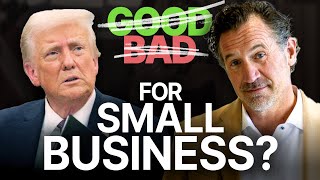
This content was created by MARK KOHLER. This content was uploaded by MARK KOHLER. This is a YouTube video titled "BREAKING NEWS | What New Tax Policies Mean for Small Businesses" (created 2025-02-14). It is a diarized transcript of a tax-policy update led by Mark Kohler, with a moderator/interviewer (labeled SPEAKER B) and audience Q&A. Kohler reviews recent executive actions and congressional budget blueprints (including a reciprocal tariff plan), explains likely impacts for small business owners and real estate investors, and details four expiring Tax Cuts and Jobs Act provisions he expects to be extended (bonus depreciation, the 199A pass‑through deduction, the employer credit for paid family/medical leave, and Opportunity Zones). The video also includes discussion on tariffs and consumer prices, inflation, effects on individual 1040 filers and side‑hustles, and a brief update on BOI/CTA reporting.
Chapters
Foreign. Well, good afternoon, America. It has been a busy day in tax policy. Washington is working around the clock to, well, they say save U.S. taxes. And everybody's trying to get in on the party. Of course, Donald Trump's our fearless leader and he's set a pretty high bar. And so Congress is trying to respond. Let me just bring you up today in the news as to what's been happening. I've got some impact statements I want to make on what this is going to mean to small business owners. We're going to focus on that today rather than individuals. And all of you, man, you 40 million Americans with a side hustle or 50 million Americans with a rental property, this, this is going to impact you. So let's talk first. Yesterday, the House GOP said we're going to come forward and release our blueprint for the budget and these tax cuts. This is it. I printed it out, 45 pages. It's a blueprint. This is the first step in a lengthy legislative process. This is them just kind of, you know, throw it and shooting across the bow. You, here's where we want to see some cuts in different departments. Here's what this is going to do to the budget. And we're going to carve out 4.5 trillion. Yes, that's $4.5 trillion in tax cuts that within 10 years has got to get paid for. So they kind of just threw out an outline, you know, and this is, and they start saying we should cut here and we should cut there. And we don't like what they're spending over at the DOJ or, or in Health and Human Services or wherever they're going to, they're going to start kind of putting their stakes in the, in the sand, if you will. Well, day two today, three hours ago, right before Donald Trump. We'll get to it in a moment. Sign some, another executive order regarding tariffs. Doge shows up at the front door of the irs. Hey, how's it going? We're coming in. We're, we're going to start auditing your books, too. Oh, how the tables have turned. How many of you fear that day when the IRS knocks on your door and you're there having to answer to the IRS for the their audit? Boy, how fun would it be to be a fly on the wall there and say, how's it feel? You know? So the IRS is now going to be getting audited by Doge actively. Donald Trump empowered Elon Musk and his team to just go in with transparency. Tell us what you find. Do the same thing you've been doing everywhere else and just start adding up the columns, subtracting, do some math and let's see where everything's going and where it's being spent. Well, simultaneously, like I said, in the exact hour, Donald Trump signed an executive order and it is called a reciprocal tariff plan. Now, this is going to play into that budget I just talked about with this 1.5 trillion. Remember, the House budget has to be able to pay for 4.5 trillion in tax cuts within 10 years and cannot affect our deficit. In fact, we want to pay down the deficit. That's what lawmakers are trying to do. And so Trump says, well, you know, guess what, I'm going to help pay for that because any tariffs we collect from other countries, they go against that number. So he says, you know what? Instead of charging more tariffs against some countries and just trying to be arbitrary and maybe unfair, some might appear to feel it might be, he says, I'm just going to do reciprocal. You charge a tariff on our stuff that goes into your country, then we'll charge the same tariff on ours. And he said, no more, no less. I'm going to charge the same thing and we'll see what happens. And by the way, we want a balanced trade relationship. If you're going to take our goods, we'll take your goods, you're going to take our goods. We're going to be balanced. No one gets more or less than the other. Sounds logical. We're going to see how it plays out. I've got some incredible information to share on tariffs in some future videos here shortly. It is complicated topic and I'm going to break it down for all of you here in some videos to come. Please make sure I want to just mention this now that if you have not already subscribed and hit the bell icon, please do the rest of this year until we see the dust settle. I'm going to be here every week giving you an update on the tax policy, the budget and everything that's happening with your tax dollars and the impact it's going to have on your tax return. As a regular W2 wage earning corporate employee, American small business owners, real estate investors, I'm going to break it down. Been doing this for 25 years and I love Main Street America and saving taxes. Democrat or Republican, let's figure out how it's going to impact your tax return and your bottom line and your American dream. All right, now, as Trump is announcing this reciprocal tariff plan, Doge is blazing into the IRS to start Their audit. Who thought the IRS was gonna get audited? I just love this. Okay, then an hour ago, so two hours approximately. After all that was going down, the Senate, not to be outdone, says, oh, here's our budget proposal and our blueprint. It came out an hour ago. I haven't even had time to print it yet. I've just got the houses. Boy, if you want to sleep well tonight, let me tell you, print out this bad boy and start reading. That's how I sleep so well. You know, as a tax lawyer, when you read tax legislation, it knocks you out. So anyway, I got a lot to read. I got a lot to do. And with all the kidding aside, this is serious stuff. And you almost have to go into this with a little bit of fun and humor because it's exciting. This is really exciting. And the end result is that all of these parties, all of these people and these different groups and parties are, the whole effort right now is to save reckless spending, fraud, mismanagement, cut taxes, tax countries that aren't willing to take our products and give tax cuts to business owners making products in America. I just got choked up. I mean, that. How incredible is that? At least in my lifetime, I haven't felt like all the legislators are getting together on this. RFK just got his nomination, just passed today. He's in. And that was our legislators working together and this swell of energy to help take back that American dream, it's just unbelievable. I don't care how old or young you are, race, color, creed, political party, someone's trying here and doing it with transparency and trying to get this done. So I'm going to be here every week breaking down these breaking tax policy news as it happens in Congress and in the White House. We with these executive orders coming out in rapid fire and without any further ado. And I'm going to take your questions here in a moment. I'll do my best to answer them. As a tax lawyer of 25 years, I've written countless articles, hours and hours on YouTube and my podcast, five different books. You can do your background on me. I'm out there trying to be on the cutting edge and I'm here for you. So I'm going to answer your questions here in a moment. But let me just give you what I see as the impact of these tax cuts. Now, Donald Trump has said, I want to make sure, no matter what, we extend the provisions of the Tax Cuts and Jobs act passed in 2017 to make sure that any of those provisions do not expire. He wants to extend those. This is a legacy issue for him. That tax legislation was the biggest tax legislation since Ronald Reagan. We saw a lot of economic growth during those four years and the following three to four years as those started to kind of trail off and expire. He wants to extend those. He's been very clear about it. Now, there's four key provisions in the Tax Cuts and Jobs Act. I used to carry it around with me. It was 552 pages, but now I've just got a summary of the 16 page summary of the provisions that are expiring and there's four of them. And I want to explain these four that will specifically help you, the small business owner directly. And Trump has said I want to see those four extended and the same carryover of what they were when they were first passed. Now, as I before I explained these four, the reason why they're expiring is these budget bills have to pass within. They have to budget balance within 10 years. So you can cut like the GOP and the Senate are both proposing 4.5 trillion in tax cuts, which we don't know where they're going to come yet. And they're trying to reduce spending to pay for them. And we're hoping to see tariffs come in, which is going to juice up that pot too. We haven't seen the detail yet, but the one thing Trump has demanded and asked for is that these provisions live on and they have to balance with the overall spending and revenue within 10 years. So here's the four. The first one I'm going to go with, the first one is one of the easy ones. Let's cut our teeth on an easy one here. And that's depreciation, which was brought out of the gate as bonus depreciation. 100% write off of certain equipment used in a trade or business. Now, let me give an example of this. You go out and buy a new computer, a new laptop, cell phone equipment. It could be 3D printers, it could be more significant. It could be some sort of manufacturing tool, equipment. It could be a backhoe, a truck. In your business, this applied to autos, which was a huge opportunity for planning. It was used for RVs, any mobile home, any type of equipment or personal property that you would be using in your business. Normally you would depreciate that over a certain number of years. Well, when the Tax Cuts and Jobs act was passed, it allowed for 100% depreciation in the year you bought it. So as a business owner, you were motivated to go holy Crap, I need that in my business. And I can write it off all in one year. And I can even go into a loss on my bottom line and take a tax credit and push it forward to the next year. What? Okay. Or tax deduction and push it forward into next year, which may get me a refund this year. There's lots of moving parts and the domino effect of that in real estate, investors were able to go do a cost segregation and write off the rental property in a faster method with this bonus depreciation. Well, this year it's 40%. It's been trailing down from 100 to 40. Next year it'll be 20%. Trump wants to extend it, get it back up to a hundy. So that's the first provision that will help so many of you as business owners. Some of you might be familiar with the 179 deduction where you can write off that computer or cell phone or a truck or an SUV or whatever, a backhoe, forklift, bobcat, you could write that off, but you couldn't go into a loss. You could only write it off up to the income you had and then you'd zeroed out. With bonus depreciation you can go negative and then that loss can be a carry forward. It's incredible. Okay, that's number one. We want to see that depreciation extend. It will help you as you buy equipment to expand and scale in your business. The second one is called the 199A pass through deduction. This pass through deduction is for S corporations primarily. We love this because it really makes the S corporation even better. But even if you're an LLC, sole proprietorship. And remember, LLCs do not save taxes. LLCs are for protection. Create an EIN brand. Your name la la la. It's going to be taxed as a sole proprietorship. Now what we want to do is elect S corporation status. S as in small when the time's right. Well, whatever your net income is in either one of those companies, you get a 20% tax deduction that you can take against your other income. Now that's a 20% deduction is a big deal. So we love that deduction and it's a wonderful write off. But what's cool is in an S corporation we're going to take our self employment tax piece through our W2 and that pass through, we're going to get the deduction there rather than a sole proprietorship paying self employment tax on all of it. So you get. I just say this because I want you business owners to know this. With a sole proprietorship or LLC, you get that 20% deduction on a bigger number, but you're paying self employment tax on all of it. It's wonderful with the S Corp where you keep pay smaller self employment tax but, but you still get the 20% deduction on the K1 or the flow through. Now this provision goes away, it's gone next year unless this is extended. So Donald Trump has said, I want this for small business owners. This is a big deduction for small business owners and I want it. So we're expecting to see that in this budget reconciliation. Now the third one that I wanted to mention is the employer credit for for paid family and medical leave. Now you can't take this credit if you pay yourself in your business because you had a child or a medical leave issue. But if employers pay 50% or more of the wages while their employees out, typically with maternity, they can take a tax credit of at least 12.5% and to a maximum of 25% depending on what you cover in wages for your employee. That's out during those six weeks, nine weeks, 12 weeks, whatever you do. So this is a really cool benefit for employers so they can help their employees whether out again on this maternity or medical leave. Well, again it's gone if we don't see this extension. Donald Trump says we want it, we need it. Small business owners need this and it helps the employee as well as the employer. Now the last one I want to mention is the qualified Opportunity Zone. This is a pretty cool one because it has another ripple effect throughout America. What Donald Trump wanted to do the first time is say, hey, we've got all these little areas throughout the country that really need to get revitalized. They need some extra infrastructure. Maybe it's a shopping mall from the 1980s and we need to upgrade it. So we need to give them some incentives with and three specific incentives. If someone was to sell any asset, it could be crypto, it could be stocks, bonds, mutual funds or real estate. And they have a capital gain. If they take that capital gain and inject it into a real estate project in one of these zones, these opportunity zones, where you get an opportunity to help revitalize an area, you can defer that tax up to a certain number of years. Number two, you can increase the basis of what you spent on that investment arbitrarily around 5 to 10%. And it depends on again that when you did this. And then third, if you hold that investment in that area for at least 10 years. You can exclude any capital gain ever when you go sell it. So if you sold your investment, 11 years later, you pay zero tax. So that's called an opportunity zone. Well, I thought it was pretty cool. In the federal government, Donald Trump's like, well, I don't know what's going to work over in Oklahoma City or New Jersey or down in Miami. So he said, you 50 governors, you choose your zones in your state. And we'll have these 50 states choose around 3,000 opportunity zones around the country and then we'll federally designate them. This benefit, it's gone, it's gone next year if we don't extend it. So this is another one that Donald Trump wants to say, we need this. It's good for real estate investors, it's good for business owners, it's good for these communities, and let's get it back. And so this tax benefit is pretty cool. I'll break it down more and I've got videos and other articles on it. So those are the four benefits I wanted to mention that I know we're going to see. I bet on it. These are keystone parts of the Tax Cuts and Jobs act that Donald Trump campaigned on and has asked Congress, both the House and the Senate, to include in these bills. And as they come out and as the two committees, I mean, the committee, there's a reconciliation committee between the House and the Senate now. And they're going to start going through this and just trying to figure out, what do we want to keep in here, what's going to pass in both the House and the Senate, and can we make this thing balanced? So I've had a neat opportunity in years past to get a call from a legislator or senator and say, hey, what do you think of this provision, Mark? Is this one we want to keep? Is this a good one? What's the impact on Main Street America? And I want you to know I'm, I'm taking those calls, obviously, and feel honored to be a part of the process in any way I can with the legislators. This is a big task and we need it. And I'm excited for America and small business owners everywhere. I'll keep you posted and every week here on the developing tax policy here in America. Now, let's take some questions. Let's see if we can unpack any of this. I'll do my best. Is it very complicated stuff? Please give me some grace. What do we got, Danan?
Well, let's go ahead and start things out with a controversial topic. You said you wanted grace but sorry.
Great.
So with tariffs going both ways, does that just mean that consumers in both countries essentially get the footage of tariffs?
Well, with this tariff reconciliation, the theory is if we're upside down, See, the theory is if one country is we're paying more tariffs to go put, put our products in their country, then we're charging another country to come to our citizens and sell their product. Trump says that's got to be fair and square. So it's a, it's a unique way of, and I think it's kind of ingenious because he's like, I'm not going to pick any on any one country. They all should be equal with us. If you're going to charge us tariffs, we're going to charge you the same amount. What's the big deal there? That's the concept. Well, let's say again, I use an example last week that you've got a razor that, you know, men's razor for our beards or face hair, and we're going to import it from a foreign country and bring it to the US and our tariffs, their tariffs on our products are higher than ours on their products. So now we're going to increase the tariff so that country has to pay more to get that razor on the shelf at WALMART in the U.S. that's the tariff. And that money is going to go into our federal budget to help pay for the tax cuts for Americans and small business owners. So we're going to say, hey, foreign country, you're going to pay more in this tariff or tax to have that razor on the shelf at Walmart. Okay, now I'm going to be breaking this down. That statistics show that oftentimes those far the majority of the time those countries, those companies will eat the tariff because that company that would pay the tariff is going to say, I still want that product on the shelf at Walmart and I want it competitive. So that's a cost of doing business for me now. I'll figure it out. Now, with that said, we the consumer, what happens in a free economic society is that other manufacturers of razors are going to go, ooh, we got a shot here at getting the business of another consumer that may not choose to pay more if that company wants to pass that tariff cost along to us. Remember, we have choices. It's not like all of our products at Walmart are going to go up and, and one fail swoop. Just certain ones that companies don't want to eat the tariff on, they're going to pass that along. Okay? Well, I might go choose a razor that's manufactured in the US and so we get to choose. That's the beauty of our capitalistic society. So that's the purpose of these tariffs, is that, yes, it will increase, possibly, if it's up to the company that wants to pass that tariff cost along on their product. But it's one of many products, some of which would be produced in the US And Donald Trump's asking for a tax cut for the manufacturers that are doing the product in the US to make them more competitive. That's the concept. I hope that answers the question. It's complicated. We're going to spend more time on this in weeks to come.
Okay, next question. Most businesses adjust prices around taxes. This is the opinion of the person commenting here. So taxes don't really matter. The main important thing is simplicity. The complications in the tax code are what harm people.
Say the last part, simplicity and complexity hurts people.
It's not the amount of taxes, it's the complexion of the complexity of the taxes that is harmful.
I would disagree absolutely. The total tax bill in my life matters. A tax bill in my business, I run a business here. What my business pays in taxes or is passed through in an S corporation to me and the tax bill I pay matters. Complexity. My dear friend, please embrace the complexity. The complexity is another word for opportunity. And it's not unethical or something I created. I didn't create the tax code. It's about four pages wide, four feet wide of printed material. The tax code itself. Don't even start talking about case law and regulations and all of the ancillary material that explains it. But the tax code. And I want to ask all of you, don't get so hung up on the tax code being complex or having all these provisions. The tax code motivates us to do things. It can benefit us and we can take advantage of it based on our situation. For example, opportunity Zone, I just told you about Opportunity Zone. Fairly complex. It's got some pages to it. We're going to give investors a tax incentive to go build a rental property in a dilapidated area of a neighborhood of a city. That's good for you, that's good for the economy, it's good for the city, and we're going to give a tax break to an investor that says, I've got some money to deploy. Do I leave it in Wall street or I go invest in rental property. That's some may say, well, that's complex. Opportunity zones, those are tricky. Well, just learn it. Take your Money and invest it. You win, the community wins. So tax legislation motivates people to do things. Another one. Remember Katrina and the huge hurricane that went through the south? They couldn't even get water down to the Houston dome. It was a disaster. Federally trying to help out with all the people that were stranded that the federal government was going to rebuild. Louisiana and parts of Texas and Florida all over the. They were going to rebuild. Do you really trust the government to go rebuild down there? No. What they did is say they passed immediate legislation that said, hey, any investors that want to go build rental property down there, we'll give you a kick ass tax incentive to go do that. It was a little complex. You had to know what the rules were. It was a depreciation strategy, a bonus depreciation. 100% write off, go build a rental property, write the whole damn thing off in one year. Investors from all over the country descended on that. And we rebuilt those areas in less than 10 years because we got tax incentives to put in handicap access, buy an electric car, go drill for oil, put in, go down to Home Depot and buy an efficient water heater, get a tax credit. See, these are all complex. Buy a rental, buy a truck for your business. Take a write off, write off your travel to go have a family board meeting for your small business complex. Okay? Use it. It's there for you. You can complain about it or take advantage of it and build your American dream around it and it benefits the result in the process. That's my take. I can sleep better at night with it. Maybe I convinced you, maybe not. Maybe you're pissed off. Got a picture of me throwing darts. I get it. All right, next question.
That's just me with the darts, but. Next question. This isn't so much tax related specifically, but do you think with all these changes we're going to see inflation continue to go up? Wondering if we will see higher rates, which would be good for investors.
Well, one of the main facets of Donald Trump's campaign was we need to tackle inflation. A strong economy brings down inflation. Spending, reckless spending and the government printing money increases inflation. So inflation may be good. That's true. When there's inflation, there's winners and losers. When there's economic growth and there's winners and losers, bond braces go down, there's all this. I'm not an economist, it's probably above my pay grade. But I do know a strong economy brings down inflation. So Doge, love them or hate what they're doing. I love the transparency and love Seeing the carnage is going to help us be more efficient. Less spending, more efficient government, increasing productivity and a stronger economy, lower deficit, inflation goes down. And so that's the hope. By the way, you guys may not know this, I have a crystal ball. I can tell you exactly. In fact, I should do that now. Okay, Mark, will, Will, let's see, let's put it right here. Okay. Mark, will inflation go down? Okay, crystal ball, please help me out. Okay. Yep, I think so. I think, I think inflation is going to come down. And you see, you can, it's tingles on my fingers. I can. That means it's right. So I'm going with inflation down. All right, next question.
Next question is what is, what does all this mean for individual 1040s or those who are not self employed?
Oh my gosh. Okay. For those of you that are not self employed or have a small, hey, you got a side hustle. You're driving for Uber. Guess what, you got the, you got the gateway drug people. A side hustle is a small business. Now this person asking the question says, I do not have a small business. You got a 1099 coming in from Etsy. And anyway, that's a small business. So by the way, you want to get on the path to American dream and saving more in taxes and building wealth, start a side hustle. Oh my gosh, I'm all over that now. In my 16 page reference table on the Tax Cuts and Jobs act, there are close to 9. See 1, 2, 3, 4, 5, 6, 7, 8, 9, 10, 11, 12. I've got 12 different provisions that will affect the average, even the business owners. But even if you don't have a side hustle, 12 provisions that are going that are a mainstay of the Tax Cuts and Jobs act and what Trump wants to see passed, I will be going through these 12 over and over again and on a regular basis moving forward. I covered four for the small business owner. So my dear friend that's listening, please don't go away. I'm only, you know, I'm here just for under an hour once a week talking about this and it's, I try to be easy on the ears and on the eyes. So stay tuned. We're going to break down those more and more as that legislation unfolds and it will help your tax bill. This is not about sticking it to middle income America. Are you kidding me? Just the fact that we're going to see tax tax rates go down across the board is not sticking it to the middle income American. And Trump's already going after two billionaire classes in his tax legislation. I love it. All right, next question.
Next we have somebody's asking if there is any update on the CTA act with BOI reports.
No update on the BOI Report. Business Owner Information Form. This is a tricky one, everyone. We could get into the details on this. I'll probably do an update on this in the near future. The business owners bottom line, you do not have to file the BOI report at this time. So if you go to the FinCEN website, Financial Crimes enforcement website, there is a notice that it is voluntary. Now, there are multiple cases headed to the Supreme Court right now and the Supreme Court is going to tell us once and for all if the BOI report is going to be required. Now the doj, Trump may call off the DOJ and they just drop the case and we're done. You know, I don't know we're going to see what's going to happen here if the BOI is really going to be enforced. But right now, business owners don't worry about it. Beyond the scope of today. It would take a little time to break that down. Don't worry about it. We're filing them at our law firm for clients that say they want it done. We set up every 15 minutes. We set up an entity across the country for Small Business Owners LLC is our S Corporations. My contact information is everywhere. Check us out if you rather than just check doing that on your own online. Everybody, thank you for being here. I'm going to keep it brief every time I report the news, let you know what's going on in tax policy as it unfolds. I'm grateful to be on merit, grateful to be a Main street business owner. I hope all of you continue to work for that American dream that, that you hold so dear to your heart. It's not easy. It's hard. But man, is it fun and it's exciting And I want to share every possible strategy I have in my toolkit to help you succeed and make millions. Find that perfect Zen. No one has to have millions to be happy and survive. Let's find that perfect medium and take advantage of that tax code. Even for some of you that feel it's super complex, let's find that perfect fit for you. Thanks everybody and I'll see you next week with another update.
More from MARK




The secret to managing your family's future #financialfreedom #estateplanning #shorts



Moving Property to an LLC: What They Don't Tell You #realestate #investing #tips


