Build Wealth FAST w/ KRIS KROHN!
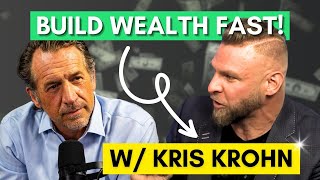
Kris Krohn explains his real estate strategy: buy single-family homes below median price, hold for 5-7 years, target 25% annual returns using other people's money. He also covers side hustles like Facebook lead brokering for contractors and short-term rentals, and warns that AI job displacement makes owning assets essential.
Chapters
I think it's just important for people to recognize that entrepreneurship is the direction of America that you got to go in if you're going to financially survive. Make sure you have a 10 out of 10 on your core significant other relationship. Have a 10 out of 10 relationship with your health, and then have a 10 out of 10 relationship with money. And if you got all three of those simultaneously going on, that is the have it all life. It's like, hey, I figured out enough of the game of money that I also have created this balance.
Well, welcome everybody to another episode of the Main Street Influencer interviews. And I am so excited to have a mogul in entrepreneurship and real estate with me today. Kris Krohn, who's an entrepreneur, real estate mogul, best selling author, breakthrough mentor. I love father and husband best selling author. And he's done over 6,000 real estate deals, $2 billion worth of real estate over the last 20 years helping investors around the. Got a lot to talk about today. Chris, thanks for being here.
Yeah, Mark, happy to be here, brother.
No, I appreciate it. Now I want to point out to my followers, Chris does have close to a million subscribers on YouTube. We got to get him his gold play button. I got my silver play button. I'm coming up on you, man. I'm going to get there.
So no, I love it. You know, it's interesting. It's like everything is TikTok, everything is Instagram. But YouTube is kind of like the specialty niche because all that short form media out there, I can reach, you know, millions of people every day through the shorts. But YouTube is really, or podcast is where you really get to, I think know somebody because the long form is, you know, it does something that short can, it does.
It all leads to YouTube in the. Really want to get the real deal. So. Yeah, well, anyway, we love what you're doing there. I'm, I'm right, I'm right behind you. Well, okay, one of the. So on that note, I was, I was perusing your last 10 to 20 videos and I was really excited. I know you're, we're going to talk about real estate, everybody, because any of you that know Chris know that, but it's just incredible his knowledge on that and I'm hoping he's gonna reveal some of his top markets that he likes today. But before we get there with these last 10 or 20 videos of yours, at least a third of them, we're just helping entrepreneurs get started. How to start a business under five grand. How to start a business under ten grand. I'm speaking on the same topic in a couple weeks, helping people find how to deploy five grand in their ira. Where do I go? What do I do? So can we brainstorm? Tell me some of your ones you love, like helping these side hustles, side gig people, get the juicing, become entrepreneurs. What do you love right now?
Well, first of all, I think it's just important for people to recognize that entrepreneurship is the direction of America that you got to go in if you're going to financially survive. You know, the politics and the directionality of everything. We've got Gen Z, 94% of them want to be entrepreneurs. They're looking for freedom, they're looking for mobility. They don't want so much that corporate life. And it's weird. I think college has kind of come and went and kind of died a little bit because it's such a commoditization to have a degree. And then on top of that, you look at that. Over the last 20 years, wages have increased 28%, but real estate has gone up 148%. And with inflation where it's at, the bottom line is one, income is not enough to live a good life. Two, incomes is hardly enough to give a good life. People now need multiple streams of income and a job just can't fulfill on that for so many people. So entrepreneurship really is the key. And some of the things that I'm loving right now, Mark, is sometimes it's little as a side hustle. How can I just spend an hour or two a day as a solopreneur, but maybe make enough money to risk my job? Like, can I outpace my job, not just supplement it? Can I make 5 or 10 or $20,000 a month, in which case maybe I become a full fledged entrepreneur. I like tempting people with that. So I've got a variety of spaces that I'm doing in. What are some of the side hustles that are just hot right now in this kind of.
Well, no, hold on, let me, let me. I to echo you, because what I estimates are now is that 50%, over 50% of working Americans have a side hustle. And you have to. But the beauty is what I find the key is, Chris, that I love is that when people find the side hustle, it's not to buy the BMW or to go on the next big trip. If they're smart, they're using that side hustle to fund the investments, to fund the real estate so that five, ten years from now, maybe they still have the job, but now they've got this huge passive income and that. I don't know, what are your thoughts on the smart play when you have that side hustle?
You know, first of all, I think it's important for people to recognize that either you spend money, you know, you know, irrationally and you're impulsive and those people. We know how the financial story always ends as a cautionary tale. But then you have the accumulators, and the accumulators you cannot. If you're going to make 3 to 5 million dollars in your working life, you're not going to save the $3 million that you need. If all you make is 3 to 5, how are you going to save 3 million dol give it to your financial planner and on the 4% rule, you know, wind up with a basic $100,000 a year like so many people dream of having. Because we hit our financial stride in our mid-50s. For most people that's making around $90,000 a year. So they dream of at least a retirement where they can, you know, keep the same income when they're not working. And when you start doing the math and realizing that accumulation isn't really a possibility, you have to do mark exactly what you're saying. You have to save money. And it's not for more accumulation, it's for investing. And investing is the only thing that'll ever set you free. And you know, so many people are against that because like, well, it's risk. And I'm like, no, no, no, you don't get it. The biggest risk is doing nothing. You're going to have to take a risk to make it calculated, get financially educated. A side hustle is a great way to save up an extra 2, 3, $500 a month or maybe a few thousand. And if you're smart, you'll put that in a real estate. You'll own businesses. You can have an absentee, you know, owner status on a business and have a business that is paying you and making you money. And this is the way that we have to transform our thinking in this country.
It is, it is. And I'd love to say a couple of things I want to echo. What you said is like, I love the side hustle is like the gateway drug to like full blown investing and entrepreneurship. You just get a taste of that 1099, you're like, Hey, I can write things off against this. And of course, my, my jam is the tax write offs and the building wealth because a lot of times it's easier to save money than make it. And so if we can get there. And, and I love that this, this concept that the side hustle is supplementing are real wealth building. Like wealth building has to come from somewhere. And if we're not generating this extra income, it's not going to happen. We've got to embrace it. It's okay. Don't be stressed out about it. Okay, so without further ado, what are. I mean, I want to brainstorm here because I've got my favorite ones too. I love it. But what do you, you know, these young entrepreneurs that are finally catching the vision. What's some of the things you've seen lately that have been exciting, interesting?
Yeah. So, so let's do a deep dive on a, on a small niche. You have a percentage of the workforce that doesn't use the Internet. They don't know how. And that's the construction field. So you have all these handymen and you have all these construction workers and they don't know how to promote their business online. And yet online is where we go to find contractors. So they're largely misrepresented, underrepresented. And what I do is I. One of my favorite little side hustles, I call it high profit hustle. And I basically see, say, let me give you a system for generating cheap Facebook leads for people that want expensive things like a kitchen remodel or having their basement redone. And then go find the companies that will charge tens of thousands to do those things and go take a 10% cut for giving them the job, or maybe it's a roofing job. And so I got a lot of young entrepreneurs, older ones too, they'll spend an hour or two a day basically launching a half a dozen ads. They collect the leads through text. They, and then they just hand them off, broker the lead out. And should any sales take place, they basically get a 10% of whatever collected fee. And I had a guy last year make over $1 million doing that. So it's a really, it's a thing that, listen, whether it's making an extra $500 a month or 5,000amonth or whatever, it. What I think a side hustle should be is something that takes less than one or two hours a day so that you can still keep that job and supplement the income for that investing that you're talking about.
Well, and what I'd like to, and you've said this in some of your videos, is that some of the easiest side hustles are not capital intensive. They're service based. You've talked about these smaller franchises, models where I can, for less than five grand, I can at least get a name and a brand and some training to get going. Service based businesses are so easy to get going. Yeah, I love those.
But there's also some bigger games to play out there. There's a, there's a dozen franchises right now that I think are hot. They're doing really, they make, you know, they have the potential to make, you know, hundreds of thousands of dollars a year. And a lot of them within 6 or 12 months are absentee owner status. So it's like, wait a second. Most people think entrepreneurship means start a business and the most difficult thing you'll ever do in business is start one instead. Right now, we're in the largest wealth transfer in our history. Over the next seven years, as the final baby boomer lays their head down to retire. They're going to let their businesses, 70% of their businesses, these trillions of dollars worth of companies, they're not going to be sold, they're not going to be brokered. They're, they're going, oh, I was saving that for the next generation. My kids don't want it. They want something different. So I guess I'll do nothing. And I'm like, wait, you spent 30 years building up this, you know, cabinet fabrication company. You've got all these SOPs, models and systems. It's fairly automated. It makes, you know, $300,000 a year in profit. Someone should come in and at least negotiate to take that over, do a leveraged buyout or just buy the thing. So there's a lot of, instead of start from scratch. That's kind of why I think most people get beat up in business is because there's a massive learning curve when you start scratch. But if you move into an existing business or a franchise, someone else has figured out like 90% or if not 100% of that business. And it's a little bit more of a buy by your way in. And you know, there's a way to get into some businesses for no money, but some maybe are 50,000 or maybe, maybe they're legitimately a couple hundred grand. But those are also the kind of things that I like to collect because I like to collect streams of income that don't require my time.
Oh, I love it. And in fact, it's funny you bring that up because as you know, in my tax and legal space, I'm certifying enrolled agents and CPAs and accountants to provide tax coaching and tax advice as a certified Tax advisor and accounting practices are the same thing. I had a client in Texas last month go in and buy an old accounting practice from this guy that was like, just gonna shut the door. He's like, I'll give you ten grand for your book. He's like, all right. I didn't think it was worth anything, you know, and he just stepped into this full blown accounting practice as an enrolled agent. And I just loved it.
Yeah, that's so amazing. That stuff is out there everywhere because a lot of these people that own these businesses, they do it for money until they no longer need it, and yet their business has value. And if they, if they ignore that, they're just going to let it go. And so I love, I love finding those and allowing that to pass on to the next generation. And so I think entrepreneurship is going to also be more important than ever before because of AI, right? The World Economic Forum says, Expect 70 to 80 million job transfers or losses in America alone by 2025. And I'm using AI everywhere in my business, and I'm embracing it because I think there's good and bad in everything. And I choose to find and look for and embrace the good. It is the way the world is moving. And so I think that everyone, even if you've been in your career for 20 years, you got to stop and pause and think, wait a second, am I about to be taken over? Because by the way, accounting practices and law firms and reporters and news, these are some of the first things where transition is heavy. And you can either wield AI as your friend or you can allow it to just take you down.
I know, I love it. Now, before we get to real estate, because I love talking arbitrage, Airbnb and lease options. I know you're in master at that. But one other thought on this entrepreneurship. What are your thoughts on doing what you love? And in fact, you've talked about how many people hate their jobs. And then just so maybe to share your thoughts on finding that side hustle you're passionate about.
You know, 85% of people hate what they do, and that means that the other 15% are okay with it or can tolerate it enough. You know, the only people I feel like that should be employees are intrapreneurs, people that are caught up in a company and its vision, and hopefully that company has a profit share program or something that says, hey, if we can move towards having a great level of success, maybe an exit someday, we want to share some of that with you. But unfortunately, a lot of corporate Culture and companies don't operate that way. And so on the one hand, you have people that don't like what they do for a living. And I think that's so dangerous, because if you practice every day being a complainer, if you practice every day becoming grumpier with time, eventually it's like, who cares whether you are or aren't making the kind of money that you want? If you're not enjoying your life, you're missing out on the most important part of life. Eventually, the proverbial bus is going to hit you. And when it knocks you on your ass or your deathbed, can you look back on your life and love what you did with it? So for me, I think one of the most egregious sins in the world is people that will excel 40 or 60 hours a week of their soul to do something they don't love. And I'm like, all you're doing is training to hate your life. And that turns into anxiety, depression, and for some people, shoot that, that even ends in suicide. So I do think it's important to find a life that you love and either mark that's find a business or a side hustle that you have passion for or commit to become so good at the game of money that it doesn't rule your worldly world anymore because you become passive. You know, when I was 21 years old, I realized the stats that I'm sharing right now. And by the time I was 26, I was financially independent. I quit my job, I just graduated college and my entire real estate business I handed off to a friend to run, and I had nothing to do. That was. That was one of the happiest times of my life because I had time, I had the money, and that's really the definition of what freedom is. So in that case, I didn't need passion for a thingy because I. What I did is I just worked hard enough over a short enough period of time on the right thing that it paid itself off. There are people, I tell you right now that are watching this right now that have been in the accumulation mindset, maybe they're Dave Ramsey Ites, and they put their money in 401ks and IRAs and these vehicles, and they're stashing cash there. And if all they did was rearrange some of that money to own real estate or own a business or two, they could probably make the same amount of money and buy back all or most of their time. So it's, you know, for me, the game of Financial mastery is how do I rearrange resources to get to the real goal? The real goal is loving your life. That's where passion really fits in for
me, you know, And I like how you said the business of money. And some people ask, oh, why'd you go into accounting? Well, I mean, I didn't want to be an accountant. I didn't want to be a lawyer. I just love the business a lot. The business of accounting. I think it's the lifeblood of business to know the numbers, to know the structure and all that. And when you get excited about just making money, I'm like, all right, I'll do a dump truck business. Oh, you want to do landscaping? I'm in. You want to go it? I'm in. You know, I do. It's just like, what? Where's the roi? Let's do it, you know, and just get excited. And the people you hang out with should enjoy talking about money. I was talking to someone the other day that was like, I was getting shunned by my friends because I was talking about success and wealth. And I'm like, you got the wrong friends. You know, you got it.
Well, tell me about it. I own an event center here in Utah, and every quarter I have people stream in, mostly from the United States, but some of them international, and they'll come and hang with me. And they want real estate training, they want business knowledge. But my events are very experiential, and half the time is really focused on positive psychology and how to think like a millionaire and a billionaire. You know, this last year, just one of my businesses added nine figures to my net worth, and I own hundreds of businesses. And one of the things that I've learned is that if you want to financially be more successful, you need to learn the game of money. But you also have to learn how to be a happy human being, because there's a lot of miserable, successful people out there. And who cares to have money if you're not happy? And honestly, the bigger picture for me is it's like, make sure you have a 10 out of 10 on your core significant other relationship. Have a 10 out of 10 relationship with your health, and then have a 10 out of 10 relationship with money. And if you got all three of those simultaneously going on, you've got it all. And my bigger brand is have it all. That is the have it all life. That's like, hey, I figured out enough of the game of money that I also have created this balance that the world says is elusive. And you're too busy for, for it and it's impossible. I'm like, no, no, it's, it's all available, but it does take some training and I think that's a draw for some people when they come out to my events is like, I don't know if I'm doing it right. So I'm not the happiest person. I'm not making all the money that I want. Something's gotta shift.
Yeah, that's a good call. Great call. Well, we've gotta get to one of your favorite topics and mine as well. In fact, I'm, I've got inspections this afternoon on two Airbnbs. I got two Airbnbs I'm taking down in Scottsdale and we're looking at those this afternoon. And I know you love real estate. Give. Okay. For those that don't know, again, a lot of people are like, I can do this with my own money, my IRA money. I can get into real estate. Tell us about some of these arbitrage strategies that don't take a lot of capital.
Yeah, you know, so when I got into the game of real estate, I probably spent too much time there. Any financial planner looks at me and says, you're so, you're so deep in real estate, you should probably, you know, diversify a little.
Of course that's going to be their answer.
I know. Well, I know we won't get on Wall Street. Right. Every day I buy a property, I buy it with no money, I buy it with no credit and frankly, I buy it with someone in the world that's watched my social media because I found out how to basically say, hey, come partner with me and I'll do 100% of the work and we'll just co own it. Because I'm an expert at this very specific strategy. And here's when we talk about how does someone enter the game, it's like, well, commercial. That's got to be intimidating because usually we're talking millions of dollars multifamily. Like buying either a 16 unit or a 600 unit, that's intimidating. That's a different level of financing. And your purchase price is likely in the millions or tens of millions. So if you take a look at, in my opinion, the most profitable version of real estate, but also the most entry level. It's weird. What is most entry level for me is also the most profitable and that is doing a short term, five to seven year hold single family properties. And what I do is I buy them below the median. My average purchase price is around $220,000. And I just bam, bam, bam, bam, line them up, buy them and accumulate them. And I only buy properties where I'm going to hold it, I'm going to rent it, and then in five years I'm going to sell it. And I can average around, you know, at least minimally. The goal in focus is always a 25% minimum projected annual ROI. And that's because I can outperform the stock market 27 to 1 if I just go from single digit 30 year average in the stock market to real estate's double digits. Those double digits, you know, people think more, more ROI has got to equal more risk. That's honestly not my experience. I'm a little bit more of the Buffett that talks about margin of safety. And I love playing the game of real estate because it gives me a ton of safety, a lot of security, but it also just makes me a lot more money. So single families, I think, mark one of the most accessible ways, because if you want to get in on a $220,000 house with a 20% down payment on the low end, you're looking at $50,000. That's a lot of money for a person. But just buying one house at $50,000, growing at 25% over 20 years, can turn into $4.3 million, for example. So it's like, okay, there's an end game there that lines up with my greater financial goals. And real estate can do that when many other things can't.
No, I love it. And when people catch the vision of that, it's so exciting. And what I love too, it's a hard asset right now in today's world with the cryptocurrency, which I'm a. Yeah, I'm a fan of crypto, but at the same time, we've got these smaller bank issues and we've got Wall street, who I'm not a fan of. But real estate's a hard asset. And when you're buying under the median, what is the risk? I mean, as long as the cash flows, I'm a huge believer that we got to have at least some sort of cash flow. Cash flow. We don't want to be going negative. But then the real estate, I, you know what, let's go there too. What's your feeling? You know, a lot of people say, well, we're in a bubble, you know, well, we're going to see this, we're going to drop, da, da, da. And I, I'm not, I don't, I won't say my opinion.
What?
Give us your take.
Well, let's back up first to 2008, right? Everything leading up to that, everyone 5, 6 and 7 was making all this money. And I remember I was buying all these single family homes and I had a couple of buddies that were buying these one and two million dollar homes. They the house within a year was worth twice as much. And they said, Krohn, you know, you have to buy 20 homes to make the kind of money I can on one of my big multimillion dollar deals. And I said, you're right. And a year later, they lost everything. And because I bought below the median, I had something through 2008. I was screaming at the top of my lungs in 090-10-011, buy real estate. The media said they shut it down like they are right now. And they said it's bad asset class, don't do it. I'm like, are you kidding me? Like, do you understand that Wall street and the hedge funds are dropping $50 billion to acquire 10% of all single family homes over the next decade? They want real estate as a service. They're taking your number one money making machine. When someone retires today in these years 2023, average retirement is 65 years old, 255 grand. But did you know that your net worth is more than that? In the real estate equity alone, if you knew that, that you were going to have $300,000 average in equity retirement, you got to be thinking, shoot, if I just bought 10 homes, I'd be worth $3 million. I'd have 10 times more money than the situation I'm sitting in. So commenting about the situation that we're in, whatever the media is saying, it is most assuredly the opposite. Within five years of 08, I cleared $100 million in profits for my investors. And mark my words, what's happening right now, Mark, we have a, you know, people are worried about a bubble that's going to pop. I'm like, do you realize that we're missing 5 million plus homes and number growing every single day for real estate that doesn't exist? And the only reason why prices have stopped going up is because the government only has one leverage, one lever to pull against financial easement because they've been printing. What about the $4 trillion in 2020 they printed? We've been rewarded for the last 23 months with inflation above 5%. So while the value of your dollars drastically decreasing, there's an inverse relationship to real estate because it's a Hard asset, it's going up in value. The moment we get serious about electing a new president, if Biden has any intelligence at all, he's going to drop rates because he needs to actually create fans amongst the people. As rates drop, real estate is going to go through the roof. Why? Because it's a function of supply and demand and we're not building enough real estate. So whatever argument there is out there for a bubble, number one, you're right. I don't buy multimillion dollar real estate. I stay below the median. It keeps me safe. But I'll also tell you, the moment those rates come down because of the shortage in real estate there is, watch what happens across the board to the prices. I think the next five years is probably one of the biggest money making plays of the last two decades in real estate because of the dynamics that we have right now.
Yeah. And without. You don't even have to be a conspiracy theorist to realize the media is owned by Wall Street. And while they're trying to lull everybody into this false sense of security, they're buying, they're buying as much real estate and they're going down to the granular level buying single family homes. They're not just doing the big multi units, they're buying anything they can.
Well, and this next decade is going to be like the heyday for single family. The World Economic Forum. Again, they envision a 2035 where no one owns real estate anymore. You don't own a car, you don't own anything. Everything is a service. And I'm like, do you realize that just from the boomer to the millennial generation by age of 40 that the average millennial has five times less money than the previous baby boomer generation. So we're headed in a really awful direction financially where we're all basically being told no, life is a service. Pay for this streaming thing, you know, pay this monthly thing. A car will come and pick you up. That's what the future looks like. You don't need to own a home anymore. And it's almost like we're putting humans like in a little ant farm so that we can control them. And we're losing our sovereignty to produce our and own our own financial destiny.
Yeah, it's crazy. Well, okay, we're coming up on our time here and I just a couple of other. I don't want to leave our group hanging. So let's get to a strategy for fun now. I know. And folks, you've got to get over to Chris's Website we'll get all that information will be down in the description. I want Chris. Chris will be able to share that here in a moment because he's got multiple ways to help assist people that want to buy with one on one with Chris's team or themselves. Coaching and finding property as well as funds for accredited investors or reggae. That's coming out later this year. I'm excited for you. So there's a spot for everyone there. But this arbitrage strategy, I mean you just did a great little video. I love the way you explained it the other day. Just kind of break, break it down for people what arbitrage means even with a short term rental.
Just there was a French economist in the 1800s, JBCHE, and he said that creating wealth is simply the function of moving assets from low yields to high yields. So think for just a moment of what that means. Can you borrow money at 5 or 6 or 7%? Sure. And if you do, is there a place that you could put it that could earn predictably 15, 20 or 25% that also exists when you borrow low and then you invest what at a higher rate, what you make in the middle, that margin, that's profit. And that's called a positive arbitrage. Now conversely, if I were to borrow money at, on my credit card at 18% and then put it in some really low performing asset class at 6%, the difference between 18 and 6, I would be losing 12% a year on my money. That would be a negative arbitrage. People that are good at making money, people like me, what we do is we look for positive arbitrage or mark. I own a bunch of Airbnb in Scottsdale as well. I basically put some money down, I borrowed some money from the bank. I bought these. They're making me money. That money that I'm making is on somebody else's money. That's also a form of positive arbitrage. And so the first thing you want to do is make sure you're getting a positive arbitrage on your own money. And then there are some people that become ninja enough at that that eventually they'll feel more comfortable borrowing. Like I have a track record on thousands of homes. I have no problem. I know exactly my metrics on how to borrow money, deploy it into the market and make money on the difference. I just borrowed a million dollars actually today, and I'm borrowing it at 5%. I'm putting it in one of my vehicles producing 18%. You look at that delta and every month I Service the debt, which is positive because it makes me money. It's not a bad debt. This is not something you want to pay off you, man. If I could, you know, every day that I can borrow money, I will if I can create a tangible benefit on my positive arbitrage and I make the difference. That is a just another money making strategy. And it's a different way to think about money than the way that we've been educated because we've been taught that debt is bad. And the reality is, is that I'm trying to get into as much debt as possible. But of course I'm not talking consumer debt and things that cost me money and boats and stuff. I'm talking about business that makes us money.
Yeah, it's so powerful. Now I know they're going to have to get a hold of you to get all the tips on the hottest markets. But I know you, of all the markets out there, you focus on less than 10. I think it's five, even just five
markets that I've planned.
Share one.
Yeah, I'll share one of them with you. Right now. One of my favorite markets is Florida. We lost 600,000 people out of California last year, 500,000 people out of New York last year. Half of them went to Texas, half of them went to Florida. Right now, the economic stimulus and the billions of dollars that are, that is going into that state and where people are moving, the median income, there's $80,000 a year. The average person moving there is making $132,000 a year. It's the ultimate retirement community. So if you want to know which real estate markets will be the next that boom, you, you know, there's a quick tip. You look for population growth, you look for migration, and you look for economic stimulus. Then you figure out in those markets where to, you know, the suburbs where you can buy below the median. Those become the hottest markets that end up appreciating the most. And appreciation is a part of really kind of factoring that total roi. So Florida, especially in the Ocala, Orlando area, Kissimmee, in those areas, I'm transacting a lot of real estate. And there's four other markets. And the reason why I do that is half of my ROI comes from the intelligence of the macroeconomic on selecting a market rather than just saying, oh, I'm an investor, mom and pop shop. Right. We'll just invest in my backyard. There are more intelligent options and there's hands off, like very passive options as well.
I love it. You've Got your buy box freaking nailed down and I know it's a concept you teach constantly to people. Chris, you are so awesome. I love your, your brain, I mean it's just so powerful. And you look good too, you know.
Thanks brother. Are you liking my cheetah shirt?
I like totally like it's summertime, you know, you're going cash. I love it. Yeah. No Chris, thanks for being here with us. We really appreciate it. I want to encourage my followers get over to his YouTube channel and subscribe. Let's get that, that gold play button done. And I love.
That's kind of you Mark.
I appreciate that and I love Chris's videos. They really are good. They've got content, they're not just fluff.
So check those out if anyone's interested also in just trying to figure out just get a lot of free access to a lot more real estate plays especially if you have money in self directed accounts and you're thinking man, I want to figure out how to get into the real estate game. Timing is so good right now and I have prepared a free gift for everyone. Do you mind if I share that, Mark?
Yeah, please, please. I know. Thank you.
Yeah. Freewealthgift.com Main Street Freewealthgift.Com Mainstreet you'll find a variety. I've got one of my books that I'll send you for free on that website. Website I've got a free event ticket people pay $2,000 for just for Mark and you listening here. And then I also have a free consultation to take a look at partnering in real estate to help you understand what some of your real passive and hands off real estate investment options look like.
I love it for sure. Awesome. Your assistant talked about possibly a free offer and I didn't want to assume it and so I'm so glad you took the bull by the horns and please folks, get over there. I'm going to and I know I'm going to be working more with Chris and we've been, our paths have been trying to cross here for years and we're both in our lanes doing what we know best and it's just a great combo. And Chris, thank you so much and any that's where we want them to go. Freewealth.com mainstreet that's a lot easier than
trying to spell my name. My parents, my dad spelled Chris with a K. I'm like when I was a kid I was like dad, that's all awful now that I'm an influencer. I'm like, that's pretty cool. It's a differentiation from all the Chris's in the world.
I love it. Well, we wish you the best. We hope to have you back and thank you so much for helping so many entrepreneurs and real estate investors around the country. Main Street, Main street rocks. And Wall Street. Go do whatever you want. So I appreciate it.
Thank you everyone for listening and watching.
Thank you.
More from MARK




The secret to managing your family's future #financialfreedom #estateplanning #shorts



Moving Property to an LLC: What They Don't Tell You #realestate #investing #tips


