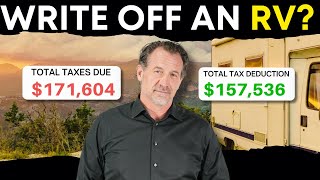
In this Main Street Business podcast episode, Mark Kohler and guest Vance Sorensen explore how owners of recreational vehicles (RVs) can leverage tax strategies in 2025. They first distinguish between full‑time RVers—who have sold their traditional home and live primarily in an RV—and occasional RV owners who use the vehicle a few weeks a year. For full‑time RVers, the RV is generally considered a personal residence and cannot be fully deducted, but a portion may be written off if a toy‑hauler section is used exclusively as a home office, and mileage driven for business can be deducted. They discuss the powerful benefit of changing domicile to one of nine states with no personal income tax, using the RV as a mobile base for a 1099‑based business, and avoiding property‑tax burdens of a traditional home. The conversation then shifts to treating the RV as a business asset. By allocating the RV (or a trailer/fifth‑wheel) to business use—such as a mobile workshop, tool storage for real‑estate rehabs, or a work‑camper for contractors—owners can claim depreciation, including 100% bonus depreciation if the asset is placed in service this year. They explain the IRS 14‑day personal‑use rule that still allows a 100% write‑off for business use. Platforms like Waverly (the RV equivalent of Turo) and Airbnb are presented as ways to rent the RV, making it a revenue‑generating asset and solidifying its business‑use status. A detailed case study follows: a Santa‑Claus‑making business uses an RV to transport supplies to trade shows and then deliver finished products to consignment shops. Because the RV is used less than 14 personal days per year, the entire purchase price can be deducted. Similar examples are given for contractors, insurance agents, RV inspectors, and real‑estate investors. Finally, the hosts compare trailers versus fifth‑wheels, noting that pulling a trailer with a truck creates two deductible vehicles (truck mileage and trailer depreciation). They touch on the legislative outlook, mentioning possible extensions of the Tax Cuts and Jobs Act that could keep 100% bonus depreciation available. The episode concludes with a call to action for listeners to consult with their lawyers or tax advisors to integrate RVs into a broader wealth‑building and tax‑saving strategy.
Chapters
I've met with a lot of full time RVers. There's a financial strategy here. You're literally moving your home for business. You're getting 1099 where you go so you have a business. That's probably the biggest benefit of the full time RVer. I can choose one of these nine states that have no state income tax and go, I'm moving my domicile. Do you ever go anywhere with your small business where you could use the RV to get there? Do you go to conferences, events? Do you go pick up supplies? You go be with vendors. All of a sudden this RV becomes a work tr. Welcome everybody to another episode of the Main street business podcast. My name is Mark Kaur. I'm here with the illustrious Vance Sorensen. We're here to talk about an exciting topic. It is RV show time in America. It's February, March. Everyone's going to RV shows, getting ready for the summer.
Yeah. And you want to talk about taxes.
Yeah. Well, hey, anybody that's buying an RV is like, how can I write this thing off?
Yeah.
I mean, that's just what the wife does not want her husband to know.
Yeah. She's like, he doesn't need one more reason to be able to buy the rv. You know, the lifestyle we can have. Oh, my country rebate. And it's a tax write off. That's just like your gateway. That's your. That's your way in.
Okay, now some of you may be wondering, why are you talking about this tax rate RVs? Okay, now if you own an RV, you're like all in. You already saw this, this broadcast. Do you know RV ownership in 2024 was to 11 million households. 13% of U.S. households own a recreational vehicle. 43 million Americans regularly go RVing.
I just invested into an RV resort.
Did you really? Yeah. Tell me that. Yes.
And they have multiple locations from Lake of Ozarks to Virginia to. So yeah, that's cool.
Did you know this 39% of those 43 million Americans are millennials. Yeah, Over a third are millennials. Young people. Over 16,500 campgrounds just for RVs this year. And this is the one. Cause I did it podcast a class the other day for full time RVers. One and a half million Americans live full time in RVs. So this is a big deal. So we wanted to just cover some issues when it comes to acquiring the rv. How can I write it off? What are my options and how could you make money with your rv? Can I say the word, Waverly?
Yeah, you got Waverly at the work camper stuff, which is interesting because these RV owners knew that strategy and they loved having those work campers come onto their parks, where campers are people who will like, come onto the park and they're kind of the ones that, you know, you greet when you come in. And they got the nice RV sitting there. They know what's going on. They're kind of looking over the place and they're getting paid to be there. Yeah, that's their business sitting there. And that's a piece of business equipment.
Okay, so let's, let's be very practical about this. So we're going to divide this into two camps. The first camp is those full time RVers, which are the minority, that are literally living full time. They've sold their sticks and bricks, as we like to call it in the industry. They've sold the sticks and bricks, they're living full time in the rv. And then the other category is those folks that are using the RV off and on. Maybe many of you listening are like, yeah, I got an RV sitting next to my house. I go out for two weeks out of the year. It's kind of like the boat, you know, you got that boat you just wish you use more, just sitting there. So that whole other camp of RV owners that use it once in a while or we're going to talk about maybe in your business, those are, those are the two camps. And do you ever find yourself thinking you're going to go live full time in an rv?
Never. I know you do. I know you do. At least a month or two out of the year.
I mean, I don't know. Kathy and I are out looking right now.
I could maybe do a weekend, maybe a weekend?
Oh, yeah, wait till you. It's, it's exciting. Wait till you go. You know what I love about it the most is when you roll into a campground. I just got a tinge of emotion.
Literally.
You roll into a campground and it's just salt of the earth people, they're just out there with their campfire, their lawn chairs, their American flag, maybe their dogs, their kids are on bikes running around, or they're older, younger, everywhere in between. And they're just like, hey, what's up? Yeah, you know, what are you doing?
They're out in the outdoors too.
Usually.
Those are in beautiful places and, you know, get the mountain air.
Yeah. Oh, it's just beautiful. Okay, so those that are full time RVers, let me just say this in summary quite quickly. You're not going to be able to write off your RV itself because it's your home and there's court cases on this. If you have the toy hauler in the back and we turn it into a home office exclusively. A home office, which some people with the fifth wheels do. That's cool. You could, we could write off a portion of the RV under the toy hauler home office exception, but other than that, we might take mileage. If you're using this RV for business too, you're like going from location to location. Like Matt said, you might be at this national park here. Then you're going to go work at the Amazon fulfillment center during Christmas. Then you're going to go work at Six Flags in Oklahoma here. So you're going. You're literally moving your home for business. It's not a moving deduction, but you're getting 1099s where you go. So you have a business. I'll write off some mileage. Yeah, but you're not writing off your rv, so. Yeah, but you enjoy it when you sell your home. There's a lot of nice things there, right? Yeah, yeah.
I mean, what are the in terms of like state taxed income though? You know, there's some strategies there. Right. Because then maybe you, you know, move that SRA when moved the domicile. You've been in California and now you're out on the American road across the US and you need to re. Domicile though.
Right. And how do I get out from.
Because I might still have some other income. I have investments, I might have business income. So my dirty. Yeah, my retirement account, you know, taking money out of a traditional IRA or something.
So that's probably the biggest benefit of the full time RP or I'm glad you brought that up, is that I can choose one of these nine states that have no state income tax and go, I'm moving my domicile. I've had it with, you know, California tax, Illinois, New York, one of these big blue state tax rates and you say, I'm going to just move my domicile. And legitimately now I've got some YouTube videos on this. It's a big conversation.
Re establish it. You don't just get to like checkpick the state on your tax return.
I live here because I really got
a PO Box in South Dakota.
Yeah, not going to fly. But. So there's a lot to talk about there, but a big opportunity. And you also don't own a home anymore with property tax, the ongoing maintenance and a lot of people are Home rich and a little retirement poor. So this is a chance to pull that money off the table and sell
home exemption gets that cash out tax free. Yeah.
Okay, now I want to tell me what you think. This, this is next level. Now you full time RVers, that was baseline next level. Don't sell your home, put it into a rental pool, long term rental, it's already furnished. It could be a great Airbnb. Now you're cash flowing your home, paying for the RV payment if you had to get an RV payment. And now you've, you've actually maintained that equity in your home. You're still cash neutral and you're creating cash flow probably in excess.
Yeah.
And now you're being smart with your money.
Yeah, I love that because I'm always talking about building wealth.
Right.
And the best way to build wealth is to accumulate assets that appreciate in value and generate income. Well, when you move out of your home, what is it? It's an asset that appreciates in value that turns into a rental that can generate income. And so why sell it? Now you may say, well it's in California and the rental income to the value is not great. I could sell, sell it, get, sell up home exemption and buy other rentals in other places. The cash flow better and I might feel better appreciation. So but what I'm saying here is don't liquidate assets that can appreciate so over time and give you some income.
And you've been a big believer in that. I've seen you do that.
Yeah, I've like my last couple of homes or rental properties, they're not like I don't sell them. Why?
Yeah. Oh, you're so slow. I love it. Now for sure you're listening to an rp Tax strategies. Whoa. There's a financial strategy here, is that if you want and I'll just talk to you this now, I've met with a lot of full time RVers. It's a phase, let me just say
that zip base of life, it's a base life.
When you're living in, you know, 200 square feet and your closet is the size of your fridge, you're like, I could do this for a year or two. So yeah, let's be smart with our home. Let's not be quick to just like, I gotta get outta here. I'm gonna live our full time RV for the rest of my life. You know, none of us do everything for the rest of our life. So let's be smart with that. There's a lot of personal, family, Decisions that go with that. But financially, let's not be perpetual. So I think so. Okay. Now that that's set aside, full time RV or there are lots to unpack. You got an RV on the side of your house right now. What I like to do is meet with a client, go, what's your plan? You know, you're not living in it full time. That's cool. How many days a year, truly, how many days a year are you going to live in it? And you're like, oh, or live in it. I say use it. I say 14 days. Because see, if they take off for a weekend, that's only two to three days. Yeah. You know, are you really going to put more than two weeks, maybe three weeks in that rv? You may put more. Hang tight, I'm just unpacking. Then I asked, do you have a small business? Do you ever go anywhere with your small business where you could use the RV to get there? Do you go to conferences, events? Do you go pick up supplies? Do you go meet with vendors? Do you go meet with customers? Do you have a rental property in another state? Do you have a rental property two cities over? And you need a office tool equipment center called an RV that you're going to put outside of that rental while you rehab. All of a sudden this RV becomes a work truck. It becomes a. I mean, you see big construction companies with these mobile offices, you know. Yeah. So they have a. If you have a. Someone that, if you're one of those people with a small business where the RV could be used as a tool. Now we unlock a lot of opportunity with that.
What type of opportunity? We talk in here.
So the opportunity is you could write off the entire.
Talk about miles here.
Yeah, we're not talking about miles. So now let's just do. Maybe we'll do an example. Okay. Chris Kyler. Okay. One of our partners in the law firm over the years, his mom and dad have a Santa Claus making business. Okay. I don't know if you ever knew that. I didn't know. Yeah, she makes like almost 5 foot tall Santa Clauses. It's cool. It's really big in the craft industry. And if you go to Christmas stores around the country that many open year round, they have these really ornate Santa Claus. Okay, cool. Okay. So now he was a sheriff, Sacramento County. Okay. Cool guy. But their hobby was we're going to build these Santa Clauses. So they had a little workshop keyword there, that right there. And they take supplies, build these Santas. So what they do in the spring is they'd load up their RV with supplies. They go around the country and picking up. I'm going to actually put the sailor at roof. They'd get in their RV and start driving around the country in the spring and going to trade shows and they'd be picking up supplies. They'd have special fabric and buttons and this, that and another that. They build these Santas with wood, blah blah, blah. And then guess what, a lot of that route, it just seemed to be weird. Their grandkids would live in a lot of those towns where trade shows were and the supply centers and craft stores.
Makes sense. That's where the best shows are.
Yeah, exactly. So they cruise around with their rv, pick up all the supply, work on it. In the summer they have the little workshop. It was super cute. And then in the fall they'd load up all their Santas and go around and make another tour and drop off all the Santas at consignment shops. Park City, Utah. Deer Valley, Aspen. Rich people like to bikes a little and they drop off all these Santa Clauses and gosh, it was weird. It was kind of a route where grandkids live family and then they go park their work truck, work RV back next to their house. That RV was a hundred percent write off if they were to use it two weeks out of the year. That's allowed by the IRS. You can use up to 14 days for personal use and still write off 100% of it. So they would literally had this 50,000. Then they upgraded 100,000 whatever, trailers, fifth wheels. They went through all the different machinations. They were all a business write off 100% against their Santa Claus business. Yeah. I've got clients that are contractors, real estate investors, insurance agents, RV inspectors, RV repairmen. The RV trailer, fifth wheel, whatever version you have, becomes a business vehicle.
Yeah.
Huge write off.
Yeah. What about the work camper too though? Same thing or. No, I'm doing up there traveling and using that. Going spot to spot is where they reside. They're getting 1099. They're staying at a RV resort, looking over it or RV park, whatever it may be.
I like starts to become a percentage of business use versus personal and how many days out of the year. So when you're on the and you've got to maintain your sticks and bricks. Yeah. So you may live in California and we're going to get in the RV and go work in four or five locations using our RV as a work shop, a home office and get 1099s. We have a better opportunity to write off a portion of the rv. But we even brought up Waverly. So there are. So make you don't have a business. We love this strategy.
Waverly is a lot easier. I mean this is think of like Turo, if you're familiar with that, you know, for renting out a car. It's like we're just doing it with rv. You know, it was, I was meeting with a client that has an Airstream on the side of their house that they rent out through Airbnb actually, but that could just as easily have an engine on it and you know, like be movable. And it's, it's a, it's. That's what Waverly is. So you can rent out your RV to other people using the Waverly app and of course do it because that can make you income and generate income. We're not just wanting you to chase tax strategies just for the hell of it. We're just saying there could be good business proposition and opportunity here for you
to go do this.
Live out some of the things that you want to do, have the benefit of these assets for a little bit of personal use. But also let's make some money on it. And there's tax deductions and incentives there. So putting it into rent, which is putting it into use would be Waverly. Think of it like Turo, which we have a lot of clients that have done Turo to. Or Airbnb of course.
Yeah.
But I don't even know how that gets written off versus like my rental in Airbnb.
Oh well, you're going to love. So the IRS rule on this is that if I make that Airstream on the side of the house 100% available for rent. Yeah. So I'm going to make a. Yep. I'm going to go on Waverly, create an account and Waverly has the. Oh, will you go put this RV in a local spot for the renter or can they come pick it up with their truck or does it, is it an rv, not a trailer. And they can drive them away. So Waverly has all these different options. They even have pop up trailers and sprinter vans, the whole nine yard. So you take that Airstream, put it On Waverly, it's 100% available year round. Now it's not going to be 100% rented. So you might stay in it once in a while yourself. That's okay up to 14 days a year. So I've got that option. I can put it in the pool and when I do put it in the pool and it's 100% available. It is now 100% deductible. It is now a business asset. Just like your Airbnb. Yeah. You put it on Airbnb, it's available year round. You can use it 14 days out of the year, no problem. And still make it 100% rental. So it's the same thing with the RV. So you say, well, I bought the RV three years ago. Will you place it in service now? A fair market value or basis, whichever is less. Now it goes on the books. Complete depreciated, you know, depreciable asset. Now this year, with the, with the tax policy in the works, we got the House and Senate and Donald Trump is pushing to get his Tax Cuts and Jobs act extended. We could see 100% bonus depreciation again. So now you just wrote off a $50,000 RV in one failed swoop and you created cash flow.
Yeah.
Using this asset sitting around.
Yep. So if RV life is calling, it turns out maybe you can make some money and save some taxes.
Yeah.
Along the way, lots of options.
Yeah. I got all sorts of YouTube videos on it. So are you gonna. Would you go with a trailer or would you go. Okay, so the trailer, you put on a hitch, then you got the fifth wheel that hooks in the big ass truck.
I don't want that because I don't want the truck for that. Because otherwise that truck's sad.
Yeah. And you gotta get like a 350.
Yeah. I would say the trailer don't want
to do the fifth wheel.
I'm probably more of a trailer guy.
You're not. You're like, get in there and drive it.
Yeah.
Like Robin wings. Not. No, you don't want to drive your rv. You want to just pull it behind the truck.
Yeah.
Yeah, I like that.
Yeah. I like a little separate space from where I'm driving and, you know, I don't know.
Yeah, well. And from a tax write off standpoint, people, if you have a truck pulling your trailer now, you've got two different vehicles. So now the truck could have its own deduction mileage business. The RV or that trailer itself could be a business asset or not. You're going to park it next to your rehab. I love this for real estate investors, too. Yeah. Because where you store your tools, you're doing a rehab. Pull it over by your rehab. Even in town, you might be working late. You're like, I'm going to stay in the RV tonight. I mean, I'm new to me over my Airbnb last year we were working till midnight some. We're like, man, if I would add RBL or trailer, I would have loved that.
Yeah.
But okay, so lots of options and hopefully you're finding this helpful. If you have a Main street business, if you have this asset lingering on the side of your house called an RV or a waste of money, as some of your your significant other might call it, you now make money, save taxes. And please also schedule a call with one of our lawyers that can help build a trifecta, build a plan, talk about these assets. How can you make your portfolio of assets so you might even not see as investments all of a sudden blossom into a great way to make money and save taxes? And if you kind of, you don't know what you don't know. Yeah.
And yeah, we have a passion for helping our clients who are small business owners, investors. Whether you're starting a business, you have an existing business, Main Hustle side Hustle. We want to talk about how to help you grow that, protect the assets that you have, save taxes and build
wealth along the way. So thanks, everybody. We'll see you next week for another episode of the Main Street Business podcast. Until then, the dream lives on. Don't give up.