Capital Gains, Retirement, Trusts and more! Live Q&A with Mark J Kohler & Mat Sorensen
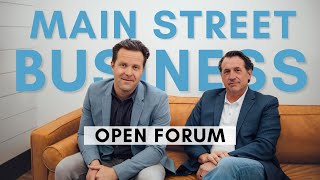
In this open‑forum episode Mark Kohler and Matt Sorensen answer a rapid‑fire series of listener questions covering a wide range of tax, legal, and investment topics. They begin with a personal anecdote about using a self‑directed health‑savings account to own cattle and explain the prohibited‑transaction rules that forbid owners from performing labor on assets held in retirement accounts. The hosts then dive into entity selection, clarifying that an LLC taxed as an S‑corp offers the same corporate veil protection as a traditional S‑corp and that the S‑election is a tax choice, not an asset‑protection feature. They discuss DBA requirements for opening business bank accounts, the pitfalls of offshore trusts versus domestic asset‑protection trusts, and the benefits of Wyoming LLCs. Cap rates are defined and critiqued, with a push toward cash‑on‑cash return as a more useful metric. Professional entities such as PLLCs are explained, and guidance is given on when a real‑estate agent should use a PLLC versus an LLC. The episode also covers Roth IRAs for minors, using whole‑life policy loans to buy crypto (and why gains are taxable), depreciation and startup‑cost rules for a new auto‑accessory franchise, and strategies for buying property to rent to oneself. Additional topics include transitioning between accountants and lawyers, short‑term capital‑gain treatment for a single fix‑and‑flip, and the emerging trend of celebrities moving to Idaho. Throughout, the hosts blend informal banter with practical, actionable advice for small‑business owners and investors.
Chapters
Foreign.
Welcome everybody to this week's episode of the Main street business podcast. My name is Mark Kohler. I'm here with the infamous Matt Sorenson. This is the Open Forum show, but we have music there, you know.
Yeah, we really. But let me just say howdy.
Howdy.
Yeah.
For Those watching on YouTube, I got my hat on today, my cowboy hat. Now Matt is the proud owner of kind of a cowboy hat. Right now we're getting it resized for him, but it's nicer than mine. It's a felt. It's more of a go out to dinner type hat. This is more of a work.
Okay. Yeah, yeah. And shocker, the hat wasn't big enough. I have a big head, if you didn't know that.
Yeah, I thought you had a smaller head when I. This was his birthday present I got from last week was a really cool, nice cowboy hat. But anyway, we're moving the herd so I thought I'd put on the hat. Okay. I don't know if 10 cows constitutes a herd. I have a herd.
It sounds much cooler. Let's go with that.
Yeah. So in the spring I'm learning all these cool things from watching the show Yellowstone. And for those that don't know, I bought five cows. My health savings account. This is one of our self directed strategies that we wanted to explore. Can you really own cattle or livestock or a farm inside your retirement account? And the answer is yes, you very well can. And I bought five cows and they gave birth to five bulls, which is very unique. Usually it's kind of a mix of male and female.
You got lucky.
I did. I got heifers and bowls. And in the spring I learned this. I didn't know this. I'm normally, I'm kind of a surfer. Lived in the big city, had a convertible. Now I'm out in the farm country and you know, when in Rome, do as the Romans. So yeah, I like to go down to the diner in the morning, hang out, talk about Farmer's Almanac and what the weather looks like for the week and yeah. What pork bellies are trading for. I don't even know what a pork belly is. I assume it's a belly of a pig, but who knows? Anyway, so. So in the spring you move your cows from this, I guess you'd say the corral or the feedlot, the barn. And you put them out to pasture so they can eat all the green grass. It saves some farmer money. You don't have to feed them hay, you've got to move them. So Where I bought my five, now 10 cows. The rancher has about 20 of his own cows. And he's like, hey, we're moving the cows this weekend. I'm like, I'm in. And he goes, all right, I'm planning on you, Brandon, and castrating. And I'm like, I'm going to do that to my five bulls. And he goes, I thought you said you can't work on your five bulls. Now, here's the tax strategy here. This is the lesson. You cannot provide sweat equity on your own rental property owned by your IRA or HSA or 401k. Well, if your IRA or 401k happens to own a restaurant, you can't go in and do dishes. Dishes. And serve food. You can't. If you have cows in your IRA or hsa, you can't go out and move your cows or brand them. That would be prohibited. But I get to brand and castrate the rancher's cows because he's like, well, I want you out here. And I'm like, well, I'll work on your cows and you work on mine, so.
Okay.
Just want to point that out. It's a family show. We'll just leave it at.
Yeah, let's just leave it there. I don't even want to get into the jokes, but, you know, I'm just proud of you, and you're, you know, fully embracing the cowboyness of Idaho. I mean, you're just. You just fitting in, you know, get in where you fit in, you know?
You know, a lot of people think, why would you live in Idaho? And this weekend, we had some friends that came through for Memorial Day, and they're like, it is so beautiful. They're like, this is like the best kept secret. You got the Tetons, Yellowstone, all these beautiful rolling hills of grain, and it's just beautiful. And they're like, why don't people know more about this? I'm like, it's a secret. This is why Aaron. So many celebs are now moving to Idaho. Aaron Paul from Breaking Bad. He. He's got his own little farm. Sweet. He did a little.
Third time you've mentioned that on the show.
Well. Cause I love Aaron Paul. I mean, he's a stud.
I know.
Okay, I'll name drop some other celebs.
He's okay.
Oh, geez. Okay.
You know, Bryan Cranston, I mean, that's, you know, that's who made the show. But he was okay. He was good.
Jeez, man. Siskel and Ebert breaking down. Action.
Yeah. No, One cares what I think.
Okay, we gotta get to Open forum. But anyway, thanks for letting me. See, there was a principle there to be hot. So we want our clients self directing, which means your IRA that owns the mining rig for your cryptocurrency, you can't go maintain the mining rig when your retirement account owns it. But my Roth owns a mining rig and I pay a third party to host it. And I'm still very, very profitable. Even though bitcoin value is down, I'm still earning bitcoin. And when it comes back, my mining rig is going to be fat. My rock IRA is going to boom.
Yeah, well, cool. All right, well, this week, you know, is all about you and your questions on Open Forum. We have a lot. You can always submit them@mainstreetbusiness.com there's a button there. Submit your question. If something pops in your brain, you're like, I want to know the answer to this. I don't want to pay a lawyer to get the answer. Just get free free legal help. That's what we're doing here on the podcast. And what I'll say is there's probably not as many. We won't be able to get to every question. If your question's a little odd or super nuanced or very specific about your situation, we sometimes tend to skip those. You might need a consult form. But we have a lot here, so many that I think will be helpful to other people learning about how to grow their business, save on taxes, protect their assets, because that's what this show is all about.
Okay, well, I'm just going to point this out and then we'll move on. Tmz, for those that don't know, that is the news. It is the, you know, it goes Fox, cnn, tmz, I watch the news, has now dubbed Idaho the new North Hollywood. So you can take that, Sorensen. So look at this. Kim Kardashian was recently here vacationing and looking to buy. Henry Winkler's here now and playground for Clint Eastwood, Arnold Schwarzenegger, Bruce Willis, Demi Moore raised their three daughters in Idaho. I'm just saying it's kind of a big deal. I'm a trendsetter, Matt. Everybody's going to start moving to Idaho.
I think so. No, I mean, if Mark Kohler's there. Yeah, they say Mark Kohler move there. No, TMZ didn't get that. Did they not get the press release?
You know, thank you. I know they did not, but I will, I will make sure I call my TMZ reporter and let them know. Okay, I've got so many good questions, too. We'll quit screwing around. Thanks, everybody for letting us have fun. Because talking about tax and legal is difficult, but having it be such an important part of your business plan and understanding it can make you so much more money, save you money. So fun. So, Matt, since I've been screwing around here, the cowboy hat is off, my glasses are on. I'm ready to go. My brain power is fully focused for this hour. Okay, what do you got? First question, Matt Sorenson.
All right, this is from Tommy Rod, who asked Axel Rod.
Axel Rod?
Yeah. No, just Tommy Rod. Does an LLC in Colorado, taxed as an S corp, have the same asset protection as an S corp? Okay, so what. What Tommy Rod's asking here is when you have an llc, you can choose how to tax it. So you can say, well, I just will have it taxed as an S corp. And that's. Many people do that. Many people start with an LLC as a sole proprietor, kind of get going. And then they add the S corp election as they're making more money. And we love the S corp for small business owners selling goods or services. Asset protection for an LLC or an S corp, which is just a corporation with an S election.
That's just.
That's all it is. It's a corporation with an S election. Just like an LLC is a LLC with a S election. So that the S on these is really just the tax choice that you're giving to the IRS on how you want to be taxed. So what the question really is is, is an LLC and a corporation the same thing for asset protection? For the most part, yes. And I would say for most people doing an operating business, it's the same. The corporate veil is this concept in asset protection that says if the business, the corporation or the LLC is out doing something, let's say you're selling a product and something goes wrong with that product, there's a defect. Well, they have to sue who sold the product. They're going to sue the LLC or the corporation. They can't sue the owner of the business and get to the owner's personal assets. The owner didn't sell them it. The corporation did. It's a separate entity. Or the LLC did. It's a separate entity. So you have this corporate veil of asset protection that protects you, the business owner, from the business liabilities and risks.
Okay.
That's the same in an LLC and in a corporation 99% of the time.
Love it. Now I'm going to say it a different way and add a little variable. I'm going to say this. The S corporation, Everybody is irrelevant when it comes to asset protection. So whether you do an LLC in Colorado or an LLC in Mississippi or a corporation in New Jersey or Florida, the S election is a tax designation. The asset protection is going to be the same when it comes to operating your business 99.9% of the time. Now, watch out for those people that go, oh, you need a C corp in Nevada or a C corp in Delaware and an S corp here, that's going to give you better protection. Bullcrap. They're adding a complex tax issue on top to sound smarter and to sell you something you may not need. So watch out for that scan. A second variation here is some people might go, well, Mark, come on. An LLC is different from a corp. There's a different purpose for an llc. They are different for asset protection. That's when you're trying to protect the asset, not you. Okay, now this is deep, everybody. Matt said, hey, if I'm running a business and a product has a problem or someone slips and falls in the restaurant, whether it's a corporation or llc, it's going to protect the owner as long as they weren't negligent or recklessly endangering people's lives or driving drunk or whatever.
So negligence is okay. You can be negligent. You just can't be grossly negligent.
Yeah. And there are some states that will protect you if you're even just. You have to be grossly negligent. And there's different standards that can be complex. But again, like Matt said, 99.9% of the time, if you're running a restaurant or a business, let me ask you, why did you set up the LLC or corp? It was to protect you from the business. Where LLCs can be unique, is they protect the cabin from you being an idiot or your teenage driver? See the difference? I'm looking at the LLC protecting an asset from the owner being stupid rather than protecting the owner from something unplanned happening bad in the business. So that's where LLCs can be a little different from state to state, but that's not running a business with an S election. So it can be a little unique. So great question. It's a big rabbit hole. Really is.
Yeah. And many LLCs will use. And we should probably do an episode on asset protection. We haven't done one for a while, have we? Yeah. But one of the reasons you use an LLC Would would be this, the rental property to protect the slip and fall at the rental from them suing you. So you'll want that protection of protecting you personally from the LLC and the rental property liability. But you could also use the LLC in the opposite direction. Like Mark said, if you have an asset that doesn't have liability, like let's say the cabin or the second home or even the brokerage account, and you want to protect that asset from dumb things you personally do where they may get a personal judgment against you and you want to stop them from getting up into the LLC. But there's sometimes also you can use LLCs there. Mark's got a whole chapter in his book, the tax and legal playbook on those types of entities, which is called a cope, by the way, charging order protection entity, where you're protecting the asset from the dumb things you may do personally.
Okay, I like it. All right, let's hit a few base hits and then I've got more complex questions here. But here's a kind of a little fun, easy one. And I think it's a very common question. So I really am glad this was asked by Zachary Salters says looking to set up a bank account for a side hustle. Small business. Love it. And some of you get.
Well, hold on.
I don't need a bank account for my side hustle. If I'm going to drive for Uber, they can just pay my personal bank account. They could. But I like what he says here when setting up a bank account to separate my personal and business expenses. See, Zach's already thinking ahead because if I have separate banking, the bookkeeping is going to be a lot easier. I want separate drawers. I want a drawer for underwear and a drawer for T shirts and a drawer for jeans. And that's why he's setting up this bank account. He says, do I need a DBA to open up that bank account for my little sole proprietorship note? I'm in Rhode Island. Well, first, a DBA is called. It stands for doing business, as it's a term that's kind of in local at the local, state or county level, depending on the where the jurisdiction. And it's kind of like a trademark. I'm just trademarking the name in Rhode Island. No one in Rhode island can use Zach's business. Zach's going to call it Zachary Salters Enterprises dba. All right, as long as no one else has Zachary Salters Reserve Enterprises reserved already. He can reserve that DBA in Rhode island and no one can use it, even if they want to incorporate or do an llc. They got to get a hold of Zach and go, yay. Can we buy that name from you? We want it for our company. So a DBA is like a statewide trademark. Now, it can get. It's a bigger topic to talk about how national trademarks can supersede something like that. But let's just say in Rhode Island, Zach's locked down the name. That's what a DBA is. 20, 50 bucks, maybe 100 bucks around the country. Does he have to have a dba? No. He can start his business selling lemonade on the side of the street. He doesn't have to have a dba.
But.
But here's the problem. Banks can be a pain in the butt. Banks are a pain in the butt. Bankers cannot go to the bathroom without getting approval from New York or three offices and managers above them. It drives me crazy. So in fairness to them, though, what they're trying to prevent is Zachary going down and open a bank account called Microsoft Computers bank account. They're going to go, no, you can't do that. Microsoft's already reserved. Well, I'm going to set up Microsoft Pillows dba. Okay, you can do that. So anyway, what the bank is trying to do is make sure that that name isn't being used from someone else, for someone else. Now, the way around a dba, Zachary is going into the bank and saying, I want Zachary Salter's small business bank account. And because your name's in it, a lot of banks will say, eh, we'll skip the dba. No one else has that name. You're cool. It's your name. So there are some ways to get around it. You usually have to go, let me talk to your manager. Damn it. I don't want a dba. And you put your own name in it. You might be able to get around it, but just know that they may require a DBA for banking purposes. It's not that the IRS wants it. It's not that the state's requiring it. It's not that the city is requiring it for a business license. It's just the bank wants it to cover their butt. And banks drive me crazy.
So, yeah.
All right.
Okay, let's go to. This is from I am Ashley Monet. Sorry, Ashley, if I'm. If I got last name wrong. She says, explain the benefits of an offshore trust owning a Wyoming llc.
Oh, my gosh.
Versus a stateside trust.
The benefit is you're making someone some money.
Yeah. The benefit is whoever told you about this Offshore trust. And this Wyoming LLC is, well, let me just say, the benefits all to them. Offshore trust. Let me just start there. How many, how many trusts have you done offshore, mark?
In my 20 year career, yeah. Zero.
Me too. I figured you're gonna say that. So if that gives you an indication of what we feel about offshore trust, let me say why you should not consider one. 1. If you look at the Dirty Dozen list at the IRS every year, the stuff they want to audit that they are annoyed about and that they actually pursue criminal sanctions against offshore trusts are going to be at the top of the list. That's not where I want to be in my tax planning. I don't think that's where you want to be. Why do you want an offshore trust? Is it for asset protection? Are you trying. Are you hiding from something? There's usually something else going on or someone has just told you, hey, this is amazing asset protection, you know, and they, they've kind of sold you something that you really don't need.
Can I add. So, yeah, let me add right there at that point. And let's, you know, debate this. Do offshore trusts exist? Yes. Do they provide more anonymity, meaning you can kind of hide an asset a little bit better with a offshore trust? Yes. Are you trying to hide from the irs?
No.
Are you trying to save taxes? No. Anybody that's trying to sell you one of these trusts to save taxes or hide from the irs. Run, Forrest, run. Fly away like a bird in the sky. That's when she's sitting. That's when. What was his. Why, what was his girlfriend's name in the show that he did marry in the end? Jenny. That's right. Jenny. Yeah, Jenny.
Jenna.
Jenny. So Jenny's in the cornfield. Fly. Fly away like a bird in the sky. Okay, so. But do wealthy people use these trusts? Yes. If. Monet. Mrs. Monet, you're calling us. If you're worth millions, we might recommend working with a law firm that specializes in these types of trusts. Because you're trying to hide something from a stalker or an ex. Someone or a lawsuit. And it's privacy and better protection. But the cost can be so prohibitive. And I think why Matt and I don't do them is because we just. That's not our type of client. So it's not that bad.
It's going to cost you in the tens of tens of thousands of dollars to pull off. Plus you're going to have to do foreign bank account and asset reporting to the IRS on it every year, which you're not going to do on TurboTax or your local CPA. You know, those are. You got to get a highly specialized CPA that does it. And what I would say though is they've also lost favor a little bit over the last 10 years as trusts called Domestic Asset Protection trusts have become more popular. A lot of states in the US now have something called the domestic Asset Protection Trust. That is a trust you can put assets into that effectively is like that people can't get out in though. I mean the IRS could get into it or I think like child support in some states they can bust into it if you have failed that. But every other creditor, there's no way they can get into these domestic asset protection trusts. So if you're looking at asset protection, I don't know the state you're in, you may want to. We would probably consider a domestic asset protection trust in lieu of an offshore trust. So now we still got the Wyoming LLC issue there, but I don't know if you want to touch that part of the question mark.
Wyoming LLCs, again, great asset protection, if it's worth the cost for the benefit. So you have this cost benefit analysis. So but we set up a lot of Wyoming LLCs. We set up a fair amount of domestic asset protection trusts. And for clients that have maybe between 5 to 10 million dollars or some unique assets, those are worth it. We generally really like that. So I think you're going to be okay going on that down that path. But get second opinion if someone's really trying to sell you something. Okay, yeah.
All right. We had a question from Robles. Rob less.
Hey, hold it. You asked that last question.
I was buying you time. I thought you were doing something over there.
Oh, no, no. I'm looking at questions. I got questions coming in. Here's another question. This is from Patty C. In Northern California. Just sounds like a beautiful person already. You know, just Patty C. She said, can you please explain from your perspective, guys, the term cap rate. What is cap rate? Why does it vary so much from property to property or state? To say as I'm out looking for properties. Tell us, give me your take. So, all right, cap rate or capitalization rate is what it stands for. It is a very popular method for analyzing commercial property. You're not going to see cap rate in analyzing a business sale or a residential property. Wouldn't you agree, Matt? It's more of a commercial property thing.
Yeah, commercial, multifamily, you know, all that apartment building crap.
Okay, so everybody out there don't worry about this per se. I'm just going to give a disclaimer here. Some of you can just flush this information right out to the sea out there.
I mean, single family investors look at it too, to some degree.
Yeah, yeah. Okay, now here's what the equation is and then I'll tell you why it can vary. The simple equation is net operating income for the year divided by current fair market value. That's your cap rate. So let's say you're going to. You have a $70,000 a year net income on a property that's rent minus operational expenses.
Doesn't include mortgage, by the way, if you got a mortgage that's not included in that.
I know, yep, I'm coming to that. This is good. So you got this. I'm just going to say 70,000 of net income divided by fair market value of a million dollars. You're going to buy this apartment building or commercial strip mall or whatever it is. You're going to make $70,000 in its current sales price is a million dollars. So you take 70,000 divided by a million, you have a 7% cap rate. Okay. And they've tried to put this on the mls. And when you go out to shop for properties in Oklahoma City or Miami or Phoenix or Seattle, they're going to. All the commercial agents are going to go, okay, this Property's got a 6.2% cap rate and this one's got a 7% cap rate and this one's got a blah, blah, blah. Okay, now here's where the problem is. The cap rate is based on net income, which means who. Who's creating that net income number? Some people might include expenses that you wouldn't. Some people are. May not include expenses you would. And it can be very. So when you're going through due diligence, you're going to really tear apart that net income because. Cause that's the numerator in this number. You know, that's a big deal. What is really the net income? And then the fair market value, is that book value, what it was purchased for, Is that going to be the ultimate sales price? Is that a comp based on what? And so you got two subjective terms here. And then as Matt just said, there's no debt involved. This is just net income divided by value. Well, no one's going to buy a commercial property for cash. So you've now got another variable in all this. What is the debt service going to be? And so it can. Yeah, go ahead. What do you think?
Yeah, I Just say a couple other thoughts because cap rates have gotten really low. Well think what's happened in the real estate market. Prices have gone up. If net income stays the same and the value of properties increases, that means the cap rate is going to go down. Right? Because if instead of it being a 700, you know, 70,000amonth in rent, annual million dollar property. Oh sorry, annual, yeah, 70,000 annual net income divided by a million dollar fair market value, that'd be a 7% cap rate. Right. But let's say the property's 2 million. Well now the cap rate's 3 and a half percent. Right. Because the value's gone up and that's what we've seen in the real estate market. So since rates have gone down that has really pushed cap rates down too because it, you know, there's the cost to buy property has gone down which has driven up price. Plus you've had inventory issues and a weird pandemic that's just crushed the real estate market and made prices go up. So I think that's why, that's one reason like in the last few years cap rates have, are kind of crappy because a lot of investors are like man, I want a 7% cap rate, that'd be awesome. You know, and they're getting four. And it's not necessarily because the income is down, it's because the price is up so much. Yeah, on the value.
Totally. And I, I'm going to be jaded here and tell you honestly, I hate frickin cap rates. I hate it. Whenever a realtor says this is a cap rate I'm like don't care because I have my own spreadsheet. And if, and I'm going to say this to anybody listening, if you want to email mark@markjkoler.com and put real estate spreadsheet in the subject line. That's all you have to do. Mark@markjkohler.com and put in the subject line real estate spreadsheet. I'll send you two to three spreadsheets and a little video and a little article or two of how I Mark Kohler ghetto hack. Mark Kohler analyzes properties and a spreadsheet. And I give you a basic and an advanced that I've just kind of created over the years by learning from my most amazing real estate investors I work with. And I say what spreadsheet are you using? Dah dah dah dah. Because I want to analyze. Why I bring this up is I want a spreadsheet that takes into Account a lot more than the freaking cap rate. And I want to do due diligence to figure out what the real cash flow is going to be after debt service. See, I want to know what is my cash on cash return, which has nothing to do with cap rate. Nothing. I want to know what is my cash I'm going to put in my pocket every month times 12 divided by my down payment. And that's after debt service. That's the number I want. And most of my successful real estate investors, they're looking for an 8 to 10% cash on cash return, which has nothing to do with cap rate. And so again, you want to find the key performance indicator. And we've talked about these before. Key KPIs, key performance indicator. Find a Kpop, a KPI that speaks to you. What is your KPI that you care about. And then when you're going to look at properties, get the info, you need to analyze it that way. That's my take. All right, good luck, Patty. Love you. Okay. All right.
All right. Okay. Bob's got a question here. And it's. He's kind of. I'm just going to truncate it here. He's got some lobbying and real estate agents, but the question he gets to is about, is it recommended for a real estate agent who's an independent contractor to form a pllc? What is the difference between that and a regular llc? Are there any benefits or things to know? Well, a PLLC is very powerful, Bob. It's a powerful llc.
I like that. It's a power llc.
Yeah. Do you want a power LLC or do you want the regular llc? Yeah, no, just kidding. So PLLC stands for Professional Limited Liability Company. In many states, you're actually required if you're a licensed professional to use either a PLLC Professional Limited Liability company or a PC professional corporation. Mark and I both have PCs that are effectively our S. Corporations. They're professional corporations. We have. We're licensed attorneys. Mark's also a cpa. So we have to have these professional entities. In many states, real estate agents do. I'll say. Some states you don't. It depends on your state and the state licensure rules. But in many states, you will need to have this. So, Bob, what I would do is I would. Depends on your state. But you can use the pllc. That's what we would do. In general. Some states have different rules, too. Some states say your name must be in it. It can't just be, you know, Vandelay Industries, pllc. It needs to be Art Vandelay, pllc. All right, so and I hope that helps. I think like in Arizona, that's it. That's an issue. You generally have your name in it in real estate but other states you can get away with it where you don't need to do that. So I hope that helps, Bob. And remember you can make an S election to that PLLC because we'd want you to be an S corp if you're a real estate agent making at least 50,000 net on your commissions.
Yeah, I'll just throw this out. I like that. Matt right at the end he said, remember the S Corp is what matters. That's what matters. Bob, I don't care if you have a pllc, LLLP Inc, an llc, an
lp, blah blah blah, all that stuff.
They do have little nuances that can give you a little different asset protection based on your type of industry and some department of, they're called Doppels Department of Professional Licensing might require a PLLC versus an LLC or an INK or a PC. But here's the point. Everybody focus on S Corp. That's what matters. When you're a real estate agent, when you're a dentist, doctor, an engineer, an architect, a lawyer, an accountant and Doppel is telling you what to be organized as. Just do whatever the freak they say and then make your S election because that's where the money's at. Okay, let's see here. Now I'm going to throw this out to. This is out to my. A little shout out to my daughter Sydney and her friend cities down in Southern California as a realtor. Kirby out Nashville. I'm just going to throw this out and say, say this LLC's when you're just starting out as a realtor are great because we don't know what your income is going to be. And I can backdate you into an S corp if you have a kick butt year. So with Sidney and Kirby, I said boom, let's do an llc, let's see how the year goes and then we can do an S election later. Now Bob here sounds like he's got a lot going on and he's a fairly successful realtor already and he's looking at the PLLC fine, whatever. If you guys are making more than 40 or 50 grand net, just go straight to S Corp, deal with the Doppel and be done with it. But for some you, they're just starting out as realtors, doing an LLC and then an S election later is fine. Okay, Matt, I'm going to throw this one to you, John from Florida says John Tennyson down in Florida says, I'm 70 years old and I receive a six figure income from mineral royalties, rentals and Social Security.
Love it.
God bless you, John. Down there in tax free state Florida. Living in. Yeah, living in Boca Vista now. Yeah, John, if you don't know Boca Vista, you need to watch a few Seinfeld episodes.
But it's Del Boca Vista. Del Boca Vista.
Yeah. Yeah, you drive it driving a Cadillac in Del Boca Vista. Oh, that's a good episode. Okay. I want to turn my primary residence into a rental. Okay. By the way, John, we did a whole show on this on our podcast. It's been probably 12 months or more. Good onto the history. But it's a great little show and we had an expert on there that really works in this area. So turning his primary residence into a rental. I also have additional rentals. Should I create an S Corp or an llc? Matt, what would you say?
Llc, baby. All of that income you just outlined there. In particular, let's just focus on the rentals. That's all investment income. Rental income. There's no self employment tax on that type of income. So the S Corp, remember the strategy of the S Corp is to use it when you have ordinary income selling goods or services. Renting real estate is rental income. You don't have to pay self employment tax on any of it. See, the S Corp only minimizes self employment tax. When you pay it, you don't get rid of it entirely, but it can minimize it when you have to pay it. But in a rental you don't pay it at all. So I don't need the S Corp. We like the LLC for the asset protection for some of the stuff we talked about at the beginning of the show. Tenant slips and falls, they can sue the llc but they can't go after you personally. So all that other income you have, the mineral right income, you know, your retirement income, Social Security, they can't go after that. If you get. They get a judgment against you. The equity in your home, your other assets, that's all protected and separate. So we look at doing the LLC. Of course we do this in our law firm, KQS Lawyers all the time. You can get to kqslawyers.com to learn more and to get an appointment with one of our attorneys. But that is where I'd start. I'd do an llc. If you're buying multiple properties, you may need to look at multiple LLCs, depending on how much equity you have. But you can always do a couple properties in one llc as long as you don't have more than a few hundred thousand of equity between the properties. Okay.
And I want to say this too, because it kind of relates to another question asked by Eric. We don't know where he's from, but this is on the website too. He says, and by the way, any of you that are kind of like, I want to ask some questions, this is cool, go to mainstreet business.com mainstreetbusiness.com podcast or it's right there on the homepage and click on it and say, I want to ask a question. Just type it in there. And on our next open forum we're going to try to work through and grab all these. Eric says when a new client switches from their previous accountant and or tax attorney over to your guys, what quality control measures do you have in place for a smooth transition? Well, I think this kind of relates to John's question down in Florida. Before any of you decide to switch to our law firm or get a, you know, just kind of, there's two or three steps really. We've got the law firm, we have the accounting firm and then we have the trust company. If you're going to self direct your IRA or 401k or SEP or SIMPLE or HSA, you might use this for one of those. Two of those are all three. Don't feel pressure. You can just a la carte our services. You can say, you know what, I just want to bring my IRA over. I just did a rollover at my old job. I got a 401k that I want to self direct. How do I get involved? You go to direct@ira.com boom. You can still listen to our podcast and get our newsletter and blogs and hopefully we're helping you out. When you work with your lawyer, accountant, you could do just law firm or just account. But here's what I recommend to make a smooth transition. Get a consult with one of our tax lawyers. Just pay for an hour. So whether you're John down in Florida or Eric here somewhere in the US just set up an hour. We're going to do a phone, zoom, share, screen, camera, whatever conversation with you. You'll speak with a real lawyer that'll say, hey, what do you got, John? What do you got, Eric? Susan, Tina, what do you got? Show us your send over your tax return. Show us what entities you have, what assets you have and we'll give you our opinion as to how it should be structured. You Might have a train wreck, you might be totally set. And we'll say, hey, things are looking good. Just keep doing what you're doing. But that second opinion can be really, really valuable. And then we're going to create a task list. Here's things you need to do, and that's the transition. It may involve the accounting firm, it may not. May involve the trust company, it may not. But start with the lawyers. They have that kind of bird's eye view ability to just bring the whole thing together, build you a little diagram and a checklist. Matt, you think that. I mean, is there any other protocol?
Yeah, I would just say the one thing I was thinking about as you're explaining that is, I think for the small business owner, you have to be captain of your own ship. And so, you know, the big company, or maybe if you're a kind of a, you know, larger than the small business owner, you might have a team of people internally that work directly for you. You may have a financial person or accountant or somebody in your business. You know, maybe you've got somebody does some of your legal stuff that can help coordinate that. But for the most part, the small business owners, you're having to direct these services. And that's why we do the podcast is you know what to ask, you know what you should be doing, you know what to be looking at, you know, the questions to ask of your professionals. I think as you're transitioning services, it's always painful, no matter what it is, whether it's an ira, a cpa, an attorney. Obviously, the first thing I just say is you're gonna want to paint a clear picture of where you're already at now. Give copies of those things. A lot of times people come over to directed IRA and they'll be like, all right, here's what I want to do. Then they bring over what they're actually doing and what they actually already have. And it's very different than what they explained when they talk to us. And so then we're, like, backtracking, trying to figure out what the heck they already have. It's kind of a mess. And unfortunately, a lot of people do move when it's a mess, and that's why they want to get out of wherever they're at, because it's a mess. So, I don't know. It's tough. I just will say with professional services like that, I mean, I. I even feel the pain myself sometimes.
So.
Okay,
I'm looking at questions here, too. I think your question, I think it's Your choice.
Oh, okay. You're gonna let me give one. Okay.
Passive aggressive. Matt Sorensen.
Today I just, you know, I was reading Rob Less Robless. I don't know what this was about. This is. I was just going to note this one because this was. How would I go about putting money into a miner's Roth Ira? A sister who was 12. Okay, great question. The directed Ira podcast we're going to record tomorrow. We're going to Talk about Roth IRAs for Kids. This could be your sister who's under 12 or who is 12, sorry, and. Or, you know, any of you out there listening for your kids, we're going to be doing a show dedicated to Roth IRAs for your kids. How you do them, how they work, things to be thinking about. So get to the Direct IRA podcast for that. It's a whole podcast answer to really get a good grasp of it. It's not that it's too complicated. It's just we want to bring it all together in a better answer.
So, yeah, I like it. Question from Scott. He says, I have an S Corp that is going to rent from my llc. Which entity should pay for the leasehold improvements? Okay, now everybody step back for a minute. So you may think, oh, this question's over my head. I don't have an S Corp, or I'm not going to rent for myself. Or you're just going back to your sandwich, or you're on your treadmill checking text or something. Stop and listen for a moment. Matt and I for years have said, when you start to build wealth, a goal, not saying do it. We're not saying you got to watch the market. You got to be careful. But what we recommend very, very strongly is to look at buying a rental property every year, whether in part as part of a little partnership with others, by yourself. It doesn't have to be a multimillion dollar property. You may not even own your own home. It's okay. Look for rental property and build it in your portfolio. What Matt and I have seen over 20 years is our most successful clients buy rentals. It's inspired us, like within years of Matt and I just partnering up, we were like, oh, my gosh, there's a theme here. And we learn from you, we learn from our successful clients. Buying rentals makes sense. Okay.
Yep.
Number two, oftentimes people ask, okay, I got it. I should buy a rental. Where should I buy it? What type of rental should I buy? And you know what's interesting? We didn't catch on to this until a Little later as well, we realized. And Matt, I'm going to see if you agree with me. I'm putting words on Matt's mouth. Is your first best rental where you're renting from someone else already? So if you own a business and you're renting a spot, a warehouse, a strip mall location, office building location, your first best, you're going to be your best renter. So buy something that you can rent to yourself. You're gonna have so much more control, autonomy, building equity. You'll get oftentimes get a better loan opportunity at the bank. You might even be able to bundle it with an SBA loan. You're going to get better interest rates because it's an owner occupy. You're going to win nine different ways till Sunday. So if you can buy your own property, you're already maybe renting, and that includes your kids at college, why be letting them pay rent to someone else? Let them pay rent to you. So wherever in your equation you're paying rent, stop the insanity and rent to yourself, Matt. And I've got an example I want to share in my personal life right now. But Matt, what do you think? Agree. Did I?
Yeah, I love that too. But the other thing I would say as the next tip there is don't necessarily buy where you live. You may not live in the best rental market for, let's say just even a single family rental like I'm in Phoenix. You know, Phoenix is a crappy cash flow market in general. Sure, we have appreciation and we have the ups and downs and I do have rentals here, but it's not a great cash flow market. So look to other markets where there's better cash flow, where you can basically buy more, get more for your dollar. So if you think of the. There's always kind of the old rule of thumb that doesn't always hold true because prices are high. But for every 100,000 you buy, you want to get 1,000 bucks a month in rent. So if I buy a 200,000 property, I'll get 2,000amonth in rent, a 500,000 property, I'm going to get 5,000 in rent in Arizona. That's general and very generic, but I'm just saying that's a good thing to just think about when you're comparing what do I have to pay to get a certain amount of rent per month out of the property.
Yeah. Another thing I would add to is I had a client this week that was. I really kind of turned him around on this. He was thinking of renting a place for his business. And that was the conversation. And I said, whoa, whoa, whoa, whoa. Have you got a commercial realtor looking for you? And he said, no. I said, oh, my gosh. Let's everybody think for a minute. What has happened in the last 12 months? The commercial space business after business have realized, oh, my gosh, my people can work from home. I don't need to pay this umpteen thousand dollars a month rent for my employees when half of them can work from home. Now some businesses realize my employees working from home, train wreck. I can't wait to get them back. Right. And that's true. I agree. But some businesses have realized that they can downsize their lease and have a few people working from home and save a lot more in fixed overhead. What's that doing to the commercial market? There are buildings now, boom, popping up for rent. More boom, more leases open, more rental opportunity. Because commercial. I think commercial market is in for a bloodbath over the next two years Because a lot of people are stuck in a commercial lease. They don't plan on renewing it. And so if you're going to go out and buy back to Patty's question about cap rates. If you're going to go out and buy a commercial building and look at cap rates, you better darn well look at that rent roll. Who's in the building now? Are they fully back from COVID or do they plan to be fully back? Are they going to blaze as soon as that lease is up? What's going on there? But this client I was talking to, I said, this is a perfect time for you to go out and buy a commercial building for yourself. There's got to be some deals out there. And he's like, oh, my gosh, I just thought of one. And it was really. So you. If we look at the big picture, I think this is a great opportunity, too. Yeah.
Cool. Okay, I got a question. This is from Basel Tov. Basel Tov.
Basel Tov. Okay.
I think it's a play on words. Yeah, it's.
It's.
I believe it's. Yeah, yeah, that's his hand.
All right.
So it's a good question, though. He says, if I buy crypto with money from my whole life policy, are the profits tax exempt? Okay. You can have a whole life policy and loan yourself money from a whole life policy. Right. And this is one of the strategies, Particularly people who sell whole life insurance. Love and I. It's fine. I guess there's some merit to it. Here's the Downside that now you've just loaned yourself money back out of the policy. It's personal, it's a personal asset now. So if you use that money to buy crypto and then you have gains on the crypto, that's all going to be on your personal tax return. Okay. This isn't going to be tax sheltered like if you used a Roth ira. So instead if you think you know whatever crypto you're interested in or different types of cryptos are going to go to the moon, you would want to instead use a Roth IRA. We of course have the crypto Roth IRAs at Directed Iraq where we link your IRA to a Gemini trading account. You can buy crypto and hold it right there. So I, I'd consider that from a tax standpoint, if you have a concern about the tax profits, the post on the whole life insurance policy, you're just gonna be taxable. Yeah, it's no fun.
I, and I know I make a lot of enemies when I say this, but I've got to be true to my conscience and my belief and experience. Whole life policies have a place in a wealthy person's portfolio, but I think they're sold far too widely to people that aren't ready for a whole life policy and the ability to maintain it. And I think they're sold as a one size fits all solution. And insurance companies love to try to sell that insurance policy as a tax preferred vehicle. When in reality it's a stretch to say that because you don't control the investment in the whole life policy, you're borrowing against it and a death benefit is going to pay it off. I get that. But I still have yet in my 20 year career to meet someone that 10 years ago started a whole life policy in is reaping the benefits now. Never met ever. Have you?
No. No one ever got rich from a whole life insurance policy other than whole life insurance policy salespersons.
Yeah, okay, I got some. Yeah. Okay. I've got some good questions. Matt, can I hit these quick? Yep.
I got one more too.
Okay, we both, I've got two. I got Lee Richter in Midland, Texas, longtime listener. We got to get his question. Yeah, but first Dan, Dan says I'm starting an auto accessory business. We have filed all the correct paperwork for opening my new business as part of the franchise. So they got to think of it like a Pep Boys. So they're going to be part of a franchise. They've got their leasehold, probably they're starting to buy stuff. They're getting ready to open their doors. It sounds like, what costs am I eligible to deduct? And which costs are startup costs? Oh, damn. This is. This is literally a full semester's class in a master's program that I attended to get a master's in taxation. This is a whole class just depreciation. How do you do it? What is depreciable? Over what time period? What is not depreciable? What can I write off immediately? What is considered an improvement? What is considered a repair? What is considered an expense? Let me give you some general rules of thumb here, and I'm going to make this recommendation right out of the gate. Talk to your accountant, have a sit down with your accountant immediately let them know what you're spending money on and which ones are going to be immediately deductible and which ones are not. We literally have. For our accountants, we have a training every year that we go through and everybody has a different color of marker. And when they go through a settlement statement on a purchase or the business or a franchise or a building, they go through with a highlighter and highlight which ones are amortized over 3 years, 7 years, 15 different colors for different periods and types of property, and which ones are a startup cost? Which ones are goodwill? So this is a big great question, Dan, but it's just too much for the show. But I'm glad that you're thinking about it. But here's a general rule for everybody out there. Startup costs specifically are a type of expense that can be amortized or expensed expense on the first $5,000. The rest are amateurized over 15 years. So if we just kind of zoom in on that piece of. Because of franchise fee, there's going to be all sorts of expenses that Dan's going to have to amortize and some he'll be able to write off. But on startup costs, this is where everybody you've heard of me of my infamous lemonade stand. All those expenses to open up your lemonade stand are a startup cost until you sell the first couple of an aid. So what I want people to do is keep those costs on a spreadsheet, whether you had a business account opened yet or not, or an LLC or yet or not, or an S Corp or not, I don't care. Keep track of all those expenses on a spreadsheet and try to get selling product as soon as possible. Because it's really a timing issue when it comes to startup costs. The minute you have your first sale, boom, you're now in business. And the startup cost Period is over. So, Dan, if that helps a little bit, I hope it does. Start selling auto parts on the sidewalk in front of your building that now you're out of startup mode. You know, even if the doors aren't open yet, start selling the hammers and
yeah, hold off on some expenses until you have to incur them. You know, if you don't need to pay for them now, don't get ahead of yourself. So that can help too. Cool. All right, this is a question from Balance by Stevie. She asks, if you're a sole prop, do you have to start. If you're a sole prop, do you have to form an LLC before electing S corp status? Yes. So if you're a sole prop and you're just went out there as, you know, Matt Sorenson Industries, sole proprietorship, whatever, you know, I didn't file anything with the state or maybe I did get a dba, but I'm not an LLC or a corporation. I can't make an S selection. S elections are a status that was first designed only for corporations. So you had to be a corporation to get S corporation treatment. Then when LLC came around and became the new kid on the block. Great group, by the way. Hope they make a comeback. LLCs become new kid on the block. The. The tax rules eventually caught up and said, you know what, you can elect S corporation tax treatment on an LLC as well. So if someone is a sole prop, they would need to either set up an LLC to elect S corp tax treatment, or they would just set up an S corp and just move into the S corp. So that's kind of the rules on that. That's why a lot of small businessmen, we say if they want to get going and they think they're going to have, let's say 50,000 of net income, do the LLC now and we can elect into the S corp later on during the year. Because if you're just Matt Sorenson, sole proprietorship right now, and then six months later, you're like, all right, I'm crushing it. Well, we got to start now as an S corp and that first six months is going to be sole proprietorship, schedule C on your tax return. I like it. Anything you want to add there?
No, I'm loving it. Okay, quickly. I want to.
She's an accountant, so.
No, no, you nailed it.
I want to give her a detailed answer. All right.
Yeah, I loved it. Okay. I want to get to both. This is Jordan Smith says, first off, I'm still raving to people about the SDIRA Summit. A couple weeks ago. So much good info. Thanks, Jordan. And for those of you that missed the summit, you can purchase a recording which is 2 days, 12 hours of content on different topics with an agenda so you can flip around, find the part you want. A couple hundred bucks and you get over to directed ira.com or sdirahandbook.com you'll see the summit, right, Matt? In the education sections.
Yeah. Go to sdirasummit.com sdirasummit.com that's where you can grab it and watch it.
Yeah, and there's links on those main sites, too. There's links everywhere to it. On our newsletter there's still links to the summit recordings. He said, I'm one of seven siblings. Now, everybody, this is a good summer question. I think this question relates to every one of you. Listening says, I'm one of seven siblings and all of us are self employed or have a W2 but also have rentals in order to write off part of a family vacation. Can those with sole proprietorships have a board of advisors that they can add us to for their family vacation? Annual meeting. Is the board necessary or could we just set a meeting agenda with business topics and a business lunch with soup du jour? That sounds good, Jordan. Jordan. He gets our humor, Jordan. I love that, Jordan. Mmm, Soup du jour. That sounds good. For over four hours. And we're going to do it for over four hours to write off those business meetings for the days. Business meeting days. Okay, first of all, everybody, whether you have an LLC or corporation, you should have a board of advisors or a board of directors. Number two. Yes. You need to have it documented that these people are on your board. It's done in the minutes. It's very straightforward and simple. Becky Lloyd runs our company maintenance department. You may want to start with Becky Jordan to make sure everybody that you're taking on the trip and their businesses have the right company maintenance in place and that they have the paperwork to add people to their boards. Becky can help get that done or she may even send you over to the business department for what we call a cleanup. So, yes, you want to have that documented before you go. Then when you're there, you want to have really well defined meeting times and what you covered and keep good notes. Now, if you're going to ruin this trip with four hours of meetings every day, that's some dedication there, Jordan. I would say maybe you do one or two days of meetings and enjoy the rest because the more meetings you have, the more fights are going to occur. And then the family meeting reunion is just going to blow up. Definitely don't have alcohol at the meetings. You know, it'll just turn into a brawl. Yeah, it's a recipe.
Or dumb ideas.
Yeah, it's kind of like mixing opioids with alcohol is mixing family meetings with alcohol. It's both are calling the cops. Yeah, it's don't do it.
It's a no go.
Definitely don't drink and drive. Don't reunion and have a business meeting. Yeah, no. Corey said, say that again.
Our producer family is an opioid.
Family is an opioid intervention waiting to happen.
Right.
Our Robin. See, Howard Stern has Robin in his shows. For those that were kind of a Howard Stern fan, 10 years ago, he had Robin in the studio.
Howard Stern still rocking it, isn't he?
I guess. I'm serious.
Oh, yeah, he's still. He's still killing it.
I think the language is a little too much for me.
But yeah, he still refuses to podcast. Apparently. I've heard that, that like everyone wants him to do a podcast and he refuses to do podcast. I don't know.
Well, Corey is my Robin. He's just like over there making comments that make no sense whatsoever. Most of the time. Pretty dumb.
But.
But Corey, we still love you. All right.
Be and Robin's a compliment.
Yeah, Be and Robin's a compliment. That's what Matt said, Cory. All right. Okay. Lee Richter and Midland. I'm going to give this to Matt and this is our final question. Okay.
All right.
Regular listener Lee says, hey, Mark and Matt from. Lee from Midland missed the live call in. I always enjoyed kidding around with you guys live on on the phone. But as for my question, I do rentals. As you know, I am doing my first fix and flip. However, when I sell it, can I show it as a short term capital gain on taxes since this is not what I do for a living regularly? Yes, the answer is yes. Do you want to explain a little bit more?
Yeah. So the good news is yes. Now, short term capital gain, the downside to that is it's at your ordinary rates, right? You're not going to get the max 20% long term capital gain rate because you've owned it for less than a year. But the good news is it's not self employment income either. It's not ordinary income since you've only done one. So for some people who are fix and flippers and they're flipping five, 10 properties a year, those clients are not only paying short term capital gain rates, but which is Ordinary income. They're also having to pay into Medicare and Social Security on it. They're paying self employment tax because that's their business. They're in the business of doing that. So Lee's asking. Well, this is the only one I'm doing. I do rentals in general, but I just. I'm doing one fix and flip. Can it just be a short term capital gain essentially, or do I need to call it ordinary income like I'm in the business of real estate? Don't worry, Lee. It's going to be short term capital gain. Don't worry about Medicare, Social Security. You do have the higher rate from the long term capital gain that you may be used to on your rentals, but you're getting outside. You're outside of the Medicare and Social Security.
I like it. And if some of you ask, where's that threshold, we tell clients about three. About three flips. Now, the IRS is like, you're in the business of fixing flips. So more than three a year, you will need an S Corp, which is not the end of the world. And you may have an S Corp you're using for something else. You can still use the same S Corp for multiple businesses. I only have one S Corp in my life. All my operations flow down into 1s corp and a river runs through it. There you go, Brad Pitt. All right, well, I didn't have any news. I gave the TMZ news that, you know, Idaho's the new North Hollywood, but I don't know if I showed this shirt on the SDIRA podcast or Main Street. Did I show this on Main Street? Do we remember?
I don't know. I think that was on the Directed Ira podcast.
Yeah. So I've got a new shirt. This is. Okay, now here's a disclaimer for those that can't see this on YouTube. You're podcasting on your treadmill. I grew up in the northwest in Washington, born in Oregon, and hence I'm a believer in Bigfoot. If you have not seen the documentary Harry and the Hendersons with John Lithgow, rent it this weekend. Some may call it a docudrama, I call it a documentary. But I got a new shirt says Bigfoot saw me, but nobody believes him. I thought this was the epitome of passive aggressive. I just wanted to.
Yeah, I like that shirt. Has it been in the studio this whole time? You haven't been wearing.
I left it here. I left it here on accident and I thought, I'm just gonna show it again.
Okay.
Next week. I'll reveal my FICA shirt next week.
Okay.
And those that want to buy it can so.
Okay. Well, thanks, everybody, for tuning in to the Main Street Business podcast, the Open Forum episode. We hope you learned something from all your other fellow listeners questions. And maybe Mark Rice said something smart, I don't know. But if you don't like the questions, get them in. We love seeing your questions. @mainstreetbusiness.com hit the submit a question button. You can type it in. We do this every few weeks. We try to squeeze in an Open Forum episode. And if you love the show, please like it. Give it five stars. Subscribe. Kudos. Whatever it is on the podcast, app or medium you're listening to the show on, please, please. It does help other people find the show, and it gives Mark and I a pat on our back. You know, sometimes we, you know, that's. We. We just want pats on the back.
Yeah. So we need a little Richard Smalley love. Yeah. All right, well, everybody, thank you and we'll see you next week.
More from MARK




The secret to managing your family's future #financialfreedom #estateplanning #shorts



Moving Property to an LLC: What They Don't Tell You #realestate #investing #tips


