Communicate Your Value With Bob Burg
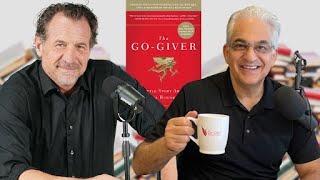
Mark Kohler interviews Bob Burg, author of The Go-Giver, on how small business owners communicate value instead of just price. Burg explains discovery questions that uncover what customers actually need, and why building influence through daily emails and reading matters more than you think.
Chapters
Great salesmanship, great leadership, great influence is always about the other person. Most everybody will tell you their biggest concern is price, but it's not, it's never a price issue. It's a value question. The more you read, the more you're going to grow, assuming, of course, you take the information and actually utilize it and put it into action.
Welcome, everybody, to another episode of Main Street Business where we get the pleasure of interviewing another Main street business owner, an influencer that's changed the life, lives, frankly, of millions. We're excited here today to be talking with Bob Berg, author of Go Giver and multiple books that have spun off from that millions of copies sold, translated into 30 languages. It's on HubSpot's 20 most highly rated books of all time. And really his success alliance, his website, his daily impact email, just affecting so many of us that are doing business on Main street. And I just, I just love that. And Bob, thanks for being here with us. I really appreciate you taking a little time to be here and share your thoughts.
My pleasure, Mark. Thanks for having me.
Well, thank you. And you know, before the interview started, folks, I actually was telling Bob what drew me to his message so much was value and creating value in yourself and that value experience. And I'm going to just throw it out there, Bob. I've really struggle with that as an entrepreneur myself. Like when you start to price your services, price your product, your hourly rate as a tax lawyer, and what am I doing? You're like, the value proposition gets to be so complicated for me. Is there any way you, how do you simply approach it for someone that's trying to value themselves, their service, their product? Where do you start?
Yeah, So I think the important thing is to kind of define the difference between price and value. Okay. Because price or, or what is charged is a dollar figure, a dollar amount, it's finite. It is what it is. Value, on the other hand, is the relative worth or desirability of a thing, of something to the end user or beholder. In other words, what is it about this thing, this product, service concept idea, what have you that brings so much wor to another person that they will willingly exchange their, their money for it and be glad they did while you make a very healthy profit. And let's, let's use an example of someone who has. And we'll go very basic here, a bookkeeping service as opposed to a tax account.
Speaking my language.
So let's go. But we're just gonna, we'll just talk about a bookkeeper and, and this bookkeeper, this bookkeeping service, she to, to do their books, make sure to have them protected for tax reasons and all the other reasons. Well, so she charges and we're going to just say $5,000. That is her, her, her fee, literally her price. But what value does she, does she give, what value does she provide for that? Well, through her, her years of experience, her, her desire to get to know your business, you know, it's inner workings, what you're looking to accomplish, she's able to, to create a system and do the work that helps you eventually save or. I said she charged you $5,000, I meant she charges you $1,000. Okay, for this service, but with every, all the work she does, she's able to save you $5,000 or the person who hires them $5,000. She saves them countless hours of time, right. Because she's doing that work. She also helps provide them with the security and the peace of mind of knowing it was done correctly. So what she did is her, she, she give, gave her client well over $5,000 in total use value. Right. In exchange for $1,000 fee or price, she gave more in value than she took in payment. And this is key because a very basic law of economics says the end of human nature says that people will exchange their money for that which they feel is of greater value than that for which they exchanged, right?
Yeah.
So in other words, they're exchanging $1,000 cash value in exchange for well over $5,000 in use value. So they profit because they receive more than they paid. But our bookkeeper also profited because to her it was worth it to charge a thousand dollars in exchange for her energy, her knowledge, her time, her caring, her everything that she did. So in any free market based exchange, and when I say free market, I simply mean no one's forced to do business with anyone else. In any market based exchange like this, there should always be two profits, buyer profits and the seller profits because each of them come away better off afterwards than they were beforehand. So now in pricing your services, you need to first have that understanding of the true value that you're providing that other human being. Now you can never charge more than what they're receiving, right. In value, but you can charge what you charge, providing you're giving them much more in value than what they're paying now. You'll say, well what about your competitors? Well sure, that's what a free market also does. It creates downward pricing pressure. But we don't want to be that the low cost alternative when you, you know, when you, when, when, when low price is your unique selling proposition, that's not a good way to do business. It's not, it's not rewarding, it's not productive, and it's, it's not profitable. And it's certain sustainable when you stop.
Well, should she charge more than a thousand then, or.
It depends. It depends. She's not charging a thousand dollars out of charity. She's charging thousand dollars because she feels that that is what she is most like, that that's the optimum price for what she is receiving now, you know, for what she is. For what she is, is giving. If she felt that she could charge 1500 and she's still giving much more than $5,000 in value, then she should charge that. But there's always other things. What is your competition charging? And again, you, you, you. You shouldn't charge based on what your competition is charging. But that's also, that's also something that you have to consider. It's a factor. When you sell on low price, you're a commodity. When you sell on high value, you're a resource. But that's why it's so important to not only understand the true value that you're providing. Okay, it's, it's important to be able to communicate that value. But where a lot of people, I think, make a mistake is they believe, Mark, that commun. Value is based on what they say. It's really not. It's based on the, the effectiveness of your discovery with that person. It's discovering their needs, their wants, their desires. Right?
And that's, and that's at the beginning of the proposition. I. And you teach so much about this. So we. Okay. And this is where people struggle. They're like, I don't know if I can say that they have imposter syndrome or they're like, I don't know, maybe they don't even know what their value. But if I hear what you're saying, just you're asking questions of your customer rather than just blah, blah, blah, Abs.
Absolutely. Because they've got to be the ones that understand that that value that's communicated. But it's, it's much easier to communicate your value when first you've asked the questions so that you know what it is they need, want and desire. Remember, as human beings, we tend to think that everybody sees the world basically the same way we see the world, which makes sense. How. How else could it be? It's all we know. But it's also not true. Different people Value different things differently.
Can I throw out an example on this bookkeeper one? Because I heard this once previously in another training. It's funny, you bring up the bookkeeping one, and now it comes back to me. So let's say you're the bookkeeper and I'm interviewing this customer and I say, I'm normally a thousand dollars. And you can say, I think that I'm going to provide far more value than that, $5,000 in savings. You can hear about this. But, but, but, dear customer, tell me what concerns you the most? Like, what do you want out of your bookkeeper? And they say, you know what? I don't care if you save me time or money or. I don't care about all that other stuff. I just want my books at the. On the second day of every month for the prior month. I just want it on this date. I don't care about anything else. That's what's important to me. And I think as a bookkeeper, sometimes because I've been a bookkeeper, you're like, really? That's what's most important? That's what's most important to me. Well, that's a little outside my norm. If that's what's really important to you, that'll provide a ton of value. I'll charge fifteen hundred dollars, but I'll deliver. And I don't know, I mean, is that where the point of being able to increase your price comes in, when you identify the value or how do you.
If that's, if that's going to be worth it to that person? Yeah, I mean, I don't think, I think that if you say, well, my fee is 1200, but if you want it on the 2nd of the month and it's 1500, I don't think, think that's necessarily something that's going to be very persuasive in their mind. So I don't, I don't think you necessarily set the fee. You know, talk about the fee at that point. I think you need to find out first what it is that person wants. And I'm, and I'm not saying you should have different fees for different people, unless doing that is going to be a hardship on you. That takes extra time. That's more of a premium client. Okay. And that's fine. So, so I think it's, it's always got to work out best, obviously, for both people. All right. And that's how we always need to approach it. But if this person needs something from you that's above and beyond what you would normally do. I would expect that you would probably charge higher for that. But you've got to be able to justify it in that, in that person's mind. But again, you find that out by asking questions, not assuming that you know what they want. I think you bring up a great example because let's say this bookkeeper. But to them, timeliness isn't as much of an issue. Yeah. So they assume, well, that's an issue. That's not an issue to the other person. Or they might, they might be very much a price conscious person. And so as far as they're concerned, all my prospective clients care about is price. Right. And so what they always try to do is, is sell on the lowest price. But that's not usually, you know, for those rare people it is. But those people probably aren't the ones you really want to do business with anyway. But, you know, all things being equal, but, but it's by asking those questions that they will tell you how to serve them, they'll tell you how to help sell them. And that's why it's so important to do that.
I love this. And you know, I, I, of course, you know, I'm a tax and legal guy. So you may have very well chosen the bookkeeper example just to stroke my ego because I love bookkeeping. I'm, I'm a dork. But I. Okay, let's stay with this for a minute because in one of your conc. Teach, which I love, is how does a person add value to others without costing more money and become a competitive. So let's stay with the bookkeeper. Let's say that they find out all their customers are worried about price, which kind of in bookkeeping is a common thing. People see bookkeeping as a commodity. So how would you change that bookkeeper's approach to branding themselves or their business or their value just off the cuff? I mean, I don't. If you don't mind, like what you would you say, bookkeeper, you got to change the way you're approaching this because you're going to get sucked into this commodity world.
Yeah. And you will if you buy into, into an idea that everybody's biggest concern is price first. Most everybody will tell you their biggest concern is price. But it's not. Okay.
Okay.
You know, I mean, personally, if I'm going to have, you know, brain surgery done on me, I'm not shopping for the lowest price surgeon.
Okay.
Now I'm gonna say, well, but this isn't brain surgery. Well, it's still Pretty darn important. Okay. Yeah. And so, so, you know, people say price, but typically, and my, I remember my, for an art subject, you know, taught me this. He said, you know, typically it's, it's never a, a price issue. It's a value question. So if you're able to give them what it is they really need, want and desire, then price isn't going to be an issue and your competition isn't going to be an issue. But again, I go back to the only way you can know this is to ask questions and truly listen. Now there's another thing too. And I learned this from a gentleman by the name of Richard Wildman who worked with financial advisors who target high net worth clientele. And Richard says, call up several of your most loyal clients, the ones who do business with you all the time, the ones who refer you to others, the ones who are what I call your personal walking ambassadors. Have coffee or have lunch with them. Try not to do it on the phone or zoom, but if you have to, you have to and that's okay. But if you can meet with them in person and ask them what it is about you that they find to be of most value, the reason why they talk you up, the reason why they tell others about you, the reason why they're such a loyal client. And again, this goes back to our seeing the world in our own way, because they're going to tell you things about the value you provide them that you hadn't thought of. Because remember, you don't see the world their way. And so because of this, what it's going to do is it's going to give you a much wider recognition of what you provide over and above the price you charge. And you're also going to be able to, in your discovery, ask the kind of questions that will bring some of these answers out in others that remember, they don't necessarily know because they don't know your business, like you know your business.
I love it. Okay, now I want to talk about if I could, if you'll give me a lot to your business because I love this daily impact email. Now I do an email every week and I'll tell you, it is hard to find something fresh, at least to me, you know, without recycling a topic I did two years ago or something. But what you're doing, and I have a lot of clients are like, hey, I need to provide more value. I want to get people drinking my Kool Aid. I want to do a weekly newsletter or a monthly newsletter. And I try to do the same. And I was talking to a client this last week that was just when I said, are you ready to do your monthly newsletter? They're just like, oh, like I don't know how to do that. I don't know how to do it. And Bob, you're doing it daily. What can you, what's your, I mean, tell us maybe why you're doing it and then of course how you do it. How do you come up with cutting edge, fresh things every day?
Yeah, well, so I, the reason I do it is it's probably my best marketing vehicle because, you know, people are seeing me every day and getting a message assuming they like it. Or, or I would guess they would, they would unsubscribe. So assuming they like it, it's a message that you know, is, is providing is. It's helping the know like and tr. And if you notice at the bottom of it, we always have a promotion about something. You know, whether it's the endless referrals program, whether it's the Go Giver Success alliance or one of our beyond the Mastermind two day events. So we always have something that we're advertising on the bottom, but it's understated, you know, it's, it's, it's not in your face type of thing. But they see it. So it's a great marketing tool for me as far as as it being fresh. You know, I've been doing this for so long that I've had, I have hundreds and hundreds of articles already written that I've done throughout the, What I, what I did with this is I just kind of edited them, edited them into a constant format. So if you notice, I always have, within the, within the, the emails there's always the, you know, the key point or then there's something like important thought, you know, it's today's exercise or something like that. So I took the articles that I already had, which is something close to 400 of them, and, and just, you know, reformatted them a little bit and, and so forth.
Well, you know what you need, you really just need a big wall of books. You know, something you could turn to if needed.
Right, exactly. I always tell people my, my, my house is comprised of books with some scattered furniture.
I love it. I love, I have a library in my house. It's like my, that's been my dream. Some of us old guys, and I'm not saying you're old, but me, you know, I am, we, I actually appreciate paper. I love paper and I have a paper Calendar and I still do the Google Calendar thing, but I love the paper. For those on listening on the podcast version of this, Bob's background is he's got a big library behind him and, and I just love it. You know, I'm going to ask you about that. Why you love books. Tell me, tell me why, like, do you do the ebook thing? You're like, no, I gotta have that paper. No, I don't think.
No, I'm a, I'm a paper, you know, but regular traditional book guy. I'm 65. And I, I, that's not an excuse because there's many people my age who, you know, are able to adapt and have the Kindles and all that, but. Nah, not me. I like to feel the book, I like to smell the book. I like to write in the book and, you know, do all the things. So it's just me, you know.
Do you ever collect books? Do you have any good, Some oldies that you really like? Do you go to the old bookstores and get someone.
Not, not that many, but something like Peace, Power and Plenty. This is an original edition from Morrison, Sweat and barden, written in 1910. In fact, I, I wouldn't even write in the, in the pages on the book. I just took notes on the sticky notes.
I love it.
Yeah, because it's just, you know, it's an old version and I have a think and grow rich. I think this is a first edition.
Oh, that is super cool.
How to win friends and influence people. This is a, A first edition and it's even got a newspaper article about it on. About Dale Carnegie on it. Oh, I love it. This is in the news, this newspaper. It's dated. It's a Rochester Times evening edition and it's dated. Not finding the date and I don't want to take up too much time, so I apologize. But it's, it's. Well, actually in the, the not yet 19th. Simon Schuster, 1937. So it says it right there and it looks like the newspaper copy is from about that age as well. So.
Yeah, you know, I just think we, we need to read more as a society. We do. I, I mean, I'd love to get your thought on that. It just. Everybody's on their Twitter feed is. If it's not less than four sentences, I'm on, you know, six and on. I mean, just snuggling up to a book and something that's been written. I, Yeah, I don't know. I think a lot of young people too think if it was written over 20 years ago. It doesn't have value or there's enough
in there, is that it is. It's really unfortunate. You think about the, you know, the, the books from the Stoics which are written, you know, a couple thousand years ago, 2500 years ago and that's some of the wisest information you can ever read. You know, I love it. Aurelius and Epictetus and Seneca and the gang, you know, what they, what they put together 2500 years ago or so is, is just as, just as valid today. I mean you read it and you say holy cow, how did they know this?
You know so well, let's bring it around. Maybe this will be a final point here is you talk so much about having influence on others. Do you think your, your education being well read and studying helps you in the influence you hope to have? I what do you see a correlation there? What are your thoughts on that?
Sure, I mean, you know, the more you read the more you're going to grow assuming of course you take the information and actually utilize it and put it into action. But I was a horrible student in school. I barely graduated high school. In fact it's funny, on graduation day, as we were leaving the ceremony, I remember I came across my guidance counselor and he said Berg, I can't believe I'm actually seeing you here. And he was a nice guy. I mean he wasn't one of these people who, you know, tries to keep people. No, I mean I, I don't blame him. Know he, he did the best he could but I just was not into school and I was out more than I was there and you know, college. I, I finally, after taking a couple of years off after high school, I got into college, I got in on academic probation and I'm pretty sure I graduated, graduated on academic probation if such a thing as exists but it was after I got, you know, I just had no respect for the whole thing which I, I regret that now of course because the idea is to learn how to learn it matter what, you know, specifically but, but it was once I got into sales that's when my education started. That's when my love of books and the funny thing is my dad who was self educated, I mean he grew up in the, you know, the, the, the, you know, Americana immigrant tenement slums and self educated and, and was reading all the time, all the time. So I had a great example. I just didn't, didn't really. Other than reading sports when I was a kid, I didn't care about reading anything else. And so when I, in my mid-20s, that's when my education began. Because not only was I reading books on how to sell, I started recognizing that it was the personal development that was the key. And that's when I started getting the books, the, the Carnegie books and the Thinking Grow Rich and the Psycho Cybernetics and As a man Thinketh and you know, all the classics of the sales and personal development field. That's when my education really started.
Started. Well, it's, it's interesting you bring that up to the first business book. If someone said, I remember the first fiction book I actually read that a teacher didn't make me read in school. I still remember a couple of those fiction books. But the first business book that I ever remember reading it was in my 20s that was like, oh wow, this is what a business book's all about. It was how to win friends and influence people. But you held up there. And I was just wow. And, and the stories were, were still old. You know, there he had these kind of stories that are, you know, almost depression era, you know, and industrial age and in it. But they were so poignant and so special.
Absolutely.
They're timeless.
Timeless. They sure are. Wow.
Well, any, you know, I'm going to just say how can. Last tip, you got a business owner on Main Street America, you get to have a cup of coffee with them and you're walking away and they go by, how can I have more influence and create more value in my proposition? I'm in my, whatever small business. I'm just trying, I don't know what do you pat them on the back and say, what's that? I don't.
I think I would probably share something that an old mentor From Gosh, almost 40 years ago said to me. It was when I was in the midst of a sales slump and I was, I was really focused on just getting out of the slump and making the sale as opposed to serving my, my, my customers, which is where my focus should have been. And he saw that and he, he said, Berg, if you want to make a lot of money in sales, he said, don't have making money as your target. Your target is serving others. Then he said, now when you hit the target, you'll get a reward. And that reward will come in the form of money. And you can do with that money whatever you choose. But never forget, he said the money is simply the reward for hitting the target. It's not the target itself. Your target is serving others. And you know, that's, that's really, I think more than anything, Mark, where it hit me that great salesmanship is never and we can say leadership or influence, however you want to say. It is never about the salesperson, it's never about the leader, it's never about the product or service. As important as those are. Great salesmanship, great leadership, great influence is always about the other person. It's about those people whose lives you want to add value to. We could actually even I think go further and say it's about another person's life being better just because you are part of it. And I think that when we can approach life, leadership, sales influence from that foundational premise, I think then we're really nine steps ahead of the game in a ten step game.
That hit me there. I filled up a page of notes myself. People, if you're not taking notes during this viewing on YouTube or podcast on your portal, you need to re listen to this with a yellow pad in front of you. Bob, you threw out so many golden nuggets there. And thank you for being here and sharing those cool books off your shelf. I could see those meant a lot to you. And, and we appreciate you being here. Thank you so much.
My absolute pleasure, Mark. Thanks for having me.
Okay. Oh, let me say everybody get, get over to bird.com sign up for the daily impact email. See what those messages are all about. So, so important that you make this message that Bob's sharing a part of your life and it will be better because Bob's in your life. I'm sorry. Mine's better. Thanks again, Bob.
Thank you.
More from MARK




The secret to managing your family's future #financialfreedom #estateplanning #shorts



Moving Property to an LLC: What They Don't Tell You #realestate #investing #tips


