Don't Set Up An LLC Before You Watch This Video...
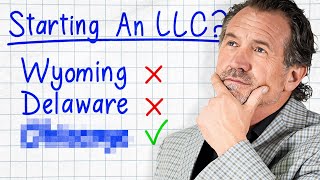
In this Main Street Business Podcast episode, hosts Matt Sorenson and attorney Mark J. Kohler debunk the widespread myth that forming an LLC in Delaware, Nevada, or Wyoming is automatically advantageous. They argue that the optimal state for an LLC is the state where the business actually operates or where the underlying asset (e.g., a rental property) is located, because that is where registration, banking, payroll, sales‑tax, and legal compliance are required. The conversation walks through ten common LLC use‑cases, explaining when each structure makes sense and what additional considerations apply: 1. Operating‑business LLC – set up in the home‑state, later convertible to an S‑corp once earnings exceed $40‑$50k. 2. Rental‑property LLC – formed in the state where the real‑estate resides. 3. Charging‑order protection LLC – an asset‑protection layer for high‑net‑worth owners, often using Wyoming for its strong statutes. 4. Self‑directed IRA/401k LLC – a “check‑book” LLC that lets retirement funds invest in real estate, crypto, or other non‑traditional assets. 5. Partnership LLC – defines ownership, profit splits, and exit strategies for multiple founders or investors. 6. S‑Corp insurance LLC – an LLC that can be back‑dated into an S‑corp, providing tax‑efficiency and liability shielding. 7. Professional LLC/PC – required for licensed professionals (doctors, lawyers, accountants) in many states. 8. Money‑raise LLC – structured to comply with SEC/Reg D rules for private placements or venture‑capital fundraising. 9. Family LLC – an estate‑planning vehicle that allows gifting of membership interests while retaining control of family‑owned assets. 10. Non‑profit/charity LLC – an LLC used as the legal entity for a 501(c)(3) or private foundation. Throughout, the hosts stress the importance of consulting a licensed attorney or tax professional, warning against DIY solutions and “Google‑only” advice. They also introduce the concept of a “trifecta” – aligning liability protection, tax efficiency, and administrative simplicity – and promote their own law firm as a resource for personalized planning. The episode blends practical examples, state‑specific pitfalls, and a clear call to action: focus on growing the business, not on chasing misleading LLC‑formation hype.
Chapters
Don't waste your time going to these states. Just go to the state where you're conducting actual business.
If you're sleeping on a pillow in the state of Oklahoma, out of the majority of the year, you're an Oklahoma citizen and you're going to pay tax in Oklahoma. Don't think setting up an LLC somewhere else is going to help you. You are going to make more money focusing on what you do, rather than trying to figure this out and waste your time and effort. Once you start making 40 or $50,000 or more, you don't want to be taxed as an llc. You want to be taxed as an S corp.
Welcome, everyone, to the Main Street Business Podcast. This is Matt Sorenson, joined by the great and powerful Mark J. Kohler.
I was waiting for Oz. The great and powerful Oz.
No, no, no, no. Just great and powerful.
Okay, Great. Powerful. Okay.
I love it.
Wizard of Oz. Such a great show. You know, that was a classic. It was a classic as a kid. Thank you for that wonderful introduction. We're excited to have you all here. This is a big topic. So much misinformation out there on where to set up an llc, how to set up an llc, and click, click, click. And then three days later, you're like, what did I do and why? So we want to help you.
Yeah, we want to help you figure this out and tell you what state to go to. Mark and I happen to be real lawyers helping clients across the country. We have a law firm. We set up 500 entities a month. Guys. For clients across the country. Mark and I have done the 10,000 consults. We want to cut to the chase and tell you what you need to know. In a few different situations, it might be different if it's a rental or an operating business, or maybe there's a specific asset protection strategy you're chasing where going to hit those so you know what state to go to. And we're going to bust a bunch of myths. There's so much BS on this topic. There's, like, more misinformation when you Google this than accurate information. There's also a lot of information that doesn't apply to you and you just don't know it. So we want to go over this and try and sort through it.
Yeah. And some of our biggest competitors are not lawyers, and they're selling LLCs for more than we charge. And I know it's hard to find a lawyer that can be creative and think outside the box. We get that, but we're not that lawyer. And if you want to confirm and verify anything we say get it from a legal source, not someone on the web that's not licensed making promises. Call them up and go, hey, will you put this in writing and stand behind it? Well, you know, I just done it myself and I've done research and I are you licensed to do this? You know, be careful where you're getting your advice. So with that said, we're grateful you're here. Let's get into it. I'm going to probably talk about what I think is the number one place you see LLCs. Okay. And you tell me if I'm wrong. The brand new small business owner side hustle, starting a business. And everybody's like, ding, I got to set up an llc. They don't know why. Like I got to set up an llc. And so they start to go to the web and they could live in Oklahoma, Texas, Florida, New Jersey, wherever. And they go, I need an llc, I just started a business. And they go to the web. Oh, I'm supposed to set this up in Nevada or Delaware or Wyoming. Okay, first train wreck begins. Yeah.
Now let, let me say, would you say that's number one, that's number one reason. And unfortun, unfortunately, there's different reasons people are promoting those three states. A lot of people think of Delaware. Remember Elon Musk, guys, let's not remember, let's not forget Elon Musk had to move his company from Delaware because of the BS laws there to Texas. And Delaware traditionally was if you were going to have shareholders and raise money and be a publicly traded company, Delaware was very friendly to management, friendly to Wall street shareholders, friend. And so friendly to Wall Street. And so that's where a lot of people went, is they went to Delaware simply because of that. Now if you're a small business owner, medium sized business owner, if you're not going to sell stock and go on a public exchange, don't waste your time going to Delaware. Unless you live in Delaware or you really love Joe Biden.
Yeah. And if we look, if we look at the history, what happened next was in, and I'm old enough to remember this, Nevada was the hotspot, no pun intended. You can hide in Nevada, you can get better asset protection in Nevada. And for years I had to battle this. I'm like, are you doing business in Nevada? Do you live in Nevada? Is this going to even help you in Nevada, you know, in your state of Oklahoma? No, it's not. But you get sold this bill of goods. Now does Nevada have some great LLC law back in the day that provided some privacy. Sure, if you lived in Nevada and you were doing business in Nevada, but not if you weren't. Because at the end of the day, if you were in Oklahoma, you still had to register your entity in Oklahoma. So anyway, we have the Delaware thing now. Wyoming seems to be the hot, you know, ticket lunch. And so we've got to just be careful about this. So let's say this. If you're starting a small business in Oklahoma and you're a landscaper, a restaurant owner, an anesthesiologist, an engineer, an accountant, a lawyer, whatever, and you're starting a business in Oklahoma, set up your freaking LLC in Oklahoma, that's where you're going to have the ability to convert it to an S Corp. Where it's when the time's right, you can get your banking done properly. You're going to get an EIN and walk into Wells Fargo or B of A with an actual set of articles that are in that state with an ein, open up your bank account and start doing business. And that entity is going to protect you doing business in Oklahoma. And so that's just basic 101. And please do not listen to all the rhetoric out there of these other states. We'll come to that. There are times when you might set up in those states for some asset protection reasons, but not when you're just a brand new or well established small business owner operating in a state.
Yeah, and even if you did one of those things like setting up in Nevada or setting up in Delaware or Wyoming and you do business in Oklahoma, Oklahoma still wants you to register that Nevada LLC foreign into Oklahoma. And now you're paying fees to the state of Nevada and Oklahoma when you could have just gone to Oklahoma in the first place. So don't waste your time going to these states. Just go to the state where you're conducting actual business.
Now, if some of you are like, okay, that sounds good, but back it up. Let me give you a practical backup to this. You set up your Nevada entity, you're living in Oklahoma. Well, you got to open a bank account in Oklahoma. That's when you're going to get a first slap in the face because the bank is going to go, going to. You're not even. Because they go and they pull up the state website for the Secretary of State of Oklahoma. They go, you're not even registered to do business here. So then that's going to be a difficult challenge. Next, let's say there is employment issues. You're going to hire employees. You might even hire yourself and make an S election. Well, the state of Oklahoma has to have you process payroll in the state of Oklahoma. And you're going to need a payroll tax ID number. And all of a sudden you're not registered in Oklahoma. Oh, you're going to sell a product and now you've got to collect sales tax. The sales tax commission of Oklahoma is going to go, where's your entity? And then you get into a lawsuit and you run into court in Oklahoma and the judge goes, you're not even registered to do business here. Yeah, but I got this Nevada entity. That's just amazing. Yeah, but it's not registered to do business here. People is problem after problem. So I just wanted to back that up with a few quick examples. But trust us, set up in the state where you are for your operational entity. Listen to our other podcasts on when to convert to an S corporation, how to set up your LLC, how to maintain your LLC. Make sure your LLC is registered with FinCEN. All of those other little topics we've got other podcasts for. But when it comes to where to do it, do it in the state where you're starting business.
Yeah. And for you operating business owners, let's say you have the Oklahoma business, Oklahoma llc, and you're like, I'm starting to do business in Texas as well. Well, when do I register into Texas? Do I need to go into Texas? Do I need the Texas llc? We can use the exact same Oklahoma llc. Now, if you just have some customers in Texas, you're not having an office or physical location, you don't have employees in Tex, you can avoid having to register in Texas. Just use the Oklahoma llc. That's where you're based out of. That's where your office or your presence is. And you can have Texas customers or customers across the country, that's fine. But if you make a physical presence in Texas, you open a location there or an office or you have employees there, now we got to look at registering that entity into Texas, but it's still the Oklahoma entity. It's just what registered foreign into Texas in that example.
I love it. Now, let's address some of you other naysayers that are like Mark and Matt. You don't think outside the box. You don't know what you're doing. Oh, tell me your story. Well, I'm an online marketer, I'm an influencer. I'm making money on YouTube. I don't even have an office in Oklahoma. I don't Want to pay Oklahoma state tax. So I'm going to set up my Nevada or Wyoming entity because I'm just making money online. Oh, okay. So Wyoming gets whiff of this when you file your 1040. And Oklahoma's like, sorry, Oklahoma gets whiff of this when you're filing your state tax return where you live. And they're like, huh, you made some money here online. What are you doing? Oh, well, I make money online, but my entity is in Nevada, so you can't tax me. Good luck with that one. Oklahoma's gonna be like, you drive on our roads, you go to school here, you go to the gym here, you live in Oklahoma, operate in Oklahoma. You use all of the Oklahoma state services, but you think you can set up an entity in another state and claim all of your money is earned online in this other state? Because the servers over there, it could be in a foreign country. It does not matter. If you're sleeping on a pillow in the state of Oklahoma, out of the majority of the year, you're an Oklahoma citizen and you're going to pay tax in Oklahoma. Yeah. Don't think setting up an LLC somewhere else is going to help you.
And we're saying Oklahoma here, but we're really talking to you Californians. All right. We're just trying to be a little more subtle about it because we know you guys, 13% state income tax. You're like, I'm in Wyoming. I'm in Nevada.
You don't know about the franchise tax in California. Mark, this is a really good strategy. It works all the time.
Really?
Yeah. Who told you that one? You know, the only way you're going
to get out of that California state income tax, even the franchise tax, is to get your butt out of California physically. You can't live there or be a resident there.
Yes.
So. So that's. But we're gonna still set up the LLC in the state. You're doing business. Yes. If you're in California doing business in California. Guys, we're into a California LLC. I know you're like, but, guys, there's an $800 annual fee for that. Well, that's what it. That's the deal in California.
Yeah.
You can't get out of that by doing a Nevada LLC or Wyoming LLC and then try to do business in California. California is still going to charge you that 800 bucks. You're not getting out of it.
All right, now, this opens the door to LLC number two. The second most common reason to set up an LLC is because, let's say you live in California and you just bought the coolest little rental property in Tennessee and your kids are going to the University of Tennessee. And so you buy this little rental property and you need protection. They're going to have parties, they're going to rent out a room to their friend. You've got a rental property, you got to have some structure. You're going to have to file a tax return because you live in California, even though you're making money in Tennessee. And we won't go down that tax path again. But you need protection. Well, where do I set up my LLC in the state of Tennessee where your rental property is? Now, California might still try and tax that or charge a franchise tax as a whole other podcast where we talk about franchise tax issues for California. But the point being is for protection, you set up the LLC where the rental property is. This is different than that operating business, which was the number one reason. So we set up the LLC where you're going to have a rental.
Yeah, let me give you the practical considerations there on the rental. When you go to close on the property. If you set up an LLC in Wyoming to own this rental property in Tennessee, the title company is going be like not going to record that deed into that. You need to register that llc Foreign into Tennessee, where again, we're coming back to the same concept. Just start in Tennessee, the state where you own the property. Now, we have a lot of real estate investors that own multiple properties, right. And they might have different, you know, they might have rentals in Tennessee, they got rentals in Indiana, they got rentals in Arizona. And you might have multiple LLCs, you might have an Arizona LLC in Indiana LLC, you might just have the Tennessee LLC that's registered for foreign into Arizona, for example, because you own rentals in Arizona and Tennessee. And so like, like, for example, myself, I had a, I have an Arizona LLC that owns property in Arizona and also owns property in Indiana. But it's foreign registered. So it's, it works in both states, but it's the same llc.
Now if any of you are like, ugh, guys, you're making my brain explode. Can't you make this easier for us? I'm going to go back to Google and find some influencer that's going to tell me how to do it faster and easier and cheaper. Oftentimes it's more expensive.
Can I tell you what they're actually going to do? They're going to go to Google to find the answer they want. That's the danger with Google, right. If You Google long enough, or if you're searching on the Internet long enough, you'll find somebody that's going to tell you what you want to hear.
Yeah, that's right. So when this starts to happen and your eyes start to glaze over and you get frustrated, do what the successful clients that make money and build wealth do. They call their lawyer, set up an entity, and get real legal advice related to them. Now, we know that can be difficult because lawyers have a stick up their butt. They can be expensive as well. And all of a sudden, you're getting all sorts of weird answers. We are here for you. We have had a law firm for over 25 years now, helping clients all over the country. We've got 14 tax lawyers that help Main street business owners affordably on a zoom call in all 50 states. And that tax lawyer answers to me and Matt. And they speak. Mark and Matt. They understand this podcast, and they've been on the podcast with us, and they. Some of our tax lawyers have been with us for over 10 years. So when you get on that call and you're like, oh, this LLC cost me 1200 bucks. All right, maybe I could have done it on LegalZoom for 800 or $600. But you know what? I get to talk to a real lawyer that's going to help me craft the right structure for me. And then we can build upon it, because we want you calling us back six months to a year from now doing your next transact to give you advice that's legit and it's honest, and it's going to cost a few hundred bucks, but it's going to save you so much down the road doing the wrong thing.
Amen. Amen. Amen. I know, it's shocker. Oh, call the lawyer when I need legal advice. And let me say another angle on this, too. I know some of you like hacking this out and you're like, well, I love watching Law and Order.
You mean the engineers. Law and Order.
And I like to watch suits and everything. I want to play a lawyer. I want to do all this stuff. This seems fun, guys. Go make money in your fricking business. Go take that time that you're trying to use to save you money or to do something you think that interests you, but you don't know what the heck you're doing. Instead, go make more money in your business and pay someone to take care of it so you make sure it's done right.
And I know you may feel like we're rolling our eyes a little Bit at you right now, but I just want to let you know I've been in your spot. Last weekend I had to work on a little rental property and I needed to do some plumbing work and I went to Home Depot and I thought, I can do this. I watched a YouTube little video on how to solve this problem and I thought, okay, I'm gonna go down to Home Depot and start hacking this out myself. Well, that seasoned 65, 70 year old grandpa that's working at Home Depot, that's done it all before and figured it out, rolled his eyes at me and said, just hire a professional. And I was like, damn you, you're right.
Mark Six questions in here. Did you wear this outfit when you went there?
You look like a gigolo. And what are you, like, trying to sell me? Anyway, so I learned the hard way, of course. What did I do? I tried to still do it myself and the guy sold me the stuff I needed. And then four hours later, I was on thumbtack looking for a plumber to come in on Monday and fix my mess. So, okay, we have paralegals that literally work in a department, fixmylegalzhumanity.com that's what we do. Because the people try to do it themselves and they tried to screw, you know, and they screwed up. So we feel your pain, but this. Matt made a great point. You are going to make more money focusing on what you do rather than trying to figure this out and waste your time and effort. And so we feel your pain. We're there for you. We've got a great team. This is not an infomercial. This is help you not make mistakes commercial. So if you don't like us, at least go somewhere else that's legit. Not Google.
Yeah. Who doesn't like us?
Oh, that's fair. It's fair points. Fair enough. All right, give us the third most common LLC out there.
All right, the last LLC we want to talk about is the charging order protection entity. All right, now this is about asset protection. The reason you use what's called a charging order protection entity is asset protection. Now we're talking about your business LLC or your rental llc. The primary asset protection you get is if something happens in the business. A customer sues you or your rental property, a tenant slips and falls and they want to sue you. They can only sue the llc. That's the limited liability. The asset protection I get in the llc. They can't sue me personally. They can't get to my other assets. They're limited to that llc, that where that lawsuit erodes either the business or the rental property in those examples. Now, when we're thinking about asset protection for my personal liabilities, what happens if Matt Sorenson does something dumb and Matt Sorenson gets sued and he's got this business and he's got the rental properties? Can they get into those LLCs?
Yes. And this is where the misinformation starts to go crazy, because this is where a Wyoming LLC could make a lot of sense. And so the promoters out there jump onto this bandwagon to create fear and some sort of knowledge that they have and we don't. And then you go form a Wyoming entity, which would make sense in this circumstance, in this third reason, because you've got some assets, you've got some rental properties, some money in the bank, some crypto, some equity in your home, and you're like, man, I want to protect that. So I'm going to. I'm just going to set up an LLC in Wyoming because that's what I hear is great for asset protection. It is in this advanced stage of the game. And I like what Matt said, you've got your LLC for ops, you got your LLC for rental. But you know what? I'm getting to a point where I need a little extra protection. I got teenage drivers. I've got these assets. That's when we start talking about this charging order protection llc that protects your assets from you, not you from the rental. It protects the rental from you. And that's this next level.
Yeah. And we want to see, of course, equity in that rental. We thinking like this is Maybe you have $1 million of equity and other assets that we're trying to protect here. We're not doing this if you got 10 grand or 100 grand, we don't think it's worth it or necessary. But if you have enough assets. Right. Why are we going to build a wall and a fortress around something with nothing in it? Okay, let's make sure there's something worth it here to cover the cost. And trust us, like I said, we sell llc, guys, we set these up, we want to set them up. But I really want to set up. If it works and makes sense for you.
Yeah. Because what happens if we set this? You call us up, you say, I want a Wyoming llc, we're going to warn. You say you really don't need it, but you say, I want it, we do it. Who are you going to be mad at a year from now when you finally figure out, I really didn't need that? Now, the companies that are out there selling these, they're long gone. But we don't want to be long gone. We want to build a relationship. That's what your tax lawyer, your lawyer should be doing for you, is doing what's for your best interest in the long run. Now, two, three years down the road, you're kicking butt, you're making more money, you're deploying it, you're investing in silver and gold and vehicles and houses and all that.
Great.
We're ready to add this third type of llc. Now to answer the question, this is where the Wyoming LLC for example, which we think is one of the better states right now, Ohio is not bad because there's some privacy techniques here too. We can make this LLC very anonymous and get you better protection from the outside. Let's say it is Wyoming. Now we set up that Wyoming llc, it's going to own your Tennessee llc, it's going to own your other asset. Holding LLC is not your operating entity. Your operating entity is just making money. But all these other assets out there that need protection, the lawyer is going to walk through with you and go, okay, we can protect this. This is already covered. Oh, your IRA, that's already good. Oh your 401k already good. Let's do it here to Kukuda. So they walk through you, your situation and add this energy where it makes the most sense.
So that's it.
Oh no, I got one more. I just came to me.
Oh, okay.
Our number four reason. Oh, I can't believe you forgot this.
I probably know what it is though.
Yep. It has to do with self directing your retirement account.
Oh, we might have five then.
So some of you out there are going, hey, I want to take my IRA or 401k and I want to go invest in a rental property with that I want to go invest in some crypto or some strategy. I want to partner with my kids Roth iras. So our directed IRA podcast down in the description, it's always there. Go check out our sister podcast where you're going to self direct these retirement accounts and invest in things outside of Wall Street. In fact, we have an alt Asset summit coming up in October where we give you all sorts of kick ass strategies to invest your retirement accounts. Nine times out of 10, well, eight times out of 10, you're going to need an LLC for that. It's going to give you more control, flexibility, the ability to raise capital with your family's retirement accounts. And that's going to require a special purpose LLC sometimes called An IRA llc. So you'll meet with the lawyer, they'll design it, boom, ba da bang. And that's number four type you want to add to that along.
Well, the last one I was going to add in there. I love the self directed IRA one. Of course, you know, I love that. But is the partnership.
Oh. Ooh, man. How did I miss that one? Wow.
We stay on here long enough, we're going to get to 10.
Oh, my gosh.
I'm going to start thinking the LLC is a great entity for partnerships, but it's going to fall into the same thing we talked about for rental or operating. What type of partnership is this? We love LLCs for partnerships. It's an operating business. Okay. I might have partners in this operating business. Maybe your S corporation owns a percentage of that llc. But again, that LLC with the partnership is going to be in the business where the partnership is conducted, is being conducted. Same thing, of course, for the rental property. We're still going to go down the avenue of where's the rental property located for that partner.
Yeah. Let me give an example. A very transparent, honest example here is Matt and I are partners in our law firm. And so we have a law firm, llc. It employs the paralegals, the other lawyers, that pays rent. It's a normal operating entity, but it's not my personal piggy bank. It's not my LLC that I can do tax planning with.
That's why I keep telling you.
Well, little do you know. So Matt and I both have our own individual S corporation that owns a piece of that LLC. 51 for me, 49 for Matt. I made that change the other day. I hope that's okay with you. Anyway, no, we're 5050 in this LLC, but our own operational S Corps own that LLC. And so that's another reason for an LLC is to define a partnership. Who does what, who gets what, who puts in what. What happens if it goes bad? What happens if one wants out? What happens if we scale and sell? So all of those. Ooh, I like that. Scale and sale.
Scale and sale.
Oh, my God. Scale and sale. All right. But anyway, that great idea to be
trademarked tomorrow, not to be used about the express.
So we got ir. I got another one. Do you have another one? I came up with another one.
Oh.
Ira, LLC is number four. Okay, let's go. Number one is rental. No, no, no. Number one is operating business. Number two is a rental. Number three was the charging order protection. Number four. Ira, llc. Number five.
Partnership.
Partnership. Okay. I call this the S Corp Insurance, llc.
Yeah.
Now this is a sister to number one. When you open up your small business, that little side hustle, llc, eventually you're going to become an S corporation. Once you start making 40 or $50,000 or more, you don't want to be taxed as an llc. You want to be taxed as an S corp. And so I'm going to use my daughter Sydney as an example. Give her a shout out. She's a realtor. If she were to stay an llc, she would pay way too much in tax. But we wanted to have the insurance of being able to back data into an S corp when the time was right. So we started as an llc. And then about a year or two into her realtor practice, if you will, she said, hey dad, I'm starting to make money here. Isn't it time to go to the S Corp? I was so proud of her. She had listened to my, you know, rhetoric on stage and on the podcast and I said, yes, now is the time. And we were able to backdate the LLC into an S corp. If she didn't have that llc, we couldn't have just made a LLC back in time. I mean, made an S corp back in time. But with an llc, it gives you that unique ability to go back in time and convert it to an S
corp up to that year.
Up to that year. And so you have the kind of this llc, S corp. I know I'm trying to shoehorn in number six, but kind of this llc, S corp, S corp insurance type strategy.
And anyway, yeah, yeah, that's a good example. And now for some people, this is the professionals now some realtors and states, you actually have to do a pllc, a professional llc.
Oh, look at you, number seven, Professional llc. I like you.
You might do a professional corporation. So that would be on the operating side of your business. And again, we're going in the state where you are conducting business because you're also going to have state requirements for that. Different licenses require different things. Like even California is weird. Like they have like medical corporations, dental corporations, PCs, and the different licenses and licensing boards have different rules for what, what type of entity you need. And so you might need to do a professional entity if you are a licensed person. So my PC, for example, my S corporation is a professional corporation. It's a PC, it's an S corp. Marks is the same. And that's what works in states like Arizona and Utah for lawyers. If you do a professional corporation, you could also do a professional LLC, LLC.
That's right. There's PLCs, PLLCs, PLLPs. I mean, there's all sorts of PAs, professional associations. There's crazy. Yeah. Lots options. I got number eight. Ready.
The hits keep coming.
Yeah. This one would be Money Raise llc. Ooh, right. I might do a Reg D private placement, Raise capital, a fund. So if you're going to go out and raise money to do a multi unit apartment building a new startup, you're going to use a special type of LLC that allows you to meet sec, that Security and Exchange Commission rules and state SEC rules where you can raise capital. Yeah. How would you add to that? I mean.
Yeah. And I think generally you're going to go in the state where you're raising the capital. Let's say it is the multifamily deal and you're. You're looking to buy a multifamily property in Colorado. Well, you're probably going to do a Colorado LLC to go raise the capital. Now if this is a startup and you really are raising capital in a private fund, there are lawyers are going to be like, we're going to go to Delaware, we're going to go to these states. And I'm not totally opposed to that. In those areas where you are raising capital and you're planning on having lots of different shareholders or investors, that's not our preference. And even I think Elon Musk is the great case. Even he, with a huge publicly traded company ended up moving to Texas where they're actually headquartered.
I've got nine and 10. We did it. We got 10. Number nine is the family LLC. Now this is an estate planning technique. And so sometimes attorneys are meeting with clients that are worth a lot of money. They're over and above the estate planning exemption. And so if families have a family farm, they have a family business and they're trying to leave it to the next generation.
We're talking tens of millions.
Yeah, yeah, we're over well over 10 million here. But very common, believe it or not. And a million just isn't what it used to be. It just says it's not, you know. Yeah, 10 million is the new million. So anyway, these families start doing gifting through special discount valuations. And so there's these LLCs that have special provisions in the operating agreement that allow family, mom and dad, grandpa and grandma to keep control of an asset, but start gifting shares in that entity to the kids or membership interests. And it's a well recognized IRS strategy to allow a business owner or real estate owner or asset owner to get property to the next generation. And some of you may hate that the rich do this. Well, when you're rich, you're going to love it. So get there, you know? So anyway, the family lv. You worked on those?
Yeah, definitely like the family. The old version of that was the family limited partnership, or flp. The new lawyers and the smart ones are doing the family LLC now. Number 10, you give this.
Okay, I'll let you get. So some of you may be wanting to start a foundation or a charity, a 501C3. And more and more, we see clients that will set up an LLC rather than a nonprofit corporation. You can take an LLC and do a 501c3 application or a private foundation application. So that's done through the 1023 or the 1024 application. And if any of you have that goal, it may be part of your legacy plan to form your own charity someday. And you could use the LLC as the foundational structure for that. Now, in a nonprofit, no one owns it. It's for the benefit of the world, or you and I in the United States or whatever you're going to do. So this charity that you're going to form is going to have a board of advisors, board of directors. You're going to get it approved by the IRS to go out and hold a golf tournament or a charitable event and raise money. And so we've seen clients use the LLC to create a nonprofit. Yeah. So the nonprofit LLC.
There we go. We hit 10.
Wow.
10 different LLC types. Now, remember, the state we want to set these up in is the state you're operating your business, the state where you own the rental property. Maybe you're doing some charging order protection because you have significant assets and you're worried about your personal liability. We might use Wyoming in that instance, but that's a limited scenario. We're not saying everybody go out to Wyoming.
And then.
The last thing I want to add in, though, is there's more to the LLC and the structuring in the entities than just the states and the different types of.
You mean I just don't need articles and I'm done?
No, there's more documents and paperwork, but there's also more structuring and planning. And that's what our lawyers are doing every day with clients, setting up a trifecta, going over, where are your liabilities, where are your assets? Do you. Oh, you have a large brokerage account. Oh, you have a boat with a. With a friend. Oh, you have another business. Oh, you have a large 401k. We want to optimize all this stuff, lay it out in a trifecta, make sure it's efficient for tax purposes. So you're paying only as much tax as you have to. We want to hit all the tax strategies that go into this. When you own a rental property, when you own a business. We're just scratching the surface on the
reasons, the first step of the reason
to set it up and what state to go to, let alone like, how do I tax this, how do I structure it, how do I maximize my asset protection, minimize my tax liability and not over complicated either and create too much administrative burden. So that's what we're doing in the trifecta. And please get over to our law firm@kqoslawyers.com we can certainly help you get that planning done and get going. Or like Mark said earlier, we talked about people who have kind of baked the cake already and then they bring it to us and they're like, I'd like some chocolate in this. And some like, okay, we can clean it up too. We can clean it up too.
We can fix it. So the moral of the story and my final message is, you ain't nobody till you got an llc.
Is that Nicki Minaj?
Nicki Minaj. There you go. So if you want to be somebody, let's just get an LLC rolling and then you'll, you'll feel better about yourself and you're, you'll feel like you're on your path to future wealth. Thanks everybody for being with us today. We love being here in Main Street America, helping you build your perfect American dream. And the llc, I hate to tell you, is going to be a part of it. Our wealthy clients understand, maintain and own llc because you're not going to be able to build wealth without it. But the type of LLC and where you do it and how you do it is so, so, so important. Don't cut corners, don't be Mark Kohler and go to Home Depot and try to become a plumber on a weekend. You will pay a big price on Monday and hopefully there won't be an insurance claim in the process. Thanks, everybody. We'll see you next week.
More from MARK




The secret to managing your family's future #financialfreedom #estateplanning #shorts



Moving Property to an LLC: What They Don't Tell You #realestate #investing #tips


