Former White House Director: How To WIN In This Economy w/Anthony Scaramucci
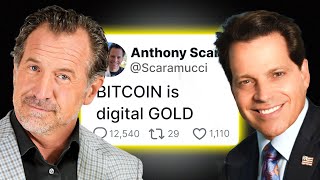
Anthony Scaramucci, former White House Communications Director and SkyBridge Capital founder, discusses navigating business in tough economic times. He credits his early jobs on Long Island docks and in his uncle's motorcycle shop with teaching him relationship-based sales. On inflation: it stems from pandemic stimulus, not personal failure, so stay optimistic, cut costs, and use technology to gain productivity.
Chapters
Welcome, everyone, to another episode of the Main Street Business podcast, where I have the honor and the privilege of interviewing Anthony Scaramucci. Now, his name may ring a bell, as he was the former White House Director of Communications and has released the new book From Wall street to the White House and Back. And we're going to talk more about that with him on the ability and resiliency to pick yourself back up after being knocked down. His insights are incredible, but most importantly, he is a financial genius. And currently serving as founder and managing partner of SkyBridge Capital, he has been name one of the 100 most powerful people in global finance. He is also a titan in the industry of Bitcoin and the NFT Marketplace, and it was recently also named Entrepreneur of the Year by Ernst and Young. Bottom line, Anthony brings unparalleled expertise, helping entrepreneurs from Main street all the way to Wall street to better succeed in the American dream. Anthony, thanks so much for being with the Main Street Nation, if you will. We stand in awe of you because we know you came from Main Street. I want to ask you about that, but thanks for being with us. Really, it's an honor.
Well, listen, I mean, that's very flattering. I appreciate you saying that, Mark. I mean, you know, my upbringing, I think, has prepared me for so many different things. You know, I'll just say this to you. You know, my dad said to me when I got my job at Goldman Sachs, and he didn't know what Goldman Sachs was, you know, the difference between different places. My mother was embarrassed for me by the way that I went at Goldman Sachs because she wanted to be a lawyer. I'd gone to law school. And so she told her friends I was at a law firm called Goldman and Sachs. So just giving you a sense for the family I grew up in, nobody was educated, nobody went to college. And. But my father said something to me that small business owners know, okay? He said, I never want you to complain about your job. And I said, why is that, Pop? He said, well, you know what? You're indoors. You're out of direct sunlight, and there's no heavy lifting. And he said that to me 35, 36 years ago. And I got to tell you, he was right about that. Because you're indoors, I'm indoors. We're blessed with that. A lot of people work outside. You know, when I'm on the road and I see a guy with his yellow vest on and the helmet and the reflector stuff, I think my dad, that's what he did. You know, he did that for 44 years.
My parents, my dad was a Main street entrepreneur too. And the lessons you learn, and that's what I want to ask you about it even a little bit further. I knew you grew up in Long Island. I spent a couple years in Bayshore just down the road from you.
And 80s bakery factory is. Remember the factory?
Yeah, yeah, dude, totally.
Yeah.
I would stop there and pick get the day olds for totally cheap. I was in College in the 80s in Long Island. Man, we just need to talk about that. And Guns N Roses at shea Stadium in 90. I mean those were the years. But what were some of the lessons you learned though in the small business world? Main street that helped you succeed late later in Wall street is one, you know.
Yeah, I. I had a couple of jobs growing up. You know, I worked on my dad's stone. You know, my dad was the crane operator on a stone dock in Port Washington. I worked as a laborer there. So I was in the union. I got decent hourly wage. I worked in the local supermarket for a small business owner, an entrepreneur that was a proprietor of that grocery store. He was a lovely, lovely man. And then I worked for my uncle in a motorcycle shop out here. And so, you know, he was the character of characters. Okay. And he taught me a lot about sales. And his big thing related to sales was relationships. His big thing, he was a non linear, non transactional salesperson. And so his attitude was build a relationship, you'll have the client and be less conversations about price, there'll be more conversations about the relationship. And you know, there's a little bit of name driving. Just bear with me for a second. He had Billy Joel as one of his big clients. Oh, and he's now passed. Now he died. He died a couple years. It was 94 when he died. He was a World War II vet. But Billy Joe used to come into the shop, he'd hang out with my uncle. You know, my uncle give him a free this or free that or he'd go for a ride with them. And my uncle's attitude was, you treat everybody. Now if it was Billy Joel, a Hell's Angel, a first time buyer of a moped or, or a helmet, my uncle's attitude was he treated everybody with respect and kindness so that, you know, they left the shop and they said good things about you. You know, it was really important because my grandmother, his mom was an. A maid. You know, she was a turned over the beds in the town and she cleaned houses. And so his thing was, he's always said to Me, you better tip people in these hotel rooms. You're a fancy pants Wall Streeter. Now, going to hotel rooms. That could be somebody's nana, it could be somebody's grandmother. You better make sure you leave some money on the table for that person. You know, and I always think about that. You know, we're, we're lucky to be doing what we're doing. And we're blessed by the grace of God to be doing what we're doing. And there's other people there. This is a great country, aspirational country. And there's people in this country that are doing different things than you and me. I respect their work. I respect the dignity of their work. I also want to be that guy where people say, yeah, you know what, he's a good guy. He's not some stuck up Wall street snob or he thinks he's better than other people. That's just something I don't want to be ever.
Well, I love that. I didn't expect you to talk about that close relationship experience that really exists in the communities on the main street where Hollywood and Wall street can be a little more shallow. And so that, that's incredible.
Petty Hollywood Wall Street Betty. You know, you know what Washington is, Mark? Right. Washington is Hollywood for ugly people. Oh, I love it. They're just petty, you know, and they, and they, they snipe at people. Here's the thing. I'm going to tell you the story. Hope you don't mind, it's a little bit of long winded, but I was 23 and I was in law school and I was working for a solo practitioner out in the Hamptons. And so for your viewers and listeners, that's like the vacation resort area for New York. It's gotten very, very upscale.
You were working for Bobby Axelrod out there, so. Right, exactly.
This guy's name was Dick Pellicane. He was an Italian American. He dropped the pelicano. He was pelicane. He was such a great guy. And I was at his house. He started with nothing in Brooklyn. He built himself up. He was a real estate lawyer in the Hamptons. And he said to me, you know, I made some money, but really all I want to do is cook some spaghetti on my stove and I want to watch television and get a good night's sleep. And I looked at him, I said, yeah, yeah, right, Mr. Pelikan, that's because you have money. You have money. And he said, listen to me, little Scaramucci, you little punk. You know what? Someday you're going to have money, you're an industrious guy, you're going to realize it's not that important. And then he said something that was so true, but I didn't realize it at the time. There's so many miserable millionaires. There's so many millionaires that want, want, want. They compare themselves to other people. They get anxious about their status and their ego drives them crazy. And he says to me, you'll see. You'll see. You just wait. And he's passed away now. Too many soul recipes. But I always think of him because he was right. I made a little bit of money, I got a little bit more financially independent. And I. And I have seen elements of Wall street where it's like the miserable millionaires club. You know, they're all comparing to each other and they're all, you know, you find your happiness. My point is in the simple things in life, you know, there's a small business owner out in your followership that's just some did something really nice for somebody. I don't know what it is. Maybe they gave a kid a raise on their job, or maybe they went the extra mile for a customer, or maybe it was a tax attorney that, you know, went over the returns of a relative for the client. I don't know what it was something. Okay. And that's where the feeling is, you know, that's where the good feeling is. Jackie Robinson broke the color barrier in the major leagues, the professional leagues, really, for everything. I mean, he started baseball, but he was really the push into the other major leagues. He had one of the best lines ever. He said, you know, you're living your most purposeful and happiest life when you're serving and helping others. You know, as you just think about some of these people, they serve themselves. They don't serve others, they become miserable. You're serving others. And that's what our nation's small business people do, you know, they serve others. Yeah, lots of purpose in that.
Yeah, great point. Thank you for sharing that very personal story too. And you mentioned Washington there for a minute, which obviously leads to your incredible new book and the story and White House and back and the hard knocks of that.
If you don't mind me being a little promotional, I'll show you the copy of the book. You know what it costs to get a Photoshop version of yourself looking like that? Okay. When you're my age? A lot. Okay. A lot. Okay.
Very well done. Worth every penny.
It was worth every penny, right? Orangey Cool. Orangey But I thought that was appropriate given I work once for a person that is orange.
Yeah, I'd love it. Well, we're. That book is definitely down in the show notes and your team sent me a copy. I love it. And. But back to that small business owner because I so many lessons learned of hard work, the relationships you mentioned. But that resiliency that you got knocked down and you freaking got right back up and there's just like that small business owner you mentioned that's out there doing something for someone for the feeling there's one that's got knocked down yesterday. How do you, how do you, what do you tell them?
Well, here's the thing. I tell people if it's not health related, well, first of all, if it is health related, prayer, mindfulness, listen to your doctor, do the best you can to get yourself healthy. Not health related. It's mindset related. So. And I would tell somebody listening if you've had a bad situation. Let me tell you about my bad situation. Okay. I was hired into the White House on July 21st and I was fired from the White House on July 31st. So everybody does 31 minus 21 is equals 10. But it's really not because I worked a full day on the 31st. If you add it all up, it's actually 11 days, you know, and I deserve to be fired. I don't blame it on anybody. I've never blamed it on the president, never blamed it on the chief of staff. I did something wrong, got fired, owned the problem. But the excoriation from the media and the late night comedians and the mockery on Saturday Night Live and the general press craziness, I can't imagine. You could go two ways with that. You could get really bummed out and depressed and very self conscious and you could be bummed about it. Or you can say, you know what? That's a moment in time in my life. It's already over. It's already behind me. Whatever mistakes I made, I'm not going to wear the millstone of regret. I'm not going to wake up in the morning, wow, I did something stupid in the way I got myself fired. Let me kick myself in the pants this morning. I don't do that. I take the millstone of regret off, I leave it behind me and I go forward and I focus on the task ahead. So somebody's made a mistake in their business. You know what? We make mistakes in our business. We can't get everything right. I know we idealize our lives. We want our Lives to go up and to the right at a 45 degree angle. But nobody's life is going like that. People have the trials and tribulations of life, health issues, people that have mortality issues. We're all facing that, you know, and you. You have to take an attitude approach. You have to get your mindset for that. You know, when I got fired from the White House, my son, who was 25 at that time, he's 32 now, he put his arm around me. We were walking on the promenade in Santa Monica. But the first time in my life, Mark, I was parented by my oldest son. He looked at me, he said, dad, are you okay? I said, well, what do you mean, am I okay? He says, oh, my God. He goes, this is devastating. You're getting devastated out there. It's hurting the business. Skybridge. It's hurting this, hurting that. And I looked at him and I said, AJ we're indoors, we're at a direct sunlight, and there's no heavy lifting. And let me tell you something. Watch what I do with this. Watch how I handle myself, because it'd be very important for you. And here's the thing, Mark. I wrote a very real book because I want there to be space for my children to make mistakes. I want them to see the flaws. I've read some billionaire bios that are written by ghostwriters, and the billionaire bio is, I am perfect. I did everything right. I made every decision perfectly. This puts so much pressure on younger people, particularly your children. You have no idea. So I would rather be open and honest about the pluses, the minuses, the strengths and weaknesses. And I would tell that small business owner, you had a hiccup, you had a setback, even if it was catastrophic or you were forced into a bankruptcy. You know what? You live in America, and as long as you have your health, you can put yourself back together. And this is a kind country. You know, I know we like to fight politically, and I know we like to go off on each other, but in general, when you meet people in this country, they want to be helpful. And Ben Franklin had one of the best lines ever. He said, you know, if you want to make a friend, ask him for a favor. It's literally one of the best lines ever, because it's counterintuitive. You know, Franklin's notion was people have a willingness to help you, and they always like to reciprocate. And so you go out and ask somebody for a favor, they do you the favor, you feel good about it, they feel good about it then. Now you have this inclination to reciprocate. You know, that's a universal language in America. And so if something's bad happened to you in business, you got to that business. You've been successful before, you will be successful again, okay? You got to believe in yourself, okay? And so get your mindset right. And the other thing is, you got to learn to laugh about it. You know, I got fired from the White House. You know, I turned that into a unit of time, so it's almost like a noun. Now it's 11 days. So as an example, I said Liz Truss, when she got fired as Prime Minister of the UK after 45 days. Well, I know she lasted 4.1 Scaramucci. I put that up on Twitter. When Speaker McCarthy got blown out of the speakership after eight months, I said, well, he last at 24.5. Scaramucci. You know, somebody says to me, I'm. Somebody says to me, I'm short. I said, geez. I. Well, I actually do know that. I'm sure it's not like you're giving me news information. I said, well, let me tell you something. There's a lot more oxygen down here than there is up there, okay? And lastly, I'm too short to see the glass. Anything other than half full. It looks full to me when I'm looking at that glass, you know, and so it's your mindset. You know, everybody's got stuff that they're dealing with. Well, I think that if you own. If you own your stuff, you can pick yourself up and you can really, really go forward. You know what? And that experience, that burn, that scar, you may be more fortified from it. You may have more confidence. The next time another hiccup happens, you may be like, wow, I got hit again. But you know what? I was hit in 2017, and I absorbed that blow, and I did okay, and I'm going to do okay with this blow. So that's what I would say to that small business person.
Well, thanks for that. And I think that Scaramucci unit of measurement should be in the Urban Dictionary this year. We'll lobby for that.
It is, actually. If you go to urbandictionary.com I'm a little mad at them. I just want to point out that they say it's 10 or 11 days. So if there are Urban Dictionary judges out there listening to me right now, even Trump says it's 11 days when he's provoking me with me tweets on Twitter. He said it was 11 days. I think the President is an official score of my duration in the White House.
Yeah, he was your direct supervisor, right?
Exactly. Direct supervisor reported directly to him. I was an assistant to the President. He said I lasted 11 days. Let's go with that.
Well, and what's poignant about you being able to joke about it and write a book about it? Holy crap. People were crawling to holes after something like this. And the beating you took in the media, just brutal and. But for you to talk about that when someone else is like, well, you don't know how bad I've got it, really. Talk to Anthony Scaramucci. He's got a pretty compelling story. You want to go get, you know, beat up and you bounce back.
Not help related. But listen, we, we have a tendency towards self pity. We do, we get down and then we do the woe is me thing. You know, look, I mean, you know, there's, there's a couple things that we have to accept. You know, Sophocles said that the kids are always mad at the parents. In the ancient world. He was the great Greek writer. I said, well, why Sophocles? Why are they mad at the parents? They didn't ask their kids for permission to be born. So the kids are mad. When bad things happen to the kids, they blame it on the parents. Stop blaming your parents and don't play the victim. And the other thing is, you're living in a 1,000-year-old piece of machinery. This thing called the human brain has not had a software upgrade in 100,000 years. Yet. Your phone, your phone went from iPhone One to iPhone 15 in 15 years. But now your brain, you're still living with that primordial brain which has fear in it, it has greed in it, it has excess in it impetuosity. It's prone to the seven sins. It's also prone to virtue. And so what you have to do is you operate that brain. Be transcendental, you know, push yourself to be the best version of yourself, or what Lincoln once said, you know, let's appeal to the better angels of our nature, you know, and if you do that, the people around you are going to do that, you know? You know that.
Yeah.
If you're mendacious and you're mean and rude, you're running the company. Guess what happens? You get a group of people that are mean and rude. But if you're kind and you're fair and you're considerate, people around you will, that will click with them. And you know what? They'll be like, you know, I got to be fair, I got to be considerate.
Great, great comment. And let's pivot to that as we talk about the, this mindset stuff, which is absolutely so important and incredible to that Scaramucci brain of yours, which I think is equally incredible when it comes to financial knowledge. And I just wanted to get your. Since you have a crystal ball over there, we presume this, this fall in the economy and everything going on, what's your, what's your take right now? Like in helping small business prepare, at least mentally as well? Like what, what, what do you think's going on?
So listen, you know, I don't want to make this overly political, unless you want it to be, then I'm happy to go super political. But here's what I would say. My general observation as an adult, so from 18 to 60, this is my 42 year observation, is that most things are that we personalize and just bear with me for a second. So when the economy goes into recession under George Herbert Walker Bush, it's Bush's recession. When it comes out of recession and it's in recovery, well, it's the recovery of Bill Clinton, it's Bill Clinton's recession. But the truth be told, the economy was going in a recession one way or another. It was a cyclical thing and it was situational. But we have a tendency to personalize it. Okay. And why this is important is the inflation that we're experiencing right now is a direct byproduct of monetary and fiscal policy that was implemented during COVID Now we can analyze and slice and dice that. We can disagree with it, we could Monday morning quarterback it. But if you induct that much money into the market and you induct that much money into the system and the supply chain breaks. And so you have more money in the system and you have less goods and services. More money, less goods and services, the prices are going up. And so that happened. Okay, and that's clearing now. That's starting to clear. But you know, if President Trump won reelection, it would have been President Trump's inflation. That inflation was going to happen one way or another. It was all situational, the way I just described George Bush and Bill Clinton. It was Joe Biden's inflation. So he owns the inflation and people personalize it on him from a political perspective. But that number's coming down. So if Joe Biden wins reelection, it's going to be Joe Biden got the inflation numbers under control. If President Trump wins reelection, it'll be, he got it under control, but it's actually happening with or without them. So I think what the small business leader has to do is take a step back and say, you know what? I don't care who's the President, United States. What I'm going to do is I'm going to run my business for profitability. I'm going to run my business for good culture. What I'm going to do is I'm going to cut costs where I need to. I'm going to create pricing expansion if I'm capable of it. I'm going to add products or diversify in different ways to make me a stronger business. And I'm going to myopically focus on the locality of where I am, irrespective of what's on Fox News or CNN or even cnbc. Because what I have found in my career is I can't control it. You know, I can't. I can give you my opinion of who I want to be president. I can give you my opinion who I want to be governor of the state of New York and the mayor of the City of New York. I give you my opinion, but I can't control it. But what I can control is doing the best that I can do, irrespective of who's out there. And I can do the best I can to be realistic about my business and governmental policy and taxation and how best to handle myself and to ask my team to handle theirselves. And I think the economy is stronger than people think. I think inflation is actually coming down now. A lot of secular reasons for that. There's going to be more AI, bigger increases in productivity. The cell phones, the computers, all this stuff's going to get faster again and more efficient. And I think that we're going to see lower prices because technology, I didn't bring charts to this podcast, but technology over the last 500 years has reduced prices. It reduces price in economy. You and I are old enough to remember that phone call that was made from Europe at $5aminute and it went to $3aminute. Now it's at no dollars a minute because we can do it over the Internet. And so all of this stuff is coming. And I would tell the small business owner, be optimistic. Put your mindset towards optimism for yourself and the country. When they test people psychologically, the optimists are the ones that inspire and the optimists are the ones that people. When you say the word optimism, people think leadership. When you hear the word pessimism, people think distrust. Now should they think distrust. I'm not saying they should think distrust, but they do because, you know, pessimists sound smart. Doom and gloom, the world's coming to an end, but they don't have a whole big followership. People want to hear, hey, man, we're going to do this. We're going to figure this out, okay? I got hit after the White House, I came back to my office, hey, we're going to figure this out. Then we went into crypto. The first part of crypto went pretty good, Mark. The second part of crypto went really bad. Okay? We made an N. We made an N. The consonant N. Up, down, up. Well, I'm hoping it's not an M, mark. Up, down, up, down. You know what I mean? I don't know. I'm hoping it's not right. But the point I'm making by saying this to you is when it was really down, I went to my team and said, we're going to figure this out. Relax. Going to figure this out. You know, I always think of the scene in Apollo 13. They're in the command module. They're running out of filtration. They have to figure out a way to get the filter out of the lunar module to scrub the carbon monoxide out of the air, okay? So that they can stay alive to get themselves home. And they take all the engineers, they put them at the table at NASA, you know, they got those little plastic pocket squares, this 60s, you know, actually, that was 1970. They said, here's everything in the lunar module, okay? Figure out how to put this together so that they can use it in the command module. And those guys, they figured it out. And then they had the CAPCOM call in the instructions. This is located here. Put it over there. This is located here. And they saved those three men's lives, okay? And you got to think like that in your small business. You know what? I'm going to save these people's lives. I am going to engineer, I'm going to adapt. I'm going to pivot. I'm not going to mourn my losses. Yeah, it sucks. I got this happened to me or that happened to me. Nobody. I'm going to adapt and pivot like the engineers did in Apollo 13.
I love the message you're sharing, is just so on point. And we can't get sucked up into the craziness. And when we can focus on our own little universe and really optimize it, we're always going to be better off emotionally and financially.
Amen.
Now, I'm glad you brought up crypto in our last few minutes because I know you're a huge cryptocurrency and an nft. Not many people know that's a non fungible token. I am a huge fan. We're holding our third annual crypto tax summit, a whole summit just on tax strategies for crypto. We love it. What's your forecast for the market as a whole? And I'd love to know what you think about this nft. Not a lot of people play in that area and there's so much opportunity on future there.
I think the NFT market is a lot like the art market. And so, you know, I grew up with no money, so I had no interest in art. When I started making a little bit of money I was like, well why would somebody pay that much for this art? And then I realized what they're paying for is the immortality of the creativity. And I'll just give the best example I can think of Da Vinci. 500 years ago he painted the Mona Lisa. And so that that picture and his hand is coming through portal from 1500s to the 2024s and it's there for us. And we this is a relic from the past. This is a genius that could have been Steve Jobs or Elon Musk, but he had a craft as a painter and an inventor. And so a result of which this immortality, this, this art, we remember the artists, they're not going to remember us, the business people, but they're going to remember the artists. And so we see this channel. And so the mfts are a digital representation of art. And so yes, they have value similar to the Da Vinci. I mean, listen, the wood that da Vinci painted on, plus the oils that he painted with, I don't know, is that worth $30 or worth $50? I don't know. But the representation of his creativity is priceless. And so the art that happens in the fungible, the non fungible token world I think is valuable. And you know, you have to be selective and you have to go for scarcity and things like that, but I think it is valuable. But more broadly, I'm a big bitcoin believer. I own other cryptocurrencies, but I believe that bitcoin is digital gold. I believe that bitcoin has the characteristics for the future that represent a store of value. And I believe, if you're patient, because bitcoin is only at about a 5% adoption. It's roughly where the Internet was web one was in 1999. And as it starts to scale and more people adopt it and more people own it and more people buy it. I think it will trade to the market capitalization of gold. So right now, bitcoin's at a $1.6 trillion valuation. Gold is at 16 trillion. Bitcoin's at about 67,000. Could bitcoin go up 10x and be the market capitalization of gold tomorrow? No. But over a decade, I believe it could do that. And so I'm not allowed to give quote, unquote, financial advice publicly or anything like that.
Yeah, I hear you. Me too.
But I have spoken about this asset. I've written a book about it called the Sweet Life with Bitcoin. How you stop worrying about cryptocurrency. I did. You can too. Something like that. And what I would say to you, your viewers and listeners, don't be fearful. You can own a little bit of this in your portfolio and I think long term, it will reward you.
Yeah, well, I completely agree. And the world's getting smaller and digital currency is becoming more stable, and that's an equation as well for something. Sounds good. Thank you again for being here. I know you've got to run. It's just been an honor to hear your insights that are so wise. And we just are grateful for what you're doing for us little guys out there. I love that you're bringing so much of your Wall street experience to Main Street.
You're being very generous to me and thank you. But we're all little guys, you know what I mean? We have to know that. Okay. We're, you know, Churchill, Winston Churchill had a great line. He said, we're all worms. He says, however, I choose to be a glow worm. And that's what I wish for you, Mark Kohler and all your views and listeners. Be a glow worm. We know we're all worm. Just be a glow worm. There you go.
Anthony, thank you so much for being with us. We wish you the best and everything you're doing and good luck with your family and wish you the best of health. Thanks again for joining us.
Right back at you, my brother.
Thank you.
More from MARK




The secret to managing your family's future #financialfreedom #estateplanning #shorts



Moving Property to an LLC: What They Don't Tell You #realestate #investing #tips


