From NFL to Passive Income Empire | Devon Kennard
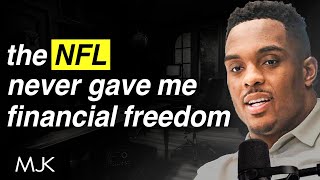
In this interview, host Mark Kohler talks with former NFL linebacker Devon Kennard about how he has built a passive‑income empire while playing professional football. Kennard explains why he wanted financial independence beyond the NFL, describing his early foray into real estate with an $86,000 duplex and how that modest start led to a portfolio of 20‑plus rental units across markets such as Tampa, Kansas City, Ohio, Tennessee and Phoenix. He outlines his "core four" team—broker, lender, contractor, property manager—that lets him invest passively, limiting his involvement to about five hours a week. Kennard balances direct ownership with over 30 real‑estate syndications, using K‑1 tax deductions and dividend payouts to boost cash flow. He discusses his investment philosophy of treating each deal as a "base hit" rather than a home run, emphasizing incremental growth, habit formation, and the importance of a clear buy‑box. The conversation also covers his motivation for writing the book It All Adds Up, aimed at younger and under‑represented audiences, and his future plans to launch courses, private‑money lending, and continue scaling his portfolio while maintaining ownership control. Throughout, Kennard stresses the mindset of "flipping the bag"—making the most of whatever resources you have—and offers practical advice for athletes and anyone seeking financial freedom.
Chapters
The NFL takes advantage of that. They're going to offer you the lowest
contract possible, 20 plus rental properties that he build up while in the NFL.
I do not know everything, but I am actively learning and growing. This Property is only $86,000 and I went in with a partner and we each put 12,000 grand.
Yeah, I'm just going to go buy this crappy little rental. There's not a lot of dollars at stake, but I'm going to learn the ropes. Alright everybody, welcome to another powerful Main street interview with a influencer that's making a difference in Main Street America. Devon Canard, former NFL player. So you, you know what, it's kind of cool, right? You know, we all love that America's sport. Nine years in the NFL recently with the Ravens. And by the way, ESPN called Devon, I need to find out if you're going free agent this year. We're going to cover that. But, but most importantly, Devon and why I love him and thanks for letting me introduce you is that 20 plus rental properties that he built up while in the NFL. He's got a book helping educate kids and young adults everywhere. In between the financial literacy and the philanthropy he's doing. Born and raised in Phoenix. That's close to me as well in my heart. And so Devon, thanks for being with us. I really appreciate it.
Thanks for having me. This is a pleasure. I love what you're doing on social and man, the tax advantages and everything you teach is amazing. So you know, I'm, I'm a big fan of yours and everything you have going on.
Well, thank you. Thank you, sir. Well, all joking aside too, are you going to play this year? I mean, maybe you guys say, Mark, I'm going to reveal that somewhere else.
It could be here. I don't know. Yeah, no, absolutely. I mean for me it's up in the air. To be honest. I'm in a position that I'm grateful I get to make the decision myself instead of the league deciding like I have interest. I could be signed somewhere now, but the opportunities aren't beneficial enough financially or just situation wise to where I really want to do it. But I'm in that position because of the moves I've made off the field. A lot of guys are in their career and they're going to take whatever they can get and the NFL takes advantage of that. They're going to offer you the lowest contract possible and say you better sign it. What else are you going to do type of deal. And for me, I've set my life up in a way to where I have the. What else figured out to where I don't have to just say yes to whatever the NFL or certain teams tell me, the contract I should agree to or the situation that I should accept. So I feel like I'm in a power position. I'm leaning actually towards retirement. I just finished my ninth year, but I'm not. If the right opportunity comes, I'm still training and ready because it'll be 10, and 10 is a special number. So I'm like, I don't want to completely close the door yet, but, you know, I'm definitely preparing myself that this could be, you know, I could be done.
Oh, wow. How excited. I'm training, too. I'm waiting for the NFL to call. I'm ready.
I'm ready if they call, ready to go. Okay.
But you know what? Everybody here. What Devon said, though, that was really, really poignant because so many of us, and I meet with clients all the time, and at times in my life, I haven't had the freedom to make the decision that's best for me in the long run because I got to pay the bills. And so some of you that might be in a corporate job or in a job that you're. Or a career that you're not excited about, were you building up the passive income and things to give you that choice to make better decisions? And you've done it. So. Devont. So, big question. How hard was it? You worked so hard in the NFL? Were other guys freaking knuckling it and working hard to get Reynolds going? Or were you kind of an anomaly? Did you.
I mean, like, not to say I'm anything special, but I would say it was definitely an anomaly in the sen. As I started figuring out what I wanted to do as I'm in the NFL and I invested in my first property when I was a rookie. I didn't hear many guys talking about this, and most guys were investing, had financial advisors, first of all, and were investing in the stock market, and that's the game they're playing. So I dibbled and dabbled in that because it felt like that's what I was supposed to do, and that's what everybody was doing. But one thing I recognized right away is it didn't seem to solve the issue that I wanted cash flow that could sustain my lifestyle. And if I'm not bringing in cash flow to sustain my lifestyle, then I felt dependent on the NFL. And once the NFL decided to drop me or injury or whatever, then I would be scrambling to figure out life. So, you know, my mindset at, like, as soon as I got into the NFL was like, all right, what's next? Or how can I leverage my NFL career in other avenues to give myself an advantage? And I think more guys need to take that perspective. I will say since 2014, when I first got drafted and now it's 2023, the conversations in the locker room have evolved. You're seeing more guys investing, and they're signing marketing deals, but they're trying to get equity pieces and building relationships, and so they're becoming more business savvy. But, you know, I still think the next jump and the next level is really figuring out how to do that and building passive income streams to cause guys get caught up in the big return, and they invest in venture capital and different things like that, which I think have a place. Absolutely. But one big issue is guys invest a lot in that their career ends and they have no actual income and they're scrambling. So I feel like finding a way to balance your portfolio and really factoring in cash flow and passive income is something that all athletes need to look at. And I was kind of blessed to have that mindset as soon as I got into the league.
I love it. I now I want to get to your new book. It all adds up. We'll get there in a moment. But if it's okay on this real estate vein for a minute, did you find it was hard? What's the, you know, a lot of people say, oh, man, you're in the NFL. They work you so hard. You're, oh, it's season. You can't even, you know, you can't do anything during the season. You're like, what? You build up 20 rentals? A lot of people may feel, well, I got my day job. I'm 40, 50 hours a week. I don't have time to do rentals. And did you. How did you find the time to do it? What was this? Was that a reality? It was really hard to overcome, so
I'll say I found the balance of two things. So I. I decided I was going to build out my own personal portfolio, which is Now I have 21 units, and I'm looking to start buying another multifamily property here soon. But I also am an investor in over 30 syndications. And I'm assuming you being a CPA, you know about syndications, K1s. And I felt like this was a great balance for me because the syndications gave me exposure to a lot of different deals and bigger Deals and I was leveraging my access as an NFL player with good syndicators and good general partners. So I'm able to leverage that and get dividends. So that was helping me with my cash flow. But I was also a lot of the K1s I was getting were showing tax deductions and stuff. So it was offsetting some of my income. So I liked that game.
But.
But then I was like, it's great being a limited partner in syndications, but I realized the general partners were the ones that were really hitting it out the park. So that's where it was like I started balancing out. All right, I want to build my own portfolio too. And how do I do that in a way where I can remain passive? And you know, there's a lot of social media influencers out there right now. There's like, there's no such thing as passive investing and stuff. And it's like, in my opinion, you have the privilege in saying that because how you got into real estate. But for me, I was doing my day job of playing in the NFL, which was my dream job. This is what I wanted to do my entire life, but I wanted to get into real estate. So I went into it with a different mindset. Passive was the only thing that I could do. So it wasn't. It wasn't, can I invest passively in real estate? It was how can I? So I started to build out the ways that I can do that. Syndications was one, buying long term hold rentals but having my core four team members in place. So that's a broker who's finding me deals. So I'm not the one having to be on 100 calls and door knocking because I'm building relationships, using my NFL career to build relationships with people who are doing that. So that's cutting significant time. I'm finding off market deals through relationships instead of doing it myself. Then it's a property manager, somebody managing the property. Then it's a lender, like who's going to help find me the lending and the funds that I need to buy these deals. And then it's a contractor. So I'm like, those are the four big pieces. Where I'm like, if I have those four pieces in place, I can invest passively in any market across the country. It doesn't really matter because those people are going to be doing majority of the work for me.
Now let's go through, let's name those four again. It was your broker, your lender, your
contractor and your property manager.
Your property Manager. I love it. Those four, write those down. You love it. People.
Yeah. So if you can find those four people in any market across the country, you can invest there and you could do it passively. And because there's so much talk about whether passive income is legit. Legit or not, I like to dive in on what I classify passive. And to me, passive investing is something that takes you five hours or less a week. And I built that because I was like, I don't want to have to spend more than five hours a week. So that means after work or on lunch break, that might be a 30 minute call here. There are, you know, an hour looking over some notes or having a different kind of meeting, meeting with my property manager, whatever. But it should never exceed five hours a week. That's 20 hours a. Now when you think about that, who, who can't find five hours a week, you know, don't watch your Netflix one night and lock in and, and do that, you know, during your lunch break. Maybe do a work lunch and you're taking calls or checking your, your bookkeeping and looking at your property manager statements during lunch one day. So it's like you can find five hours in a week and just don't
do it on that.
You can invest passively.
Yeah, I freaking love it. And, and just, but just don't do it on Sunday or Monday night. I mean, that's okay.
Sunday and Monday were out for me. But you know what, I got a lot of, I got a lot of work done on, on airplanes, on away trips, on our, on our off days. And then I would spend 30, 45 minutes at night, certain evenings. Like I would get my extra studying in at the facility for football and I would come home once I got the kids down. All right, let me lock in. And you know, I need to look over these statements real quick, make sure they're lining up with my bank statements, you know, the property management income statement with my bank statements. Let me make sure that takes 30, 45 minutes. But when you build systems and teams, it makes that, it makes the process pretty quick and easy. So I'm able to do things that might take some people a long time. I'm able to facilitate and get it done pretty quickly.
Well, so cool. And you know, folks, if you're getting engaged in this conversation, this, that's a really deep point that I want to just point out here that. And talk about is, and peel away the onion a little. You may think, oh well, Devon's in the NFL. He's got all These resources. Or people say, well, Mark, you've got a law firm, you've got an accounting firm, you've got all the resources. It's easier for you. No, I've still got to put in the time. I got to still manage my little spreadsheets. I got to make the phone calls to the property manager, I got to run the numbers, I've got to find the time. And I'm two nights this week. I've already been up till 11:30 at night not watching TV, just working on my own finances. We have to find time to work on our own wealth. And you freaking done it and still doing it. It's an ongoing life project.
Yeah, absolutely.
So the book, it all adds up. Did that. That come from. Was it just when you were in the grind and trying to figure this out? What's your message there that you want everyone to do?
So there was a couple of things that really inspired me with. And number one was I started to get infatuated with finance and real estate books. And to be honest with you, most of the people writing them were middle to late age white guys. And I was like, there's no one. Those guys are jerks.
Too. Ridiculous.
There's no one younger and there's no one. Like, I didn't see a lot of African Americans. And I was just like, you know, it would be really cool if I could write a book about a lot of the things that I've learned through books that through books that I've read, the things that I'm experiencing and using my platform as being an athlete, I might be able to reach a different audience than maybe even you can or the next person. Absolutely. So I was like, you know what? I wanted to do that. And the biggest hurdle for me was validating myself. Like, do I know enough? And I had to accept the fact I do not know everything. But I am actively learning and growing. And this isn't my. It's my first book, but it probably won't be my last. But I'm going to give them the opportunity to learn and grow with me. And I'm gonna share what I know now and in a year or two, I might know a little bit more and I'll share what I know then. But I don't like how so many people wait till they got it all figured out and then tell you the story of like, oh, this is how I did it. It doesn't hit the same. Like, I wanted to kind of show, like, I'm in the trenches, I'm in the NFL. And I'm in the trenches of building a real estate portfolio and trying to make sure that I have generational wealth for my family. And I haven't got all the way there yet. I haven't hit all my financial goals. I haven't got to 100 doors and done this, but that's the journey I'm on. Come with me and, you know, join me along the way because I feel like I can change lives even now with where I'm at. And that was kind of my inspiration. And, you know, I think I did that successfully in writing this book with the feedback I've gotten so far.
So cool. I, I want to encourage everyone. Get over to Devon's website, devoncanard.com It'll be down in the description and also the books on Amazon. It's also there. You can get to it through his website. It all adds up. Give him some support. Get a book that you might, that might resonate with your kids, your family, your friends, your young adults. Get a few copies, you know, give them away this Christmas. I love giving books more and more as I get older to kids and my family.
Me too.
It's awesome. So back to your real estate for a minute. What markets are you liking? Where are your doors right now? Is it in the Phoenix area or where have you liked to invest?
It's funny that you say that because I just posted today about the Phoenix market and it's like, I want to invest more in Phoenix, but I've been a long term buy and hold investor in all the other markets. I mean, and I've spent this whole year kind of underwriting deals. My wife is an agent here in the Valley now, so trying to figure out, figure deals out. And a lot of them don't pencil out like, you know, they're costing 5, $600,000 and you could get $2,400 rent. Like the math, the math ain't math. And so I'm like, what's working here? And most of the real estate investors I know who are having success in the Valley right now seem to be people who are fixing, flipping and are doing new development. So I'm like, am I beating my, beating my head against the wall right now? Do I need to kind of evolve to what works in this market? So I want to expand in Arizona. And I'm trying to decide and figure out what, what that's going to look like for me because right now I only have two units, but I have a, I have eight units in Tampa. I have six units in Kansas City. I have six units that I just sold in Ohio. Actually, I'm done with Ohio. That's the story itself, guys.
Anyway, I mean, seriously, you know those, those Buckeyes fans.
Yeah, exactly. And then I have, I have stuff in Tennessee. So I started in the Midwest because when I first got into the league, I was a fifth round draft pick. And my first ever property was in, in Beech Grove, Indiana. And I decided, you know what, Like, I wanted to buy there because I built the right team. I had the core four that I mentioned earlier. And I was like, all right, this Property is only $86,000. And I went in with a partner and we each put 12,000 grand. And I was like, I don't know what I'm doing all the way. I just finished my first season in the NFL. But I think this makes sense. And if I'm wrong, it's $12,000. I'm going to be pissed about losing it, but it's not going to like, end my life. So, you know, I recommend new investors all the time. Is like, get in the game, learn as much as you can. But you got to shoot your shot eventually because, I mean, I ended up making a great percentage return on my first deal, but the dollar amount wasn't substantial. But what it did for me and what it's led into with syndications, with my portfolio now with private money lending that I'm doing with like, just. And where it's taken me, it's like, I'm so glad that I bought that first property and it would have never happened if I was. If I just waited on the sidelines and it was like, I'm going to buy in Arizona because the price point seemed too big at the time when I first started.
Yeah, no, I totally agree. And not to use another sports analogy, you think that's I'm playing into our interview or anything? I talk about this all the time. I joke about it on stage is I just love the, the movie Moneyball with Brad Pitt and Jonah Hill and that, that scene where he's with the scouts and he's talking about the importance of just base hits. And that's what I was thinking of when you were talking about, hey, I'm just going to go buy this crappy little rental. There's not a lot of dollars at stake, but I'm going to learn the ropes and I'm just going to hit a base hit. You know, it doesn't have to be a home run. Such a great principle.
I mean, like, I built initially, I built My portfolio off of basics. I was buying turnkey properties because I didn't want to deal with a big value add while I was playing and while I didn't know what I was doing. So it was, it's only been the last year or two that I started building the right relationships and being comfortable enough with contractors and what that looks like to deal with a value add. So I was dealing with a lot of turnkey base hits, but I was in markets where the cash on cash return was pretty high and, you know, appreciation was still sufficient. So I was like, you know what? But those, those, those plays turned out great for me and it really got the ball rolling because it was bringing in great revenue. And then it was like, okay, now it gave me confidence. It started to, like, I started to see the equity I was building, the cash flow that I was reserved because I, I've rolled all the money that I made back into my business because I didn't need the money because I'm playing in the NFL. So I started to see the game and I'm like, man, these base hits are starting to look like doubles. Like, yeah, this is such crazy how that works. Yeah.
And such. Another important principle. This has got to be in your course, people. You got to keep following Devon social media, his website, because his courses are going to be freaking amazing. I know he's developing them. We're going to make sure that you guys hear about them when he launches them. But one of these courses is. There's two things though, I want to, if I may unpack there. It's the principle of the base hits. Look at this. Don't you. Some of you are like, man, come on, how'd you do it? You're awesome. Hey, look at. He said for five to six years I was just doing the little deals. I didn't need to run out of the gate. So many people go into real estate and think they got to come out of the gate doing some multi unit contractor, half a million dollar deal and they got it. No, just take your time and you. And that was so mature of you over those years. You were probably dying to do more, but at the same time you're like, nah, I got to, I got to build my muscle here. I gotta really figure this out.
You learn how to walk so then you can run. And you know, now I'm in a position, I just finished a huge value add sixplex and I'm expecting to get probably 12 grand or more in rents a month in Tampa, Florida. And you know, I bought it for 900. Put 200 in them all in 1 1. I think it's going to be worth 15 or 16 somewhere in there. And I wouldn't have done a deal like that a few years ago, but, you know, I got, I got the reps, I learned how to walk, I started jogging and now I feel like, all right, my next property, I might do 10, 10 plus units if I could find the right deal. And now I'm ready to kind of, to kind of pick up and get some steam behind me. But I don't regret starting slow and building up because I felt like it's like that snowball going downhill. I built enough momentum to where it's like, now I know enough now. I built good relationship relationships. I'm going to be hard to stop now instead of like trying to go all in right. Right at the beginning and then it could go good or bad. And that's where you get in tough positions.
Yeah. So powerful. And for my listeners, I want to use another term that you've heard me use a lot. And that's what Devon's saying here. He's been crafting his buy box. He's like, this is the areas I'm looking, the type of relief study I'm looking. And Devon may say, hey, I don't need to do 20 units. I got a sweet spot at six units. I got a sweet spot@ eight units. I can do those all day long and just continue. You know, we don't always have to do the next big deal. And I like that you're doing that.
And I think that's going to be my niche because I've decided when you start talking about buy box, I don't know if I want to. I think I want to bootstrap my portfolio. I want to own my own stuff, like being somebody who I invested as a limited partner in Syndicate. I don't know if I want to answer and become a general partner one day and I got to answer and report to all these people and I'm buying 100 unit deals. Like I'm like, I can stick to deals that I can afford myself and use my money, my equity to keep buying a few properties a year, bring in other revenue through lending because I just started doing private money lending through, you know, some of the courses that we talked about and have all these other revenue streams and never have to answer to anyone. And I personally think that that's going to be my kind of portfolio growing. And that might mean I never hit 500 units, but I Still think I could probably eventually get to 100, 150, but own them outright with no one else. And I think that's powerful. So I think that's the route that I'm personally going to choose to go.
Yeah, incredible. You know, slow and steady wins the race. You know, just basically again, you're hitting triples, not singles. These are triples. You know, they're good, you know.
Yeah.
Good stuff. Now my buy box, I got to tell you, we're going to have to talk about Phoenix. The one area that we found that works in Phoenix and there's a lot in the news, a lot of people that went in when they shouldn't have, they didn't know what they were doing. But we love the short term rentals. I've just closed on a couple properties in Phoenix area, Scottsdale and the midterm that are corporate homes for corporate executives, the traveling nurses, the doctors. There's so many hospitals around Phoenix where people need to come in for a month or two. So the short term and the midterms working for us in there. But I'm with you on the long term, they just don't pencil out.
Yeah, and I agree with you. Like, I just get weary with the short term rentals and I'm curious your thoughts in Arizona because they seem so oversaturated because I have one and I'm like, like if you're underwriting and you're basing it solely on short term rental, like could you end up in a tough spot if occupancy goes down a lot or, you know, what have you. So I'm trying to navigate that. But I agree. The short term rental and midterm, we actually have a short term rental in Tempe and we've been having a lot of success on Furnace Finder with midterm. And I'm like, if that's the best route to go, maybe our property and our location is primed for that. It's pretty close to a hospital. So I'm like, you know, we might start leaning more towards midterm, but I agree that I think that is a great kind of lane.
I like the where we found a lot of success and so much for our clients is the short term rental and kicks butt in the first year because of the tax deduction where I can go cost seg the heck out of it and use the short term loophole. And then in year two I can go, hey, maybe I'll go refurnish finder and go midterm. So it's not always going to be a short term rental. I can use it initially and then go there. And that again is kind of that pivoting in the buy box and finding what works. And so anyway, so, so exciting. Well, what's the future hold? You've got your, you got maybe another book in you. You've got a course you're building, you're buying more real. What, what's, what's the advice here for these people that look up to you so much and just want to. What would you tell them to really
focus on just continuing to grow and play the cards you're dealt to the best of your ability. I talk a lot in my book about this concept about flipping the bag in your life. And it's from a parable in the Bible, essentially where it's like there was three servants. One and the master was leaving town, he gave one servant five bags, one, one, two, and the other one one. And he was like, go invest it essentially. And when I come back, tell me what you did. And the guy with five bags came back with 10. The guy with two bags came back with four. And the guy with one was lazy and did nothing and just buried it. And you know, the premise of it is essentially it's like it's not what you got, but what you do with what you got be. So, you know, maybe you're the perfect person with five bags, two bags, one bag, it doesn't really matter. But flip the bag in your life, multiply the blessings, the circumstances, your skill set and add value to yourself. And flip the bag in your life to where you can turn it into more and leverage it because you'll be surprised at where it can lead you. Because what I found is the person who starts with one and turns it to two, well then it can now turn two bags into four, then now turn four bags into eight and you start to multiply and compound interest. It applies financially but also in every aspect of your life. And that's what my book It All Adds up is all about is like how to kind of start to make small decisions and how they start to mount up in your life. And a huge book that impacted me, that gave me that kind of concept is Atomic Habits. I don't know if you, if you ever read it, but it's about like building habits. And it speaks financially, but also just the habits you build in your life. And it really compounds in all areas. And I found it works financially like the best because you make little investments in yourself and then all of a sudden you are doing way bigger things, way better things. And I would never imagine I'm in the place that I'm in now, but it was all the little decisions I made along the way. So I want to recommend every reader to kind of listener today to kind of have that mindset get started and the little changes you start to make. Maybe it's listening to this podcast. Listen to the next episode, too. On the way to work during your workout, you know, find time and you start to build, build that up, that knowledge and you gain confidence and you put yourself in position to be successful.
I love it. In fact, you can even say it all adds up. Throw that out there. I mean, you can use that if you want.
Exactly. I mean, it does.
No, it's so cool. I love it. Well, Devon, thank you for being here.
Everyone.
Please get to his website, check out a social the book and such great, simple sage wisdom. Just so I won't go through all of it, we summarize so many great little principles. Thanks for finding some time for us and we look forward to having you back as you go to that next level and launch more products into education. We really want to support you. Thanks so much for being here.
Thank you, Mark. I appreciate it. Thanks for having me. And I'll definitely be back on. So see you guys soon.
More from MARK




The secret to managing your family's future #financialfreedom #estateplanning #shorts



Moving Property to an LLC: What They Don't Tell You #realestate #investing #tips


