FULL BLUEPRINT: How To Build LASTING Wealth In 2025 w/ Josh Jalinski
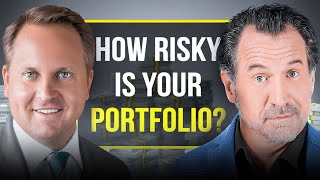
Mark Kohler interviews financial advisor Josh Jalinski on building wealth in 2025. They cover Solo 401(k) deadlines, choosing the right advisor, term versus permanent life insurance, and estate-tax planning for business owners.
Chapters
If you're not building that bucket of wealth, there may be nothing there.
Life can change in an instant. You are your best investment. Your ability to generate income is your best investment. But life happens.
Business owners need to know they've got one quarterback they can turn to that they're meeting at least quarterly.
Why are you always taking your kids with you on these trips? You know, we're going for a month to y. We're quit doing this, we're doing that. You know why? My life insurance, it's backfilling my future value so that if I don't exit my business for what I think I might want to exit, it's more of what I call permission slip to spend.
Welcome to another episode of the Main Street Business Podcast. My name is Mark Kohler and it's my honor to be interviewing Josh Jelinski out of New Jersey, and a host of the well recognized Financial Quarterback podcast. He owns an ria, a registered investment advisory firm, which means he's giving independent advice to the business owner on what's best for them, acting as a true fiduciary. We're going to be talking about a host of issues that I know will impact you, and I'm so excited to have him here with us. Well, Josh, welcome. I am so excited to have you here. It is an honor. And man, I know we've got like so many topics we could cover, but I, I just want to open up with. What are you doing this last three weeks of this, the year? I mean, business wise, what does your company focus on the most? Like, what are you like? This is game on. Here's what we're working on. I, this is here.
This is game on the next three weeks. I mean, you're, you're a tax advisor. I'm a financial advisor with a tax bent. So we're working with accountant, CPAs, accountants, attorneys, and a lot of people are asleep at the wheel. The last three weeks we work, I take off January 5th. So it's sort of like an accountant takes off after April 15. I take off after January 1. Because we are pushing through small business retirement plans, qualified charitable distributions, charitable giving strategies, tax planning strategies, all for our clients, tax holds, harvesting. To me, the next three weeks are the busiest time of my year. I mean, I take off Christmas, Christmas Eve, New Year's Eve. I work maybe half a day. But generally we're working around the clock.
No, it's true. When employees join our firm, they're always a little frustrated. We're like, December is not your PTO Month. I hate to tell you, enjoy the summer. Take off all the time you want, use up your time. But December is game on. And no, we have the same challenge here. And for any of our listeners, it's nice to hear from Josh, an outsider, because my listeners hear it from me all the time. That December is. Is fourth quarter, literally fourth quarter of a game. You know, once December 31st hit, the buzzer's going off, and then it's just looking in the rearview mirror. And so it's nice to hear another professional emphasize how busy they are. Because if you're not busy in December, but you're busy in April, you really don't have a tax advisor. You have someone that preps taxes. And that's okay if that's all you need. But if you need someone that's planning, I mean, your phones have got to be ringing off the hood.
Exactly. Or you have a. And from a financial planner, you got to pick the right financial advisor. If your financial advisor, taking the last two weeks off, get a new one. You know, if he's really good at golf and not talking to you about tax loss, harvesting QCDs, qualified charitable distributions, solo Roth 401ks, solo 401ks, you know, maxing out your plans, doing forecasting. We're doing Roth simulations, Roth conversions, filling up to the 22% bracket or the 24% bracket, if people aren't doing that. You have a glorified stockbroker, you know, from the old days.
And I love this because I want to, because, you know, again, my followers hear my angle on this, and they say when you go to law school, they teach you as a lawyer, never ask a question of a witness that you don't know the answer they're going to give. But I threw that out the window because I said, screw court. So I'm gonna. I don't know the answer yet. I mean, tell me what you like or what you're doing about Solo 401Ks right now. We're a huge fan of the Solo 401K. We're hitting a major deadline for us because it's hard to pull them off in the last week of the year with the IRS websites down. But talk to me about solo 401ks. You what you love, you hate what you're doing with them right now.
I love, hey, your people can sign them up through us. We got Jim. He works every day except Christmas, Christmas Eve. And we have a deal with Fidelity and Schwab where we just go in, we create them. Boom. They're done. You can fund them, create them, and if it's less than, I believe 250,000. I'm not the, I'm not my actuary, but I believe if it's less than 250,000, you don't have to file 5,500. So it's low cost. Wework also, the biggest thing that was a game changer for us is I met with a client in Idaho this week. They go, josh, I have this firm, it was some no name, you know, trust firm out of Texas. They do. And I said, you need a financial advisor, accountant and attorney. And a dedicated. We work with a pension company to make sure that it all flows. That's why my podcast is called the Financial Quarterback, because we're the quarterback, but you're the wide receiver or maybe you're the tight end. The attorney is the offensive line, whatever you might call it, there's a whole, we're calling the plays. We're not doing the taxes, we're not doing the accounting and legal. That's why what your firm does is so great. I've referred people to you guys at kkos and it's, you know, you need an accountant, you need an attorney. Too many times people go, what does my financial advisor do? They think a financial advisor controls the market. But then when the market is down, what does your financial advisor say? Oh, I can't control the market. You know, you're diversified. A financial advisor should not just be a stock picker, they should be an agent of change in your life to get you to do things you wouldn't normally do on your own. Right.
No, I agree. I think the advisor word because we do it. You see the logo here behind me? The Main Street Tax Pro Advisory is. Some of our tax advisors don't do the compliance either. And they see the financial or the investment advisor as a wide receiver and that's fine. You know, this is college ball. You know, you can play Tebow. You know, Tebow could go both ways.
Exactly.
And that's okay. I think I'd like what you're saying though, that all of you business owners out there, you do need one quarterback that you're going to give the ball to. Who is this person? They could be more financially driven, they could be more tax driven, more legal driven. That's fine. But they've got a team and they're there. You're the owner of the team and you're talking to that quarterback and you're, you're out on the sidelines going, hey, what do we what's the next play? And your quarterback's going to be out there making it happen for you. But you got to know what's going on. You got to be on the headset calling in the plays for the quarterback. You're, you're communicating.
Exactly.
I love that. Now let me.
And the only reason why you might have interject here, the only reason I think of the financial advisor is the key quarterback. I know you would probably say you're a guy is because CPAs are so busy. The average CPA.
Yeah. If they're stuck in compliance, they don't get it. Yeah.
And they're not seeing the big picture. They're. And then the attorneys are creating the documents but they don't know whether you should have a Wyoming llc, a South Dakota trust this or that. So we tell them, hey, call Kohler for that stuff. Call, you know, so we're, we're, we're not, I'm not getting in the weeds in tax and accounting, but it's critical to have somebody who's conversant in those issues. And then from a financial advisory perspective, yeah, we help with diversification, investment taxes, all those things. But, but I love the financial quarterback trademark.
That's what we're talking about and I love it. And I want my followers to know if an advisor really embraces being an advisor and a quarterback, I don't care which discipline they're handling as their primary discipline. That's okay. Like my tax advisors, they've got stock pickers, they've got, you know, document preparers. Right. They're, they, because they're the quarterback. And, and if you're playing quarterback, that's cool. You're going to have a compliance accountant that just does whatever the hell you tell them to do. That's great. But again, you business owner and I, Jo Josh were cut from the same cloth is that business owners need to know they've got one quarterback they can turn to that they're meeting at least quarterly. At least quarterly, exactly. To do that. Okay, back to the solo 401K. Now our solo 401Ks and this is good for my, my community to hear. We're not just sold on the self directed solo 401k where our client self trustees, those are the 401ks we set up. December 15th is our deadline. If you're listening to this podcast, too late. If you want a self directed solo 401k where you are the trustee now, you can change to that later. But Josh, I like what you're doing too in such a big way. Because not everybody has the skillset to self direct their 401k. They don't want to plan on investing it. They don't want to set up LLCs. They just want to have a good advisor that can say, hey, let's go get Fidelity as our platform and then tell me what to plug in. But so you can have two. Tell me your perspective on these types of solo 401ks. Many people don't realize there's types of 401.
You mean self directed is great, if you're into that. I mean a lot of our clients are into that, but a lot of our clients just want to build wealth. See, here's the thing. Your primary economic engine is your income. But you need to take 10 to 15% off the side. Invest that in the future. Because here's the thing. Too many of our business owner clients are just, they're like a hamster, right? And other than an exit on their business, they're not really building a $2 million for 1K, a $2 million solo. And they need to build at least a $2 million.
You know why? Do you know why, Josh? I like this because business owners, listen up. You think your business is worth 2 million or 4 million, but it's not. You love your business, it's your passion. But getting someone to come in and buy it with your ebitda, forget it. So Josh is on it. He's like, just peel off 10% a year. Just give me 10 years peeling off 10 or 15% and you'll have the 2 million over here. And if your business is worth something, great. But if it's not, you got the 2 million.
We had a guy, we'll call him Jim. His name's not Jim. Jim just got me my Starbucks. Thank you, Jim. He's, he's clocking out. He's going, so he's done.
So here's your Starbucks. I'm out.
So Jim, Jim works like six, seven days a week. He's awesome. But Jim. But not that gym, but another gym. He was referred to us. He maybe had half a million dollars ten years ago. Today he's retiring with 8 million. None of which was the result of a business exit. Because I said, jim, peel some money off. He bought bitcoin when I was into bitcoin, years before it was closed for financial advisors. He bought good dividend paying stocks, he bought big growth stocks. He had a big position in Tesla. He bought ETFs, he bought, you know, he, he bought, he bought real Estate. He bought a real estate in Dominican Republic. He bought a real estate. Beachfront real estate. Turns out guy was in a major business where the business is really no longer valid anymore, so they're not making money. He, he had 10 great years. He was single guy, he was divorced, had a kid, you know, but he was like kind of playboy the last 10 years. Saved a ton of money. And if we didn't create that sort of building wealth, both conventional and non conventional assets. So it's kind of works with your stuff with self directed IRAs, with real estate. So he had real estate, he had traditional assets. He wouldn't have 7, 8 million. Now he can retire. The guy ended up getting Parkinson's, which is kind of sad. So the fact that we have built this kind of kitty, he sleeps better at night, he's taking care of his health now. He's going to be able to live longer now because instead of worried about sales and. But he thought his business was gonna exit at 10 million, 20 million. He's gonna get zero exit.
Wow. You know, I, and I, I think your point, I want to echo that because so many business owners think that their business is gonna last longer than them. And that's wonderful. Sometimes they do. But with one stroke of the pen, and you and I talked about this earlier today, Josh, like one stroke of the pen in Congress, your business industry could be obsolete. Whether it's a tax issue, a regulatory issue, some global issue. And if you're not building that bucket of wealth in my world, it's the trifecta. We need that asset side growing, growing, growing, that's independent of your business side. And, and you are so committed to that, which I think is so incredible, there may be nothing there. And by again, just so quickly and we don't realize that and it's scary.
Life can change in an instant. So that's why you should build a financial plan. I mean it is so critical.
No, it's good. I had a potato farmer and I love to help out at potato harvest. It's like where I get back to my roots, no pun intended. And Patty and I will go drive a potato truck for a week. And it's just like the best ever. And eating in the barns, just put, you know, a Dutch oven and it's so cool. And. But this good friend of mine, he was like, man, every year my accountant would say, go buy another tractor, go buy another truck, go buy another barn to create write offs at the end of the year, rather than a 401k or a DB plan or some sort of cash balance plan or something that would take it off the farm. So again, just like every farmer, they're land rich, cash poor. And the only way he retires, if he starts to sell the thing he loves, which is his farm. And if you've watched Yellowstone, John Dutton ain't selling the farm. What do you do? You know, Beth Dutton's like, we need some more money over here, you know. Oh boy.
No, that's. So here's the thing. I want everybody to listen to this. Most of your listeners who are business owners or real estate people, they fundamentally don't trust financial advisors because they perceive that they make more money in their business or real estate. So why mess around with that stuff?
They're, they're, they're their best investment.
I agree with that. You are your best investment. But not ability to generate income is your best investment.
Yep.
But life happens. Yeah. And that's why you save 10 to 15% in traditional assets. Real estate would be included. Rental real estate. But I know so many. My real estate, I have people worth 50 million in real estate. They're done at a certain age.
Yeah. They're self insured. But now here's, here's another interesting point you just said I liked is that they don't trust their financial advisor because and, or they don't trust their accountant because all their accountant does is plug numbers in. Or they don't trust their lawyer because all their lawyer does is tell them no. And the reality is it's not that lawyers are bad, accountants are bad, or financial advisors are bad. You just have the wrong one. Exactly. If you can captain your ship and get on the sidelines and put on the headset and start freaking building a team and get freaking involved, you can build a freaking super bowl team and, and you can do it. But it's not going to happen. Just hiring one person and going, okay, bye, I'm done. You know, it's not going to happen.
Yeah. Wealth isn't, doesn't happen by osmosis. The other thing is you got to realize it's kind of morbid, but you have an expiration date. You know, whether it's the guy with Parkinson's or somebody with some diagnosis of cancer, you have to build the team not only for yourself, but also for your spouse. And generally the type of person listening to your podcast or my podcast, they are the financial, really? If they're married or have a significant other, they are most likely the go to financial person in the family and their spouse wants nothing to do with financial planning, they leave it all to you. What happens if you're gone? Who's going to step in and protect your wife or your husband? We have wives now who are the financial go to people for their husband, Wall street executives, et cetera. So I think financial planning, the whole operation of financial planning is really an exercise in love and protection for the people you love and the causes you love for when you're not there.
Yeah. Wow. Boy, that's deep. I thought I was going to live forever and you just freaking blew that out of the water, so. Oh, well. Well, now on that note, I think that's a great transitionary point to one of the topics I'd love to ask you about. We just last. Our last one of our last podcast.
Yeah, we got way deeper than I thought we were going to get.
Yeah, I mean, I. I'm ready to cry. I mean, give me a tissue here. Okay. Now, we just recorded a podcast where we compared life insurance to Roth. Now we called it IUL versus Roth. But really in my mind, I was comparing any sort of cash value insurance to Roth and I came out saying, I think there's a place for both of them and with the right person, they should have both. But I want to get your take. I know that you've listened, you know, you've listened to that podcast. You've heard us talk about this a lot. You and I are both believers in life insurance for the right person. Why don't you talk about that first? What do you think? Who's the right person for life insurance? Everybody or what?
Anybody who loves their family and wants their family to be okay after they pass. But in my mind, life insurance is not merely death insurance. So if you're poor and you don't have any money, or if you're living paycheck to paycheck, you shouldn't be having cash value life insurance. You should have term life insurance equal to how many years you want to work. So too many people don't have any term insurance.
Yeah, I want to agree right here. I just want to say I like what you just said. Anybody that has, anybody they care about should have at least term insurance. We start there and I totally agree.
Yes.
When do we transition to the cash value?
So I have a wealth model, the financial quarterback model, where it's protection, savings and growth. And there's a strategic asset allocation that as you grow in wealth, so there are certain non negotiables. You want to have term insurance equal to 20 times your pay. If you're a certain age, 10 times if you're maybe 10 years away from retirement. Disability insurance equal to two thirds of your pay. You want to have an emergency fund of three to six months in the bank. This is before you do any cash value life insurance. Then you want to max out your qualified plans and then up to the max. So if you've taken advantage of your max, let's say your employer matches you up to 6%, you put in up to 6%. If you're doing the match, if you're doing, if you have the emergency fund, if you have the term life, if you have the disability, if you have all that, then you can start converting. It's very critical to buy a term life insurance policy that is convertible to a good whole life. Don't go cheap on the term insurance. There are term insurance companies that will be convertible to crappy whole life or crappy universal life. You want someone that converts to a whole life that you actually would want. Because buying life insurance there are so many makes and models that I'll keep it simple. I really want it only convertible to an ordinary dividend paying cash value policy from a mutual insurance company that participates in the dividends. There's reasons for that. I like certain IUL for certain people, but there are many changing variables in those contracts that I'm a little bit worried about changing cap rates things. But you want a convertible. But even if you like IUL because there are people, I mean, I've seen IOL policies, they make double digits in certain years and they do very well, you want those term policy to be convertible to good IUL or good dividend paying policies. So after you've taken advantage of your match and your qualified plan, then you can start your cash value policies. I love it.
And I, and I mean for some of our listeners, they may have glazed over after your first point.
So I'm sorry.
Sure. No, no, no, no.
I mean that could be a whole show. I guess my top six tips, you
start talking about taxes or legal or insurance, you know, people are going to careen off the side of here. So we got to, we got to rein them in here. But no, I'd like. Okay, I want to reiterate your first point that was everybody should at least have some term insurance. If you have someone in your life you care for or that you're caring for, if you're raising children or have a spouse and if something happened to you, would they be financially impacted, at least get term insurance. Okay, point two that you made, if I may dissect it, you said, okay, you got your term. Now let's take care of the basics. Let's make sure you're out of debt, you got good stable income. If you've got a 401k at work, you're participating in the match, maybe you're funding your Roth individual Roth ira. You've got disability insurance if you need it. If that's the situation that matters. I mean, there's a lot of little things, but the basic point is you're stable, you're stable, you're like.
Exactly.
I could pay for my crap.
You know, the disability insurance is big because people do not have disability insurance and more people get disabled early than die early.
Yeah. And you know, long term care insurance is another one too. I just. This is. You're opening up cancer.
No, no, I wouldn't go to the long term care yet. That's not on my priority list yet. That's, that's like priority number 12.
Okay, okay, okay.
Because if you have a good cash value life insurance policy that will cover you in instances of long term care.
Fair enough. I agree with that. I agree. So. But for all of our listeners, would you concur that we got our term and then we're building stability in our life? Maybe there's some college savings for younger kids. We're, we're starting our basic retirement plan sequence. We've got a stable job with benefits, or we're building a business that's, you know, optimized. Okay, we're there. Step level two.
Exactly.
Now level. And I'm with you. Level three, we start to look at the character of the person. Are they more of a real estate person? Are they more of a crypto person? Are they more of, I just want to go to work and not worry about finances. I just, I want to put that money away. I want to commit to it, but I don't want to be engaged in it daily. I don't want to be actively involved. I need more death benefit or whatever. I mean, this is where the, the profile of the person and ultimately they could have a piece of everything. But you as a financial advisor, you're going to start to build that profile and that portfolio based on what they're good at or desires. Right, I agree.
But I would say all three people need cash value life insurance. Here's why. Joe Robbie Stadium. Why is it no longer called Joe Robbie Stadium? Miami Dolphins, where they played. Remember Joe Robbie.
Oh, yeah, yeah. Okay. Okay, Fair enough.
Okay. Because when Joe Robbie died, he didn't believe in insurance. He didn't have insurance to fund his trusts and they had to sell the rights to the stadium. I believe he even sold the Miami Dolphins so that they could pay the estate taxes. So I would say, you know, once you hit a certain level, you need the life insurance to pay the estate taxes. But that's just kind of an aside. So even if you're a real estate person, you know, I think there is a benefit. I would say real estate people. I'm okay if you're not a stock person because generally real estate, you know, if you have a lot of real estate, they generally don't trust the stock market. So I like, I like real estate, I like stocks, I like bitcoin, I like all the above insurance. But the point is, if you're a real estate person, you don't want to have. What did you say?
You got mortgages?
Yeah, yeah. Who's going to. Wouldn't it be nice to have those mortgages paid off so that your people can hodl. I love how the bitcoin community has created hodl. Hold on for dear life. I would even say if you're a crypto person, you want live insurance. Here's why. If you are a crypto person, fundamental. If you're a bitcoiner, let's say, let's just use bitcoin because if, you know they'll never sell, Bitcoin maximalists will never sell. They believe it's going to be worth 13 million a coin in 2047 after I'm dead.
Yeah.
So 2047 and they want bitcoin to be their legacy asset. Your estate is going to be worth x millions. You're gonna have to pay estate taxes. You need the life insurance to pay the estate taxes.
That's a very good point.
I would argue that it's sort of like a strange curve where like you don't need it, then you don't need it even more because you're kind of self insured. Then you're worth even more and then you need it more. So it's to me it's a part of an overall plan. It is not the plan, but it is, it's a piece of the.
I agree, I agree. And now is it that you like whole life? The cash value is nice, but more that it's permanent. Do you like that permanent insurance?
I like the permanent nature because when you do a deep dive into iul, they have rising costs and it can be funded properly and it can be done well. But also the caps can go down so you can have Rising costs, lowered caps. Whereas with a permanent policy, even if the company, what if the company gets sold? Right? A lot of insurance companies are getting bought by private equity firms right now. So what happens? So I have a company that I bought a whole life on myself. They change the dividend structure. I don't like it as much I used to, but it has guaranteed death benefit, guaranteed cash value and guaranteed costs. So I never have to worry about them canceling me due to non payment. So I just like the permanency. So few things in life are permanent but death and taxes.
Yeah, for those. Don't understand what I mean by saying permanent. If you get term insurance, what that means is for the term might be 10 years, you pay X premium, you get a million dollars in life insurance done, they can't change it. But at the end of 10 years, you got to reapply, that term is over, that insurance is gone, hit reset. Permanent insurance says, all right, we're going to cover you for the rest of your life, no matter what comes cancer, Parkinson's, whatever. And we're going to give you that life insurance in a whole life scenario at a fixed premium for the rest of your freaking life. And we'll create a cash value with this little extra piece that goes on top that you can borrow against or whatever. You get to use it for whatever the hell you want. So I just want to digress and say that now you're saying if you're in that third phase, phase one, term, phase two, get your crap together, phase three, I'm ready to go. And insurance should be a part of your portfolio. Your point is? There's a type of insurance that's necessary for everybody. In that type three, I would argue,
yes, it's about ensuring your economic engine. I mentioned this to you earlier, that I deal with a lot of people, they exit their business. I'm sure you do. You know, then they're worth 40, 50 million and they say, so what, you know, what am I going to do with this? Then the 40 million turns into 20 million because of after taxes. So. And the beauty of the life insurance. See my idea is it's more of a conceptual concept than a rate of return. The rate of return, a whole life policy, what is it like 5% IRR or something like that? Which tax free. I'm in high tax state like New Jersey, it's like making eight or nine taxable. So it's not horrible, but it's not like as good of the rate of return of my business or my real estate or My stocks or my Bitcoin. But the point is. That's not the point. It's so that there is an instant estate created upon my demise. I liken it to a permission slip. People go, josh, I mean, in my 20s, 30s, 40s, I have seven kids. We got married young, had a lot of kids early. And no, I'm not Mormon. Everybody always asks me if I'm more. Not there's anything wrong with it, but
Mormon or Catholic, something, you know.
I'm neither. Right? It's funny. I'm neither Mormon nor Catholic. It's funny, but what they asked. But why are you always taking your kids with you on these trips? You know, we're go for a month of why we're doing this, we're doing that. You know why? My life insurance. Because I don't have to save X to leave them. Okay? I know that my life insurance has that covered. Day one, I'm gone. I don't live as long as I. It's filling, it's backfilling my future value so that if I don't exit my business for what I think I might want to exit, I don't really want to exit. If I just say I did, it's more of what I call permission slip to spend. It's not really about the rate of return. All right?
I, I like it. And my brain's about ready to explode, too. Sorry, somebody listener. I just want to understand how you justified taking your kids on vacations to Hawaii was because of life insurance. I thought it was. You didn't want a sex life or something? I'm like, why in the world would you take your kids to Hawaii with you? What are you crazy?
My, my, my. My bride has always wanted to take our kids wherever we go. So, anyway, Yeah, pros and cons. Yeah, we, we. We've. We have seven kids. Who hasn't hindered it so much, right?
Oh, my gosh. Well, we have seven as well in our blended family. Seven kids, but they're between 20 and 30. What are you. What's the ages of your kids?
Three to 16.
So you're not sleeping tonight, are you?
No.
So what's her name? Do you even know what her name is?
So it's a lot. Yeah, we're in that crazy phase, but it's a lot of fun. But to me, it, you know, it's critical that you work with somebody who believes that your income, your real estate, your stocks, your business is your economic engine, not life insurance.
No, I love it. Oh, my gosh, what a wonderful Christmas. Three to 14, seven kids. Man, it's like home alone in New Jersey. Wow.
It's crazy.
Yeah, that, that is. It is a fun time. What's funny is in all these different stages of life, it's a different challenge. Like, for you, it's got to be fatigue, right? It's. It's the relationship with your wife, connection and fatigue. Then when they all start turning 20, it's like, holy crap, do I. Where do I find that bank account, that ATM to pay for all these kids that are, you know, like, dad, I need this, Dad, I need that.
Yeah, I don't really want that phase coming. So.
But then you're. You're home alone and you're like, oh, this is great. There's no kids around. We got the kitchen all to ourself. This is great. Anyway.
Yeah, well, Josh, there's an eternal mess. There's a mess everywhere.
There's a mess everywhere. Okay, so you're doing. And I, and I mean, this, this is not an infomercial. But it's important. We all have to take action in so many different ways. I know you. You're doing kind of a life insurance review for your. For any client or current or new client. What do you call it when a client comes in? You're like, let's find out what your life insurance portfolio looks like. What do you, what do you call that? What's. Are you scheduling appointments for that? Can our, can our followers come. Totally.
Yeah. Due diligence. Yeah. People don't even know how their policies work. People don't know the fine print. People don't know anything. Yeah. We call it our protection, savings and growth model review.
So can I ask generally what it would cost to do something like that?
The initial review is free. They just call us 8889 at 8 Josh. And we audit everything. You know, I got to start charging for it. But now what happens is most people become a client.
Yeah.
But if they don't, they'll refer us to people we've, you know, we've grown. We're an ria. We're a registered investment advisor in New Jersey. SEC registered registration doesn't imply endorsement. But yeah.
No. And I love RIAs because they're truly independent. You're going to recommend what you date the client. Really? Yeah.
What's in the client's best interest? We are fee based fiduciaries. And what you'll see with a lot of these people, like. And I'm sure that's why you did the IUL versus Roth Is is people put things in inappropriate products for commission or whatever.
Well, let me share one last. We got to wrap up, so I want to share just an important, quick, very brief story here. My mom and dad both have passed away. My mom passed away in 2024.
Sorry.
This year they set up a islet in irrevocable life insurance funded with. I don't know if it was iul, vulnerable, whatever. I was too young to know. I wasn't even. I was in high school when they set it up. Four to five years before my mom passed away. The policy crashed. It was based on second to die for three kids. I have two siblings and it would have paid out millions.
Man. Gone.
And I want all the listeners to know this. This is super important. It wasn't because the agent was bad. Yeah, they could have crafted a little better policy, sure. But you know what the problem was? I didn't get an annual review with an agent that knew a train wreck was coming because the policy probably could have been salvaged, modified or fixed. And I, even as a, as a lawyer, you know, seven, eight years ago, I was still a lawyer, but I was out of sight, out of mind. And I didn't appreciate at that time. This is five to six years before I set up my Main Street Tax Pro advisory where we take a holistic view. I was in the trenches as an accountant, just compliance, compliance, compliance. And I didn't see the vision of that annual review. And I want to challenge all of you. If you have any freaking type of life insurance, just let these guys look at it. It's not going to cost you anything, just like you said. Just have them look at it. If you don't like them, don't like them. If they share something that could be earth shattering, hey, you just dodged a bullet. Please do it.
Yeah, that's funny you say that. One of my best clients I got them from, I called it an eyelid audit. Did a radio show on it about eight years ago. He called me up, he goes, I don't know, but my mother has something. And I. And we ended up helping the mother, helped the kids get about $8 million. I was six brothers and sisters all throughout the country to became clients. Four didn't, so you don't have to become a client. But they got a whole lot more money because of the eyelid audit. So every eyelet should be audited because a lot of those were also funded under the principle that people were going to die by 85. And as people are living longer, that's another reason why I like permanent policy like a truly per.
Can you stop?
Doesn't happen.
Stop talking because you're.
I'm sorry.
I'm going to about start to cry here.
I'm sorry. You should have met me years ago.
No, I. I don't mean to be rude, but no. Did everybody hear what he said? People are living longer, and if you don't reevaluate these plans, they don't have to fail. So I'm going to just say it from my heart here. Down in the description is a link to Josh's site. Go do a review and just see what he says. And I need to do the same thing. And Josh, thanks for being with us today. And just, I know you're busy. You're on the East Coast. Holy crap. You have seven kids under 14. I shouldn't even be talking to you. You're probably. You're going to roll off the know this podium here and go into a fetal position. God bless you.
Thanks. A lot of fun. A lot of fun to be with you, Mark.
All right. What website should they go to, too, if people are too lazy to look at the description?
Well, make sure you've subscribed to my podcast, the Financial Quarterback.
Okay.
And it's jinsky.com j a l I n s k I.com jinsky.com.
i mean, it's. It's like the Sopranos. You think it's hard to spell, but it's not.
Jic J A L I N S K I.
He's buried people on the Jersey Shore.
I'm from the Jersey Shore.
I know. That's what mean. That's why we're doing this interview from afar. I'm nervous. I'm nervous. Josh, thanks again. You have a wonderful holiday season. Thanks for being with us, man.
Thank you. Thanks.
More from MARK




The secret to managing your family's future #financialfreedom #estateplanning #shorts



Moving Property to an LLC: What They Don't Tell You #realestate #investing #tips


