How To Beat The $1 Trillion Debt Crisis
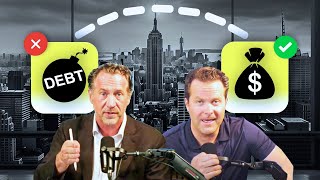
Mark Kohler and Matt Sorenson break down the $1 trillion U.S. credit card debt crisis and explain why most of it is bad debt. They cover the debt snowball method for eliminating high-interest balances and when credit card rewards actually work for disciplined business owners.
Chapters
You Americans out there. We have 1 trillion in credit card debt.
The rich are getting richer with bigger savings accounts and the poorer getting more in credit card debt. Yeah, but Dave Ramsey told me to cut up all my cards. Yeah, well, now your credit's in the toilet. Good luck expanding your business.
These are the little perks that, quite honestly, the credit cards use to get you.
If we can start creating a little win and have a feeling of freedom, to have a feeling that I'm making progress, a feeling that I'm not a loser, and that there's a future and there's a light at the end of the tunnel. We welcome everybody to another episode of the Main Street Business Podcast with yours truly, Mark Kohler. And sitting right next to me is the amazing Matt Sorenson. We have a show for you. It's going to be good.
Yeah, we have a show for you and you Americans out there. We have 1 trillion in credit card debt.
Wow. You're going to lead with that, huh? Yeah. Nice.
The trillions. I like talking about trillions. Trillions. I'd rather it not be credit card debt. But we have hit an inflection point. We are in the trillions now in US Credit card debt.
Now, I even sat down to discuss this with Matt earlier and share some interesting details in this big lump of debt, because what does the media like to do? Choose one number, one little, you know, tagline and get readers to click. So there's some things we gotta unpack, but I also want to talk agenda. We're going to hit what's good debt and bad debt. Not all debt's bad. And we want to also help any of you that have a little lingering credit card debt. Oh, we're going to hit the snowball. And we have a free debt snowball to send to you, your kids, your family, your friends to help them get out of debt. Because we want to be lean and mean.
Yeah. Now here's what I want to talk about at the outset. And this is what pisses me off about all these headlines. You've been hearing about 1 trillion in credit card debt. Do you know what they're not telling you in the statistics of what's coming out right now? Credit card debt is at 6%. As to total US savings and bank savings and checking accounts. That is the lowest percentage in 20 years.
Despite the ratio between debt and our savings accounts.
This is the lowest percentage of credit card debt in comparison to savings and what's in checking accounts than we've ever had. Now they hit a 1 trillion number and that gets its headlines right. We've hit 1 trillion. But we have more savings. There's more money in savings than there's ever been before. And that is counterbalancing it. And so when you're looking for signals, this is what's tough, is if you're a small business owner or investor, you're looking for signals about what to do. Do I grow my business? Do I make more investments? Do I sell my investments? Do I stay on the sidelines? You hear 1 trillion in consumer debt, you're like, oh, I've been hearing this recession word. Are we headed towards it now? Look at the details and the underlying numbers.
Okay, now I want to debate this with you. So let's just. So everybody gets this. Let's say the ratio would be for every thousand dollars I have in savings, I would have $60 in credit card debt.
Okay.
That's the theory. Okay, cool. I don't think that's how it works. What I think the richer are getting richer with bigger savings accounts and the poorer getting more in credit card debt.
Yeah.
For the people that have credit card debt, they don't have 1,000 in savings, they just have $600 in credit card debt and it averages out with the wealthier. What do you think of that?
I don't know that that's in the statistics, but that. That could be. That's possible. That's possible. But if you're looking at a general economic picture, there's still a lot of cash to be invested to buy goods. If you're a business owner and you might. I don't know who your customer is, but there's still a lot of money in savings. And actually, I don't know that that's the case because one of the things that happened out of the recession. Right. Not the recession, I say the pandemic, you know, was we saw record savings across all people. People were getting stimulus checks. A lot of people saved them. You saw people taking on second jobs, people starting a side hustle. And we started seeing people actually generating more income and having more savings. They were deferring expenses and stuff they wouldn't spend on vacations. All this stuff and this money got invested. You saw record number of Robinhood accounts open and people entering investing. And. And so. And we saw it even in our firm. Right. Business owners, you know, now let's take that slowed down a little bit. Yeah, that slowed down a little bit. But.
So that's a good counter. Yeah, I will take that. Okay, fine, sir. So your counter argument is, hey, well, we've seen a lot of people saving more, so maybe people are finding a better balance between saving and carrying a little bit of credit card debt. Fair enough. Okay, here's another thought. I like your point that are people looking at this as an indicator? Does this mean I should expand or not or whatever? My thought on that is whether you expand your business and what you invest in is really a local decision, meaning your life. What's going on in your business, what's going on in your marketplace, how your sales, what's your trajectory? Are you at a break point, a tipping point, a nexus point, all these little terms that are out there? Yeah, I'm going to look at the national indicators. Fair enough. But I'm not Walmart. You know, Walmart's going to care about a national indicator. I'm a landscaper in Duluth, Minnesota.
Okay.
Should I buy another truck? Well, how busy are you and is there more opportunity in your area? Yeah. Well, then, damn it, let's talk about it. And how much debt are you in as a landscaper? So I think the debt issue, the savings issue and expansion is really a localized personal assessment.
That's the microeconomics of the matter, not the macroeconomics.
I like that.
I'm using that a little off. I am an economics major, but I think just thinking of that on your local level and what's going on, and I love it in your own business, because even different industries, there's shifts of what's happening. Some businesses are making money somewhere. When you say Walmart, it's funny. Walmart actually does the best when the economy's in the shitter.
Yeah, that's true.
I'm gonna have to edit that out, maybe. But because people spend down, they go down. They're like, I'm not going to Target. I gotta go to Walmart, you know.
But you're saying Target's better than Walmart.
That's what I'm saying.
Wow. Wow. I go to Bed, Bath and Beyond. I don't. Where's that fall? You know, I don't know.
They're out of business, aren't they?
No. Turn around. I buy good linens. All right, Now I. Okay, so. But staying with this for just another moment, and then we can get into debt as an issue because Dave Ramsey is going to be dialing the red phone behind him when I talk about debt. Because I love parts of Dave Ramsey's message and other parts. I completely disagree.
So.
And you guys can choose. We all have our free choice. So I'm going to give you an alternative thought on that. But on the big picture still what I think is is true. There's still a trillion dollars in credit card debt. Yeah. That's not good. You know, Whether it's use $60 of your thousands in savings or you're consumed with credit card debt. Any credit card debt is bad debt. And that's where I give Hail Mary. Dave Ramsey, he's very much on board of eliminating credit card debt.
He's at the tip of the spear on getting rid of credit card debt. That guy's been leading the charge.
Yep. So I so with that said, it's definitely worth talking about because it is a micro individualized level. Maybe a good wake up call.
Yeah.
That we all need to look what's on our credit cards now. I love point manager point. There's so much I want to say. So no I so credit card debt bad. You know, drugs are bad, Credit card debt's bad. Where are we at?
Don't do credit card debt.
Yeah, don't do credit card debt. This is your brain on credit card debt.
Okay.
I remember those good 80s commercials where. Where are we at on student debt? Did where it was student debt in the mix. That's a whole other indicator, right?
Yeah. They just keep kicking the can down the road. But that is an issue from a macroeconomic thing. To me that is important because you've got, I don't know, I think it's almost in the tens. 100, a million people that have. 100 million people that have student loan debt that have been able to not have to make payments and now all of a sudden they're going to have to start paying 300, 400, 500 bucks a month out of their income. And that's going to come out of not what they're spending the economy right now. But anyways, another big topic. But student loan debt can be good. We don't want too much of it. But let's focus on the credit card debt because that's where we do agree with Dave Ramsey and we want to talk about the good debt. We like debt. You're needing to get debt to acquire business. A rental property like there is good debt to buy a home, to buy assets that can produce you income like that, that can be good debt. That is good debt. We have that debt.
Yeah. I think an SBA loan to buy a self rental. We've talked about that strategy a lot. Rental property using opm, other people's money. So I can create cash flow on the debt and still be careful. I'm not saying no money down. We went through the 2010-2015 race for, for, you know, these debt instruments were totally reckless. So we've got to use debt wisely. But it's okay if it's making us money. That's, that's what it always comes down to. Me, if you're going into debt, is that going to make you money? Whether it's a business loan, a reasonable, very small amount of student loan debt, we have some ratios. We've, we'll do another show on that. But so anyway, yeah, that's where Dave Ramsey's like all debts bad. I think his message, he's got to stay consistent. And there's a demographic that needs to hear that. Yeah, their home is their number one asset and it's Social Security and hopefully a little retirement savings and no debt at all is a good thing for that demographic. But you, our followers, you want to go out and make money, you want to build wealth. Debt that is productive is a huge part of that equation.
Yeah, I mean, it's a tool, let's be honest. It's a tool to building wealth. Some of the people that you may, you know, aspire to be business owners. Investors use debt smart. They're smart about how they use their debt and so it can be used as a tool. Credit card debt is the one where it's really hard because if you get a mortgage or something, let's say you're paying 6, 7%, you know what the rates are at now on a rental property or you get debt to start a business or to grow your business. Okay, well, what's your return on that when you're getting credit card debt for consumer purchases, that's usually crap. You don't need to impress people you don't even like. I think, I don't know. It's a Dave Ramsey isn't there? It sounds like one, but you know, you're getting that at 20%. What type of investment are you going to do to beat that? Like you're, like you're just putting a, you're weighing yourself down. And so there are some awesome strategies. I know Mark's had done a lot of content on this over the years, has an awesome tool also for eliminating your high interest debt.
Yep, yep. Now, before we get to the debt snowball, which again, if any of you have even 2,000, 20,000 or more in credit card debt, we can implement a strategy immediately at our individual levels to get out of debt quickly. It's called the debt snowball. Now, before we get There too, I, I want to say with self restraint. Using credit cards to build points is a very common strategy. And let me explain a paradox here. When I was, I've always been an entrepreneur and when I owned a small business in college and then throughout my entire life, I've had side small businesses, any of you that are entrepreneurs, full time entrepreneurs, you know, the ups and downs, you're making money, you're losing money, you're making money, you're losing money. And you're not, you know, and you'd wish you had like this baseline. But businesses are volatile and until your business is mature enough, we sometimes put strain on our businesses taking money out of the business before we should. And then we wonder why our business fails or we go into credit card debt to make up for the month when things are down. And I've been there, done that, I've had to do a debt snowball because as a business owner you're trying to provide stability for your spouse, your children and you're like, hey, we got to buy groceries this month. Either you pull it out of a business and not do payroll or you put it on credit card in there.
Yeah, yep.
The problem is when you do make money as a small business owner, you have to have the self discipline to go, okay, it was a great month, pay off all that debt. But we don't do that. We want to reward ourselves. We've worked our butts off and there's a, there's a lot of emotional issues tied to the cash flow of small business. So with all that said, and I understand that paradox and dynamic, if you do have the self restraint and the cash flow in your business, to use an Amex, which is their points are the most creme de la creme of all points. If I can use an Amex throughout the month, pay for a lot of business expenses and pay off that car to zero before its next due date, the point benefits can be substantial, travel perks, all those goodies. And I have a lot of business owners that successfully manage their points. There's websites to manage points. It's really a cool strategy, but you got to be careful. It's a loaded gun.
Yeah, it's a loaded gun. But you know what, if you know how to use a gun, again, this is a tool and there's good credit, bad credit. There is also the credit cards which can be consumer debt, they can be very high interest. But if you're paying it off every month, you have that discipline, you, you have the savings. If you get into a Crunch. And you are a business owner. Your income's up and down. You're going to be able to cover it so you don't get trapped. But I'll just tell you this, and Mark knows this, My honeymoon Deborah Bora is being paid on credit card points. Okay, that is not cheap. But those points are definitely coming in handy. All right. Okay. And we paid nothing for that. I mean, it's just a little, it's a perk. And that's for many of you business owners. And by the way, one of the coolest things for business owners on your credit card points is, is it's not taxable income.
Yes.
All those points, not taxable, but getting the benefit of them as the business owner. And so, so that's a cool little benefit of it. But you do have to have the discipline because it's a trap if you don't have the savings inability with the fluctuations in revenue of business owners where you can get stuck.
Yep. And another important message here is Dave Ramsey will tell you, cut up all your credit cards. That is not a good idea. You want to use your credit cards maybe once every three months, bare minimum, for at least $50. Show activity and you're going to get deluged with more mail of credit card offers because credit card companies are like, oh my gosh, you're self disciplined. We need to hit you with more credit card opportunities. So when you're using those credit cards intermittently, maybe you're using a point strategy, maybe not. You're building a credit score that's going to be very, very important. When you go to expand into a rental property, when you go to get that business loan, if you don't have any credit cards and you go in to get a business loan, you're looked as a bad borrower because the bank's like, we don't know. Are you a train wreck? We don't have a litmus test.
Do you pay people back when they, you borrow money from them? They don't know.
Yeah, but Dave Ramsey told me to cut up all my cards.
Yeah.
Well, now your credit's in the toilet. Good luck expanding your business. So again, this is where it's like credit safety or gun safety. And I know bringing up the word guns can be very, a very dramatic topic. But just be patient with the point that there are safety precautions that you can use with debt, just like weapons and, and it can really be a powerful tool. So two weeks ago, let me tell you this, I went, I got the new United Club, Visa.
Oh, United.
Yeah. No, I've been. I know. I've been flying out of a couple hubs that are just all you. I used to be Delta man through and through. And. But united. So anyway, so here's the strategy. So I think it's about a $450 annual fee, which is steep, but I get 80,000 points. I get club membership wherever I go, which means I'm not buying food in the airport, which can be expensive in an airport. So if I'm at an airport, I get all my food taken care of at the airport. I get bags for free. I get two extra bags every time for free. Those bag costs, and that's £50 or more. It doesn't even matter. And I get a companion fare throughout the year. And guess what? That $450 tax write off those points when I redeem that companion fare, no tax. So. And I'm building my credit, showing that I can use credit wisely. Yeah. So it. That's. It's just. So there are techniques. We don't want to be villains of the credit card. It's the abuse of the credit card that's the problem.
Yeah. And here in Phoenix, where I'm flying out of, I'm using the Amex because you can do a centurion lounge, and they have a centurion lounge. They don't have them everywhere. The same thing. You get the food, you get the drinks. It's clean, it's nice. The bathrooms are cool that, you know, they have it all. And so. And that is a nice perk, which, again, I'm usually traveling for business. We're expensing that. But you also have your occasional personal use, which is fine. So I like the. The credit cards. But I think this is funny because these are the little perks that, quite honestly, the credit cards use to get you trapped.
Yeah.
This is where Ramsey would be like, hey, you guys, you got deceived. And. But it's true. You can win at that. You can win if you have the discipline to not get stuck and not pay your state and not pay your bill. But they're just waiting for you to miss one month. And all of a sudden they've made enough money on it. All those little perks they gave you, you know, you leave a balance on there, Boom. We just cleaned up.
Now, let's say for some of you that do have a little lingering credit card debt you have, and maybe you have some savings, and I don't want you pulling money out of a retirement account to pay off credit card Debt? Hell no. I don't want you going get in a heloc. Oh, we'll just refinance the house when the mortgage rates come down and then we'll pay off all the debt. No, we're not going into more debt to pay off credit card debt. We're not going to our retirement account and sabotaging our retirement to pay off credit card debt. What you have to do is pull up the bootstraps and do a debt snowball. Debt snowball is a really amazing mathematical tool where you pay off the lowest balances first. You don't worry about interest rates, you don't worry about minimum payments. You build this snowball based on the amounts due and you start paying them off in a progressive order. Now I have Matt and I have designed a debt snowball spreadsheet that's very intricate is that would be the word.
Yeah.
Very technical. And it helps you build a plan where you can pay off credit cards within months, within a couple years. We've seen people pay off debt so, so quickly and then take the same discipline of paying off the debt and shift that money. Because I've gotten a good habit of putting away money against debt and then just roll that money in that habit into aggressive savings, funding their Roth IRAs, funding their 401ks, buying rental property. So we want to do more than just get out of debt. We want to build some new habits. We want to build a habit of carving out a thousand or two thousand dollars a month with a side hustle, better efficient business organization, a side job and go, oh my gosh, life's okay and I can pay off my debt. And then five years from now I've got 200 grand in the bank rather than 20,000 in debt. So if you email and it'll be in this description there, if you email me markjcohler.com There'll be a little opt in to get the debt snowball for free. Matt and I produce a newsletter every week with videos and articles. We only email you once a week. And when you opt in to get that debt snowball for free, use it, give it away, don't care. It's a downloadable form. You can Excel file. We won't hold you captive. But sign up for our newsletter. Be in touch with us. We want to help you do, do the things that are going to build your American dream. And getting out of debt and managing your debt is one of those.
Yeah, on that concept of the debt snowball, there's some like, psychology in that too. And I Like what you said too about the discipline of it. Sometimes getting that discipline of saving, going out and finding other ways to make more money, whatever it may be, you need to cut expenses or make more money. That's the only way you're going to do it, is that that discipline carries through. And now you have this extra money that you used to be setting aside to, to pay off debt. Now that's money you can go and invest.
Yeah, the pain point of the debt gets you going.
Yeah. But don't once you pay off that debt be like, all right, now I'm back to living high, you know, oh,
I can get that lease on that BMW now.
Exactly. Yeah. So, so maybe start throwing that into your Roth IRA or other cool things to start saving for the long haul. But the psychology of the, the debt snowball is really important because by starting at those lower balances, which is part of that equation, you know, let's say you got five credit cards and one of them's got a thousand dollar balance, one of them's got a $50,000 balance, one of them's got 10, 20, 30, whatever they are. You know, you track off that 1001 first, it might be a lower rate actually, but that psychological win of we got that one paid off, keeps you going to the next one. And then you're chasing that feeling that sometimes people have when they're spending of this like, feeling that like, ah, I'm buying, I'm happy. You can get that same feeling of paying off debt. And honestly that, that process I think to me is why so many people are like uber super fans of Dave Ramsey is because they've, they've, they're psychologically, they've had these wins of getting out of debt and they felt that freedom that it gives you and that, that weight taken off that money coming back into their life. And so just know there's some psychology to it. Even though the numbers may not make sense, you might be like, hey, but why am I not paying off the, the balance? That's 50 grand at 20%. I'm paying off the thousand $1 at 15. You might think I should focus on this one first. Well, because that one might take you three years. I don't know how much money you have set aside to hammer away at that 50 grand, but we can knock a win out on that thousand and then we're going to get to it. You'll get to those.
And the snowball, you get more and more snow on the snowball as it goes down the hill. You're building momentum. And I love that Matt went into life coaching. Very proud of you. Because what he said very subtly is we do things based on a feeling. We don't tackle our credit card debt because we feel what would be reasons. We don't feel like there's any option. We feel suffocated by that debt. We feel trapped. We're embarrassed, and we're depressed, and so we do nothing. And we may. We may do other things to feel better. And we can go through a list of all sorts of things that release dopamine other than paying off debt. And so we get into these terrible, vicious cycles of alcoholism and opioid use and addiction to this, this, this, and this. So if we can start creating a little win and have a feeling of freedom, have a feeling that I'm making progress, a feeling that I'm not a loser, and that there's a future and there's a light at the end of the tunnel. We do things based on feelings. And so if we can create a little bit of a win, that's what the snowball is crafted to do, then that you take that feeling and go, ooh, I want more of that. You actually get a release of dopamine when you pay off debt. That is a win. Your mind is. Your brain is going to reward you for making progress in your life.
Yeah.
So, yeah.
And then once you've gone through that process, you are, like, adverse to getting that bad credit card debt again. It's just like a nasty taste in your mouth.
And then you can turn the tables on the. On the credit card companies. You don't cut off your credit card now you're like, I'm going to gain you. You screwed up my life for five or 10 years now. I'm going to screw you over. I'm going to pay off my credit card every month. I'm going to get all the points out of you. I'm going to get those companion fares. I'm just going to be that credit card owner that you hate.
Yeah. That is the one they do not want. But yeah, you know what? I'll say this. Let me say they actually don't hate it because they are still getting all the merchant fees. You may not be paying interest.
Fair enough.
But they're still getting that 3% or two and, you know, quarter merchant fee every time you swipe that card. So you know what? They're still making money. Not that I care about whether they're making money or not, but they're still making money. You make money we just don't want to get caught in that trap. So make sure you go chase down that debt snowball.
Mark. Yeah. Again, mark@markjkohler.com It'll be in the description. Click on that, get it and start it now. Yeah.
And so to circle back to what we said at the beginning of the show, I just want to hit a couple summary points. Yes, there's a lot of credit card debt out there. Yes. If you have it, we want you to make a plan and get rid of it. It's going to help you in your financial life. It's costing you. I don't care how amazing your businesses or investments are, beating a 20% return for that type of debt, you just will not do it. You're going to be weighed down. So we want to tackle those credit card debt. Those credit card debts because it's holding us back. But also this signal in the economy. I'm just back on my initial point. All is well in the economy in the macro scheme of things. People have money, they've saved it up. There's more of that in comparison to credit card debt we've had in 20 years. And so have some positivity already. I think everybody's so negative out there right now and what's going on in the economy. Feel good about it and look for the numbers. Don't get deceived by the media about the headline that caught all attention on one trillion credit card. Look deeper in the numbers. What's really going on in the economy to help you make better decisions. And I did love your local point, by the way. That was fricking awesome.
Well, thank you, I appreciate that. And I will take a little different perspective. I think this trillion in debt is an indicator of the disparity between the wealthy and the poor. If you the surveys are out there too of how many millions of Americans don't even have $1,000 in savings. And regrettably they're the ones getting into the credit card debt, I think for the most part. And so yes, there's that middle income America which is probably has a little lingering debt they need to get rid of. This shows for you and the wealthy if you're saving and able to take advantage of points, God bless you. For those of you that are really, really struggling, we know the economy is not perfect right now. There's a lot of people that are struggling. At the grocery store. Almost every item is double in cost than it used to be. More than half of Americans have a side hustle because they can't make ends meet. I just want to let you know that there, there is a path. That side Hustle is actually a blessing in disguise. You may have had to go out and start driving Uber to make ends meet. Guess what? That's a small business. You're going to pay less tax dollars on that small business. It's going to allow you to open up doors to pay off debt, build a retirement and that's that. Little side hustle is a gateway drug to you really becoming self sufficient. So we know there's a lot of people in pain right now and there is a path. And I hope that you're finding this show helpful. Please don't give up. Share it with others. Give us a five star review. Continue to listen. We're going to continue to try to do our best to bring you great content.
Yeah, I love the gateway drug by the way. We're going to make like T shirts side hustles. The good gateway drug, you know, or something. We needed something online like stickers, something.
Yeah, yeah.
That's such a good one. Yeah. Well, great topic guys. Thanks for hanging in on this topic. I know it sounds a little depressing, the 1 trillion, but we want to give you the information, the tools to make better decisions, take care of your financial future. We'll be back next week with another amazing episode of the Main Street Business Podcast.
More from MARK




The secret to managing your family's future #financialfreedom #estateplanning #shorts



Moving Property to an LLC: What They Don't Tell You #realestate #investing #tips


