If You Make Over $100K, Your Retirement Strategy Should Look Like This
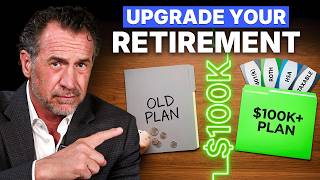
CPA Mark J. Kohler outlines a four-layer retirement strategy for six-figure earners: capture your 401(k) match, fund a self-directed Roth IRA, max out an HSA, then use pre-tax contributions to lower your taxable income. Small-business owners can create multiple vehicles to avoid over-concentrating in one account.
Chapters
If you're making over $100,000 a year and your retirement strategy still looks the same as it did when you were making $40,000 a year, we need to talk. Because once your income crosses 6 figures, the rules change. Your tax exposure changes, your savings capacity changes, and the opportunities available to you expand dramatically. But I see high earners make the same mistake over and over again. They keep using entry-level retirement strategies long after their income has outgrown them. I'm Mark J. Kohler, CPA, attorney, and small business advocate. And in this video, I'm going to walk you through what your retirement strategy should actually look like once you're earning over $100,000, including what type of accounts you should be using, the priorities of the different types of accounts you're using, where tax savings really matter and where it doesn't, and how to build flexibility into your long-term plan. Let's break it down. Start with the foundation, but don't stop there. First, let's be clear, the basics still matter at $100,000 of income. You still need an emergency fund and working your way out of debt with a debt snowball if you aren't already, and consistent monthly savings habits. But here's the shift. Once you cross into that six-figure income territory, the goal is no longer just participation. The goal becomes optimization. At lower income levels, getting money into the retirement account is the win. Let's just get the money in there. At higher income levels, how you invest that money, how you allocate it between accounts, start to matter a lot more. Now, one of my first strategies, and I've been talking about this a lot the last few years, I call it match and out. What it means is that if you have a workplace retirement plan with a 401 match, this is still step 1. This is the closest thing to free money in the tax code. Let's say you earn $120,000 a year and your employer offers a 4% 401 match. So if you contribute 4%, $4,800, the employer adds another $4,800. They match it dollar for dollar. That is an immediate 100% return on that portion of your money. No investment strategy is going to beat that. And you want to double that money. And what's crazy? Estimates are that up to 25% of working Americans don't even take advantage of this. Seriously, double your money. 25% of Americans don't do it. So if you're leaving the match on the table, you are voluntarily taking a pay cut. Now, why do I call it match and out? Because sometimes the best place to invest your money is not in the workplace 401. So I want to get the match, get that 100% return, invest in whatever they have to offer, because it's better than nothing and I already got 100% match, but then take the additional contribution I would have made at work, which a lot of people just do blindly. I'm going to take that money and put it in a different type of account where maybe I have more control. But again, if they're going to match, I want to get that match and then I get out. Number 2, the Roth IRA. Now you may say, well, Mark, I already have a 401 at work and I may even make too much money. I can't do a Roth IRA. That's what my accountant told me. They're wrong. And you're thinking, well, if I've got this 401 at work, why am I going to go home or on my own go do a Roth IRA? That's taking the out money. You know, you're going to match and then take what you would normally put in that 401, not take it out of the 401, but take it out of the equation. And that's where I want you to go into a Roth IRA. With an individual Roth IRA, you can invest it in what you know best. It could be ETFs, stocks, bonds, mutual funds. It could be crypto, it could be real estate, it could be small business. Now, you know, I talk a lot about self-directing and especially on our podcast, the Directed IRA Podcast. Please get over there and listen to that. But when you're a high-income earner, once I get the match, I want more control. I want to take my next $7,500 this year and put it into a Roth IRA where I have complete control before I go play back in the 401 at the work, which I may do. But talking through our strategy here, number one, I want to get that match. Number two, I want to fund my Roth IRA and in a self-directed account where I can control it. Now, why do I like the Roth IRA? Well, fundamentally it's tax-free growth. I can invest in anything, pay zero tax, and pull it out tax-free. Now I've got to wait till I'm 59 and a half, but until I get there, I can always pull out my contributions penalty-free and tax-free. The growth has to stay there, or there's a penalty if I pull it out early. But if they're in an emergency, I need it, I can always pull out my contributions. Now there's a lot of benefits of Roth IRAs, but the fundamental concept is tax-free growth, tax-free withdrawals. So if I have enough money, I'm going to start going through a hierarchy. I'm going to do that match, then I'm going to go fund my Roth IRA. And the goal is not to guess today which bucket will be best. You want to plan in advance so that you're not having to guess about this later. The purpose of this video is to give you that plan of attack so it's automatic. Now, the next account you should be looking at is the HSA or health savings account. Now, that might surprise you, but if you're eligible for a health savings account, and I'll talk about that in a moment, this becomes very attractive because you get a tax deduction when you put money in an HSA, then it grows tax-free and it comes out tax-free for any qualified medical expense. And you can pull out money tomorrow if you wanted to. You don't have to wait till you're 59 and a half. So it's like a Roth on steroids. Man, it's neck and neck with the Roth on why it's so important is because it's only for medical expenses. But medical expenses are the number one reason for bankruptcy in America. So we know this is a big deal for people. So if I can be building up my Roth at the same time I'm building my HSA, let's say you do your match, remember, and you only have an extra, eh, $6,000 to put away, $500 a month, HSA and you're trying to be a good saver, I would say put $500 in your Roth, put $500 in your HSA, back and forth, back and forth. So at the end of the year, you've got $3,000 in each account. Now the more money you're making, you're like, ooh, I could double down. Now I'm going to end up with $6,000 in this account and $6,000 in that account. Now the contribution amounts are going to change every year and get bigger and bigger adjusted for inflation. But the point is, is when we look at the tiers of where we're going to go on this, And we're going to get our match, 100% return. We're going to do the Roth and the HSA almost in tandem. And we're going to be building up those accounts until we max them out. Now, an example is a married couple maxing out an HSA contribution in 2026 is $8,750. Now, if you are over age 55 to age 65, you can put in $1,000 each extra. So we're at $10,750. Now you get a tax deduction on the front page of your tax return for that, no matter what your income level is. And it starts growing tax-free and coming out tax-free for medical. Now, meanwhile, this year you can put up to $7,500 per person in a Roth IRA. And if you're over age 50, an extra $1,100. So you're at $8,600 plus the $10,750. Now, if you do both accounts and you've got the wherewithal as you start making more money, you're putting away almost $28,000 into tax-free vehicles. And that doesn't even count the match at the very beginning. So what's amazing here is, and I've said this so many times, becoming wealthy or getting rich, it's not a quick equation. It's not a get rich quick. Wealthy people have been putting away money slowly but surely, investing in what they know, being consistent. And what I'm trying to share today in this video is that process. And as you go through these different accounts and you start to get more engaged, what we're trying to do is build these buckets up. Simultaneously, so we have the wealth to rely on later in life. Let's say you're like, Mark, man, we hit the lottery this year. Not literally, but you had a good year in your business. Maybe you sold some real estate, exited a business, or your business is just really hitting another level. And congratulations. That's not, doesn't happen to everybody. But let's say that's happening. You've got your match, maybe through your spouse's day job, you got benefits, and now you're building up the Roth and you're building up the HSA. What next? Well, this is where using pre-tax contributions strategically could come into play. Now, what a pre-tax contribution is, you're going to put money into that 401, back at work. So you did the match, got out, did the tax-free accounts, you got extra money. You could go back there to the 401, put money in and get a tax deduction to do so. You could actually even set up your own 401 inside your small business. You could do what's called a defined benefit plan, all sorts of options. And this is where you start trying to get a tax deduction to put the money away. And why I call it pre-tax is because you get a tax deduction, it grows tax-deferred, and then you'll be taxed when you pull it out later. Now, you may think, well, hold up, Mark, I love that Roth IRA idea. I never get taxed again. Yeah, but there's limits on how much you can put away. So the pre-tax contributions are pretty awesome because now I can put away even more money in a different type of bucket, but get a tax deduction. So rather than tax-free later, I'm now using the balancing act of maybe some tax deductions now. Eating that apple with different bites from different angles, and it gets really cool. Now in summary, why would I do that? By using a pre-tax account like a traditional 401 or a DB plan, I'm going to reduce taxable income. I'm going to drop my income into even a lower marginal bracket. The income I am going to be taxed on. I'm going to improve my cash flow efficiency because I'm being smart about my next taxable dollar. And an example would be if I earned $130,000 $30,000 and I contribute $23,000 to a traditional 401, your taxable income drops to roughly $107,000. And there may even be a match in there. So that could save you several thousand dollars in federal and state tax and put you in a lower bracket. This is the real immediate tax leverage this year. Meanwhile, your Roth and your HSA is experiencing tax-free growth over here. High earners should not ignore this tool. Now I want to make one other important point that kind of stacks on this whole process and the, the concept, and that is if you have small business income, you're going to have more options. You can have multiple 401s. You can have a 401 at work where you're getting the match, but then set up your own 401 for your small business. It could be a consulting business. Holy crap, you can set up a solo 401 for driving Uber. The point is, if you have a small business with income and especially an S corporation, now I can start adding additional strategies to the equation. I have clients that literally start a small business to fund future retirement and not even take any profit out because that's the machine that's going to pay for the future. And that's just a concept, but I'm wanting you to see what the possibilities might be. Now, a couple cautionary points. Avoid the one account trap. One of the biggest mistakes I see high earners make is overconcentrating in a single retirement bucket. They find one that makes sense and then just go all in. As hopefully you've already noticed here, multiple ways of investing and strategies and accounts will actually make you more powerful and more successful. Good retirement planning at higher income levels is about balance, a balance across pre-tax accounts, Roth accounts, health savings accounts, taxable investments, and non-retirement accounts assets. It's about how efficient you can access all this money later in different ways or in different situations. Let's just do one quick example here, a 6-figure earner example, and let me show you what it might look like. So let's assume this individual, single individual, makes $125,000 a year, 40 years old. They have an employer 401. A balanced approach might look like capturing the match first. So a 4% match on approximately $125,000 might be around $5,000. So let's get that match and then move on. Then we're going to come out and do the Roth IRA. We'll pay tax on that money first, but that account will never be taxed again. So we can put away $7,500 there. Now what's interesting is you've put away $12,500, but it's already worth $17,500 because of the match. That match is that key part that allows you to double your money on that first contribution. Then you go over to the Roth and you're going to invest that self-directed Roth in what you want, and then you're going to go fund the HSA for your healthcare, which is another $4,400. So we're at $20,000 in extremely tax-efficient investing with maybe only about $15,000 of actual out-of-pocket dollars because you're being smart. and then you can fund the HSA if you're eligible, which is around $4,400 this year. Then we can go back to the traditional 401 and get a tax write-off if we want. Then we can go even invest in our own name, rental properties, or who knows what. So there's so many options here to start building wealth. And the exact mix depends on your goals, your tax bracket, and timeline. But the key is intentional layering. So in summary, if your income has crossed into 6 figures, your retirement strategy should evolve with it. The basics still matter, but optimization, tax diversification, and intentional planning start to play a much, much bigger role. If you'd like a second opinion on how your retirement accounts, business income, or tax strategy are currently structured, my team at KQS Lawyers helps business owners and high earners dial this in before small inefficiencies turn into big missed opportunities. There's a link in the description below if you'd like to connect with us. And if this video was helpful, make sure to hit the like button, subscribe to the channel, and turn on notifications so you don't miss any future videos. I'm Mark J. Kohler. Thanks for watching, and I'll see you in the next video.
More from MARK




The secret to managing your family's future #financialfreedom #estateplanning #shorts



Moving Property to an LLC: What They Don't Tell You #realestate #investing #tips


