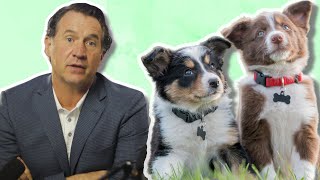
In this YouTube video, CPA‑attorney and author Mark Kohler explains why pet owners should include their animals in estate planning and walks viewers through how to do it using a revocable living trust rather than a simple will. He begins by highlighting the scale of pet ownership in the United States and the tragic reality that many pets are euthanized when owners die without a plan. Kohler then contrasts wills and trusts: a will can name a pet guardian and allocate a lump‑sum, but a trust allows the owner to control who receives the money, when, and how, while also avoiding probate. He describes how a revocable living trust can own a wide range of assets—business entities, LLCs, rental properties, retirement accounts, and a primary residence—by “funding” the trust, and how the trust can be structured with separate “buckets” for spouses, children, and pets. For pets, he recommends a yearly distribution (e.g., $5,000 per year) rather than a single lump sum, creating a financial incentive for the caregiver to keep the animal alive and well. Kohler also notes that trusts are affordable, with his firm offering basic packages starting around $800 for individuals, and that the same fee applies regardless of client wealth. He concludes by inviting viewers to contact his law firm for help setting up a pet‑friendly trust.
Chapters
Hi, Mark Kohler here, CPA attorney, best selling author, radio show host, YouTube personality to some degree, and a pet owner. This is my dog, Maggie. This is our family's dog, Maggie, and of course, a Minnie Schnauzer, and she's the star of this YouTube video. Because I want to talk about pet estate planning. Yes, there's 79 million Americans around the country that own a dog, 85 million Americans that think they own a cat. Yes, we think we own a cat as well. But thousands of pet each year are put down through euthanasia because the pet owner passes away and no one wants to take care of their pet. And they're not as loved as the pet owner did for them. And so there's problems. And we need to have a plan. Many of you need a will or a trust. You need something for your pet as well. And so we're going to talk about it. So, Maggie, I'm going to let you go now while we work on the whiteboard. Okay? So in an estate plan, you can have a will or a trust. Now, a will at least could dictate who is going to take care of your pet. And maybe you could say, I'd leave them X number of dollars. But what's nice about a trust is it lets you do the when and the how. A lot more variety. And so if we compare the two, just briefly here for a minute, before we integrate our pets into our estate plan, a will says who gets what financially, and it's going to appoint guardians of your children. And that would also include guardians of your pets. So pets and children. Maybe I should have put children first instead of pets. But anyway, so guardians, who gets what? And of course, you're going to appoint your executor. And your executor, this is going to be the person that takes care of your funeral, burial arrangements and all that kind of goes through your underwear drawer and distributes things according to your will that sometimes called a personal representative. Well, Will's great. 50% of Americans don't even have a will. We give away a will because it's so cheap and easy and really not the best. But what we prefer our clients to do is a trust, an estate plan that includes a basic will, but it also includes the revocable living trust that you control. No extra tax return, no extra tax ID number, and can last the rest of your life. And you can do little updates. But with this trust, you get to do the who, what, when, and how. You also get to appoint a trustee. So you're still going to appoint the guardians that handle the raising of your children or helping your pets. That's the guardian. But the trustee handles the money. And the beauty of all this trust stuff is you avoid probate. There's no probation probate. Even with the will, it's got to go to court. But with a trust, there's no probate, there's no lawyers, there's no court, there's no government. Your trustee takes over, handles everything, works with your executor. Now I want to show how this plays out in a diagram with your pets. So what does this look like? Well, a trust is the foundation of your overall business, tax, estate, asset protection plan. I want your trust here. You might come up with a unique name for your trust. Use mail forwarding, some privacy strategies, all sorts of good things. But the trust would own your s corporation or your business. Maybe it's a sole proprietorship or something like that. Any assets for your business your trust would own. Then your trust would also own your LLCs that might own rental property. And the trust would be the beneficiary of your 401k or IRAs. That's right, a see through trust can handle that. So don't stress out if your stockbroker says, oh no, you shouldn't have a trust. Trust the beneficiary of your 401ks or IRAs or retirement accounts. You can do it if you have the right trust. And then your trust also owns your home. So all these assets, kind of like an umbrella, are owned by your trust. Very simple, easy, don't have to change a lot of documents or things in your life to make this happen. It's called funding your trust. Now, once something happens to you, and it will, you're going to die. I hate to tell you, your trust is going to be divided into different pieces. You can say the trust lives on for my surviving spouse, but then you can also carve out pieces for your children or your spouse's children. You can carve out a piece, kind of a bucket for these children that are part of a his, her and ours marriage. And it could also carve out a bucket for the pets. And so you can put a certain amount of dollars in there for this pet. And I like to distribute money over time. So every year the pet lives, they get $5,000 or something and maybe initial couple thousand when you die to take care of the pet. And it's kind of a financial incentive or carrot, you know, for this person to take care of your animals. Now I always joke about it, but honestly, maybe not give them a lump sum here, take care of my pet for $50,000 and then the pet gets run over or not taken care of the way it should have. So you want to maybe give a financial incentive of thousands of dollars each year the pet lives on and it could be again one horses, it could be cattle, it could be a cat, a dog and all sorts of animals. Right. There's all sorts of animal lovers out there. So think about a bucket for children, a bucket for pets and then for the children. We'd love to talk about this. And I've got a lot more different articles and videos on the living trust on giving money to stages to the children in stages where they don't blow it all at once either. And so you can have stage one, stage two and sorts of rules in there. So this is a trust. We have a special every year around Memorial Day. We do them all year long around the country for clients and they can be as low as 800 bucks for a single individual, 1200 bucks for a married couple. And then there's discounts at different times during the year. But that the trust is a very affordable plan. Don't get sucked into thousands of dollars even if you're wealthy. It doesn't have to be an expensive proposition. We charge the same whether our clients poor or rich. You know, it can be very affordable. So anyway, look at information below on how to work with our law firm on getting your own trust set up for your pets or your children or spousal and all the stuff that comes with it. We hope that we can be a service, but it's doable, it's important and it can be affordable.