Make Your Side Hustle 100% TAX FREE
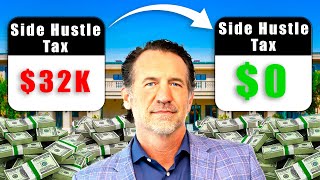
Tax lawyer Mark Kohler walks through write-offs for side hustles: mileage, home office, meals, equipment. He covers entity selection between LLC and S corp, handling teen income, and retroactive S elections, answering audience questions throughout.
Chapters
Hey everybody. Welcome to a live broadcast that's for you. This is for business owners out there. Those that have a side hustle, a little side gig. You're making some money in some creative way, doing a little consulting on upwork, driving Uber, little part time. 1099 you might be getting working for a small business people. There are some secrets to the tax and legal angle. I want you to make your side hustle tax free. Free. And I'm going to show you how to do it. And there are so many stupid scam artists out there setting up LLCs in Wyoming and Delaware and Florida and Nevada and all this BS out there, that's a ripoff. I'm a real tax lawyer, CPA, best selling author. No one has more podcast views, YouTube views and books out there than me combined with your credentials of a CPA lawyer. I'm here for you. I want to do some Q and A. I want to help wow you with some strategies that are going to make you money right now. Guys. I know, great promotion. Grant Cardone and Chris Crow. Awesome. Build your business and make money. I'm over on the other side trying to help you save money. Your number one cost taxes, number one threat, a lawsuit and getting ripped off with scams. So my I'm the yang, they're the yin. I'm the yang. I want to make and save. Making saving money is the same thing. So get into it. And I want to go to the whiteboard here as needed to help you out. So let's just talk two major things. Let's talk about tax and legal. Tax and legal. As with a side hustle, I'm going to just put this right at the top. A side hustle. There are secrets and I'm just going to give you two. One for each topic here. I want to make sure that, that you can cover the tax issue and the legal issue as a side hustle. So let's come back to me now. So here's the deal. Side hustle. A side hustle is getting a 1099, getting some money on the side. If you're getting a W2, there's not much I can do to save you taxes with that. Few other strategies on saving money with retirement accounts or a health savings account or some investment strategies, buying real estate. Great. Love that that's an investment strategy. But when it comes to just saving money on the income, if you've got a 1099, this side business, it's going to get reported on your 1040, it's going to be reported on what's called a schedule C, as in Charlie. And if you go to your accountant and go, hey, I got this 1099. Most accountants are crappy. They are not going to ask you all the different ways they can save you money. They're just going to throw it on your tax return and you're going to get bent over in taxes. So what I want to try to do is save money as fast as you make the money with great write offs. Now let's do an example here. Now we can do picture in picture. We good? All right, so if we jump over to the side, hustle, tax and legal secrets. Let's talk about the tax issue and let's say you're just bringing in 1000amonth. So 1000amonth or 12k a year. Now what I want to do is try to whittle this away until it's tax free. So let's just think through this. Let's say that you're doing about three, 300 miles a month in auto. That's 75 miles. I was just asking the guys here in the studio their commute to this job. I got one of a 1099 studio worker today. I've got W2 workers. But on my 1099 guys, they might be putting on 300 miles of month just driving around. Well, so let's do 300 miles times 65 and a half cents. That's what it is this year. That's a $200 write off. So every month I'm going to write off $200 against my income. Now we'll just rattle off some quick ones here. Your home office is about 1500 a year. That's a simplified method. I could go throw down 100amonth just in home office. So, so we got our auto, we've got home office. And then let's jump over to dining. Let's say you're spending $50 a week just on meals with partners, other affiliates. You might be working with clients, family members, other people that you might be doing business with. Your client that you're getting paid from is if you're on the road traveling for business, you could write off your dining there. So let's just write off $50 a week. Holy crap. That's 200amonth. So we go to 200amonth for dining. All right, and then we say, okay, well I got just regular supplies. I'm going to buy cords at Best Buy and Apple for my laptop, my cell phone. I might buy paper, pens, any sort of business supplies at all. That's gonna, let's just say a hundred bucks a month average on that. And then let's just go cell phone, a hundred bucks. Maybe you're paying for some software at the office or on your laptop. It could be a zoom or an app, a cell phone bill. Maybe you're paying for your spouse's cell phone bill. There's a hundred bucks there. So there's your sell. And then finally, last but not least, let's throw 200 bucks in. On average. We're gonna for catch all this could be annual expenses for a computer. Let's say you bought a computer during the year. Any equipment, office equipment, maybe an iPad. It could be a camera because you're doing some promotion on your social media. It could be a phone, it could be a laptop. And this is not even taken into account. Pay per click. You might be doing some ads on your social media. You might be paying for some website builds. Maybe you're. There's some fees there for your URL. Maybe you're doing. You got on an airplane and you during the year and you went to a conference or you went to go visit your mom and dad, AKA the people that are on your board of directors. Maybe there's a hotel fee. So just think of all this stuff, all that stuff like it just. That could be like 2,400 bucks during the year. $2,400 of just that. Easy Smeezy. So look at what happens here. We got $1,000 of income. That's just our baseline. Now we're going to write off 200, another 3004-005006-00700, 800, 900 bucks. Guys, we're almost, we're here at $900. Easily could be a thousand by the time you take in all these other extra write offs. People, I want to wipe out your income. Your side hustle is now tax free. That's how business owners do it. You need to keep track of all these extra write offs. I want you to be thinking of all these things you pay for in your business. I'm just looking around here right now. I got a cell phone, a pen, an iPad. I've got some books. You might be buying books to read for your small business. I'm looking at a camera. I've got some lighting, a tripod, a backpack, a all sorts of camera gear, a laptop over here, some tape and pencils and pens and a fan, a whiteboard. Guys, this is what business owners do. Anything you buy that's related to your small business. Freaking. I want to write it off, but you got to track it. You got to put it on your debit card. If you're going to be using your bank account for this, you could put it on a credit card. I like you to keep receipts. Just take pictures of receipts, throw them in the cloud somewhere. Do your best to keep good records. You don't need an LLC to do this. You don't need a corporation to do this. You don't even need a separate bank account to do this. Just track your effing expenses. That's what side hustle smart business owners do. And as your business scales, the more crap I'm going to write off. I've clients to write off entire vehicles, write off their plane, write off all of their travel, all their hotel, all their airfare. The more money you make, the more when you're traveling and doing business, I want to write that off. Do you have a tour of vehicle? Are you writing off your rv? Are you writing off your. Your rental property and depreciation people? The list goes on and on. This is what's exciting. I love to save money. My wealthy clients, they are starving for good write offs. I was on Kris Krohn's podcast the other day. He's like, marc, I need all the write offs I can get so that I can save this massive tax bill that's kicking my can. That's the theory here. So any of you have a question on this? Let's talk about it now before we go to Q and A. Let's just slide over to legal. Now. What I'd like you to have maybe an LLC in the state where you live, where you're doing business, and have a bank account, and you have a good little app, Maybe a little QuickBooks or Quicken app to track your expenses in your upgrading and learning financial literacy with your small. And you could be 20 years old. You could be 60 years old. If small business is new to you, doing bookkeeping and having an entity like an LLC or a corporation could be a good fit. It's going to depend on how much money you're making and risk. Some people are like, you're going to get sued. You got to have an llc. I'm like, dude, you're doing website design in your basement and your underwear on a computer in the middle of the night on upwork. Are you going to get sued for that? No. Oh, over here, I'm driving Uber. Ooh. Okay. You're driving people around in a car and could get in a car accident. I'm interested in some protection oh, you run a bungee jumping school and you're going to be throwing people off of trains at the county fair. I think I want an entity for that. So you got to see, does your business create liability. I'm going to want an entity if the more money you make, I might take your LLC and convert it into an S corp. So don't stress about that. Right now I've got a podcast with almost 500 episodes where I talked about LLCs and corporations. You can get up to speed on it without feeling like you're getting sold a bunch of crap. Now, here's the scam. When someone says, you got to set up your entity in Wyoming and you live in California, or you got to set it up in Florida and you live in New York, or I live in Texas and I got to set it up in Nevada. People watch out for this garbage. In an operational business, you set up your entity where you're freaking doing business. If I'm a landscaper, a plumber, an electrician, a consultant, a dentist, a doctor, a lawyer, an accountant, and I live in Arizona, then I'm going to have an entity in freaking Arizona. Now if I buy a rental property in Tennessee, I'll have an LLC for that rental property in Tennessee. Well, Mark, everybody's talking about Wyoming. In Nevada, that's when you're worth $10 million, $5 million, maybe a million dollars, and you've got 10 freaking rentals. And I want to create an extra layer of protection, maybe some privacy people. We set up entities in Delaware, Nevada and Wyoming and in Nevada all the time for clients that are worth a bunch of freaking money. But when you're just getting started, do not get sold this crap. Someone is trying to sell you an entity for 1500, 2000, $3000. And, oh, we know what we're doing. Don't call a law firm. At our law firm, we're 1,000 bucks. We're that inexpensive. And we are licensed to do an entity, not some BS call center in Nevada or in southern Utah trying to do an entity for you, and they're not even lawyers. Get real advice from someone that has attorney client privilege and the license to do it and can do it affordably. Most of my competitors that are full of crap charge more than I do. It drives us insane. Please be careful getting sold an entity you don't need in a state where you don't live and you don't have assets. Pen drop. I stand behind it. I've got more books on Amazon than anyone else on this. I'VE got the podcast to back it up, the YouTube videos to back it up. I teach and write to and teach other CPAs and attorneys around the country on this. Please watch out for the scam artist. All right, there you go. I'm all yours. If any of you have any questions on this, let's break it down. We'll stay here for a little bit and then I want to help point you in the right direction. Dylan, my studio director here. What's our first question? What do you got for me?
Normal form asks, does your side hustle need to be a legal entity before you can use the related expenses as a tax write off?
No. That is a great question. And I want to just say this clearly. Does an LLC save you taxes? No, you do not have to have an LLC to save taxes. Here's a classic example. Let's say you're going to open a little landscaping business. Maybe you're going to open a little lemonade stand. If I walk across the street to that commercial building outside my building and go, hey, I'm going to landscape your front area or I'll mow your lawn every Saturday trying to make some extra money with my kids, or I'm going to do a little landscaping or I'm going to open up a lemonade stand out on the street. Now, under US Law, do I need to claim the income that I make mowing that lawn or selling the lemonade? Yes. Also under US Law, am I allowed to take any write offs for my lawnmower, the gas, the equipment, or the cost to make the lemonade, the supplies, the cup, the ice, the mix? Yes. Any expense I incur. This is code section 62 of the IRS, IRC, internal revenue code. Any expense I incur in the production of income is a valid write off. I have a realtor showing a property in Deer Valley on their snowmobile. I can write off their snowmobile. That's an expense they incurred showing property on the mountain. Any expense I incur as a landscaper or a lemonade stand owner, I get to write off. And anywhere in that equation. Did I mention you had to have an llc? No. Now maybe you do want an llc. So if some rock goes flying off the lawnmower and you hit someone in the eye walking on the sidewalk, do you want to be protected from them suing you and getting your house? Yes. Do I want to make sure I don't get sued for bad lemonade and food poisoning? Yes. I don't know if I've ever heard of lemonade food poisoning. But anyway, I might want an LLC. And also, if I start making more than 40 grand a year, around 3,000amonth, I'm probably going to want to convert to an S corporation. An S corp, not an escort in Nevada to be confused with that. An S corporation that saves you money, but not an llc. So I love that question, people. You can go get an entity, but you don't have to. And when my businesses grow, my clients businesses grow, I will recommend an entity, but it's going to be in the state where they freaking live and where they're doing business. Next question. Dylan.
Yeah, I think this next question falls in line with the previous question here, but Regina asks, do I need an ein for a side hustle?
Great. Regina. An ein for all of you that don't know is called an electronic identification number is through the IRS. You get that on form SS4. You can do it online if you have all the right answers or. Or sometimes you have to fax it in or email or not email, mail it in. But there's different methods to get it. It's called an ein. Again, do I have to have an EIN to open up a lemonade stand on the street? No, I will be. I could very well report it under my Social Security number on my 1040. I'm okay with that. Now, when I need to get an ein is when you start to go next level. If I hire employees, I got to have an ein. And I'm going to start reporting on payroll reports because I have an employee. If I'm going to build corporate credit, I'm going to want an ein. If I get an llc, I'm required to get an ein. If I need to go get a food handler's permit at the city to go sell my lemonade, I'm probably going to need Ein. If I want to get special discounts at the Toro building, you know, to buy lawn, lawn care, lawn mowers and equipment. Toro. I might need an EIN to qualify as a vendor to get discounts at Home Depot or Turo. So an EIN can help you in certain situations. Also, if I go open a sole proprietorship bank account, I could use my social or I'm going to walk in with an ein. You can choose either way, so don't feel like you have to. Now, I'm going to tell you, as you build your business, you're going to damn well get an ein. But you don't have to. We'll grow into that. Regina, great question. Next question.
Dylan, dad and eli asked my 13 year old started mowing lawns this summer.
Love it.
What do I do for taxes?
Okay, your 13 year old, make sure he turns over all of his money to you because he owes you. You put a roof over his head and provide food for him. So Eli, just suck it up and give dad all your money. Okay, now for tax planning. Well, here's the deal, which is pretty cool. I'm going to assume eli is probably 16 years or older. I would hope, you know, he's out there. Maybe he's going to start driving the truck and the trailer and unloading lawnmowers and start working it even if he's 12 or 13 or 14 year old. I want your son to claim the income on his 1040. Now the beauty is this year he's not going to pay taxes on the first $13,850. He doesn't pay taxes on the first $13,000 because he's, that's his standard deduction. Now as a small business owner, he might pay self employment tax even when you're 12 years old, but you could have him claim all that income on his 1040. There's several strategies here. Have him claim all the income on his 1040, he'll probably pay no tax at all. Now what that allows Eli to do is to go open up a Roth IRA and he can start saving money for the Future. A Roth IRA is incredible, Eli, just five grand a year, that's about 400amonth, about $400 a month saving some of that money that you're making lawn mowing at age 15. If you put in $400 a month for the rest of your next 40 years, you'll have over $5 million in your Roth IRA when you turn 65. This is, this is the strategy of starting to put money away when you're younger. Now I think I said 40 years and he was 15, so that'd be 55. But it's a 40 year multiple with a 12% return on $400 a month. It's basic math. So anyway, what I'm getting at is you young people that have this little lawn care business or babysitting or dog walking, you're going to report that on your 1040. Eli, take the earned income, put it away for college, savings or the future. Try to live very frugally. Now there is another strategy. I'm just going to say it now because I love it. Dad could claim the income on a schedule C pay. Eli is an expense in his schedule C. So dad pays zero tax. When a parent pays a child under age 18, it is non taxable income to the kid up to the standard deduction, 13 grand and fed. And depending on the state, there be no state tax either. So dad, if you were to claim the income, I might do that to zero it out from federal and state tax for you. 0 federal and state tax for your son up to the $13,000 on net. That's after all the expenses of the business too. So we could game it in a father son relationship where you pay zero tax and then put it away for college savings or in a Roth ira. I kind of like that strategy to meet with your tax advisor. Any of you that need a tax advisor that talks like Mark kohler, go to markjkohler.com tax advisor network, my tax pro network. I don't make any money on my network. I train CPAs and enrolled agents around the country. If you're a tax accountant and you want to up your game, I have a training system that's two live sessions a week, 13 modules. It's incredible. Check it out@markjkohler.com and any of you can interview and hire your own tax advisor that you want. They're not going to go through my firm. It's fine. Go check it out@markjcohler.com so dad and Eli, if your accountant is a dumbass and not talking about these things, hire a new one or tell them to go get certified in my program. Go to markjcohler.com the Certified Tax Pro network. You would love it. All right, next question.
John asks how do I fix an LLC that I set up myself and an ein?
Okay, if you have an llc, people, and I know there's many of you watching here, you may have set it up on LegalZoom or went to the state, paid 50 bucks and you think you have one sheet of paper and it's a mess, you have two options. You can go do a rehab on your LLC. We have, we, I think we just finished our rehab special a couple weeks ago. We do it every year. Saves you 100 bucks. But the point is, first option is go to a legitimate location, a law firm, not some strip mall where they're not even lawyers doing legal work illegally. Go to the law firm and we can fix your llc. And you're gonna, if you really need to keep that llc, sometimes it's as expensive to fix it as it is to just do a fresh, new, clean one. So in our consult, the paralegals will ask you some questions initially and say, let's just scrap it and set up a brand new one. When we do a brand new one, we have a paralegal special where you don't even need to talk to a lawyer. Let's just get it out. We include the ein, include all the paperwork, the filings with the state, filings with the feds. You get a new LLC that's fresh and new. You could also ask them what the cost is to clean it up and get you an ein to get just a cleanup, a basic cleanup. You're going to be probably 5 to $700 depending on how much of a mess it is. Or we can get you a brand new one with a lawyer for under a thousand. And I think our I can't remember what our paralegal special is either. Go to kkoslawyers.com maybe we can put that in the description team. Kkoslawyers.com you want to look at cleanup or rehab or a brand fresh new one and you could go either way. All right, next question.
This next question is from Santosh and they said the IRS rejected to elect my LLC as an S Corp for 2022. Can I resend Form 2553 to the IRS to elect as an S Corp for 2022?
I would not try to go back and do it for 2022. First of all, if you got the election approved, you're already late. S Corp tax returns were due a month ago, September 15th. I know it may be painful for you. I don't know what the tax hit's going to be, but if you're trying to do a selection all the way back to 2022, it's going to be a nightmare. Could you do it? Yes, you could do it. If you're going to need a special letter to send in with your 2553, you have to quote a special rev ruling. We help do it for our clients. We only charge like 2 or 250 bucks to do a retroactive S election. But the problem is if you do get it approved, you've got to go back and do payroll for 2022. You got to do an S corp return for 2022 that's already late. And you didn't even file an extension to do a 2022 S Corp return. So now you're late six months. The penalty for a late S Corp return is 300amonth times six months. It's not worth it. So screw 2022. Get your return filed, do a schedule C as due in the next two weeks by October 16th. Then what? You do is do the s election for 2023. Oh my gosh. Now it's clean. And if you we can do again, do the whole retroactive s election for you for this year. 11:23, nail your payroll for the year. Let's make sure your income level is proper, your LLC is cleaned up, you've got the proper ein and proper bank account payroll. Dude, we can save you freaking money if you're making any of you more than 40 grand a year net in any sort of LLC. Let's backdate the selection for 1 123. Give up on 22. It's not worth it. All right, next question.
Dylan, next question is from Preet and he asks, or he is stating he's creating a digital course online right now, but he's curious if he should create his LLC before or after he's done creating it.
Preet, this is a great question, everybody. I love this. I just got chills because these are quality questions, people. So Preet is creating an online course now, everybody, let's think about that for a minute. What does that mean? That means a lot of intellectual property. Preet is working his ass off at night to build a cool program that he can sell to anyone, anytime on the web. Great social media marketing. He's going to create some funnels and he wants to make money while he's sleeping, right? Well, hell, that means he better have one URL locked down if he's going to be selling this nationwide, maybe worldwide. Shouldn't he have a trademark? Who could go steal that name from him after he puts all that money and time into it? He's going to need merchant accounts. He's going to need a website with a shopping cart. He's going to need to send out W9s to vendors and 1099s to people that he pays. He's got to get an ein right away. And I can imagine, Preet, you're hoping to make more than 10 or 20 grand if you're going to work that hard on an online course, right, you're going to want to have your LLC set up your ein. I want your LLC to own your trademark. I want the LLC to own your godaddy account, your URL. I want that LLC to be the setup for your Merchant account. Venmo, PayPal. You might take crypto payments online with with Coinbase. I mean, you've got to have all of that lined up. I don't want that in your name. I want it to all funnel into your future LLC taxed as an s Corporation. And pre. To add insult to injury, do not think that you can do this in Nevada or Florida or Texas or Washington or South Dakota or Wyoming and get state tax free income. Unless you live in Texas or Florida or Nevada or Washington or South Dakota or Wyoming, you cannot live in California or New York or Illinois or Arizona in your basement building an online program and set up your entity in another state and think you're not going to get taxed on it. You get taxed in the state where your ass lives. So you've got to set up your entity there and be ready for that. So, pretty man, that was a. That's a consult worth some grand right there, bud. So get with one of the lawyers at my office. Get the entity set up properly. Do it in the state where you freaking live. Own that intellectual property. Nail down the URL, Nail down the trademark. We have a trademark attorney at 750 bucks plus your filing fee with the USPTO. Get it done right. Preet, love your question. Next question. Dylan.
Next question is from Cabela and it reads, I have an S Corp business that just started a side. That just started a side hustle. Would it make a difference if I created another business under this S Corp. I love it or just included it in my personal income.
Perfect. First name.
K Bella.
K. Bella. Man, I wish I could ask you more questions. I'd ask what state you live in, how much money you're making, and da, da, da. Let's go whiteboard on this. Okay. One of the things all of you need to learn is called the trifecta. The trifecta is something I teach constantly. If you're a follower of mine and people, if you're freaking loving this, will you get over my damn YouTube channel and subscribe? Get to YouTube and click the bell icon. Whenever I go live, you're going to get pinged. I've got videos on all this crap and I save you money just drinking my Kool Aid. I will not let you down. So the trifecta is a concept that brings us all together. I do this with clients that are 20 years old, just starting, 16 year olds just starting, and 80 year old clients. Everybody in between. Young, rich, old, poor, whatever. So here's the trifecta. The trifecta is this. We want to divide your life into two sides. And Mabella, you're going to love this answer. I want to put your operations over here, your assets over here. Down here is your trust or your 1040 tax return. Okay? Now Maybella says, now what I want to do with the trifecta is I'm going to put your operations in a business here owned by your trust and your investments over here owned by your trust. And all that money flows downhill into your 1040 tax return. So all of us as Americans have to file our 1040 tax return. It's a two page deal and we're going to file out our tax return and all of this income is going to end up here. And then you're going to say, how much tax do I owe? That's how it works. So I want to make sure that I'm structuring this all to flow right down into my 1040. Now Maybella says I'm an S corp. Okay? Now he or she could be an LLC or an inc taxed as an S corp. I don't care if you're an LLC or an inc. What I care is are you an S corp? So Maybella says they're an S corp. Now let's say they had a rental property as well. We put our rental property over here. And let's use my example, I said a minute ago, let's say they're in Tennessee. Okay? So we're going to put our LLC registered in Tennessee with my two rentals in Tennessee. See how that works? Let's say Mibella lives in Oklahoma. So she has an Oklahoma S corp. And oh, I'm going to start another business. I'm going to. And let's say their business, they're a realtor just for fun and they're like, oh, I'm going to start selling online. Okay, do it right in the same S corp. Oh, I'm going to start a lemonade stand. Okay, Put it right into your S corp. You can run multiple businesses. Well, Mark, the name of my S corp is Hair Salons R Us. I don't care. You can be freaking selling tamales out the back of your hair salon. Run it through your S corp. I don't care what you're doing. Run your S corp as an entity. You can have multiple businesses in that now. Yes. As you expand, maybe bring on partners and it can get more elaborate. I have clients with 80 LLC. I probably have 20 myself and 1s corp. I always have 1s corp in my life. I want to keep it simple. So Maybella, we might form an LLC over here. This LLC might be doing a completely different business and you might have a partner over there, but it's owned by your S corp, not you. I don't want anything coming down to you individually. Make sure it all Flows down. You could have subsidiary LLCs, water flows downhill. I call them a subsidiary, but they're flowing down into your main company. So this is your main company and it all flows down here. This is going to do a tax return called an 1120s and then it's going to kick out a K1 and a W2, which is all going to come down into your 1040 and a river runs through it. Brad Pitt, you know what I'm saying? Her, he and Jennifer might get back to dinner together. Still, I'm rooting for him, you know, and I watch the news. I watch tmz. So it could happen, you know, watch. All right, next question.
Dylan, next question is from the Truth. And they said, I'm a homeowner and I write off my mortgage interest each year. Now that I have a home based farm business, can I write off additional interest for the portion of the house my business uses?
Yes, you could. And this is a very dynamic question because it's going to depend on your income. And are we going to itemize your 1040? So if truth, their name's truth. Be told. The truth. Okay. The truth. Here's the truth. The truth. If you're doing it, you may say, yeah, I'm writing off my mortgage interest in my house. Really? You're not using the new standard deduction. That's pretty hefty a lot if you're married. Your standard deduction this year. Holy crap. 20,000. No, married, sorry, that's the head of household. 27,700. A lot of people think they're writing off their mortgage interest, but when their accountant does their tax return, they're really not even writing off their mortgage interest because they're doing the standard deduction. So the first issue is when someone comes in and says, hey, Mark, I'm writing off my home mortgage interest. Really? Let's look at your return. It's like looking at your blood work. Yeah, you really do have high cholesterol. I thought I did it. Well, your blood works told me different. So your tax return is going to tell me the truth. Truth. So here's the deal. Step one, are you really writing off your mortgage interest? Step two, you have two options right off. Home office. Let's go there. Whiteboard, please. So when you go do your home office, you've got your business here and you're doing. They're doing a farm. A farm is going to be an operational business. We might put the land or the buildings over in a separate llc. We do that with a lot of farmers. So the farmers, their, their assets are over here. But then the operation, the cattle, the dairy, the farming, the wheat, potatoes, whatever, we're going to run that through the main entity, which is going to again, typically be an escort. Now, you might be running that through a schedule F on your personal return. Again, there's so many variables here, so I appreciate your patience. Now, you for home Office, all of you out there, you have two options. When you go to write off home Office, and this relates to the question, you can do the simplified method, which is really nice because you're not depreciating the home, you're not writing off the mortgage interest, you're just taking simplified. When you go to sell your home, you have to recapture the depreciation because you're, what you're saying with the actual method. When we go over here to the actual method, now we're writing off mortgage interest, depreciation, hoa, utilities, all these goodies. But when you go to sell your house over here, now you've got to recapture this depreciation. It creates a kind of a problem when you go to sell the home down the road again. And some people are like, I'm not selling. So this is why there are a lot of variables. I need you to do a consult with one of our tax advisors. Now, the simplified method says you can write off up to fifteen hundred dollars a year just right off the top. Done. And I don't have to worry. It's based on $5 per foot, 300 square feet. But the beauty is I can just take simplified and I'm not going to worry about recapturing depreciation. So the moral of the story is you may, I could say yes, you could write off some mortgage interest, but I may not want to. And number two, we may be writing it off on your home, on your 1040 because you itemize and I want to take advantage of it there rather than in the home. You also might be an S Corp, where I do a home office reimbursement. And that's a whole other strategy. So I don't know how you're structured. I don't know what your income level is. I don't know what the plans are for your home. I don't know how much mortgage interest that you really have, but I like where your head's at. This is a good one. So get with the tax advisor and everybody if you're eating this up. Okay, if you see that this is actually kind of fun. I love saving money. I hold an event every six months. It's called the Tax and Legal 360 Conference where you can call business owners, meet advisors and everybody's hanging out for three days. We're throwing Denim and Diamonds, a big country party. It's going to be down here in Phoenix on November 30th, December 1st and 2nd. Super affordable general admission tickets, 500 bucks. We're going to have a big party on Friday night. Bar dancing, line dancing, the whole nine yards. My VIP experience is the casino royale. We are going to have a great night, playing poker, hanging out with all the speakers and the other high level individuals. We 3 days, 30 classes, 20 speakers on tax and legal. For you, the small, the American dream, the small business owner. I'm going to be on the main stage every day teaching like crazy. Then we go to breakout sessions all day long. You will love it. It's a resort in Phoenix and who the hell doesn't want to be in Phoenix in December? So get your butt over to tax and legal360.com and check it out. Business owner, advisor, attorney, CPA, enrolled agent. You will all freaking love it. So get there. Oh, and it's down below. Down. Okay, it's pinned down in the comments. Get there. So if you guys are loving this, come to the conference. It's a tax write off. It's a tax write off. You're going to love it. All right, one more question. We'll call it a day.
Okay, Brenda had a great follow up question to your diagram. She asks, is the S Corp considered a holding company and the LLC is going into it called subsidiaries? Yeah.
Okay, so Brenda, here's the deal. We're throwing around some loaded words. Subsidiary is the. It sounds like it's sub, it sounds like it's below. But what a subsidiary really is is it's owned by a parent or a main company. Now, like I said, I like to visualize money and money, I'm sorry, money and water kind of flowing downhill. So if I have a parent company, my subsidiaries are actually above me, flowing down into the parent. Now if you want to call an S Corp a parent company and you've got multiple URLs, multiple LLCs, maybe a Q sub, which is an S Corp owned by another S Corp. You've got all sorts of operations going in here, trademarks, whatever. Yes, you could call this a parent, but I could also be doing operations in the parent. I could be selling books, I could be doing workshops, I might even run some consulting. But then I have an LLC over here that's a restaurant or whatever. So you could have one S Corp. That's. And I do. I only have one S Corp in my life. I do. And then I have any operational business here. Now, the tricky part, why I'm trying to be careful using the word parent. Parent usually means kind of a holding company as well. So over here I have clients will have an LLC that's more of a holding company parent. See, this is an operational parent. This is a holding parent over here. This LLC is going to own my LLCs that have rental property, investments, gold, silver notes, crypto rental properties, commercial storage units, land. All of these assets are over here. So, Brenda, just keep in mind, this is a holding company parent. This is an operational company parent. I'm going to run ordinary income through here. I'm going to run passive income through here. Now, one last point on this. Did they see that when I was writing? Did they see that? Can you go back over. Oh, my gosh, a few people. I was on whiteboard the whole time there. Oh, that's okay. Let me say this again. This is the LLC holding company that's holding all these different assets. LLCs, notes, land, passive income. This side is an operational company parent that's running all of the ordinary income. A restaurant, trademark, URLs, books, workshop. So they're both parents, Brenda, but they just serve different purposes. Holding and passive income, operational income. One last recommendation so we can bounce off the whiteboard. Okay, one last thing. If you guys are eating this up, because I eat, drink and breathe and sleep this stuff. And I love it. And I love making money. I love saving money. I don't hate the US Government. I don't hate the irs. I'm grateful to pay the smallest amount I can in taxes to enjoy this great country. But we can game the system. You can play the game more strategically. And it doesn't mean you're unethical. It doesn't mean you're illegal. You just know the loopholes, the tricks. The wealthy that own our country in businesses and assets know how to play the game. I'm not a tax lawyer living in New York or Chicago. I hate big business. I hate effing Wall Street. I love Main Street, America. And as a tax lawyer, I'm like a spotted white leopard helping small business owners because I love my small business owners. There's very, very few tax lawyers. They talk to the small business owner like I do. And I'm grateful for this opportunity to be with you. Please keep learning. It's hard to get all this stuff. I get it. Start soaking up the Podcast, Main street business podcast. Come to the workshop for three days and just start learning and networking. People, if I don't save you 10 times in taxes, your cost to come out to a little workshop for three days, I blew it. That's how magical and powerful it is. Think about this, everybody. Wealthy people know their tax return. Small business owners know their write offs. If you want to be wealthy, do what wealthy people do. And that means knowing what a P and L is, knowing what a balance sheet is, knowing what a 1040 is, an 1120s, a W2, a 1099, an EIN. You should know those terms. Well, I'll spoonfiji. Get over spoonfeed. You get over to my books on Amazon, get to the podcast, get to my YouTube channel and subscribe. I'm not going anywhere. I want to be there with you on your journey and you can continue to absorb. If you hear someone that says something different than me, come on our Open Forum podcast. Come on my live. Come to the workshop. Talk it out. Get a second or third opinion. Don't go on Google and keep searching until you find the answer you like. Find someone you trust and then vet that answer. People, the American dream is real. You can do it. I'm with you. I love you. Don't give up. Get down into that information below and I'll see you here next week. And I'll see you in Phoenix November 30th in December, 1st and 2nd. Thanks.
More from MARK




The secret to managing your family's future #financialfreedom #estateplanning #shorts



Moving Property to an LLC: What They Don't Tell You #realestate #investing #tips


