Marketing Your Brand And Business Tips With Buck Wise
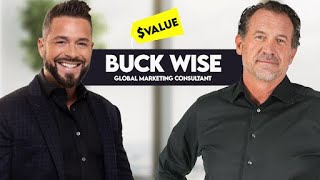
This content was created by MARK KOHLER. This content was uploaded by MARK KOHLER. This is a YouTube interview titled "Marketing Your Brand And Business Tips With Buck Wise" (published May 12, 2023) from the Main Street Business-style podcast. It features host MARK KOHLER interviewing marketing/media expert Buck Wise about branding, content creation, and practical marketing strategy for small businesses. Buck shares his background (radio, founding a digital agency, working with large brands and Grant Cardone), contrasts corporate vs. startup speed, and gives actionable guidance: know who you are and who your customer is (persona), build muscle memory by creating consistently, track KPIs (scale/sustain/slip), and use a four-step content framework (capture attention in two seconds, state value proposition, provide credibility, give a low-friction call to action). The conversation includes examples (Starbucks, Nike), advice for real estate and small-business owners, and calls to engage on social channels. Metadata: contenttype=YOUTUBE; createdtime=2023-05-12T01:00:00Z; title provided.
Chapters
The two most important things in any marketing strategy. Who am I and who are you really truly understanding why you do what you do for the consumer. What are the attributes that you want the consumer to feel when they hear that message?
As small business owners, we need to realize our strength and that ability to be agile and quick. It's an art. You don't learn it in school, and you've got to just soak it up from guys like you.
Foreign
welcome to another episode of the Main Street Business podcast where I get to interview an incredible influencer. And we were here with Buck Wise, a man in the space of media and marketing, making a difference, content creation. His experience goes on and on. We're just grateful to have him here. He's worked with Nike and Starbucks and Grant Cardone and the list goes on and on. And currently out there educating more and more small business owners on marketing, marketing and media. And we're just grateful to have him here for just a little bit. And Buck, thanks for being with us.
Absolutely, Mark, it's an honor and a pleasure to be here. I mean, your YouTube channel's blowing up. You're helping people understand financial literacy, building bigger legacies for these, you know, financial and tax real estate professionals across the country. And I'm happy to just be able to take five seconds to add as much value as possible to your audience. You know, I mean, you've got a really big community that you're building.
Oh, I appreciate that. And we're all. I'm out there trying to learn as much as I can. And I know my community and my. The followers and podcast listeners and YouTube viewers, they really do value the time that we get to have with someone like you and your experience.
Sure.
Just start basic for me because I'd love to get to know a little bit. I. Early, before our interview started, you said you grew up in Texas a little bit. Yeah, and I love to. I'm down in Texas right now at a big RV convention and I love.
Nice.
They're salt the earth people. When you were growing up as a kid and going through high school and college and all that, what took you to entrepreneurism and what. What were the. What was that experience or two that took you down this path, if you don't mind sharing.
Yeah, sure, sure. Yeah. I, you know, there's nothing I hate more, Mark, than when somebody kind of lays out their life path with no real value. So what I try to do is take my experience and give the lessons along the way so that. Yes, you'll. About me A little bit. But, yeah, let's be honest. Why is anybody watching this? They don't want to know what life as a kid in Texas was like. They're like, how do I make more money? How do I move faster? What mistakes did you make that I can learn from so I don't make them again? So I like to try to put it into that sort of lens. And what I can say is I was a creative kid, and I believed I was a purebred creative. I wanted to do television and radio. And so at the age of 17, I started working for iHeartRadio. I was syndicated across the country to more than 45 different markets. I worked alongside Ryan Seacrest in Los Angeles. And I really worked my way through the broadcast space. But what I really learned, and this is the lesson, is how to create. Being a quote unquote creative. How to create in a way that engages an audience, that drives a behavior and builds community. That's really what I was. I was kind of flexing the muscle, you know, and it is. It's a muscle memory. People that say, oh, I could never grab my phone and do videos like you do. I'm just an introvert. I was an introvert. And so anybody that's watching this right now, if you're a business owner and you're not creating content and you let the cousin or your junior employees do it for you, I'm here to tell you that being an introvert is a crappy excuse that you let your parents teach you that you are not capable of being outgoing or. Or making connections through building content in a faster way. And so that was sort of the lesson for me is get out of that syndrome of my personality or my energy dictates my ability. And so through that, what I really realized, Mark, was that broadcast was lacking, severely lacking. You'll remember in 2000, 2001, MySpace, the Facebook launch only for college students. And broadcast was so bad at connecting the digital space to the traditional space. And so I created a digital agency working inside CBS Radio. I had a syndicated morning show. I had. I was running digital for CBS radio stations across the country. And, and. And at the time, they really didn't understand, what is this thing? Everybody's, you know, it's. It's like AI right now, if you hear people talk about AI, right? There's a group of people like, it's so amazing. Let's go all in. And then there's, they're going to lose jobs, they're going to take over the world. And so I was on the glass half full side of digital, Started an agency. And Mark, between you and I and the thousands of people watching this right now, I had no freaking clue what I was doing. I had no idea I started an agency. Did talk about taxes. You'll laugh at this because you've heard this story before. My wife and I was midnight in Detroit, Michigan going through our taxes after a year of running my first digital agency. I think I was 24, 4 years old. I lost money that year. Like I didn't even make profit that year because I had no idea how to run a business. And I say that because a lot of business owners are in that pain point now where they're trying to get to their first million and they just don't understand the semantics. You know, Mark, you asked me specifically, you know, tell me about that childhood. I think like a lot of people, I didn't get the financial literacy. My dad was a pastor, a Southern Baptist pastor. He wasn't teaching me about real estate and taxes. He was teaching me about proverbs and ecclesiastic and all the different verses. You know, I was learning how to be a good human being and I don't regret that time, but I wasn't learning how to build a business and scale it through operations and understanding flow and conversions and retention and all those things. And so I'm a student of life. It sounds like you and I have that in common. Built that agency, learned my lessons, hired my first employee, fired my first employee, and then eventually sold that agency to the world's largest agency holding group, which is wpp. And that's where I started working with really big brands like Starbucks, Nike, Google. So now I'm working in teams of 60, 70 people. We've got million dollar budgets. I worked on pumpkin spice, latte, Frappuccino, Nike, running Nike Golf, like all these really cool, interesting brands. And so the reason I give that sort of perspective of having no clue how to run a business and then working with the world's largest businesses is knowing what it takes to run a business in the first break point before you hit a million and knowing once you hit 10 million, 20 million, 50 million, 100 million, how to drive a P and L with amazing, amazing margins, keep a team inspired, connected and talented and drive a KPI and a revenue for a business at a really large scale. So I have perspective, I have context and contrast to small business and big business. But then you're right. After that I spent a little bit of time with Grant Cardone. I went As a chief marketing officer in his. His business management company, which is Cardone Ventures. And nothing in the corporate space prepared me for three years of real business boot camp with someone like Grant. Let me give you a perception on that. You might find this funny or interesting. Starbucks allows us six months and millions of dollars to research pumpkin spice latte. We're going to determine who the drinker of a pumpkin spice latte is. Over six months and a team corporation
moving at the speed of.
Oh, my God. They call that the big ship turning in the port, right? It's just weeks and months, right? I get to Grant, first day, hey, here's what we want to do. These six things, I said, great. Which one's most important? He said, all of them. I said, awesome. I get that. Which one do you want me to start first?
It's like, all of them.
I said, great. What do they do? He said, today. I was like, oh, God. So he acts like a startup, but he's going to do 400, $500 million in revenue, but he acts like a startup. So it's just this weird hybrid world of big money. But speed to mark. He taught me speed to market, which is where a lot of these corporations lose, man. You know, they could be doing so much better.
As small business owners, we need to realize our strength and that ability to be agile and quick. Now he crafted that message. You've sparked something. I never know where an interview is going to go. And it was interesting. When you talk about broadcasts and I heart. And you're there and you're learning how to craft a message. And I think a lot of small business owners, it gets. It's kind of. It's an art. You don't learn it in school, and you've got to just soak it up from guys like you. It was interesting. I went and did a quick interview with Dr. Phil. I was trying to get on a show to talk about the experience people have, and they. He needs drama, you know, he needs, like, something to grab people. And. And his son was like, you can't say that. You know, the T word, that's the F word here. And that's taxes. We can't say taxes. And else he's like, that's not a good word. But when I did all my negotiations with him to try to come up with a good show, they. They really had an ability to craft a message that they knew people would stay, they'd watch.
Did you?
I mean, as you were trying to build that digital marketing and that and crafting your Own message. Now, is there anything. I know this is maybe out of right field, but how do you, how do you craft a message? What do you do to come up with something? Whether it's a video or a piece of. It's a meme or it's an art piece or a message.
Yeah, sure.
How do you do that to, like, really get.
That's such a great question. And honestly, I think you know this because you're familiar with what I used to do. I would teach courses on that question literally for six hours in a day, like, and I could keep going. My voice goes out by the end of the day and I just want to keep going. Right. If people are receptive, if they want the information, I'll burn myself out just giving. Just like, here's what we need to do, here's how we're going to do it. At some point, I should. Mark, I know you come to Phoenix a lot. I'm in Scottsdale. We should, we should connect together. And I could do a whole marketing section inside your, Inside your financial event. It would be, it'd be so fun to partner. But let me see what we can do in a short amount of time to just give people a little inspiration, a little bit of guidance, a little outline, something they could take right now and then go apply and create more success in their business.
Oh, I know it's a huge question.
It's a huge one. But I'll give you, I'll give you like 40,000 foot foundations that they need to be thinking about. Set your mind to this. The two most important things in any marketing strategy. Who am I and who are you? That's it. Who am I really truly understanding why you do what you do for the consumer. How is that different? What's the position in the marketplace? Because trust me, I have yet to meet a business where there isn't a competitor. So there's somebody else doing something that you're doing. So how clearly can you articulate why you're the person I should do it with? And if you can't tell me that in one sentence, you really don't know who you are, what are the attributes that you want the consumer to feel when they hear that message? Do you want me to feel educated, inspired, comfortable? What are those words that you would use in order for that consumer to say, you know what? I trust this person just enough to make a behavior, a decision to move towards the goal. Whatever the goal, the ROI or the KPI of the goal is, I want to move towards that because this Person's speaking my language. Now. Speaking of speaking the language, let's go to who are you? Who is the consumer? Who's the Persona? Some people, you know, you call this the avatar. If you really understand someone, that's where you build trust. So there's a quote. To know me is to love me. And that's what a Persona wants. They want to feel understood and heard. And when you speak a language that they understand because they go, God, that is me right now. Like, someone's watching this right now. And their pain point isn't that they're succeeding or failing, it's that they don't know how to fix it. They go to bed at night and they go, I've done well enough, but I can't seem to get past this threshold. And the things I want to do to innovate in the business, I can't, because I'm stuck doing the thing that I have to do to drive the most revenue. And so when I speak a language like that, a business owner right now is going, yes, that is me right now. Because I understand that pain point.
You know what's interesting? Like, a bit ago you said that intimidation someone has of shooting a selfie and trying to create a message on their platform. It's interesting. I like what you said about knowing who you are and who your listener or viewer is or what are they? What do they need? Because once you understand that, making a video becomes a lot easier. It comes from place a lot. Right. I mean, it's kind of like, why am I doing this? Once you know, the why they got it just got to happen, I would
think it's exactly it. Yeah, they. You know, there's a famous quote from one of my mentors when I was at Cardone, you know, Brandon Dawson, he used to say, where there is confusion, there is always failure. So the more confused you are as to who you are and who they are, the more failure you're going to have. So the two things that are most important, I call this evergreen content, you just pick it up and go on the fly. It just means you're just, you know, you're just creating storylines on. On the whim, but they're intentional. Just because they're on the whim doesn't mean there is an intention behind it. So. So the two things that are going to be easiest for somebody to create and why do we create? We create to make more connections. Right? That's what we're creating to make the connection. The two most important things are. Yes. Know who you Are, know who they are. That's one. I'll group those together, know who I am, Know who they are. And then the other is muscle memory. Some people, they get on and they go, oh, that was horrible. And they've done it once a week. You know, if it's like swimming, it's like anything you do in life, the more you do it, the more the mechanics become comfortable. So I've created content since I was 17 years old with iHeartRadio that that skill set transcended traditional radio, TV, social media. Anywhere I go on a stage, I can tell a story, captivate an audience and give value and keep them as a community because I learned that skillset as an introvert. But the. That's because it's muscle memory. So those are the two most important things.
I like that you're pro, like, like me. I'm sure you're the same way. I shoot a lot of content. I never post. I just, I'm just shooting and. Or I'll do like five or ten takes to just like try to get that message across.
Which is fine. Yeah, which is fine.
And then some people will look at it and go, oh, I'm so bad at this. Or I took 10 takes. I'm sorry, everybody. No, it's cool. Just own it. We're all there too. We're all trying to craft that message. And I guess that fear of failure is, is it just holds people back.
You're. You're better off doing it wrong than not doing it at all. I know real estate agents because I coach a lot of real estate companies. Exp. Glen Sanford is one of my clients. So I know that. I know the real estate space really well. I worked with Elena Cardone on her real estate strategies. You know, Ryan Sirhant, I worked with in New York for many, many, many, many months. And here's what I know. I'll go into a market where there's a legacy real estate agent who's refuses to adapt, refuses to adapt, has their legacy gen lead gen systems in place and the kids get on YouTube and blow them out of the water. But they're doing a horrible job. They have no idea. They have no real stress, but they're just. It's just quantity over quality. And so omnipresence, a famous grant quote, right? Omnipresence. The more it's not best, not best product, it's best known. And so a lot of kids in any market will come up underneath you, even if you've been in the game a long time and they will beat you out of sheer perseverance because they show up more than you do and more people know them, which gets them to trust them faster. I love it.
Maybe a couple more questions. I appreciate your time. This is so good.
Yeah, sure, sure.
I'd like it. I, I, I think if I can re articulate that in the restate it in the sense that a mistake a lot of people make is they just don't shoot they out of fear or whatever. But sure, the real success is just shooting quantity. Just get it out there, get it out, get the practice and all that.
Yep.
What, what's a I feel like I want to ask you like a success story recently. Think of maybe one of those realtors or one of the other folks you're coaching in a small business startup. I know you've helped so many scale. What's a success story of someone that if that comes to mind, maybe of understanding the media message, they didn't get it before, now they got it and they figured out.
Yeah. So so many of our clients experience the same thing which a lot of times people ask buck, why would I hire you as a consultant or a creative agency? And the truth is it's real simple. I know my why. My why is to give you clarity. Because most of the time it isn't what you're doing or not doing. It's the fact that you don't know at all. You have no organization. Marketing is a data game and it's all about organization. The more organized you are, the more you know that you're doing. There's three things a business can do. Scale, sustain, or slip. Scale, sustain or slip. That's it. If you're not organized, if I ask a business owner, this is how I know. If you're my client, this is how I know. Today at this hour, this was recorded on April 26. At this moment, is your business scaling, sustaining or slipping? If you don't know, you aren't tracking the appropriate KPIs. If you don't know how many appointments were set, if you don't know how many conversions you had today in relation to yesterday, in relation to last month, are your percentages up or down? Why are they up or down? And then how many conversions are you actually creating inside the company that are driving a revenue point? Who inside the company is driving the most conversions? Why are they driving the most conversions? Which sales scripts are working best or not? If you don't have organization and that data, then that's what I'm cleaning up for the Most part, I'm cleaning up intentionally where you're at and where you want to go. This is the roadmap. Here's where you're at, here's where you want to go. Are we here, here or here on that roadmap? And my job is to optimize as you go, you know, So I have so many success stories with clients where they'll start to learn how to have more impact in their ability to create content. So I think if there's anything I could leave your guests right now. Let me give you a simple framework that I give all my clients. This is thousands of dollars of coaching that I'm just going to give away. Mark, because your community deserves it. They deserve it. So, so it's a four step process that my clients use. And when they're done, we always see increase in conversions, increase in connection, increase in revenue. So one, you have two seconds to make an impact. The world moves at light speed. So any social platform, the average time that somebody gives you. So if we take the phone and we go like this, we're scrolling. Instagram, Facebook, Tik ock. The Average time is 1, 2, 1, 2. Oh, this is interesting. I'll stop. Okay, let's go. 1, 2, 1, 2, 1, 2. That's how long they give you, two seconds, right? So you meet these entrepreneurs that go, hey everybody. That's how we start, right? Everybody starts with hey everybody. And if you talk to everybody, you're talking to nobody. Nobody, right? So like that's the number one mistake. Every entrepreneur, I gotta, I gotta tell you, I gotta clamp people down on this one. I'm like, stop with the everybody, right? It's hey, I know you're struggling in your business. 60% increase in conversions when you were use the word you in the first two seconds. So the idea is you got to capture attention, you got to capture their attention in two seconds. And the way you do that is value proposition. So impact, value proposition. What's the value? Right? I know you're struggling in your business because you can't find great talent. I've got three things you can do immediately to attract and magnetize better talent and innovation into your business. Value proposition. They're like, I'm listening, I got their attention. I'm listening. I'm gonna give you credibility. I've worked for some of the world's largest brands and transformed over a billion dollars in business helping people just like you who didn't know where to go. Cred or I get Mark to say buck is one of the best marketers in the world. That's third party validation, credibility, Right? Or I've driven over, you heard me say a number, a billion in sales for my, for my clients. Right? That's a credibility point. So numbers are credibility, third party's credibility, influence, testimonial ambassadors, they're all, they're all credibility. And then the most important part, the fourth thing is call to action. So now what do you want me to do? Okay, you got my attention, you got my interest. And the call to action is where most business owners fail because they want to take. So if you hear anything I'm saying, give in the call to action, don't take. I'm going to give you three points that are going to help you immediately attract better talent to your organization. Here it is, it's yours. Take it, right? Instead of book a call, schedule an appointment, let's have a conversation. You're trying to pull from them and they're like, yeah, no, I'm not giving you that because I don't want to get on your damn list and get hit over the head with an email every day. Right? So we've got to be in a give mindset with our call to. Especially on the cold side of the funnel where nobody knows who the hell we are, nobody wants. The stat is consumers are more willing to give you a credit card than a phone number because the phone number is very intimate, right? They'll buy a program for me for $7, $15, $30, and they don't know me, but they'll pay 30 bucks to get the innovation on how to drive more success in their business. They'll pay 30 bucks. Can I have your phone number? No, because I know what you're going to do with my phone number, you know, so. So, yeah, so the question is, how much value are you giving and what are you asking for in return for the value that you're giving?
You know, the way I've talked with it, accountants. Because accountants, a lot of advisors, they hold all of their knowledge. Like, I can't give this away. We have the scarcity mindset and their competitors, all this. And I'm like, no, you want to make deposits, you want them drinking your Kool Aid. And then, then you can ask for a withdrawal once in a while. But you got to make deposits where the withdrawal is easy. They almost feel they've got to give you something.
That's exactly it.
So much.
That's it. In simple terms, too. And Mark, you probably know this, but the great Vaynerchuk has A book, the punch punch jab jab book which is exactly that. So if you've never read it, it's about giving you have brand equity so you can take. I've heard that.
I haven't read the book. I've got to get that.
Oh, it's good. Yeah, it's a good read. There's a couple of books in my system that I always. So that's a good one. 10x rule and be Obsessed or Be average are great marketing books. They give you a lot of advice on how to be aggressive in the marketplace. There's, there's so many good marketing books that I continue to read.
Well you've given me and I'm sure our listeners so much here good for anything. I mean where we can send people or where I getting to your website or just follow you on Instagram. What would be.
I give, I give so much value, Mark, on my Instagram. That is my platform. That is where I just give all day. I've got advice on there today that I'm posting Follow me at about buck and and here's what I always ask. Don't be. See there's two things. There's creation and consuming. Create and consume. 85% entrepreneurs are stuck in a consuming. I'll follow them. I'll watch his stuff. I want you to be a creator. I want you to create more than you consume. So here's what I'd love you to do. Don't just follow me. Reach out and introduce yourself. Say hey, I'm a fan of Mark's. I saw you on his podcast and I want to report back to Mark that his army and community of people man they really are engaged. They're listening, they want to grow. So reach. Don't just follow me. Say hi I, I send a video message back to everybody that follows me. Some days I stay busy, some days are light. But I would, I would love to just continue to know more people. Mark, you can only be as big as you can unless you bring in the right people to partner with you. I can only be as big as I can be unless I bring in somebody in your audience or you or somebody needs to partner with me. So I'm always just looking for the long term partnership opportunity with anybody to do something big.
You know, there's so many golden nuggets and, and what are we talking about today? Just that last one alone is just so powerful in networking and again a lot of people are. It's a, it's scary to get out and meet new people. And sometimes introduce themselves. Be bold people.
I love it. That's it.
About. At about Buck. That's.
That's. That's it. That's it. That's it.
Get their people. Tell them. You tell them I sent you and that's right for me.
And we gotta study the data. I want to know where you came from.
Got it. I got it. I meant. And I'm not going to start a video ever again with hey, everybody, don't do it.
I did that. Not my clients. Not my client. I get real fast on my. Hey, hey. You are not my client if you're doing that right now. Don't do that.
Hey, everybody. Hey, you all right?
Hey, you. Yeah. Okay.
Awesome. Mark, we appreciate you, man.
We'll see you got it, brother. Anytime. Thanks, man.
More from MARK




The secret to managing your family's future #financialfreedom #estateplanning #shorts



Moving Property to an LLC: What They Don't Tell You #realestate #investing #tips


