Recession Proof Your Business
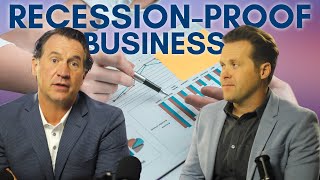
Mark Kohler and Matt Sorenson outline a ten-point framework for surviving a recession. Cut waste through expense audits and vendor reviews, boost efficiency during slower periods, and raise prices if needed. Avoid panic decisions and never cheapen your product to save money.
Chapters
Foreign. Welcome, everybody, to this week's episode of the Main Street Business podcast. My name is Mark Kohler, here with the amazing Matt Sorenson in post Covid recession times.
Is that official? Post Covid. Who cares about COVID anymore? We got a recession now to worry about
new problems.
And is there a vaccine for that? No, no, no. We've got a medicine for you today, though.
Yeah. Yeah, that's right. No vaccine, but definitely some precautionary health care tips. Can you say that something? No. Folks, today is all about how to recession proof your business. Last week was recession proofing your personal life. Now we want to talk about your business now. During COVID it's estimated there was 10 to 15 million more side hustles created in America. Going into Covid, There was over 40 million side hustle small business owners filing Schedule Cs or 1120s or 1065s. The boy Small Business Administration SBA does their survey every year and there's different reports that come out on these things. But it's now estimated over 50 million side hustles in America. And I'm sure that's many of you listening. If you weren't here on this podcast or YouTube video and not owning a small business, you might be in the wrong spot, because we love small business. It's a huge part of your wealth. So today we're going to talk about how to, I don't know, deal with the recession in regards to your business.
Yeah, yeah. We got 10 ideas that we're going to hit. At least we'll see where we end here as we get through this. But everybody's got a different scenario. Everyone's got a different business. Everyone's affected when different things happen in the economy. And so. So some of these are going to apply to you, some of them aren't. And some of you are going to go different ways on some of these. As we hit some of these, some of you are going to go totally opposite directions on these. But one thing, and I'll just give my opening quote here, is one of my favorites. I say it probably way too, but it's a good one and it applies to what we're talking about today. You can't control the wave, but you can't control the surfboard. Okay? We can't control the economy and everything that's going around. You can't control whether the recession is going to come or not. Like that wave is just happening. But you can control the surfboard, okay? You can make the moves and you can crash and burn or you can, you know, get barreled in there and come out alive and looking super cool. So that's what we're trying to do today. We want you to get barreled and come out looking super cool. Not a wipeout. We don't want that.
I think that was a little ambitious. Quote from Matt Sorenson. I've seen him surf. There's a big assumption in there that you can control the surfboard.
I'm just happy you called it surfing. You, you said I surf.
That's true.
Mark's a little more Mark. Mark's better on a surfboard than me. That's to be honest.
Well, I got lots of work to do there. I once in my life I did get barreled. Now it wasn't a stand up look, really cool barrel, you know, like, yeah, might see it pipeline. But, you know, I was, I was crouched down, I had that wave crashing over my head and I. It was sublime. Yeah, bucket list of life. Gotta get barreled. Then I wiped out and ate coral. It was brutal. Okay, now let's start with our 10, everybody, let's get into it. We're gonna keep this light, fun, educational. Next week's newsletter. Make sure all of you have signed up for our newsletter@mainstreetbusinesspodcast.com or mainstreetbusiness.com if you get there and sign up for our newsletter. Every week we try to send some informational articles and YouTube videos, important tax deadlines for small business owners. We will summarize these 10 points in our weekly message. Last week we summarized, or I should say this week's newsletter. We summarized last week's podcast. So make sure you're signed up for the newsletter. It's free. Try to provide a lot of content there for you as your number one resource for tax and legal in America as a small business owner. Okay, so number one is going to be the same. Frankly, we got to start with this number one, it's the same as last week's on the personal. Keep your head, don't panic. It's so easy to watch the news and get freaked out. The news is trying to find whatever they can to get your attention and talking about the economy and the recession and all hell's, you know, going, you know, sky's falling, all hell's breaking loose. That's their mantra. Be careful what you listen to. Don't get sucked into the rhetoric.
Yeah, love it. And I think this is going to be a short term thing. So, you know, recessions all end. Every recession has ended and so.
And we're still alive.
Yeah, so. So businesses survive.
So.
But this is when some things might get tough and you might have to make some sacrifices here you didn't want to do, and some changes in your business you may not have wanted to do or maybe even need to work harder, then you really want to work. But you can come out of this to better times. Of course, that's the goal. And stronger as a business. So. All right, you want me to go hit the next one?
Yeah, you can do number two.
Okay, I'm just.
I'm interested to see. Let's try to go priority. What would you say, number two? Priority? I think keeping calm is number one.
I. I think I want you to analyze what you're doing in terms of products and services. So I think it's a good moment to take a step back and say, all right, what do I sell? You know, whether that's services, products, whatever it may be, what do I sell? And given any changes in the economy to my customers, who I'm selling to or where I have influence, how should I change that? Do they need something different? I don't want to talk about prices yet. That's a separate thing. But just like, what am I providing in terms of a service? Let me give you an example. If you're a lawyer and you're. When you're not busy, I'm going to do bankruptcies, you know, or just whatever, you know, what's the service that applies now at the time that people want. If you do consulting, you might want to offer, like budget, you know, helping people on businesses get budgets set, you know, set. Set up. So just some easy examples, but just think about what your products and services are that you're offering. If you're in the real estate business, like, let's say you're a real estate agent. What are the types of buyers that are out and sellers that are out there right now? If this changes? I don't know that we're gonna have short sales necessarily. But one thing we saw in the last recession I saw with a lot of clients, had success, is they pivoted to short sales very quickly. And now there was differences in the real estate market than we have today. But just as an example, they pivoted to short sales and became very successful and came out of that with a much larger customer base and reputation and experience, having pivoted to the strategy and services people needed in the real estate market at that time.
I like it. I'm going to the word that came to me When Matt and I were preparing for the podcast on evaluating your service or product mix is the word pivot. It doesn't mean you're a failure. It doesn't mean you have failed, that your business is a problem. Pivoting and change is something you need to embrace as a business owner. If all of a sudden everybody's sick of clam chowder and they want corn chowder, start making corn chowder. Yeah, you know, it's okay. So you need to really evaluate what your customers need and want and provide that so many people are emotionally attached sometimes to. This is a service. This is the product. If they don't like it, they can go somewhere else. Yeah, okay. You don't shoot yourself in the foot. You're not gonna make money.
Let me give the. Can I give the example of the ultimate pivot?
I.
Because I love this one. Instagram. All right. Instagram, at a certain point was a location sharing app. You would. You would basically share something to say, hey, I'm at, you know, Harry's Bar and Grill. And it was like location sharing. And then they added a feature that you could share a picture of you at that place. And. And they. The app exploded once you could add a picture. And they realized, oh, my gosh, people don't care about the location necessarily. They just want to share pictures. They're there at their house to say, and they're sharing pictures. Like, that's nothing significant, the location of your house. And so they. They quickly realized what people needed and used and they pivoted to photo sharing, of course.
So I want. I want to give another example, too. I'm going to give a shout out to my son Dylan. He's always been a little entrepreneur. I. Which I love. You find out how you're different with your children. And I've got four kids. And as you're raising your children, you. I don't. If you're like me. Most parents, they want them to just. You've got a plan for your kids. They're going to be just like you. Right? And you've got this plan. Come to find out, they're humans. They're going to do their thing. So each of my kids is different. They have certain characteristics of me and others not. And it's. They're great kids. Dylan has really been one of those entrepreneurs in our family, and he loves to come up with ways to make money. So he. And I loved it. I call him all the time. Like, I got this idea. I called him about Turo the other day. What do you think of Turo, you know, and he's really analyzes things well. Every fourth of July, which we're coming up on in the small town in Idaho, there's a parade. And he and his buddies were like, what do people want at the parade? They need sunglasses. And so he and his Buddy ordered like 300 pairs of sunglasses in bulk on this cool website. They could get, you know, kick butt sunglasses. They had three or four versions and they set up a little. They were building them in my garage. They had this little rope around their neck with like this little tray of their sunglass options. It was like you're, you know, you're one of those bar girls back in the 50s serving cigarettes, you know, around. Just had like this little tray in front of them. And. And so the day of the parade, boom, people are out there, you know, they had their response reserved with the blankets and chairs. As soon as the sun came up, they were just walking along. $10 sunglasses, $10. They sold out. And I was just like, that's what people needed. That's what they wanted. They killed it. No one else was selling sunglasses. What I was wanting to share is that it would been fun and to keep in mind that if there was a forecast of rain, should have. They had 100 umbrellas, you know, and pivot. You know, they had a great idea with sunglasses, but sometimes we have to pivot and the weather or the economy was like, you know what, you're not doing sunglasses, you're doing umbrellas. And I thought they've never. The forecast has always been sunny 4th of July. So they, they've stuck with sunglasses. But I thought umbrellas would have been a good one. Yeah, okay. Number three. I talked right there. Why don't you throw out three.
Okay. All right, let's. Let's talk about increasing efficiencies. Now. If your. Everybody's business has been. It gets affected differently. So. But let's say your business has slowed down a little bit. Take this as an opportunity to increase the efficiencies and work on some things, some systems, some procedures, some automation that you didn't have time to. When you're like running day to day with the business busy, customer after customer running to the next thing. You didn't have the luxury, frankly of being able to slow down re. Look at your things, increase efficiencies now. Take advantage of time. This time is really an investment to future growth that'll make you even more successful. So when you, if you do slow down and find yourself with more time, use that to retool your business and create efficiencies.
Yeah, I. And I've got a cute little example here too. Did I say cute?
You did.
What am I doing?
The hell?
I got a killer exit. Who are you?
Oh, that was cute.
Yeah, that was. That was adorable. Okay, I've got a killer example here. Got to get my zone. Okay, so one of the guests we've had on our podcast over the years, a couple times, maybe even three times, is Tony Bass. He's a landscaping consultant. This is what we love about this podcast. We who do we consult? Everyday business owners around the country. We're talking to people just like you. We get cool ideas. We want. This is not just about tax write offs or an LLC for asset protection. We want to show business concepts that we're seeing smart clients do and dumb clients do and want to help you out. So Tony Bass talks about the efficiency and the landscaping arena. He's a landscaping consultant. I've been to Kentucky and spoke at some of his conferences. Great guy. And one of the things about efficiency is you say, well, I need to cut costs. Well, being more efficient is like cutting costs. You're creating capacity with the same amount of expense and that capacity can save you payroll. You give you more time with your employees to come up with. We're going to talk about value and a few other things here. But one thing that he talked about was he would go into a new landscaper operation and he goes, tell me how many homes you're doing, how many lawns are you mowing, how many sprinkler systems, Da, da, da. Whether regular maintenance route was an area of expertise for him, he'd say, show me your truck. You run an electric mowers and weed eaters and whackers. And then. But show me how many people you got and what's your route every day and which people are you doing on this day or this day? And landscapers, for the most part didn't coordinate their routes or design their routes efficiently. They may on a Tuesday be going all over town and on Wednesday going all over town. And he's like, no, no, no, on Tuesday we're going to do the west side. On Wednesday we're going to do the east side and we're going to change the route and get our customers bought in on this because I want your people on the ground mowing lawns and whacking faster and more and more time rather than driving around. And so he would say, mark, inevitably I could save him 10 to 20 minutes a day. Just by changing the routes. Now, you take a crew of five people, 20 minutes each. That's an hour. Take that hour, multiply it by the week, the month, the year, and how much more you could get accomplished in that time. That's crazy. And he's like, I would save tens of thousands of dollars for guys just being more efficient. Yeah, how quickly you're getting the soup from the counter to the debt table. What are you doing? What's your service?
Yeah, be efficient. That's, you know, that's working smarter, not harder. And so I think a lot of times people think I'm going to have to work harder. You know, times are tough, I'm going to have to work harder. How about let's work smarter too? You know, you might have to work harder, but work smarter too.
Matt, I'm going to toot your horn. Matt Sorenson implemented something in the last month at our law firm. See if you get this. I'm teeing this up for you for our clients to have a more efficient experience making appointments. What did you do, Matt? Go ahead, tell everybody.
I mean, book an appointment online for any of our most popular services with one of our attorneys that just. You can book right there.
You're scheduled.
You don't even talk to anyone. You can do it on a Sunday, reading the paper at home, doing whatever, you know, whatever you want. Just, you're ready to go. So. And we've realized people want to do that. I want to do that, you know, but saves time. We don't have to have. You don't have to talk to one of our employees to schedule it, to explain the services. It's all on the website. It's outlined. So that's an efficiency. And it's also meeting a need. Customers wanted. Right. So don't try to create efficiencies that make a better. Make a worse experience for the customer. One of the things I always like to talk about is better for the customer, decision making. And so when you're making a decision on like an efficiency or something, you're going to do and ask yourself, is this better for the customer or better for us? A lot of businesses make a mistake and they'll be like, oh, I'm going to create this efficiency. It's going to make it so much more efficient. And your customers hate it because it makes their job more complicated. That might have made your. Your job easier, gave your customer a bunch of crap they had to do. But it's. So whenever you're making efficiency decisions, you're trying to Improve something. Think of, like, better for the customer. Decision making. Did this efficiency make it actually better for the customer? Do they want this?
I love it. Which leads into my next tip, which is number four. And by the way, people will read all 10 off here at the end. Number four. Let me put it in context. In a recession, people are watching. On the flip side, people are watching their expenses. You know, what am I getting for my dollar? You know how much I'm getting a gallon of gas for? X, you know, that definitely hasn't changed. I get the same damn gallon of gas, but I gotta pay seven bucks bucks or whatever. But for all the other services out there, whether it's food or a product or a service, am I getting the value that's worth my dollar? In a recession, everybody's tightened their belt. It's called austerity. They're trying to be a little more careful on what they're spending. So we need to, on the business side, go, what can we do to provide a little more value? Is it efficiency for the customer? Is it a little negative mint that goes along with their product? Or. You know, it was funny, Matt. I got all these good examples. We built a home three years ago. We were building a home and we would buy a lot of tile from Tile Bar and a couple online websites. We found we got better tile choices. Buying out tile ourself, not letting our contractor do it. And it was really funny. Every time I would buy tile for one of the bathrooms or laundry room or kitchen or whatever.
When you.
I buy tile and I get a box, they had this little Mike and Ikes. You know, it's kind of like, you know, these. A little package. It was like, you know, or jelly bellies, whatever. They're little if you guys don't know what they are. Kind of like that hot tamales. But there was just a little package of about 10 of them. I mean, it had to cost some 5 cents.
Yeah.
But what's funny, I started looking forward to getting my tile box because I'd be like, there's my Ike and Mike, you know, or Mike and Ike's, whatever. And I was like, you know, and I just. And I. It was so small, but it was something. I'd never forgotten that. And so if you can provide more value to your customer experience. And I think about Uber. Oh, my gosh, I love to get a new. Who's got a charger for me? Who's got a bottle of water? Who's got a mint for me? A piece of gum. And then I Get into other Ubers that smell and they drive slow and I'm like, what the hell are you thinking? You know, four star, three star, you know. Yeah,
yeah, it is. A lot of those little things really matter. But here's one thing I think on adding extra value right now is it's just, I think add a little personality to your services, add a little more happiness to it. Don't be the person that comes into the, to the meeting or to the, you know, the customer. You know, when you're meeting the customer, that's, that's the complainer that I'm so busy, I'm so stressed out. You know, like you want to come in and be like the upbeat person, be happy, be complimentary to have the bedside manner of like the doctor that you love or that who knows if they're even a good doctor but like they have like an awesome bedside manner. And I think from a customer experience, no matter what service or product you have, people are wanting that and needing that even more right now because of all the things going on people are worrying about. There's a lot of financial stress of what's going on. And so sometimes that's like a breath of fresh air to get that like upbeat, positive experience from someone and that makes someone want to come back to you, continue to talk to you.
I love it. Okay, I'm going to throw out the next one, Matt and I'll be brief and let you elaborate on it. And that is we've been beating around the bush, but you got to do it yourself is do a review or an audit of all your expenses. What are you spending for in your business? Look at auto pays, vendor relationships. Matt and I just last week said, what are we paying for on our web services? Why am I paying for this plugin and this hosting and this thing and this thing and let's just reevaluate. And sometimes you find out we've been paying that for six months and what the hell, it does nothing for us. And so just a little bit of, you know, reevaluation can save you a ton.
Yeah, absolutely. And no one's going to bring that up but you. And sometimes I think you get on little auto pay type stuff or your car just getting hit and you just forget about it. And then you get so far along you don't even remember if you're using it or not. But then you're like, don't. I don't know, it's these. So just get re engaged in some of those things. And one thing people have even done is they cancel their card. You know, I've done it just to, like, I don't know what some of these things are. I'm going to obviously re. Sign up for the things I need. Sometimes people just take the. I don't know, the ultimate measure, but, you know, a precautionary measure here to just cancel that card that might be used.
So. Okay,
let's talk about prices. I don't think we've hit prices specifically because I want to talk about prices in two ways. Some of you need to increase your prices. And I know that might sound counterintuitive because you're like. But I thought in a recession, you wouldn't increase your prices. Well, what is the service you provide? If you're a landlord, you better be increasing your prices.
All right?
Rents have gone up. Your expenses for the things you may provide, your cost to do business have probably gone up. Everyone you buy products or services for, their prices have gone up. So you may need to look at actually increasing prices right now, even though it sounds counterintuitive because, of course, the I word inflation.
Okay, I like that. And what's funny, I've been dying. Some of you that may be watching this on YouTube have seen me kind of fiddling here with my phone because I want to give you a boy scout tip here. I was a scout master for years. Matt and I, back in the day. Yeah, we ran some scouts up some mountains down. But didn't we. Oh, my gosh. That was 15 years, 10 years ago. But I love scouting. It's been destroyed for a variety of reasons. We won't go there. But I love those days. Well, first aid merit badge was always a fun one. It's required. You got. I. I did the first aid merit badge so many times. Resuscitation Annie, remember her? Some of my best makeout sessions were with her. I mean, I really. We can get mouth to mouth to a dump. I'm in.
Hey. Oh, that's sad.
Oh, my gosh. Okay, so one of the things that was interesting in the first aid, and I've. I've noticed a newer version now of the first aid handbook. I mean, I had a version that was 20 years old, but they had four tips when you approach an emergency.
Ooh, I love the first one. The first one. First, assess the situation.
Dude, you're awesome.
I love you.
That's number one, assess the situation. And I would love this. In scout camp, all the kids would be assess the situation. Number two, that I loved, approach cautiously. Remember that? Number three, Call for help.
Okay.
And then number four, don't become part of the problem. Which is a typical scout thing. Right. I'll save this person.
Yeah. He's like 12 year old boys. Like someone's hurt. Oh, yours is only gonna get worse. But the poison ivy over there. This poison ivy.
Rub this on him.
Oh, man.
Oh, the poison ivy days. So anyway, I think what we've joked about that for years. Isn't it a little flashback?
Yeah, yeah.
Assess the situation. Approach cautiously, call for help. Don't become part of the problem. I have used that four step.
Yeah, yeah.
Mantra, whatever. In so many little presentations over the years because it really applies in so many instances. And right now it's the same thing. We've got an economy. We're trying to assess the situation. What does it mean for me?
Yeah.
And we need to approach this cautiously. We don't want to act rashly. We don't want to get, you know, do we cut prices? And this is why I want to bring it up at this point. Matt was like, maybe you should increase prices. Approach cautiously.
Yeah.
Number three, call for help. We're preaching to the choir. But you're listening to this podcast today that's calling for help. Get some advice, talk about it.
Yeah.
Number four, don't become part of the problem. Freaking out and just, you know. And Dave Ramsey was out. I loved it on his podcast last week. He's like, you will survive your retirement income and is still the same. Your principal retirement account will come back. It's okay. The sky is not falling anyway.
Yeah, love that. And I actually just have a YouTube video coming out on this is. I think sometimes the approach cautiously. What's happened is a lot of people have been like thinking, oh, I got to trust my instincts. I got to trust my instincts. And what people are doing is, is there like they're selling their assets and they're going to cash, which is the dumbest thing to be doing right now. The worst thing you want to hold right now is cash and inflation when we're talking about your investment assets. And so. But what's happening is that their instincts are being motivated by their emotions. They're not approaching cautiously. They're seeing a problem and they're running to it and they're trying to do some dumb stuff without thinking about it. So don't let your emotions drive your instincts and don't fool yourself. So instead, approach cautiously. Right. Assess the situation. Make an informed.
Matt's opening the door. Love it. Love it. Matt's opened the door to life. Coaching at its core, we love the model Brooke Castillo, and my amazing life coach, she has taught over and over again, our emotions drive our actions. And so we have to carefully think through what are our thoughts that are causing our emotions. Because we're emotional people, we're going to make decisions based on our emotions. And so we've got to figure out. Whoa, whoa, whoa, slow down. What am I thinking about? What am I feeling? Yeah, because I need to be intentional about making. Taking these actions and not just let quote, unquote, instincts, which means freaking out.
Yeah, yeah, people. You people hang their hat on that. I just felt in my gut that was my instincts talking. That was your emotions. Okay. And when we're talking about money in business, you want to make informed decisions. You want to analyze situations. You don't want to think, oh, my instincts told me to sell everything.
Okay, well, do I need to quote the Godfather? Okay, we'll just. I'll just say it wouldn't hurt. Yeah, it's. It's business, Michael. It's business. Okay. All right. Okay. Next, Next. Now this is the hard one. Okay, let me forewarn all of you. You're not going to like this one. It's tough. If you have employees, you've got to do an audit. You know, what are my employees duties? Who's our weak link? What are we doing with tasks that need to be completed? In a recession, there are layoffs. It's inevitable. Sometimes you have to get rid of some dead weight in order to save the entire ship. And so. Boy, sorry, you gotta say it.
How about. Let's just say there might be another opportunity better for them, you know,
oh, my God.
We're not throwing people off ships. But yeah, I think, you know, a lot of our. A lot of businesses have had significant growth over the last couple years. We had the kind of the mini Covid recession briefly, and then. And then the economy came roaring back and has the last year or two. And so I think a lot of businesses. Have you seen it in the growth and even all the publicly traded companies right now that had staffed up and there was no one left to hire, and it was tough to find people. Well, that seems to be shifting a little bit right now, and the data's out there on it that employers are finding an easier job to fill, their positions that are open now, and there's a lot of people worried, you know, of course, and that about where their spot is. So I think you do need to assess your people in your organization, if you have them. This could be Your contractors too. You know, this could be, you know, had you. Are there certain contractors or vendors that you use that you might need to price out. And so maybe you need to go look at your contractor situation and vendors that you're using and that that's probably a separate point in and of itself is just look at those relationships in addition your employees to find out where's the value you're getting. Can you get a better deal? Can you get better people? Can you get those tasks done and take in a better, more efficient way?
Okay. On this review, and I'm going to say this is number eight and we may leave it at eight to be great. I don't know if we're going to come up with 9 and 10. I think we've combined a few along the way. Number eight in you kind of alluded to it there, Matt, is a vendor review. Not only are you looking at your employees and maybe I could cut some costs with payroll as needed and turn to some vendors. At the same token, we got vendors we may be overpaying right now. Do we need all that Again, back to the landscaping example. You may be paying a vendor to mow your lawn at the company office and you're like, you know what, I've got a little capacity with this employee. I'm going to go down to Home depot and buy $250 lawnmower and on one day a week for two hours they can mow the lawn. Yeah. And we're saving some costs. So look at your vendors. On that quote. On that note, can I share this quote? This is from Liddell Air, our partner in the accounting firm. Our operation. Okay, this is deep. Everybody ready? Expense management drives short term profitability. Asset management drives long term profitability. Now Matt, you had an insightful example with rental property on this.
Yeah, well, I think if you just take the rental property, one of the most common small businesses that you can have out there, side hustles, if you will. Even all of our, you know, full time day job or sorry, you know, full time business owners with employees, you should be having a rental property too. But so I think we can all get our head around this. If you think about like your rental and cutting expenses in the short term maintenance, setting aside some money for, for, you know, something that could happen that that might save you some money right now, might make you feel better. But in the long, in the long term you might have some things are going to be much more costlier. You're not doing repairs that you should that cause into more Costly damages and things that, that end up decreasing the value of your asset over time. So. But your business is the same. You know, your business is a structure and organization that needs things happening. It needs to be maintained, it needs nurturing, it needs all these things. And so if you cut it off with that stuff in the long term, that business, which is an asset in and of itself is going to be less valuable to you because you starved it, you didn't take care of it, you didn't nurture it.
I love it. And one other example with a product, and I love the rental property example. I think it was in Stephen Covey's book. I don't know if it was Seven Habits or one of them. He's got It. Son's got a great new book out. But Covey talks about watering down the soup. I think if you remember this example, Matt, I'm not sure, but it was an example of a restaurant. They were known for their soup. They had this great soup and they needed to cut costs, so they started watering it down a little bit. And in the short term they saved money, their food cost went down. But slowly everybody started to realize that's not the same soup, that's not as good. And they diluted the brand. Literally.
Yeah.
And pretty soon they were like, okay, we can get back to our regular type of soup. By then they had lost their market share, their customers, they had, they had undercut their long term asset of the soup. And so in this economy right now, my final closing statement is don't dilute your service, don't dilute your product, enhance it in any creative way you can to create more value, create more efficiencies so that you can provide the same product without diluting it from a customer perspective. And if you can do some of those things, you're going to stay strong or grow. This is Darwinism in its best. The companies that can pivot and make the right decisions here are going to survive. Those that can't, they're goners. Oh, wait, that was
hard hitting today. And I, I think I just. 2, 2 points on that. And this will be my final closing statement is if you find yourself, if your business is doing great and you're not affected by this, bless you, that's great. Just keep doing what you're doing. Maybe look at some of these things that could help you otherwise. But if some of you are like, man, I got more time on my hands now, not as busy as I used to be. All right, let's invest that time. Don't Waste that time. Time is as most valuable is money right now. And so if, if you can put time into your business that's already had some success, continue to grow it when the recession is over, that business is going to be way more valuable. And so invest your time and have, have some excitement. Find the things that excite you about your business and remember why you got into it and start thinking of the big picture stuff and the things that excite you about it. Then get onto these tactical things that you know you need to get done that'll improve your business and make you stronger for the long haul. And that I think is the asset management long term profitability play.
I love it. Now Matt, I'm going to ask for your indulgence. Can I share one last example regarding closing statements? It brings in John Adams and Paul Giamatti.
Okay, all right. I mean I'm not going to deny Paul Giamatti quote. I also love him as, oh in billions, the Attorney General. What's his.
Chuck.
Chuck Bates. Chuck Rhodes. Chuck Rhodes. Chuck Bates. Chuck Rhodes. Yeah.
Chad. Chuck Rhodes. Chuck and Wendy. Gotta love.
Yeah, okay, okay.
So Paul Giamatti plays in an HBO miniseries on. John Adams came out about, oh gosh, it's been almost 15 years ago. It was a breakout role for him. He was just phenomenal as playing John Adams. For those who don't know that was the second president of the United States, you might want to catalog that. So after George Washington, which many thought he wouldn't step down after two terms because most of the world politics have been dictatorships, they didn't think this new little thing called the Constitution would hold strong. George Washington stepped down and John Adams became president. Which relates to Alexander Hamilton, the wonderful play right now, who was a shoo in for maybe the second president, but he got shot by Aaron Burr. So right little, little tidbit there for everybody. So John Adams becomes president and in the miniseries in episode one. I recommend all of you to watch it. This is really, it relates to our topic today and it's the closing statement. So he was a country lawyer, moved into Boston. His first case was the shooting. There were seven boys and men killed in a shooting by the Revolutionary Guard. I shouldn't say revolutionary. The English, the Britain, what do they call those little guys who are in red centuries?
I don't remember the Red Coats.
I don't know Red coats. So the red coats are in the Boston commons and they shoot into a crowd and kill seven people. Well, John Adams defended these seven soldiers and I'm not gonna Spoiler alert. I'm not gonna give you the result of the case, but it's what put him on the map in Boston politics. So in his closing statement, he says it's a phenomenal first episode. And he said, in his closing statement, he said, we can't make a decision based on all. All of the. Everything going on around us. We're mad at England, we're mad at them, but we can't take it out of the soldiers. We've got to look at the facts. We've got to look at our current situation and judge it based on the facts, not what's going on around us. And I think that's another important example. And it's a great show. I just watched it this last week, so it was on the mind. But it's a great example again of saying, okay, we've got this fervor going on, all these things going on in the economy, and it's easy to make decisions that are irrational because of all these things going on around us, but we got to look at the facts, what's going on in our lives, in our business. Matt, your thoughts?
Yeah, I mean, don't make, you know, don't operate out of fear. If you're making decisions out of fear and things like that, you're going to make poor decisions. And so I like to. What I think is the most important, what I'm even trying to do myself and is just like, analyze things, make informed decisions, get information, look at what other people are doing. You know, model some things of other people or businesses or things you see other people doing. You know, one thing I think is dangerous, a lot of people think they have to have a unique idea for something. No, go look at what someone else is doing in your industry right now that's doing well, that's having success. Maybe they've already figured some things out that you should be doing. Go look at some of your competitors and learn some lessons. That's getting information, analyzing things, and figuring out how it can work in your business.
Love it. Well, everybody, thanks for letting us try to share, man. We covered a ton of ground here today and hope that something resonated with you. We wish you the best. We love small business. We love the American dream. We're out there making these same types of critical reviews and changes in our own businesses. We hope that we can be of service to you and provide tremendous value. If you call the law firm, you can make an appointment online.
Yeah, yeah. Kqslawyers.com you know, make an appointment online or you can talk to us too. We'd love to talk to you if you want to do that, of course. So and thanks everybody for listening. Remember show help us get the word out there, any of your fellow business owner friends. Hopefully this could be of use and value to them and give us a five star review or kudos or whatever it is you give on the platform you listen to. We'll be back next week, of course, with another amazing episode of the Main Street Business Podcast. Until then, take care.
More from MARK




The secret to managing your family's future #financialfreedom #estateplanning #shorts



Moving Property to an LLC: What They Don't Tell You #realestate #investing #tips


