Tax Experts Explain Strategies To Save You THOUSANDS w/Carter Cofield
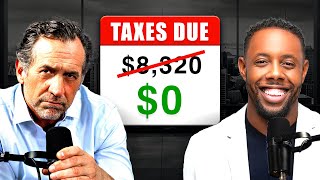
CPA Carter Cofield and Mark Kohler discuss year-end tax strategies for small-business owners, including the Augusta Rule to rent your home to your business tax-free for up to 14 days, maximizing retirement accounts like Solo 401(k)s and HSAs, and converting hobbies into deductible side hustles.
Chapters
Hey, everybody.
Welcome to a live broadcast here on YouTube with my special friend, expert tax advisor. Love him. He's going to be at our tax and legal360. We got Carter Cofield, CPA, co founder of Melanin Financial or Melanin Money, giving financial education to people all over the country. He's wearing the shirt there. Melanin millionaire. Freaking love it. Carter, thank you for being here. Where are you coming from right now? You're all over the world. You're living my dream. You, where you at?
Yeah, I just got back from Jamaica, so I'm currently in Columbia right now where I currently reside. But yeah, happy to be home. Happy to be here, man. You know, how much you've inspired me to be on your platform is, you know, just a dream come true. So here we are.
I love it. Well, everybody here live with me, please do not go anywhere. We are going to throw down some great tips before your end. If you don't save money on this live broadcast, we've screwed up, we're going to freaking blow it up. We need all of you small business owners to take some notes. You may be driving home, listening in or wherever, but I asked Carter to come with some of his hottest year end strategies. He's got a personal tax advisory practice, not taking new clients at the time. But if you hang on here before the show's over, he's going to drop his free year end tax savings ebook for anybody that would like to look at it and review it. I love it because it's. It really enhances and complements a lot of my urine tips. We are of the same mind. I love it. Carter, again, thanks for being here. I appreciate it.
No, thanks. Thanks for having me. And I think one thing that we can start off with is just letting people know. I didn't think I could be a small business owner until I discovered your platform. And you just kept pushing the American dream of starting the small business. Then my small business turned to a big business and here we are talking about the strategy. So, yeah, it's amazing.
Well, you've really inspired me because you've created an incredible following on Instagram yourself and a lot of people that just look up to you for financial advice and tax planning. And I'm so honored that you kind of got inspired by me years ago and you freaking took it next level. So it's so inspiring. All right, let's throw it down. What is your. And I know there's no particular order here. You've got several tips you want to share I know you and I could riff on this for three hours, but what's number one? What are you loving? Let's talk. Let's talk money.
So we can start off with something basic that everybody needs to know they should do, and then we can probably get more advanced after that. But like, you always preach on starting the side business and making that first dollar. Right. Because we know that if you want to win the game of taxes, you have to be on the right team. The tax code was designed to benefit entrepreneurs and investors, so. So if you're not investing or you start not starting a small business, you can't win the game if you try. So I think that every one thing that everybody can do easily is find a way to turn your hobby into a side hustle. Right? So, Mark, I had this friend of mine who. She was a lawyer making really good money, but her hobby was traveling the world and trying the best restaurants. She was like, well, Carter, you preached this hobby to side hustle thing. How can I actually do this in my business and start generating income out of this side business? So I worked with her. We created an ebook on the top 30 restaurants to visit while you're in Europe. She started a vlog. Every time she traveled somewhere, she did a video, and she started making ebook sales. And actually she made about $3,000 in ebook sales before the year was out. And that unlocked all of the deductions that she's now able to take, which is the travel, the hotels, the flight, the restaurant. So, um, that was. That's a big strategy. I think everybody can take advantage, take advantage of easily, so they can start saving on taxes.
Oh, I love it. And for me, let me ask. I. I know she can. And everybody out there that might be freaking out, yes, she can have a loss for one or two years, and then she needs to start showing profit. That's cool. But let me ask this. Were you taking that 100% of the dining expense or 50%?
So it's actually hilarious. And I'm glad you brought this up. So originally, I told her, you know, the. The meals are 50 deductible. But then I started thinking, and I was like, her. Her business is as a vlog.
As a food critic. Yeah.
So couldn't the meals be written off as research and development instead of meals?
Yeah, I was gonna say it's 100%. Yeah.
Yeah, that's what I was saying. So I was like. So we had this conversation. I'm like, that's 10. Technically, research and development. So that's technically 100. And her head just exploded because she loves eating out.
So.
Yeah, well.
And I would. I would even suggest you, I would stay away from R D because R D has so much baggage. You know, does it have to be amateurized? And, you know, all that crap? I'd call it cost of goods sold. I mean, right? I mean, if I'm a restaurant owner, I buy food. It's 100% right up. If I'm a food critic, buying food to test it out and review it. As Costa gets old, bam.
He's still teaching me years later, still teaching me something.
I love it. Well, everybody, here's the takeaway. Now, Dylan, I know there's going to be questions here. My studio director people, if you have questions for Carter or me on these topics that we're throwing down, Dylan, if you see some good ones, you give me the heads up and let's pose it. Hopefully you've got a mic there. You could read that question off. All right, so let's summarize what Carter just said, everybody. If you want to take a tax deduction this year in 2022. Sorry, 2022. In 2023. Oh, my gosh. I've been talking about several strategies today, and I was in the 22 mindset a while ago. If you're going to take a write off in 2023 for a small business that you've been thinking about developing hobby side hustle, you can't do it if you don't show some income. And that's what I like how you said you turned your ebook into an ebook sale. It wasn't a free giveaway. It was an actual sale. Now we got income. Now we can write it off, have a loss the first year. Now let's talk last point on this. With three grand in sales, I'm kind of wondering how much would you feel comfortable with a loss in the first year? Like, where would you go?
So I told her because she had. She actually had about $15,000 and travel expenses, but travel, hotels, dining out for, you know, 11 months, and the places that she went to were very expensive. So she had about $15,000 in deductions. I was okay with that. I told her I wouldn't take a loss of more than, you know, 15 or 20,000 the first year. But she has such a high income W2 job. I was okay with her taking that. You know, she had about a $12,000 loss on her on her schedule C, which got offsetted by other income in the first year. Now, I was. I was okay with that. Give me your. Give me your input.
Nope, I'm with you. I like that. I really like that. That you were kind of in that range of. Let's not get greedy. 15 to 20 grand in loss. Now, if she had maybe 300 or 30, maybe 50,000 of income and the loss was 30,000 or something, people, it's kind of a weight and balance. You know, the more income you have in that first year, you could have more of a loss, but with three grand in income. I like what you were think doing there.
Absolutely.
Yeah. I had a friend that did that with a fishing website. He taught a way to catch fish, and he sold a book for like 20 bucks a pop. And people would post pictures out on lakes. I just caught a fish. And he was making about 5, 600amonth in this little downloadable fishing technique. And it allowed him to write off all of his fishing gear, his fishing trips and his fishing deals, and he ran out of loss a couple years, then showed some income and. And it was a great little side hustle and made rev.
And here's the thing, Mark. Like, you know, we're not telling anybody to be greedy here. I'm just telling you, if you already spending money on it, there are ways that the IRS will step in and allow you to write some of these things off. Like, I just want you. Yeah, I want you like having a business, but I also want you enjoying what you love to do and getting a tax deduction for it at the same time. Even if you break Even or make $10, you're getting to write off your hobby. Right. Versus spending money on this. I think that if people can start internalizing and understanding that and start asking themselves the questions, how can I monetize this hobby of mine? They can spend time doing what they love and save money at the same time.
Oh, so cool. I totally agree. Love it. Great first tip. Any questions on this in our studio? Okay, we're going to go to our second one. We don't have any in the queue that we're going to throw out. Okay, tip number two, Strategy number two.
Yes. So this is for the homeowners out there, right. Because I love telling my clients who own homes to take advantage of the Augusta rule before the year is out. So we're in a month and a half left in the year. Right. So with the Augusta rule, if you own a home, you can legally rent out your primary residence to your business for up to 14 days a year, and your business gets the tax deduction and you don't have to report the rental income as taxable income. Now, one thing I love about this strategy so much is that one, it's pretty easy to implement because you can do it at home. And I tell my clients like, go shoot content in your house, have a mastermind, invite family over, talk business. And if you do it around the holiday season especially, you might actually be able to increase your deduction and increase your tax free rental income. Because Mark, as you know around the holidays, rent comps tend to fluctuate and go higher because a lot of people are traveling. So if you decide to rent it out around Thanksgiving or Christmas, you're actually can go from only getting maybe $500 a day to $1,000 a day. And now you get a $14,000 write off for hosting meetings and masterminds at your home with your friends and family. And you get to receive $14,000 of tax free rental income from your business. I think it's just a great strategy to implement before the year though, if
people watching, of course, this is YouTube live, so some of you might be watching. I literally just grabbed a pen out of my bag and said, I got to write this down. Damn it. This is not on my top 20 list right now. And it's getting. Well, okay, so here, here's my, I'll be honest, you know, we're out there. I'll say here's my counter, people. If you're going to do the Augusta rule now, this all comes from the Masters in Augusta, Georgia. That's where it originated. People would rent out their homes for two weeks for the Masters. The IRS said, hey, if it's less than 14 days, keep the cash. You don't have to report it. And that's where this evolved. So I'm good with it. And especially I was going to say board of directors meeting, Thanksgiving, Christmas, yada yada. So instead of renting a space at the Hilton, you're renting your home to your business to have the meeting. My account.
Yeah, okay. No, I would say then you kind of doing two strategies at once, right? You're taking advantage of the board of advisors and you're instead of paying somebody else, you're just paying yourself. So you're actually doing two strategies in one.
Yeah, totally agree. My counter to it is it gets abused. There's a lot of people out there that don't have enough business activity, business purpose. They don't hold regular meetings, they don't have staff, they don't have partners. And I'm cool with one meeting or two for a Board of directors meeting at Thanksgiving and maybe at Christmas and, and take good notes and all that. But for the business owners that have enough business to justify that, I'm all in. I'm all in. That's probably why I just don't go. Because a lot of people are like, oh, damn, I'm gonna do that with my little Uber business. I'm like, no, I didn't mean that.
How do you feel about them using some of the days to shoot content
if they regularly shoot content? So, yeah, so people out there that have a social media presence, holy hell, you should have a YouTube studio in your house anyway, boom. And shoot some content. Yeah, I'm with you. I'm with you. So I guess the takeaway I would say, is, everybody, this is a great strategy. And Carter, I'm not shooting it down. I would just tell clients, make sure that you can justify the use of your home for whatever the thing is. And you're good.
But I put it on my list 1,000, 1,000%. And you know, I work with the high income influencer Creative. So like, yeah, they can run these strategies seven days a week, twice on Sunday.
See, I, I have a bunch of white trash clients. Carter's, he's serving, you know, the super rich, so he can pull that off. So, you know, my clients are like, yeah, I'm driving Uber, making 20 grand a year. Come on. You know, I'm like, no, you got, you got to get Carter level. Okay, we got a couple of questions here. Dylan, what do we got here from the chat?
Yeah, so a few questions. First question is from Mark. He said, I lost my job and need 15k to pay year end property tax and insurance. I can't get a HELOC because they want current income, but I have $700,000 in equity. How can I tap into that? Any other ideas?
Oh, yeah, I'll throw out mine. Carter, I'll go take a stab at it. Yeah, here's your problem. You're walking into a regular frickin bank that's got Fannie Mae and Freddie Mac up their butt. So you got to go look for private money lenders you got to go to, and there's mortgage lenders that will qualify you and look at your overall net worth or your income in other ways or forms. But if you don't have a W2, a regular bank is going to kick you out the back and, you know, make you feel like a dirtbag. So I would look at some private money lenders and if you're like, how do I find them, start doing some networking and Googling. Go to your local real estate group and say, hi, I need a private money lender. I've got 700 grand in my house. Someone's going to loan you 20 grand on a second all day long and run with it. So that's where I'd go on that. Carter, what are your thoughts?
Same thing. You gotta use some creative financing strategies because you have plenty of money. The banks won't let you use it because they're traditional banks, and they won't let. So I would say just get creative and figure out ways on how you can get some hard money to pay that loan off.
Look at how politically correct you are. You're down in Colombia and you could take a shot at US Banks. And you're like, yeah, they're just conservative. I'm like, they got us. I went with stick up their butt, you know?
Yeah. But, like, I just. I'm so over it. Like, you have to understand, as an entrepreneur, especially as an entrepreneur, cpa. Like, my job is to keep my tax liability as low as possible. And I go into these banks like, well, you know, your net income, it's 20, 23. Like, come on. Like, that's what you're still looking at. Come on, now. So, yeah, I'm over it.
I'm with you. I'm with you. All right, next question.
Dylan, next question is from Bradley, and he's asking if you can just quickly explain the Hobby Loss Rule.
Oh, okay. I'll let you go first. Carter, your thoughts on that?
Yeah.
So from what I understand and what I've been taught.
Yeah.
About the great Mark Holder. The Hobby Hobby Loss Rule was put into place to prevent business owners from consistently recording losses in their business, because business losses can be subtracted from W2 income. So if there's no provision in place, people would just have losses every single year. So what it says is that your business can't have losses two out of five. More than two. More than two out of five consecutive years. If it does, then they'll deem your business a hobby and not an actual business. So you can take loss in year one and year two, but the next three, if I'm correct, Mark, you have to show profit.
Yep. Yep. And it could be a dollar of profit. And I'll say it another way. If you have losses two years in a row, the IRS is like, okay, in the third year, I got another loss. They're like, either you really suck at this, or you're just trying to get losses and so they're going to be like, uh, and so it doesn't mean you're going to jail. It doesn't mean the IRS is going to come after you. What they're going to do is say in that third year where you have a loss and it's beyond the two now, they're going to go, nope, you get to suspend that loss. It's going to carry forward until you do have profit. Because they're like, that's okay. You're trying. And in fact, there are ways out of that rule. If you really do have income and you have loss in the third year, but you can show you're trying to make money, and it's clearly not a hobby, you're just struggling. It's not the end of the world. So you're not going to jail, per se. But the Hobby Loss rule, on the face of it, is show profit in third year and you're cool. And. And if not, they're just gonna suspend it and wait till you do have profit.
So, yeah, and so, Mark, one question I always had with that was like, says two out of five. So, like, what if you had, you know, loss, loss, profit, profit, loss. Like, is it still, like, a big deal if you know.
Yeah, yeah. I wouldn't. I would. I would be okay with it with a client. I really would. Because.
Because you might just have that. I just say off year. Right? Like, you know.
Yeah, totally. Because. And this is another thing that people don't realize. The Hobby Loss rule is a presumptive conclusion, meaning the IRS is going to presume it's a hobby. If you don't have profit in the third year, it doesn't mean they're going to shoot it down as a hobby, but you might get a letter and go, what's going on? And so it's a presumption. And so again, people worry about it way too much. I mean, I want you to show profit. Hell, I want your business to be profitable. I don't want you losing money consistently. But, yeah, so, yeah, it's cool. All right. With one more question before we go to Carter's next strategy. Yeah, what's your next question?
Yeah, one more question comes from Carlos, and he asks, does your business have to issue a 1099 to yourself for renting out your personal residence if over 600. And if so, how would we proceed to report the income and the deduction to write it off on the sche.
Well, this is kind of a Guster rule, and if you fall in line with the Augusta rule, I'm not issuing a 1099. Hell no.
The whole point is, because it's not taxable income, therefore you don't need to report it. So you don't need to issue. At least in my opinion, you don't need to issue a 1099 for yourself, because that's the whole point of the rule in the first place.
And if someone. And let's go a little further. Carlos. It's Carlos. Right. I would say if you can justify the Augusta Rule for up to 14 days, enjoy it. Don't get too aggressive. Look at the common fair market value of renting that type of space, whether Airbnb or a hotel. Take the write off as rent expense on your business. Don't claim it on the personal. Don't do a 1099 because it's not required. You're in the Augusta Rule now. If you're gonna go beyond the 14 days, don't do it, because now all you're doing is paying rent to yourself and then you got to pick up income. And it's just bs. Don't go there.
Yeah, it's an absolute pointless cycle if you go over 14 days. So, yeah, keep it below that. Let's keep it below that.
Yeah.
Okay. So I thought strategy number three is something I would love for us to discuss, because one thing I live by, and I try to tell my friends, to get them investing more, I say the more you invest, the less you pay the irs. Right. So setting up retirement accounts and contributing them, contributing to them before the end of the year, I think is something that every small business owner should be looking to do if they have the funds, the capability, the access to capital to be able to do. So whether that's a SEP, IRA, solo 401k, even HSA, right now, we're in November. Like, if you have a small business, change your health plan to have a high deductible health plan. If you are healthy, then you can contribute to the hsa. All these accounts you literally get to contribute money to and get a tax write off at the same time. So I think that's something that nobody can't afford not to do.
Oh, yeah, I totally want to echo that. And by saying this, Carter. And many of you are like, whoa, what did Carter just say? Because it's a big topic. I mean, we've got the Roth IRA, we got the Solo 401K, we got the traditional IRA, the SEP, the HSA. There's a lot there. And I love that you bring it up. Let me say this to let's maybe pick on the solo 401k for a moment and then maybe one of my favorite. And then maybe we can go over to the hsa, another huge favor of mine. But also say this. If you're a business owner and you're out of debt, maybe you've bought your rental for the year. And I know Carter's clients are in this realm, they're doing well and so they're looking for any write off they can. So anybody listening here and you're making a couple hundred grand a year or more, you're really building that dream. You're trying to put money away. The Solar 401K has to be one of your first considerations. We have a special right now at KQS Lawyers. You get a couple hundred bucks off, you can set up a solo 401k kqs lawyers.com the special runs through Thanksgiving. We do it every year. But when you open that solo 401k, there's a potential of putting away 60, 70 and almost up to 80 grand a year into a solo 401k as an entrepreneur now, if you have employees, it's going to be a different ballgame. But I love that solo 401k. It could be Roth or traditional. So I'll ask you what, what's your favorite part of the Solo 401K? Like what's cool about it to you?
Okay, what do I want to start? I. I see I'm getting. I got goosebumps.
I know.
I get excited.
I get goosebumps. We're so nerdy. We're just nerds, people. Yeah.
So I love the. Okay, what do I want to start? First of all, I love the way in which you can contribute to it and what I mean by. Especially if you have a S corp, you can literally pay yourself a salary for $22,500 and just push the whole salary into your solo 401k and avoid the federal. Well, defer the federal and state taxes immediately. So like you literally kick yourself up w2 push the money into a. For a solo 401k, you have to pay a little bit of self employment taxes, but you just defer the federal and the state taxes out of the business and then you can match yourself as well. So you can put this 22,500 in as an employee, but guess what, you're also the employer of your business as well, which means that you can also match yourself. So I just, that's one of my favorite aspects of the, of the Solo 401K. But I think my favorite aspect is this. I think personally that a lot of people don't contribute to the these 401k plans because they see it as permanent. Like I can't touch the money into the 59 and a half. Well, because you're the owner of your Solo 401K, you can set up provisions because you're the owner. So where I have my solo 401k, at E trade, they allow you to have a loan provision in your 401k. So now I'm putting money away. But just in case I get into a bind, just in case things don't work out, I can take up a loan of up to 50% of my portfolio or $50,000, whichever is less. I can take that loan out. I have 5 years to pay myself back and pay yourself. You pay monthly payments or quarterly payments, but it's a five year loan. And yeah, I'm paying interest back. But first of all, the interest rate is extremely lower than any other interest rate you might find in this current environment. And secondly, I'm paying interest back on a loan, but I'm paying interest back to myself. Right. So. So that is why I love it so much.
Oh my gosh. And you know what? Let's have fun here. Who is the first question? Dylan, do you remember his name that he said he was like struggling, needed, needed 15 grand? His name is Mark.
My first, my first thought was like, if he just moved the money over there and borrowed against it. Yeah, there we go.
You should have thrown that down. So, Mark, if you're still listening, hopefully you are, remember our first caller today that said he needed 15 grand, has 700 grand sitting in his house. Equity. Lost his job. Okay, cool. Are you sitting on a 401k? Mark? Do you have a 401k laying around from your old job that you just lost? You could roll that over to a solo 401k in the next freaking week. Just have you take your side. Hustle. Boom. I got a solo 401k. Bing. Roll that old 401k in and borrow up to 50% of it. You might have 15 grand sitting right there in front of you. Done.
And you know what's so amazing about it, Mark? They don't, they're not going to do any background on employment because the money is his anyway. So even if you get fired, he doesn't have to show proof of income because the money is his in the first place.
Bam. Ah, I freaking love it. I'm so glad Carter I love being here with you. You're so creative. You know, us old guys, you know, we love these young bucks that are so creative. All right, let's throw down some questions.
What do you.
All right, Dylan, what do you got?
We got a question from Dave, and he asked, is there a distinction between the board of advisors versus the board of directors for an S corp in California after report, Board of directors. I'm wondering if Vincent as well.
Ooh, I don't know about. Okay, now I. Okay, you take the stab. I'm going to be calling one of my paralegals. Call Christy Rice my.
Right.
Yeah, you go first. What are your thoughts?
So I thought the name difference is, like, when you have a corp, you call them board of advisors. And when you have an llc. Sorry, we have an llc, you call them board of advisors. When you have an S corp, you call them board of directors.
That's.
That's the difference that I thought. And as far as the reporting requirement, to my knowledge, you only need to put your board of directors or advisors in your operating agreement. I didn't. To my knowledge, you don't have to disclose them to any state or local authority because you get to switch them, you know, quarterly or yearly. So I don't think there's a reporting requirement that I know about. I advise my clients to select their board of advisors, put it in their operating agreement so they have it in case of an audit or have the proof, you know, so that's my thoughts.
Freaking. Love it. And let me unpack it a little bit more. You know, some of you may have heard me. I said, siri. I love Siri. I was like, call Christy Rice. Christy Rice is our director of business entities at the law firm. And I just. She's like, what's up? I mean, I love my team. She's freaking. Just picked right up. And I'm like, do you have to report your board of directors on your statement of information, which is what this person's talking about in California? She's like, no, just your officers. So the point is. And freaking Carter.
Thank you, Christy. Thank you.
Freaking Carter's backup right there. So I'm going to say it this way, everybody, this is important. Every one of you that have an LLC should have a board of advisors. And we set that up. Either after you set up your entity or when you're setting it up. If you have a corporation, an inc, and you can have an LLC taxed as an S corp, you're still going to have a board of advisors because it's an LLC at its core. If you have an Inc. You're going to have a board of directors. And the answer to you is they're both the same. They're both the same for tax write off purposes. And then the last piece. And Carter already said it. I'll just say it another way. When you file your. Your annual renewal in all the states, I'm going to say all of them. Maybe in Delaware. I don't. I don't even think Delaware or Nevada requires the board of directors to be disclosed. You're not disclosing the board of directors. Don't worry about it. You're only doing the officers, so you're good. Just do the damn board meeting. Augusta rule Freaking A. Dylan. Next question.
Next question comes from Mitchie. And they are psyched because they finally made it to their live session. They said, can you talk about some of the foundational structure the IRS wants when claiming a business? They're not in commerce, but they want to take advantage of the tax strategy.
So they say the foundational what?
The foundational structure the IRS wants. Wants when claiming a business.
Oh, I think we go back to your first tip. I mean, I don't know if there's a structure. What is it?
Yeah, I mean, I think you just. I mean, like, so structure wise. I mean, in a perfect world, I want you to have your llc, ein and things like that. Just to, like, be like a legitimate company. But you don't have to do that for tax deductions. You could have. You could be a sole proprietor to say, I'm in business today, go sell a product tomorrow, and then start claiming deductions as well as claiming income. So I think it's just have your documentation in place, have your bookkeeping good. So you have proof of income and expenditures.
Yep. Picard just said the word I was looking for. That's income. And what was her name? Dylan.
Mitchie.
Mitchie. Mitchie, everybody. Listen, Mitchie's question is so classic because I know Carter and I face this all the time.
All the time.
Yeah. People think that's why Carter are like, you know, I was making sure I
didn't miss, like, okay, good.
I know it's kind of like, why is a banana yellow? They're just yellow. But, you know, Mitchie, it is such a good question. Everybody out there, you think you've got to do something big to, like, be a business. That's the beauty of the American dream. You don't have to go file jack squat. You just have to show. And Carter said income that's it. If you want to open a frickin lemonade stand, go freaking open the lemonade stand and show that you made a dollar on Venmo, you're in business. So Mitchie now would like Carter said, we would love you to be more formal. You got books, you got a bank account, you got PayPal, you got an ein, that'd be great. But you don't have to. It's okay. Test your product, get out there and just do it. I mean Carter, so many. How many clients do we just say just do it.
Just go, just like go into the marketplace, tell them what you have, go make some money. We can worry about the rest of the stuff later, but go make the money first. If you don't make the money, all these deductions that we're talking about and things that might happen, you can't take. So just go make the money first. We can come back and have the conversation.
Oh, I love you.
All right, Dylan, next, next question comes from Michelle and she asks are there any resources that someone with no tax experience can go to to become a tax preparer? Specific for real estate investors. They have three rentals and want the skill for selfish reasons and then to help others.
Did they, did you plant that in the. In here for, for my tax pro. Carter, what you tell them, I mean,
I mean first I would tell them if they want something free, just go get the free ebook that we're going to talk about in the show notes. That's a free guy. But like there is if you want to learn about taxes. There's literally no better program on the planet than Main street tax pros. And that is, and I can, you can stamp that, put my name behind it. And I told you this in my testimony. It is just an incredible group of just intelligent and wise tax repairs that are coming together for the betterment of helping our clients.
Oh, Carter, thank you. That means a lot. I appreciate you saying that. And so what's her name again? I need to write these down. Michelle. Michelle, if you. Okay, two points. First, I love what Carter's saying. There is so much free content on there. Carter's Instagram is packed. You gotta be following Carter on Instagram. Holy hell. Get over to my YouTube on a regular basis if you're. I mean you wouldn't be here if you're not. And, and let's make sure. Dylan, have you already put Carter's link in the chat in the description? So Carter's offering everybody a free ebook on year end tax strategies. Michelle, get over and download that. Make sure you're subscribed to Carter's social media everywhere. My social media everywhere. And then Carter said something that really hit home for me. It's so special. I had developed and started a year and a half ago, my Main street tax pro program. Go check it out@markjcohler.com, sign up today. Carter was there with me, a hundred other.
A hundred other specialists just talking 100 other tax nerds. Talking about taxes like you can't. If you want to get me excited. Okay. Yeah, it was, you know, it's a great place. And I learned something every week.
So, yeah, I do. I learn something every freaking week. It's so good. Okay, next question. I'm having fun with questions. And then we'll get Carter's last one. We got a hard stop here in about 10 minutes.
Okay, Dylan, next question comes from Sarah. And she said, my business partner in real estate investment has to back out of the business due to unexpected life events. She wants to keep her seed money in the business instead of me cashing her out. I'm closing the partnership, however, and that. And sorry, I'm closing our partnership LLC and moving the business function into my soul.
Prop.
Any input on how you'd honor the investment?
Wow. You can have this one, Mark.
You're gonna let me take this one? You know, and her first name again? Sarah. All right, Sarah, I thought you were gonna ask, is Carter single? He's pretty hot. I know that's what you wanted to ask. I'll let you know. Carter can comment on that. No, I was gonna say, Sarah, you're saying things that are conflicting because if you say you have a partner, they have an investment, and you want to honor that and somehow continue that relationship, you can't turn around and say, yeah, but I'm going to cancel the partnership and do it in a sole prop. You almost can't have your cake and eat it, too. Now, if you want to say, I'm going to give her a note and I'm going to give her interest on that note and go start, take that money and go off into the sunset and make money and get. Give her a rate of return on her note, that could work. But if she's going to share at all in the success of your venture, that's a partner. And you're going to have to continue that partnership relationship. And if you're like, well, I don't want to give her her money back, I think you're going to have to honor that LLC and Keep moving. Based on my comments, Carter, I know you talk to a lot of your clients that have joint ventures and partnerships. Any practical advice you'd give?
I mean, I mean, yeah, I think what you can't do is keep the money and then call them not a partner. I think like you get the money back or you continue the partnership or like I just. Yeah, I think those are not something. Yeah, yeah or yeah or the note and then you paying them back interest over time. Potentially, yeah. But you can't keep the money and then. And then just say you're. You're going to do it on your own. I wouldn't advise that. I'm not an attorney, but I wouldn't advise that.
Yeah, no, you're so smart. It's kind of life. And no, I like it. Now if they're your brother in law and you hate him, take the money and run. Just screw them over. Okay, go ahead, Dylan. Next question.
Next question comes from Monica. She asks, can you open a solo 401k if you have a W2 and also three investment properties that are not giving you a lot of cash flow. This investment are for appreciation. But cash. But cash flow if about 5k per year.
You want me to take first stab at this or I can see you thinking, you go ahead. I got, I got you.
Yeah. I mean, I mean. So I think the first thing I want everybody to know is that you can have as many 401ks as you want. The cap is $66,000 contribution across all of them. Unless you have a catch up contribution if you're over was it age 50. So your W2 job 401k has nothing to do with it. My question is that you only can have a solo 401k if you have a LLC or S Corp. So I don't know if these properties are inside of an entity or not, but the properties are not inside of entity. Then you can't set up the Solo 401k until you set up that entity. Is that fair?
Well, I'd say this. You can't have a solo 401k unless you have an operational business. Okay. And a rental portfolio is not operational. It's passive.
Exactly.
And so Carter, you know, you've heard me talk about. This is. So this is what we call the side door. 401k is dirt, Dylan. Is it? Are we going crazy if I go whiteboard, can we go whiteboard? You want to try it? Oh, I got a whiteboard. Oh my gosh. My favorite. Oh. Okay everybody. This is called a side door 401k. So I'm going to throw down on this. So a side door 401k is basically this. Okay, that looks good. So here's your trifecta. So you got three rentals over here, and, boy, that's pretty bad. That's like a little meth lab. All right, so here. Okay, here's my LLC with three rentals, and you got your day job up here and a 401k with your day job. All right, now you're saying I want to do a solo 401k. Now, I think the big question is why? Why do you want to do that 401k? Do you want to put more money in it? Or do you have an old IRA that you're dying to unlock? If you're dying to unlock an old 401k and throw it in that solo, what we would do is set up an operational llc, and that's what Carter's saying. And we'd pay a management fee, maybe just a little something. But now you said they're not cash flowing. Great. So that kind of goes against the grain, too, because I'm like, if they're not cash flowing, great again, why do you want this? Now, maybe your grandma left you some money or I don't know. But you would set up an operational llc, create the solo. That cool. We do that all the time. Pay a management fee. That's why we call it a side door 401k. We're going to come to the side and we're going to create that, and then you're going to unlock this solo and put some money in it. Maybe rollover. That's how we do it. But I'd really want you to meet with one of my attorneys and to figure out, is it worth it? What's your goal, Carter? Any thoughts on that?
Yeah, I mean, I think the best question you asked there. What's the goal? Because if. Unless the goal is to roll over or IRA so you can, like, borrow against it or. Or, you know, or whatever you want to do with 401k, then I don't know which. How you would contribute, because the. The real estate doesn't have that much profit, so you can't make a big contribution because it's based off the LLC income. So I think the only case where you want to do this if you. If you're trying to roll over old money.
Yeah, I think so, too. All right, now, before we. Maybe we can fit in one last question, but, Carter, do you have a last Tip. You want to share your ebook? Is that everybody? Go get Carter's ebook. Start following him on freaking Instagram. He's going to change your life. He's a such a. He has a different perspective and way. He says a lot of the same strategies I do sometimes that really resonates with people. Please do that, Carter. Last tipper. Do you want to do more questions? It's up to you.
You call it. We can do more questions. Yeah, sure. I mean, like, I'm here for the people, so let's do more questions.
That's cool. Oh, I will say this because Carter brought up earlier Health savings account people. We are in enrollment period. It is enrollment period from November 1st to January 15th. Get into a high deductible plan. The HSA freaking kicks ass. What do you like about the hsa, but don't. I like. No, I hear you. Oh, my gosh.
Well, so here's what I love about the hsa. I love the flexibility that it gives you on one, being able to spend the money, because unlike an fsa, you don't have to use it or lose it. But I also love, like, the. The extensive. The extensive expenses that are eligible, that are HSA eligible. So most people think you can only use it for, like, going to the hospital. But there's a wide range of activities that you can. That you can use the HSA for, which one of my hilarious favorite strategies to teach one of my clients is, again, is high net worth influencers. They want to buy expensive stuff. So one of my clients wanted to buy a pair of Cartier frames that was $3,000. I told them, don't buy $3,000 glasses, but if you're going to do it anyway. If you wear prescription eyeglass. Prescription glasses are covered in hsa, from what I did my research on. And as long as they put the prescription glasses in those frames, that counts for HSA eligibility. Mark your heads down like you don't.
No, I'm reading. Okay. What Carter's talking about is Publication 502. I wanted to pull it up real quick. It is so funny you said that, Carter, because I had a client today say is Lazik. Can I do Lasik and write that off? And so I was gonna look it up here. It's on page eight of publication 502. And no, Carter, we're on the same page. I was just looking it up for fun.
Okay, But I know for a fact prescription glasses are there.
Yes, yes, yes.
I'm not sure if LASIK is on there, but, like, Again, like, these are just creative things that you might spend a lot of money on. Why not use your HSA that is already taxed, that's already tax free money, instead of using like personal money out of your personal account.
Yeah, no, it's good. And let's see if I can answer this real quick. Dylan, be ready for one last question, then we gotta let Carter go. And living large. Okay, let's see. Eyes. Dang it. I'm not seeing it here. I thought it was page eight and I'm just missing it here. All right, well, everybody, here's the. Here's the tip. Get over to Publication 502. Oh, here it is. Okay. Eye surgery, you can include. This is page 8, publication 502. You can include in medical expenses the amount you pay for eye surgery to treat defective vision, such as laser eye surgery or radial keratomy. So people, Lasik is a write off and of course all prescription drugs and I'm sorry, prescription eyeglasses and all that. So wow, love it. Great write off in the hsa. Okay, one last question or two. Let's see if we can rapid fire real quick. Go ahead.
First question comes from user Family Channel. They're confused. They ask, can you have multiple IRAs and 401ks if you're self employed and have common ownership of multiple active businesses?
We know the key word question here is employees, but go, go ahead, Carter. I. Give it a shot. I mean, your thoughts?
Yeah, I mean, like I think we just talked about it. You have as many IRAs. I'm sorry, IRAs or 401ks as you want, as long as the. As long as the contribution cumulative is within the contribution ranges. So 66,000 or 6,500 for IRAs or 401ks. Am I wrong there?
Totally agree. And when you start talking about entities and common ownership, you're good too. The problem is people, is if you have full time employees, if you have employees, the government said, whoa, whoa, whoa. You got to include your employees in some of these plans, especially the 401k. But, but common ownership, multiple IRAs, multiple 401ks, you're good. Meet with your tax advisor or one of the tax lawyers at our firm. Because if you have full time employees that have been with you for at least a year, you're gonna have some issues. So. Next question for Carter. Make it a hard one for Carter. I wanna see him sweat. Give him a hard one. No, I'm just joking. Come on, throw it down.
Next question comes from Kevin. They said if I Move and wanna put my house in an LLC and rent it. Does a my LLC need to buy the house from me, Carter.
So, so this. I mean, I think the. One of the questions is, does it still have a loan on it or not? If it's paid. If it's like paid out. Right. I think that is. Should be taken into consideration. So I would say if you move out and you want to start renting out your property, you should start thinking about the homestead exemption and see if how that will qualify in your situation. Because if you do it for more than I think it's with two years, then you can't sell it tax free. But if you, if you move out and you want to put your property in an llc, I think you can do a quick claim D without having to buy the property business by the property. But that has its own due clause. And for the mortgages as well, I don't think you have to. I would just put the property in LLC and start renting it out.
Totally agree. So, man, Carter, you're so smart. I just love how you think. Because Carter's thinking through all these issues. He's so careful. I'm kind of a dumbass. I'll just start talking.
Years of experience. Okay, I'm trying to say. Anything wrong?
Yeah, you're good, man. Oh, yeah. No, I'll own it. So here's the deal, everybody. If you want to convert your home into a rental, it's a great strategy. Move out, put it in an llc, do not worry about the due on sale clause. Banks don't care as long as you keep paying the mortgage. They're done. They're cool. And again, you're not changing the underlying ownership of the property. You still own it, but you're gonna do a contribution. You're just gonna contribute it to the llc, put it on the books, start depreciating it, and it's a great strategy. You may even Airbnb it, which is a great option. But Carter brought up a great rule to be careful of. You got the sale of home exemption and you could sell it within the next couple of years, tax free as your sale of home exemption. So you want to be, you want to decide, am I, how long am I going to keep this as a rental? I'm going to keep it as a rental for the long call or not. So don't sell it to yourself now. Just take the sale of. Just contribute it. Okay, one last question. No, Carter's got to go. I promised him a hard go. Carter, you are awesome. Man, I want to just keep taking credit. Everybody, I'm here every week doing a live. In fact, I think I'm doing a live live tomorrow on YouTube. Everybody stay involved but Carter, any final words and where do they go to get more of you?
So I mean guys, it's really like you have a month and a half that if you, if you dedicate yourself to learning and implementing strategies, you can save tens of thousands of dollars in taxes because after the year's out there's not much we can do. So right now is the time. It's tax saving season. If you take care of business during tax saving season, you don't got to worry about anything during tax paying season. So you can follow me on all social media platforms. CofieldAdvisor. And again, I want to give you all a free ebook because if you're part of Mark's community and my friend as well, he's taught me so much. I wanted to give back to this community as much as I could.
Well, Carter, thank you. We sure love you. And check down below and my studio director. Say what? Oh yeah. Carter's link to his website's in the description. We love what he's doing and helping small business owners around America. The melanin money, the financial education. Is there a website there you want them to go to for that?
Yeah, I mean just melaninmoney.com okay.
Melaninmoney.com and tax legal360. Tax legal360. Yeah. Everybody, in two weeks Carter is going to be at my event. It's such an honor to have Carter there speaking. He will be there in Phoenix. I know he's here for a mastermind group as well. He's always improving his own personal education. He's going to come over for a day and spend it with us people. You can meet him in person, get his autograph on your ebook. Please come and check him out. Taxandlegal360.com in two weeks. Thanks Carter for being with me. I sure appreciate you. Thanks everybody.
Thank you so much. Thanks Bill.
More from MARK




The secret to managing your family's future #financialfreedom #estateplanning #shorts



Moving Property to an LLC: What They Don't Tell You #realestate #investing #tips


