The $10 Million New York LLC Case Every Business Owner Should See
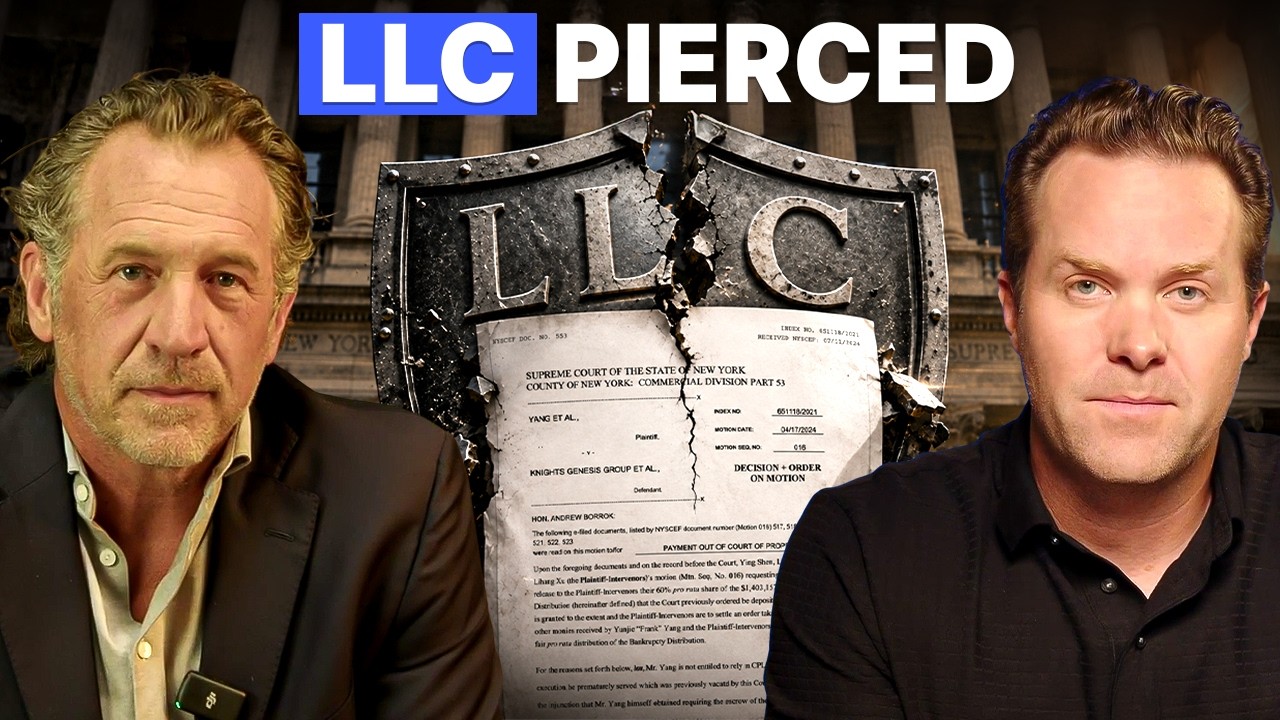
In this Main Street Business Podcast episode, attorneys Matt and Mark Kohler dissect the New York case Yang v. Knights Genesis Group, where a $10 million judgment was entered against the owners after a court pierced the LLC veil. The hosts explain that the veil was pierced because the defendants failed to keep proper books, ignored corporate formalities, and commingled personal and business funds. They stress that asset protection hinges on disciplined LLC maintenance—having an operating agreement, annual minutes, separate bank accounts, tax IDs, and accurate bookkeeping. They advise lenders to obtain personal guarantees rather than rely on LLCs alone. Throughout, they illustrate the consequences of neglect with anecdotes (including a personal story about misusing money for a video game) and outline practical steps for LLC owners: regular corporate formalities, proper record‑keeping, and using professional cleanup services. The episode concludes with a promotion of KQS Lawyers’ affordable LLC cleanup and ongoing maintenance service, positioning it as essential insurance for business owners.
Chapters
The number one reason people set up an LLC in America is asset protection. But people's LLCs are being pierced and plaintiffs are getting to the owner of the LLC because people aren't setting up the LLC right or properly maintaining their LLC. We're going to go over a case out of New York where this just happened.
And believe it or not, the number one service in our law firm last month was cleaning up LLCs, not setting up new ones. This is that important. Today we're going to break down this case and tell you what you can be doing to have better asset protection with not spending more money. The name of this case is Yang versus Knights Genesis Group, and that's Knights like Knights of the Round Table. And in this case, the defendant who had two LLCs— and I should say defendants— had set up a couple LLCs and started borrowing money from Yang and others. These are the plaintiffs. They started borrowing money to do some real estate deals. Well, they did not maintain these LLCs, and we're going to go through the particulars. But the loans they took out, at least with this one plaintiff, totaled over $9.5 million. And when it was all said and done in court, the judgment was for over $10 million. And the summary of the judgment was the judge saying, you know what, you guys did not treat this LLC properly. Forget it. It is your alter ego, which means you treated the LLC like yourself. And so I'm going to pierce it, and you personally owe this plaintiff $10 million. The LLC is worthless. And that was the result. Not good. Not good.
And I think a lot of people are surprised by that, right? Real estate investors use LLCs every day, Mark. You and I use them, right, for our real estate investments, because we're hoping whatever happens on that real estate deal or that business, if something goes bad, that we don't get a judgment against us personally. And I think that is, I mean, that's one reason we sell LLCs and why we like them and use them ourselves and use them for tens of thousands of clients is that liability protection, that the liabilities of the entity don't attach to you personally. And so in that case, like, like Mark said, just want to make sure everyone understands the facts. The, the loans and the documents, the agreement was between Yang and these LLCs. There was no individual that signed for these notes or agreed to pay it back. It was just these LLCs. Well, the real estate deals didn't go well. The LLCs didn't have any assets worth pursuing. So the plaintiff said, I want to go through these LLCs and get to that individual owner. They have other assets. I want to go after those. And so we want to make sure you don't end up like Knight's Genesis Group, we don't want your other assets to be exposed. So we want to make sure that you're using the LLC properly so you don't end up like this, having your personal assets exposed from a business liability.
Yeah, we don't want you— no one likes exposure. We want to keep it private. Not good. Not good.
They're like, I don't want to be exposed either. What happened?
Yeah. Okay. Now we've got to digress for a minute too. I've got to say, Yang, what in the hell were you thinking? If you're going to loan someone $10 million, you loan and get a personal guarantee from the bozos you're loaning to. You just don't loan to an LLC. So a note to any of you out there loaning to your brother-in-law or whoever, make sure when you sign these notes you're getting more of a guarantee than some LLC. And be careful lending others if you're just going to ask an LLC or whatever company to pay back. Okay. Now, 3 things went wrong, and we got to unpack these individually here. Matt, I'll just list these out and you can choose one that you'd like to talk about. The first one was the company, the LLC, did not keep any— they didn't keep books at all or records. They had terrible bookkeeping. Number 2, they did not observe any corporate formalities. We're going to explain what that is. And third, they used it like their own piggy bank. They were just like money in, money out. Um, there was no accountability. And in the end, the judge said this looked just like a scheme or a fraud, like you just used the LLC to take advantage of this plaintiff. But, um, those 3 key points were the building blocks that a lawyer would use to pierce the veil, because they got to say to the judge, Judge, look, you got, you got to be on our side, Judge. These guys were ripping people off. And so those building blocks were where again, no books and records, no corporate formalities, and lack of any, and lots of combing, if you will. Matt, your thoughts?
Yeah, and I think this kind of where the money's going and use of those funds is probably an easy one to take off the table. 'Cause I think if you're operating in good faith and you're doing things legally and as you should, you're really using those loan funds to put it into that real estate deal you said they were supposed to go to instead of distributing those loan funds and using them for personal expenses or other business expenses, you know, that's going to violate that. And that's where the court was like, you know what, you got $9.5 million in loans and you didn't put $9.5 million into that real estate deal you said that that money was for. You were using it for other expenses and other things and you took money. Those loan funds out as well. And so I think just know that the, the LLC or an entity or corporation is not going to protect you from misuse of funds. If you're coming into a commercial agreement, whether this is a loan or anything else, you need to use it for what you said you were going to do. Okay. So I think we can take that off the table because most of us listening, we think our clients especially are operating in good faith, right? They're not raising money or getting loans like this for improper uses. So if you take that off the table, I think what we see the most and what we're cleaning up is a lot of these formalities and stuff that people forget about in their LLC documents. Like, like they just start with that piece of paper that got approved from the state, and maybe they got a tax ID, and they're like, I'm good, I've got it. Well, that's what the court's saying. No, there's all these other formalities you should be doing. You don't need someone to put a stamp on it, But it's stuff that you have when you have an LLC that you need to make sure you've got.
Yeah. Now, before we get to formalities, I want to give a little example. If that did not land on good faith use of money, there was a day back in my life as a teenager where I was a wheeler and a dealer. I was a wheeler and a dealer. And I said, hey, I remember so well, it was my— I said to my mom, hey, Mom, I have some money to go buy some new jeans. And I remember the name of the store. This was in eastern Washington. If you're from the Northwest, Northwest, back in the '80s, there was a store called Griggs. That was his name, Griggs, the name of the store. And I remember this vividly. She gives me this money to go buy a pair of jeans, and I had an alternate plan. I was going to misuse these funds. And we had just got a new Nintendo. Now, these are the big old thing in the early mid-'80s. And I took that money and went and bought a video game. Okay. Did not go well. I— she pierced the veil and she said, that was not a gift. You're going to pay me back that money because you went and bought a video game instead of the jeans you were supposed to buy for school. I was like, and so I was not happy. I had to pay it back. There was a court order and I was going to be under house arrest until I paid it back. So it was a big deal.
So Yeah, the rule of law at home is the same as the rule of law out in the business world. That's it, pretty much works the same.
Yeah, very much. Now, these corporate formalities— I, I just want to say this, Matt, before— I know you've got so much to say on this as well— this is a good thing. People do not look at this as a difficult thing. This is a way to save taxes. Did you just hear that, everybody? I know I got your attention, right? If you're on the treadmill or driving down the road, corporate formalities save you taxes. Because you know why? You're going to have a board meeting. You're going to take your loved ones, your family, teenagers, mom, dad, best friends, girlfriends, whatever, and you're going to go on a little overnighter trip wherever, whenever, and you're going to talk about the company and you're going to document the meeting and you're going to have this board meeting that becomes a tax write-off. And oh, wait for it, take care of some important formalities. This is a beautiful thing, doing corporate formalities.
So here's some of these books and records you should have that they were talking about in the case. When you have an LLC, do you have an operating agreement? Do you have a document that says how the LLC operates? If you just did the minimum articles of organization or certificate of formation with the state, you probably did the bare minimum to state the least amount of stuff that you needed to to get it filed. Which is what we do because that's a public document. But we supplement it to fill in everything else with your operating agreement, including important provisions about how funds are used, um, how you have limited liability protection, how the owners and managers of that LLC are protected from the company's obligations. Like, we're preserving these things and stating these things in the operating agreement itself. So making sure you have that Operating agreement is critical. And I think a lot of people think, well, if I have partners, I'll do an operating agreement. I don't care if it's just you or just you and a spouse that own that business. The operating agreement is between the company and the owner. If there's just one, we want to specify what the business is doing versus what the owner of the business is doing and how those two things operate together. And that's a huge corporate formality that you're not taking care of with just a certificate of formation or articles of organization.
And these minutes are important. I know some of you have been told or think that, well, because it's not a corporation with bylaws and articles of incorporation, I'm not required to do minutes. Well, you guess what? You're not required to floss your teeth either. But don't you think 5 out of, you know, 4 out of 5 dentists recommend that you floss? Don't you think flossing is a good idea? That's it. Doing minutes is like the flossing in this equation because it's what makes all the difference. Doing the minutes every year, as I said, is a tax write-off. Having a corporate meeting. And even if you're by yourself, go, just go to dinner, get yourself something real nice, go to the spa, write down what's happened in the company for the last year. We actually have a service for a couple hundred dollars a year. Literally where we give you a questionnaire and you fill it out and it asks you questions that you should be answering that go into the corporate book. When Yang took these Yahoos to court, they said, "Produce your annual minutes, produce your corporate books, show us what you've got." They didn't have anything. They had done none of that. They lost.
Yeah, yeah. And I think that's what you need to understand. If your LLC gets sued, You're going to have something called interrogatories, and maybe you even have depositions, but there's going to be a request for production of documents, some written interrogatories you're going to have to respond to. And if the plaintiff believes or knows that your LLC is worthless and doesn't have assets itself to satisfy the judgment, they're going to try to find ways, and they're going to ask questions and make you produce documents to show you treated that LLC properly, because if you didn't they're going to blow through it to get at you, the owner of the business. And that's exactly what happened in that case. During discovery, they made production requests for all the corporate documents and all these formalities that they should have been doing, and they realized there weren't any. Nothing was produced. And they use that as the basis with the court to say, they're not doing minutes, they don't have all their other corporate formalities and documents that you should have on an— with an LLC. They got into the misappropriation of funds. And they made that alter ego argument. It is the classic one that a plaintiff can use to blow through your LLC to say, you didn't treat this like an LLC, you just treated this poorly.
Classic, like never going to a landlord with a Sicilian. I mean, that's just one of the classic rules.
Yeah, we know this, we know this. Never go to, what is that, Princess Bride? Princess Bride, that's that.
Never go into a landlord with a Sicilian. Okay, but here's, you may think, well guys, I'm sure this case got appealed. Yes, it did. It went to the New York Appellate Division and they said it was undisputed that during discovery, the defendant produced nothing. They did not have any of this. So it just blatant disregard for the LLC corporate veil. Now let's hit the third point, bookkeeping records. When you set up an LLC, It requires a bank account. Every LLC we set up and all these cleanups we do, half of them, they don't even have a tax ID number. So we need to get you a tax ID number. You've got to go with a bank packet, go down to the bank and open up your business bank account. We've had clients do selfies with their corporate book and show, show and go down to the bank. It's actually pretty cool. We've had bankers literally tell our clients, This is the cleanest bank packet I've ever seen. And they walk in, they get their bank account set up, and then you start doing, yep, it's called bookkeeping. What goes in, what goes out. And like Matt said earlier, you don't pay for your tennis club membership out of the LLC. You pay for what's business expenses and you only deposit business income and have a good set of books. And it doesn't have to be over the top. These virtual assistants in other countries can help you with bookkeeping. Just do it. You cannot ignore this. Yeah.
And I think, I mean, obviously bookkeeping, we can talk forever about this, gets you into higher, better saving on taxes. The most organized clients with their books are the ones that save the most taxes because they don't forget all the little things that is actually a write-off. And Mark threw that little tennis club comment in for me because he knows I've been playing some tennis. But Mark, what if I'm networking while on the tennis court? You know, I mean, there's a little pun there, networking. I bet you're the last one. I'm working the net.
Yeah, I know, you know, you can't write off your tennis club membership, but you probably wrote off that steak sandwich and that steak sandwich, uh, when you were at the club.
Absolutely, absolutely, because that was— we were talking business. Um, so, but okay, so I think I don't want to like scare you out of an LLC. I mean, I want to come back to the first point is like, like Mark and I both, I don't know, 20+ LLCs or something. I can't even keep track of how many, like I'm using personally. Okay. Maintaining them, getting the right documents set up, not cutting corners. And these are like, they're not difficult things to do. They're just like, no one's checking to make, to say you have to do this. And these things don't matter until you get sued. And so I think it's the easiest one people let go by the wayside. To be like, well, the bank didn't make me have this. Well, the IRS didn't make me have this for my tax return. And so I'm just not going to do it. No, no, no. Like, this is— why do these things exist in the first place? Like, you think these documents are just out there and like operating agreements and minutes and all those things and resolutions and all these like corporate formalities just out there is just like a thing for fun? No, people use them to protect themselves in this situation that we're talking about here. So don't cut the corners. And get focused. And our law firm, like when we mentioned this at the top, KQS Lawyers, our law firm, we have attorneys helping clients clean up. We'll look at what you have and fix it, and we'll include the documents we have. There might be other issues we might need to address on, on your tax planning or strategy on it. Do you have the right tax election for it? I mean, we can kind of do a whole 360 analysis of what's going on with that entity, but a minimum, we get it cleaned up and fixed.
Yeah. And I said at the very beginning, it does not have to be expensive. A cleanup at our firm is typically less than a new setup. We do recommend you get a comprehensive trifecta at the time. Let's really get a plan in place. But if you just need the cleanup, you can book a call down in the description, get that done. And then our company maintenance service, because none of you want to do this. I don't want to do this. I don't— I literally am a client of my own company., and Patty and I get our little ping via email and our staff goes, it's time to do your minutes for this entity. And it's $200 a year per entity. And we're going to line you up with our sister company, Main Street Business Services, that'll just handle that on a regular basis. And it's, it's cheaper than an insurance policy, but it is the best insurance for your LLC. That's what makes it all come together. So take some action and get cleaned up. This is a great time of year because it's kind of the summer doldrums or you're going into the fall. It's school time. I always thought that to me the new year was always in the fall because you're like, you get your new set of clothes and you go to school and, and you— and that's when this— that's when the year starts for me. Football season's around the corner. It's just such a fun time of year. Let's get your entities cleaned up at the same time.
Yeah, and thanks for everybody for tuning in to this episode of the Main Street Business Podcast. Please make sure, no matter where you're catching it, that you're subscribed, you're liking it, and sharing it with your friends and family. We hope to be a part of your American dream, so stay subscribed and tuning in. See you next time.
More from MARK




The secret to managing your family's future #financialfreedom #estateplanning #shorts



Moving Property to an LLC: What They Don't Tell You #realestate #investing #tips


