The 10 Things You Have To Do After You Win The Powerball (Or Lose It All)
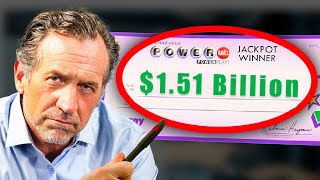
Mark J. Kohler, a CPA and attorney, walks through ten essential steps for lottery winners: don't tell anyone, photograph the ticket, hire a lawyer and tax advisor, consider a trust structure, choose between annuity and lump sum, understand withholding rates, protect your privacy, plan gifts carefully, and allocate investments strategically.
Chapters
Okay, everybody, if you're manifesting that lottery ticket, you are going to win the Powerball. And, hey, it could be next week. You're going to win a million dollars in your state lottery. I don't know if you're going to be a winner. We're all winners. But if you're going to be a winner of the lottery, the powerball, I've got 10 critical tips. This might be fascinating for you. The 10 things I walk a client through, if they're going to. When they win money. Maybe not to this full extent of 2 point, you know, 1.9 billion, but these are the things, 10 things you've got to do immediately to not lose your winnings. My name is Mark J. Kohler. I'm a CPA attorney, bestselling author, podcaster, radio show host, YouTuber, and I'm here to protect your money. That's what we do at our law firm. We help our clients who make money and want to. That's my phone, by the way, everybody. Sorry about that. And I'm here to help you protect your money and make more of it. So here, let's go through it. I'm going to put these on the whiteboard. We're going to knock it down, the top ten things. You ready? Okay, number one, we're going to go here. Number one is you do not tell anyone. I don't care. You don't even call your mom, okay? Not yet. No one. Do not tell anyone. If you win tonight, this is your big night. Don't tell anyone. The problem is, I love your. I love my mom, but she's going to call her best friend, and her best friend's going to call her best friend, and all of a sudden, by midnight, the whole world knows. All right? Then your name's being Googled in about nine different time zones. So people, do not tell anyone. You're going to get to tell her in a minute. I'm going to get to it in step seven. Okay? Just don't tell anyone yet. Okay? Number two, you're going to take a picture of your lottery ticket. Picture of the ticket, and you're going to take that picture, put it in your Google cloud, wherever you're going to, so no one can see. Find it. You lose it, you're not going to lose it. Picture of that ticket. Email it to yourself, whatever it takes, and you're going to take the picture of the ticket front and back, all right? So number two, you got to have a record of that ticket. Number three, okay, you are going to Go first thing in the morning tomorrow and rent a safe deposit box. Don't worry, you can afford it now. Okay, you're going to go get a safe deposit box and you're going to drop it in there. You're not going to tell anyone. Remember, you're back to rule number one still. You are not telling anyone. You're going to walk in, you're going to be cool as a cucumber. This is in Shawshank Redemption, right? You're just walking in there with your polished shoes, and you're just gonna open that safe deposit box, drop the ticket in there, close it. Okay? That's number three. Now we'll do some fun Q and A here. By the way, I'm gonna give a little disclaimer here. Anybody seen. Not a disclaimer warning. You're seeing anybody making comments in my Facebook feed that says they're me or anybody's trying to hawk some bitcoin, ignore it. It's a scam. And by the way, you saw the big scam on the $2 billion worth of Bitcoin the Treasury confiscated in the last 48 hours. We're gonna be talking about that on our next live. But just don't listen to any of these bitcoin scammers. There are bots or computers, whatever. Okay, Number four. After you've dropped your lottery ticket into a safe deposit box, I need you to journal. You're going to journal every moment. You're going to sit down while it's calm. I want you to go out to the park bench in front of the bank, and you're going to journal every moment by minute of everything that occurred up until the moment you bought the ticket, up to the purchase. That means who did you talk to? Where did you buy it? Anything you can think of, who you may have chatted with. When you were buying the ticket, did you talk to anyone about the numbers you were choosing? Have you talked to someone in the past about how you choose your numbers? There's a court case between a winner and their mom because they used their birth date in the lottery number, and her mom said, I have a right to some of that money because I birthed you. That's right. If you collude with talk with anyone about how you chose that number for the ticket, someone's probably going to file a lawsuit that they deserve a piece of that. So you're going to journal every moment because guess what? Your life's going to get crazy and you're going to forget. So do it now. You're going to journal it every moment and write it down, take a picture of it. Okay, number five, you're going to go get a burner phone. You're going to go pick up a burner phone and try to be as discreet as possible using your name in any form or fashion in the purchase of that burner phone. I know. This is Better Call Saul time. I love Better Call Saul. A little shout out, so just get that phone right away, number six. But you still. You haven't told anyone, remember? You have not told anyone. Number six, you are going to go rent an Airbnb or a hotel room. Whatever it takes. You're going to use an alias. There's nothing wrong with using an alias. You might have to use your credit card with your name on it. Hopefully the hotel doesn't even notice it's your name. Whatever. But you're going to be renting a hotel room or an Airbnb under an alias. Do you think Cameron Diaz uses her name when she goes to rent a hotel room? Now, I misspell alias. Alias. Right. Okay, so use an alias. Preferably Peter Lemon Jello or Ted and Ted Nugent, but that is classic, you know, Chevy Chase. So you're going to use an alias because you're going to hide out. The reason why you are going off the grid, people, is the media is going to be all over your house, where you work and everywhere. Remember, if you Google yourself, buckle up. That's what everybody's going to do in the media. So as soon as it's revealed that you're the winner, you're going to have everybody on your doorstep. You want to be out of there. You're going to have a burner phone, and you're going to be sitting in an Airbnb drinking margaritas. Okay? Away from society. Now, number seven. Now, now you can. Maybe it's tomorrow afternoon, okay? You can handle one through six in 24 hours. Number seven, you are now going to tell the. Your most close, closest family members, those that you trust. Obviously not Uncle Eddie. Your most closest family. Your burner number. I would even be careful telling them where you're at. Maybe for safety reasons, let your mom know where you're living or where you're at, if necessary. But these people will be pressured to let the media know where you're at. Oh, the Today show wants to come interview you. Whatever. Tell your family the least amount of knowledge of where you're at, because those poor people are going to get bugged and pestered to reveal where you're at now, you're going to tell your most closest family that you won at this point and give them your burner number. I would ask one of them maybe to be a liaison for the rest of your family so you could kind of choose a point person. So that way the fewer people that know your number or where you're at. Your phone is going to blow up. Stay away from it. Just put it away. Okay? All right. Now, number eight, you're going to call your lawyer. And if you don't have a lawyer, you do not have to have a lawyer that specializes in gambling, winnings, whatever. All the lawyers are held to the same duty of privacy and confidentiality, and they can be a good spokesman for you, and they're going to help you. So you're going to find your lawyer. You can call me Mark J. Kohler. I've helped clients with winnings before, but you're going to call your lawyer and you're going to go help me. I'm in a secure location. I've got my burner phone. I told my brother, I told my sister, and I got my lottery ticket in a safe deposit box and I got a picture of it. I'm now ready to go to the next phase. I need your help. And this lawyer is going to be your spokesman. And there you can tell them anything and they cannot tell anyone. So this is really, really important. We'll talk about taxes here in a minute and all that crap. Okay? But hang tight. You're going to get that lawyer. Now in this same process of the lawyer, I'm going to put tax and financial. You know what? Yeah, I'm going to put tax advisor right here. I was going to put financial advisor. That's day two. We're going to talk about day two. But your tax advisor very well may be your tax lawyer. I'm a tax lawyer, so I help clients with both pieces, which is very, very helpful for them. But you're going to want to make sure an accountant that knows what they're doing. Maybe it's your local accountant, maybe it's not help with your lawyer. You're going to get this team, your tax advisor and lawyer, because you know why. You're going to make some decisions right away. And we can talk about the lump sum or the payout, but these two people are going to be your close advisors in that process. You may even want the lawyer to speak with the tax advisor because they're held to attorney client privilege where the tax advisor is not held to that same privilege when a Lot of things you say, you got to be careful there. Okay, now number 10, you're now going to make your claim. You're going to go public at that point. And there's different methods in different states and different things. You know, I could go into the details of all these processes. There are some anonymous ways to go through this, but you're going to make the claim and this is when you're going to start making decisions. And day two is where you're going to start to talking about doing the lump sum. Am I going to do the annuity? So you have these two options. You're going to get a financial advice and you're going to be, you're going to get second opinions. You're going to be super careful because you're not going to be one of these folks that loses their inheritance. Their inheritance could be very similar to an inheritance or a lottery winning in the first three years. And you know what makes me mad? Let's go off the whiteboard for a minute, Deb. What makes me mad is a lot of people are they hear the phrase, oh, all lottery winners lose their money in five years. Not all of them. They don't, just some do. And so you get this rhetoric, this like media, everybody's going to lose it. You know, same crap of three out of five small business owners lose their business in five years. That's not true. A lot of business owners pivot. They just changed. They're making more money doing something else. Did that mean the first business failed? No. We help clients structure their business, structure their assets, structure their trust. And you as a lottery winner, and some of you that maybe had an inheritance or won the lot of some sort of degree of gambling winnings, we got to get that structured. I have what I call the trifecta. We're going to bring it together with good advice, carefully moving forward. A lot of athletes, a lot of entertainers, they get money dumped in their lap. And then without all the vultures come in all way, the, the vultures come in and people, I'm going to say this right now. If you were one of these winners of any sort of large lump sum, maybe it's through entertainment, athlete, athletics, inheritance, gambling, whatever. You do not have to go to a entertainment lawyer, a gambling winning lawyer, a I'm financial advisory, NFL specialist lawyer, all this crap, those are the people trying to prey on that select group to be their advisor. Hell, I've helped every one of those types of clients in our business and it's all the same darn Principles. It's just they've marketed themselves as a specialist so they can get more of those types of clients. I'm not saying they're bad people or they're it's a scam or whatever, but you don't have to have a specialist in that area. Get with someone that's not looking out to make money off your money. Someone that's not going to charge a percentage of this or that. Just get someone. Interview two or three different people. They don't have to work for the NFL. They don't have to work for the NBA or the pga. They don't have to be a gambling winning lawyer. This is your money. You're the captain of the ship. Interview a lot of people and be darn careful. All right, now before we go to a couple comments and questions out there, let me hit a couple caveats. Your tax rate is going to be the lump sum or the annuity? The 37%. Now, let's talk about withholding and the difference here. Let's go to the whiteboard, people. If you win, let's say you win this 1.9 billion. So you won $1.9 billion. All right? Now you're going to have a choice between doing this annuity or a lump sum. So we're going to use the lump sum example, which means you can take 51% of this right out of the gate and say, just give me my damn money. Okay? That's 982 million. If you do the annuity, it is over 30 years and the percentage is going to. They're going to pay out about 4.5%. And if you think you can invest your money better than 4.5%, don't do the annuity. Okay? Now there's a lot of people that debate this crap. I'm a tax lawyer. I love money. This is my opinion. Take it or leave it. Whatever. Okay? Lump sum, 982 million. Now, the government, under federal law, for all those gambling winners in Atlantic City or Vegas, they have the feds get to withhold 24%. But that's not your tax rate. That's the withholding. Okay? So I'm going to pull up my calculator here. We'll just see. I could use some possible art. We're going to just have some fun with this. I'm going to take $982 million and multiply it by 24%. They're going to withhold 235,000. Sorry, 235 million and change. Okay, that's not what you're paying tax, your tax rate. Buckle up. Everybody is going to be 37% fed plus state. Now, in my March Kohler calendar, you can get it on my website, by the way, Mark J. Cole or Com, I have all the state tax rates. You can be kind of playing around with that and figure out what state am I going to be in? What state are you a resident of? Because you can't move to Nevada tomorrow after you win, by the way, people, I'm sorry. So you're going to range anywhere from 4 to 13%. So if you're in California, 13% you're looking at. That's the state rate in California. And it's everywhere from 0 to 13 across the country. You're going to pay 50% in taxes. So you're going to pay 491,491 million in taxes, even though they only withheld 235. So when April 15th comes, you're going to have to cough up the rest to the state and fed. All right? That's how that works out. So if you do the lump sum, when it's all said and done, you're going to have $491 million sitting there at the end of the day. That's if you go with the lump sum. Now what do you do with that? Well, hopefully you go invest it. And I went to the Marc J. Kohler calendar. Not calendar, my website, to do some math. Check this out. If in the next 30 years, so you don't choose the annuity, you take the lump sum and you put in $491,000 with 0 contributions monthly, and you just to get a 6% rate of return. Which freaking ETF and mutual funds. Trust me, you'll find a financial advisory firm that'll get you 6%. You're going to have 2.9 billion. At the end of 30 years, you're right back where you started. You're going to live on some of that. Trust me, you don't need to live on that much. Okay? You're going to get your 2.9 billion back by just investing it instead of the letting the lottery commission invest your money and give you that annuity. So you do have choices. You can invest that money and be cautious and be careful, and that money will be yours. So 491 million to invest. And over 30 years, if you get at least 6% on that money, 6%, you're going to have your 2.9 billion. What 2.9 billion? Not 1.9 billion. You're actually getting your money back plus one and a half. You're getting one and a half times back, so pretty cool. And let's go back to off the screen. Deb. Last point. Remember everybody, if you're married, your spouse is going to get half of this. Unless you have a prenup or a postnup in the mix and you're going to have a tough time, it's going to be a little ugly. So if you're in the middle of a divorce plan on giving your spouse half of this money while you win this money, it'll be a marital asset in nine times out of 10 in all the states. They might need to touch the laptop or call James based on the screen behind me. Okay, let's do some Q and A. James, what do you got?
All right. Okay. Okay. So kind of. I have a comment I want to say just real quick. It's from J.M. i read last night that California and New York don't count lottery winnings as state taxable income.
Oh, wow.
Where did you read that?
JM yeah, I've got to confirm that. All right, well, we'll keep playing with that topic.
Okay, this is a great one. This is from pdr. Is it possible to have your company receive the winnings instead of receiving individually? I kind of asked you that question earlier in a different state, so.
Well, the. You know, this is interesting. I'm just doing a little basic Googling myself. I've got 50 state taxes we deal with with clients every day and all sorts of types of income. But it appears California does not tax lottery prizes. So nice little benefit there. Okay, you can have your company. What are you going to have? Your S. Corporation Collective money. It's not business revenue. You could have it go into an llc. But folks, it's lottery winnings. It's ordinary income is going to be taxed at 37%. Having it go into your LLC is not going to save you any taxes, not that I can see. So you might want to do some gifting and charitable donations and give away a little of this money. You'll get a deduction for that. But running it through a company could be having your LLC hold it. Could be an asset protection move, surely, but it's not going to save you taxes.
Okay, you ready?
Yes.
Beth Ann McCor McCormick asked, Shouldn't the first thing is to sign the back, then take the picture. What is? What is? No, what if you have your own safe no one knows about? Can I hire you? Questions.
I like these comments. Yeah.
Okay. She had three questions.
Yeah, three questions in there. So signing the back, your lottery ticket. I think you want to talk with your. Some lottery tickets, that's not always the case, so different ones. I haven't actually held a Powerball winning ticket. That's pretty rare experience. Right. Then they go back to the lottery commission. But signing it, if it's required in order to claim, then I like that. Get it signed, put it in your safe deposit box. I know at state winnings, some of these winning, winning tickets, there's not a signature required. It's like. It's almost like a cashier's check. Whoever holds it actually gets it. So you got to be careful there. I like that signing point. Very good. A safe in your home. I don't know. That kind of makes me a little nervous because I don't want you home. Because if you're home, there's going to be just a carnival of media and attention and people at your place, and they're going to ask, where's the ticket? Oh, it's in my safe. You better have one hell of a safe. I don't know if you've, you know, watched the French Connection or some other good movies. 1.9 billion sitting in a safe somewhere, and you're like, well, I signed the back of it. Yeah, okay. I don't know. I'd like to have it off site. And you, you can afford a couple hundred bucks for a safe deposit box. Get it out of your house. And third, if you need to hire us, we would love to be of service to any of you with any small business or let alone some lottery winnings or an inheritance. We, we. I'm going to be really blunt and candid here. There's a lot of people, a lot of attorneys out there and financial advisors that they just, they take a percentage. Yeah, whatever you got, we'll take a percentage of that and run the show for you. One stop shop. We got everything. Percentage of this value billing, percentage of that. I don't know if we've got one service where we even do that. We charge hourly rates and a retainer and charge our time to help people. Whether you're worth a hundred grand or a hundred million, I think that's the fair way to go in many, many of the instances. Now, I understand there's trust accounts and there's different types of accounting methods where a percentage might make sense. But it drives me crazy what some law firms and pseudo law firms out there are charging for these big bulk platinum package, this and that package, and Unlimited this and unlimited LLCs. Not a lot of my clients need unlimited fricking LLCs. So careful. Pain out the nose. Get a second opinion. Call us an interview. We'd love to chat with you. Thanks for that request. Okay, next question.
Lance M. If you win tonight and don't claim until 1123, is it income this year or next year?
Ooh. My understanding is the claiming is you're the winner. It's just when you show up to go pick it up. That's my understanding and tricky. Great question. But I believe once you're entitled to go pick it up, it's yours. And a lot of times it's like getting paid in business. Hey, I've got your check for what you did for me. It's sitting right here. Well, I'm not going to pick it up. Well, they already wrote it off. You have the right to go pick that check up. Even though you're not in constructive receipt, you're going to need to claim that. So you might be able to play games with that. But my opinion would be you're going to be claiming it the minute you win it, even if you haven't ran over and picked up the funds.
Ready for the next one?
Yes.
All right, from Goldchamp. How about if you get the annuity, it is the same tax question mark. I think he meant to say, is it the same tax? Can I revocable. I'm sorry, Can a revocable trust receive the lottery winnings? There was a few misspells there. Sorry, but.
Okay, that's all right. Okay, so first of all, everybody, if you take the annuity, oh, my gosh, you're getting 400 and, well, you're getting the whole 1.9 billion over 30 years. So I didn't look at the actual calculation per year of what that's going to look like, but it's in the hundreds of millions, right? So you're going to be getting these millions of dollars over time. Well, that tax rate is the highest tax rate. And this is right here in my table again here on my web, on my calendar here, you're in the highest tax bracket once you hit 539,000. So you're going to be receiving millions of dollars every year. You're going to be in the highest tax bracket. So everybody, whether you take the annuity or the lump sum, you're still going to be paying 37% Fed. Now, the nice thing about the annuity per se is that if you live in a state right now that is going to tax that lump sum and you choose to take the annuity and then move to another state where they don't tax the annuity. Now you might save on state tax dramatically rather than that huge haircut up front. This is why I put on the list here number eight, you're going to be an eight and nine, you're going to be hiring a tax specialist to help you figure this out on what to do with the state tax as well as the federal tax. All right, maybe a couple more questions.
Well, this is Hollister Stainers.
Oh, and by the way, you can. Oh, I never answered the trust. You can have your revocable trust receive the funds, but that's not, that's okay. I mean, I'm going to have a revocable living trust in the mix. We're going to start investing your money in unique ways. You're going to have a variety of trust structures. Absolutely. But you don't have to have your revocable living trust receive it. But we're going to get the funds held by the trust right away and it'll be good for estate planning, but it's not going to save you taxes. Okay, go ahead, Diane.
This is a Better Call Saul question.
Yes.
What is the best way to hide my identity in Oregon? Question, question, question. And willing to change my name. Start an LLC or a trust. LLC based in a state that protects my identity. Question.
Okay, so for any of you that are into this privacy topic, we've held some podcasts on this topic. So if you get over to Main Street Business POD or Search Privacy, Main Street Business, we've got, we've interviewed some privacy experts and it's, they're really some of our most listened to shows. They're quite phenomenal. Now, I was going to say also in my book the Tax and Legal Playbook, I want to give you the chapter. It is chapter 18 in my book I go through, which is a lot of fun. I go through four levels of privacy to the point level four is going into almost witness protection type strategies. So I have 15 different steps, level no, four stages. And I've got about 15 steps in level one, another 13 in level two. This is really good stuff about setting up entities, all sorts of little charts. It's a huge topic. There are going to be better states for privacy than others. The big thing on privacy, everybody, it's hitting reset. If you think about this, if you just go Google your name, your address is almost everywhere. You've used it for Amazon, you've used it for your utility bill, you've used it for DirecTV or whatever. You've used it for your couch delivery from the local furniture store. You start Googling your name, you're going to find out your privacy is about this bunch. Well, you're like, well, I can't move right now. I've got a mortgage on my house. I got a job, I got this, I got that. Okay, so keep in mind that you have to almost hit reset and just say, I'm going to go buy a home with cash. I'm going to use trusts, I mean use LLCs. I'm going to use some of these other states. We like Wyoming, we like Ohio, we like. There's certain states where we can structure your business assets, not your operational business, but holding your real estate and different things and money where no one can know it's you. We've got some strategies there. So you really have to get a console on that and think about what you're trying to accomplish and why. And it's going to cost and it can be a pain in the butt and. But hitting reset is a big part of this. Moving from where you have any ties not in the same. You can move across town, but you've got to. When you hit reset and go buy a new place, you're not giving that address out anywhere. You're going to use what's called a ghost address for mailing, deliveries, things like that. It can be an addiction. You're going to have to be very careful about using credit cards. There's a lot of specialists will recommend you're going to be living on cash for the most part. And the more money you have, the easier it is to hide. But it costs to hide, so be careful. All right, one last question.
I got one more question for you. This is from. This name is awesome. It's Business Phone. That's hilarious. So how many different mutual funds and ETFs would you have to hold to cover just 200 million?
Oh, okay. So what he's asking everybody is let's say I have 200 million to invest and you're going to go out and. Well, we would put together a whole portfolio of ideas. You're going to buy some. Obviously real estate is going to be in the mix. I'm going to start having you buy some high rise buildings that are creating cash flow and tax write offs. We're going to be doing maybe raw land, land that is going to appreciate for future development. You're going to possibly buy in crypto and some metaverse assets. You might be buying Some life insurance on yourself for investment purposes, not for your life. If you die, you got plenty of money to leave your family. But we're going to be using it for retirement replacement. And you're going to be putting money in Wall Street. You're got a lot to burn or spend. So when you go do an exchange traded fund or a mutual fund, Listen to the key word in there, fund. There are hedge funds out there that can take 10 million, that can take a billion or a half a billion. If you haven't watched the movie Billions with, you know, Bobby Axelrod, that's crazy show. They're moving pension funds around sometimes in the billions. And so trust me, if you've got $200 million to invest, you might be able to deploy that in just two or three funds perfectly. But you're gonna not do that. You're gonna spread this money out around, being very cautious and strategic and careful. But there's mutual funds and hedge funds and ETFs out there that can certainly handle 200 million. So don't worry about that. You're going to have plenty of places to park this money.
Can we give away some books?
Oh, we could give away some books. And I've got a question here in the studio, so you be ready with your names. We're going to give away three winners of the tax and legal playbook. Three winners. And we have another question in the studio first. Yes.
How are you? You're giving money to your family and
friends, how are they going to be taxed on that? She said, if I want to give money to family and friends, how are they going to be taxed on that money? Well, you have folks, what's called the gift tax. And the gift tax is going to kick in in a big way because if you inherit money from someone, you're going to pay inherit. The person that died is going to pay inheritance tax. The government's going to take their piece and you're like, they already took my tax on the lottery. And then you die tomorrow and your family inheritance inherits it. And then there's another haircut. Yeah. Inheritance tax and gift tax is a conversation we didn't even get into. So we got to be really, really careful there. But they're looking at tax rates of easily over 40%. If you're going to give big chunks of money away is called the gift tax. Now, there are strategies around that. There are some gifting strategies, big topic. We'd love to help with that and discuss it, but you just can't go out and start giving away right now, the gift taxing. The gift exemption this year is $16,000. You also have your exclusion, your estate tax exclusion of around 12 million in 2022. But you start giving away millions, hundreds of thousands of dollars, you're gonna pay tax to give away money. Sounds crazy, right? Well, so you gotta be careful. The people that receive it do not pay that tax. You pay it to give it. So it's called the 709 gift tax return. Super fun. It's like you're getting punched in the gut to give money away. So now if you give it to charity, there's no gift tax, but if you give it to friends or family, you're gonna pay the tax on the amount you give them. So there's, there's ways around it to some degree. You gotta have to do some, have some discussion. Okay, who are my three winners of the book?
We're gonna give one to PDR, PVR, PDR and Business Phone. Business Phone and HHH Hollis Diners.
888 Hollis Diners. There's. It's kind of hard sometimes reading some of your handles. Folks. Go to the whiteboard. Deb, if you could. If I read off your name there, you know who you are. You're going to email dianearkjkohler.com and let her know that you were a winner. She'll verify you and get that book off to you and everybody. If you want our services or need help or your friend wins and you're like, hey, this Mark Kohler guy seems pretty trustworthy. Have him interview you want these people to interview multiple people and find the right person that's not gonna take em to the cleaners. Come check us out@kkoslawyers.com anytime. Any of you need business, law, tax strategies, we'd love to help you in your small business and your inheritance and your real estate winnings. And then at Mark Real estate wins. And then markjkohler.com I've got a great ultimate tax guide of 30 strategies. Go check it out. You can sign up for my newsletter. We have a weekly podcast, weekly newsletter, YouTube videos out the wazoo. Check us out. We're here to help you better live your American dream. So thanks everyone and good luck tonight. I got to rush out myself and buy my Powerball ticket. This is it.
More from MARK




The secret to managing your family's future #financialfreedom #estateplanning #shorts



Moving Property to an LLC: What They Don't Tell You #realestate #investing #tips


