The 4 Phases of Business - Don’t Make the Same Mistakes We Did
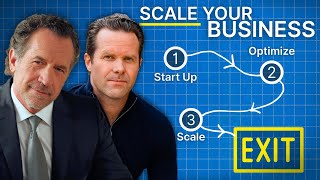
In this Main Street Business Podcast episode, host Mark Kohler and guest Matt Sorenson walk listeners through a four‑phase framework for growing a small business: (1) Startup & Structure, (2) Optimization & Systemizing, (3) Scaling & Saving, and (4) Exit & Legacy. Drawing on over 10,000 client consultations and their own entrepreneurial journeys, they share personal anecdotes and concrete advice for each phase. They warn against staying too long in startup (e.g., Mark’s five‑year “suffocation” of his firm), stress the need to duplicate rather than replace yourself during optimization, and highlight that scaling is fundamentally about hiring the right people—not just adding revenue. Tax strategy is presented as the biggest expense in the optimization and scaling stages, with recommendations to live below one’s means, structure entities properly, and separate operating income from personal assets. The conversation also covers portfolio decisions such as when to pivot or shut down a cyclical business (the title‑company example), and the importance of early exit planning: understanding KPIs, EBITDA, due‑diligence, and securing dedicated legal counsel. Finally, they discuss legacy considerations—estate planning, business‑continuation plans, and the emotional challenges of replacing the founder. The episode concludes with a reminder that business growth is not a race; owners should recognize their current phase, make deliberate decisions, and align actions with long‑term personal and financial goals.
Chapters
I was in startup for five years. I was suffocating my business. Number two, optimization and systemizing.
You don't scale a business. You scale people. People scale your business.
You're learning how to duplicate yourself, not replace yourself.
If you think you're the smartest person in your business, you're staying in optimization. You will never scale.
Now in the scaling phase, I'm making money. Do I put pedal to the metal? Is that always the best thing?
The best advice I had was from a very successful friend of mine who said, live three years behind your means.
Don't wait for the exit phase to start saving. Now we get into the fourth phase. This is where you replace yourself. Welcome, everybody, to the Main Street Business Podcast. My name is Mark Kohler, here with the illustrious Matt Sorenson talking about business. And this is. I'm really excited about today's topic because we get to be vulnerable and talk about all of the mistakes we've made in our life. How do that, Phil?
Yeah, why not record it and put it out to everyone to hear and listen to?
Yeah, why not?
I mean, you did it at the 360 just last week. An incredible event, by the way. If you missed it, I'm sure you can maybe check it out. But people love this, so it was good dived into this. I think for any Main street business owner, understanding these different phases as you broke them down is super helpful and illustrative to know what you should be doing and thinking about where you're at.
Yeah. So let's lay these four out and we'll set the table and we'll talk about our life experience in these four. And Matt and I doing 10,000 consultations with clients over the years. Each of us, we've seen clients in every one of these pH and we're going to describe and how they blend. It's not a bright line. You're going to love this. So, okay, here they are. Number one is startup and structure. Startup and structure. I got an idea. How do I structure it? How long do I stay in startup? Am I there too long? Not long enough. What does it look like? How am I approaching that phase? And that phase has different feelings and actions that need to happen. That's number one. Number two is optimization and systemizing. I've out of startup. I'm starting to make money now. I got to get efficient. I want to make money. I got to get this figured out. I make it enough to maybe get by, but I'm really trying to hone in on and dial in my product, my Service. My team members, number three is now scaling and saving. Alright, the getting's getting good. I figured it out generally, now I'm making money. How much do I want to scale? How long am I going to keep scaling and what am I doing with my profits? Where am I saving them? I may put them back into the business. Too much, too little. And that whole. There's a lot of issues there that are very different than the optimization systemization stage. Now we're going hard, we're making money. When do I come to the fourth stage? Exit? When is it the right time to exit? How do I exit? What does exit look like to me? Is it my family members? Is it a third party sale? Is it private equity or just cash flow? Until the day they close the coffin. And legacy, what kind of legacy do I want to leave? And those questions start coming up and what's interesting to me and Matt, tell me your thoughts is as a person, you could be in any one of those phases of age and you could be young, exiting a business, you could be older, doing a startup. This is the phases of business, not the phases of your life.
Yeah. And I think knowing where you are in your phase of life and what you want, your goals, your ambitions, they change from when you're younger to old. Now, I'm not saying that there's like, you know, stereotypes on that. I think actually it's everybody's different. But I think how you're going to attack these things depends on where you're at in life and your goals and everything. And also your timeline. Let's be honest too. So I like, we're going to do this in one podcast episode. So let's see how it goes.
Yeah, let's see how it goes. You know, and I think let's start.
Do you want to start from the beginning or you want to start from the end?
Yeah, let's start from the beginning. And I think I'm going to share my story and see what you think too. I want to. I love what Matt said. Let's put a couple other caveats on it is there's no bright lines. You might be. You don't wake up one day and go, okay, I'm out of startup, I'm in optimization. Oh, I'm in. I'm out of systemizing. I'm going to go to scaling. It's going to be gray. It's going to be sometimes hard to know when you've kind of moved into the next phase, but when you're there, you'll know it And I like what Matt said too is you see if you can have an ability to look at the forest and know where your business is going, then you can make better decisions too. When you're in your heads down and you're going to maybe make more short term decisions and frustration when you go, oh well my business, I know where it's going, that helps. And the last thing I would say is, is that you could have multiple businesses in any of those phases at any given time. It's funny, Matt, we've, Matt, are probably together on about four, three to four businesses and if we think about it, we've got businesses in every one of those phases.
Yeah.
And so you've got to be able to sit back and analyze this business with a different mindset based on what phase it's in. Startup for 5 years now when I'm we're trying to help our tax pros in the main street tax professional program, I'm trying to help them not make the same mistakes I made and get out of startup in the first year. You know, let's get out of startup and get into optimizing right away. But I stayed there for five years and what I was doing is I was suffocating my business. A lot of entrepreneurs say oh, I quit my job or this and they expect their business to support them. And when you're doing that, you're living month to month on your business and you're just pulling out profit as fast as you can because you got to pay bills, you got family members you're trying to take care of, maybe a young family, but you're not letting your business grow or thrive and you're suffocating, you're starving it. And I did that for five years and there was some point in there. Again, it's great when you kind of move from one phase to the next. I got a client that gave me more stable and I didn't want to do it at the time but then I knew I needed to because it gave me some breathing room. And once I had that more stable income with a retainer with a couple clients, it allowed me to take the profit from this other area and not have to suck it out to pay the mortgage payment or whatever. And I was able to build the business and I was way. And I was in startup way too long.
Yeah, I think, I think in. Yeah, I mean that's a great example. Actually we've seen that a lot because you see people leave their day job and go head first into a business when probably the most successful thing to do is start the side hustle is turn the. Keep the main hustle, whatever it might be, the day job, the stability, have that income. I know you might seem like, well, I want to go after it 100% and I get that. But I think I've seen more success in the people that start with the side hustle. Frankly, you're not going to be as busy as you want to be on day one when you go open up. You're going to be twiddling your thumbs a lot and spinning your wheels because you're like, I need customers. Now. If you can go turn it to day one and turn on this business, whatever it might be, and you have sales coming through, you've got revenue coming through that's going to support you, fine, go all in. But I think most businesses have a little ramp up period. That could be three months, that could be six months, that could be three years, I don't know. But I think that way you don't suffocate and starve the business and kind of stunt its growth, but let that business, let that income you're making, be able to reinvest it and slowly grow the business and get the systems going and all those things.
Oh, which brings us to phase two. I like that you just said that once you're letting the business breathe and grow a little bit. Now you can focus on optimization and systems. Phase two. Now in phase two, the mistake I made and I was in there with Matt in this phase, we were now partners. We were able to start figuring it out. What I discovered in the optimization phase is you're learning how to duplicate yourself, not replace yourself at exit. We're going to come to that a little later. At that point, you have to replace yourself. You need to make sure that this business can run without you. Well, right here I'm still running it, but I'm duplicating myself in the systems. I'm not doing everything anymore. What you find out in the optimization stage is you're the bottleneck. And so in our practice it was like, we've got to start to learn how to hire lawyers, tax advisors, paralegals, and teach them how to do the systems properly. And whether you're producing a product or a service, you're now duplicating yourself. And that's a tricky thing. And you're. And what we would use the model of is a third. Third, third. We wanted a third to go out in payroll, a third to go for overhead. And we were shooting for a Third in profit. And so when you're in this optimization phase, you're really trying to, to keep your costs down, get more product out and so that you can scale, which we'll come to that. But here is figuring out how to be smart in your business and duplicate yourself. I was in that phase for 12 years. 12 years of figuring that out. Now on our Main street tax pros, I'm trying to teach people how to do that in maybe two years, maybe three, because there's some school hard knocks. This is your superpower. You. I don't know if you have a mistake you made in this, but Matt knows how to maybe develop people a little quicker than I do. I don't know.
Yeah, I think once you hit that phase, you really need to. As you're looking for people to duplicate, it all becomes down to people like you don't. As you start to get into scaling, you don't scale a business, you scale people. People scale your business. And so you need to get the right people that can go execute on what you want to do. Get the people, have the right talent, obviously build the right team. And that's where like AT directed Ira, we've had significant growth and it all comes down to people and even our other businesses that we have, from Main Street Business Services to KQS lawyers and you know, we've had a title company in the past. I want to talk about that as a mistake maybe, but the optimization here, duplication of yourself, it's going to be people that do that. We want systems and process that those people follow and you got to develop that too. But you know what, those people are going to be developing those systems. You might lay it down the first time, but there's going to be iterations of that and improvements on that new technology. When you think about a 12 year cycle on that, all the different ways that things changed over the years, what your customer needs are how you deliver for them, who's your competitor, what are they doing? I mean you've got to stay up to speed on all that. But the people matter. Now here's the truth and reality and you hear this advice all the time. You need to go hire a players. Just go hire a players and you're good. Totally agree with that. I agree with that 100%. You won't afford a, you can't afford a players in optimization. You won't get them. You will. You may get lucky and get some of them. And that's why I think where a lot of small business owners fail and why they never get to scaling is they get the wrong people. They get people that can do the job, but they get people you're gonna stay there, they're doing okay. Yeah. You're making money, but they're not people you're gonna build a business with. And so I think you get stuck there.
Okay. So you're. I like, I know if we could put names to this and we could put several names but in our business organization, the mistake we made was promoting people during our startup phase in that weren't going to help us get out of optimization. They were. We knew at the time, we didn't realize that they were going to create a ceiling for us.
Yeah.
And they were in that role way too long. And once we figured that out and had to make some hard decisions, we were able to get into the next phase of scaling and we had to let this person either go or put them back into a role that was best for them but not best for the company. And some people may stay in optimization forever. You're cool. Just don't be upset when you can't scale because you're like your brother in law still your head of this or your aunt's the head of that and you're like. And you're bitching and moaning because you can't scale. Well, you kind of made your bet and yeah.
And I think the classic thing is like, you know, you need to hire your first assistant. That's typically the first. You need to hire your first employees and your assistant. And that makes sense. But then that person might turn in what you in a small business turns into your office manager and you're like, is this the president of my company? As I go into scaling. It's probably not okay. And maybe it is. Maybe that person's incredible and amazing and has this unleashed potential you never knew of. And was this a player that you found and you hired as an assistant? I'm just saying it's typically not the case. So have some reality checks there of where you're trying to go now. You might be like, you know what, I want to stay small. I'm okay. I'm not trying to scale. I've got to this 10 person team I have. I like the way I work. I can control the ship. It's what I love. And that's okay. I'm still the smartest person in the room all the time and know everything cool. But that. But you will never get out of that. If you think you're the smartest person in your business, you're staying in optimization, you will never scale.
You know, the example I think of this too is Pastry Pub.
Yeah.
Pastry pub is a little restaurant and our main street town where Matt and I were in this optimization phase for a long time, and he would serve the food to everybody at their tables. And we would ask him sometimes, like, don't you want to do a second look? It was an incredible restaurant, great food. We're like, do you have another location down the road or down the next city in town? We tell them, go to St. George with your. And he's like, nope, I'm happy right here. I love to come to work. I love the interaction with the customer. I know I could duplicate myself and duplicate this restaurant, but I would not have. I would not enjoy it. And he knew it.
Yeah. But I think sometimes, and we don't know the rationale here, but I think sometimes the mindset is no one could do what I do.
Ooh, yeah.
I'm so great. I'm so amazing that I couldn't. No one could do this down there. It wouldn't be the same. Yeah. And you know, you think of obviously restaurants and all the multiple case. Like, that's. If you're thinking of restaurant, that's how you're scaling a restaurant. Right. Multiple locations. You know, it's not like building a bigger restaurant. So every business has a different, like, growth thing as you look at scaling. But I think there's some things that hold a business back. Maybe it's some mindset, stuff like this, but it always going to become people. I'm just, I'm just. It's like, there's nothing I can emphasize more in this getting into scaling and having success in scaling is that it's people that will be the determination of whether you do this, how you can recruit, how you can attract, how you can retain. How is the culture there that the people actually work and function in is like the night and day difference. Yep.
Okay, now you're kind of bleeding into scaling. And it is again, a fine line because as you're optimizing and systemizing, you might get the right people, or all of a sudden you're into a scaling mode and you're like, holy crap, what do we do next? The last point I want to make here, though, in startup and in optimization, a lot of people are paying too much in tax. They're not structured properly, which can hold them back. And then this phase, if you see that you're in this startup or optimization phase, this is where spending a little money, like Some may say one step back allows you to go two steps forward. And so having a good tax strategy plan, meeting with the tax lawyer once a year, making sure your entities are right, what payroll you're taking, how am I paying my kids, Am I saving the right tax? Your number one cost in this optimization systemization phase will probably be taxes. And so if you're in these two phases and we just keep our head down, you're not going to get to the scaling. Make an appointment, talk to. If it's not our tax law firm, fine. But we're a boutique for the Main street business. Have that annual meeting. Where am I at? And ask them I want to scale. I was listening to Mark and Matt. We've got 13 lawyers that are amazing that know this principle because we're teaching them every day. And we trying to duplicate ourselves with good lawyers. Ask them, how do I get out of this and where do I go next? And I'm paying too much in tax. What's my structure and what should it be so I can go into the scaling phase?
Yeah, I think the number one expense you have as a business owner once you start having success is taxes. That will be your number one expense line. And the whole ability of you to be able to grow is to make enough income to live a lifestyle you want. We're all working hard, but also have money to redeploy into the business. And if you don't got the tax structure right, you're just leaving money on the table. And you're. And you're, and you're starving your business as we come back to what was earlier and you're, you know, you're depriving yourself of actually enjoying some of this wealth.
Now in the scaling phase again, being vulnerable and transparent. Once we got into the scaling that we've.
You've duplicated yourself.
I've duplicated myself.
We're opting systems. You've got some.
We're starting to make money. We're starting to make money. And this is Matt and I'm using a couple of our businesses. We have now had maybe two to three different business ventures at this point. And now this is about eight years ago. We're starting to scale. We figured things, some things out seven, eight years ago. Again, there's no bright line in this. We're starting to scale. What do I do? My approach was, and this is where I'm being vulnerable. I put every dollar back into my business, back into every business I could, even some of the businesses that Matt and I were not 50, 50 in. I would be putting money back into the business. Back into the business. As a farmer would say. I was land rich, cash poor. I was not funding my 401k as I should have. I was not funding IRAs as I should have. And I thought it was all about business. I felt I was my best bet. And a lot of business owners think that they're like, I'm just going to put money back into my business. I know I can get a better return there. That's a very scary thing. Now, luckily, and generally, I didn't have a disability, I didn't have a business failure, knock on wood yet. But I did not put away money into retirement as quickly as I should or buy rental properties as I should have been. My partner here. I would see him doing that and I sometimes give him crap. And I'd be like, dude, let's put more money in here or there. And I was like, nope, I'm going to max out my 401k every year. I'm going to max out my Roth every year. I'm going to buy a rental property once in a while. And not that I thought he was. That was a bad thing. But it wasn't my choice. And in retrospect, I wish I would have. And so during scaling, one of those things is, where do I take my profits? I'm scaling, I'm making money. Do I put pedal to the metal? Is that always the best thing to just freaking turbo? Maybe not. There's a pace to scaling that we need to be mindful of as well.
Yeah. And I think that that's probably one of the most difficult decisions you have as you're starting to scale is, you know, you're starting to have some success in your business, you're making some good money, you want to have a lifestyle. Your family's probably like, all right, can we like, get off the rice and beans deal here? You know, let's.
Some people go too hard on the lifestyle, too.
Exactly. And then they start being flashy with their money. They're buying the cars they shouldn't be and not affording. And so the best advice I had was from a very successful friend of mine who said, live three years behind your me, your means. So, like, you know what you're making now. Don't live like that. Live like you did three years ago. And then kind of. So you eventually reward yourself. You eventually get there, but you don't rush to it. Too many entrepreneurs, they want to have some flash. They think it makes them look successful. They may even think that's a strategy in my business to attract more customers or to sell more is to have this. Look, I don't know. I don't buy into that. But. But I think that they end up basically wasting money. On the other hand, you've got people that invest every penny back into the business. That could be the right decision, actually. Okay. I'm not saying that's wrong.
Yeah. Yeah. But you got to know, go in with your eyes wide open.
Yeah. Go in with your eyes wide open and just realize you're bearing a lot more risk. You're putting all your eggs in one basket. And on the other hand is trying to take some measured things off the table, which is what I would do is try to take some money off the table, be reasonable in spending, go invest in these other assets. Because when we talk about the trifecta, and this is one of the things we do with our clients, is we go over operations versus assets and we separate your business and investment life. We say over here is your operating business. You're making money, which typically an S corporation for tax optimization. And over here, we're building assets. Okay. This might be rental properties, investment portfolio 401k. Other private things you're investing in. Assets create income. And over here, my operational business is my ass working for me. What do I want? Do I want my assets working for me or do I want me working for me? There's another way to think about this on your business is trying to create assets that create revenue themselves. Now, maybe that revenue and those investment returns can't beat what I can do in my business. That's why it's this difficult question where I can say it's not wrong or right, but I do like and I've just 10,000 consults with clients of business owners is not every one of them gets to scaling an exit, sadly enough or their exit is very paltry. It's not what they had hoped for. And. And they haven't saved and they're. They're kind of in trouble. They're in their 60s and they want to hang it up and they just can't get there.
Yeah. And another way of saying this to you is don't wait for the exit phase to start saving. While you're scaling, you should be saving because you may not get to exit. And again, all of a sudden you wake up and it's scary that you don't have a savings account, but you have this business that you're strapped in. Buckle up. This is, this is your Retirement and the exit may not come and time to sell is further out than you realized. But you don't have this other pool of assets making money for you to let you breathe. And so it's a precarious area. And so in this phase, doing those planning sessions with an advisor that has seen every phase and can help you find that balance, it is balancing in this phase. This is why it creates a lot of nervousness. People that are kind of, people that are smarter are scared the most in the scaling phase because they're like, I don't know, how long is this going to last? I want to get the getting while the getting's good. Am I putting too much money in my business? Should I be deploying it over here? And they're nervous, and rightfully so, because it's a wonderful feeling to be making money and it's a scary feeling to be making money because you've worked so hard. You know how precious that time is.
Yeah. And let me just give an example here too of this. Probably one. I don't know. It's a mistake. But a tough decision we had to make was we had a title company so called Investor Quality Title IQ title. We've not that, you know, title.com great name, but what we were doing is we had a lot of real estate investor clients in our law firm and title companies didn't serve real estate investors very well. So we're like, well, we can do a title company. So we went and got the licenses, the title and escrow licenses, and we opened two offices, one in Salt Lake City, one in southern Utah where our law firm office was. This was 10 plus years ago. And we optimized that pretty quickly because neither marker I did closings. We went, hired two experienced escrow officers in each office, had had a lot of experience. They'd both done thousands of closings, had good reputations in both towns, had some connections too. And we're like, we can feed you. We can feed the work in here from our clients and the work that we're doing. And it was going great. Wasn't the best timing. Okay, this was 2007, all right. And what happened was, is the real estate market fell off the a cliff. Now, initially we pivoted quickly and had some big wins because we knew how to do short sells and that was the only deals happening. And if you're a real estate agent or someone buying or like a lender, like First American Title was like, we don't do short sells. You know, all the big ones were like, yeah, we don't do this. Well, that lasted for like two months because then they're like, that's all that's happening right now. We better do those because. And so. So then we were back competing with the big dog, and it was a very limited deal flow. And so some type of businesses are cyclical. You could be in the construction industry, maybe you're a real estate agent, maybe you're in title and escrow. You know, that business can be somewhat cyclical. So we were in that now. We were weathering the storm. We actually weren't losing money, but we weren't making a lot either. And I looked at that business at the time and I thought, do we want to go to scaling next in this? Do we really want to force our time and effort from our other businesses that we could maybe put more money into and grow? And at the time I was like, I do not want to scale this. I learned enough about the business to say not the business to scale, not recurring revenue. You have to get a new customer every week, you know, and a closing new week to fund it. Sure, you can get relationships and try and build those, but you got to nurture those. And then the business is somewhat cyclical. And so. So knowing what businesses and when to hold them and fold them, so to speak, and what businesses to optimize and scale and put your time and money into is just as critical. And I will say this, sometimes deciding to shut down a business is the best financial decision you can make and not put more time or money into it. And maybe you got to pivot your services or how you're offering it. The strategy in the business is critical too. I mean, so I don't know. I just want to drop that out there as we get into scaling of, like, we could unpack that forever, but make sure you got a winner. Make sure it's going to be worth your time and money. That business would have been successful. I'm not saying that, but I think there's better things we could have spent our time doing, which is what we've done. I think that was the right decision.
Yeah, I do too. And now you're in. This is a great point. Shutting down may be a form of exiting. And so now we get into the fourth phase. You're ready to exit, and what does that look like? And you're also talking about your legacy more. What do I want to leave to my family? What do I want to leave in my community? What does this business look like when I'm gone or my Assets, your estate planning becomes even more critical. Right now, it's our estate planning special month. We offer a discount. We want to help all of our Main street business owners get their estate plan done. No matter what state you're in, you do not have to use a local attorney to do this. You just need to use an attorney that understands you and your business. So please call KQS lawyers up to $500 off on the right package for you. KQSLawyers.com down there in the show notes for sure. So get your. This is another time to review your estate plan through this whole process. Because if you tap out early, you know what, where is your business going to fall and is it going to take backseat and actually lose a lot of the value that you were building along the way? You want to have a business continuation plan conversation in that process. So in the exit phase, this is where you replace yourself. See, before you were trying to duplicate yourself. I need to get myself out of the way, get the right people so I can scale properly. Boom, ba da bang. Now I need to replace myself as the visionary, maybe the manager, the CEO, the president. And because if you're going to exit to a family member or a third party, they don't want you around on day two, usually. I mean, at the end of this process, they want to buy a business that's going to move forward without you having to be there. Now, they may want to pay to have you there for a specific reason, but your family that's going to buy the business are like, mom, dad, bye, stay out of our way. We have our own vision here and you want them to have their own vision. So during the exit and legacy phase, now you're replacing yourself. And that can be hard. It can be very emotional and finding the right person that's going to run this business when you're not there and you're still going to make the right amount of money. You've got to start understanding KPIs, understanding EBITDA and how to really know the finances of your business and do all the little things you should have done before on your business to make it profitable when you're not there.
Yeah, yeah. I think this is, I mean, so much to be said here. Everyone's gonna have a different reason for exiting. This might be. There could be a situation in your life. There could be a divorce. There can be the businesses, and it's just in a tough spot.
It could be at the right time.
This could be the exact right time to sell.
You didn't expect it.
Yeah. There could be like a competitor that wants to buy you or a private equity firm. You could hire an investment bank or a business broker and go run a process and market it for sale. There's a lot of.
You got another dream you want to go do. You got bored?
Yeah, you got bored. You're ready to move on to something else or you have other businesses you want to focus on. I mean, there's just a lot of different reasons why this could come up. But the other thing to plan for. We want to think about legacy, too. Here is how you're going to exit. And this is something that Mark Fetzer is an attorney in our office. The help helped a lot of clients buy and sell businesses. And going through those issues. And how am I getting out of this business? What is the tax ramifications? What does this look like as the offer comes in? And making sure you have a lawyer. Okay. If the buyer of the business has the lawyer, that lawyer is not your lawyer. When you're selling your business, you're going to need your own lawyer to help you through that process, particularly if you're selling business for seven or eight figures or more. We're out of like the hundreds of thousands of dollars. So you've got to have a lawyer. Okay. Let's not be cheap.
Yeah. And we did such a good podcast series on this. Yes. About four to six months ago.
Yes. Yeah. And what I'll say too is I do think just from the business side of things. So go back to that podcast and just know Mark Fetzer is the guy if you need help at KQS Lawyers as you're thinking about exiting. I think legacy is important and we can obviously the legal components of it. But this has been for many people like your baby. Right. And so for. This is almost like a child for any of us business owners. If you've built this business and it's been, you know, a lot of the customers, you know, the team, making sure you're working with someone that whether it's the right family member that's going to take it over the right buyer, whoever it may be, that someone that you feel is going to carry on that business and something that you value, it's not about the right price. You can get as much as it is. That's important, don't get me wrong. But also like this, the right partner for this in some ways, even though you might be going off into the sunset, I think is really important too.
And in that podcast that Matt and I go through the three steps to prepare to sell your business. There's a due diligence phase, there's the closing and all that. But I guess I'll just emphasize this here briefly and I recommend all of you to go there that are thinking exit is you start to really work on the business in this phase. You're scaling your heads, you boom, let's get make as much money. Now you start having a very different look at it. You're looking at the financial statements more than you've ever looked before and you're
learning what EBITDA means.
What does EBITDA mean?
As a business owner, you're like, what's the net income? What money am I taking home? How much am I paying tax on? You don't think like that. When you're in exit mode, you're thinking, what's the ebitda? You're thinking not can I expense everything in this business? Like you know, all these quasi personal business expenses. No, we want to think about. That's not an expense. I want to track that because I want to add that back into ebitda. So this is like when you, if you don't mind, I'm telling you when someone's going to look to buy your business, they're looking at ebitda. This is the, what's the cash flow coming out of this?
Earnings before taxes, depreciation, tax depreciation, amortization.
Basically what it is you think of your net income, it's like, what's the take home pay? Whoever owns this business, what's the profit that they get? All right, now if there's certain one time expenses, some of the things that are like quasi personal expenses on your books, the company's been paying for, those get added back into ebitda, which adds more net income and more profit. So a business owner can say, oh, I'm actually get the benefit of that when I buy the business. So that's where you start really focusing on that because that's what every buyer is going to look at.
Yeah. And what I not.
Could I say one more thing? Sorry, I keep cutting.
Yeah, yeah, no, you bring it.
As a business owner for so long you've been trained to like, I want my P. L To show as little profit as possible because that's going to the IRS and that's on my tax return. When you're in exit mode, we're not doing that. Okay. That's not what you're doing. You might have, it's, you know, the financials. You're obviously filing your tax return on. We still want to expense everything as possible. You have another set of financials that hits this EBITDA number that's adding back a lot of this stuff to show true profit.
Yeah, no, I love it. And. And what? And this is interesting because we have a different point we're going to make here is that as you start analyzing those financial statements and you're looking for this EBITDA and la la la and the profit, what happens is you're also starting to really look at what are these key performance indicators, how long is a customer with me, how long are they staying, and what value are we adding? And all of a sudden, as you start to really hone in on eking out the profit, you're starting to learn more about your business. You never knew before, and you're having this new look of oh my hell, I wish I would have been doing that three years ago. I wish I'd been doing this five years ago. And oh my word, I didn't even know that was such a driver of my profit. Bottom line, you're starting to learn more about your business. You never did knew before and you're having this new look of oh my hell, I wish I would have been doing that three years ago. I wish I'd been doing this five years ago. And oh my word, I didn't even know that was such a driver of my profit. Bottom line. And with this new set of eyes, sometimes business owners are like, oh, wow, I just doubled the bottom line and I'm getting so efficient and replacing myself. I don't know if I want to sell. I'm just going to sit back and collect revenue the rest of my life and I'll let my family sell the damn thing or whatever, and that's okay. Again, you really start to look, work on your business like you've never worked on it before from an outside point of view and it opens a new perspective for the exit. Or you may say, I can do three more years of this because this is a little easier now that I've spent the time I wish I would have years ago. And so it's really an enlightening thing.
Yeah. Because I think when you do that, you start looking at the business like an investor, like some outside party, you know, because you're thinking of, well, someone's going to buy this, what are they going to be looking at? And I think if you talk to any investment banker or business broker that's worth their salt, most of them are going to tell you, you should be preparing to sell your business two years before you actually go to market to sell the business. And you should be working with them and getting the financials in order, getting the stuff in place that a buyer is going to look for that where you're going to get the optimal price and also driving some of the easy things where you can create more revenue, which is going to create more profit, which is what you're going to sell. Looking at your pricing strategies, looking at your cost structure. When a lot of companies go through scaling, they get a little sloppy in their expense management. You know, they go from like buying pizza for everyone to have them like a freaking kitchen in a cafe with a chef in the office building because they've gotten big. You know, it's like. But like. So there's just that employees are all flying first class instead of business class, you know, or instead of like coach, coach, whatever it is, you know, regular, what they call that.
You're not flying back there very often, are you? Back there?
I don't know. I see those people not even in
my peripheral and I put that little
sheet up, you know. Oh my gosh, that's a joke. That's Brian Regan. K. I don't think this guy's got a big head. That's a Brian Regan quote. He's a comedian. It's a whole, it's a whole bit. But anyways, I just think that having a little preparation and foresight before immediately going to sell and maybe spending a couple years working on that is from a lot of people that we've talked to and clients over the years, they found that very valuable and they've actually made more money.
Yeah, absolutely. Well, in summary, hopefully this has been very enlightening and to. I want to finish with this. It's not a race. There's not a right way of doing this. You may spend more time in one phase or another. And like I was just saying here, you may get to exit. And realize exit for you is getting it to a point where it just creates long term cash flow. That's an exit in a sort of way where you're not having to be in the business every day. So no matter what phase you're in, you get to choose. You get to choose how long you want to be there. And my point today is just recognize where you're at, make it not a race. It should not be full of pressure and sit back and work on your business once in a while and don't expect your business to do more for you. And sometimes we're so stressed. But when we sit back, we're like, oh, here's why I'm in this phase. I know I can get there. And here's what I need to do. I need to look, learn some new skills. I need to hire some different people. I need to make some, maybe some hard decisions. And there's no right or wrong way per se. It's your destiny. You get to choose. And we just hope that we've shared something that'll help you through that process.
Yeah. Wow. I love this. This was interesting. We kind of did something different. And I know you've had some incredible thoughts that I was just felt like I was commentary today. You know, you're like, great color commentary. I should have had a little more organized thoughts on this. But you know what? Owning a business is one of the most stressful but amazing things out there. And any of you business owners know that it can add a ton of stress and demands on your life and you miss out on things that you wanted to, whether it's friends or family or other goals you might have. But it's also pretty fulfilling. And the things that you can build and be proud of, the businesses, the customers you can serve, the people you can work with is pretty special. And so, but I think these phases are helpful for people no matter where you are, how to get to the next one if that's what you want. And, you know, we all are, you know, the hero in our own story, so to speak, and what we're trying to achieve. So thanks everyone for tuning in. We'll be back with another amazing episode of Main Street Business Podcast.
See you then.
More from MARK




The secret to managing your family's future #financialfreedom #estateplanning #shorts



Moving Property to an LLC: What They Don't Tell You #realestate #investing #tips


