The 8-Step Strategic Plan Every Entrepreneur Needs for 2026
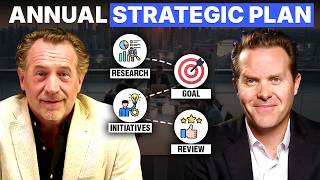
Mark Kohler and Matt Sorenson walk through an eight-step planning process for entrepreneurs. Write your goals down, build a 10-year vision, then work backward to set 5, 3, and 1-year targets using SMART goals. Break those into quarterly rocks and monthly checkpoints, share the plan with a mentor or spouse for accountability, and adjust it as you go.
Chapters
We underestimate what we can do in 10 years and overestimate what we can do in one year. We need you to think big here.
I'm like, oh, you're in debt up to your eyeballs. Your goals can still be 10 rentals in 10 years. But this year we're going to take one step back financially and get healthy.
Did I fire that cousin of mine or the brother in law? That sucks.
Now the opposite of a smart goal would be, I want to have a bunch of rentals in 10 years. What the hell does that mean? It is understated. How important is you share this plan with your spouse? If you've been married more than two minutes, you've done this wrong. Foreign. Welcome to the Main Street Business Podcast. My name is Mark Kohler and I'm here with the amazing Matt Sorenson and Happy New Year. We are so excited to be here with you on our inaugural. Inaugural. Did I say that right? Podcast for 2026. And this is our annual strategic planning podcast where we get to remind ourselves and encourage you on how to do a strategic plan. Matt and I even have our strategic planning session scheduled to go away for a day and get ours nailed down as business partners. So we are excited to be here with you. This is an awesome freaking topic.
Yeah. In other words, we're in the midst of this right now. Ourselves with our own businesses. We have multiple businesses that we create separate strategic plans for. It's frankly our most favorite time of the year. We love talking about it. Making plans we're going to talk about also after you've made the plans, what to be doing as well. Because it's not just about crafting some great plan. You actually got to execute on it and do it, have some accountability. So we'll hit that here in a second. But. But I think this is probably for us, Mark has been One of the most important things we've done in our business is every year we reset on what we want to do and we actually create a written document. We write stuff down and make a strategic plan.
Yeah. And we want to take you through our steps that we use. We probably can't quantify the number of articles, books and speeches and podcasts and YouTube videos on this topic. But we know many of you, our listeners, know how Matt and I approach things and hopefully appreciate it or you wouldn't be here. So we want to keep it simp and share our steps with you. I even went to AI, Mark. I have created an AI of every article I've ever written, every Book every podcast, put it into a database that's restrictive to just me. And then I can ask myself, what did I say on this before? What are my steps? And so I kind of saw that. I was like, oh, okay, yeah, I like that. Nope, I've gotten better because I consistently grow, improve, have life experience. So I'm excited to share with you our steps. So I'm going to go with step number one. Matt, let me. Is that all right? Can I just get it out? Let's go hard and fast. Step one, do this in writing. There is a. It's been proven scientifically that when we put pen to paper, pencil to paper, chalk to rock, whatever it is, if you can write something down, your mind processes it in a different way. It has time to process what you're writing. Because we're in this digital age where things move so fast. We think we thought through it, we think we thought about it, and our mind moves much faster than the way we talk and the way we write. So by going through the function of building your strategic plan in writing allows you to process it in a more strategic, frankly strategic way.
Shocker. I love that. We definitely do that, and it does make a big difference. And it's also fun to look back on them, even the ones we've done in prior years. And then there's also the satisfaction of actually checking it off when you've done that item on the list, which is very satisfying for any of you that, you know, are into lists and checking stuff off a list. All right, well, let's start with, like, the what now. Okay, that's the how we're going to write this down. But let's start talking about the what here. And the first thing you've got to do is set a vision. Okay? We need to create a vision of what you're trying to accomplish. And this would be per business here of what you're trying to do. So the first thing I want to say is we underestimate what we can do in 10 years and overestimate what we can do in one year. Now, you're going to create your annual strategic plan here, but we need you to think big here and set your vision of where you want to be in 10 years. So set what we call the ideal scene. What is the ideal scene of this business in 10 years? What does it look like? What's the revenue? What's the profit margin? What's the product mix or service mix? Who's working in it? Who's on my leadership team? What does my role in the company look like. All right. That's what you're building for, right? Yep.
And this could be as simple as. What does your rental property portfolio look like? You may not say, well, I'm going to write down a strategic plan for each rental property. Yeah, maybe. But I would say this is your rental property portfolio. How many rentals do you want in 10 years? That is your business. Now, it might have five LLCs or two LLCs or 10 LLCs in the long run. But step two is writing down your ideal scene. And I gotta say, Matt and I dove into this experience through a lululemon training of all trainings. It was over 10 years ago, and they had such a creative way of helping their employees. They employee driven. I love Lululemon. They're so profitable. They're amazing. But they said, sit down in that quiet spot, Buy a beach, a lake, a mountain, a park the room in her house, wherever it is. Take out a piece of paper, a pen, a yellow pad, and write down what it looks like. Literally close your eyes and envision this. And this ideal scene needs to be real. Like, what does it look like to you? That is step two. We could go into that more in depth. But I, I like this process because it can really unlock what you can do in 10 years. I like what Matt said. We underestimate what we could do in 10 and overestimate shorter periods. So that's step two.
Yep. Now we got that vision set. So let's say we hit that 10 year, right? And we figured that out, what we want it to look like. And I think you should also have what they call a bhag, your big hairy, audacious goal. I have this big goal in mind of where you can get. Because in 10 years you can accomplish a lot. Then we work backwards. If we think 10 years, what does it need to look like in five years? Then in three, now I can get to my one year goals. What do I got to do now so that I'm set up to be able to really do this stuff in three and then do this in five, and then in 10, I can really hit this vision that I have. I love. Now we can get granule.
Yeah. And I love this part. If we use the example of rental property portfolio, it could be anything. I know personal planning is a different area here. We're just sticking to main street business. But if you say this is my rental property portfolio, you might say, okay, I want 10 rental properties or cash flowing in 10 years. Okay, well, what should I have in five years, maybe five rentals. What should I have in three years? Maybe three rentals. Okay, what's my goal this year? One rental. Now, that is very linear, and that could work for you. But I've sat down with clients, too and said, I want 10 rentals in 10 years. We better have one rental this year. I'm like, okay, oh, you're in debt up to your eyeballs. Your cash flow is not great. You've got this issue, this issue. I think your goals can still be 10 rentals in 10 years. But this year we're going to take one step back financially and get healthy. We're going to get out of debt. We're going to buy maybe three rentals in three years and nothing until then. Until you're ready to make that acquisition, and that's okay. Be easy on yourself. Give yourself a lot of grace, and it's okay to have that big goal. You can always pivot. It's your ideal scene, but you want to work backwards and try to get a feel for what needs to happen this year. It could be linear to begin with, but also be realistic.
Yeah, yeah. And I think one of the things that's kind of universal is revenue maybe and profit margin. You know, I don't care if it's a rental property portfolio or you're providing a service or a product, but we definitely want to know those numbers. Think about that. Those are realistic things. What am I taking home in the business? What's the top line number of sales? I got to have to hit that. That's important. We're going to come back here in like some action items. But the other thing, Mark, and this is like last time we talked about this, that this is an interesting point actually you made. So I'm just going to steal it from you if you weren't going to already. But is I think sometimes when you start the strategic plan, you need to take a step back and change some things, Right. You might got some stuff in your life that's holding you back. Maybe that's debt. Maybe that's a partner in your life or people in your life that you're surrounding yourself with. I don't care what it is. But there might be some stuff holding you back, and that might be the stuff you got to tackle first.
Yeah, well, Matt, I'm glad you brought that up because I've been.
Did AI Mark have that down or
no, no, I'd like it. I've been.
I got my own AI Mark going in here, you know.
Yeah, yeah, yeah. Well, I'M glad you brought it up because I've been meaning to talk to you. You're kind of holding me back a little bit. And record this part. We need to have an intervention here. It's not working for me. All right. No, I love it and I'm going to say so. Step three is writing down that five, three and one year action items. We're still on this action item list. And I want to bring up the concept of I like the big audacious goal acronym but also smart goals. We want to set something specific. If some of you have never heard of this smart acronym, say it's specific. What do I want to accomplish in these 10, 5, 3 and 1 year? Is it measurable? Is it achievable? Am I being realistic? Is it relevant to what is possible in my life? Is that like making sense with all the other things going on? And also I need to make sure it is time bound. Now, the opposite of a smart goal would be I want to have a bunch of rentals in 10 years. What the hell does that mean? You know, like, so being smart, using this acronym can be very helpful. Step four, and I'm going to refrain say it another way of what Matt said was having a personal intervention is, is this realistic? And I think that's the R part of that smart goal setting process is it's okay if you have to take two steps back to take three steps forward. So that I think that's an important step because all of us have problems. We need to work on people in our lives, debt issues, relationship. And this is where some personal development could be part of that step too.
Yeah, yeah.
What do you like after that? What's your next step? I got a big.
All right, I like this is this could maybe be a, you know, a two step here. But I think the biggest thing that makes sense in your strategic plan is setting a clear objective of what you're trying to do and then action. My action items to achieve that objective. Let me give an example. Your objective might be have more sales. I need to have sales of X dollars in this year. Okay, maybe last year your sales were a million and you want to do 1.5 million this year. That's a 50% increase. That's a pretty big jump. But that's your goal. You're like, that's my objective here on this specific goal. Well, what are my action items to achieve that? Okay, I might have an action item of better marketing, better salespeople. Well, then under better marketing, I might have, well, what is That I need to start doing content, I need to do ads, I need to foster better relationships and get better referrals under, under better sales people that might be like, I need to hire people better. I need to have better sales training for my salespeople. I need to be less involved in sales or more involved in sales. So there's a lot of little things you need to break up that are things you know you've got to do that are going to get you to that action item, which could be just better salespeople, better marketing that then hits that overall objective. So get very granular on what you're going to do. The best thing about getting granular, and this goes back to the smart goals that you're talking about, Mark, is I got stuff I can check off. Did I do training for my salespeople and even myself, if I'm the number one salesperson, did I actually improve myself? Did I hire better people? Maybe better people with better sales experience? Did I fire some people that are doing a poor job that have just been holding onto for whatever reason? Did I fire that cousin of mine or the, you know, the brother in law? That sucks. You know, back, back to the marketing. Did I start, you know, on content? Did I get my newsletter going? Did I make new relationships or referral opportunities, whatever it might be? Those are things you can check off and start measuring against to know whether you're making progress.
Yeah, I want to summarize it this way too. I love this. This point you're making is that step one, two and three is about goal setting, setting vision, working backwards. What does this year's goal need to be to get me where I want to be in 3, 5 or 10? And the step four, taking a hard look at our realistic, realistically at our situation. And step five is now setting this year's action items. What needs to happen. And like you said, it's not maybe two steps, but it's a part of this is making them bite size, quarterly type objectives. We love the book traction and setting quarterly rocks and things like that. I think that plays a part in the step five of setting your action items and also not trying to bite off more than you can chew. And it's okay. It's not a race, it's a journey. And so many times people, our clients, we've dealt with this over and over again on calls with clients is they're looking at their neighbor, their friend, their brother, their sister. I've looked at my own partner, Matt, and I said, man, Matt's doing This and I start to feel guilty or feel inferior or whatever. Don't do it. Everybody has a different situation, a different started at a different point on the journey. And it's don't consider it a race and make it enjoyable. Set these action items that you. You want to do. It shouldn't be laborious. This should be exciting. If it's not exciting, we got to start back over with the goals.
Yeah. And I think that that's exactly like next is once I went through those items, right. I've got pen to paper. I set my vision. I know where I'm trying to go. I set some of these objectives and these action items I got to do now you got to schedule it and figure out how you're going to tackle this. And that is rocks that, you know, that's what we reference that word like Mark said in our organization. And just to put a little more like detail on that for you is you also need to. Because once you flesh out all your ideas, start looking at that and thinking, what do I need to do first? So, like, what's first quarter of 2026 need to happen? You know, what's most important or what just needs to happen first before I get to some of that stuff later in the year. Like, for example, you might want to ramp up your marketing, but do you have someone that does marketing for you? Like the first quarter might be consider marketing agencies or a contractor or an employee or something or a training you're going to do. Like what's step one? And that might be your first quarter. Then second quarter might be, you know, start implementation of some things and optimizing later through the year. So start thinking of how you're going to sequence these action items through the year and that helps you build out the strategic plan through the year.
I like, I'm going to put that as number five, creating your action items. Number six is scheduling them realistically. Again, I keep saying this word realistically because just like Matt said at the beginning, we overestimate what we can do in a year and underestimate what we can do in 10 years. And it's so true. I look at back where I was 10 years ago. Oh my gosh, it blows my mind what I've done.
Right.
But I also am hard on myself because I go, well, I should be able to do all this this year. And I start putting pressure on myself and people around me. It's just weird. It's just, it's a funny thing. So anyway, number six is scheduling realistically these action Items, man, I want to get number seven on the table and maybe we move it further down after your comments, Matt. But I'm just going to say it. I think number seven is sharing your plan. You need a board meeting. You need to create a board. Arguably this could be finding a mentor that you're going to meet with regularly and share this with, even if you're paying them. But you need to share this plan. And I love the concept of the board meeting. As many of you know, Matt and I are huge proponents of that. And I think this is the perfect place to do it. Have your first quarter board meeting and tell them your plan. It's scary. Now you're accountable to someone. And as you say it, you're like, yeah, this isn't realistic. Practice saying it. Prepare an agenda. And when you start to prepare that agenda and practice saying it, all of a sudden you're like, yeah, I gotta modify this and it's okay, it's your freaking plan.
Yeah. And I think going back to your realistic thing too, it's like once you start verbalizing this with others and even Mark and I, when we start coming with our own ideas and our strategic planning and we're debating it back and forth, there is a little bit of like, is that more than we can bite off? Like, are you sure we're going to do that? You know, is like. And so you start having every little reality check to like, what can I actually get done? And so, but here's the other thing too, and I'll say this is like after you have shared it. And I think just that like Mark said is like that getting ready for that process of sharing it is a reality check. And also with that person you're sharing it with, this can be your spouse or maybe you have a partner in the business or some other entrepreneur, you know, or mentor you have. Whatever it is, is no, now you're going to start going to tackle it and you can change your plan. Okay? You can adjust it, you can ramp it up. If you're like kicking ass and like, things are, you know, you're on a rocket ship, adjust it. If you're not hitting your goals, you can start pushing stuff, adjust it, recalibrate. The strategic plan is not set in stone. Okay? You should be looking at this every quarter and saying, what did I get done? And then also look at and say, what did I not get done? That's really important. What do I have later on in the year that I might need to ramp up earlier? And some are, some of you are better of that about this. Some of you are just more strategic thinkers. You're always thinking about this. It's always in your brain. Some of you aren't. And so, but just know this is fluid. You can change this. We can adjust things. Don't feel like, you know this is set in stone and you're just going to fail on it or you're going to achieve it.
Well, I'm going to call that number eight. Regularly revisit and adjust the plan and expect to adjust it. Say that right now. Expect to adjust it. Don't feel like you're a failure for adjusting it. In fact, you're being successful adjusting it because it means you're applying yourself. You're. You're engaged in it. You understand the importance of it. You're taking pen to paper quarterly at least. And that process alone should be a win. That's not a fail. Now, I want to go back to number seven too on sharing it with a board. I think you need to share it with multiple people in a board setting because I think you're going to get a lot of incredible feedback. Call it a mastermind session, whatever the hell you want to call it. And you're going to share this and work it and table it, pay people to be there, buy them dinner, take them for a retreat somewhere for a day. But Matt said something very interesting in there, sharing it with your partner. Now, obviously if this is a partnership business plan, you're going to be doing that from the outset. But I think it is understated. How important is you share this plan with your spouse? Your significant other has to know what you're trying to accomplish or it can be undermining to that relationship. It can be very frustrating for a spouse to see you doubling down and working hard and not understanding why and what you're trying to accomplish. And then you go, well, I've got this plan. Oh, you do? Pray tell what that plan is. Did you plan on sharing that with me? You know, and we've all been there. If you've been married more than two minutes, you've done this wrong. Right? So I just can't say enough. Sharing it with your spouse and getting buy in in the process. May I encourage you to say that? Do that. And so whatever plan Matt and I come up with on a business, I want to turn around and share it with my wife Patty right away and go, here's what Matt and I are planning. Hell, she may even have an insight where I go, hey, Matt, I got a new, I think we need to revisit this point, Patty. Our significant others know more about us than ourselves. Sometimes so important.
Yeah, yeah. And I think to. You're going to. As many entrepreneurs know, it's sometimes a lonely journey and there's going to be struggles and challenges and having that person in your life, if you're lucky enough to have one, is, is just like your backstop. That's just what's going to, what's going to help you get through the tough times. So definitely love that, that, love that idea. Okay, last point I had and, and I forgot to mention this is maybe this is a new point or sub point. I don't know.
We'll plug it back into one of the eight or give it number nine.
Okay. And this is, this goes back to the, this goes back to the tracking here. And like scheduling it out is you should be looking at this strategic plan at least monthly. Okay. And each month, if you've got your quarterly goals of what you're trying to achieve for that quarter, you need to assess it and say, am I on track or off track? Okay. This is like the rocks and traction type strata structure eos, for those of you who are familiar with it is look at this and say, am I on track or off track? If I'm on track, good. Let's just keep doing what we're doing. If I'm off track, what do I need to get back on track? Do I need to put more effort into this? Is this something that's really important to my. Have I just neglected it because it's not important anymore? I need to change it. So really have some accountability month to month on this. Don't just look at at the end of the quarter and say, did we do this? You know, especially for those, you have a team or a bigger organization around you, you've got to have some accountability to it. And then think, who owns this item too? Who is the owner of that item. If you're a solopreneur, you're probably owning all of it. Maybe you have some contractors that can own some things that need to get done. But for those of you with big organization, make sure it's clear who owns that item and is responsible to get it done within that quarter. And they're the ones reporting whether they're on or off track every month. Okay, last point there.
Well, I love it. I'm going to summarize with reading off the nine. I want to also give a plug for my amazing. I'm in the sixth year now of producing a calendar this is the I just had this here looking at my 2024. I've got the 2026 trifecta planner going to print here in the next week and you can pre order it@markj kohler.com but this is a calendar planner where I literally have pages for every one of these steps. And when you get to each month it indicate here's my monthly goal. I'm just looking at February for 2026 right now as I'm editing this before it goes to print. What are my weekly action items? What are my monthly goals? You turn it over and it has my February performance notes and my March strategic plan. So it's forcing me to get to write down what am I going to try to do in March. And then I turn the page and I get into March's action items and goals. So if any of you want to purchase that, I said around 30, 40 bucks and it's got tax data in there, asset protection data, deadlines, all sorts of goodies. All of our events are in the calendar for you as well. I highly encourage you to get that. I think pen to paper is highly underrated now in today's digital age and want to encourage you to get that. Matt, final words. Take us out. Oh, the nine. Should I read the nine? Yeah, do it pen to paper. Number one. Number two, Write down your ten year ideal scene. Number three, work backwards with your five, three and one year goals. Step four, Pause. Have a hard look at any things that need to change in a reality check of your wherewithal and capacity to complete this. Number five, Create your action items now for the year in bite sized pieces. Number six, schedule them realistically throughout the year. And number seven, share it with a board, a mastermind, group, your spouse, all of those. And number eight, revisit it regularly. Be willing to pivot, modify and adjust it. That are your eight steps to building your 2026 strategic plan.
There you go folks, that's the eight to be great. And for strategic planning here from the Main Street Business Podcast. This is a fun activity and a good time to set out for things you're trying to accomplish for the year. We want you to be successful in this. Hopefully that was helpful to you as you're trying to grow and scale your business. Thanks for tuning in to the Main Street Business Podcast. We'll see you next week with another incredible episode. See you then.
More from MARK




The secret to managing your family's future #financialfreedom #estateplanning #shorts



Moving Property to an LLC: What They Don't Tell You #realestate #investing #tips


