The Big Debate: ROTH vs Life Insurance
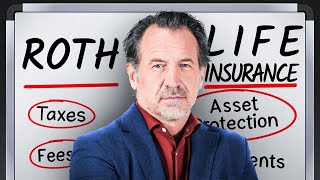
Mark Kohler and Matt Sorenson compare Roth IRAs and cash-value life insurance, weighing tax treatment, asset protection, access to funds, and costs. They break down when each makes sense for different income levels and wealth profiles.
Chapters
Where do I put my freaking money? Where I'm not getting taxed on the gains every year? Because on paper these things are amazing. But it's a loaded gun and if you don't treat it carefully or it wasn't designed properly, it can be scary.
I have a little different perspective on it. To me, there's a group in the middle of I've got good income. I've got a stable job or a stable business or self employment. I can be consistent on the premiums. I'm not a wizard at investing pretty much 99% of the time, you should.
You got to have this conversation.
Foreign
welcome, everybody, to another episode of the Main Street Business podcast. My name is Mark Kohler. I'm here with the illustrious Matt Sorenson.
Illustrious. Thank you very much. It's an honor to be here with the great and powerful Mark Decoler.
Thank you, little wizard of Oz throwback. If you've seen the title, I know we're going to get some views on this, good and bad. I don't know. It's going to be brutal. What do you think? Are we ready? You're getting the title?
Yeah. Yeah. We're going to be Talking about Roth IRAs versus cash value life insur. Specifically Iuls, because there's a lot of people who debate this and a lot of people who sell IUL policies. This is probably the number one question I get from my kids who are in their 20s, because IULs are like the hot thing on TikTok.
Well, TikTok makes the world go around, I guess.
You know, that's how they get the news.
I'm not kidding, though. I got a text this week from my cousin in Albuquerque and I asked her if she did the Breaking Bad tour. She is not. But anyway, she text me literally this week and said, I'm thinking about doing a life insurance policy for retirement. I'm like, okay, let's talk. And I go. And then she texts next one. And we were going to pull it out of our 401k. Holy hell. I was like, oh my gosh, Sarah. I said, do not do anything till we talk. Yeah, yeah, yeah.
And I think this is a confusing topic because sometimes the cash value life insurance policy is pitched as a retirement alternative instead of something else. Like it can be something else that you can do. And we want to talk about that. So understands when, when should I use it? Let's contrast it with the Roth ira because it gets talked about a lot. We want to talk about what's the order of things that you might do this. We're going to have pros and cons. There's asset protection considerations, tax considerations, investment considerations. This is why it's so complicated and people are so freaking confused about it. And I hate to say it, but sometimes that confusion goes to the favor of the person selling you an IUL. Yes.
And
I'll be focus. We sell Roth IRAs, don't get me wrong.
Yeah. And we have a lot of our client vendor contacts, referral sources and on our teams, life insurance agents that are wonderful investment advisors and there is a place for life insurance. It's not bad. So. All right, so as Matt presented the topic here, this is a difficult one. For two years or more we've been sitting here going, we've got to cover this on a podcast. So today's the day and here's the last disclaimer. Is our life insurance agents out there. Please know this is not a beat up session on life insurance. Roths are a little simpler, you know that. And so it's going to be a little easier to lean that way. So give us a little grace. The complexity of the life insurance is a wonderful thing and it's also a bad thing. And we're going to talk about that. So, so just know going in that I. This is not a crap on life insurance show. How do you say that? It's not meant to be that way, but it's.
Today's podcast is brought to you by New York Life Insurance.
And did you get a check? I didn't get a check.
Yeah, I should have mentioned that. Dang it.
All right, you got to mention that. There goes half the money sponsors.
All right, well, should we break. Let's break down the Roth IRA for a second here.
Okay. You define what a Roth IRA is in. Four or five cents.
Oh, it would be my honor. Okay. All right.
Okay.
Roth Ira, you get to put your money in it. $7,000 a year. You get zero tax deduction.
Right.
And I think a lot of people are used to retirement accounts. Wait, I don't get a tax deduction to put the money in? No tax deduction in. But as I invest that account in whatever I want, Crypto, real estate, stocks, bonds, mutual funds, private equity, whatever you want to do. You can self direct that Roth ira, as the smart people know I can. All the returns go back in the Roth IRA, no taxes. And it comes out tax free at 59 and a half, zero tax. On the way out, it was like the cash free atm. Now in that description there, there's a couple Important distinctions. Okay.
Or do we want to get into those distinctions? In a minute. That's just where the Roth IRA is that.
Okay, fair enough.
Okay. Do you want to finish?
Well, I was going to say it's long term wealth building. Okay, I want you to think about that. Think about that. Because as we compare it to this in life insurance, there's some similarities.
Yeah, yeah, yeah. There's a lot of. Okay, all right. Iul. Okay. Your life insurance agents. Cover your ears.
Okay, all right. By the way, iul, they should have came up with a better acronym for that. It sounds like a infection.
You may have the risk of heart disease. And if you have health. I can't sleep. And I call your.
You need antibiotics once you buy one of them.
Oh, I'm so sick of big pharma commercials. Okay, all right, so insurance, okay, so let's start big picture. This will help everybody listening. Okay. Insurance starts out with term or whole life. So term or whole term? You're going to buy insurance every month, pay for it every month, every year with a premium. And over that term you're going to have death benefit. It could be a million dollars, 100 grand, 10 million, whatever. So you're going to choose a dollar amount and a term. Let's say 10 years. And so as I pay my premium over 10 years and I die during that term, life insurance to my family, tax free, that's term. Well, whole life says, well, we're going to fiddle with this. We're going to take some term and couple it with cash value. So think of it like this little investment account that's tied to the term. And when you pay your premium, a portion of it goes to pay for the term and a bigger portion goes into this bucket that's going to grow tax free and it's going to be invested in very. We're going to talk about what those look like, but very conservative, consistent returns without the ups or the downs, which can be a pro and a con. We're going to. It's going to grow and let's say out of a $10,000 premium, maybe 8,000 goes to the bucket of money and two goes to term, that's going to grow and then you can borrow against it tax free at some point in the future, also long term in nature. And if I die, the death benefit pays off the loan. Or I could do a little short term loan and pay it back. So I'm creating my own. And there are a lot of people out there selling. Be your own bank.
Yeah. Holy shit. Okay.
So I'm gonna put that money in there and let it grow, and then I can borrow from it. And if I die, it pays it off. So it's long term and it's a combination of term and an investment.
Yeah, I say it's a combination of like a death benefit. Right. When you say term, like there's a death benefit value that my family would get if I passed away, plus there's like an investment account growing. And that's the. You know, the IUL is typically tied to an index. That's right. Okay. That's the I part of it. And that. Let's say the s and P500. Okay. So that might be the index that it's tied to. So that in your example, let's say it was $10,000 was put into the policy for the year. Let's say 8,000 of that was going to the cash value side of it. I'm simplifying this here so we can understand how it works. Well, that 8,000 is what's going to grow based on this index and what the life insurance company has set. And a lot of them say, and this is one of the benefits you said there, that it won't go under zero. A lot of the life insurance people say like, zero's your hero. You know, I've heard it. I've heard it. Very counterintuitive, because if the market goes down, your cash value, let's say that $8,000 doesn't go down. Even though the S&P 500, the index it was tied to, went down, yours doesn't go down. But they cap it on the other side, too.
All right, so we're getting into the weeds again. But, well, that's.
You gotta understand that you got like, how the hell is that investment growing or not? That was the part of it.
I agree. And so. And the ul, or Universal life, is a form of the whole life. So whole life, it just goes like. There's all these different types of life insurance machinations under whole life and index, Universal life, there, there's vul, Variable, Universal life. There's all. And so again, it's. The beauty of life insurance is it can be so creative and tailored, but it can also get so complex that you can get talked into anything. I said that. Okay, all right.
All right.
Okay. Okay. So let's do. Okay, what's number one? You wanted to say some. You're doing similarities or differences. I've got topics, too. What do you want to do first one, you want to take calls.
Let me I'll do, I'll do the first one.
Okay, Number one.
All right, number one, they are both asset protected. That's one pro on both of these things. Because you got options to go and invest your money, grow and build wealth. Right. I could put my money in just a brokerage account. Okay, Go on Robinhood or T Ameritrade or whatever. And I'm just putting it into a brokerage account, let's say, and, and if I'm in a lawsuit, that money can disappear. Okay. I can lose that money in a lawsuit if I get a judgment against me. My cash value in my life insurance policy is protected from creditors. My money in my Roth IRA also protected from creditors. So they both have a similarity of having a pretty strong asset protection. Now, I would say the Roth IRA gets a little benefit because even in bankruptcy you can keep your Roth ira, whereas your cash value would typically get depleted.
Okay. And we would say, we talk about Roth. You could, in a lawsuit, you could lose your Roth in a federal lawsuit or something. And in divorce, they're going to split up the cash value of the IUL
and the Roth or the IRS coming after you.
Yeah, irs. Okay, here's one I want to throw. I don't know if I'm going to have. Yes, yes on both of these, but on all of them. But of course not. But here's one I got nominal cost or no cost to set up essentially a Roth. I can go open up for 300 bucks@direct ira.com.
395.
395. So I can open up a Roth for 395 and I'm off to the races where with the insurance, I'm going to start coming out of pocket with bigger premiums right out of the gate. It's a bigger investment. It's a bigger thing. I'm just, you know, getting started in life financially. I just came out of getting out of debt. I don't know if I want to see my client thrown into immediately into a life insurance plan. The Roth is cheaper to get started. I don't know if I want to use a cheap. I need as much money.
Yeah, easier barrier to entry. Easier barrier to entry. Even if you just want to do like a free account and buy like, you know, the S&P 500 fund because, you know, if you're, especially if you're comparing it to an IUL that's indexed against the S&P 500 fund, you know, we can do apples to apples there. We love to self direct, of course, and do better than that. But let's just like, do level playing field. There is. If I can only put in a few thousand bucks a year, that's great. I'm starting to save. I'm getting money invested, and so it's more accessible. It should be the first entry point. And I would say that also for someone that makes a million plus dollars a year, I don't care if you have 50k a year and you're struggling to get a couple thousand bucks in it or you're making millions a year. I'm still saying it's an easier entry point and you should start there. Let's get that 7k 8k in there. Depending on age per year.
Yeah. And. All right, and so this brings us to one of my first, again, deviation disclaimers. Okay. Now, I know insurance agents out there. We're talking about the majority, the average. We're talking about a person making 50 grand to 5 million grand a year. So if we look at the average of, you know what people, the best entry point for them as a whole. This is why we say, now, could someone that's making a ton of money already have 2 million sitting in a 401k them going out and putting 5 grand in a Roth? Is that in their best interest? Should they maybe start with a life insurance policy? Maybe? Sure, I get that. Yeah. There's going to be exceptions to this rule. We're just saying in general, cheaper, easier, better entry point for most people.
Totally agree. All right, Okay.
I concur. You know, thank you, doctor. I concur. Catch me if you can.
Yeah. Very great.
Leonardo DiCaprio. He was great in that. Okay, now I'm. I'm making this list. This is gonna be good. This is gonna be a good article.
This is a good article. Yeah.
You can't still.
This is. This is classic Mark Kohler. He makes a list from our podcast and turns it into an article.
You know, that's a. It's called marketing. You ought to try it. Right? I've got a few. I'm trying to learn from you.
Let's be honest.
You have your silver play button yet?
I'm getting there.
Okay.
I'm working at it all right now.
But I bring this up because last night I was like, I'm going to, you know, Roth versus life insurance. I was like, I'm going to find a good article on this. Guess who's wrote all the articles on this? Life insurance.
Life insurance.
Oh, it's great. Oh, it's great. I'm like three pages in. I'M like, can someone that's not selling me life insurance compare these two, please?
All right.
Okay. So do you have numbers? 3.
I got a good one.
Okay, go ahead.
All right, Tax benefits. They both have tax benefits. Again, if you go back to how do I grow and build wealth, I could have a brokerage account. I put money in there and I'm making investment returns. I sell stock, I get dividends. It could be real estate. I got a gain. I sell a property or small business, whatever it might be. Crypto. Well, you have tax when you do that. Well, in a Roth ira, there's no tax. It's growing and building up tax free. It's going to come out tax free later in retirement. Same thing with the cash value component of the IUL is that value's growing and the insurance company is increasing my cash value from the investment returns. I'm not paying tax on that either.
Tax free growth.
Tax free growth.
Boom. Okay, well, since you brought up the I word investments, let me bring up the next one again. Pros and cons. You can control your investment with a Roth. No, And I think self directing is a separate point, but just right off the bat, I can choose what my Roth invests in with the life insurance policy. It's indexed or variable. The end, they're going to do their thing. And you kind of explained that before. There's a pro and a con. I had a little star on this one. I say, yeah, I can control my investments in the Roth. And the insurance companies go, yeah, maybe you shouldn't. Maybe you suck at that. I was actually talking to my son Dylan, and Dylan was like, you know what? I don't have time to figure out what investments are or good investments. I like the life insurance because they're gonna do it for me and they're gonna protect me from the lows. And even though I don't get the
highs, that is probably. I think that's a very powerful point and one that is understated, actually. And this is one I actually wish the insurance companies used more. And I don't think they do. Cause they don't want to insult people. Because let's be honest, not everyone's a good investor. And I think when it comes to self directing, and I said this yesterday, and this could. You're picking the stocks, you want the real estate, you want the crypto, you want the private equity fund, you want. Not everyone's good at that and made out for it. Also, there's something called the roh. Do you know what the Roh is.
No. Is this a new.
It's not the Real Housewives of something. Now, Roh return on Hustle. Okay. Oh, what's your return on Hustle? Okay. And for a lot of people, self directing, you gotta do some hustling a little bit. You gotta go find the deals, analyze them, you know, have some contacts, make some relationships, kind of be in the game. Game versus you just drop money in to a certain. And you can have an advisor, of course, that could be managing and doing those things for you. But that's, I think, a pro, certainly for the cash value and insurance company is. We're doing this for you. We're protecting you from the downside risk of the market going down. If you're a very conservative person and you don't have to do any of the investment management.
Yeah. And I did, I put yes for the Roth. You get to choose your investment. No, for the iul, but I did a little star. But that might be good for you.
Yeah.
It might be in your best interest to have that certainty.
Yeah. Now can I do a double asterisk?
Okay. A double two star. Okay.
Yeah, let's go to two.
Boom, boom.
Now here's, you could say on the other side of that, if I did a cash value life insurance policy that was tied to the s and P500, couldn't I have just bought the S&P500 in my Roth IRA?
Oh, you mean term and invest. Yes.
Ooh, I like that.
Yeah, we'll come to that. So.
And that.
Okay, so we're getting into some opinion and I think this is a good one because I'm gonna, I wanna, if I can add to that, this is a good point to bring that up. One of the theories out there that's very prominent is I'm gonna buy term life insurance because we know we need some death benefit. There's. We need some people. Some people do. Yeah. Until you're self insured at a certain point. I need some death benefit. If I died, my family needs income. It could be male or female, husband, wife, maybe a joint term, whatever. But instead of taking that other 8,000 and letting the life insurance do their thing, I'll take that 8,000 and I'll invest it and I'll buy the same damn thing they're buying. But I get the highs and I can pull it and go invest in something else and I have that control again. But then we get back to the first askers.
Well, maybe that's not good for you.
Yeah, it's so hard because you really. And this is going to maybe be one of the themes at the end. It's going to be very individually driven. Yeah, but, but you want to go in with your eyes wide open, so not eyes wide shut.
That's different.
Cruise. Yeah, yeah.
Great, great flair.
Okay. Okay. Do you have another one? I've got, I've got some more.
Yeah.
You're ready for the next one.
Why don't you do one?
Okay. All right.
How do I got to come up without the idea?
Okay. Oh, geez. Notes to self there. Okay. You can take your money back out of the Roth tax free, whenever the penalty free, whatever the hell I want, anytime. Day two. Tell me you can do that in life insurance.
Oh, but great one. Yeah. And that's not, that's, that's a big misunderstanding. A lot of people think of a Roth IRA because it is only unique in a Roth IRA. Right. If I've got, if I put seven years of contributions in of $7,000. 70 grand of contributions, and now my account's worth 150k from investment returns. You can take out that $70,000 of contributions whenever you want. No tax, no penalty. You're 42 years old. You're like, I can take that out now. I want to use that money now. I'll let the returns ride. And you can't take those out early until 59 and a half without penalty. But your initial contributions are actually accessible immediately. And so I think of a Roth IRA almost like a savings account different like this supercharged savings account because in a traditional IRA or things like that, I can't pull it back out. I already took a tax deduction. If I want to get back out, I got to pay taxes the contribution. So that is a huge perk on a Roth ira. And I think that's again, what makes it more accessible is the entry level thing, because a lot of people, that person who can only put in a few thousand dollars a year to a Roth IRA might be in a situation where they need that few thousand dollars back in two or three years. And I think the ability to know I can get that encourages them to continue to save and invest and grow it, rather than having the fear that I can't access that money.
Yep. All right, next ask Chris. Okay. You're counter to that.
Okay.
I'm trying to play both sides of the, you know.
Okay.
All right. We have to wait till we're 59 and a half for the growth.
Yes.
And see, so now let's give, you know, our listener here, a life insurance Thing point when you invest in that IUL again. So I put my $10,000 in a year. Da, da, da, da, da. There's this point where the cash value has to first pay for the commission and the administrative cost of the agent selling that policy.
They get a commission, we're going to cover that.
All right, so the cash value, so when you put in 10 grand, and if you wake up next year and go, I want my $10,000 back, well, I don't get my 10 grand because I paid for a year's worth of term, $2,000. Okay, fine, I want my eight. I want the money that's in my cash. It's not there. What do you mean it's not there? Well, it's not, it's growing. But we got to pay for the cost of the commissions. And this and this it takes on average, from what I understand, again, my life insurance agents out there are hating me maybe five to seven years before that cash value really gets some legs under it.
Yeah.
And so I've got to wait five to seven years to get that cash value if I want it or can borrow against it. Now, again, I know agents, we're going to do a one time premium. We're going to do a 5 premium pay deal. I know those are the exception, though. But the Roth IRA, I got to wait till I'm 59 and a half. And the life insurance agent go, whoa, whoa, whoa, hey, you're in your 40s. You could access this bank of cash, you know, by age 50. Oh, okay. So again, this complexity starts to.
Yeah, so it's accessible like your, the 40. It's accessible 459 and a half, but not at 42.
Yes.
So there's middle ground, so to speak, of it. But also that could be a larger amount, depending on the amount you're putting in, than $7,000 a year in a Roth IRA.
And some people need to know the rule. With Roth, it's five years or 59 and a half. So you had clients come in at age 58 and go, hey, I'm ready to start my Roth. Okay. Your party late, but that's okay. Here's a red Solo cup. Go. Yeah, go to the bathroom. There's a keg in the, you know, bathtub that was a little more detailed, which means you may have lived that. But anyway, I keg in the bathroom with all the ice. Okay. Obviously you've not been to a frat party in your poor thing.
It's been, it's my college experience was a little Different. Let's just say that I was a dad. You're going to night school. Okay, different.
Anyway, a 58 year old gets to the party late and they're like, okay, I'm going to start my Roth. Okay, well you can't take money out till you're 63. So there is that five year wait too. So.
And they could still get the contributions out, but the investment growth and returns. There's also that five year rule.
So it's muddy. That's my ascrow.
It's muddy.
It's a. But. But you can always get your contributions right back out in Roth. And you can't argue with that.
Yeah. Now the cash value, I don't know that we said this, but how do you get the money out of the cash value? How do I access that cash value? Because if there's a cash value of, let's say $200,000 right now built up in my policy, I don't need to die for that.
No, you can borrow against it.
That's not a good self pitch. If you want this money, you're going to have to die for that.
That's a great tax strategy.
Yes, it is. But you can take a loan against it. That's what I was trying to get to is you can take a loan against the cash value of your life insurance and, and you do pay interest back, but it does stay invested in growing too. So it's. So we might come to that. I don't know if you got that later, but that's how you're accessing the cash value. Through a loan.
Yeah, and I don't know if that's a pro or it's just that's, that's the attribute. Like with the Roth ira, you just call up and say, I want my money. You know?
Exactly.
Life insurance, it's called loan. Okay, people, here's an important point. If I sign up for a life insurance policy and I quit paying the premiums and it's not designed properly, that baby's gone. If I start a Roth and I start putting money in it, and then, oh, two years, three years from now, I have a hard time financially, I can say, you know what? I'm not going to contribute to my Roth this year. I got bigger fish to fry. I got issues. I'm just going to let that Roth marinate, let it keep growing, but I'm okay. When I come back a year later and start to invest again, my Roth will be there with that life insurance policy. If that cash value can't pay the premium, it's toast. And it's happened to me twice in my freaking life. Twice.
Yeah.
I started a life insurance policy when I was in my 20s. We went off to law school. I didn't have money to pay the premiums. By the time I got done with law school, Life insurance policy gone. Yeah. And the agent was bing. And then we had an irrevocable life insurance trust for my parents. And I've talked about this before, so I'm very transparent. But after my dad's death, the IUL and the was just cranking along. And then five, six years later, into my mom, who's, like, in her 80s. The policy just like little engine can up there, and the cash value couldn't pay the premium. And so $3 million in death benefit gone. And I've talked to Randy Luebke, who we love Michael Bradley here. We love him. Wonderful investment advisor. They're like, yeah, well, it got designed wrong. Well, how was I supposed to do that? My dad or mom in 1992.
Yeah.
You know, and so that complexity is great, but then it scares the hell out of me.
Yeah. And here's. Here's how that happens. When I'm trying to understand. Everybody understands how that happens is let's say you make a bunch of these premium payments into the. Into the permanent insurance policy. Okay. This iul, let's say. And after a while, you're like, I've got a pretty big cash value now. And maybe you start accessing that cash value. Well, what happens is by borrowing. By borrowing against it. Well, you've got a borrowing cost and interest. There's still a death benefit premium that essentially needs to get paid. And so it starts eating into the cash value. So now the cash value starts going down. If I'm not.
You're borrowing against it. It's paying the premium. You think all is. Well, my entrant's a great guy sitting on a beach somewhere. I love him. He calls me all the time.
No. Did they, like, hey, you might want to check this, because it's about to lapse. But that's what happens, is then the policy. There's no death benefit left because the cash value. There was nothing left to cover the death benefit. And let's be honest, as you get older, and the premiums are very expensive.
Yeah.
And so it's not just like, oh, just send us a few hundred bucks. We'll keep that. You know, send 100 bucks a month for that insurance premium. No, it's like tens of thousands of dollars. A lot of times, especially someone in their 80s. So that's where people have gotten burnt on this.
Okay, now time for another digression here, a little, you know. Okay, life insurance agents, this is why I get it. Life insurance strategies are for the wealthy. They've got the wherewithal, they've got the, the backstop of the financial income or wealth to sustain this. Because on paper these things are amazing. I'm not saying they aren't, they're great. But if you, it's a loaded gun and if you don't treat it carefully or it wasn't designed properly and you don't have the right equation in your life to sustain can be scary. And so I think they're amazing. Which brings us to probably a point that needs to be made. If all life insurance agents had that type of integrity and understanding and chose the right candidate for life insurance, for investment and banking on yourself, we'd be okay. We wouldn't be having this conversation.
Right.
But the problem is get sold to people that shouldn't be effing buying it. Yeah, that's my opinion.
Yeah, hate me. I have a little different perspective on it because I don't think it's for the wealthy. I actually don't. I have my career, the 10,000 consults. I have never ran into a client that said I'm wealthy because I bought a cash value life insurance policy. That's not why they're wealthy, that's not how they built their wealth. They might have it. But also if they are wealthy, they don't really need a death benefit. Why do I need insurance? I got assets. And so I don't know that that's the right candidate for it either. But here's who I know is definitely not the candidate for it. And this is the one that I why I'm probably the most opinionated on it is the IUL in particular is sold very hard to young entrepreneurs and real estate investors whose income is so up and down, not stable, they're still learning about finance, not able to make the best decisions, and they're the ones that don't have the ability to maintain the payments because you've got to be able to make it through five to ten years on that type of policy before being consistent on the premiums and getting some cash value built up before it really works in your favor. Otherwise, it's all really for the insurance company. Now. There's a glue, there's a. To me, there's a group in the middle of the, hey, I've got good income I've got a stable job or a stable business or self employment. I can be consistent on the premiums. I'm not a wizard at investing. I don't want to be that. I want some death benefit. I'd like some death benefit for my family and loved ones maybe. I've got young kids and stuff. And I think that could be a really good fit for that type of person. But if you're already wealthy, why do I need it?
Well, and the answer I've been told many times and I get is that I've as a wealthy individual, they're looking for tax breaks, which we need to say one of these is neither of these. You do you get a tax deduction to do right.
On the way in. On the way in.
Yeah. But when you're wealthy and you've got discretionary income, you're like, Yep, funded by 401. Yep. Funded my Roth. Oh. Bought my rental this year. Oh, I own all the buildings. I rent to myself. Oh, my business is doing great. Where do I put my freaking money? Where I'm not getting taxed on it, on the gains every year. And they're like, I'm going to go put it over here in this life insurance policy where I know I'm going to have stability. I know I don't have to set it, forget it. I know it's not going to have highs, but I know it's not going to have lows. And I can go borrow it, bake again. I can loan it to my business if I need some cash. And I'm rolling in so much money, why not?
I love that. That totally makes a ton of sense. Cause it gets back to that return on hustle a little bit too. Your time spent going and growing, building your wealth and the things you already know how to make it. But I think what you should do if you're in that scenario is that's when you get an advisor. That's when you go get the registered investment advisor. The true fiduciary. Like a Randy, like a Michael. That is like, all right, let me look at this. Because I've got a lot of options of what you can do with your. With your money and your wealth. Let's look at this. And this could be one of the considerations to talk about.
Yeah.
And let's weigh the pros and cons. Be a little analytical about it. It does depend on your situation. Do you need death benefit? Do you have younger children? Do you have maybe some adult children that aren't financially independent yet? Do you Have a spouse, what's their health situation like? There's so many variables to this. Um, and so I think an individualized advice from a fiduciary rather than your financial advisor being a life insurance agent primarily I think would be super valuable.
Totally love it. And I, as I was preparing for this, I bounce this off Randy and he was, he was like Mark, because one of my arguments, let me just get it on the table here too, is that the Roth, I can have some big swings. I can like, I can self direct it, which we is different than a choice of investment. So I can get a massive ROI in that Roth if with that hustle point.
Yeah.
But on the flip side I'm, I could also lose it all. And so Randy's like there's, you know, putting money in the Roth makes sense in that situation. And then on the tail of that he said, but an investment advisor also has so many other tools in the toolbox. There could be the Super K, the DB plane, there could be donor advised funds. Let's see what we're doing with your charitable world. And so, and I think if you are at that level again, life insurance is in the toolbox. But an RIA is going to be able to say better craft the right strategy for that person.
Yeah.
Because goals, age, health, it just goes,
yeah, it's, it's tricky. And that's, and I think also recognizing what type of investor you are. But there's, that's the thing is the, the, the IUL is one option of investing and, and trying to build wealth, provide protection for your family, amongst many things. And so, so yes. But I think the other category might be just another thing I was just thinking about is an investor that doesn't have ordinary income to make IRA contributions. I don't have earned income.
Oh, okay. All right. Well, I mean we got the side door for, but they're living off something. If they don't have real estate, we can't do the side door. I'm with you. That's a good point. Okay. I have one last one. Yeah. Okay. And I think we can wrap this up if you want to put a
wall to be or something.
I, I, you know, I got a busy day. What do you got a tea time?
Is that it? It's technically a pickleball court time.
All right. Yeah, you know, it's a reservation. I gotta go back to work, you know, so. Okay. All right. It's a reservation. Okay.
Someone's gotta do it.
You. Okay. If you want to put a lot of money in, in a big swath. See. So the person that has that money to say I gotta do something, what, seven grand, eight grand a Roth. Well, you can do the mega backdoor. Well, I'm part of a 401k here. The mega backdoor. Roth may not work for me and they can't do the dbe. They got affiliated group problems. So they're like, I can put a lot of money into this plan and start building it tax free in a single premium, two or three premium pay deal. With a Roth, there's a limited dollar amount that could go in asterisks. Well, we could convert quite a bit over from a 401 into a Roth and plow a lot of money into that Roth. Real quick. If you've got 401k money that you've accumulated. Well, I got to pay the tax on it. Well, you got to pay tax on that money before you put it in your 401k. I mean, in your insurance policy too. Yeah, that's a tax money that goes into your insurance policy.
Good point.
And it's. And yeah, I got to do the conversion on the 401k. So I think there's an asker there. Yes, the Roth has a lower cap, but through conversions maybe. And it's after tax money anyway, so it's a level playing field there. I don't know.
Yeah. And I think this gets back to something we mentioned earlier, which is there's an order of things for this.
Move to the summary.
Yeah. And we got like the ideal order of investing when we talk about this, which is if you got a 401k, whether you're self employed or you have a corporate job, take your 401k match and get the hell out. Then go do your Roth ira. If you're high income, do the backdoor Roth ira. You got a spouse, let's have them be doing a backdoor Roth IRA or Roth IRA. You got kids? Maybe do kids Roth IRAs. But, but, and then we kind of go through other next things to do. There's a lot of other things. Let's do the hsa. You know, I think the IUL or the cash value life insurance might not even be on the ideal order for some people and other people it's going to be in there. But it is definitely for someone that's got a lot more than just like tens of thousands of dollars to throw in. I think you got to be prepared because I think there's a lot of things you do before that.
Yeah, yeah. So on that Note. I'm going to just be bold and summarize in this way too. I think it starts with the Roth. I think almost at any age, any income level, you should be at least doing your Roth every year again. You can go access the money, take it back if you want. Penalty free tax, you know, tax free. The contribution and then the life insurance. Conversation needs to be had with a trusted advisor. Give us a call, we'll hook you up. We're not investment advisor.
There's a sum in the tax pro network.
Yeah, our tax pro network. We got you. But once you do that Roth, and this is for the far majority of people across all walks of life and income levels. Let's start there. Let's get out of debt, let's put money in our Roth, let's start saving. And if you're so good at it and you've got discretionary income and you want to do more and you don't have some death benefit term insurance, you got to have this conversation. And it could be, it could be a wonderful solution. But that's my take. Love me, hate me, I'll get a hate mail here and there.
But yeah, I think my take is like probably the worst take anybody wants to hear on this.
It depends. Are you going to say it depends?
I was going to say talk to your advisor.
That's it.
But yeah, but it's true. I mean, I mean, hopefully we fleshed out some of the pros and cons to this though, and the right ways to think about it because there are a lot of different pros and cons and you can't just say Roth, IRA and iul. It's like they're not competing with each other, you know, it's not a freaking competition. Okay. To me, it's Roth IRA. Then consider IUL. I'm almost, I don't. I'm pretty much 99% of the time. You should do a Roth IRA and then consider the IUL once you get advice from advisor. We kind of got it.
The ira. The long term. The full term.
Yeah.
Well, because now we're waiting, we need the podcast studios.
Oh, okay.
Our time's up. Okay.
Well, I, I do bill by the hour, so I just want to make sure I got a full hour in. Yeah. Yeah.
Okay. All right. All right. Okay, we're going to cut. This is good. Okay. Okay. You hop out. Okay. This is good. Okay. All right. You got that? We may consider putting that in. That was fun.
That was nice. Yeah.
Riley Pops in the studio.
That's right. She's like, get the hell out of here. This is good.
All right, well, take us out.
All right, well, thanks, everybody, for joining another incredible episode of mainstream business podcast. Please subscribe, share this with your friends and family. We'll see you next time.
Thanks, everyone.
More from MARK




The secret to managing your family's future #financialfreedom #estateplanning #shorts



Moving Property to an LLC: What They Don't Tell You #realestate #investing #tips


