The Handshake Deal That Destroys Partnerships
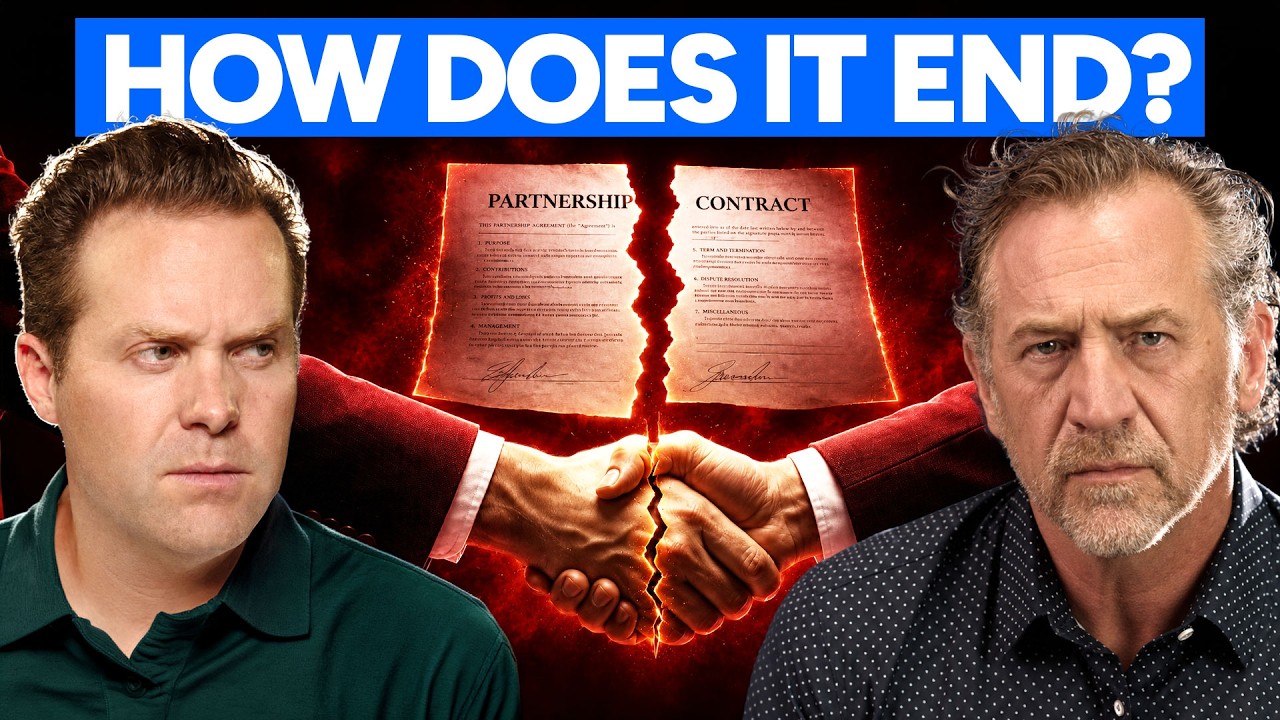
In this Main Street Business Podcast episode, host Mark Kohler and partner Matt Sorenson warn that creating a partnership LLC without professional help is a recipe for legal and tax disaster. They walk listeners through the critical elements of a partnership LLC, emphasizing the need for a robust operating agreement that coordinates with trusts, legacy planning, and buy‑sell provisions. The conversation covers the "4 Ds" (death, disability, divorce, departure) and how buy‑sell clauses, life/key‑man insurance, and separate agreements can prevent family litigation. They discuss tax pitfalls such as improper S‑corp elections at the partnership level, phantom income, and mismatched retirement planning. The hosts also detail operational considerations: defining responsibilities, authority, voting and tie‑breakers, capital contributions, manager‑vs‑member structures, and exit strategies. Finally, they caution against conflating partners with investors when raising capital, advise using a single attorney for the whole agreement, and promote their law firm’s tax‑planning services.
Chapters
A DIY partnership LLC is a lawsuit waiting to happen. What happens in a partnership if something happens to you? Who's going to inherit that LLC?
I don't want your ex-spouse that you don't even like anymore to be in this business with me. There is a document that is absolutely critical in this called your LLC operating agreement. The level of risks you can solve in this operating agreement just goes up exponentially.
Raising money and starting to call these partners investors is a very dangerous Welcome everybody to the Main Street Business Podcast. My name is Mark Kohler. I'm here with my partner Matt Sorenson talking about partnerships. This is going to be a tough conversation, Matt. Are you ready? I've got a laundry list.
Should I be prepared? Do I need to have a lawyer present to represent me in this?
But the sad part is you probably got a list for me.
But, you know, give and take in partnerships. And that's why why it's important you set up your partnership properly. Well, that's what we're going to talk about today. LLCs are the most common entity to use for partnerships. So we're going to talk about the partnership LLC, what you should be doing, thinking about structuring, and talking about with your partner as you're setting it up.
Yeah, and I just, over on my YouTube, I did a video recently on doing a DIY LLC versus using a lawyer. And I get it. There are some times and arguments where, hey, a business owner that's got some good experience, they've set up LLCs or corporations before, just knocking out a simple LLC on their own. I can understand those instances, but I'll tell you right here and now, if you are going into a partnership, there is no way on God's green earth you should be doing this yourself. Did that make sense?
I don't know.
Yes. Okay, good.
Yeah, that was pretty clear.
That was pretty clear. Because there's so many issues when you're doing a partnership and we're going to list them here, but just a DIY partnership LLC is a lawsuit waiting to happen, period.
Yeah, so obviously when you're setting up a new entity, let's just start laying some things out there and what we're digging into is, You're going into a new business with someone. This could be a rental property, a real estate project, a side hustle. This could be the next big startup and you're, you know, the Apple co-founders or the Microsoft co-founders, you're whoever. Okay. Um, there's all these famous partnerships that have been formed that have been some of the biggest companies in the world. Warren Buffett and, um, Charlie Munger. I mean, the list of partnerships go on and on. Matt Sorensen, Mark KOHLER. I mean, all these incredible partnerships over the years. But there are, there is a document that is absolutely critical in this called your LLC operating agreement. That when it's just you that owns an LLC or you and your spouse, it's really just about you and some asset protection things and some record keeping we want to ensure you're getting. But the level of risks and problems you can solve in this operating agreement just goes up exponentially in a partnership and makes this document so much more important.
Yeah. Okay, well, let's jump into it. And what I love a lot of times about my partnership relationship with Matt is we can— this partnership, we've had the makings of a band. We just played our Main Street Band at the 360 event in Dallas. And I don't know if a real rock and roll individual would call us give us the credibility of being able to riff, but here on our podcast, we can. And so I'm going to throw out number 1, and there's no particular order here. Does that sound good for you? You ready to go, Matt?
I'm ready. I think what you're saying is we're riffing here, not like we did at Dallas at the Tax and Legal 360 event, but perhaps more suited to our skill set here on what we know and are good at. Is that what you're saying?
I'd love it. All right, so number one that comes up for me that just— because there's just so many going through my mind right now. The first one is when it is the coordination with your overall structure and your legacy and your family. For example, if you're setting up your own LLC, your revocable living trust should be the owner. I'd say 80% of small business owners setting up an LLC just make themselves the member. They may even make it worse and do a member-manager. They don't think of how is this LLC going to be coordinated with my overall trifecta. So what happens in a partnership is if something happens to you, who's going to inherit that LLC and this project that you've barked on. And if you don't make sure your trust is a partner in that LLC and your partner's trust is the owner, who are you going to end up with as a partner if something happens? And this opens the whole Pandora's box for what's called a buy-sell agreement, which we include a kind of a truncated version in every LLC we do, that if something happened to Matt, my partner, there's a procedure where I can buy out his family for a predetermined equation so that we're not in litigation. Our families are not in litigation. Some nightmare. And it happens all the time. So I was going to say, number one, if I can put a fine point to it, is in a partnership LLC, you've got to think about the the departure of your partner if something were to happen that's unforeseen and is it coordinated properly? That's my number one. Would you want to add to that?
Yeah, I think that is definitely one. I kind of make a couple of points here as we start unpacking this is, if this is an operating LLC, it might be your S corp that's the member in the partnership. So for example, Mark and I have multiple LLCs where we're both partners. We have LLCs that own commercial real estate. So we have, you know, an LLC that owns real estate in Utah. Well, that's rental property. My LLC— my trust, excuse me, is the 50% owner. Mark's trust is the 50% owner. And we have a buy-sell clause in there, buy-sell agreement clause in there. We'll unpack that more. Then we have some of our operational businesses. Take the law firm, for example, that's a a limited liability partnership, just like an LLC. So it's our partnership entity that conducts business. But my S corp owns my ownership stake and Mark's S corp owns his ownership stake. My trust in turn owns my S corp. All right. So we're getting the coordination down a couple of steps on an operating business. So you might have an operating business that's an LLC, that's the partnership, but your S corp might own it if it's more assets. And think of the trifecta we always talk about— left side, right side. On the right side of more assets, think of the rental property or real estate. Your trust is typically going to be the partner, definitely not your S corp. And it shouldn't be you either. You need to have a trust and that would be the partner.
Yeah, the buy-sell agreement, we many times we set up a whole separate agreement that takes into account divorce, disability. What if one of the partners wants to leave, depart, depart? And I call it the 4 Ds.
Yeah, it's the quadrupedi.
Yeah, entire podcast on that.
Yeah, and I think those are the, so remember, death is if, so if any of these one things happens to any partner in the LLC, death, disability, divorce, departure, how are we treating that? If I'm the other partner in here and all of a sudden, you know, my partner's getting divorced and well, what's happening? I don't want your ex-spouse that you don't even like anymore, probably, to be in this LLC. Business with me. You know, what if you just want to leave the partnership too? And you're gonna leave me hanging, and I got to do the whole thing? Well, do I get to buy your ownership out? Like, I don't want to be here just having to do all the work. And now you're off in la-la land doing something else, or you're on a beach somewhere, like, hey, great, you just keep doing this, you know, you don't get to retain your ownership. So if you want to leave, like, or you want to sell or monetize that, you know, we got to You got to have a process for that. And of course, the death and disability to an extent are typically dealt with using life insurance. It's like Mark and I have life insurance policies on each other. So, you know, like if I pass away, essentially in the agreement it says, and this is in our operating agreement for LLCs with partnerships, that we would— it's included in this as we're setting this up. And again, Mark said you can have a separate buy-sell agreement to flesh this out more fully.. But if there's a life insurance policy, like the partnership's paying for that, when I die, my family gets the proceeds of that life insurance policy. And that's effectively buying the interest out for the surviving partner. So Mark would take 100% of the entity. My family got bought out based on the value. And there's an equation in there on how you assess that. And, and that way you're not dealt with 'What is this worth?' Or my heirs coming to the table saying, 'Mark, we want more for this,' or, 'This is worth more,' or, 'We don't have the money to buy you out, so, but let us sit here until,' you know, it just, it solves a lot of problems. Obviously, you can't get insurance for divorce as far as I know, um, or the departure, but you can get insurance on the disability side too. We haven't done that, and I don't see that as— we do say every once in a while, But life insurance could be something to get. And I think if you have an established business you've been doing together, particularly an operating business, I think that life insurance— it's called keyman insurance— is good. If it's a real estate deal or something more passive, I don't think you need to necessarily worry about that. The asset itself can typically be sold or otherwise figured out with the surviving family. But I don't know. Just want to bring in the life insurance part of that on the 40s.
Oh no, I totally agree. I think that's a great example that everybody should be thinking about. Now I want to digress on two points and then bring up topic number two, but here's my two points. What we're trying to do today is just give you things to think about that, oh my gosh, I did a partnership LLC and I never even considered that. Or I'm going into a partnership, I'm going to make sure I've got this list of things to talk about in the process. So today we're not going to be able to unpack every one of these. I don't know how many points we're going to be able to even get through because there's really so many. But the second point too is you don't have to have two different lawyers. That can get really expensive. It can get weird. I like it when a partnership comes together and say, hey, let's draft this partnership. Let's use the same attorney that will waive privilege. So that way it's an open book. One partner can't call me and go, "Hey, screw over my partner." So I like using one lawyer for a partnership setup. It can be more affordable and we do it every day at our law firm. We get two partners on the phone, we talk about these issues, we craft the right agreement. And so today, just be aware of the issues. And number two, don't think this has to be that complicated.
Yeah. And I'll say the most common scenario where we're dealing with a partnership LLC in our law firm and our lawyers are working on this is you've already set this up and you're already operating this business and you're like, we didn't talk about a lot of stuff. A few things have came up. We should get this done right. That's a good opportunity also to just kind of look at the structure. How is this set up and established for tax optimization, asset protection, but more importantly, for how you and your partner are operating, what you have agreed to. Sometimes in that consult too, as we're going through that and you're working with the lawyer, you're going to think of stuff that you're like, ah, we haven't really talked about that yet. And it's good to flesh it out before you're in that scenario to get on the same page. Because once you get into some of these scenarios, if we haven't talked about it, it gets a little ugly on what's going to happen. And there's definitely some problems we've seen over the years from partnerships that fail, not because the business is failing, not because there's anything wrong with whatever they were doing to make money, but because they weren't on the same page.
Now, topic number 2. Could I throw out topic number 2 and let you—
I thought we were riffing back and forth and it seemed like it was my turn. But if you want to keep soloing, you know, if you want to keep soloing, keep— go for it.
Well, you commented so much on my topic 1, I thought, you know, we were That's true.
I, you know, I riffed on your riff, so fair enough.
Well, I bet you my number 2 is going to be on your list anyway. All right. And that was just tax planning. And you kind of referenced that with the S corp. You want to elaborate on that?
Yeah, I think probably one of the most common ones we're doing is, is including S corporations in the mix. If you didn't have them already, particularly for you with an operating business. That would be on the tax planning side, one of the most common things. Maybe you're starting to add employees though, you know, and where do those employees add in? Maybe you're thinking about adding a solo 401 plan. Even with a small partnership, just you and your partner working, you guys can actually have one solo 401 plan that each of you can be contributing to in your own separate accounts. I mean, there's a, we have a whole checklist of stuff that we're going to look at on the tax side And just right now, actually, in our law firm, I just, you know, commercial interruption here is we are doing a mid-year tax and business consult where we can look at your overall situation, give some tax strategy and planning. We can look at your partnership. There'd be additional fees to restructure that. You can save $200 off if you're a new client coming in for a mid-year tax and business planning consult, $300 if you're a returning client, you've done your trifecta with us before or something like that. But you can save $300 for coming in, getting that update. And so what we're doing there, just, you know, it's like we're looking at your tax situation, we're going over your entity structuring, we're conducting a trifecta, and we're giving you a tax implementation plan in that consult. So thank you for the commercial interruption here. And our sponsors of the show, KK Ossores, we want to— we appreciate them and their long-term commitment to sponsoring the Main Street Business Podcast.
Well, and let's go through some of those subpoints because you had already a couple that I love. Is that if you're going into a partnership that is operational, what we see as a problem is taxpayers, they'll make an S election on the partnership LLC, and that is disastrous. It really inhibits the ability to take write-offs, believe it or not. And I've even got a chapter of this in my book, "The Tax and Legal Playbook." So, The S corporation is important, but at the partner level, not the partnership level. And we could talk about that for an hour. So just put that on your list. The second thing Matt mentioned that I really like is the retirement planning piece in a partnership, because one of you may be in a situation where you want to put way more into retirement from the partnership proceeds. And the other one's like, no, I got kids in high school, or I got kids in college and I, I'm not interested in more retirement planning. So if you're going to do a partnership LLC, you've got to talk about that so you can create the right structure for each of you to do what you want with the retirement planning. If you just do a cookie-cutter LLC, you can actually shoot yourself in the foot on that. And what can I throw out one more on the tax mat and then maybe you clean it up.
Yeah.
Is you bring us— bring it home. Is the The third thing is phantom income, which is a tax problem. Like one partner may say, I want all the partnership proceeds to go back in the business. I've got income over here, I don't need money from the partnership, so let's just put it back in the partnership. Well, the other partner's like, what the hell? I want some money out of this partnership 'cause we're going to have income attributed to us in this partnership and I got to pay taxes on it. And so when an LLC makes money, it's going to have profit on paper. But whether or not you distribute money is based on the operating agreement. So if one partner says put it all back in and the other partner says take it all out, you're going to have tax problems with when you're not coordinated on that. So I just want to get that on the table too.
Yeah. Yeah, I think the— and everyone's situation gets a little unique, so We, you know, here we can just throw out some kind of broad strokes. But when you're working with a good lawyer on this that understands this, that works with partnerships and understands the tax side of things, you can really optimize all of these things because our goal is not just to get it legally right. So you have a good partnership agreement and structure and some asset protection in the entity, but also to make sure that it's tax optimized to 'Cause a lot of lawyers, I'll say, are not as great on the other side. They can get the contract down and the agreement down, maybe even the asset protection, but they're not as great on making sure the tax piece gets optimized and they don't do a good job coordinating with the tax advisors or CPAs that could be involved. So we want to make sure that that's all coordinated and optimized together. But let me hit the next one, which is responsibility and authority. Okay, so when we're talking about a partnership together, I think it's really important to define what responsibility does each partner have, and also what authority do they have to do things. So let's, let's take a— now sometimes you might be, oh, well, we're 50/50. Well, 50/50 means you guys have to agree on everything, by the way. So are you okay with that? What did you need, a tiebreaker scenario? You might want to think about that because you have— you basically have no authority to do anything unless if your partner disagrees. And there's some things you can do there on, on, on a tiebreaker. Um, even Mark and I at one point have had in our partnership agreements a third party we would go to to kind of be the tie-breaking vote. We've never had to use them, but, um, so, so there's some things there. I, I don't know if that's required, right? Always recommend that. But just if you're 50/50, just realize you could be in that deadlock scenario. But I think what's important is, and where I've seen the most opportunities to do a lot of good planning in the operating agreement to avoid disputes down the road, is when you have someone that's, say, the cash partner or money partner, and someone else who's the work partner. If I'm, if I'm the cash partner, and let's say you went 50/50 into a an LLC and you're the one putting in all the money and the other person's the one doing all the work. Okay, I presume we're going to give the person doing all the work most of the authority. They get all the day-to-day decision-making. They may be the manager of the LLC. They can sign on checks. Maybe they got to check with me if we're going to go into debt or an expense over $10 grand or $50 grand. You know, there's some certain things I might want to be involved in, but I'm not in this business day to day. So I'm the cash partner. I'm more in the investor seat. Okay, well, that sounds great. Well, what happens when the business isn't doing well and we need to put $10,000 in to cover our expenses because we're short? Am I the one that puts in the money? I'm the cash partner. Do I put in $5,000 because I own 50% and the work partner has to put in $5,000? Was my commitment just the initial money I put in, or is my commitment to always be the person who has to put in the cash as we need it? So make sure you're defining that. Also, if you're the work partner, do you get a salary on top of the work you're doing for the equity in the deal? If you're getting a salary or management fee or other compensation from the LLC, is that only when there's revenue? Like, what is the agreement and understanding? Um, I think getting on the same page on that is super helpful. You will not solve every scenario. Let me just say that. A good partnership agreement is never going to encounter everything, and you will kill yourself trying to solve every problem that could come up in every what-if. But we do know in that work partner investor model, you have different roles. So let's make sure that what you've talked about and agreed to is what actually ends up in the document. And think about not just— I think people are good about when we make money, how do we take it out? That's fine. That's going to be in there. But think about when it's not going well, what are we doing? Are we putting more money in? Am I just putting money as the cash partner? How do we share that?
Well, you went up and down the scale about 3 octaves. So I'm going to summarize what you talked about because I think each one of those are really good and are different topic. So let's— I want to summarize for everybody that is taking notes too, like responsibilities, who does what. It should be very, very clear in your operating agreement because every— when it get the storm clouds come, you're going to have a different memory of what was the real— hold on, I thought you were supposed to do this or I was doing that. So make sure it's very, very well spelled out, I guess. Number 2 was voting. I like that you brought up what are decisions that we need to have a tiebreaker vote on because you're going to get deadlocked. One of you may believe we should buy this piece of equipment and the other one, no. What do you do in those situations? The capital contributions. When do we put money in? When are we allowed to take money out? And if you put money in, is it considered a loan? Or is the other partner required to put in money too? And then this work partner situation, are you both working equally in the business? Is one of you required to work more because the other one's putting more money in? Well, when is too much and too little? I'll tell you right now, the work partner will always feel like they're putting in too much, and the money partner will feel like they're getting nickel and dimed. They will. And if you don't have it defined on what that specifically means, you're, you're, you're creating the mix for a dispute. So I just wanted to summarize those, Matt, because I think those were all really important. And the reality is they go in different places in an operating agreement. You just don't throw this in on a napkin. And that's why, again, I go back to the original point. If you do not have an operating agreement with your partner right now that addresses this stuff and you're not already in a dispute, count yourself lucky. Get an appointment with the attorney you love. Maybe you don't have— we would love to be of service. And let's do a comprehensive plan and look at— because we're going to generate tax savings for you. Meeting with one of our tax lawyers will save you money. It will pay for the process. And then you can knock out all this other crap at the same time. All right, now what's next on your list?
Let's see. I would go with kind of management and manager roles. So in an LLC, you have what are called members, which are the owners, and you have managers, which are like the officers, or think of like president of the corporation. So manager is the person who can act on behalf of the company. Now, we always do what are called manager-managed LLCs. Do not do member-managed LLCs. We always do manager-managed LLCs. In a manager-managed LLC, I think it's important to understand the managers kind of have authority to do most things in the business. And so when we're talking about the work partner, cash partner, the work partner may be the only manager and the cash partner may just have be a member and they might have some key voting on certain things like going into debt or a large expense or, the manager changing their salary or compensation, but otherwise they don't have much decision-making day to day in the business. So, but if you are kind of operating in the business day to day, a key figure, you're going to be a manager in the LLC and you can have multiple managers in the LLC. Well, when we have multiple managers in the LLC, there's also a section in the operating agreement that says, well, what if you have two managers? Do both managers have to sign on certain things? Does one or the other? Does, does one manager have authority to act on their own versus the other? So just think through those things. We generally have some standard ways we're going to do that. Where again, if you're typically both involved day to day in a kind of a leadership role, you're both going to be managers in the business. If it's someone that's more passive in the business and not involved day to day, they're typically not going to be a manager. Um, but that's going to be another thing that's question that will get me to get fleshed out is you're doing the LLC partnership.
Oh, good one. Good one.
I'm—
well, the— me, it could be— there's a lot of little things, but this would be one of the last big ones for me is exit planning. When you go into this partnership, talk about what's the long-term plan. Are you Do you want to be in this for 5 years, 10 years? If it's a real estate deal, at what point are we going to sell this property? And that can be a big fight. We've seen many times too that the property goes up in value and one partner is like, hey, it's time to walk away. And the other partner is like, oh no, no, no, it can go up even more. No, I want to sell. Well, the other partner doesn't want to sell. And at the very beginning, you may say, well, remember when we started this, we said if it got here, and the other partner's going to be like, I don't remember that. And so again, anything you say verbally doesn't matter. It's going to be what's in writing. And we see partners have to go back and look at emails and, well, you said this in an email and all this crap. And so When you go into this partnership, think about the long-term plan. And a lot of times we see it say, hey, no matter what, if we can't agree, we will sell when this happens so that both guys or gals know what the plan is. And I think that exit planning is really important at the outset. Yeah.
And I'll just say kind of related to that is If what was— what's your expectations in this partnership? Like, why are you doing it? And, and then how— what things are important in your conversations and what you talked about of what the hell you're doing that needs to be reflected in the document, you know? Um, and, and so that's what you want to include in there. So if it was like, this is a real estate project that we're going to turn in a year or 3 years and you're wanting your money back out for certain purposes, well, put that in there, you know. Um, if this is something long-term in the future that you both plan to keep doing and you don't have a necessarily a end date on it, say that too, you know. And like, it's fine, leave yourself your options open. But every— everybody's situation's unique, and this is an opportunity to provide clarity on what's important to you. And I think many times as I did partnership agreements with clients over the years, we get into certain stuff sometimes, and I'd have one partner on the phone who's talking about something important. The other partner's like, oh, well, I didn't agree to that. I didn't know that was important. What are we saying on that? This is going in the agreement. And they're like, okay, I didn't know that was important to you. Glad we're talking about this now. So, consider this an opportunity to flesh through some important business planning items between you and your partner. It's going to be multiple partners and also document it and get kind of a meeting of the minds. It's a good exercise just for the, the— I don't say the sanctity, that's the wrong word, just for the strength of the partnership in the future. It's just a good exercise to go through in and of itself. Let alone the agreement and document you'll have after.
I love it. Well, I've got one last point, and because I'm the drummer, usually it's, you know, but I don't, you know, I don't know, you know, that could— well, if you're— I don't think that would be really good in a song. But anyway, I did want to say this. I just remembered, Matt, is remember raising money and starting to call these partners investors is a very dangerous territory as well. We've got podcasts in the past on raising capital, and partners, lenders, and investors are 3 different things. Do not blend those. That's when even worse problems can happen. That gets criminal, and the SEC gets involved in things, and it becomes a security, and, and you may say, well, I want a silent partner. That's AKA for investor. And if you don't follow the rules, you're in big trouble. So make sure if you're going down this money-raising route, listen to some of our other podcasts just to get some framework and definitely make an appointment with one of our attorneys to, to see how you want to proceed.
Yeah, yeah. Great point. And you can definitely have people that are a cash partner in your partnership and you can have even a handful of them that are people that put money in and you're the work person, the entrepreneur executing it, pulling it off. But they will have some involvement and some voting rights on certain things, not day to day. And so it's— so it's okay to get there too. Remember everyone, there is that mid-year tax and business planning consult special. If you're in need of that, we can again include looking at your partnership situation and that might be additional fees if you do a restructure on that. But it's a good time to get in now. If you're thinking about your overall structure and tax plan, do not wait until year end. All of our clients are trying to rush in the door at the end of the year. So it's a good time if you have the— or if you want to get in now, you get some discounts. Get over to kqlslawyers.com and you can book a call with our team to learn more about our services there. And thank you everyone for listening to another amazing episode of the Main Street Business Podcast. If you're still listening right now, I think you liked it, and you should just subscribe already if you haven't. Follow, whatever it is you may do. Um, and Mark looks like you have something to say before I wrap it up. No, just give me a weird look.
No. Okay. No.
All right.
I was like, I was letting you just take it out. I didn't know I'm gonna go, okay, bye.
I was, I was trying to wrap it up, and then I got a look from him, and it was like Nope, that wasn't— look wasn't for me. All right, um, thank you everybody for tuning in. We'll see you next time.
More from MARK




The secret to managing your family's future #financialfreedom #estateplanning #shorts



Moving Property to an LLC: What They Don't Tell You #realestate #investing #tips


