The Retirement Account That Can Pay You Tax-Free!
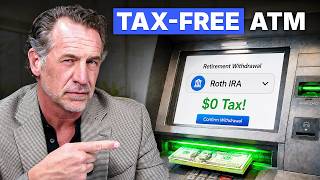
CPA Mark J. Kohler explains how Roth IRAs work beyond the basics: contributions grow tax-free, you can access them early without penalty, and consistent investing at 15% returns yields over $1 million tax-free in 20 years. He covers backdoor Roths for high earners, Roth 401(k)s that allow up to $40k annual contributions for those 50+, and self-directed Roths that hold real estate, crypto, and other alternatives.
Chapters
Your Roth IRA may be the most flexible tax-free wealth account you'll ever own. In fact, I'll say it is the most flexible tax-free wealth account you'll ever have, and most people are barely using it. They think it's just a retirement account. They think it's locked up until they're 59 and a half. They think if they make too much money, I can't even put money into this IRA thing. And they also think the only asset I can put in the Roth IRA is stock or mutual funds. But here's the reality. When you understand the rules, your Roth IRA can become a massive tax-free ATM. That can literally get double the returns you might get in Wall Street. And you're not going to drain it early because you're building an account that will give you the freedom and wealth that millions of Americans are now older and can only dream about. Bottom line, the Roth IRA will give you flexibility and access, leverage, and long-term tax-free income more than you can imagine. I'm Mark J. Kohler, CPA, attorney, bestselling author, and a Roth IRA Owner and Advocate. And today I'm going to show you how to use your Roth IRA strategically. We're going to cover how to contribute. We're going to cover how contributions can be accessed tax-free, penalty-free, how the account can grow tax-free, how high-income earners can still get money into a Roth IRA, and how business owners and investors can use Roth accounts as part of a bigger wealth-building plan, investing in assets they never thought was possible. Let's break it down. All right, now before I give you all the basics and build this case of how important this is for you and your life, I want to make sure I point this out at the very beginning. Anybody at any income level can contribute to a Roth. You may have heard from your accountant, an investment advisor that, oh, well, once you make too much money, I can't put money in a Roth. Wrong. There is a backdoor method that's been around for years that is legitimate, ethical, honest, and not high risk at all. And I'm going to get to that a little later. But let me talk about the basics first as I help you understand the power of the Roth IRA. The Roth IRA is not just a retirement account. Most people hear Roth IRA and immediately think retirement. Yes, that's part of it. We want to use it in the future. That's not the whole story. The Roth IRA at its core is a tax-free growth account. You put money in, you can invest in whatever you want. It grows tax-free, comes out tax-free. But if you follow the rules, the contributions can come out penalty-free and tax-free if you need them earlier in an emergency, maybe to go to college, to buy a new home or something if necessary. Now, yes, we want to let that money ride as long as possible, but you've got to know that that option to get those contributions out if necessary is always there. Next, I want to compare the Roth IRA to a traditional IRA or the traditional 401(k). 401(k). See, with a traditional IRA, you get a a tax deduction when it goes in, still invested in whatever you want, and it grows tax-free? No, tax-deferred. Because when that money comes out, you'll pay tax. So you get a tax deduction on the way in, it grows tax-deferred, but you'll pay tax later. Now, the Roth IRA, however, you pay tax first. You take money that you've already paid taxes on, after-tax money. I want to say it 2 or 3 different ways. And that after-tax money You put it into the Roth IRA, it'll never get taxed again. You can invest it in whatever the heck you want. It grows tax-free and comes out tax-free. Unbelievable. Now, there'll be a debate sometimes, and I want to forewarn you. There are people like, "Well, you want that deduction now because your tax bracket later will be less." Really? I want to make more money in the future. I want to be in a higher tax bracket later. I might want to have tax-free money in the future. I don't always need a deduction right now. Now the argument goes both ways for sure, but every time I've done the math, the more you increase the rate of return inside the IRA, the Roth wins. What that means is if you're able to invest that account more creatively, investing in alternative assets, getting a bigger rate of return, then that tax-free growth is more powerful than a deduction now. Keep that in mind. See, the Roth IRA isn't just about saving money. It's about controlling future tax exposure. And for 2026, the IRA contribution limit is $7,500 with an additional $1,100 catch-up if you're 50 or older. But when you invest consistently over 20 or 30 years, that little annual contribution can become a serious tax-free bucket. I was just doing some math right here before I shot this video. I took $7,500 as your initial contribution and $8,000 a year, which it's adjusted for inflation. That'll go up. If you just did $7,500 this year, $8,000 every January for the next 20 years and had a 15% rate of return, you'd have over $1 million tax-free in 20 years. That's just $7,500 a year, about $600 a month of small incremental get rich slow investing. I love get rich slow. I don't like get rich quick schemes. They scare me. There's always some hidden problem. But if I can stay the course, slow and steady, $7,500 a year, you can have millions tax-free later. Now let's talk about this tax-free ATM turning on later in this entire concept. I don't mean you treat your Roth IRA like a checking account. I just mean later in life when you follow the rules, this account can become a source of tax-free income. And just like an ATM, you can go get that tax-free money anytime you want, and it doesn't even show up on your tax return. Let's imagine you're age 60. And by the way, it comes a lot faster than you think. And you've started to look at Social Security and you have a range of when you can claim Social Security. And I want you to wait as long as possible. Maybe you got a little rental income, maybe you've got a small business that's still creating some income for you, and maybe even some traditional retirement accounts that you can pull money out when you want, knowing you're going to get taxed. See, all of those different areas are going to increase your taxable income and put you in a higher tax bracket. Mm-hmm. It can even affect your Medicare premiums and how you're going to cover your health insurance costs. It can affect how much of your Social Security is taxed. But your qualified Roth IRA, they're different. That little ATM around the corner, no one knows about it. No one cares. It does not show up on your tax return. That Roth IRA can give you income without adding to your taxable income. This is powerful. Need that extra $20,000 for a car, $15,000 for a family trip? You want to help a child or a grandchild? Want to manage your tax bracket at year end? The Roth can give you flexibility in retirement that taxable and tax-deferred accounts never will be able to. This is why I don't want clients thinking, should I do traditional or Roth? I want to get every dollar you can into a Roth account as fast as possible. And we're going to convert traditional money every year, chunking at it, staying in the lowest possible tax bracket as we chunk at it. Some people may argue for two different buckets, a taxable bucket and a tax-deferred bucket, maybe even a tax-free bucket. Me, I want everything in my tax-free bucket. So as you start to build your wealth and build your future, do not underestimate the power of the Roth. Okay, now that we've covered the basics, I want to talk about those high-income earners that are here and what this backdoor Roth is all about. They say, Mark, I make too much money. I can't have a Roth IRA. Think of the Roth IRA as a party and they want to get in the front door. And I want to get into that Roth party, it says right there on the door, I can't contribute to the Roth IRA. I can't be a part of the party. And that means the Roth planning is dead to me. And they see these numbers that— and for 2026, those numbers on the front door say the Roth IRA income phase-out for a single filer starts at $153,000 and ends at $168,000. Meaning if you're single and make more than $168,000 with adjusted gross income, that door's locked for you. If you're married filing joint, it begins to phase out at $242,000 and ends at $252,000. That means you're not walking in the front door either if you make more than that. So if you make over those limits, you may need to look around the corner and go in the back door to the party. This is called the Backdoor Roth. And what the strategy entails is you make a non-deductible traditional IRA contribution. Because you make so much money, you can't even have a deductible IRA contribution. You're saying, well, I'll just put money in a traditional IRA and get a deduction. No, you can't do that either. You made too much money. So a lot of people are like, well, why am I going to put money under traditional IRA if I don't even get the deduction? You wouldn't. This is— it makes no sense at all. But you're smarter than that. I'll make that non-deductible IRA contribution, which you still can. Then on day 2, you can convert it to a Roth IRA. That's right. Any amount. And since you didn't get a deduction, to put the money into the traditional IRA, there's no tax to convert it to a Roth. Now you may say, let me get this straight. I make a non-deductible contribution, which would never make sense, but I can convert it to a Roth on day 2 and I can walk into the back door of this party? But the details matter. You've got to make sure you follow the right steps. You've got to open the right accounts, make the right contribution amounts, and convert the money properly with the right paperwork. It doesn't take a lot of work. It's not expensive. There's no penalties or fees or taxes to do it. It's just working with the right team that understands how to do it. If you already have traditional money stacked up, one of the rules, however, is you've got to convert that money to Roth before you can convert the money you just put in. Now, I would still make the non-deductible traditional contribution because you want to get that money in the hopper, if you will, get it in the pipeline and then start converting over. Mm-hmm. The old IRA money that is still stuck in a traditional account. I call that chunking at the Roth IRA. We're going to chunk at it. And my favorite tax bracket for this is the 24% bracket. If you're single, what this means is that I can convert as much Roth IRA money as I want, up to $200,000 of AGI and stay in the 24% bracket. If I'm married filing joint, that number's around $400,000. So I want to convert as much Roth as I can before I jump to the 32% tax bracket. That's a big jump. I don't want to jump up to a 32% tax bracket if I can control it. So every fall we'll meet with clients and say, let's convert up to that sweet spot before I jump into that higher tax bracket. Meanwhile, I'll still make those non-deductible traditional contributions locked and loaded for when I can convert the money. But this is where people can get burned. They watch some 60-second video on a Roth conversion and they're like, oh, this is great. They do the contribution, they do the conversion, Oh, but then at tax time they realize it wasn't tax-free because they had other IRA balances still sitting out there that needed to be converted first. So it's kind of like first in, first out, and we want to be building that Roth. So yes, high-income earners can still use a Roth, but they've got to have the right strategy to get that money snowballing and growing. Now, one more topic that's a little more advanced and is for you business owners. You have bigger Roth opportunities because if you own a business, your Roth planning may go beyond just a regular Roth. We're going to stack on top of it the Roth 401(k). 401(k). Now, you may already have a solo 401(k). 401(k). You may even have a Safe Harbor 401(k) 401(k) for your employees. Well, you can convert that to a Roth 401(k) 401(k) and even a Roth 401(k) 401(k) that you can self-direct and invest in other assets. Now, I'll just warn you, your financial or investment advisor is not going to like this. They're going to say you can't do it because they don't want to lose money under management. They want to keep that 401(k) 401(k) under their control. But the reality is you control it. It's your money. And if you see a better path to build your wealth, I want you to learn about it and take advantage of it. And why this matters is because the regular Roth IRA limit is only one piece of the puzzle. And your investment advisor that handles the 401(k) 401(k) is not going to care about the Roth IRA. The numbers aren't big enough for them. They're going to say, "Yeah, knock yourself out." Oh yeah, I guess you can do a backdoor Roth. Go ahead. They just want to keep their hands around that large 401(k) 401(k) with all the employees or your solo 401(k) 401(k) with the big contributions. And I get it. I'm not trying to beat them up. That's what they are built to do in the investment community and Wall Street and help you build your 401(k). 401(k). But if they're not emphasizing the Roth IRA or investing the Roth 401(k) 401(k) as a possibility, or even that you can invest that 401(k) 401(k) in alternative assets, I think you need to look at other options because a business owner with the right retirement plan can build a much, much bigger tax-free bucket. Here's an example. A W-2 employee may only be thinking about a workplace plan and a Roth IRA, but a self-employed consultant, realtor, contractor, online business owner may be able to design a plan around their business income on top of their Roth IRA. That's where the planning gets fun. Your business creates income. And we're able to sock away a lot more on top of that Roth IRA. For example, in 2026, you can put up to $24,500 in a Roth 401(k) 401(k) on top of that $7,500. And if you're 50 or older, you can do another $8,000 on top of that $24,500 and the $7,500 and the $1,100. People, we're talking almost $40,000 going into that Roth IRA. Now what that means, again, is if you're over age 50, is you're able to put $24,500 $7,500 plus the $8,000 catch-up, then your $7,500 for the IRA and the $1,100 catch-up. That puts you at $41,100 in contributions and it could all be Roth money. You're married, double that, right? Now I was just playing with that on a calculator here. Remember I got you to $1 million on that $8,000 a year for the next 20 years? You do a Roth 401(k) 401(k) and stack it on top of it. We get to $1 million in just under 10 years. That's pretty powerful. And that's all tax-free. That's where planning gets fun. Your business creates income, your entity structure reduces taxes, your retirement plan captures more dollars, your Roth bucket grows tax-free for the future. The wealthy don't just ask, can I contribute to a Roth? They ask, how can I legally move more money into that tax-free bucket? That's the difference between using a Roth casually and using it strategically. So in summary, the Roth IRA is more than a retirement account. It's a tax-free growth vehicle, a flexible contribution bucket, and eventually, if you follow the rules, the most powerful source of tax-free income you will ever have. It's a way of life. And the big takeaway is this: do not underestimate the Roth because of the annual contribution limit and that it feels small. The wealthy understand that tax-free compounding growth over time can become massive. And when they use these other strategies with the backdoor and even a Roth 401(k), 401(k), it becomes the cornerstone of long-term wealth. And if you want to take these Roth IRA benefits even further by investing beyond the stock market, which I've been alluding to this whole time, into investments like real estate, private companies, notes, crypto, precious metals, and other alternative investments, check out Directed IRA. Our team can help you set up your own self-directed Roth IRA, help you fund it the most advantageous way, and start investing in what you know best and take advantage of that tax-free growth. There's a link in the description below where you can book a free call and get started. Finally, if this helped you think differently about your Roth IRA, hit the like button, subscribe, turn on notifications so you don't miss future strategies to build and protect your wealth. I'm Mark J. Kohler. Thanks for watching, and I'll see you on the next one.
More from MARK




The secret to managing your family's future #financialfreedom #estateplanning #shorts



Moving Property to an LLC: What They Don't Tell You #realestate #investing #tips


