The Secret To Exploding Your Retirement Savings...
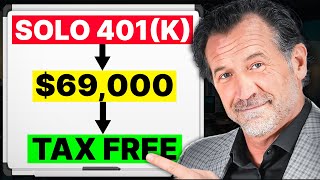
Matt Sorenson and Mark Kohler explain solo 401(k) plans for self-employed people and side-hustlers. They cover who qualifies, contribution limits, Roth vs. traditional options, and how to self-direct investments. They also discuss a strategy for using solo 401(k)s with rental property portfolios.
Chapters
The amount of money you could put in that solo this year could be a huge game changer. And then you're like, ooh, take the money and run the estimates. Over 50 million Americans with a side gig, side hustle, trying to make ends meet. You can have a 401k for that
if you are self employed with self employment income. And I know there's so many people listening, they're like, I've never had an IRA. I've never had a 401k. This is for you.
The side door is a great way to create more write offs in the rental portfolio. If you have a portfolio of rental properties, you're still in the party.
The common characteristic and trait of people that have large accounts is they don't wait for the deadline. They put it in as quickly as they have it because they want their money to compound faster. Welcome, everyone, to the Main Street Business podcast. This is Matt Sorenson, joined by the incredible Mark J. Kohler. The man, the myth, the legend.
And by the way, I want to just say how good you look today.
Thank you.
Your hair is like perfectly manicured. I, you know, when I go with the Matthew McConaughey look, there's always a hair that's somewhere, you know, because I just.
Yeah, it's a messy look. It's tricky.
Yeah, it is.
You just get 80% right if you're doing the McConaughey. But here's the trick. Lighting.
Lighting.
I came in here and I'm like, we gotta work on the lighting.
And we did that. No.
And then look better.
Yeah. Thank you, Daniel.
I'm not doing anything.
It's lighting.
Sliding.
Okay, well, everybody, thank you for letting us have a little fun here with you. 401k may be a seemingly boring topic, but it's not. This is the key to your future and building a beautiful retirement. And by the way, can I just say, a 401k does not mean Wall street, does not mean stock, does not mean you have no control. So many people in America, millions of people in America think a 401k means stock.
Yeah.
And they have no control over it.
Yeah. And here's what it is not as well. It is not. I got to work at a company that has one. Self employed people. You got a side hustle, main hustle. I don't care if you are self employed with self employment income. And I know there's so many people listening. They're like, I've never had an IRA. I've never had a 401k because no one did it for me. I didn't have a company, did a match. This is for you. You can have this solo 401k where you can put $69,000 a year. And we're gonna break it down, all the pros and cons. We love it. If I ever talk to someone self employed, hands down, 99.99% of the time, I'm like, your choice should be a solo 401k. Don't even think about anything else. Do a solo 401k and we'll break it down today on all the rules, how you use it, how you maximize it, why it's fricking awesome. Why you should have one.
Another thing, it's not expensive. I was training over 130 CPAs and enrolled agents yesterday and someone said, yeah, but they're expensive, Mark. I'm like, what? No, they are not. And there are so many myths about that. So today we're going to go through the myths, the how to, the cost, the benefits, try to break it down quickly for you. This would be a really well listened to podcast and YouTube video. I know. Because so many people just want the straight facts on this.
Yeah. Let's start with who. Who should be doing this.
Okay. I was going to just say to An Uber driver can have a 401K.
Yeah.
A DoorDasher, an influencer online, a real
estate agent, a consultant. I mean you're selling stuff online. I don't you get a 1099 for commission sales like you're self employed.
Yeah. Anybody there's now, I think the estimates over 50 million Americans with a side gig, side hustle trying to make ends meet. And you can have a 401k for that. And you can have one at work. You can have a Roth IRA, you can have an HSA, you can have a traditional Iraq and a Solo 401K. So they are the best kept secret.
Yeah.
So I.
And you can have the day job 401k that your company is matching in and you also have a solo 401k for your side hustle.
Yep. We'll talk about some strategies there. So that's number one I like Matt, that you led with who can have a solo 401k. So there's your answer. Anybody with self employment income. Absolutely. You're good to go. Now I want to say too that there is a hierarchy here. Who should, who can have one. We just said but who should. And I want to say this, I think the average American, including myself, Matt, we've taken the same Approach. Fund your Roth IRA first. Get a match with your 401k at work first. Because if you can put away enough money to get 100% match at work and that's all you can afford to do, do that. And then fund your Roth IRA at home, do that. So right there you're talking about someone with $100,000 salary, which is a good salary. I mean middle income America, that's, that's pretty nice. 100 grand. You're probably getting about a 4% match at work. So that's 4 grand. So that's about 3, 400 bucks a month. Then you can do your Roth IRA at home. And we say you can invest in what you want, there's another 600amonth. So if you're putting away a thousand a month between Your day job 401k and your Roth IRA at home, and that's all you can afford to do, and then maybe you're doing a health savings account contribution and maybe you're trying to do a little rental property on the side. I'm good with that. But if things are going well, that's when the solo comes in. If you're like, hey, I can put away more than a thousand a month, mark, okay, that's, that. Would you agree with that?
Exactly. Yeah, yeah. I shot a video called the Optimal Order of Investing where I broke exactly that down. We've been talking about it for years. Brighter broke down 13 steps on the optimum order of investing and it was go get the match and get the hell out. If you got a day job 401k, do the Roth IRA and HSA next, then come back to your 401k. But here's what's different for the self employed people. Let's say you don't have the day job 401k, where are you going to go first? You just go right to the solo K. Now you might say, yeah, Matt, but I only want to throw a few hundred bucks a month away. You know, I'm making 70k a year. I'm not going to be dropping kids.
Income's tight. I'm trying to get out of debt. Whatever.
Don't worry about the solo K yet. Come to it later. Do the Roth ira. That's where I'd start. But once you're like, no, I'm doing my 7k a year, cool. Then we want to hit the solo 401k because you can do $69,000 a year. And here's for any of you that are up to it, for any of you that are high income. This is the big thing about the Solo 401K. You can do 10 times as much in annual contributions. So if you're like the 45 year old, the 50 year old self employed person that's never had an IRA or 401k and you're feeling like you're frickin behind, where are you gonna move the needle In a solo 401k?
Yes. All right. Now we talked about who can as a business owner, if you should, or the order. Now let's ask the question, do you qualify? Because here's the deal. If you have employees, and I'm going to define that quickly and then Matt, you clean up the mess here. I'll try my best. Right, I'm going to define that.
Rules have been shifting the last few years on this.
They have, they have in your, sometimes in your favor, sometimes not. But if you have employees, we have to address that. Okay. You cannot have a solo 401k. If you have a full time employee which is defined as 1,000 hours a year, which is freaking 20 hours a week. I know that sounds crazy.
Full time, huh?
Yeah, that's full time. Whatever. But if you have an employee that's now had an anniversary date of one year, so they've been with you for at least a year, working an average of 20 hours a week or more that is determined to be an FTE full time employee and that full time employee has an anniversary date of one year with you, then you cannot play in the solo that year. You could play in a solo the first year while they're just kind of starting, but the next year when they hit their one year anniversary, you're going to have to shut down that 401k which is okay, roll it out to an IRA and then go with the group 401k, a safe harbor, which is great too, that's fine. But the solo is only going to be okay up until that anniversary date. Now if your employee quits before they hit their anniversary date or you fire them on the 364th day, you're good, you're out. Now the part time employee, you can't have more than three part time employees. That's the same employee the same three years. Three, sorry. A part time employee that has their three year anniversary. See, I knew I'd screwed up somehow. So it's a three year anniversary for a part time employee. But this does not involve your family or kids. This is a third party employee. So three year anniversary of a part time one Year anniversary of a full time, you're out.
Yeah. And so now let me say who's okay in the employee because you might be like, well, I'm an employee in the business, my spouse is, maybe one of my kids are. I got a business partner. You're good. Those employees don't count against you. You can still do a solo K plan. And each of those persons, your spouse that may work in the business, your business partner, they can have their own solo 401k account in the plan and they can be doing $69,000 a year. Okay. But it's these third party employees full time been working work for you for over a year, part time, under a thousand hours are doing, I've been there three years where you're like, this isn't a solo K. And the point of that from Congress was, hey, we intended this type of 401k to be the self employed person that doesn't have employees. And if you're going to have employees, by the way, you need to give them this incredible benefit to. And so most people like, yeah, I'm not going to do a solo K, I'm not going to pay my assistant or my office manager and drop what I'm putting in my 401k for theirs. So that's kind of the gist and the logic. Sometimes there's logic in the tax code.
Now this is where this is such a fun podcast. I want all of you to embrace this because once you know the rules of the game, you can exploit it. I play these board games with my kids at times during the holidays especially. And I just, I get killed until I know understand the rules. Then I turn the tables on them and take their money. But it's, you got to just know the rules here. Now here's a twist on this. You say, well Mark, this is my side hustle that I'm going to do a solo 401k. Yeah, I have another business over here, but I'm not going to do the solo there. Not any employee. You have a full time employee in any company that you own 50% or more. So if you've got a little restaurant over here with employees or you're a doctor and you've got employees over here and you're doing a little consulting on the side, you're like, oh, I'll do my soul over here. You have to look at your whole umbrella of companies. So if you own having full time employees in any business that you own 50% or more or your spouse, well not your spouse we're not going to go there.
Yeah, let me hit the spouse one.
Yeah. There's some loopholes here we're going to play with and some strategy, but just know you got to look at all the companies of which you may own, and if you have a full time employee over there, then you've got to do a group and you got to include all the people. Yeah. Now as spouses.
Now let's hit the spouse one because this is one where you could have a business with employees and you can't do a solo K. Let's say you're the dentist and you got the office people and the hygienists and whatever, and you got 12 employees. Like, I want to do a solo K. Like, you can't do it. We can do a group 401k and you're into a 401k for you and your employees get included and maybe you throw in a little match and. And that's great. You could still do that. But we're talking about the solo today. But let's say your spouse is like a real estate agent, has nothing to do with your dental practice, but they have their own business and they don't have employees. Your spouse could do a solo 401k. Okay. And they could be doing up to $69,000 a year. Now you might be like, well, I'm going to work in my spouse's real estate business. No, you can't go over there. Now you do $69,000 a year in the account because you have employees in a business. So the spousal rule, there's an exception made for this, which I think is pretty cool to say, hey, that spouse, that's not an owner in your business where you have employees, they can do their own thing. They're able to do their own thing and they can have a solo K and they can do a 69k a year in it.
Yeah. All right. Now, another little side strategy we'll mention it is if some people are like, well, I don't have a full time employee, but I'm going to have one next year, so it's not worth the bother. Whoa, whoa. If you can ring the bell and drop some money in that solo this year, knowing that next year you're going to have to convert it to a group, that's okay. Take the money and run. Because the amount of money you could put in that solo this year could be a huge game changer. And then you're like, ooh. And you may even. And you're Going to have the ability to contribute to that solo up until when you file the tax return next year too. So don't feel like you got to put all that money in right now. Let's get it set up. Let's decide how much we want to put in it for this tax year. You might have until September or October of next year to put that money in. You may even borrow or refinance or say I'm going to throw some money in that thing and get that pump primed. Then I can fall back to a group also I'll just say if you hit that one year anniversary, I would argue go over to a SEP for maybe one year because you have a two year anniversary deadline with the 401k. It's a one year anniversary. You can't do a solo.
You get an extra two years on top of the one. So you get a total of three for the SEP irs.
That's right, total of three. And so some now that's a topic for another day. But so don't think it's no 401k at all. I'm stuck with a Roth. You could do a SEP that interim period and really get some good money in there and then go to the group maybe three years from now or whatever. I mean there's some options here.
Yeah, yeah.
So that's where doing. I'm going to say this too if already your brain is swimming. We have a 401k comprehensive consult at our office where you meet with one of our tax lawyers for 1500 bucks. You get a 401k, you get a consultation, a trifecta and a plan. So just learn enough here to be dangerous and know that your current advisor might be leading you astray and you can have that consultation and we'll bring it all together for you. Don't feel like you got to do a DIY Home Depot thing here.
Yeah. And right now there's a special, I mean we have a special going in our law firm, KQS Lawyers and AT directed where we do the accounts. So you can be saving a couple hundred bucks to get it done right now. Because here's what happens. We get buried in November and December and our team is buried doing year end tax planning. We're setting up tons of solo case for clients because they want to get the plan set up, they want to be maximizing their contributions and so we're like let's get them ahead of the game here. So if you're listening to this now, just know kickyoslawyers.com you can go there on the homepage. There's a special you can get going in this. You'll save money, get it done. You talk to a real tax lawyer that's going to talk about how to do this, how to maximize it, how clients are using it, how you can even self direct it. Okay. Like Mark said, you don't have to buy stocks, bonds and mutual funds. So let me hit one other thing though because I thought this is where you're going on your last point, which is the side door solo 401k.
Oh, okay.
Because a lot of times we have clients that are like, well, I got a bunch of rental properties, Matt, does that count? I can just. Because here's the thing. In order to create a solo 401k, you have to have a business. We said self employment, but you've got to have a business that sells goods and services. Main hustle, side hustle. We don't care what it is. Some people like, well, I got a rental property, I got an LLC that has some rentals, can I use that? And my LLC will create a solo K. No, because that LLC is getting rental income or capital gain income when you sell the property. That's not ordinary income or self employment income, which is great. Right. For tax purposes because you're not paying into Medicare and Social Security. It's exempt from that because it's rental income and capital gain income. But it doesn't let you play in the solo kitchen. So we have created a side door solo case strategy where we will set up a management company that is going to charge a fee for services to manage your rentals. And this could just be a sole proprietorship. You don't need to go set up more entities necessarily. You're gonna have a bank account and you're gonna expense some fees from the rental property, some costs and you're gonna pay income over to your management company solely for the purpose of having a solo K and then contributing that money into the solo K. Yep.
And there's a lot to that. Because we want to know what your vision is, your trajectory, your plan. Because we might want to do an LLC and even elect an S status and do a payroll. Put your spouse on payroll. How much money is your rental property? We have clients with a big rental portfolio and they're trying to. They've already cost seg it, they've already depreciated it, whatever. Or they're not getting pass through losses because they're not a real estate professional. Professional. The side door is A great way to create more write offs in the rental portfolio. So we might even go with the S Corp. Talk about again, spouse, payroll, your payroll. Because if you do a sole prop, you're limited more to a 20% contribution. We might want to get it up to a 25% anyway, there's some things there. So if you have a portfolio of rental properties, you're still in the party and, and that's when you're going to do that console. Okay. One other thing on this I want to throw out is timing. Some of you listening to this. Our special is only good for a couple of weeks. It's always in the fall. You may be watching this and be like, got it. What is the dates for that?
It's September, like 15th to October 1st, something like that. Yeah, yeah.
So if you're this podcast, go to
kkoslawyers.com it's right there.
Yeah. You're gonna see down in the description a link. You're only saving a couple hundred bucks. It's not, you know, gonna change your life, but it's a nice little perk if you're in that window. But a couple points, you can't do a last year 401k and say, ooh, I wanna throw down a 401k for 2023. Or you might be listening to this podcast in 2025 and you're like, oh, I wanna do this in 24. There are some ways to go back in time and, and knock out a 401k. Sometimes it depends on the time of year, depends on what kind of entity you have. I don't know if I want to go there right now. Let me.
Can I try to explain it succinctly?
Yeah, yeah, yeah. I'm just saying in general, going back in time can be a challenge.
Yeah.
But let me lead with this. The best time to do it is before year end. Get it done for this year before December 31st. You get the maximum benefits of the 401k. So if you're listening to this, no matter when you're listening to this, we can set up a 401k right now for this year and do it right. Especially if you're even up until about December 15, then it gets precarious in the last couple weeks of the year. Just know we can't pull a rabbit out of our hat on that. You notice I was politically kind on that one. So just know right now for this year is a great time. But if you're now after January 1st, how would you break it.
Yeah. I think rule of thumb number one is if you want to make contributions for 2024, let's get it set it up in 2024. And that no matter any S Corp, LLC, sole prop, whatever it is, we know we can maximize contributions if we get it set up in the year before the end of the year. Now there's a couple fallbacks. If you're sitting here and it's February 2025 and you're like, I still want to set one up for 2023. Sorry, 2024. You're like, I want to make contributions for 2024. Okay. What's February 2025? We're good. You can still set up for sole proprietorships up until April 15th. Okay. And you can make employer, employer, employer contributions up until that April 15 deadline. Now let's say you're like, I'm an S corp, which we love. Many of our self employed clients that are making good money, which are the ones doing solo Ks have an S corporation. Your rule is the tax deadline plus extensions. And there's a caveat to this. But let's say it's now June, June of 2025. You're like, Ah, I want to do this solo K and I want to make 2024 contributions and take a write off on my 2024 return. You can do that because you would have extended. So it's tax return deadline plus extensions for your company, which is September 15th. So you're still in the game for doing 2024 contributions to some degree.
You're not going to be. Can I ask.
I said there was a caveat. Yeah, yeah.
If I could add the caveat. Great job explaining that. The caveat is the company can do their quote unquote profit sharing or contribution.
Yeah.
Yesterday when I was teaching accountants. So like contribution is a scary word because employees want to do contributions or deferrals. And there's these terms of art here. I'll just say the company portion can be done in 2025, take the write off for 24. But you won't be able to do that employee deferral piece because you missed it with your S Corp. You already did your payroll. Payroll was done back in January, so you missed it. But that's okay. We can still ring the bell with the company portion.
Yeah. Which is we'll get to the how you calculate this. But there's that could still be pretty good bang for your buck. And then you know, you're going forward, you're doing your employee contribution, you're Sometimes called elective deferral or your employer contribution, the match or profit sharing. And so, and Those are the two numbers that total up to getting $69,000 a year. Now we're going to break down how you calculate those here in a minute. But just, you know, timing deadlines, rule of thumb number one, just get it done year end if you want to maximize contributions for that year. If you're listening to this later in the year, different rule depending on sole prop or S Corp. But as long as you catch it before the right deadline, you can at least get the employer contribution in.
Yeah, and I, and I like Matt, how we're going to save the actual numbers for the end of this. Let's kind of some of these other rules. Now I want to give you another deadline. If you have to do a group or safe harbor. The deadline is October 1st. So that's right around the corner for those that are catching this podcast as a new release. We're recording this in mid September right now. So October 1st is your deadline for a group safe harbor if for 2024. So if you wake up in November and December, go, oh, I want to do the group you're going to be setting up for 2025 at that point. So the deadline is October 1st, December 31st for solo gets you all the perks. Then April 15th is your deadline if you're a sole prop or Single Member LLC and then with extensions up until September 15th if you're a S corporation. Okay, now I want to get one again. Before we get to numbers, let's talk about the contribution deadline. And I kind of alluded to this earlier. You can say, here's how much I want to put in for 2024. But you do have until 20, your filing of your tax return to make your contribution in 2025. The a lot of people argue with us on that. So I want to be clear about this. If you have employees, you do not get that flexibility because you are a fiduciary, meaning you are responsible for their money. So when they do little matches and put money in, boom, you're on it. And even for yourself, you got to be on it. When you do a group safe harbor 401k, you're not jerking around, playing around, putting money in down the road next year, you're doing it every month when it's required.
And there's rules on that. There's a separate set of rules on this, dealing with employee money, about the timing of when you have to get their contributions in.
Yeah, but the Solo.
It's a different ball game.
Yeah. The only person. Yeah. The only person you get pissed at or sue is the trustee of the plan. That's you. So you're not going to sue yourself. So that's where the government says, we don't care. And they don't broadcast that, but that's the rule. And so if your advisor is freaking out going, no, you got to put that money on right now. They just, okay, who am I going to sue? Well, the plan administrator, you. Which you're not going to do. So it's no big deal. So just don't stress about that again. This is something we're going to talk about with you, because the planning, now, Matt Sorenson would say, be smart. Don't do that. Because think of that the minute you decide how much you want to put in your 401k for this year. If you can get it in there.
Yeah.
Get the clock ticking. Get the snowball going down the hill. Right. You talk about this all the time.
Yeah. I mean, there was a report by fidelity of million $401k accounts that said, what are the common characteristics of. People have a million $401k, they contribute as soon as they can. They don't wait until the deadlines. And so why does that matter? I got a whole. Let's just back up for a second. The deadline is what Mark's saying, by the way. You can wait. So it's like till September of next year. Yes. You could wait all the way until then to drop your employee and your employer contribution, and you would have had to put it on your W2 for S Corps, but you still don't have
to put it in.
So you got till September 15th. Well, what if I put it in on January 1st? Yes. Of 2024. You've got 18 months of investment growth on your money. And so, so just, it's the fact of just getting your money in to invest to grow it, that's a common characteristic and trait of people that have large accounts, is they don't wait for the deadline. They put it in as quickly as they have it because they want their money to compound faster. How do you do that? You get it in sooner. Can we catch up later? Yes. And so let's, let's hit those timing, though. Let's talk about the S Corp owners. I think those are the most common people with a solo K. Let's say you set it up right now, September of 2024, and you're like, hard, I got it ready. But you don't put any money in. Okay, well, your employee contribution can be 23,000. You got to make 23K. At least we'll get into the numbers.
Or 30,500 if you're 50 or older.
Okay.
So yeah, so you're like, all right, 23 to 30.
Okay, so now I don't have to put it in now, but I do need to put it on my W2. Okay. Because that your employee contribution, even if it's Roth, still needs to be on your W2. Now the employer contribution, the company's going to put that in and the company expenses that see your employee contribution goes on your W2. The employer contribution is going to go on the 1120s as a company retirement countries, which is an expense. But. And so you want to expense that there if you're doing traditional dollars, but the timing of that is the company tax returns. So you could be September of 20, 25 is when you're a whole year later of when you're actually putting this money in.
Yeah, well, we're there since we opened the door to numbers. Let's hit it. I have other points too that are non numerical, but I like what Matt. So just let's say it. If you have an S Corp, which is the most common for solo owner, you can put in 23,000 or 30,500 if you're 50 or older. And then the company can put in. Typically it's going to be 25% of whatever your salary is.
Yeah.
Now there's this mega backdoor Roth, let's
come to that later.
It's going to allow you to go higher. And that's where we've thrown out the word 69,000 or 75,500. So we'll. Or 76,500, we'll come back to that. But most people want to just let's get the 23 in or the 30 and then let the company do a match. So if you take a salary of let's say 40,000, then you could put in 25% of that, another 10. So the company could put in 10
grand and you would have done 23. Okay, let's say so you got 33,000 in the 401k off of a $40,000 W2, which let's take a moment here to talk about why the solo K beats the SEP ira, because some of you might have had that question here. We didn't address it of like, guys, a SEP IRA sounds easier. Why don't I just do a SEP ira? Well, here, this is exactly why? Because you can put $69,000 a year in a SEP IRA. $69,000 a year In a solo 401k. Okay, you took a $40,000 W2 out of your S corp and how much am I putting in a SEP IRA? $10,000. How much can I put in? Because you can only put in 25% of whatever your W2 is. How much can I do in a Solo K? 25% of whatever my W2 is plus 23,000. So I get 40, I get 33K. And I can maximize my contributions on a lower dollar amount of W2 because one of the amazing strategies in a in a S corporation is taking a reasonable compensation, a small W2, as much as little as you can get away with to minimize your self employment tax.
Now I'm gonna. I've got a slide here. I was just training. This is. You guys are awesome for sticking in here with this podcast and this video because this is the same stuff we train accountants and lawyers and enrolled agents on and they're like having aha moments the whole time. So this is next level stuff. I've got a slide here. I'm gonna PDF it and send it to my producer here and let's see if we can get it at least in the YouTube video. But let's break that down. The comparison. A 401k, a Solo 401k and an S Corp versus a SEP in a sole proprietor. And let's say they both make 100 grand. You're going to make 100 grand. And this is a typical realtor, consultant, online producer, you know, whatever. It's just you, you're flying solo, solo 401k and so you make 100 grand. If I'm a sole proprietor and make 100 grand in my LLC. Remember, LLCs don't save tax. But I have my LLC. I do my sole prop. I make 100 grand. The max I can put in the SEP is 20,000. 20%. And I'm just repeating what Matt said a little differently. Sometimes it clicks with Matt, so it clicks with me. But I'm going to pay FICA a 15,000. So I paid $15,000 and only got to put in 20,000 in my SEP. If I do the solo 401k with an S Corp combo. Now I'm going to do a salary of 40. Only pay 6,000 in FICA. So I just saved $9,000 right out of the gate and I can put up to 33,000 in my 401k. That's the 23 plus the 25% of the salary, which is 40. And now I've got in 33. So with that S Corp, I'm going to take a salary of 40, pass through of 60, save six grand, only pay six grand in FICA, save nine grand. Now that's a side note here. Kind of fun.
Yeah.
That's the power of the solo and the escort.
I love that. That's awesome. That's just like.
Yeah, tax planning. That's right.
That is how you maximize your money. You want to know how to, to get wealthy, you're doing the same thing. You have to put the same amount of effort there to make 100 grand. The question is, how much do I get to keep and how much do I get to optimize in a tax advantaged way? There is a better way, okay? There's a better way than being a sole proprietorship and having a SEP ira. It's what Mark just taught you right there.
Yep.
Fricking huge.
Okay, now my producer, make sure I send that to you. Okay? Now let's, let's hit a couple other points. The next one, it's a big one, is the Roth concept. With a Solo 401K, you've got flexibility. That's the beauty. You can say, I want a $33,000 write off, or I want to put away 23,000 in traditional and get a write off. I want to have my W2 lower or my income lowered by doing a traditional 401k contribution. And then the company match is also a write off. So I get, in that example, you get a $33,000 write off and you're only paying income tax on $67,000. So you made 100 grand, you're only paying tax on 67 and you dropped in 33 into a traditional format. Or you could say, hmm, I never want to pay tax on that again. And I've kind of worked my life over here on this angle. I got some pass through write offs over here, maybe a little rental property here. My spouse is doing X, Y and Z. You know what, I'm going to make that all Roth and you have the choice. I could say, I'm going to put away 23,000, call it Roth. And once the company does its match, I'm going to convert that to Roth. Boom. Now you're paying tax on 100 grand. That's you got, you got to pay tax on the 100 grand, but you got 33,000 in a Roth structure now that'll never pay tax again, ever, ever. Smalls. Okay. That's a big deal. So that. And guess what you can say, well, I'll do Roth on my trip, my contribution, I'll let the company be traditional. Or next year, I'll do traditional next year, I'll do Roth next year. You get to choose.
Yeah.
And so that Roth aspect is so powerful.
Yeah. And so like, let's say you and a spouse are participating in this solo 401k and you're doing some traditional, you're doing some Roth, your spouses, you could have four actual accounts under the solo.
Four buckets.
Four buckets, so to speak, one solo K plan. And I want to talk about this because I want to hit some logistics, make sure everybody's connecting the dots. Here is we're talking about 69,000. We're talking about per person. So you got a business partner, you got a spouse. Each of you could be doing 69,000. All Roth, all traditional. A little bit of traditional, little bit of Roth. So, but let me talk about what this looks like in terms of documents. So you're like, all right, guys, I love it. I want to do Roth or I want to do traditional. I want the tax deductions. Whatever your strategy is, here's what it's going to look like. The first thing we need to know, you have a business. Do you actually have a real company that makes money or you're doing the
side door or you do the rental
property, which is creates a real business. You got that management company. All right, the second thing we're gonna do is that business creates a 401k. See, individuals don't have a 401k plan. Individuals have 401k accounts under a plan. Think of the Dunder Mifflin 401k. Right? Dunder Mifflin has a 401k plan for each of its employees. Pam's got an account. Jim's got an account. Michael Scott's got his account. All right? Now when you're self employed and you got the solo K, Vandele Industries, whatever your company is called, all right, you're
doing great today, Vandalay.
All the TV references. Yeah.
Little Seinfeld.
Yeah. Vandelay Industries, you know, employs one person, George Costanza. Okay? And Solopreneur, Vandali Industries, Inc. Adopts the Vandali Industries 401k plan. It's a plan document. George Costanza has an account in the Vandalay Industries 401k plan. So your company will have a 401k plan, and then you individually have an Account in the plan.
Love it.
All right, so that's the logistics. Now KQS lawyers, our law firm sets up these plans. We have an IRS pre approved solo 401k plan that allows you to self direct because you could be like, well, Matt, I want to go to TD Ameritrade.
There's now you're opening self directing. Let's go there in a minute. Okay, let's stay with this.
We'll come back to this. But just say you do need a 401k plan and then an account.
Yeah, I love it. And in this big reveal that Matt just said of what you're going to invest it in and how we're going to come to in a moment too. But let's stick with George for a minute. So George has his 401k at Vandelay Industries. He can play with the contribution amount, play with Roth or traditional every year, make those decisions. That's the beauty of the solo. If he's to hire someone, he could hire Kramer. But as long as Kramer doesn't work a full year, he keeps the solo.
Or Kramer could be 1099.
Yeah.
Kramer could be independent contractor doing stuff here and there.
And George could still have his Roth IRA on the side. So he could have a health savings account. He could have a Roth IRA putting his seven grand in that and then come back and play in the solo. So you've got all this flexibility to really ratchet it up to a total of 69 if you're under age 50 or 76. 5 if you're 50 or older and still do a Roth. So that's where we get into some mega ideas, but not maga mega. We're not going to go political on the show today, but but this is super powerful is that flexibility of what George can do individually and in the Vandelay 401K. All right, now I want to say this too. When you set up the 401k, like Matt just said, let's talk cost just for a minute. Yeah, we charge a thousand bucks and you get a full hour with an attorney walking you through the do's and don'ts and helping you structure it properly. We have that get a trifecta, comprehensive structure where we look at all the moving parts in your life and put it together with a trifecta for around $1500. With the discount it's 15. I think it's 1600 without. And you get 50 bucks off the thousand right now if you do that. So there's a couple options during that special period. But this is quite affordable. The annual fee to maintain it, it's going to be around 500 bucks. Could we say that? 4 to $500?
Yeah. You'll have your solo cake account, 395. So in your first year, you get $100 discount if you go through the special here. And so it might be less, you know, it might be less than that because that'll include, by the way, that includes doing your 5,500 if you have to do one. Because I want to talk about some maintenance stuff here in a second. So what do I need to do year to year with if I have a solo 401k? So let's hit that too.
Yeah. So it's actually in the big scheme of things, pretty affordable because you may not have a stockbroker in the mix. You get to be the trustee of that 401k. I talked about that a little earlier. Now. It's, it's. Jim Cramer on Mad Money would say that's a, that's a loaded gun. You know, you got to be really careful just throwing that in someone's lap. There's some maintenance Matt's going to talk about. You got to know what you're doing and you get to invest it how you want, which we're going to start talking about here. But the beauty is you're in control. It's yours. It's actually very affordable. And you get a tax write off to pay for those fees. And you're. Because it's a business plan and so very beautiful, you know, Beautiful. And you're off to the races and you can invest it how you want. Now you could have a stockbroker. You can go out there. Some of you are like a thousand dollars. I can open one up at Fidelity for nothing. Yeah. And they're going to be taking fees out of that 401k in perpetuity. And you're going to feel a lot more expense than a thousand in the long run. So you've got to decide where do I want to set this up?
And, and, and I will say, and what does Fidelity let you buy when you have a solo for 1K? At Fidelity? You can buy what Fidelity sells. So you can buy stocks, bonds, and mutual funds, and that's all you want to do. Actually, I don't fault you for going and doing that.
No. Yeah.
Okay. But a lot of our clients, like, I don't want to do that. I want to invest in real estate. I want to invest in private company. I do private money. Lending. I want to buy crypto. You can do that with the R Solo K. It is available in our accounts at Directed. You can buy all these different self directed assets that we talk about all the time on the Directed IRA podcast. If you're listening to this, by the way, and you're just catching it, hit the directed IRA podcast. First 10 episodes, we go over what the heck self directing is. But that's what our Solo K does and that's why it costs more. And you got an attorney consult is you're in control now and you have all these other investment options. Yep. Some people come to us like, well, Matt, I did the TD Amerit trade solo. Okay. Because it was free and now I want to do real estate. What do I do? We can fix it. We restate the 401k onto our plan document. Cuz see, the. The plan document you're going to have at TD Ameritrader. Fidelity is going to say you can buy stocks, bonds and mutual funds. And that's what the plan investments allow for. That's all they'll let you do. You come over here, we're going to be like, anything allowed by law. Anything allowed by law you can buy with your solo 401k, which includes real estate, private companies, small business, LLCs, private money lending, crypto, the fun stuff.
Yeah, let me see if I can. We're getting so close to wrapping up loose ends here. I love it. Let me throw.
I want to hit some maintenance here in a second.
Yeah, you want to hit maintenance. I'll say this too. When you establish that 401k, let me unpack those options again, Matt. And I say it different ways sometimes, and it's really helpful. I listen to Matt and learn something every time we. Yesterday I was teaching the 401k and I'm calling Ma during the presentation. Dude, what about this? What about that? I mean, it can get really tricky. So let me unpack it a little bit more. So when you open that 401k with us, the attorney's going to meet with you, you're going to get it set up. The 401k is going to have a bank account. Now, you don't run into Wells Fargo and go, ooh, can I open a bank account for my 401k? Oh, they're going to go, oh, you want a 401k? No, no, no, no. I already have a 401k. I just need a bank account for it. So we help teach you on how to get the bank account going for the 401k.
And we have a bank that knows what the heck that is, takes care of it for you and does it? Yes.
And then you're going to need to do some maintenance. So you're going to want some, man. It's kind of administration, we'll call it that. Matt will talk about that. But once you have it up and going, you could open an LLC under that 401k. You'll hear about that. Sometimes out there people are going to be hawking these LLCs and solo. What are all the. Some of the terms out there that some of you might hear that they're like, they have these, these 401ks that are super special.
Like they've QRP and all this.
Yeah, the QRP. Do you have a QRP?
Yeah.
You mean a 401k? Well, they're a QRP here we have a qualified retirement plan. You're going to hear all these little acronyms out there. They're going to make them sound super sexy and they're going to charge more than $1,000 to, to set this up. So try to work with a real law firm when you do this, please. And when you go out to look for this, you're going to see all these sponsored ads and this and that. Just be careful, do your homework. And so at the end of the day, a QRP is just a solo 401k and they're going to go through the same rigmarole. They just think they branded it and they've got something special. And they're typically not lawyers or accountants that are doing this. So you're going to have an account that you could invest in multiple different ways. You could have an llc, you could again buy crypto, do notes, you could do real estate. And this is where I'm going to recommend you go to our sister podcast, the self directed Ira podcast. The first 10 to 15 episodes are incredible because they walk you through all the things you need to know about self directing. So if you want to self direct an ira, you're going to follow the same rules to self direct your 401k and a lot of the same strategies and platforms and procedures. So get over to that podcast. And I just wanted to button up the self directing talk.
Yeah, love that. Let me hit two other things. I got two things left on my list.
One, I want to talk about moving
money over because some people are like, well, Matt, I left corporate America where I had a 401k and now I am self employed. I want to do a solo K. And I want to roll that 401k at my prior employer and into my solo 401k. You can totally do that.
I like calling it unlocking 401k.
So I've got that old employer 401k. Let's say I've got some traditional dollars. Sometimes they call it pre tax in your employer 401k. Let's say you've got some Roth dollars in that old employer 401k. Both of those buckets could get rolled into your solo K. So you'd have a Roth solo K account and a traditional solo K account in your new Solo 401k plan. Now, let's say you're like, matt, I've got a Roth IRA already. I've got a traditional IRA already. Can I roll my IRA into my solo K? Depends. Traditional IRAs can always go into your traditional solo k account. Roth IRAs can only move to other Roth IRAs.
Unless it originated as a Roth 401k. You can trace it back if it was a Roth 401K. At my old job.
Can you? I've never heard that.
I thought so. If I have a Roth for once
it hits Roth ira, it's now Roth ira.
Okay, see, now this is so good. I'm learning here.
Might be an exception to this. I don't know.
Yeah. So let's everybody, this is an important point. So Matt said you've got an old 401k at Dunder Mifflin, and you're like, oh, now I'm sold. I'm an entrepreneur.
Yeah. You're Jan. You got fired by Dunder Mifflin. Whatever happened there, you know, we don't know.
We don't know.
I don't find any fault, you know,
but you're going have to have to. Yeah. All things considered, office. But. So when it's in that 401k structure and you're going to roll it to your solo 401k, you can go Roth to Roth 401k. In that situation, you have to be careful if you roll it out to a Roth ira.
Yeah.
I thought once it had the character of old 401k money, it could go back up into a 401k. But that maybe. I read that.
I saw that there might be an exception to that. I'm not familiar with it, though, so
be careful rolling it up to.
What I would say is don't rely on that if you know you have Roth IRA dollars. Just the one rule of thumb I always just say is if you have a Roth IRA that will only be a Roth ira and when you die, it can be an inherited Roth ira, but that's it.
Yeah.
So because we do have a lot of clients that have Roth IRAs that are quite significant and then they want to start doing a solo K. They're like, how do I get that Roth IRA into my Roth solo K? I just want to consolidate all the money and all my new contributions are going to be in my Roth solo K. And I'm like, can't do it. You're going to have to have two accounts. So now there might be a tracing rule. I'm not familiar with that.
Don't hang your hat on that. Now another thought before you hit maintenance is you can do Roth conversions in your solo 401k. So if you roll over traditional money, or you've got old traditional money and you're solo K and and then next year you wake up and go, ooh, I do want it Roth. It's called a Roth conversion. And you can do that inside your 401k.
Yeah. And the last one I'll say is, let's say you're one of these self employed people that has been doing the SEP IRA. You can roll the SEP IRA into the Solo 401K. The SEP IRAs are typically pre tax traditional dollars. So that would get rolled into your traditional solo K account.
Maybe it was the SEP Roth. Cause if it's SEP Roth money, which
is a new thing, 2023, you can start doing sessions.
Theoretically I should be able to roll that into my Roth 401K.
It's a good question. I don't know.
New frontiers here. Yeah. Okay.
You know what, if you have one of the lawyers, the tax lawyers do it, they'll look that up for you. If you're doing it. We'll figure that out. If that's actually something you're gonna do, don't just give us. Don't waste your time on that. Call with hypothetical questions.
Okay, so maintenance, I guess we're down to maintenance. You've set this thing up, you're self directing it, you're making money, you're putting money in every year based on your capability.
So here's on maintenance. The first thing is you got to track your contributions. Now this is something you typically work with your accountant or maybe payroll. Company employee contribution should be on your W2US Corp owners and the employer contribution is going to be on the books and it'll be on your 1120s on your tax return. Okay. Now the next thing though is 401S. File a tax return called a 5500. However, the IRS has said for you solo KS, until you have $250,000 of assets in the 401K, like net value of assets, don't bother us, don't send us anything. We don't care about what you're doing. It's not even worth telling us that you have a solo K. Okay, now we're going to get a tax ID for your solo K. When we set it up, you're going to have a plan document, right? There's going to be some tracking of your contributions. But once you hit 250k, we will start doing an annual tax return. And if you have a solo key account, a custodial account, directed where your money's at and you're investing it from it, we will we include that as part of your account.
Again, that's a 5500.
Easy, easy, easy.
Until you hit 500 grand and then it goes, no, you could be.
You're just always doing 50.
500.
Yeah, easy all the way. Until you have employees and you have to convert. You could have a million millions in your solo K and you're still doing it easy.
Good, good. I knew that.
I was just know, chit testing me. Yeah, well, no, just throw me curveballs.
I was asking you questions people might ask like, do I. So this is good. Now on this process, I wanted to tell you. So you know, if you want to self direct it, then you want to let directed IRA provide what's called a custodial account. You might say, well, I'm just going to do it all myself. I'm going to manage my 401k all myself. I'm going to be my own trustee and my own accountant and I'm going to maintain it all. I don't even do that with my own 401k. Because you've got to be on top of it. You're now talking about a QuickBooks account to manage all the buckets inside your 401k. You're on your hook for your own 5500EZ. If it gets to that point and
you start taking distributions, you start doing the 1099, you do a Roth conversion. Now you got to do another 1099. That's all included when you have a custodial account.
And the custodial account is how much a year?
395 for the first account and then 295 for every additional. So if you're like, well, I'm Doing, you know, an account. My spouse has one 395, 295. But you got two accounts and you can be doing again $69,000 a year in each one of those.
And there's no stockbroker in the mix taking their 1% or 2% or 3%. I mean this is where Warren Buffett and even Tony Robbins have just been very outspoken on the fees buried inside company 401ks. And this is where self directing you actually are saving money.
You the fee is just visible. So a lot of people are $395. My 401k at the company I work for is free. Is it really the average, the average 401k fee is one and a half percent. I mean you had $100,000 in that thing. You're getting charged 1500 bucks. The problem is you don't see it because you get nickel and dimed every month on different fees here and there. And they just subtract it out of your mutual funds or whatever you're invested into. So you're not paying it or seeing it. It's not visible. The nice thing about the solo KM Mark said this earlier is this is a company expense, this plan set up and the accounts even this is a employee benefit. It's for you, the owner, but it's still a deductible expense.
Yeah. And where they really nail you in these group 401ks or the company 401k is it's a one and a half percent administration fee. Then they're going to invest it and take fees out of the mutual funds or the ETFs. There could be trade fees. And this is where Warren Buffett's like, it's a joke. You could hit 3 or 4% in some instances because they'll put annuities inside these things that have big fees and things. So you've got to just love when you're self directing I really think because now you're in control of what those costs are and you. Yep, they're there in front of you, but they're typically a flat fee and you're off to the races and investing what you know. So love it.
Well, get over to kqslawyers.com they'll be right there on the homepage. You can get a directed ira.com as well. But that's where we're setting up the solo Ks. You can take advantage of the special. Remember, you're going to talk to a lawyer when you set it up. That's going to go over this, answer your questions, make sure it's optimized for your situation, make sure you qualify. You're understanding some of this stuff. You might have a few questions. It's possible. Mark and I didn't cover everything on this podcast.
This is a long podcast. I know for some of you, this is a marathon podcast. You may.
For the. For the two of you still listening,
you know, you may have done this in two or three pieces, but now it's all things 401k.
You got it.
You now have enough knowledge to be the captain of your ship, get a professional to help you, you know, run that ship for you, and watch out for the reefs out there and all those little things as you step back as the captain of the ship and just make sure it's headed in the right direction. That's the goal here. You got to know enough to direct your professionals.
Is the reef like the IRS or. Yeah, or maybe the IRS are like the pirates.
That's who they are. I think the IRS is like an iceberg. You know, it's just. You see the tip of it and you don't realize how.
How bad it could be underneath. Yeah, that's true.
Kate Winslet, she'll let you know. She'll walk you through that, so be careful. Yeah. All right. Well, everybody, thank you for listening, and we're going to see you next week for. For another episode of the Main Street Business Podcast.
See you then.
More from MARK




The secret to managing your family's future #financialfreedom #estateplanning #shorts



Moving Property to an LLC: What They Don't Tell You #realestate #investing #tips


