The Secrets To Taking Over ANY Niche w/Wendy Starland
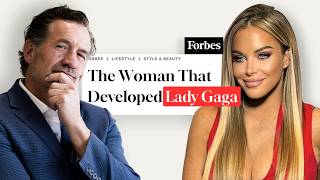
Wendy Starland breaks down how artists actually make money: streaming pays almost nothing per play, so touring and merch are the real income. She's building Music Soul, a platform giving artists around 70% of revenue instead of the industry standard, with brand partnerships and fundraising underway for launch.
Chapters
With Lady Gaga, first we said look for the niche in the marketplace that isn't being filled and fill it in the gay community, to the fashion community, and then in the fashion, you know, magazines, to the housewives who read them, and then to their husbands. And so the circles became larger and larger and larger. And so you don't cast your net out to everyone or else it will be diluted. You've got to choose a niche and try to capture that niche and then have concentric circles out to a broad
audience, whether they're a singer, a performer, a writer, whatever. It's all about the music. It's all about my art. And they don't realize there's a business here. Running a bakery is very different than baking the perfect cupcake. Welcome to the Main Street Business Podcast. I'm so excited for our interview today with Wendy Starland, a icon in the music industry. Now, you may have not heard of her name, but you have definitely heard of her songs. She's a music writer in the Music hall of Fame. She's been a producer, a philanthropist. She's helped so many artists, even Lady Gaga, launch their career. So we're excited to talk with her today about her future plans in the industry. She's still writing music, still touring, and it's just an honor to have her with us and talk about the industry of music as it relates to business. Well, welcome Wendy. We are so honored to have you here. And just reading your, your bio is just so exciting. I know there's fans of yours that are probably followers of mine. See, I, I have followers. You have fans. That's the difference between you and me.
And I'm your biggest fan. So I'm happy to be here. I'm really grateful to be on here. Thank you so much.
Oh no, I, I, I, I'm, yeah, quit high fiving and having a fester. I, what I wanted to let our or the followers know of how I met Wendy as well was we were both had the honor or opportunity to be in Davos a month ago at the World Economic Forum, probably an unlikely place you and I ever thought we'd be. And I was speaking on a panel about small business owners in a house over, or they call them different houses amongst the forum conferences on a panel. And then I walk over to this other location and there's Wendy on a panel and, and Chris Voss, a good friend of mine. And Winnie was talking about the music industry, obviously with her background, as many as you can imagine. And I just was riveted with what you talked about. I really was surprised and I, I, I don't want to steal your thunder. Can you tell everybody what your topic was at the World Economic Forum, which just surprised me and I loved it.
Well, thank you so much for saying all that. I really appreciate it. We were talking about how musicians in the music industry have been exploited for years and years and decades and how to create that change to stop the exploitation of artists in the music industry.
Well, I thought if I got my song played on itunes, I was making big money.
Well, let me just clarify exactly what it means if you are, if you get a billion streams. Let's say you're one of the most popular artists. You have a billion streams. That means you made less than $45,000 for a billion streams. So people see these huge social media numbers and thinking, wow, those artists must be making so much money. Not from their music, they're not. They're making it from other sources like ticketing or merchandise or whatnot, but they are not making it for music streaming.
Okay, now with that said, everybody, there's a lot to unpack here because here's what was one of my major takeaways. And Wendy and I had a chance to talk after her, her speech was an artist. Let me frame it this way, and I really would love you to kind of explain this further. Is an artist, they're so excited. They're excited about their music, whether they're a singer, a performer, a writer, whatever. They're just so excited about their music and they think, oh, it's just going to sell and I'm going to be rich. Because it is all about the music. It's all about my artist. And they don't realize there's a business here. And I, I think Main street business owners are going to see a theme here. Like, it's not that I'm just a good dentist or I'm a, just a good lawyer. There's a business here. And I, I'm. And I guess you understand the artist mentality. They, they really do mean well. But they tell, tell me how you unpack that when you're working with artists and helping them.
Well, basically, artists believe that how good your art is, how great you are at your craft is directly correlated to the sales of it. And that's a natural assumption. And that's partially true. That's one part of it. But the fact is that there's the industry of music, the, the people who have to sell that product, your songs and your Persona and your performances and whatnot, and the Sale of music is a whole other animal because there are, you know, gatekeepers and there are people that need to accept it. And people don't realize record labels are buying placements on a Spotify playlist. For example, some artists have Grammys bought for them from their record label. You know, how much promotion you receive. They, you know, as soon as an artist gets a record deal, they assume, oh, okay, well now I've made it, now I'll get promoted. Then there's the race inside the label of which three to five artists that year are actually going to get the promotional dollars from the record labels. So it's a constant source of competition and insecurity for the artist. And it's a terrible way to live because if you look at painters, for example, the greatest works of art, like for Michelangelo and the Sistine Chapel, he had a patron, he knew that there would be food on the table for him. And musicians don't have that. Musicians who are touring and making money off of merchandise and ticket sales, that's a different story. But if you're just trying to make money from music streaming, it's a really tough road.
Now I know this is a big topic and maybe you can distill it down for us. Let's work backwards now. From what you know, I grew up in the 80s, record labels, tower records. And then this digital music and streaming started to occur. How does it, how did, how did that happen? What was the transition that. If you could give us just a brief history lesson for all of us that of how we went from vinyl to my phone here.
Well, I would say, you know, and this has happened also in the movie industry and all different industries, but obviously music was digitized and first was the cd. And there were these huge margins from, you know, making CDs and manufacturing CDs to, you know, selling them for 20 bucks or whatever it was.
Did the artists make more money in that transition?
So much more money. They made tons and tons of money. And also the, for example, radio royalties. So every time your song is played on the radio, the royalties for terrestrial radio are really good and fair and allow artists to make money. What happened was when I was in school, there was this thing called Napster and Napster came along and said, all music is free and we're giving it away. So now imagine if you're a business owner, if all of a sudden your product or service was free, how are you going to make money? You know, you've got to find, find a way to monetize something that is absolutely Free. And that became the norm. And then itunes came along and said, okay, well it's going to be 99 cents or whatnot. But there are already these databases and a generation who believed that music was free. And that's fine. I think that it is what it is. Now overcoming that hurdle because music streaming, they're giving you 0.004 cents per stream. This is across pretty much every single platform.
Maybe it's less converse to that. And I remember you talking about the flip side of that is that. But the artist can get out there much easier, more easily in the public eye. Where before they had to get signed by a label, I think of the one hit wonder, you know, wonders that they get their one small 45 and that was it. But now they can get out there, but then there's no pay in it. I don't. I had so hard to reconcile the opportunity versus the payoff, right?
So right now there is this huge mass quantity of artists who can create music on their computers and learn how to produce and just, you know, download the software and it's affordable. In the olden times it was. You had to, you needed a record label to pay $1,000 a day to get you into the studio and make a record. And um, through that was this curation process which you needed to really learn how to write a great song and you needed to really learn how to sing. You didn't have all of these tools to change auto tune and things to change your voice. I mean, you had to really learn and hone your craft. But there are very few who sort of got to the top and got through to the other side with having a record deal and getting famous. Now there's. You can, for 50 bucks or whatnot, you can have distribution all over the world digitally on Spotify and whatnot. But who's going to find you on Spotify? You upload it. There's no record label to kind of push you to the front of the line and get you on the homepage where people will discover you. And then if, even if they do discover you and you get a billion streams, it's less than $45,000. So in how many of these people live in major cities, how are they going to pay their rent? How are they going to feed themselves? How are they going to have any sense of dignity about their craft? Because they're being told, you know, there's that expression, oh, what are you worth? Or what's Elon Musk worth? Or what's, you know, one of these people Worth. They're talking about how much money they're worth. And the subliminal message to artists is whether you're Mozart or the crappy musician in the subway station, you are worth.004 cents, less than half a penny per.
Okay. And I know you are on a mission to solve this and change the dynamic. We're going to come to that, and I'm so excited for you to. For what you're doing in the industry. But a couple other questions. Okay. So it is what it is right now. Wendy Starlin can change that when
Starlin changes it. Yep.
Yeah. You're gonna do it. How does the musician. Where do musicians make the most money? Is it touring? Like, what's the. How do they crack the code now? Let's say they figure out, all right, I got this great song or I got a great talent. I can sing, I can play this, I can put together a band. I want to survive. I want to make money at this. Obviously, streaming is not going to be it.
Right?
What's the path that works right now?
It's touring, it's ticketing, and it's merchandise. But they didn't spend their whole lives learning to create beautiful music and putting their heart and soul and sense of purpose into that to become a T shirt salesman. But that's exactly what. What they're doing. And so you see these artists who would like to retire, who would like to take a nap when, you know, Mick Jagger is probably exhausted, you know, the guy deserves to have a break. Or, you know, but the fact is, is that if they're not selling that merch and those tickets, where's the money coming from?
Yeah, well, I. It's. In fact, it's interesting you say that in two weeks, I'm going to go see Hart. I'm a huge fan of the Sisters. They're huge fan.
Huge fan.
Amazing. The coolest women rock band ever.
Ever.
And. But I know the lead singer, she has arthritis. She's got. She's. It's hard for her to tour, but they're still out there just grinding it out. And maybe it's for the. I don't do their tax return, so I don't know what's. What's in their bank balance. I know they wrote a lot of their own music, too, but maybe it's just for the love of performing, and I hope that's the case. But it is. It's interesting that even some of these more mature artists are out there still on the road, and the young ones are trying to Find stage time. It's got to be hard with promoters even to get, to get concert time.
Yeah, I mean, you basically. How are you going to afford to go on tour, especially if you're a solo artist, because that means you've got to pay the band to, you know, go on tour with you. How are you. And pay for gas and pay for, you know, travel and hotels and how are you going to pay for that without a record label? You're pretty much not. And you've got to find a way. You. When there's a will, there's a way and there are some artists that do it and they're like, okay, let's just all do it. But you need to be able to survive and the music industry isn't making it a very easy place to do that.
Okay, so before we get to your mission here, if I may, help me provide the, the connection to the main street business owner that I think also needs to catch the vision of the business piece that if you could be passionate about. I think I joked before we started the show, if someone that owns a bakery, a cupcake shop, you know, they make the best cupcake in the world. It's incredible. But running a bakery is very different than baking the perfect cupcake or again, I refer to the dentist or even a lawyer. Lawyers come out of law school and they love the law. They want to advocate. They're a great, they can reason well, write well, they can read anything and write a brief. But do they know how to get a client in the door and out and make money as a lawyer? That's very different. And so what do you, how do you help educate the artist or any business owner on that, the difference between your craft and the business? How do you, what advice do you give them?
Well, obviously being good at your craft, no matter what business you're in, has to be the baseline. You have to expect that excellence is the only thing that will get you through the door. Even if, you know, cases.
That's the starting point.
That's the starting point. You gotta be great at what you do. That's a B is once you're great at what you do, you have to be your own marketing machine. You have to be able to think of, okay, what strategic partnerships can I create either with other brands or people or things that will drive traffic to what I'm doing. You've got to be a one man show on social media. The more you give to social media and the more active and engaging you are, the more you'll get in Return and you can now, I mean, from the days of, you know, the Tower Records days till now, now you have access to people that you never had access to before. So if you're a musician, you can connect with not only other musicians, but other record producers and labels and managers and booking agents and talent agencies and you know, at the same time, brands. So maybe you're a good looking artist and you should connect with fashion brands that can drive traffic and awareness. Or if you're a business owner, see what kind of influencers would drive traffic to your. To your company by having them do social media posts and be brand ambassadors.
I love this too. And I think of if I can add C. I'm just thinking with you because I love this. You and I, we got to do a joint presentation to business owners on this and I think you have some experience with this, working with Lady Gaga, but I also think of Gene Simmons and Kiss, I think of other bands and even Billie Eilish recently. They have to set themselves apart. They have to like, how can I look more unique or be different? I mean, everybody, at the end of the day, they're all singing a song, right? Like, what are you doing that's different? Beside, the song sounds nice, it's melodic, you hit the notes. That's cool. Differentiation is that. Can people go, is it that helpful? Too far? I don't know. What's your take on that?
Well, I, I can tell you the process with Lady Gaga was first we said, okay, well if she. She absolutely needs to be differentiated because the style of music at the time was revolutionary for the United States. So Nora Jones had the biggest album on the planet. I think she sold like 25 million copies or something insane. I mean, it was one of the biggest selling records of all time. But that was very sweet and pretty and perfect and soft and acoustic. So we went in the complete opposite direction. Look for the niche in the marketplace that isn't being filled and fill it. So we put dance music on the radio in the US where it might have been in Europe and whatnot, but it certainly wasn't on the radio in the US at the time. And then we said, okay, well,
what
community really embraces dance music? Well, the gay community in New York City where I was living was really embracing that. Okay, and how do they dress? Well, a lot of, you know, drag queens and whatnot dress in these flamboyant.
Flamboyant dressing and exactly the tops. Yeah.
So I started, you know, we started dressing Lady Gaga like that. Then basically we're Saying, okay, well who's one of the gay icons? Freddie Mercury of the brand Queen. Okay, well what's one of their big songs? Radio Gaga. Okay, well it's not a radio, it's a lady. So Lady Gaga here was her new name and she was born Stephanie Germanotta and became Lady Gaga and that was the evolution. So then we said, okay, well let's market her to and the music and the lifestyle and whatnot to the gay community. And so she was singing and performing in gay clubs and from the gay community to the fashion community. And then the circle became a little larger and from the fashion, fashion, you know, magazines to the housewives who read them and then that from there to their husbands. And so the circles became larger and larger and larger. And so you don't cast your net out to everyone or else it will be diluted. You've got to choose a niche and try to capture that niche and then have concentric circles out to a broad audience gradually.
Wow, wow, everybody. If you weren't listening intently, you've got to rewind that. You just got a tutorial on how to build a brand and different that freaking awesome. And what was interesting though, go back to point number one that you made. I saw Lady Gaga in Vegas. Absolutely. So talented and a true performer. And that's where it all starts. If anyone out there, again, I'll stay with the same analogies. If you're a baker and you got to make the best cupcake, start there. If you're going to be a dentist, be the best damn dentist you can. Be your best lawyer. Then realize that's not going to bring in the business itself. You've got to get out there and learn how to perform as a dentist, perform as a baby, perform as a lawyer. It's all a performance really. Right. We're providing a service to people.
Yeah, it's marketing and it's, it's hard to be a one man show. It really, really is. It takes, I, I mean, at least in our case there was a team and there's no I in team. It really takes people who. And that really takes the charisma of the artist or product to be able to garner a team around them who is going to be not only cheerleading but creating the opportunities and the waves of success that will, you know, last for decades. That's. You need a team of people because there's nobody who's great at everything.
It's almost the real soul of music to do that. And that was a little joke everybody, because please, that's a perfect transition to tell us about Music Soul, what you're trying to do. I'm such a cheese ball. Remember, I'm just an accountant at heart.
I can get behind it. I can get behind it. When we're talking about Music Soul, I think that's perfectly fun because it really is. I mean we're thinking about. So first I'll just tell you what music.
Yes please.
Music Soul is a music streaming platform and marketplace which combines creates an ecosystem all based around music and the needs of the consumer, the brands as well as the musicians. And so I'll tell you how we do that. We basically have created something where the brands exist on the platform and the artists exist. And so as soon as anyone signs up, you know, they'll be asked maybe a couple questions as a listener or
a performer, like on both ends, everyone,
so that we have some idea, kind of like a dating app, you know, where you might be asked a few different questions about what your tastes are, what you like. And based on all of this information, we use AI to drive traffic from the brands on our platform, from the opt in consumers, the brands and to the artist profile where they will then retain 70% of both streaming and advertising revenue, which is insane because right now they're making less than half a penny per stream and we're giving them 70% of streaming and advertising revenue of pretty much everything on the platform. And so if you go there, you will be able to stream music, you will be able to get tickets to concerts, you will be able to buy merchandise from the artist or otherwise you will be able to have an Amazon shopping experience type of experience from the brands, where the brands will sell directly to you. You can have listen to podcasts, be part of contests where meet and greets, you get a chance to, you know, potentially meet Beyonce or any of your favorite stars. And it's, it's, you can get involved with charities that you're interested in and have resources to list of people like on a LinkedIn and, or a masterclass where you can all of a sudden there's education, it's really a one stop shop around music. And it's just so exciting because in the same way that Uber, you know, teed up your next ride, if you're an Uber driver and if you had a car, you had a job. Now if you are a content creator or making music, you're an artist, you've got a job because it automates the engagement of the listeners from the brands to the artists and from the consumers and from you know, just the regular users. So it monetizes the whole, the whole thing.
All right, I've got so many questions now. If I'm a consumer, nothing changes for me. I go to Music Soul, I go to itunes, I go to Spotify. I still have the opportunity to listen to the same music I would have anyway.
That's right.
Even free or for a nominal cost, freemium model.
So it doesn't cost anything more to the user. It's a freemium model.
Okay, and so next question. So when you first described this, I was like, okay, where, where's Waldo? Like, where's the money and all this. And I did think, I think itunes, okay, itunes is what, 9.99amonth or a year? I don't even know how much I pay for it, but it's not much. Right? You know, itunes or whatever, I just, it's a few bucks. So obviously when you said, well, the, the artist is only getting a half a cent, I'm like, well, that makes sense because I'm not putting much in the tank. So there's not much to share. But the missing link is the ad revenue and that's where the itunes, if I'm right, this is my question. Isn't that where the streaming is getting all this ad revenue? They're keeping that and then they're splitting the pittance with the artists of the. Maybe that streaming cost that I'm actually. But at the rev, the ad revenue is what the artist is not getting and that's what they, they really need to share it.
Is that fair to say that that's, that's a portion of it. So to my knowledge, none of the other streaming platforms have incorporated brands in the way that we do. We incorporate brands in a very and 360 degree way into all of the experiences. So it's great for the brand and it's great for the artist and it's great for the consumer because it's only. You're only going to be interacting with brands that you're interested in because the AI will understand what you're interested in and automate that engagement for you. And then of course, pay people generously. 70% is, is generous. So it's, it's really exciting.
Well, so what's the timeline on this? For me, a consumer, to engage in the platform? I know it's taking thousands of hours and lots of money to get this launched and this whole vision of yours. Where are you at on the process? What, what, how can we get involved?
So right now we have raised four and a half million dollars. We're raising another 25 million. We have the platform completely built. It's 1.5 million lines of code and we've got a bunch of brands on board who are very excited. And now and we have the music license to all the artists on the Internet. So all the music that you hear on Spotify, for example, will be on Music soul from day one. We are raising this 25 million. We've got a few people who have verbally committed, but until the money's in the bank, we want to hear from you if you're an interested investor. And we would be four months or three and a half to four months away from launch from the time we have that round of funding closed.
Wow. Now is your music going to be on it?
Of course. Of course. And actually, you know, a lot of my music isn't on other platforms for that reason is like I don't hear these songs that I've spent countless hours creating and digesting my life's experience and turning it into music and setting my diary to music only to receive 0.004 cents per stream. I mean it's insulting. It's insulting to the experience that I lived. And so I looking forward to releasing music on Music Soul.
So are you still writing music now?
Yes. I mean, as you know, I was honored by the Songwriters hall of Fame and have worked with countless artists from the Wu Tang Clan, people you wouldn't necessarily expect to Billy Ray Cyrus, totally different genre of music to Moby, you know, Grammy nominated record last night and obviously Lady Gaga, you know, Black Eyed Peas and toured or you know, opened for people like Jack White and Sheryl Crow and the Foo Fighters and all. All sorts of different people. There's. It's been a really exciting, crazy journey.
Well, I, I love. One last question because. And thank you for spending this time with you, with us and I'm excited to spend it with you and we'll continue to follow this journey for Music Soul and want to participate and help in any way. I love to see young artists. I love young business owners. That's what they are. And they forget that. They forget I'm just. I'm a musician. No, you're a business owner or really or you got a job and you're just having fun playing music. Which one is it? And I try to do my part telling him that. But on a. So anyway, back to you on a fun. When you write music, do you write on the piano? Do you write just at the kitchen table? Do you write with your guitar. What, what speaks to you the most when you're like in the zone and you're writing your music?
I write on the piano, I would say, is, you know, a great way for me to write. I also write with other people who play guitar or an instrument better than I do. My voice is my main instrument. And I also just in my phone I have like voice notes and I will come up with like, I hear all the parts in my head. So I might come up with a bass line or a guitar part or even a drum part or. And I'll sing it into my phone into a voice note so that I can remember it. It might be just a little section of a song if I'll say, okay, here's the chorus and I'll sing it into my phone and then in the studio I'll bring it back and tell the other musicians, okay, here is this part and here are the chords underneath it. And it piecemeals together.
Wow. So exciting. That's how I do tax strategies. I'm driving down the road or I get a tax strategy. I'm like, okay, you could write this off. Just remember this mark, I would like
to talk to you about that.
Yeah, I got you on that end. I got you.
Great.
No, it is funny. I do carry a yellow. It's so funny. We all have so many different talents and I've had my yellow pad in the car writing down ideas for my write offs. But gosh, Wendy, thank you again for first, all you're doing to help young and old musicians understand the opportunities and, and providing a platform where they can have a living and feel the respect that they deserve for the craft they've been working on. How so neat.
Thank you. That means so much to me, really, because that is at the core of what we're trying to achieve is the respect and acknowledgement of the contribution of music on this planet. Imagine a movie without music. Imagine a party without music. Imagine life, you know, it's such an important part of life and it needs to be acknowledged. Wow.
Well, I was just rocking out before you got jumped on the interview because I was trying to get some energy going.
Great.
Yeah, it's dick. You know, music keeps life real. Thank you again for being here. And where can we send folks? We'll put that link down below, but tell us now where you want people to go to help out in this mission.
Great. Well, you can certainly go to my website, wendystarland.com you can also find me on all social media platforms. But I'm mainly on Instagram, so instagram.com
Wendy Starland okay, well, we'll be there. Thanks, Wendy, again, and we wish you the best. Keep up the fight.
Thank you so much. Thanks.
More from MARK




The secret to managing your family's future #financialfreedom #estateplanning #shorts



Moving Property to an LLC: What They Don't Tell You #realestate #investing #tips


