They're LYING To You... Stop Setting Up LLC's
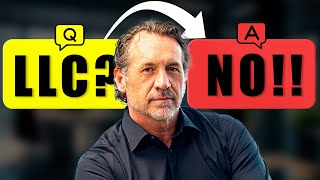
Matt and Mark Kohler, who've formed over 25,000 entities, say most small-business owners buy more LLCs and structures than they need because vendors profit from the sales. They explain which structures actually work: LLCs for rental properties in the right state, S-Corps for growing businesses. Skip the Wyoming privacy LLCs and offshore entities unless your risk-to-asset ratio justifies it.
Chapters
There is one way they sell this thing that gives a lot of crap in your life. You don't need that doesn't work for you. It might have worked for someone else, but it doesn't work for you. But the person selling this strategy happens to make money when you buy it.
We see people constantly with too many entities, too many LLC is too many corporations, too many trusts, too many structures that think just because everybody else is doing it, I need to do it too. And that's another fallacy. And I get it. You want to start manifesting and doing things that rich people do because we want to get there. And I understand that concept. But when it comes to legal structuring, we don't set up those structures till we arrive.
Welcome everyone to the Main Street Business Podcast. So excited to be with you today. Talking about what, Mark?
Well, the most oversold, number one. We've debated how to title this because it's just over the top. It is getting too much to deal with for us. It's just overwhelmingly a glaring problem in America. The number one oversold legal strategy in America.
And, and there's a lot of culprits that fall into this. Number one. It's not just one thing, but there is one way they sell this thing that gives a lot of crap in your life. You don't need that doesn't work for you. It might have worked for someone else, but it doesn't work for you. But the person selling this strategy happens to make money when you buy it, and so you end up buying a lot more of it than you really needed. So we're going to try to unpack that today. We have been business and tax lawyers helping clients across the country in our law firm. Our law firm set up 25,000 plus entities. We've planned 10,000 estates. Mark and I have the 10,000 hours in the trenches doing this. We're entrepreneurs ourselves. We want you to get the right strategy and structure that makes sense for you. There is not an easy button to do this. And so we want to unpack this and try to help you avoid this common problem that we see so many people falling into.
And here it is, I'm going to say it distinctly. The number one oversold legal strategy in America that doesn't work is business owners buying things they don't need that actually do work, but they don't need it. And there's company after company out there selling crap to any small business owner. Not asking if they really need it, they're just pushing it and pushing it. And we see people constantly with too many entities, too many LLCs, too many corporations, too many trusts, too many structures that think just because everybody else is doing it, I need to do it too. And these structures work, but you may not need it. That's the problem. And it's bad. Yeah.
Let me just give a quick example here. I remember meeting with a client, this is maybe 10 years ago, and this client literally came to me. They had maybe 15 or 20 LLC. I'm not kidding. Not one small business, not one rental property. But they went to some seminar and someone sold them this package that if they bought this many LLCs, they would get a discount on all these services. And they're like, oh, and you need an LLC for your car. Oh, and your spouse has a car. You need an LLC for their car because you need liability protection. That's what all the rich people do. They all set up LLCs to protect their assets. And so you better have one. What happens if you get an accident in your car? Oh, my gosh. They had. Frankly, they had no business having one LLC. And we love LLCs. Like I said, we've set up 25, 30,000 of these in our firm over the years. They work for specific situations. And so easy. Classic example of overselling something that they don't need. Because what did that company sell? They were in the business of selling LLCs.
Yeah. If you want to go to a bankruptcy attorney, guess what? They're going to sell you a bankruptcy. And so here's another reality. The culprits that are overselling these things, they're not law firms. They really aren't, because lawyers know they can have malpractice claims and people know they can go after them and get a refund. And lawyers have a responsibility to do what's right for their clients. This is called a fiduciary duty.
They lose their license like we can lose our license.
But some influencer told a client, oh, you need to go to this company and they're going to set up XYZ entity in Wyoming or wherever. And. And everybody else is doing it. That's what you need. Okay, so what we're going to do today is talk about some of these strategies that work, but you may not need and give you the ability to captain your own ship here. It's just so, so important that you're aware of these different legal strategies that are wonderful, but they may not be a good fit for you right now. You may grow into them. So let's go with the LLC first.
Okay, let's hit the llc.
And let's talk about the different types of LLC too.
Oh, my gosh. Y hit that next. But let's just say basic llc. When do you need an llc? If you've got a rental property, you need an llc. We want that property in an llc. Absolutely. Real estate investors, you need to know this. You're using LLCs. Even if you're flipping properties, you may have an LLC, maybe an S corp, depending on how many properties you're flipping.
You know, just up to number two. Number one, if you have a rental property, you need an llc. And the sister to this is where do you set up the llc? You would set it up in the state where the rental property is. You don't need a Wyoming LLC right now. That may come later.
There's a category of people that use that and need it. Yeah, but it's not the person that has one rental.
No, no. And what's often oversold is you need an LLC for every rental. That's not the case. I've got a couple rentals in one llc and I'm a lawyer. I don't need it. I know what my. I don't need the extra administrative headaches. But people will sell it to you because you'll buy it. So number one, you want a rental property, an llc. When you have a rental property and the LLC should be in the state where the property is located and you're going to have a conversation about do I really need more llc? Depending on the number of rentals. Then you threw out the real estate professional. Yeah, the realtor broker, flipper.
Let's say you're in the business of real estate. You get commissions from real estate. You're wholesaling properties, your floor flipping properties, you're typically going to have an S corp. It may be an llc, taxes and S corp. Or you might just flip one or two properties on the side and maybe it's just an llc. There's some tax considerations there. But just from an entity standpoint, we want an entity for that. We want some liability protection from that, from the services you're providing or the properties or deals you're flipping. And so we liken any for that. There's liability happening there. Remember, the reason you're doing an LLC is not to save on taxes. It's for asset protection. Something happens in this deal, they're going to sue the company. They can't sue you personally, so they're stuck at that entity level. So we like it for that.
Yeah. And I talk about S Corps every day in some aspect of my life. It's crazy. But I talk S corporations are great. I swear to you. I teach conferences around the country and someone will come up after and go, I need an S corp. And I go, really? What are you doing? Well, I'm starting or going to start a business. Okay. We can start with an LLC and convert it to an S corp. But you said S Corps are so great. Yes, they're great. But you don't need it yet.
And so there's another example. An S corp setting up an S corp before you need it. Yes. Oversold.
Oversold. And. And so I like the LLC as S corp insurance. So it. Because I can transition that LLC to an S corporation. So now, putting this in the trifecta model, I have a rental property. I get an LLC for that. I have a little operational business, little real estate business or restaurant. I'm consulting, I'm doing landscape and I'm doing whatever. Selling online. I'm a little influencer. Set up an LLC for that that might convert to an S corp. Brother, sister. Right side, left side. LLC for a rental, LLC for operations. That's great. I had a consultation yesterday. Client, four LLCs, not one business at Ideas, but no operational business at all. And no rental property. Again. That was just yesterday.
Yeah.
And so. And I bless their hearts. They're excited, they're passionate, and people are gonna prey on that.
Yes.
This. That's why this is the number one oversold issue in America. They work.
Yeah.
But you may not need it. And so we've got to be. You gotta be your own watchdog here in so many ways.
Yeah. And you got to watch out for yourself because this is your money at the end of the day. And let's be honest, we sell entities. I mean, it's like, you know, we sell this and we make money when you buy it, but we want you to do it right. We want to be in business next year. We want you. We want you to give the right advice. We want you to have the right advice at the end of the day. And so we do not want to oversell you. We're trying to have integrity about this. So let me go back, though, to how many entities do you need for your rentals? Because you mentioned you have a couple properties in the same LLC and you could do that, but we look at how much equity do you have? If I have 10 properties all in one LLC and something goes wrong on property number one, all 10 properties are exposed, they can still sue the LLC. They can't sue me personally, but something happens on property number one, they can sue the llc. The LLC assets are at risk for its own liabilities. Now could I have one property and one LLC and I got 10 LLCs. Yes, you could do 10 LLCs if you wanted. I don't recommend it unless you have a lot of equity. So we're going to look at how much equity do you have every 250,000 of equity. 200,250. We want to set up a separate entity. So for example, you could have two properties. They're million dollar properties each. You have a half a million of equity in each. You got some loans on them. But I want to do those in separate LLCs. There's enough equity there that it makes sense to hold those properties in separate LLCs. You could have 10 rentals with 10,000 of equity each. That's only 100 grand of equity. I'm going to drop those all in one llc. So you don't necessarily need an LLC for every property. But I don't want all your properties in one LLC either. It depends. And this is the confusion that people get where they're just like, well I'll just set up an LLC for every property and they just sell it to you because why not? Doesn't hurt.
And here's the problem. You're going to hopefully not. But. But a lot of people are sold some non law firm company. Oh, but we have lawyers on staff. Doesn't matter. Are you talking to a lawyer about your situation and they have your background and all that. You're going to get sold by a company that you want to have this conversation. You want to know how many entities should I have? But they can't give you that legal advice or they don't know what they're doing. But then here's the quandary and I know some of you are already thinking it, but Mark, lawyers are so expensive. Do you know 80% of these companies out here that are out there selling more entities than us are more expensive because they got to pay affiliate fees to all the influencers that told you to go there. People. It's not that expensive to go to a law firm. We are, we're. What are we for an entity with a consultation with lawyer. 1200 bucks. 1200 bucks?
Yep.
And you and you get everything. Start to finish, a real consultation and it's tailored to you. Twelve hundred bucks. If you spend more than twelve hundred dollars for an entity not with a lawyer, you got ripped off. I'm going to say it Right now. And I know I'm going to get some hate mail for that, but I don't care. Freaking A. If you want to start doing any of these for people and give legal advice, go to effing law school. That's how it works. All right,
all right. Let's talk about LLCs for personal assets. I brought up the car and all this stuff. You do not need that. Okay, we're not setting up LLCs for personal assets, and we're not setting up LLCs for your house.
Oh, can it work, Matt? If I have a $300,000 Lamborghini, it
could, but I wouldn't do it.
But do you have a $300,000 Lamborghini? No. Oh. But the guy at the conference had one parked out front and said, I have an LLC for my Lamborghini. Everybody's like, oh, I got to get one, too. You're driving a Datsun from 1986. Oh, yeah. But the guy up front had a Lamborghini. He had an llc. I must do it, too, because I want to be like him. So it works, but we don't need it.
That 1982 Datsun might be a collector's item, actually. Pretty valuable. Yeah, that's. Yeah. So. Oh, my gosh. So maybe we do an llc, but.
No, I'm with you, Matt. That you again. The concept is you can set up LLCs for your personal assets, but unless you're at that level, it's completely unnecessary. It's interesting.
The Wall Street Journal did a diagram chart that I shown sometimes my presentations of Donald Trump's LLCs. The guy has, like, a hundred plus LLCs, but those things own hotels and major businesses. Okay. That. He's not putting his personal assets into an llc. All right? So.
So just.
The problem is the LLC is just getting oversold. Now, here's why it matters. Okay? Now, some of you might be like, well, Matt, okay, But I bought this package of unlimited LLCs, and it doesn't cost me any more. I could have 100 or I could have 10. It's the same cost, so I might as well just do 100 of them. Okay. All right. You have an annual fee in most states. Most states have an annual fee for an llc, and you got to do something every year to keep it active. So you got to file paperwork, and if you don't, you get fines and penalties.
Oh, and you mean.
And you know what's gonna. Right around the corner here is the Corporate Transparency Act. Every one of those LLCs is gonna need to be registered with FinCEN, you're gonna need to disclose who's the manager, who's the member. And if you don't file that registration with FinCEN, it's a $500 penalty per day and possible jail time. So all these entities that have been sitting out there that you're not even using, you've got to shut those down. We want people cleaning up right now. This Corporate Transparency act, this new law, it's a federal law, it's gonna affect every small business owner is 20, 24. All these entities you're not using, you need to go close them out or you have to figure out how the hell you're going to comply with this Corporate Transparency act. And registering with FinCEN, that has criminal penalties and $500 a day penalties if you're not compliant.
I was having fun here on my laptop. I was looking up Donald Trump's tax return on my laptop, but it's on another, another device of mine and I think it was 432. LLC is, by the way.
432?
Yeah. You have that many K1s and LLC was sweet. And he was killing it. I love it. Okay.
He's a billionaire.
You're going to need that. Yes. Okay, the next one. This is a good one, everyone. What works but you may not need, and we've referenced it a little bit here in our conversation, is the Wyoming type entity, let's call it an asset protection llc, where it's there not to protect you, it's there to protect the rentals from you. And we call that sometimes a copa any, a charging order, protection, any you might want, an LLC for privacy, which could be kind of piggybacked on the same strategy. I'm going to set up a Wyoming, a New Mexico and Ohio, a Delaware, a Nevada, whatever. They all have their pros and cons. Oh, but you need a lawyer to explain that. So anyway, you might have one of these entity that's about asset protection and privacy. And they work, they're incredible. But do you need it? And again, we see clients that have three little rentals with two or three hundred grand in equity and they're on the great journey, a great path, and we love them and it's great. And they're doing it. They don't need a Wyoming, you know, I don't have one. I don't, I'm not going to disclose my personal wealth and my real estate portfolio, but I don't even have Wyoming entity. I don't. I'm not there yet. I don't think I really am.
Yeah. And it should not even be on the table for someone unless you have a million dollars of passive holdings like that where you have assets. And even if you do equity, most clients don't even do it. Now it is a strategy and I want everyone to look at their risk situation. This is why this is so tailor made.
Okay.
It's not just like off the shelf. What is your risk? What do you have? Are you a contractor? Are you a plastic surgeon? Are you someone that gets sued a lot Within a personal level, we might incorporate that type of charge. You want to protect charge, could you have more risks? But you also have a lot of assets that could be exposed. So I know how much assets do you have? But also how much risk do you have? And the higher risk and the higher asset level, the higher asset protection level you need. And we will add in these strategies. But the general real estate investor client, you know, we're, we're not setting that up all the time.
Now I would say this too. Let's go to another one that is out there, the land trust. Land trusts are great. They can work wonderfully in certain situations. But again, you're going to have promoters out there that will sell a land trust to anybody that'll buy one. There are certain states, they work great. Florida, Illinois and in some other pockets of the country. And we have some influencers we work with and real estate investors work with that use the land trust perfectly. We're not saying land trusts are bad, it's just they're not for everybody. And you might be living in a state like Arizona that doesn't even want land trust in their borders. They will freaking go after them. They are terrible. And title companies will spit on them and kick them out the door. But oh, but this person says they use land trust and they're great. And so I bought one. And did you get a lawyer to help you out do that? No, I just went and bought it online because so and so told me to. So it's okay to use a land trust, but you want to use it when you need it?
Yeah. And in the right state, you know, that's the tricky thing with these laws is there's 50 different states. LLCs have pros and cons in different states. There's different costs and responsibility to that. In California, a new client starting out in California, I might not set up an llc, but right out of the gate they're starting. In Arizona, I might set one up if it's a side hustle, let's say. And there's just little different considerations and nuance to this. That's super helpful. Of course, to land trust, it's only in four states. 46. We don't even like working it. We don't even think it works.
Okay. I love it. All right, next. Irrevocable trust. Oh, boy. Doesn't that sound sexy? An irrevocable asset protection trust could be onshore, could be offshore. Oh, I need an offshore trust. Oh. So. And so they're a billionaire and I want to be like them. So I'm going to go set one up. And that's another fallacy. And I get it. You want to, you want to start manifesting and doing things that, that rich people do because we want to get there. And I, and I understand that concept, but when it comes to legal structuring, we don't set up those structures till we arrive. I may want to use the personal attributes of self discipline and investment strategies and savings and really adopt a lot of what a billionaire is doing. But I don't go out and set up the same legal structure they have. Yeah, they didn't, they didn't do it back then.
Exactly.
You grow into it. So irrevocable trusts are again, oversold. And notice the word irrevocable. Not, not fun to try to unwind.
So, yeah, and this is, you know, I'm kind of like, get in where you fit in. And the irrevocable trust could work for some of you. It could be a good strategy for some of you. Where did your brain go?
I'm just gonna let that comment fly. I'm not even gonna repeat that. But you might want to go 10 second rewind on that. Just. Okay.
But I was there. Is that what she said right after that? Okay, all right. I walked into that one. Okay, okay.
I love it.
But you know what I mean. All right, if you're not in that spot yet,
stop talking. Stop talking.
That's not the place in your life where you are at.
Yes, yes.
Don't get that structure. Okay. And here's the perfect. With the irrevocable trust. The thing is, they could sell it to you. It's a great asset protection tool. Yes. It will protect your assets. What's it going to cost you? The worst tax rates possible. You're now on trust tax rates. You better have a super competent tax lawyer or CPA that's going to be reporting this. Not an easy return that your typical CPA or accountant wants to touch. And so plan on the tens of thousands of fees to get those Returns done. Not the thousands of dollars of fees. So you're just. So you're not ready for it yet.
Now we recovered this next one in our tax scams, but since it's a legal structure, I think it's worth mentioning here some of you may have not heard that podcast and that is the C Corporation oftentimes sold as asset protection and tax benefits. The C Corporation can be a great fit. It can be wonderful. The C Corporation has certain attributes that are incredible, especially for those companies that are going public and want to sell stock and syndicate or, or you know, blah, blah, blah, all those goodies. But for a small business owner, holy crap. We have been very, very clear for years that there's only a couple instances where we might use a C Corp structure in a very targeted way for either health care or some, some self directed investing in our IRA or 401k. That's where we might use a C Corp. But please beware of. Oh well, I have a C Corp and so you should too. And well, that's when we get some advice.
Yeah, let me see another one. The foreign llc. Okay, sounds very sexy, right? I got an LLC in, in the Bahamas or you know, the Cayman Islands or Nevis.
Or is it Nevis or Nevis? Tomato, tomato.
It depends on if you're a local or not. You know, that's true. So this foreign country in the Caribbean called Nevis. Nevis. But we do set those up for clients. You know, we might do one of those a month out of our 500 entities we're doing. But it's not going to be everybody. And here's what a lot of people think. Oh, but Matt, I'm outside the jurisdiction of the US I got it out in this, you know, they can't get my assets over there and I got my money offshore. The federal government doesn't know about it. No, no, no. Okay, you're going to file a FBAR report to the irs. You've added more reporting requirements, having to tell the government what the heck's going on because you got to now file this FBAR form. Form, bank account reporting. And you also have another asset reporting document that you have to file to the irs. So you're now on their radar, frankly, more. And so be careful of this get outside, no one knows where you are type stuff, even the government. No, that doesn't work. There's actually additional reporting and criminal penalties if you're not complying with that. So be careful. Also, those forms are expensive. You're not walking into your typical Business or tax lawyer or law firm. This is a high end type service that's expensive, that not a lot of people are seeing day to day. And we have those clients. We can help you with that if that's where you want to go down. But Again, this is the 1% of clients that would do this. Oversold.
Oversold. So our theme, again, just because it works doesn't mean it's for you. That, and that's. That that's the legal conundrum in the industry and people going after the, and working with these companies that aren't law firms because they think there's some angle there. And it's true too. Lawyers cause their own problems. Lawyers are not easy to work with. Lawyers can be expensive. We've tried to create a, create a boutique firm that's very affordable and simple and easy for clients around the country to work with. And we've been growing leaps and bounds every year and we're grateful for that. But so we know it's hard out there to find a good lawyer too. And these companies are ready to go and they're friendly and they're fast and they're easy to work with. It can be very, it can be tough to compete against. It really can. Next, the joint venture agreement. The joint venture agreement is often sold these real estate clubs and kind of this ghetto. I mean, I don't want to say that either. It's kind of on the streets type strategy that hey, this is jv. Let's JV and promoters will get up on stage that are successful real estate investors and say yeah, I just jv. You know, I don't, I mean California, it's expensive. I don't want an llc. So I'm just going to jv. I mean, I'm going to go this way. I want. Yeah, JV agreements can work and they can have a really good place. They play a really good role in certain places. But again, they're not for everybody and we don't want to rely on them as the get all, end all. And I'll just forewarn you, a joint venture agreement is a general partnership and so whoever signs that is personally liable for anything that could go wrong in that jv. So we're hoping you have your entity in a JV agreement with someone else's entity and that's number one. And number two, a JV agreement is a partnership in the eyes of the IRS. So now you've got a 1065 tax return because the IRS needs to know who's getting what out of this JV. Well, I'm going to 1099. You and 1099 buckle up for an audit if you handle the JV wrong. Yeah. So they can be dangerous, but they do work.
And see, this is the trick. Sometimes people will undersimplify it. They'll try to make it too easy, like the JV agreement, when you really did need to do, like, an LLC anyways, you really did need that more organized corporate LLC structure. Then sometimes people oversell it. Okay. And so it's getting that right balance and hitting that sweet spot, if you will. Yeah.
Okay. Very elusive.
It's really true. And that is where you find the most enjoyment in your business and tax planning.
Wow. I can't even unpack that. That was. That was really. That was artistic, the way you did that. Obviously, I'm done here. I need to clean up. Yeah, I'm done. I need to. You know, I'm the problem here, because obviously my mind is, you know, thinking about, you know, I'm serious.
There is that. You know, we see it. I see it both ways. And I've come across clients that haven't done enough legal planning, and I'm like, oh, my gosh. You know, we run to those clients, they got, like, 20 properties and a
couple businesses, and they're all sold props all over the place.
Well, I got a DBA over here. I'm like, oh, my gosh, you're totally exposed.
The opposite of the problem. Yes.
We're like. We're trying to be like, dude, you need to do this. And they're like, okay, okay, okay. You're right.
You're right.
And then on the other hand, we get clients that come in and they've overcooked it. You know, maybe that's what it should be. You don't want to undercook it or overcook it. You want to just be right.
Just be right.
And so.
But I.
And so. But then we get people that super overcook, and they got all these entities, and they got no business. Literally, they got no business setting up that many entities.
A couple more. Not as common, but it's out there, is the trademark. You'll see people filing trademarks, and we have a trademark attorney. And any of you. This is another underdone area, because if many of you out there are trying to brand your product, your business. Nationwide. Worldwide. But you're at least nationwide, you've nailed the URL. But that doesn't mean it protects the name from someone else taking that name and running with it. So the trademark is actually can be very affordable. We're under $1,000 for one mark. You know, by the time you pay for the filing fee and the attorney, you're around a grand. And that can be very. You go to an IP attorney in Orange County, California, buckle up. You know that. So it can be very expensive, but we try to keep it affordable. Some people set up trademarks that don't need them. Many people don't set up a trademark and they do need them. I think it's a missing a blind spot for some people. Yeah. The nonprofit.
Oh my gosh, the nonprofit is misused.
Yes.
Okay. A lot of people think this nonprofit is going to give them some angle where they can use it for their business or to pay their family.
And.
And they're not going into it with a charitable purpose and intent. If you're going to be doing a nonprofit have a charitable purpose and intent. That's the reason the nonprofit, the irs has so many rules and requirements that if you fall out of line of those two things, it's just not going to work. Don't think it's some great tax strategy. It's some way to take charitable deductions or throw it over to your own nonprofit and go play with that. That little nonprofit. You must have charitable intent and charitable purpose for that really to work. And we love it. We have. Devin Muns is setting up lots of those. His clients super passionate about it. We've seen some people do some awesome things with nonprofits, but they have real charitable intent and a real charitable purpose. That's the reason they're doing it so good.
Okay, you may have one final But I'm going to, I want to summarize with this and then, and then I'll let you bring us, bring us home. I. Some of you are probably like, guys, information overload. You make it so yeah, these are all great points, but what do I do? Where do I turn? I humbly state this. We did not craft today's podcast for this informational sounding statement I'm going to make. But please consider that annual review with a tax lawyer that is tailoring their practice to small business. Could be us, couldn't be us, I don't care. But do it with someone that has a fiduciary duty with attorney client privilege to talk about things that you don't really want out there and you don't want to share with someone else. And we, this is a very. We have a comprehensive year end tax and we do it throughout the year. We have a Comprehensive, build my trifecta, give me a checklist, review my entities, look at my tax return, kind of this overview, talk about what the pain points are, what do we need to do around 15 to 1600 bucks and you get a real lawyer. Couple hours in and through the communication process and doc, you know this beautiful trifecta given to you and then take it and take it to your insurance agent, your homegrown lawyer, your personal CPA or whatever. All of our tax attorneys are trained on 80 different topics. They're certified as a tax advisor on our Main street program. 800 quiz questions crafted by Matt and I that help people, our team, understand the issues of privacy, asset protection, estate planning, wealth building, tax planning, the entities, charities. Every one of these issues they're going to look at with you and say, all right, here's where you're at and we can dive deep, we can spend more money and go deeper if we need to. Here and there. We'll talk to you about it. But for the most part, you've got this game plan and it's so, so important for business owners to get that look once a year. Love it, man. Yeah. Anything to add to that?
Just an amen. That's all that needs to be said to that one.
Any other final overdones?
Yeah, I think, you know, I still like to get in where you fit in, but I know people's minds go somewhere else with that. I will just say this is not the easy button and one size does not fit all. Your tax and legal structure needs to be tailor fit to you. It'll be efficient. That way you'll be saving taxes in the right structure. What you do and your friend does, that's another business owner entrepreneur. You could have a totally different structure. You know, Mark and I have some variability in our structures. Even though you might think you guys do a lot of the same stuff and we do, there's some variability to our structures. Okay. There's a little bit of different differences in how we approach things and that's okay. So just make sure it's tailor fit for your situation and like a, like a nice suit, that's just when you're going to feel good, is when it's tailor made for you.
I love it. Great final words, everyone. Thank you for listening. Please, if this, if you know someone in your life that's underdoing it, overdoing it, and you're like, hey, listen to these guys. They kind of hopefully make a fun, at least somewhat palatable, please share this podcast. Give us a five star. It only takes two seconds. We really want to impact more lives around the country, and we feel like there's. There's just not enough conversation about these issues from licensed professionals that. That really are the ones that should be talking about it. And so thank you. Please share it. Grateful to have you here. And we'll see you next week for another episode of the Main Street Business podcast.
More from MARK




The secret to managing your family's future #financialfreedom #estateplanning #shorts



Moving Property to an LLC: What They Don't Tell You #realestate #investing #tips


