This Choice Costs You THOUSANDS: LLC, S-Corp or C-corp?
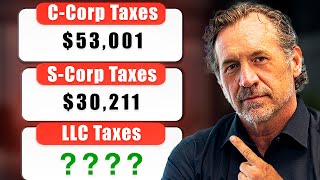
Mark Kohler and Matt Sorensen break down LLC, S-corp, and C-corp structures for small businesses and side hustles. An S-corp can save you thousands in self-employment taxes through the Kohler payroll matrix, which sets reasonable compensation. Asset protection matters too: separate your rental properties from your operating business.
Chapters
As we're going to focus on here today is making sure you're understanding what any do I use in the right situation for multiple reasons. A lot of lawyers can give you a great asset protection plan. That sucks for tax planning because they are not good tax lawyers and vice versa. You might have a good CPA that knows tax stuff. That's not giving you the best advice from the legal side.
There's still a lot of misinformation on when the S Corporation makes sense. Stodgy, older, more conservative CPAs are not suggesting the S Corporation enough, regularly and at the right time because they're scared to death and that's their personal lifestyle. But that doesn't mean it's yours.
Whatever you may be, we want to make sure you have the right entity for this. And the people with a side hustle are ones that I think forgotten a lot. But this is for you main hustle people to leave in corporate America. You're going to start a small business. You're coming out of college, you're going right into small business. I don't care what is. You need to know the right entity to set up. Welcome everyone to the Main Street Business podcast. The first episode of 2024 this year is off to a bang. And I'm just excited to be back on the podcast with the man, the myth, the legend, Mark J. Kohler.
Oh, thank you so much, Matt. And normally every year we do kind of a strategic planning, how to build a business plan. What should I do for 2024? I'd really like to do that in the next two weeks.
We're doing ours too.
Yeah, we're doing ours too. In fact, we were just talking when are we going to do a off site in the next 10 days and really plan for the year. So we're going to have that podcast. But I think one of the main questions people have as a business owner as they look to the new year, am I structured properly? Especially with the Corporate Transparency act and the filing that's going to have to happen. And are people having entities they don't need or what entities should they have? This LLC S Corp debate is a constant one. And once you make the decision, a lot of seasoned business owners, it's done, you're good, you know what to do. But for 50 million side hustles out there, they're like, I don't know. And so we hope this podcast is going to be really, really helpful for you.
Yeah, even you main hustle people, you know, it's a full time business owner Whether it's small business, big business, you're a real estate investor. You know the type of entity to use is really important and it gets into your tax and legal planning. And that's what we're doing every day here. Mark and I are both business and tax lawyers. We're investors, business owners. We each have dozens of entities ourselves, but we've set up 20,000 plus entities for clients. So, like, we know what works from a tax standpoint and from an asset protection standpoint. Coordinate with your overall estate plan. That's what we're going to focus on here today, is making sure you're understanding what any do I use in the right situation? For multiple reasons, a lot of lawyers can give you a great asset protection plan. That sucks for tax planning because they're not good tax lawyers and vice versa. You might have a good CPA that knows tax stuff that's not giving you the best advice from the legal side. So we try to coordinate that and consider both sides of that as we're thinking of the right entity for you to use.
Yeah, and Matt and I are both tax lawy. I was just speaking at a conference earlier this week in front of 50 CPAs very well respected in the Phoenix area. And there's still a lot of misinformation on when the S Corporation makes sense. Stodgy, older, more conservative CPAs are not suggesting the S Corporation enough, regularly and at the right time because they're scared to death. And that's their personal lifestyle. But that doesn't mean it's yours. And as tax lawyers, we're fricking willing to go out there. We talk about this, we make this decision for clients. And we have never in 23 years had a client audited for taking the wrong level of payroll based on our recommendation, ever. And we've saved clients thousands, hundreds of thousands, probably millions of dollars over the last 20 years. So please give this a thought. Your CPA may not know it all. Holy crap. You can hire three different contractors to do your kitchen and you think your contractor's the best? Maybe not. So take control of your ship.
Yeah.
Yeah.
All right, well, let's break it down here. And I want to hit a couple other letters in the Alphabet soup of this. We talked about LLC and S Corp. That's going to be 99% of you. That's all you need to worry about, that those are the entities in your world. But there's also the C Corporation and the limited partnership or sometimes, which is LP or flp. We'll mention that Briefly here. I just want to make sure everybody knows we're going to hit this from a comprehensive standpoint. Also, when you get into llc, there's series llc. We may mention that briefly here when you would consider that as we get in the LLC discussion. So we're going to all those little pieces in this podcast episode today.
I think we take something off the table right now. So it's just easy. Yeah, let's get the C Corp off the table. You know, like, no one wants that. Yeah, no one wants to, you know, grandma's cranberry sauce. Let's just get it off the freaking table. It's not even there. Make room for the mashed potatoes and gravy.
Right?
Yeah. Am I still in the holiday season? I'm.
You are still.
I'm in my new January diet and so I'm like craving mashed potatoes and gravy. Yeah, it's on mine.
I don't blame you.
Yeah, it's tough. It's tough. So we did. We did a show on this in the last two to three months of what the biggest mistakes our business owners make in with scams and promoters and influencers that really don't know what they're doing or give advice in areas they shouldn't be. And so I'll just say it right now, the C Corp is so unnecessary and it should only be rarely used by a small business owner. What are some of the reasons you. Matt, like, just.
Well, everybody says, well, I went and Googled this and you know, Microsoft, Amazon, all the big companies are C corporations. They're so smart. They have big lawyers and CPAs that know what they're doing. Why shouldn't I just be like the big corporations? Well, there's reasons that the big companies are C corporations. One is it's a necessity to be a publicly traded company. It's virtual. You can do it without being a C Corp, but it's way harder. So you get benefits to being publicly traded if you're a C Corp. And also there's some taxes for retirement accounts that may invest called ubit. Sometimes we do use the C Corporation as what's called the blocker entity. This is for if you're raising money and getting investors and you want to be publicly traded. And so don't get duped by some article you've read about this being the next Uber. And you got to be a C Corporation. If you really have this amazing technology or business idea and you're going to go raise money from venture capitalists and try to be Publicly traded. Okay, let's talk about a C Corporation. But that's not 99% of you. 90% of you are going to be business owners. You're going to own this might be a small business, could turn into a big business. But being a C Corp, remember, you're going to get double tax because the corporation is going to pay a tax of 21%. Then you're going to pay an individual tax of 20% on the dividend, plus the state taxes on that type of stuff, which there's corporate state taxes plus your individual state taxes. So you're signing up for more taxes by being a C Corp with no benefits unless you're trying to raise money.
And you can always convert to a C Corp later if you need to. And by the way, we could beat the crap out of c Corps for 45 minutes. So we're going to. I'm going to. Let's wrap this up here in the next 90 to 182nd. Two minutes.
Grandma, your cranberries are just not good.
No. And here's the other thing some of you may be hearing. Well, my dad or my mom or my brother or sister set up a C Corp and it's working for them. You don't get to see their tax return. You don't know how it's really playing out. You don't know what their net income is. Do they have the Proper account number? 3. There's a lot of influencers out there that go, oh, you can write off more in a C Corp. And the C Corp does this and that, really. We've written articles after articles, podcast after podcast, teach this, write it in our books. We stand behind it. We're licensed professionals. Hell, if I could sell you C Corps, I would. You think I'm holding back?
I mean, we can sell you C Corps. It's just not the best thing for you.
No, we don't want you to fire us three years from now. But that influencer that told you to be a C Corp, they're gone three years from now and you're stuck with this mess. The final point I would make is there are a lot of nuances that go with C Corp's that are unique. The 1202 election, there's small business stock exemption. All these little things that if you're going to rapidly grow and go public and be big and all these things. The C Corp again might work, but is so rare. So I'm just going to say this right now as we move on. Any of you small business owners out there, starting out side hustlers. Any of you big hustlers. And you got a big business right now, one employee to 50 employees. Your accountant, you're questioning, should I be an S Corp or an llc? Or am I LLC taxed as an S Corp? Which way should I go? Let's unpack that. But the C Corp, forget about it. And if for any of you that are a C Corp, please, please call our office, the law firm. We help clients all over the country. Get a consult, a review, and say, should I be doing this? We save people constantly. You're on the wrong freeway. It's almost like plane trains and automobiles. You're Steve Martin and John Candy, and you're going down the freeway in the wrong direction. Remember that? And they're like cars going on the freeway next to him. You're going the wrong way. And Steve Martin's like, how do they know where we're going? Then all of a sudden, disaster strikes. So please, get a review. Get a second opinion from someone that's not selling you the C Corp. Yeah. All right.
And I think the wrong way, by the way, is more taxes. Right way is less taxes. You're going in the wrong direction. Okay. All right, let's talk about the limited partnership. Because if we're taking stuff off the table, I also want to take off. Maybe, like the cauliflower.
Oh, yeah.
You know, why does that even matter? Come on.
Yeah, maybe Brussels sprouts.
I mean, did you even put cheese on it and try to, like, spice it up?
Why am I going to eat something healthy at Thanksgiving? Seriously, I'm already.
Get it off the table. All right, okay, let's. Let's talk about the limited partnership. Now, the limited partnership has a place just like the C Corporation. Here's the drawback on the limited partnership. Some people will use this instead of an LLC for rental properties. And we see it all the time. And people think they're being fancy because they see, oh, this big hedge fund's a limited partnership again. They start seeing some structure out there. They think, well, that must be great for me. Oh, you want to put your single family rental limited partnership. Okay. Do you want to take the losses on that rental? You do, don't you? That's going to be a benefit. Owning rental real estate in an entity or just in general owning it? Well, you can get locked up in a limited partnership. There's loss limitations there. We don't like limited partnerships because you're going to automatically have a partnership tax return when you may not need to have one. Because a limited partnership requires a general partner and a limited partner, you must have two parties. And in a limited partnership, which is going to force you to have a partnership tax return, whereas in an llc, which we're going to talk about in a minute, it could be single member and just flow onto schedule E on your tax return, you don't need a separate company return. So the limited partnership just doesn't give you anything more than you can get with an llc. But it comes with more. Well, I shouldn't say it doesn't give you anything more. It gives you more baggage, it gives you more problems, more hurdles to overcome and more tax returns to file with zero benefit for the small business. For the small business owner.
Yeah, that's right. Just like the C Corp. There's these little weird nuances where a C corp corp makes sense. Just like an lp. They could make sense in a unique situation where you might be part of a legacy property for your family, you're gifting ownership to a cabin or ranch. Maybe in a limited partnership you're doing oil and gas exploration and you need. And maybe you are going to raise capital. Limited partnerships can raise capital, but they have again, a very, very unique place. So I'm going to just say this in summary. If you have a limited partnership, if someone's pitching a limited partnership, get a second opinion. Our law firm can say, why do you have this? Where do you have it and should we simplify it? It can save you money and headache and baggage. It's not going to really cost you more in taxes. Maybe, but it could cost you a lot more administratively. And some limited partnership interests don't create as many tax benefits even though they may not cost you in taxes. I know that sounds odd. There's not an extra tax, but you may not get the write offs. You think so? Last point. Limited partnerships off the table. Get a second opinion. If you want one, have one. Or been told to get 1C corpse off the table. Yeah. Now let's get to the candy yams. I mean, that's right.
What is that? The llc.
Oh, yeah, yeah. Candy. Everybody wants candy with the marshmallows on top. Oh yeah, yeah.
Those little pecans.
Maybe some pecans. Yeah, I think, I think everybody can go for that. So yeah, all you side hustlers out there, it sounds so bad to say side hustle, side giggers, whatever.
They're business owners.
Business owners, small business owners. You're getting a 1099 from Uber or Lyft, you're renting your car on Tur renting your RV on Waverly. You're doing some consulting on upwork. You have a little landscaping business, you're doing a little janitorial work. You're designing someone's website. There are 150 plus type of industries that have classification codes with the IRS that 50 million Americans now use for a second source of income. You're going to get a 1099. And spoiler alert, next week's show is on the 1099. What do you do when you get one? Should you be issuing them yourself? So that's coming next week. So if you're getting a 1099, guess what? You have a small business. Welcome to the team. Welcome to the club. That's the gateway drug, the 1099 you're in now. It's not a bad thing. This is a good thing. I love to see a 1099, right?
Yeah. Because now it's like, oh, you're a business owner now. We're going to unlock some tax deductions and stuff you could never take before. Some auto, some home office, some electronics, some cell phone. These things that you're using in your business, of course, are going to be tax deductions that get unlocked and it gives you more opportunity. Plus, you know, sometimes this side hustle turns into your main hustle. And for a lot people, that's the goal. For some of you it's like, no, I like what I'm doing in my day job and I like doing this on the side. You know, maybe I'm a photographer or there's some of my, a passion thing that I love. That's, that's part of my business.
That's cool.
You know, I have a good friend that's a, that owns a physical therapy practice, works in a bike shop once a day. Because he's just a bike nerd, you know, and it's like. And that's just like. But he makes money on that. And he gets, he's a contracted bike mechanic essentially, but he has a real job as a physical anyway. But so you, whatever you may be, we want to make sure you have the right entity for this. And the people with assigned hustle are the ones that I think get forgotten a lot. But this is for you main hustle people too. Leaving corporate America, you're going to start a small business. You're coming out of college, you're going right into small business. I don't care what it is. You need to know the right entity to set up.
And here's the answer. Start with the llc. When all else fails, some of you might go directly to the S Corp. We'll talk about that in a moment. But you can always convert your LLC to the S Corporation. Super easy. We're going to talk about when, how and why here in a moment. But the easy answer for all of you is you want to start with the LLC because it gives you the flexibility to convert to the S Corporation. It gives you the asset protection of what you might be doing in your business. It can allow you to start building corporate credit. It gives you a tax ID number, You can open a bank account and makes you look more legitimate. You feel like you've now taken a part of the American dream and the LLC becomes your parent company for future operations. I mean, I could just go on and on. The LLC is a great place to start. Now, do you need more llc? No. Do you need an LLC in a state you don't live in? No. And we're talking about you with a small business, not a rental property. We'll come back to that in a moment too. But the LLC is a great place to start. And I like the word you used, unlock. It unlocks so much opportunity and potential.
Yeah, and the LLC too, is something you can move to an S Corp, but you can't go S Corp to llc. You can go LLC to Escort, but you can't go escort back to llc. And so that's one reason, particularly for new business owners where we like the flexibility to move between the two based on your tax situation, because we talk about S Corps here in a moment. There is a point where you at a certain level of net income and a certain type of business operation, the S Corp will save you taxes, but we can convert you over to it. The S Corp has more tax returns, quarterly payroll and stuff you got to do. But the LLC is nice and easy because I can set up as a single member llc. No tax return to the irs, nothing else to the state. It can flow on a schedule C on my personal return. This is if I'm doing, you know, ordinary, ordinary income. I'm selling goods or services. If you've got a rental property too. We love the LLC for rental property.
In a minute, though. Yeah, let's do that and come back. Yeah, but I like the way you're saying this. So simple, easy.
It's simple and easy. And not a lot of tax returns. You have to annual fee to the state to keep it active. You're going to do your BOI report. Remember that. This is the new thing from FinCEN you got to do that now. Of course, our law firm is doing this when we set up entities. Now we're taking care of all these pieces to make sure you get all the documents right in the llc. Because one thing I want to make sure the LLC is not the filing with the state and you're done. No, no, no. The LLC is articles. You need a tax id. You need the operating agreement, you need your initial minutes, you need your BOI report to FinCEN K. All these little pieces are part of the LLC. What you're doing here, if you just got the articles from the state is you just bought some sweet potatoes and put them on the counter. You got to get all the stuff. All the other ingredients of the LLC
are those, those yams don't taste as good. Exactly. The whole dish bake at 350.
Is a sweet potato the same thing as a yam? Are those.
Yeah, the same thing.
That's the same thing.
Okay. I love it.
Okay.
Candy yams, I love it.
So by the way, the, the tax ID is the marshmallows and the operating agreement I think is the brown sugar.
There's so many good people now. I love that you went there, Matt, because I was just going to say this too. Some of you listening to the podcast. Okay, great. I can turn off the podcast. I need an LLC buy and you go to some online website or you go to the state website and just do it yourself. Think you're done. I'm going to save $500 by calling the law firm or $800 or whatever. And I don't need to talk to anybody. I listen to Mark and Matt for 10 minutes on this. I'm good to go wrong. There are so many questions you don't know to ask. Are you going to put your spouse on as an owner? Are you not? Do you have a trust who's going to actually own the llc? What address are you going to use for the llc? Where should the LLC be set up? What type of information do you want to put on the llc? How private do you want to be? How public do you want to be? The list goes. We can't even cover that in a podcaster so much. That's why you pay for a lawyer that's affordable. That can help you around the country. Do it right. If you don't like us, fine, but don't go do this your frickin self or hope that your brother in law can knock it out on LegalZoom because he did it before. Because we have a whole service of Just cleaning up llc. So those pieces and parts are so important and really the conversation come to the table on a zoom call with a lawyer and go, all right, I'm going to spend a grand, whatever, on setting up this entity. I want it to really be here for me for the next five to ten years or more. I've got a bunch of questions. Please answer them for me and give me all the pieces apart. Go. Tell you right now, the banks with this BOI report, FinCEN and the corporate Transparency act, the bank's going to ask for all these documents. So when you go to open your bank account and you show up with your one page of articles you printed off the website of the state of Indiana, they're going to go, you're not getting a bank account until you bring us all this other stuff. Well, I thought I just needed file articles. No. Oh, and then you get into a lawsuit and you show up in court. Yeah, I've got a sheet of paper from the state of Indiana, I'm an LLC judge is going to go, where's all your other stuff? And did you respect it? Did you do this, this, this? I didn't know I needed to. Did you pay a lawyer to do this or do it yourself? Well, I did it myself because I watched Law and Order the night before. It stayed at a Holiday Inn. No, it's not going to work.
But they were going to say they listen to the Main street business podcast. Yeah. And they watched Law and Order. Yeah, that was too. So. Yeah.
So do it right.
Yeah, do it right. And this is. I'm always like, I don't change my own oil. Could I. Yes. I don't.
I don't even think you could. I appreciate you saying that, but no, I don't think you could that Veronica Vaughn. No, you didn't.
But you can imagine, right?
No, I couldn't.
Well, a friend of mine could.
A friend of yours could change your oil. You have a friend that can change oil?
Yeah. No, you don't imagine.
Oh, my gosh. Yeah. It's so funny why people, they take all the time in the world to pay. To pay someone to do something that is not legal, when legal is such a big deal. It is weird.
And I think the one thing too is you'll learn a lot in that process. And then you're gonna have tax advisor, business lawyer. Like that's what we do all day long that can help you is you're adding pieces in, you're making changes, you're growing the business. An comes up, you kind of certainty and that you have the asset protection, that you have the right tax plan. One of the biggest things that I think can drain a small business owner is the uncertainty of not knowing what the hell you're doing and trying to be your tax and business lawyer while you got a million other jobs you got to do as a small business owner. Let's take that off the table. You can export delegate that.
Okay, now I'm going to say a couple other important tips. Choose your legal advisor properly. They should have some tax background. Our KQS lawyers helps clients around the country. Obviously that's what we think is the best in the world. And we are boutique firm that's helped 20,000 clients around the country or more over and over again. Next, make sure you set up your operational LLC in the state where you live and reside. Don't get sucked into the Wyoming, the Nevada, the Florida, the Delaware crap. That is again a big company issue. We could go there, don't go there. Stay local, stay there. Set up your energy properly in your state and finally make sure that you use it. Don't just set it and put it in the drawer. Make sure that you get that bank account, you get the debit card going, you start to get familiar with maybe QuickBooks Online or some sort of software to help you track your income. Even if it's simply Uber. You've got to start acting like a business owner. It is so Easy as a W2 employee to just say, oh, here's my paycheck, auto deposit, I'm done. As a business owner, it's a double edged sword. You get all these extra write offs, you're going to pay less tax on that money. Wonderful. But you got to do some things to do it. So own it, get familiar with it. Continue to listen to this podcast. We have workshops around the country throughout the year. We're here to help you. We have a network of advisors that you can hire on the accounting piece that we don't make any money on. We're trying to build a network and a community for you to support you with these technical things. Now rental property, you want to go there?
Let me, let me hit the LLC too because I like that point on using and I want to make sure understands one of the primary benefits of the LLC is asset protection. If I'm using my LLC properly, let's say I'm a subcontractor and something happens at a work site, somebody gets injured or something like that, well, I don't want them to sue me personally, I'm not out here doing business. My LLC is. I want them to have to sue the llc. I don't want all my personal assets over because I don't want my bank account trade, my homeworks, my retirement account. I don't want my bank account garnished. Right. I want the LLC to be the only thing at risk. That way, if something happens in my business, any plaintiff or potential lawyer has to sue that llc. They can't sue me personally. They can't get to me personally. That is the corporate veil and the limited liability protection. But only if you use the llc. If you go set up an LLC and leave it on the shelf and you're out there, I'm like, I'm Matt Sorenson. All right? Matt Sorensen's contracting to do this service for you. Matt Sorensen is going to sell you these goods or services that doesn't work
in your personal bank account.
And your personal bank account. You're not going to get the limited liability protection. You can't pull this LLC off the shelf. I have this. Can I use this sword now? And this shield. I should say no. You've got to have the actual entity being used as you're operating your business.
I love a great point. Now on the rental point, I'll just throw this out and I know you'll add to it. Matt, and you always do such a great job is if you're going to have rental property, that's a different entity and you're going to need 2 LLC. You may have your operational little side hustle or main hustle. That's going to be an entity. We'll talk about when to convert it to an S Corp. But staying on the LLC theme, you may also have some rental property. Could be in your state, could be in where grandma lives in Arizona. And so you're like, hey, I'm going to buy a rental property of cash flows. It's a great little duplex. It could be an Airbnb long term rental, midterm rental, who knows? But when you go to buy a rental property, it needs its own shell, it needs its own bucket of protection. You don't want to put all your eggs in the same basket and they're taxed differently as well. So the first point is you have a separate LLC for rental property. Now, how many rentals go in one llc? Do I need an LLC for every rental? No, we've got podcasts on that. We talk about rental property. LLC is going to our list of almost 500 podcasts. We've got topics where we break that down. But you're going to set up that LLC in the state where your rental property is located. That's first and foremost. Now you're worth 1 million, $10 million. We might start talking about Wyoming, in Nevada and some of these other entities, states, Ohio, frankly, not Nevada. Start with the LLC and the state where your rental is treated separately.
Yeah, and I think Mark's kind of using his hands if you've seen a little bit on, on YouTube. But for those of you on the podcast, I want you to think of two different sides of the equation. Here, take a piece of paper, split it in half. On one side we got our operational lives, our business, we're selling goods or services. This could be a main hustle, a side hustle. This can be your day job. You are out there earning money for selling goods or services as ordinary income. On the other side, the right side, this is where you're accumulating assets. We're earning income on the left side over here from our operations, our business or our day job to go buy assets that produce income and that appreciate over time. Rental properties, a stock portfolio, building and maximizing your retirement accounts, all those things. So the entity types you're going to use in these two operations versus asset side, we want to think about them for two reasons. One, I want asset protection. I want to separate any liability from my operations. Let's say I'm a plastic surgeon or a contractor or somebody who gets sued all the time. I don't want to have entities in the mix that have rental properties or assets in those the same entities. I do operations. Okay, so we're going to separate those two things also. Those are taxed differently. Income from a rental property is rental income or capital gain income when I sell it. A stock portfolio, okay, maybe some dividend income or capital gain income when I sell those that stock my retirement accounts taxed differently. Doesn't even hit my frickin 1040 at all because it's in an awesome retirement account. Tax deferred are coming out tax free. And so I get a little bit better tax treatment on my assets over here and my investments. And so I don't need additional tax planning that I may add over on the operations side which we're going to get to the S Corp. So what I'm trying to say here is there's two things at play. We're separating your operations and assets for asset protection purposes. I want your assets totally separate in separate entities from where you're operating, where you can obtain liabilities. And lawsuits. Also, these different types of income, operational income, investment or asset income, they are taxed differently. You can already get beneficial tax treatment on your investment income, your operational income. You may need to insert some things and some strategies, like an S corp to save taxes.
They're just different. Yes, it's apples and oranges. And the beauty is at the bottom of this equation, bringing it back to the center. At the bottom is going to be your 1040, where it all gets blended together like a smoothie. And you've also got your estate plan. Do I have a will or a trust? You could almost call it a trifecta.
That would be a great name for something.
We should use that name. Yeah.
Trademark it, too. Hello.
Yes, I have trademarked the term trifecta and we've been building trifectas for clients for almost 10 years now. If you do work with one of our lawyers, we will build a visual diagram of your overall structure with your retirement accounts and your debt and your assets. Both sides of the equation. Where does it come together? Give you an action plan for not much more than setting up just an entity. So if you get to kqs lawyers, that's what you're going to get. Now if you go somewhere else, you may not get that. So shop around. It's okay. We are not high pressure. We have a lot of people who test us out, use us for service, then go back out into the concrete jungle and they're like, oh, my gosh, it's crazy out here. And they come rushing back. We want to be. We don't want hate mail three years from now. So we're going to try to do what's best for you and keep it affordable. It's crazy. There's influence out there with working with companies that charge twice as much as we do. And we're a real law firm. They're not even law firms. It blows my mind. So we have a fiduciary duty to do it. Right. So anyway, this two sides of the equation all flows down. It should be coordinated. It should be a beautiful operation. It should be something you can manifest and think of, where am I going to be two years from now, five years from now? We don't want to just be your tax advisor, your legal advisor. We want to be your wealth advisor. We want to be helping you build a structure that you can grow into. Now, we're not going to be an investment advisor that's licensed and tell you what to buy and sell, but holy crap, we can build the buckets and the structure to help you build that wealth. Because they go hand in hand with an investment advisor. Investment advisor just wants to give you advice on what to buy. We want to give you advice on where to put it. That's the magic.
Mm, I love that.
I like it.
Okay, well, let's bring in the chills.
Did you get chills with that?
I got a little hot and bothered actually. Yeah, it's not chills is a little different.
I appreciate it. Okay.
All right.
Okay.
Now let's talk about the escort.
Yeah. When in the hell do I do an S corp?
Well, we talked about this left side of the equation here on the trifecta and we're talking about this. Your operating income, selling goods or services. When we're talking about that, there is a tax that you pay on that side of the equation called self employment tax. See, you're paying income tax everywhere. I got a rental property that gets rental income, I'm paying income tax. I got a small business, I'm paying income tax. This is just whatever tax bracket you fall into. But when you're selling goods or services, we just say generally operating business, you're also paying self employment tax. When you're self employed, you're paying the employee side and the employer side it's 15.3%. Then you pay income tax.
Yeah.
Okay. Now this self employment tax is something you can minimize with an S corporation. In an S corporation, basically what the government is saying is all right, you own the business, but you also work in the business. So we're going to make you take income out in two ways. As the business owner of profit and as wages. As the person or salary as the person working in the business. Now the business owner profit you get to take out, you pay income tax on, but you don't have to pay self employment tax. And this is unique in an S corporation where you get to do this, but you still got to take a salary. And that salary, your W2 that you take from an S corp. There's a model on how you do it, it's called the Kohler payroll matrix. But that you will pay self employment tax on because you are working in the business. Just like any employee that be working in a business has to pay into Medicare and Social Security. That's what the self employment tax is. But the cool thing about the S corp is I get to take profit out in the K1 dividend profit, whatever you want to call it, that is not subject to self employment tax. Every ten grand I can take out on that side for the most part. Here, I'm going to save 15%. 1500 bucks. It's pretty big deal.
It is. Now an example, you may think, well, this is very aggressive. You should. My accountant said, I don't make enough money to make it work. I got to take a reasonable comp. It's not going to work for me. We're going to come to cash flow for you little side hustle business owners. You don't have to actually take a paycheck. This is a paper transaction we can do simply with sleight of hand. On paper is very well respected, honest and straightforward. It's been around for 50 years. It's not that complicated. Joe Biden, Joe Biden, when he was lucid enough to write a book. Sorry everybody, but it's true. And he wrote a book before he ran for president. He got a book advance of almost $13 million to write his book after being vice president with Obama, President Obama. So he got this big book deal. Guess what he did? He ran it through an S corp. He took a salary of about 500 grand. I think it was. No, I'm going to be honest. I think it was between two years, about 700 grand. He saved almost $350,000 in FICA or self employment tax by funneling his book deal through an S corp. Joe Biden did it. Every dentist, doctor, contractor, attorney, cpa, landscaper, finance advisor, side hustler, business owner that's creating restaurant owner. The list goes on and on. Anybody making more than 50 grand a year, we're going to be doing an S Corp. 50 grand profit a year. You're an S corp. Can I repeat that? So for all of you CPAs out there might be listening, going, oh my gosh, that's too aggressive. And okay, for 25 years we've been teaching the Kohler payroll matrix. I go to every conference, read every article, read every court case on reasonable comp. We have an approach that is fair, simple. You don't. We don't even sell software on how to figure out reasonable comp. It's not that hard. And anybody that's being told by their accountant that it's too aggressive to be an S corp, get a second opinion. You are leaving thousands and thousands of dollars on the table. Freaking Joe Biden took about a 5% allocation of payroll on his book deal. Now maybe he got preferential treatment with the IRS and they decided not to audit him. You know, meanwhile they're tearing apart Trump's returns. But this is so common. Get over it. And I'm a CPA I'm a board member on an AICPA organization. I've got all of my credentials in multiple states. I carry malpractice insurance. I've written on this, spoke on it, I've got it. I get this. So don't think you know more. You're too conservative. I mean, I get, I mean, I feel bad saying it that way. I mean it's very aggressive for me to say that, but I cannot emphasize it enough that too many accounts are afraid of their own shadow when it comes to reasonable cop.
And meanwhile their clients are paying for it. Literally, their clients are paying for their incompetence because they're paying more in taxes than they otherwise have to be. And guys, I know for some of you it's like, all right, let's say you're making 100 grand. The S Corp strategy might save you six or seven grand a year in taxes in self employment tax. That's every year. You've been doing this for 10 years. That adds up. This is tax savings. And by the way, the only thing you have to do on this, which is start issuing yourself a W2, you got to start doing a payroll report and you're going to do a quarterly payroll. If you add an S election to your S corp or you can S corp corporate return, you'll have a corporate return, your 1120s, but you're doing bookkeeping and you're tracking your income and expenses anyway. If you're making enough where you have 50,000 net income, where the S corp is going to save you on taxes, all of your tax savings is going to pay for that. Plus keep money in your pocket. And then as your income grows more and more again, there's more tax savings to be had. So I have an S Corporation, Mark has an S Corporation. All right, we use these structures ourselves. We have thousands and tens of thousands of business owner clients using S Corp. It is the most common entity for an operational small business owner.
Period.
Period. Now, like Mark said, for many of you side hustlers, you may not want this. If you're like, guys, I make a net out 10 grand a year, I'm extra thousand bucks a month in this little side hustle because this is after expenses. Should I do an S corporation? No, just stay. This LLC that we talked about and this is why Mark said at the front end of this is the LLC is very flexible and we can build on this. Let's say five years from now, that 10,000 a year is 100 grand. Then we're like, all right, let's add an S selection to that and now you turn it into an S corp. You start using the tax savings when it makes sense and when you will get money in your pocket. But remember, if you do an S corp out of the gate and you're making 10,000 bucks a year net, you're doing a corporate tax return when you wouldn't have to anyways. You're doing quarterly payroll and you're gonna have to do a W2 when this could have just gone on your schedule C and you could have saved yourself the hassle of it. So we don't like it out of the gate unless you're like, hey, I just graduated from medical school, I'm going to be a doctor. Okay, let's do an escort out of the gate, right? If you're like, I'm doing some Uber on the side, you know, on the weekends for three hours, you know.
No, no. Now it's really expensive to convert from an LLC to an S corp. So buckle up. We charge $200. I know, I know it sounds atrocious, you know, like how could we charge $200 to convert you to an S corp at the right time? And yes, full disclosure, you're going to probably pay about $1,500 to two grand at most to have an S corp during the year versus an LLC. I think 1,500 is pretty common. Average change, that's what your tax reporting costs with an advisor are going to go up approximately fifteen hundred dollars. So let's do the math. Let me see, you're going to save four grand in self employment tax, but spend 1500. I'm going to spend, which is 1500, but make four grand. I don't know what I should do. It's really, I think, holy crap, people.
I'm like, you're the CPA here. Jeez, come on, it's 2,500 bucks in your pocket at the end of the day. So I do think this is where some people do get stuck a little bit. I'll be, I'll be honest. And they don't know when to make the change and they're worried about a tax form or a filing. And this is again, I think some of the progress and progression of being a business owner of you need an accountant and a tax advisor on your side. One of the nice things about, okay, now I'm doing an S corp corporate tax return and I need an accountant or tax advisor. Now that tax advisor is probably going to help you on a lot of stuff that's Coming up in this return that you are missing, doing this on yourself on TurboTax, cranking this out on schedule C. All right, you just get a little more level, higher level of playing field and a little more professional advice. It's not just filing the necessary required documents. There's more you can get out of that.
Yeah, get a second opinion again, call the law firm, get your trifecta done and get an opinion on your tax return and your LLCs Corporation option. Now I'll throw this out. We have many followers that are budding accountants. They're wanting to open an accounting practice. We have enrolled agents that love our show, that get a lot of help and support and they're becoming enrolled agents and CPAs and tax lawyers that follow us around the country going, hey, what angle do you guys have, please, when I say, hey, we know how to peg your reasonable comp and structure all this. I lay this all out in our certified Tax Advisor program and this Certified Tax Advisor group that we I started over a year and a half ago. Matt and I have been teaching in it, helping now over 500 accountants over the country. I want to double that again here in 2024. We are a community, we are a tribe. We meet twice a week, strategizing and growing. I have a certified tax advisor system and education program to help you understand how to implement all this. So for any of you out there that are business owners and are like, I want to freaking get certified. I want to be the best captain my ship and understand taxes so I can manage my people. It's not that hard. Come join the program. And for any of you that are accountants in the industry and you're looking for those cutting edge strategies, I've got 12 modules, 80 classes, exams, CE certified classes for you to come and get engaged in a tribe of like minded people. Two semiannual workshops a year, they're included with that. So check it out@marchacoler.com if you want to get into the nitty gritty of what this is about at Be an Advisor.
Yeah, last thing I want to say is for you real estate investors, we love the LLC for your rental properties. So if you're in the business of real estate buying rentals, buy and hold properties. We like an LLC. We have separate podcasts on how many LLCs you should use. We want to look at how much equity you have. If you got 10 properties, you may need 10 LLCs, you may only need two or three. It just depends on how much equity you have on those properties. But the reason we like the LLC for rentals is asset protection. Right? We're using the LLC for asset protection. If something happens on the property, they can sue that LLC. They can't get to your other LLCs or other equity in properties. They can't come down to you personally, can't get over to your operating business. We're isolating that risk in that LLC that owns that specific property. Now if you're flipping properties, you're wholesaling properties, you're flipping properties. You may have an S corp or an LLC taxed as an S corp because that turns into operational ordinary income, wholesaling income or flips. If you're doing enough of that. More than a couple of those a year or I say more than three or four, let's say a year, you're in the business of doing that. The selling real estate is your business now or wholesaling real estate is your business. So the IRS is going to want to charge self employment tax on it. So if they're going to do that, we want to drop it into an S corp or an llc. Taxes and S corp. So I just want to drop that out for real estate investors. Make sure you understand where to go. LLC for your buy and hold rentals, S Corp for your flips and wholesales.
Last point I make before we close this out and I wish I would have said this early on for any of you that do have the day job and you're building that side hustle or you've got multiple side hustles, or you've got a main hustle and two or three other things going on. Maybe you're married and you and your spouse have three or four sources of 1099 income. They can all go into the same LLC that could be converted to the S Corp at the right time. So don't think we're offering to you that you've got to set up an LLC for every 1099 or every business. We can keep this very organized. And back to max Matt's point for those on YouTube, you can see this on the podcast Envision. Again, the left side where you have one entity primarily out of the gate. It could change and based on circumstances, but 95% of the time there's one entity where all these sources of income drop into. And then over here we get on the right side, we figure out how many LLCs do we need for the number of rental properties we have and in what state. And that's going to be more dynamic and vary based on the type of rentals and what's going on in your plan, and then it all flows down. That's your trifecta. You want to visit that annually. So, full circle. This is why we're talking about. This is our first podcast of the year. As you start to manifest your plan for 2024, as you start to build your diagram and structure for 2024, use a professional. You don't want us? Fine. You don't want KQS soldier. Fine. Find someone that knows this crap and can lay out a plan for you of where your bucket should be and how you're going to build that wealth. Frankly, I'll just quote Kevin Costner. If you don't build it, they won't come.
Can I just say that I see what you did there.
Build a dream.
Yeah. Yeah. The premise of that show was so weird when you.
Well, it was sci fi. You know, what's in the sci fi genre?
It better be, you know, a bunch of dead baseball players coming out of the. The corn stalks, the corn fields. I mean, it's just weird, really. When you unpack that movie, it's like, what?
This was weird. And for you Christians out there, you can't put new wine in old bottles. Get the quote right? If you put new wine in old bottles, they break. And so if you want new wealth, if you want to grow and build, you've got to build new bottles for this. You got to build a structure that works so that it doesn't fall apart.
Okay.
Was that better? Rather than Kevin Costner. You were bothered by Kevin. I can tell you. I had to go throw out a second one.
I always just filled the dreams. It's one of those. I did like it. I was just. Those movies that was just like. That's just weird.
Welcome to sci fi. Anyways, you watch Mandalorian.
Yeah. Yeah. That's true. That's true. It's true. What am I. Well, the last thing I want to just say is some of you out there are kind of like these people that do analysis paralysis. And this is kind of sending you off here, I guess, in your asset protection and business tax planning is you go overboard. You do. You do too much. You think about this too much, and you freaking overcomplicate it. Some of you go way too fast. You don't know what the hell you're doing. And you set up, and you set up way more shiz than you need to, and you get sold crap you don't need.
Okay?
So make sure you're balancing that out. If, you know, you're Someone that likes to go a million miles an hour, go get a professional. That's why we're like, we are not going to try to oversell you, but if you're also the person that analyzes things to the 10th degree and you never do anything, okay, you're leaving yourself exposed to and you're leaving losing out on opportunities. At the end of the day, our focus is we want to have this. Maximizing asset protection, minimizing tax liability. We want to do it in the most administratively convenient way. Keep your cost downs, keep it as easy as possible. We're trying to analyze those things and do it all at once. That's why this is tailor made for your specific situation, your income, your state, the type of business, the other assets you might have. It's all unique. There's not an easy button to push on this. So get some good advice on this. Get a specific plan in your situation, Start diagramming and dueling it out for yourself. Start trying to think through this stuff, but also get some specific advice and then take action.
Well said. Just.
Amen. Amen.
Okay, okay. Amen. So Matt brought us in. I'll take us out. Thank you everybody for listening and or watching today. Catching this in shorts on YouTube, wherever it may be. Please get over to the podcast, give us a five star rating if you would share it with your friends and family that are trying to build their American dream. We want to be reputable, reliable tax lawyers in this business space. Your only answer for real, practical, legitimate advice. We're going to be there for you all this year. We're excited for 2024. We're excited for you. We hope to catch you on more episodes. See you soon.
More from MARK




The secret to managing your family's future #financialfreedom #estateplanning #shorts



Moving Property to an LLC: What They Don't Tell You #realestate #investing #tips


