This Is How The RICH Actually Build Their Wealth… COPY IT
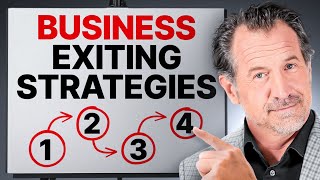
CPA-attorney Mark Kohler explains how wealthy entrepreneurs exit their businesses. Make yourself replaceable by systematizing operations and growing EBITDA over two to three years, then structure the deal with earn-outs or seller notes to increase proceeds. Tax planning matters, but maximizing sale value comes first.
Chapters
Welcome back everybody. Today we're talking about the payday of when you exit your business. Very different than the payday of how you pay yourself in your business every day, week or month of the year. I have a separate video on that. But this is also a big payday and a lot of business owners are working towards some exit. Well, today we're going to talk about four strategies that the wealthy do when it comes to exiting their business and are going to help you on your path when it's time to sell. Now, my name is Mark Kohler. I'm a CPA attorney, bestselling author. I've had a tax and legal practice for over 20 years now. I've done my 10,000 consultations. I can't count how many clients I've met with that have a dream of selling their business. And I've met with these clients on the front end, the back end and everywhere in between on this process. So this is time tested information that I know is going to help you. So number one is a soul searching question. Who are you going to sell your business to? A lot of business owners see that they're going to sell that business to their family or give it to their family or some sort of succession planning. Don't go watch the show, it's pretty brutal. But the point is, if you're going to sell the business to your family, it is a whole different process than if you're going to sell to a third party. And I'm not saying one is good or bad. It's like, what do you want? This is a very personal question, very introspective question of what you see with your legacy. Do you see selling the business to a third party and taking that money and going somewhere else and building something new with your family with a new vision, a collaborative vision or something that the family and these older children are now excited about. They may not be excited about your business or do you have some family members that are excited about your vision and what you built and they've been brought along at least to some degree where you where they want to be a part of this business moving forward. What you may want and what you can get could be two different things. And you've really got to have a reality check. Now let's say you want to sell the business to the family and you have at least one family member that's going to carry that torch into the future. If you're going to go down that route, I would start with a business consultant that helps with succession planning. These can be lawyers on our team to at least start the process. But these are typically business consultants that are going to have boots on the ground in your organization for months, if not a couple years or more, helping guide you through that training process, that kind of vision building process, and how you're going to hand it off, not only just financially, but from a mindset perspective. It is so common for the business owner to keep their toes in the pool, if you will, and trying to help the business grow and kids freaking out, going, leave, go, I bought your business, leave me alone. And it can even be friction throughout the process of the exit. There is so much to learn there. You don't even. There's books written on this, consultants on this. I've interviewed them on my podcast. It is a whole other process. So decide right out of the gate. And this is what the wealthy do. They, they understand. What are we going to be able to do? Am I going to go with a family route, A third party route? Number two, we're assuming we're going down the third party route. You're staying on the highway. You haven't taken the family off ramp. You're going to go boom. Third party buyer. Okay, Step two involves systemization, developing people and understanding ebitda. And that is earnings before interest, taxes, depreciation and amortization. This is what a buyer would expect to have almost cash flow wise. This is what your business is going to generate. Dollars and cents. You're going to start to marry that number. You're going to really understand how to tweak it, grow it, build it and sustain it. This process is easily going to be two to three years. You're going to start making yourself irrelevant. You're replaceable. If I'm a buyer, I don't want to come into your business and have to be dependent on you. I want to buy a business that's sustainable. Okay, what's so funny is I've had so many clients come in and they're like, okay, I want, I want to do this. Okay, let's start building your ebitda, the financial statements, the systems, everything with your people to make this work. And what's the goal? Oh, we're going to get $1 million in EBITDA and I want a multiple of five. So I want to sell the business for five times EBITDA. $5 million. Maybe it's on a note, maybe it's in other ways. We're going to come to that. But this $5 million sales price. Okay, cool, let's get to Work. So we take two to three years, maybe faster, maybe or longer. Getting everything in place. So a buyer would just love this. And all of a sudden the business owner goes, wow, I really am irrelevant. I've just created amazing cash flow and I can go do what I love every day. Golf, sit by a swimming pool, pursue another business, go invest in real estate. Okay, why am I selling for 5 million? I'm going to make that over the next five years or more. Now that I've systemized everything. Yeah, you really want to sell? No. I did everything I was supposed to to be running my business in the first place. Now maybe I don't want to sell. Isn't it kind of funny? Many of you have gone to sell your own home, your own personal residence, and there's all these things you want to improve in your home and you just kind of deal with it. The door that doesn't shut properly, you know, the paint that needs to happen here, the flooring here. And you go to sell your house. And so you go do all these things. And you sit there. When you go through it with the realtor to list it, and you're like, man, I wish I would have done all that four years ago and enjoyed my home more. When I did own it. I did all these things so I could sell it. Well, it's kind of like that same way with your business. There's a be prepared for this. There's a kind of a rude awakening where you're like, wow, now my business is really ready for a buyer that could be me, in a sense. I'm going to stay and own my business with a better, improved model. So could be pretty shocking. Now that's step two. So you decide to sell to a third party. You go through that self realization. Now you're building the system and the EBITDA and enjoying that ride. So third step, you get there and you're like, I still want to sell. I got other things I want to do with that money. I see risks coming down the road that maybe a buyer may not see, but I see, what do I do? Number three, be willing to get creative. And what I mean by that is when a buyer comes in, there's going to be a process of exiting you, and it could actually be fairly lucrative because they may want you to stay on for six months to a year under a contract, some sort of maybe its own payroll scenario. And you're going to do a farewell tour. You're going to help the team transition to the new buyer. You're going to help customers or clients transition to the new buyer. And your sales price could actually be a little bit more because you're willing to help in that transition to help them succeed. So you're going to want to know that this is coming, that it's not just like, hey, I sold the business. Here's the keys of the car buy. I don't think a buyer is going to want that. They want to transition. Also, there's going to be a financial creative aspect to this. You might carry some money back as a lender. You may say, I want 3 million up front, and I'll take a $2 million note. You may say, okay, I want 3 million up front and I want 20% of the business. And we're going to have a second exit. Let's take this business to the next level and see. Private equity buyers might want that. They're going to take your business, but not in full. They want you to stay on board for another two to three years with retained ownership, and they want to increase that multiple and the EBITDA and go out and double down. You may make more money on the second exit than you did on the first exit. This is the genius of private equity. Some great books out on that. Now I know what all of you wanted to talk about, and that's number four, because it sounds sexy and exciting. Hey, what are the tax strategies on this, Mark? Am I going to put this on a foreign trust and sell it when I'm in Puerto Rico, or am I going to, you know, do this with a charitable remainder trust or an installment sale and is it capital gain or not? Whatever. Yeah, we're going to talk about tax planning, but don't let the tax tail wag the dog. The taxes are going to come. They're going to be a part of the equation. And yeah, there might be some ways to minimize the tax bill, but that's secondary to getting the best value and understanding the exit and what you might even get on a second exit. Yes, we want capital gain. Yes, we might take it over time and we might put it in a special trust to get you a deferred tax situation. But this is what I warn you about in this area. Be careful of these companies and advisors that are going to come through and want to sell you some sort of elaborate tax structure. Could have special acronym like a DST and an ABC and a CRT or DA da, da, da da. And some of them can be good, some of them can be bad. A lot of times they're very expensive and that's maybe unnecessary and you've got to look at the cost benefit analysis and some of them can be extremely high risk and have an audit risk with the irs. Get a second and third opinion on any of the tax strategies and the people promoting this are not going to encourage you to do that and they're going to tell you why you need to pay them 50 grand, 20 grand, 100 grand for this amazing tax strategy. And we're the best in the world. I don't like it. That's not my style. And I think you can very well overpay for tax advice. This value build based on the price of the sale. Be careful, get a second or third opinion. Doesn't mean they're good or bad, but you want to go in with your eyes wide open. Now some of you may think, well, that was pretty simple, Mark. Yeah, I knew all that well. I have also shot with my partner and Matt Sorenson three one hour podcasts almost. I think some of them were longer than an hour, some a little shorter. Three podcasts on selling your business. Everything from getting ready to sell it, selling it and the tax planning and legal afterwards. It's a great podcast series down in the link below. There's also some incredible books out on this. And the important thing is to take your time to go in ready to learn and to have good advisors along the way that aren't asking for huge retainers or a piece of the action or percentages of this or that. And that may come maybe, maybe not. But start getting educated on this. And I know that these four tips are important and will point you in the right direction. Now it's time to continue to get educated on this. But here's my greatest call to action. Please get a consultation with one of our tax lawyers. It's a fixed price that's extremely affordable that can build a trifecta. Build a vision and plan for this. Review your legal and tax structure and at least give you kind of your blood pressure. Do your blood work like what's baseline here? How are we looking? Take that and use it with your current accountant or your current lawyer. Some of you may not have an accountant or lawyer you trust. Check out KKOS lawyers for this consultation and this comprehensive trifecta analysis. It will save you thousands and thousands of dollars of heartache and maybe get in hometown by some big expensive law firm. Check it out. I'm not going anywhere. Our podcast, my YouTube channel, the Education, my books. Please stay on board and continue to learn. I love small business. I love exiting a small business. And you can do this on your terms. Thanks so much.
More from MARK




The secret to managing your family's future #financialfreedom #estateplanning #shorts



Moving Property to an LLC: What They Don't Tell You #realestate #investing #tips


