Unleash Your Inner Negotiator With Darren Prince
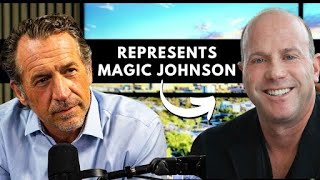
Darren Prince, CEO of Prince Marketing Group, shares negotiation tactics like quoting price ranges instead of single figures and prioritizing steady revenue over big wins. He also discusses his recovery from addiction between 2004 and 2008, and how purpose and relationship-building drive both business success and personal healing.
Chapters
So I was negotiating one of my book deals and the vice president of publishing I got one meeting with and I was trying to pitch him on my book idea. He had like two or three Yankee kind of memorabilia stuff. And I made my pitch, I did some background on him, found a baseball signed by Derek Jeter, wrapped it up, put it on his desk early in the morning, and I said, I hope we can play ball together.
Oh, that's great.
Well, welcome everybody to another episode of the Main Street Business podcast. I am so excited to be here interviewing another major influencer celebrity, in my opinion, and that's Darren Prince. Darren, thanks for being with us. Really appreciate it.
Thanks, man, for having me.
Now, let me introduce Darren. Folks, you got to get some perspective here on what he's going to be talking about because it's pretty cool. Darren's the CEO of the Prince Marketing Group, which is a prominent agency representing celebrities and sporting, I mean, athletes and any a listers. And he's negotiating marketing deals and endorsement deals, licensing and helping his celebrities protect their brand and their name and their image and likeness. It's a big deal. But he's also, and it's a really a major part of his life as he's a global advocate for recovering from addiction and having mental health issues. How do you recover from all these things and still be the best you can be? He's got a foundation and, and a book titled Aiming High. So I mean, you, all of you know, we could talk to him for hours and just learn copious amounts. We've got him just for a little bit of time here. But again, Darren, thanks for being with us.
Thanks, man. Looking forward to it.
All right, now, here's here. I told Darren this is what I want to ask him and he didn't expect it. I could tell. So I want to, I want to throw this out though, right out of the gate. You've been a small business owner. You're still in my. You know, we're all business owners, which I love. I know you started out just like a little guy like me too. But negotiations, I mean, this is what it really says to me when I look at your bio and cutting deals and representing everyone from Scottie Pippen to music deals with all. I mean, I'll be careful. I like, I just watched the Jordan show, so I had Scottie Pippen on the brain. But I would. When you are negotiating deals, large or small, us, all of us out there on Main street and small business owners, I think a lot of us are self conscious and scared about negotiating and saying the wrong thing. Do I make the first offer? Do I don't. What are your thoughts on negotiation in general? And maybe you have a few tips. I'd like to unpack that a little bit if you don't mind giving us your thoughts on being a master negotiator.
I mean, I think it doesn't just go for our business. It's a great question. But what I'll typically do, if it's Magic Johnson for example, or Charlie Sheen and I were just texting for this call on a very high end corporate keynote. I don't like negotiating ads myself and I think most businesses have to have that mindset. I think you almost need to give a range with the ball and the other client's court, you know, and I'll give a very wide range. You know, it'll. If it's hypothetically something for Magic, I, I know where his rates need to be. But if it's something more higher end like an endorsement, you know, it could be something as simple. And I just did it the other day for Jerry West. You know, he's not going to be interested if it's 50 grand, but it's also not going to be 5 million. So let us know what your, what your range is and the service is and the name of use and likeness and whatever else you need from a mobile. We'll try to find a middle ground that works because it's not just, you know, you're not hitting home runs, you're trying to hit singles and doubles all day long and build a brand and built a business. Any entrepreneur understands that, you know, anybody that's constantly looking for triples and home runs, it's not going to happen that way. And even still to this day, I mean the home runs, they, they come very once in a while, but it's about staying consistent. And most importantly, as I talked about in another book that I wrote, the Art of Relationship Building, you got to get to know your client on a personal level because people work with who they enjoy and who they like.
I love it. Now I, I want to. Gosh, you said a lot there. That was incredible. And I love these, an interview like this because I sometimes feel like I'm the biggest benefactor. But I want to restate something you said for our listeners and small business owners out there. I oftentimes feel like if I'm the first one to offer, I'm going to screw myself over. And I loved what you just said. Be the first one to offer a range, not a number that, that's pretty insightful because you get the conversation going. So if you're negotiating a vendor by a lease agreement, buying a piece of property or buying a, you know, a new line for your business or whatever, you're throwing out a range to get them talking.
It gets the conversation going. I mean, you can have a product and you could say, look, it's really not worth their time to take a 500 PO, but I don't exactly expect 50 grand out of the gate. So tell me something that you feel comfortable with and we'll go from there.
No, I love it. Now then you also said about the base hits. I love that because in the movie, I mean, I know you've seen every movie because you got clients that are in every freaking movie. So I love, I love Moneyball. And when you, right when, when Brad Pitt's talking to Jonah Hill and he's like, it's base hit, base hits, you know what, you know, boom. You know, he gets on base, gets on base. And I think so many people feel like they have to negotiate this massive perfect deal and then by trying to go for the home run, they get nothing, they strike out or whatever. I, I don't know.
And then by doing that too, you're losing the most important key to a business, which is the mrr, the monthly recurring revenue. So you have to focus on the singles and occasionally hit a double.
So I, I know you don't need to disclose who the client was, but if you don't mind, is there an example that comes to mind to you or like you were like, man, I killed it on this one. I kind of negotiated we were going here, but because of a. I, I was able to maybe present an angle that, that made a big difference. Does anything come to mind? I know you've done, oh, by the way, folks, over 200 million.
But I mean, you know, yeah, for me, in my line of work, I think it happens with us when there's deadlines. Usually when there's deadlines, it's an ad agent. So that might be scrambling for town or somebody backed out or it was a last minute campaign. And usually around super bowl time, that happens. And we put Hulk Hogan in a Radio Shack spot and Ric Flair in a Sombra Hummus spot. And when I tell you, literally within 36 hours, they were on set after those shoots. So those got to the point where there's only one Hulk Hogan world, there is only one nature boy. And so you have a lot more leverage when it's for its crunch Time, because there's. Right. How much of a replacement when they're spending, what's it, 7 million on a Super bowl nowadays. So those are always, like I said, more fun when they happen. But it's not just, you know, it's not just about, you know, saying, oh, yeah, you know, we crushed it on that one because you want the other side to win, too. There's been times where we've had offers actually come in much higher. Magic has this flat rate on keynotes, and we're a company. I was contacted maybe a year and a half ago for a group that got a rate that was a hundred thousand dollars more than his keynote. Right. And Dan Fleischman, a dear friend of mine, serial entrepreneur, had the guy call me because I, you know, you're dealing with a booking agency that's probably calling Prince Marketing and couldn't believe it. And when I told her how much he was saving, I was like, no, it's, you know, there's no reason to get gouged. I mean, I have no idea why somebody wouldn't quote that much, because all they're doing is somebody's lying in their pockets. And it ultimately hurts the bottom line of getting the deal over to Magic, whoever it might be on my roster to get them booked. And since then, that individual and his company, I've probably booked six or seven other huge keynotes. Because you do something like, for somebody, they. They realize you, you know, you're stand up and you do things right. Yeah.
And I don't know what, that's a great point, too, because I don't know, again, I relate a lot to scenes and movies and things and where you stick it to them and you think, oh, I got the best deal, whatever. You really cut out all the future relationships that you might have had from making a fair deal rather than, oh, I got the best. I really screwed them over. And then. But really, you hurt yourself. You screwed yourself.
You'll hurt yourself. It's like I said, and believe me, there's so many times over the years where a deal could weigh in our favor. And look, as we grow, you know, we do eight figures, substantially figures here in endorsement and marketing deals, and we have moments like any other company, a lot of expenses, overhead, where there could be a slower month or two. My biggest problem is all the clients we have are so observably wealthy. The majority of the huge opportunities really need to be a right fit that day, that month, that year for their brand. Or there's a lot of times, you know, these Huge stars will pass on opportunities and it's life changing money for other celebrities but for them it's just, it's just not the right fit. So that's why relationship building is so key. Because yeah, you're going to go with peaks in the valleys, but if you have a slow quarter or slow month or two, you have enough seeds that are planted that eventually it all comes back around. Wow.
Well, let's change gears for a minute. There's so much again we could talk about and I'm so grateful that you're here, but I just had a ting of emotion with preparing my question here for you because it's tough being a small business owner out there and I think of negotiations and the pressure that you must be under a lot and I know you've got a story that that pressure took a toll on you and mental health and addiction and recovery and you're very vocal about it and. But I know a lot of people don't talk about it and they're in, they're in a small business just struggling and no one to talk to and they try to find ways to buffer and what any just initial thoughts for that small business owner that's watching and listening right now that when you know they're going to bed just depressed, sad, stressed and don't know the way out, what would you say to them?
Well, you know, I started a mail order baseball card company in 1984 when I was 14 and the company exploded by the time I was 19 I sold it for over a million dollars. But you know, I had a lot in securities and adequacies. Feeling a blessed then. I was always told I had a severe learning disability and I thought the money and climbing to the mountaintop as a young entrepreneur was everything. And not addressing it eventually wound up at the top of sports and entertainment industry representing some of the most iconic names in the world. And I speak all over the world and I say at one point it was once living to use, turned out to using to live and everybody's talking about success and building, growing, scaling, but there's just not enough emphasis being put on the entrepreneur that's either in start out, middle mode, growth, expansion, doing great, doing unbelievable, getting near an exit. When you don't address those issues that we have as a youth or a child, whatever that trauma or inadequacy might be, you're not running away from it. I don't care what type of wealth can have billions, it, it affects your everyday life. And for me the last four years before I got sober from 2004 to 2008 and I was up at 3, 4 o' clock in the morning wanting to kill myself every night because had all the money in the world. Like I said, top of, top of the industry, all the external respect you could ever imagine on the biggest talk shows, the biggest events, sporting events. But I lost the sense of self. And that all changed from on July 2, 2008, when I fell on my knees and called out to God and I said, take the money, the business, the notoriety. I'll do anything for a single day of freedom. And I was given the gift of desperation and slowly but surely put one in front of the other, started going to 12 step meetings, found a new family of my spiritual brothers and sisters that showed me the softer, easier, easier way to a better choker life and a spiritual life. To just have that mindset of the glasses always half full, not half empty, you know, focusing on what I have, not what I don't have. I was telling my ladies here in the office the other day, you know, of course everybody always wants more and wants to evolve and do bigger deals. But, but in hindsight, like the majority of Israeli have luxury problems in today's world, they truly are. And you know, when you, when you put that in perspective and you can, you can really look yourself in the mirror. If you live the way that I used to and say enough is enough, whether it's anxiety, depression, suicidal thoughts, bipolar, substance abuse, whatever it might be, that's creating unmanageability in your life. That's where the strength is. And
it's crazy like, like what you just said, that's kind of these luxury problems with these, sometimes they go on those first world problems and you really get to someone, you're talking to him, you're like, that's your problem. And we just get so twisted in thinking what is we should, you know, that we should feel better every day or we don't have enough. When living these incredible lives, we just, it gets so distorted. Yeah.
And, and I, and I think with that mindset, it's why there's more opiate overdo deaths last year than DUI deaths and led this nation because it's so easy for somebody to just pop the pill. And I was a hardcore opiate addict. It's all painkillers for me for 24 years. And you know, it's just easy and the doctors make it accessible and you know, you ain't gonna win, you're not gonna win in the end. You've got three choices for anybody that's listening, I always say you can get locked up, you can get cleaned up, or you're gonna get covered up because nobody gets out, you know, for free.
You said something there. It was interesting too. You said you were given the gift of desperation and you dropped your knees and you're like, I got to give myself, you know, to get out. What, what if. So I don't know. What does someone do? Like a lot of times people are forced into desperation because their problem, they lose everything financially. You had everything financially, but you had
that self awareness, got just, you know, the biggest celebrities from, like I said, magical flare, Ollie Frazier, evil. It was, yeah. I mean, you just would have never thought it would have happened. So as much as we're trying to talk to the everyday, hardworking person, I'm sure you've got some very high net worth individuals that listen to this podcast. You ain't off, you ain't off limits, you ain't off the table. Because nobody, I'm sure that's listening, had a stewarded career like I did at the height around the biggest stars on the planet, the most influential humans of the 20th century. And I wanted to put a bullet in my mouth every night for the last, you know, few years. Like I said.
What would be your. I don't, I know it sounds maybe juvenile or basic or two. I don't know. But someone that's listening right now that had those same feelings last night, this morning, right, Right now, what do you tell them to do? Pick up a phone and call Hood. Where do they go? What do they do? I know that you're, you're always reaching out and helping others with your foundation.
Yeah. I mean, first up, anybody can reach out to me at Agent Underscore DP on Instagram or message me on Facebook. Wow. But there's treatment centers everywhere. There's no excuse not to be able to pick up a phone and call toll free number for any treatment center that can help you. First, with the underlining issue, if there is a real medically diagnosed mental health disorder over and above the substance abuse, you know, you can go to a hospital, they have detox centers all the time where, you know, people will go in there and, you know, you look at it when you're in that moment on that last day. A lot of times for me, I thought it was the worst day of my life. And fast forward July 2nd, God willing, it'll be 15 years of recovery for me. I look back in as the greatest day in my life. But I thought Was the worst. Now turned out to be my best. And I get more excited over my July 2 birthday than I do February 6, which is my birthday, because that's when I felt reborn. That's the day that I could reflect back on another year of growth, helping so many people around the world with my platform. And I'll go through different messages that I've had. My buddy Frank. I was going to New York on Saturday for a couple big business meetings and flying out of lax. I got a text. He's from New Jersey with a picture. Just celebrated 13 years sober and met his wife in recovery. And they've had two beautiful kids since. They've been married for six years in recovery. And he said, thank you so much. My brother couldn't have gotten here without you.
Wow, that's better than any endorsement deal.
Exactly what I said. I was literally sitting on the plane in tears, texting my sponsor, who's got 36 years. We even hate using that word because he's like my big spiritual brother. And he's like, lucky, you put in the work every day, you do something every day to be dialed into the world of recovery. And Magic Johnson and Hulk Hogan are two of my dearest friends. And they've said it many times that God can't help but to reward you. When you live a life of service and when you do it just because it feels good and you want to help people, that's when the reward comes in. If I lost the business tomorrow, I tell people all the time, the most heartbreaking thing was everybody working for me, my mom, my sister, I wouldn't be able to take care of people. You're still talking to the same Darren Prince. Because I've healed. I've gotten to that place of David Gongan is a good friend inclined, too, and he talks about it. And when we hung out last September, he said, you went to war with yourself. And he goes, that's the only way to come out on the other side. And there's days that I still have to, though. It's interesting because you get this beautiful sober life. But there's still coping mechanisms. Like how do I celebrate differently when it's an incredible month or an incredible year? And then how do I deal with the letdowns and the disappointments when most humans can go out and know, have a couple drinks, grab a bottle of wine, they can do, you know, indulge in some things that just give them, you know, a little relief. I mean, I have my routine. It's hanging out with my dog. Massages every once in a while, taking a trip with my girlfriend. But you're. You still, you still have to go through it. Because I think the first thing people want to do is you want to celebrate when all the good happens. And I think for me the easiest thing is usually taking care of other people that mean a lot to me because that just at least makes me feel good. And I let them go out and do the celebrating because I know they're normal people that can do it. I lost those rights.
Well, now let's bring it back. You said something there. You may not know I'm going to go there, but I, you said something in. It was special, taking care of the people you love. And you talked about your sister and your mom. And one of the topics in my book that's a big deal is I want all my business owners hiring their family, putting them on the tax write off strategy of getting family involved in business. And I was debating with one of my partners the other day, he's kind of against nepotism. You know, you shouldn't have your family in your business. I'm like, I want my family in my business. So if you don't mind me just asking about it, you just said you've got some family in your business. Has that been a blessing?
My, my dad was heavily involved in my business. My mom and my sister aren't, although they're big cheerleaders. My, my dad worked out of the house. Old school Jewish guy. In the 1970s and 80s, it was a big thing to do. So every time I go downstairs into the basement when I had my baseball card business, he had his whole staff down there working on computers and phones. And so it's just something that was instilled in me. And I've only had probably two offices in the 35 years I've been as business. We work out of, you know, beautiful apartment now and in Brentwood and before this is Marina Del Rey, West Hollywood, my old place in Livingston, New Jersey, where I, I grew up. And the majority of the people I've hired have always been friends. They've always been people that have been very near and dear to me because I, I believe when you have that they know you better personally, what your strengths are, what your weaknesses are. And then you find out along that group who can pick up the slack and do what you're not great at. And I think that's a big advantage, to be honest. And I think it's also about paying it forward. Like, yeah, of course you want to Get a good couple hires here and there that are great people and, you know, have them accelerate their path to success. But what better when you're keeping it in the family. Yeah. And it's, you know, loved ones that mean the world to you. I mean, wish everybody can blow past my success one day because I'm at that place of being so healed and so humbled and zero ego that if everybody told me tomorrow they got a job or moved on with this incredible career and I'm so sorry, I'd be heartbroken. But I'd also look back like, wow, if they weren't here, Print marketing group, well, you would have never gotten to that stage in their life.
Yeah, I, I, I last comment. Well, you've been so generous with your time. I myself, a lot of people are like, well, isn't it hard with family or friends in the business? And it can be, but if you're mature and you've got the long run goal of, and mindset of working with them, it actually brings you closer together. My, my son worked with me in my business for years and three or four years ago he's like, we both decided you got to go work somewhere else for a bit. Let's do it, you know, go get some other experience. It was just so stressful. And then just this last year back and it's been, I love it, it's been huge. And we both came back with a renewed love and experience and the whole thing drew us closer together. When other families, they don't even hang out. I, I don't know, I loved it.
But that, that, that's amazing. I mean, I love that because you're, because you're going through it together. You're going for the losses, you're going for the wins, you're going for the battles, you're going through the, you know, when it becomes a love and a passion and you're able to do it with loved ones and family members or friends that are near and dear to you. It's, it's, it just makes it so much more exciting and rewarding and sweeter. Yeah.
Yes, totally. Well, Darren, thank you so much. Any final word of wisdom for that entrepreneur out there that's just trying to negotiate a deal, trying to get through a tough time, maybe fighting their demons or just trying to level up? Anything come to mind? That kind of a. I think there
needs to be more emphasis on relationship building. If you're trying to get an account, if you're trying to build an account, build a relationship, always focus on the Person and not the business side of things. Find out a little bit more about their personal interests, their families, where they're from, as much small talk as you can. I think that's everything. And too many people have gone away from that. It's a crazy quick, hey, are you interested in this? You want to buy that? You want to buy this? And I. I just don't think. I don't think that works anymore.
Dude, I was going to say this story earlier. I wanted was like, man, I'm going to talk to Darren Prince. I got to tell him this story. But I didn't see a spot until now. I got to throw this out. So I was negotiating one of my book deals, my first one, and I was been working with Entrepreneur magazine ever since, and the vice president of publishing, I got one meeting with him and I was trying to pitch him on my book idea. And when I was in his office, he had like two or three Yankee kind of memorabilia stuff around his office. And I made my pitch. I don't know if it sunk in or whatever, but I was like, all right, I got to work this. And so I did some background on him, found a huge Yankee fan. And you're going to laugh because it's like, probably have these laying around and, you know, sock drawers, but I found a baseball signed by Derek Jeter. You have the little and, you know, very verified legit sticker. You know, all this stuff. Wrapped it up and I got his secretary to put it on his desk early in the morning. And I said, I hope we can play ball together.
Oh, that's great.
I dropped it off and rest is history, you know, I. No, anyway, but I got the deal.
Love that because, you know, I was in the memorabilia business for years, and to this day, I got out of it in 1995, especially as men to able to send somebody, you know, something signed by Chevy Chase or Magic or Larry Bird or Hulk or Rick, and now it's in their office. So when they're doing other business and this is signed Magic Johnson Lakers jersey on their wall, and that corporate executive or that team comes in to see my client, it's like, oh, wow, where did she get that? It's almost the best form of free advertising true for me that I could ever do. And we still haven't gotten away from that. It's something I love to do. If somebody comes in, their fan of Charlie Sheen will get, you know, some wild thing Ricky Vaughan jersey signed and shook one out and have Charlie personalized. And the clients love doing it. Too, because it, you know, it's a conversation piece, keep them relevant. So usually from an iconic moment in their career, or it's a special jersey that, you know, signifies greatness or an image that meant so much, you know, to the world. And it's a great, inexpensive, thoughtful way to build that relationship.
Relationship. Yeah. I was like, I didn't know. If I get a chance to tell you my. My only real. I mean, we could talk about my football cards, which are completely worth, man, because.
Yeah, I haven't heard many people do something like that. That was really smart with the Jeter. Well, I love that.
Well, I don't know. Well, Darren, you're awesome. Thanks so much for your time, and thanks so much for what you're doing to help others around the world. And we love to see our superstars and their endorsements and impact in our lives, but more importantly, see what you're doing with aiming high and helping people find spirituality in their life and recover. Thank you so much for all you do.
Thanks for having me, man. I appreciate it. Take care.
Take care. We'll see you around.
Thanks.
More from MARK




The secret to managing your family's future #financialfreedom #estateplanning #shorts



Moving Property to an LLC: What They Don't Tell You #realestate #investing #tips


