What You NEED To Learn From Grant Cardone’s Lawsuit
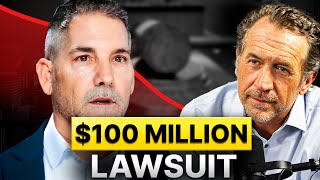
Grant Cardone is suing former T-Mobile CEO Jean Leger for $100 million over statements made on Clubhouse calling him a con man and fraud. Mark Kohler and Matt Sorensen break down the four elements of defamation and what entrepreneurs need to know about protecting their reputation online.
Chapters
This is a very brave move for Grant because it's going to definitely bring a spotlight to his life and it's not going to be comfortable. But dammit, he's standing up for himself and so we want to give him kudos for that. And what a good learning lesson for all of us to see something like this play out where from the sidelines, there's lots of lessons to learn.
I really do think there's an important message and takeaway for us and what we're saying online about other people, also about how you can protect your reputation and understanding this defamation law. So no matter what side you're on about it, you're saying something negative about someone, feel it's important to say that, make sure you're sticking to the facts and it's accurate or you could be on the hook for defamation. Now, on the other hand, if you're on the receiving end of this, you know where you're getting defamed, they're saying false stuff about you, you do have a way to go protect yourself legally in court. Welcome, everyone, to the Main Street Business Podcast. Today we have got a big update on a major case in the news and some key takeaways. We want you to know. Matt Sorensen, Mark Kohler, her two lawyers.
Yeah, just trying to be good guys helping out Main Street America. I just say this is a special edition. Some of you may have just fallen on this podcast is due to the title you're interested in this big case, what defamation really is. This is not a news flash of what's going on in the case today. It's about what are the takeaways like? What can we learn from this? As just a person on social media, let alone a business owner investor raising capital, all these things are a lot to play out here. You can even reference the Johnny Depp case. So we're excited to be here with you. We help small business owners around the country and hopefully you'll be intrigued enough to check out the other podcast episodes.
Yeah, yeah. We're not prognosticating what's going to happen in the case. Who's going to win or lose. Is that what this is about? But there's some important takeaways here and I think the suit Grant Cardone has brought, he's been bold, I have to say yes, in bringing this case because he's exposing this. He's putting himself in the spotlight and these issues that Jean Leguer has raised and made claims about that have damaged Grant. We're going to get into those facts as A way to help illustrate what is defamation? What can you and can't you say online? What can you say about a person, an influencer, a company online? What can you put in a Google review? We've had. I ran into clients that have been sued or have sued people for reviews that are inaccurate because people get so pissed off. They start saying stuff that's untruthful because they're so upset about the situation. They overindulge and they say that was really worse than it was and all these things. So we've got to be careful about this. We're going to get into what the heck is defamation? How can you use it as a tool to protect yourself? How do you make sure you're not on the other end of it getting sued?
Yeah. And we've interviewed Grant here on our show before. We've been to a number of his conferences over the years. We have a lot of real estate investors we represent, and we don't know how this case is going to play out, but we do want to compliment him for being so brave to defend himself. Many of you have thought, boy, that person really said something bad about me on social media or in a situation on stage or who knows what. And you really question, like, should I go at them? What's going to happen if I do? And we're going to talk about that because this is a very brave move for Grant because it's going to definitely bring a spotlight to his life and it's not going to be comfortable. But damn it, he's standing up for himself. And so we want to give him kudos for that.
Yeah.
So.
And I think it's. It's an important lesson. And Johnny Depp is the same. You only have one reputation, so you better freaking defend it. And so if someone's saying something inaccurate about you that is false and that causes you damage, we're going to break this down further into the actual legal elements. You have a right to sue them. That's what Johnny Depp did. When Amber heard, we all remember that case, right? It was all big in the news. She said that he was sexually abusive to him, that he physically assaulted her, and he brought a case against her and said that was false. I never did those things, and that caused me major damages. Well, that. All the way to trial, that when the thing went on for years, they finally got to trial. He got a jury verdict, a $15 million verdict in his favor. She appealed. They let her settle for a million, but he basically went out and cleared his name through that trial. And so that's a good example, I think for people. There's like, you can't just say anything you want about somebody. You have a bad breakup, bad business interaction. That doesn't mean you can go out and say whatever the hell you want. You've got to stick to the facts if you're going to go say something negative about someone. Or you could be on the other end of a lawsuit.
Yeah. So let's take our two. As we kind of break down the takeaways. I think there's two sides of the coin here. Leger, what did he say? How exposed is he? What does he have to prove to defend himself? Because what Grant did is sue him for the words he said. And so Grant is the plaintiff, Leger is the defendant. And so what does it mean on his side of the equation? And what should have he been maybe more careful about? And like what Matt was just saying, where do we find ourselves with our boundaries and what we say on a Google review or on social media or in any system.
Yeah.
Then we'll come back over to Grant's side and talk about good or bad. What's he going to have to do to prosecute his case? And what does it mean when you really stand up for yourself in this situation? And how hard is it going to be? And ugly. So first, the facts. Let's get through the facts on the table. The case, if you haven't heard about it.
Yeah, let me hit a couple key facts if you haven't heard about the case and what this is about. So Grant Cardone and Jean Leger, by the way, he's the former CEO of T Mobile. Leger, Leger, former CEO of T Mobile, Grant Cardone. If you don't know who he is, big financial guru, undercover billionaire, TV show. You have 10x conferences. These are both pretty famous people with huge social followings. Let me just say that.
Okay.
If you don't know them, they're kind of a big deal.
All right.
Both of them. So they were on a clubhouse app together. This is, if you guys know the clubhouse. It's an audio app in a big room. Hundreds of other people were on listening to their conversation. And last summer, last summer, this is in June. And Jean Lasher said a number of things, but important, particular things that Grant Cardone said was defamatory to him and has caused some damage. Here's a few of the key things that are in the case Leger said about Cardone. I believe in the next year, Grant Cardone will be found guilty of fraud. He called Cardone A con man and a BS artist. Some other nasty things he said about him, but those are the key things that he said that Cardone's like, hey, that's untrue. Those things you're saying about me. I'm not. Those things that you're saying and the things you're saying because you're a well known public figure and you got a huge following have damaged me. Over $100 million in damages. That's what he's claimed. This is in a court case down in Florida right now. And so that's the basic facts of this. And like Mark said, Cardone's the plaintiff. He has brought this case and put it into the spotlight.
Yeah. And many of you that listen or watch Nancy Grace or Megyn Kelly and know the elements of a case and what that means, that the elements are for Grant as he sues him, is you said something false.
Yeah, that's the first element. False statement.
False statement. And you have a reputation or the platform that someone relied on it, heard it. And I was damaged financially because someone relied on your false statement. I was hurt financially. At some point in the case, Grant's going to have to prove what those financial damages are. He threw out 100 million. That's a topic later on. But the first thing is, did he say anything false? And so it kind of puts the burden of proof. And it's a weird thing. I was talking Matt about this. Who's got the burden of proof here? Grant's gotta go and say, nope, those are lies. Cause Leger, his greatest defense is they're true. So he's gotta prove they're true and Grant's and. Or gotta prove they're false. And the jury's gotta go, who am I gonna believe? Her.
Yeah. And that's that. The thing here, you can say negative things about somebody. You can say things that really hurt them, that cost them money. As long as they're true, you've just got to be right. And this is where Leger. We don't know.
I don't know.
This is where he's on the hook here. Because if this wasn't true, and Cardone can prove in his case, which he presumably thinks he can because he brought it, that what Leger said is false and incorrect and that the burden is first going to be on Cardone. He's got the burden. Proof to prove these are false. But how is he going to do that? Well, he's gonna have to go show all this stuff to show this is not the case. What Leger was saying about me is actually not true. Here's my evidence. So what happens in a legal case is. And you know, the lawyers know what this process. But for many of you, this is. What happens is there's something called discovery. Cardone files his suit. Leger is going to file and say, no, I didn't. Those things aren't, you know, I'm going to win the case. And he puts up his defense as all. Just the filing. And then they get into what's called discovery. And Leger is going to be able to say, all right, show it. Prove it. Cardone, give me all the documents I want. Records, we're going to put you under oath under penalty of perjury. And depositions. Both of these guys are. Have to go through this, and this is going to create what's called discovery, where this is all going to be put on display. And if you think of your Grant Cardone, I mean, I'm just like. And this is true. You're not going to bring this case. You're going to bring this into the spotlight.
Like, you know, and it's. And it's so hard, too, because what Leger has done is he's gone out and created a public campaign to find anybody that feels they've been wronged by Grant Cardone. And Grant had to have known this was going to happen, which is the scary part is now Legere's out there. Hey, if any of you think you got conned by Cardone or ripped off or fraud, come tell me about it. I need it for my case. Oh, my hell. So anybody with an axe to grind, right or wrong, true or untrue, is going to start throwing this crap at Leger, and it's going to end up in the record. And even if it's not true, and poor Grant here, I'm. This. This is where I'm like, see, he's already been on our show, and we've talked to him before about this. He's gone through 23 SEC filings to do Reg A offerings to raise money for real estate. And people have made claims once in a while, like, oh, I don't like what you represented. The SEC has gone through with a fine tooth comb on all these offerings. Clean bill, health. The SEC is like, grant, you're clean. This is great what you're doing with the sec. We're fine. But that could be a false sense of security when Legere starts throwing out mud from who knows what angle. I mean, it's really.
Yeah, we're gonna see how this develops. Who freaking knows? I mean, I. I Actually, I'm like, this is my business. I like. I applaud Cardone for bringing the case because he's like, I'm. I'm willing to go bring this into court and prove it. He's pushing this into a court of law to go and show this and demonstrate this to try and win this case. So now Mark hit some of the elements of defamation. I just want to make sure everybody got that, because there's four elements. False statement. And this is the number one element, of course, at issue here. Communicated to a third party. Obviously it's communicated to third parties. This is on a clubhouse app with other people who are on listening. The transcript's gone berserk, and it's all over. Yeah. It's on a platform that. And the person saying it in this case, Leger was at least negligent. Or if you want to think of Johnny Depp, Amber Heard. Amber Heard was at least negligent in what she said. Negligent means they were careless about what they said. You know, let's think of it maybe that way. What's worse than that could have been. They. They knew it was not accurate. They had no basis to say it. That. That would obviously qualify, too. And then the person bringing the case had to have been damaged by it. And that's where Cardone said he's been damaged. It's hurt his ability in his businesses to make more sales or raise more money. That's affected how much revenue he makes, and that's damaged him. I love it.
Now. Okay, so let's stop here with takeaways. And I got a lot of people have said, well, how hard is it to prove fraud? So I want to get into the elements of fraud, too, because I think that's going to be an underlying issue in this case.
Well, you mean proving fraud because Leger said Cardone has. Will be convicted of fraud within the next year.
Yeah. And so Cardone's like, really? You better show me meeting the elements of fraud. That I've done that. And so we're. We'll go there here in a moment, but let's talk takeaways. Okay. Be careful what you say. I think if you know for a fact and it's truthful and you want to go hard at someone and it's truthful, you should be fine. I mean, you can say whatever you want as long as it's true. Now, do you want that heat that someone could. They could still pull you into court. Yeah. And you might have to prove it's true. That's going to cost you an arm and a leg with lawyers. So be careful.
Yeah. Do you remember we had this guest on our podcast a long time ago that was a lawyer that their whole practice, and they're actually a pretty big firm, was suing people for leaving negative reviews online of companies. And she was very smart and very good and worked for a lot of big companies and brands. And she said the way most of her cases were were bad customer experiences where for the person basically manipulated the facts and made it sound bigger than it really was. They embellished it because they were so pissed off about the situation, they could have stuck to the facts and left a negative review. But they go embellish it. They say it was worse than it really was, and then they would get liable on a case. And I know that happens because people get passionate about something, they want to oversell their side of the situation. But if you start doing that online and it can damage or harm someone's reputation or a business's ability to gain customers or anything, you could be on the hook. So that's why I say you got to be really careful about this is stick to the facts. You can say negative stuff about people, but stick to the facts. What's actually happened. Do not start embellishing. This is not an opportunity for you to oversell your situation. Don't to make that crappy company or person you dealt with seem worse than they are.
And I think there's another distinction here too. Saying something crappy about a company and about a person, it can be a fine line too, because you might want to get personal. This person was a jerk, or they were this or they were that. And really you're complaining about the company. That's fine. Stick to the facts. Now, you can still be sued for defaming a company or a person, probably
more likely a company.
But you have to remember they're different and getting personal. You know, you've heard that in the movies. Don't get personal. You know, that's where you don't want to throw adjectives and epithets that really you can't even prove. So be careful there. Now, on the flip side, let's just say another major takeaway, if you're going to defend yourself on this, you got to be aware of the big D. And that's called discovery.
I didn't know where you're going with that. Careful, huh?
Big D. And I don't mean Dallas country song. But if you're gonna go into this, even Johnny Depp, I don't think really Knew the extent of. Because she can get up and say anything.
Yeah. Do you think she's won?
We were in the bedroom, and he did this. And he did this. And I mean, you're like, really? Oh, my gosh.
That whole trial was on tv, and they had psychologists and everything. I mean, it was a total train wreck. But to him, he had to make the calculus. I had no choice. I had no choice. And that was interesting, some of the recorded phone calls that came out from her and him, which is a very interesting case if you guys followed it. But. But yeah, that's. It is. Discovery is where all this information is going to come out of. What is the issue here was Jean Leger. Right. And the claims he made against Grant Cardone. And that is discoverable information now that all that information about Grant Cardone is going to have to come out in the case.
Yeah. Now, if someone says. Let's say someone says about you that you could be. We've seen this in the social media place. They. They are not a real blonde. They bleach their hair. They're a fake. They're this. Okay, so now we're gonna. Discovery's gonna be all about your hair, your product, your whatever. And this. This influencer is like, oh, my gosh, they're calling me out for my clothes or my hair or my. And you see it out there. There's these little, you know, fights that happen out there in this case. Legera saying Grant committed fraud. All right, now, the scary part is we're not talking about hair product. We're talking about fraud. And that's a serious issue. So here's just the rough elements of fraud. Sometimes they're between six to nine elements. But let's just quickly. So, you know, so for Leger to win, he's got to say that Grant represented a fact that is false and it was material. So that means he's trying to get someone to invest in maybe one of his businesses or projects represents a fact that. And this is the next one to the knowledge of the representer. It was false. They knew it was false. So he's got to be able to prove Grant said something that was false. He knew it was false and it was material. It wasn't just for 50 bucks.
Yeah, it was important.
It was important.
It was, like, important part of the thing.
And then we get to the I word, intent. And it was Grant's intent all along to rip off this person, one of the elements. And then the injured party did rely on it, and they had the wherewithal to Say yes or no. And finally, the injured party had injury. They lost their money. Those are a lot of freaking elements. And I'm sure Grant met with his attorneys and said, is there going to be any instance where Leger could meet all of these elements that you did to someone? And Grant's like, no, I don't represent false ideas. I don't rip people off. I don't take advantage. And Grant, I'm sure, very, very carefully realized I haven't done this. So Leger does have an uphill battle. It's not easy to prove.
Yeah, yeah. And there's other statements that are said there, though there too. You know, that he was a. He's a con man, that he's artist. You know, whether he's got a billionaire or not, you know, there's all the other statements and issues in the case. And so, I mean, this is not going to be a simple case. Let's just say there's going to be a lot of discovery. This will probably drag on for a year or two. But what you're going to see here is, and I think the big takeaway we want people to know is, yes, this is a big, sensational case. These are two super famous people gonna be in a legal battle. You know, the newspapers and the Internet, and everybody's gonna be loving this. Do newspapers exist anymore?
You know what I mean?
Yeah, online, but the media, let's just say that the media's gonna be all over this and reporting on it. But I really do think there's an important message and takeaway for us and what we're saying online about other people, also about how you can protect your reputation and understanding this defamation law. So no matter what side you're on about it, you're saying something negative about someone, you feel it's important to say that, make sure you're sticking to the facts and it's accurate, or you could be on the hook for defamation. Now, on the other hand, if you're on the receiving information end of this, you know where you're getting defamed and it's. They're saying false stuff about you, you do have a way to go protect yourself legally in court.
Yeah. And our heart really goes out to anybody that's been defamed because to defend yourself is. It's a carnival. It's a circus. And Elena, his wife and what his family's going to have to go through in all this disclosure. Our heart goes out to you, Grant, and we're proud of you for standing up for yourself. We hope none of it's true. And it's just, we're just grateful when we see people stand up for themselves and fight. And we have to all recognize what that takes financially and emotionally. And so we just applaud you and hope it turns out well. And what a good learning lesson for all of us to see something like this play out where from the sidelines, there's lots of lessons to learn.
Yeah, yeah, lots of lessons. Of course, takes two lawyers to get all excited about it and be like, ooh, what's this case about? You know, like I said, it's all over the place in the media, but we just, we geek out on it from that angle too. And just for all, many of, you know, listeners here, many of our clients who are dealing with these issues, we should probably reference that old show we did with that lawyer that represented companies and we'll link that in the show notes here to make sure you guys have access to that. So that was a really good conversation. I still remember that. And because they gave a lot of tips too about getting negative reviews, I think that's a common thing for business owners, is you get negative reviews that aren't for their faults.
Yeah.
We've even had them in some of our companies that are competitors. And it's like, really, you're going to leave a negative review on our Google reviews and you're a competitor, Come on. You know, and so that was false. You know, and so there's, there's ways
you can fight their pants off.
Well, there's processes through Google you can go through to get those removed too. But anyway, yeah, it's great.
And in fact, in our show she talked about.
Yes, exactly.
So, so. Well, thanks everybody for listening. If you're new to the show, please look at our history here. We're pushing almost 500 episodes. We'll hit that early this year. And we are just so grateful to be a part of your lives. We love you. We appreciate what you're going through. The American Dream is live and well, it's so hard out there right now financially at times and we just want to be a resource to you to get straight answers on legal and tax and wealth building strategies. So please check out our podcast and those prior shows and if you enjoyed this, please share it with someone that you, you value their opinion. Give us a five star review if you can. We want to get this message out there to everybody on the. The beauty of the American Dream.
Yeah. Thanks everyone. See you next time.
More from MARK




The secret to managing your family's future #financialfreedom #estateplanning #shorts



Moving Property to an LLC: What They Don't Tell You #realestate #investing #tips


