Which Entity To Use For My Business | Main Street Business Podcast
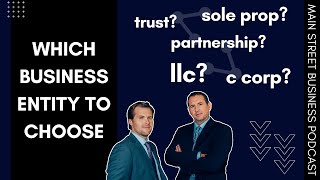
Mark Kohler and Matt Sorenson break down which business structure makes sense for you: LLC, S Corp, or partnership. They cover asset protection, whether to buy a business's assets or stock, and how to structure retirement accounts for tax savings.
Chapters
Broadcasting worldwide on Internet radio, Refreshing takes on legal strategies, straightforward answers to difficult
tax questions, independent ideas on building wealth. It's the Refresh youh Wealth show with Mark Kohler and Matt Sorenson.
Get your free copy of Mark and Matt's ebooks and sign up for their weekly free newsletter with important tax deadlines and articles@rejuvenyourwealth.com now here's math, Mark and Matt.
Welcome everybody, to today's episode of Refresh youh Wealth with yours truly, Mark Kohler and my amazing co host, Matt Sorenson. Oh, over here.
Yep. Yeah. On video, I'm the. Yeah, yeah. I'm the white one. Mark's the tan one. I don't know how that works out, but geez, you got better lighting there. I gotta get. Oh, no, the lighting. It's all lighting.
It is living the dream in Idaho. While you're in Phoenix, you're. This is your pasty white season. Cause you're in hiding under an air conditioner.
Yeah, you got to be with it. You know, one minute outside is about all you can take. And you got to be an ac. So I'm getting a light.
Fishing in a little rv in little hiking Yellowstone, spraying down bears. But anyway, thank you for tuning in, everybody. We're coming to you on itunes, stitcher, Spotify, and YouTube. This is being simulcast on YouTube. I'm going to be using this whiteboard behind me today for our topic. So we wanted to make sure that all of you that are listening on a podcast, if you. We're going to do our best to describe the diagrams, what we're doing, but we'd highly recommend getting over to YouTube and we're changing the title. Matt, why don't you give them the big news?
Yeah, it's big announcement. Drumroll, Rusty. Rusty, drumroll. The Refresh youh Wealth podcast is going to turn into the Main Street Business Podcast. We're excited for the new title. You'll be able to get more information@mainstreetbusiness.com or we put a lot more educational resources up there. But yeah, this is going to be the podcast formerly known as Refresh youh Wealth.
Yeah. Now all of our prior podcasts will be in your feed so that you can search for prior podcasts. If you're having a hard time finding a topic in your browser that you're using for the podcast or on YouTube, just go to mainstreetbusiness.com There's a search window there that allow you to search for over 300 prior podcasts of ours. We've been doing this over 10 years now. And also on that website there will be a link where you can now click on it on your phone or at your home at computer with a microphone and record a question for our Open Forum shows. So we're not going to accept call ins any longer. We'd love to see your email, a post on any of the social media platforms or simply just hit record and state your first name, the city you're from and your question. And we're going to try to choose the questions that best reflect the groups of questions we get so that we're answering what you want to hear and do our best. But that's the method for now. And next week's our Open Forum show too.
Yeah, yeah. So we'll have some changes. Same geeky hosts and dorky topics with a little bit of humor mixed in, but some better branding we think for the long run and some better ways to try and deliver this content to you and get everybody more engaged. I think we think the website will help everybody get more engaged around the podcast, help each other communicate and try to build a community of those who are really trying to live the American dream. And for the self directed investors out there, we're going to be doing special self directed podcast episodes in its own channel and podcast which we'll be announcing later too. So lots going on with the podcast. We're just happy you're here and we've got the most, to me, one of the most critical topics that we ever talk about for today's show.
Yes, if you've seen it there, of course, in the title of the show, as you were browsing, which entity to use for my business. Now, on the face of it, it may sound very easy to you. Why are we talking about this? LegalZoom just told me I just need an LLC. Click, click, click. And LegalZoom does a great job with their documentation, but unless you pay for the consultation and you're not sure what you're going to get, are you going to get a tax lawyer team like ours at our law firm and accounting firm, giving you advice from thousands of consultations of people just like you on Main street doing business, it can be a crapshoot. So we want to talk about the differences today between LLCs S Corps and even the LLCs you might use for a self directed IRA structure, when to use a partnership, a general partnership, a limited partnership. We'll hit on some of those as well. But this is a topic people love.
Yeah, yeah, we'll talk about what not to do, like the C Corporation or incorporating in Nevada and all that stuff. We're going to hit some of those points and we've got shows that dive deep into each one of these things. Like the S Corp. We have a whole show just on the S Corp strategy. What we want to do here is not teach you everything about any entity, but let you know which lane you're going to want to go down in general based on what you're doing. Whether you're opening a small business selling goods and services, you're operating in multiple states, you've got a partner, you're doing real estate. We're going to break. Sorry. We're going to break each one of those down.
And that gets excited. So he's.
He's. I know.
Be slapping his microphone, you know, get a little excited.
Dude, can you blame me, right?
You say get in the right lane and then you can choose the right vehicle in that lane. Maybe. But I love that progressive commercial where that guy's getting his tattoo done and the guy's looking at like, dude, are you doing this right? He's like, stay in your own lane, bro. So we want you to stay in your lane. If you're a great restaurateur, if you're a great import exporter, if you're a great online seller, if you're a great affiliate marketer, broker, engineer, that's great. We're not stepping into your lane. Our lane is which entity you need. We do this every freaking day in all 50 states for 20 years. Do you think we might know some tricks of the trade after consulting the last 2000 clients through our door? That's what you're paying for. And we're asking for a full service entity at our firm. Eight to 900 bucks. And that includes a consultation with a real lawyer. Not someone in a cube saying they got advice from a lawyer down the hall. This is a real tax lawyer coach helping. Yeah. Not a coach. Not a life coach. That's going to talk about your diet after we set up your entity, which those coaches are. Great. I need those, too. But this is about which entity to use. There's no huge upsell. We're not trying to sell you an entity in Nevada for 5,000 or a package of unlimited entities in whatever state, like Utah, for the rest of your life. It's ridiculous. It's unnecessary. You don't need it. So we're really hoping if you think you know it all, today we're going to try to teach you something you don't know. And it's a big deal.
Yeah. We want to lead the person out there really looking to decide what to do, what any do I really need? We're also going to go over when it's too early. Like sometimes it's. You're not ready yet. Don't worry about it. I think at the end of the day setting up the right entity is like having a well tailored suit. Right? Sure, you can go buy something off the rack, but is it going to go with what you really are trying to use it for? Like is it good for a wedding? Is it good for church? Do you take it to work? Do you go on a date in it? I don't know. You know, see, we want to get you in the right suit and get it tailored for what your situation once in a while.
Matt, that's a new analogy. For those that are regular listeners, I just want to say, Matt, good job, hats off, buddy. That, you know, Matt always continues to amaze me. He pulls that analogy out of his rear end and that, that was awesome. That was good.
It just comes out of my fondness for suits. A well tailored suit. I mean, can you, I mean, yeah, yeah.
You ladies, you buy these dresses, you got to have the black, you know, the black little party dress. We've got to have a nice fitting suit. We just guys were cheap. We need to step it up our game. We need to. Okay, now every week we do a tax tip and legal tip. We're going to continue that tradition with the new Main street business podcast. We may not be using our sexy guitar riff jingle that we've used over the last four to five years so that this will be the last time you're going to hear Matt in his home garage playing the guitar, which Matt's amazing. But this is it. So everybody, you got to enjoy it. Matt, do you want to do our legal tip?
Yeah, I got the legal tip. Let's do it.
A legal tip that you can actually
use a legal tip where you don't feel like you have to take a
shower after all right, well this, I want to just give a quick legal tip about buying a business. Okay. Now we're talking about setting up a new entity for your business. But I want to give a quick legal tip about buying a business. Alright. And I had a consult with a client who basically wanted to buy a business of a real estate broker that was basically shutting down doors. They were like, I'm just retiring from this, but I have some customers and I have some branding out there and a newer Working agent wanted to buy it from them. Now the question, and this could be anything. This could be any type of business. Of course, the services you're providing, goods. And there's a lot of complications. Again, we have a whole podcast episode on buying a business. But there are two things to look at. Do I want to buy their company, this old agent's professional LLC is what it was, or do I just want to buy the assets of the business? Now, generally, if you're going out to buy a business, the easiest thing to do, just buy the assets. I don't want everything. I don't know what that company that this prior business owner has been doing. Does it have a liability? Does it owe someone money? Is someone that they did a real estate deal for two years ago going to come back and sue this company? Now that I just took over and thought had value, you don't want the liability. Let's keep it simple right now. Just buy the assets, buy the customer list, buy the name, buy the website domain that they were using that was specific to a geographical area, and buying and selling homes. So that's. That was just the advice. Want to give a quick tip on that? Is when you're out there buying a business, you're either buying assets and it's called an asset purchase, which is generally the way you want to go for a new business, or when buying or you're buying the stock or the LLC interest of their company, which I would say stop. Don't go down that road unless you really know what you're doing. You're getting solid advice. So when you're going to buy business, look at buying the assets and doing an asset purchase for your typical small business transaction.
You know, it's always fun to add a little story with each of our tips. Maybe Matt will be able to add one to my tax tip coming up shortly. But when Matt gave that tip, it reminded me of one of the first business owner sale transactions I dealt with in my career. And this was in my first office. Matt, remember that little office on Sage Drive? I was setting up a card table during 9 11. I remember sitting on a card table or sitting next, you know, behind my card table setting up when the 911 twin tower hit. And that's how long ago this was. But this couple came in and they had sold their business and they had sold the assets, which I thought was fine, like Matt said, for $10,000. Okay. And to pay for a lawyer in this issue would be a little surprising because that's a low purchase price. I Don't want people to spend a lot on legal fees with a $10,000 sale. But they came in, and I said, what's the problem? They go, well, he only gave us 5,000. He owes us another five. Now, there's an issue there. We've talked to a lot of clients. When they go to sell a business, get as much as you can up front, because that's a lot of times there's buyers remorse when a buyer gets into a new business and they don't have the wherewithal to pay you the rest, and they just want to sometimes give you the business back. And that's what was going on here. The guy got into the business, realized, oh, this is more work than I thought. I'm not going to pay you the other five grand. You can just take it back. And they don't want it back. They got to keep five grand. But they wanted to get rid of the thing, too. And I said, well, show me your contract. Let me see what you got. And they both looked down at their shoes and looked up, and they slid a piece of paper across the table. And Matt, I swear to you, it was three lines, two sentences. We hereby sell our business for $10,000, effective date. Da, da, da. Thank you very much. Bye. I mean, it was just ridiculous. And I'm like, that's it. Well, we didn't want to pay for a lawyer, but now they are, and they don't have the five grand. So I really want to encourage many of you that are going to buy or sell a business, even if it's five or ten thousand or one hundred thousand or a million dollars, spend a little upfront. And if you feel like you're getting hometown by the lawyer and they're really racking up a bill, get a second opinion.
Seriously, no one wants to get hometown. I love that word.
Do you feel like you're getting drugged down the street behind me, behind the truck? Yeah. Get off the crazy train. But a little bit of contract up front is so important.
And, Matt, that's what the asset purchase is. I mean, contracts can outline what are you buying, what are the assets included, you know, how are you paying for it? And so, like I said, there's. We have a whole podcast on buying and selling a business. It goes into the details, and there's different strategies when they're buying or selling that you want to be thinking about from a tax standpoint and from a, you know, payment point and protecting you. Yeah. So competing interest there, of course. But, yeah, the contract helps everybody to make sure whatever the heck you agreed to is. Can be executed.
I think this is time for Matt's most famous analogy. Could you bring up the turd, Matt? Can you.
Oh, yeah. Well, sometimes, you know, people bring that contract as an example, or maybe they spring their entity that they set up wrong to us and they're like, hey, I set up this entity. Can you fix it? I know I screwed it up. Or I don't even know what I set up or what I even have. And a lot of times they just have to tell you, you just can't polish a turd. You know, I can't fix this. This is just gonna have to be thrown out. We gotta start over. That's many of these entities that people are setting up online in relation to today's topic. Or these piece of crap contracts that.
Oh, and I'm gonna take a shot at one of our other famous quotes here, A bad contract. Shoot, I'm going to try to do a good deal. Can't make a bad contract better, But a good contract can make. I don't know. How do you do it, Matt? That's a famous Matt Sorensen quote too. I love it.
I think. Well, I think what you're trying to say is that a bad contract can make a good deal go bad. So, like, if sometimes you have a good deal but you screw up the contract and so the deal goes south because everybody's jacked up on the contract and doesn't know what was agreed to. And. And this great deal you thought you negotiated and we're going to make, you didn't put into the contract. And frankly, those are the ones that sometimes people want to back out of because you have such a great deal, but you had a bad contract, so now you turn out into having a bad deal. So the good deals, the really good deals for you and your position as a business owner or investor, those are the ones you really want to make sure you have a good contract for.
I love how the show is going because my camera. I'm just going to keep bringing up ideas for quotes and I'll just.
Let me just tee him up for me. I appreciate it.
I need a second rock star this morning. I'm dying. So also, if you notice here, I took a shot to the head this morning of my sparring match. And when they say you rung my bell, I never knew that until I started boxing this last year. You know, I'm kind of a nerdy cpa, so I get beat up at truck stops a lot and I Thought, you know, it's time to really up my game and my self defense skills. So I started boxing about a year ago, and so I'll take a punch to the head. At least it wasn't a girl today. This is a. Yeah.
Okay, good.
Yeah. This is a fellow professor from one of the colleges I'm putting together. I'm like, recruiting all these guys because I'm like, dude, this is so fun. It's such a great workout. Yeah, you do a three minute round, you find out what you're made of. I mean, it wastes you. I don't know how they do 12 rounds of three minutes with a one minute break between each round. You try to do three rounds and you're. And so I'm talking all my buddies.
Do you wear the headgear usually? Not like that one. Were you wearing headgear?
I was not. And the reason why, believe it or not, in the Olympics, they're eliminating headgear. They're finding out that headgear causes more injuries because the leather glove will hit the leather headgear and it'll snap your neck more. And oftentimes your head jiggles in there and you get more of a concussion. So headgear is actually deceptive. It helps you not break your nose or get a black eye, but it can actually cause more brain damage. So anyway, you guys don't want to hear about that, but I'm recruiting all these doctors and professors and other lawyers, accountants. So I got this 50 and older fight club going on at the gym. It's freaking awesome. We're just like, it's not pretty. All right, let's hit this tax tip.
A tax tip you can actually understand and won't put you to sleep.
A tax tip that could save you thousands.
All right, here's my tax tip. And this is. This is going to offend probably 30% of our viewers, and you're not going to like it.
But I gotta say, a new show, we're trying to get out to everybody, you know?
I know, I know. But you know what? Sometimes the truth hurts, Matt.
Yeah. Say what needs to be said.
It's got to be said. You know, Matt, it's not me, it's you. There's. It's a time to make. Okay, here's the truth, everybody. Tax tip. If you're a business owner, do not vote for Biden.
Don't lower Biden on this issue. On this issue.
If paying taxes and business growth very important to you, Vice President Biden is not your choice. I have an article coming out tonight that we have researched for over a week and gone through every tax policy of Biden's. And it's gonna have more meat to it than any other article you can find out there on Wall Street Journal or Fortune related to small business owners. And it's brutal. And so I just wanna warn all of you, now, I know Trump can be an idiot a lot of times. And when you get into social policies and COVID policies, I get it. President Biden has, or Vice President Biden has a lot of good things to say. Absolutely. I voted Democrat before in my life. I'm not all 100% Republican in all my elections that I voted. But I'll tell you right now, if you break down as a business owner the policies for taxes that President Biden is going to propose, if you're trying to be a successful business owner and make it out of the lower middle class and succeed. Right. Which is all what we're trying to do here. You're not listening to this podcast. If you want to stay lower income, you're listening to this podcast to take your business to the next level. When you hit that level, bend over. I'm just saying. Yeah, it is taxes.
I love how you say who to vote for. Just tell me that Biden's tax plan sucks. I can, I can sort out everything else. Let me say it. Let me say it that way. I mean, it sucks. Let's just say it. All the tax benefits we've gotten, any fairness on rates as a business owner, particularly small business over big business, is going out the window. And Biden, he's kind of puts himself as a moderate and I think he mostly is. But the tax plan is very aggressive in raising rates.
Yeah. And if you guys want two little. You're like, Mark, you don't know what you're talking about. Let me give you two deep insights. The first one is he needed to saddle up to the Bernie Sanders followers. When Bernie Sanders fell out. Biden needed their votes. And Bernie Sanders is in a very. He is a very aggressive progressive system planner, which means tax the rich, redistribute evenly. Now that's. I explained that in the article. What that means. Well, when Bernie Sanders wanted to entice the. Sorry. Dropped out. And Vice President Biden wanted to get those followers to come over and join his crowd, he had to come down on a more aggressive tax policy to get them. Because that's really a lot of Bernie Sanders pitch. Tax the wealthy. The second issue that many of you may not realize, and this is where, love him or hate him, Donald Trump and the gop. The business provisions in the Tax Cuts and Jobs act passed two and a half years ago. All of the small business and individual benefits phase out in the next four years. Yeah. They're gone. So whoever's in the White House has a clean slate to redistribute the entire Tax Cuts and Jobs Act. He's not going to have to repeal the Tax Cuts and Jobs Act. It's gone. It's gone.
And we have a Republican Congress. You know what? Honestly, the Republicans did that on purpose. Yes, they did, because they wanted you to have to elect them back. That's the one thing every politician wants to get elected again. So they didn't pass it permanently. They made up. You're gonna have to bring us back.
Yeah. And so that's why some of you are like, well, if President Biden gets in there, he can't just repeal everything. He doesn't have to. He just has to wait a couple years and then he's got a clean slate to restructure everything. So that's what was sucked about the Tax Cuts and Jobs act is the corporate tax policies were made permanent, but the small business policies were temporary, and they did that for a reason. Okay, well, we need to get to our topic for the day. Matt Sorenson, I'm going to let you kick it off on the choice of business entity. We could talk trifecta, we could talk short term, long term, we could talk. I'm going to let you call the first shot.
Let's just talk about your operations and your assets. Because everybody approaches an entity different. Okay? Now, there's different instances where we're going to use a business entity. One might be for operational business. You know, what you would think of as your business, your small business. You're selling goods, you're selling services. You got a storefront, maybe you're working from home, doesn't matter. Got an online, whatever. You're selling goods or services. On the other side, though, we have assets. And that's another reason people set up entities. Those set up entities to protect their assets, maybe, or protect them from their assets, like a rental property, for example, or maybe a second home or other things that people may do. Entities for more asset protection purposes. So just think of those two different worlds out there, your operational business and many of our clients are going to have both. They're going to have their operations, they're going to have their assets. We want them separate for two reasons, taxes and asset protection. The right entity is different for these things. And so we want to sort those taxes and asset protection benefits out between the two.
I love it. Now, as Matt and I go through this topic, we're both going to take a stab at each topic, I'm sure, and say it in a different way. Most of you will connect with the way I say it. Some of you might get lucky and understand what Matt says, but that's just as an aside. Just want to forewarn you they can jab. That's called a jab in boxing. Cliche.
Was that a jab? Okay, I'm just letting you, I'm just letting you in a little bit so I can throw the uppercut. You're just drawing you in.
Yeah, yeah. Matt's pulling the Muhammad Ali rope a dope, he'll just let me, blah, blah, blah. And then he's gonna slam you at the end. Okay. Now for those out there, what I'm talking about is left side, right side, and the trifecta, if you get a chance, get over to YouTube to watch the show. What we have is on the left side, operations. On the right side, assets. And at the very bottom of the three legged stool, or the trifecta, is your revocable living trust. 90% if not 95% or more of our clients that have a small business, have some investing going on, married or single, maybe kids, maybe not, but they have that trifecta. That's what I have. Have a revocable living trust. At Most we charge 1800 bucks, 1200 for 90% of our clients. And people go, will you get what you pay for? I paid four grand for my estate plan. Bet you. I'll bet you $100, same as ours. Damn it. Seriously, a lot of lawyers around the country will charge 3, 4, 5, $10,000 for an estate plan because they look at how much you're worth and then talk it up. We do the same plan essentially for a 5 million, $20 million client or you're just newly married couple, you're going to get this trust on the base. Your operations are going to be on the left which are going to start out as a sole proprietor and eventually gravitate to the S Corporation. Then on the right hand side, and if you see this diagram I've got on the asset side, really two columns. So not only do we split the paper down the middle, on the asset side we have two columns which will come to why here in a moment. But assets are typically going to be our LLC structure. And I'm going to say this one point and then hand it back to Matt. LLCs do not save taxes. Now some of you just careened off the side of the road thinking I set up an llc. What do you mean? I'm saving taxes. Yeah, no you're not. They don't. Now if you make an S election, an S corp election on an llc, now you're saving taxes and you don't have an llc, you have an S corp. Now you still may have the acronym LLC at the end of your name with the state of Wyoming or the state of Alabama, but it's an S corp for tax purposes. All right, Matt, where would you go?
Now a lot of people jump in and say, so what entity do I set up to save taxes then, Mark? Depends on what you're doing. All right. Why wouldn't I just set up an S corp? You just told me S corp save taxes. Well, for operational businesses, this is one reason why we separate operations from assets for tax purposes.
Give an example, Matt. Do in real estate tends to be the easiest one. Operations versus assets.
Okay, let's say that you get commissions on real estate or let's say that you flip properties or you're a contractor in real estate or any of those things, that is operational income versus a person who has rental properties, that's an asset, that's more investment income. So if I'm flipping properties, I'm a contractor or I'm an agent getting commission income, I'm over on the operations side. Okay? Now that is important because operational business income taxes you in two ways, okay? You'll get taxed. Let's say you do nothing, okay? You're just a sole proprietor. You didn't set up any entity. You start getting 1099s or you're open for business, you're a sole proprietorship by default. And when you get income like this, that's operational, you're gonna pay income taxes based on your individual tax bracket. And you're gonna pay self employment tax. That's your Medicare and Social Security. You've got to pay that in as the employer and the employee. When you're self employed it kind of sucks 15%. Alright, that's. So that's. This is where you start the tax planning. When you have rental income, I don't need to worry about self employment tax. I still pay income tax on the rental income if I have profit. After all, everything I can expense on the rental. But it's just rental income, it's exempt from self employment tax. So I don't want to get an S corp in the mix over there. And in fact there's passive loss rules for S Corps that cause problems. I don't want it over there on the rental side. So point number one is tax planning is going to determine S Corp versus llc. Once you understand what you're doing, whether you have operational income or you have assets, I love it.
Now again, for those that have an opportunity to get to YouTube, I'll do my best to explain this. For those on audio only on the left side, what I've diagrammed is your starting block which is going to be the sole proprietorship. So if you're in a 400 meter dash, you're going to start out as a sole proprietor. And if you make start making money quickly, we're going to convert you to an S corporation right away. Now some of you may want to be an S corp out of the gate because you want to set up corporate credit, you want legitimacy, you need some protection, you open up a restaurant, you may not have a lot of profit, but you've got liability. And you're like, I got to set up an entity anyway. I'm as well freaking just jump right into the S Corp. In some states that can be more expensive and we want to hold off. So again, that's why a consultation can help tailor it to you. The halfway point is if you start around that 400 meter dash and you're just kind of plugging along, you're not making a ton of money, but it's, but you're not sure how the year is going to play out and you have some maybe asset protection concerns. We'll do a part B, kind of a halfway step and do an llc. So in my diagram I go from an S corp, I'm sorry a sole proprietor, straight to an S Corp. Or I can stop halfway and do an LLC and then retroactively make an S selection at the end of the year back to the beginning of the year, which I can only do with an llc. So an LLC gives me some protection and flexibility, but until I make the selection, I'm paying self employment tax on all my profit. So this is what blindsides the brand new doctor, the brand new realtor, the brand new engineer, pharmacist, realtor, broker, electrician, plumber, because that income, once you hit 50 grand, it starts to just beat you up and that's usually our break even point. So if you're gonna net 50 grand, we're gonna start moving you towards the S Corp as soon as possible. That's the operation side, as Matt talked about. We're not even over to that rental side in depth yet. So if some of you have an entity now and you've got rentals and operations in it, we need to break that up. Yeah, we want to. On this wall. We want the left wall. Just sue me. You can have my S corp. I own a cell phone. The end. But yeah, assets over there.
Yeah, right, Great point. So. And we don't want to put your rentals and other assets in the same entity, even if it was an LLC. Even if you had an LLC, you did some operational stuff you made 10 or 20 grand a year on. You're like, why don't I just throw my rental property I have into that same llc? No, it's an asset protection thing. I know they're both an llc, but I don't want you doing business and conducting activities and transactions out of the same entity that owns an asset. Okay? Even think of, like, us or think of any. Most businesses that own their building, let's say it's a restaurant or you're a dentist. Or even our law firm. Like, okay, we own the building that we operate out of in a separate LLC that owns the building. Okay, Our law firm or our business. Or let's say you're the dentist or the. Whatever, the restaurant, it's paying rent to the LLC that owns the building. Okay? We want to separate those things for asset protection because if something happens in the business, we don't want all that equity you're building up in the business building that you own. So even though you may be doing both, and even though they may be linked, we still want to separate them back out for asset protection.
Now, let me get a few fallacies off the table. What a couple of things Matt said triggered some thoughts before we dive into why I have two columns on the asset side. First, people go, oh, well, I'll put my home in an LLC and rent it back to my business. No, we don't do that. We just take the home office deduction, which is a wonderful write off. Even in the movie Accountant with Ben Affleck, in that scene where he talks to the farmer and his wife, he extracts the home office deduction out of him and saves him taxes. Hence, he's invited over to the farm to shoot his gun. I'm gonna buy that gun someday. Now, now that is an issue in this trifecta. I want your home owned by the trust, not an entity. So anyway, that's one thing that came to mind for me. Matt, any new. Oh, and I'll say this One other nuance. We talked about it earlier. You set up your operational entity where you live and you're operating. If you're in Nebraska, you don't set up a Nevada entity. Now, if I have rentals in Nevada, I may set up a Nevada entity, and we'll talk about that next. But for operations, I'm not even going to say 90% of the time. I'm going to say 100% of the time, you better have your freaking S corp set up in the state where you're living and operating.
Yeah, yeah. And even if you don't, let's say, because people get duped into this, someone says, well, set up your company in Nevada. And they're like, I'm already having entity in Nevada or Delaware or whatever. Okay. But I actually do business in California. Okay. Now you need to register that entity that's already in Nevada into California. Now, you're paying fees to Nevada because you're doing nothing there, but you actually have to be legit. And what you're doing in California, you need to register into California when you could have just come to California in the first place and saved the hassle. Okay. It's a. It's one of those things that some, for whatever reason, websites and seminars, companies that just, like, jam down people's throats and they just buy a hook, line and sinker thinking, I need to go to Nevada. So. So beware. Beware of that scam. And the only exception, I would say, is sometimes you get people who are an online business. You're 100% online. You're not shipping from anywhere. You're not doing anything else. You may have some flexibility into determining what state to set up in, but on the other hand, it's not going to affect your income taxes if you're still a resident, let's say, of California, whose tax rates it sounds like might go up to 16% now retroactively for 2020. Can you believe that? Have you seen that news? There's a proposal for. To retroactively for the year 2020, impose an additional 3 to 4% tax on the highest bracket.
Oh, my gosh.
It's gonna be 16%. Oh, my gosh. Californians, I'm sorry,
but if you live in California, setting up Nevada is not going to help.
Yeah, your income tax, you're paying tax on the state. You're a resident. You got to get your butt out of there.
And I'll take issue with Matt's point and say you might have flexibility if you do online business. But really, Matt, Hear me out. I'd say no because see, with an S corp you've got to do payroll and your payroll has to be processed in the state where you live. And then if you're doing payroll in the state where you live, your S corp has to be registered with the franchise tax board in that state. So I think you get to a dead end. You really do.
Now I don't think it helps anyways because tax thing I was just talking about like, well, I'll set up my entity in Florida or Nevada. They have no state income tax. Okay, that's myth number one. Doesn't matter where you're doing where you set up your entity, you can't get out of the state income tax. That depends on where you live and conduct business.
Now quick side note, and then we'll jump to the right side is setting up your entity is very different than maintaining your entity, which involves minutes, making sure the fees to the state are paid, tax returns are done, books are kept because you can go get one sheet of paper in the drawer. That's not a freaking entity. Good luck in court. So we have another podcast just on maintaining my company. So it provides the tax and legal protection I thought it did. That's it, you know, so we'll go. That's another topic for another day. Now on this asset side, okay, so left side is operations people. And if you're listening on audio only, envision the right side of the whiteboard. Your teacher just went up there and took a piece of chalk down the board and on the right side of your assets, divide that in half again. So now we have two halves on the right side. The reason I do that is you're going to create two buckets of assets underneath the right side of assets. It's kind of an A and B bucket. A bucket is going to be your pre tax bucket. That's where you're going to be doing asset building with entities in IRAs, 401ks, SEPs, HSAs in self directing and getting a far bigger return than your mutual fund out there or your whatever. I'm just gonna leave it at that. So we've got plenty of little podcasts and videos on YouTube talking about getting a 20% return on average when you self direct your retirement account. So that's one half of your asset side. On the other half is your post tax strategies. Because I do want you to own rentals. I want you to own rentals and your IRA to own rentals. There's you're now double dipping and getting the benefits and the pros and cons of both strategies. So over here you might have an LLC owned by iras and an LLC that's owned by your trust. And so that way these two buckets.
Matt, look at that picture.
Those two buckets create two different asset strategies. I think. What do you think, Matt?
Mark just drew a box around a circle to signify a bucket.
Come on.
For the podcast listeners, I just wanted to let them know what's on the board here. Okay. I thought it was good. I got it.
Okay.
Because there's like a little circle at the top, like the opening of a bucket.
Yeah.
Pretty genius. I like it. Okay. So yes, I love that. And I think even if you're not self directing, I mean we got lots of content on that. I wrote a frickin book on it. But even if you're just, you know, you got your brokerage accounts, you got your 401k at work, whatever, that's its own little asset that you want to be considering your asset protection plan. Remember, retirement accounts are per to have great asset protection in and of themselves. When we go out and self direct and we want to use entities and stuff for a lot of planning reasons, asset protection based and maybe partnering stuff or just getting checkbook control, there's lots on that. Like I said, I got a book on it, but just retirement accounts are where a lot of people built wealth. So we want them in the equation here.
Yeah.
Now other ways people are building long term wealth. And it was funny as a lawyer, I remember, like I was trying. I do a lot of estate plans at the time. This was, I mean, maybe 15 years ago, you know, I mean this is early on and I'm like, hey, I was always trying to figure out how do people make money? Like how are they wealthy? And I remember looking at people's estate plans and we do a questionnaire. When we do your state plan, we still do it to this day that says how much money do you got in your retirement accounts? How much money do you have in rental properties? How much equity do you have in your home? We'd always calculate that because there used to be an estate tax at a
million bucks, which Biden wants to bring back.
Oh, are you serious?
Yes. He wants pre tax cuts and jobs act rates. Dude.
Okay, all right. That's gonna bum me out for a little bit. Sorry.
Three off.
It'll be good for business though. I mean it'll be. Makes us more valuable, let's be honest.
Yeah.
So I hate to say that, but. Okay, but Back then you'd pay estate tax over a million bucks. And maybe in the future, apparently if I win. So we needed to know if people were a millionaire or not. Well, when I would look at their ass, I mean, this would be regular people. You know, we have some very wealthy clients. We have a lot of just regular clients. Small business owners or kind of a day job spouse has a small business or side hustle where everybody seemed to have that they paid off the equity in their home. They had a couple rental properties and they max out their 401ks and they're millionaires. Okay. They're in their 50s or their 60s. They just did the regular stuff. They're the millionaire. Next four type people. Yes. This diagram is showing here is these pieces and how you need to plan them from an entity standpoint. But it's all the pieces that we really think kind of build the American dream. Your small business, your retirement accounts and your real estate, your home and your rental properties.
Matt, I love what you just said because there's no shortcuts. Once in a million, once in a 500,000. There's some, you know, Zuckerberg that comes along with an idea that makes trillions, fine, but that's not going to be you, it's not going to be me. And what's funny is in my, literally one block over from my house and I look out off the deck of my bedroom, there's 15,000 acres of potato fields. Many of the five guys, fries, you're eating when you go up, they have a little whiteboard up there and you'll hear, you'll see Idaho every time. Some of those families I know really well and there's no way to go grow a potato any faster than putting it around, fertilizing it, watering it, hoping for good weather, waiting till the fall. That's it. And I love what Matt just said. It's the law of the harvest. There's no shortcuts. And if you think when you turn 50 or 60, you're going to start saving for retirement, think again. And I know some of you are there and scared to death. I don't have as much in my retirement as I'd like, but we do what we can. And I love what Matt said, just do the basics. And that's what this, this fundamental trifecta does, is it helps impose that on you. As soon as, as we can get a hold of you and tie you down and teach this to you.
Yeah. Do it in the most tax efficient way so you get to keep the Most money as you're building this, because that's, you know, the number one expense small business owners have taxes. All right, that's the number one. That's crazy. That's the number one expense you're going to have. And so as you're trying to build this, well, you got to be tax efficient about it so you keep more of it. If you think. If you're doing this for 10 or 20, 30 years, trying to run this structure, the tax planning is a big deal. Yep.
Say something. I have to wave my hand to get his attention here and say this. I just realized we've gone on some tangents, so let me circle this back for a minute. This asset side might be 1 LLC, it might be 10 LLC. But that's where we use LLC. That's the. Now I'm going to give you three ways we use LLC. The first way is holding assets. You might have an LLC to own property or investments with your retirement accounts. You might have an LLC for your rental properties in Virginia. And we don't set up a new LLC for every rental. We look at the quality of the rental, the risk of the tenant, and we may put four or five rentals in one llc. That's fine. Yeah, we look at the equity and so. And Matt may comment more on that. I'll let him. So we can have multiple LLCs. And Matt could talk about possibly when. But that's where we use LLC. It's the first place. The second place we use LLCs is to partner. So Matt and I have a partnership in a law firm. Now, what type of tax would Matt and I pay right out of the gate if we were just an llc? What is it? Everybody starts with an S. Self employment tax. So you'd say, well, Mark, aren't you and Matt an S corp? Nope. Because we want the flexibility for our personal tax planning. So my S corp owns a part of an LLC and Matt's S corp owns the other part. Mine is 60%. Well, at least I'm trying to. Now we're 50.
50 anyway, so I appreciate you drawing my S corporation is the same size of yours in the bubble.
That's true.
It's usually a common joke to make one of whoever's diagramming this smaller, but you missed that one. You missed that one.
I know, I know. I was trying to. I missed my.
I appreciate the fairness.
Okay, so, Matt. So LLCs for partnerships are wonderful, whether it's rentals or 2s Corps doing business in a brokerage or a development or a dental practice. Or an engineering practice. The third place we use LLCs is that stopping point on the way to S corp life. So you may set out an LLC and some of you listening are an LLC right now and paying too much self employment tax. We can convert you to an s Corp for 125 bucks. Get a console, let's get it done. So LLC to S Corp, LLC is for partnerships and LLC is for holdings. That's where the LLC comes in. They're the chameleon of entities.
Yeah, let me hit a couple of exotic varieties of LLCs.
You got me at exotic.
All right, exotic LLCs like the Series LLC. Okay. This is an LLC that is popular for real estate in particular where you have one master LLC that can own multiple properties in their own, in each their own little series. So it's like, it's kind of like your main holding LLC called the Series for the Master sometimes. And it owns sub series entities that each on their separate property. So like let's say I had this to be a common client. They have five rental properties and they're like, alright, do I set up one LLC for each property? Do I put all five in one? What should I be thinking about here? What we're looking at in that scenario is how much equity do you have between those five properties really? And here's the risk. If I've got five properties, each one has 100,000 of equity in it and I put them all into one LLC. If something goes wrong on property number one, all that 400,000 of equity between those other four properties is all at risk. Because while they can sue the LLC and they're stuck there, they can't get down to me personally. That's the corporate bill. Asset protection I get with an LLC or an S corp, they can't go down and get the business owner. So I got liability protection personally. But my other four properties are at risk in that llc. So the solution to that, Mark's diagramming it for you. Video. Appreciate this. I feel like this is like Team Pictionary.
You know,
there's got to be some game show of this is some people say why not just set up a separate LLC per property? Okay, that's expensive, right? You can have five LLCs and that way if something goes wrong in LLC one, they just sue one LLC. But I don't, we don't generally do that. So we start to group. We're looking at where do you have 250,000 of equity? At about 250,000 of equity, we think a new LLC makes Sense. You're like, hey, Matt, I've already got two properties. Each of them have 150 grand of equity. I'm buying a third. Should I put in the same llc? We're going to say no. What's open up a new LLC for that because that's too much equity at risk. There's too many eggs in the basket, so to speak, that if one goes bad, it's going to affect the whole thing.
I like it. Now, for those on YouTube and listening, let me diagram or show you what I wrote. A series LLC has baby subs feeding into it. They only work in about 15 states in my book, Tax and Legal Playbook. And by the way, I want to give Matt's book a plug, if any, any of you are interested in self directing your retirement accounts. I had a phone call with a client before I came over to the studio and they hadn't heard of Matt's book and he was like, okay, I'm buying it. And so you can get it on Amazon, but just think of a self directed IRA and what's the handbook for that? So just type SDIRA Handbook. You can get it on Matt's website, sdrahandbook.com or Amazon. My book is the Tax and Legal Playbook. Both of our books are now in second edition. They've been deemed bestsellers from the number of copies sold. Not New York Times bestsellers, that's a whole other category. But they're nationwide bestsellers. And you can get the Tax and Legal Playbook, which I have a whole section on series LLC you can go look at. But the subs feed into the series and which states. There's a table in the back of my book that tells you the second option over here on the right is one LLC with five properties in it. Well, I got all my eggs in one basket. Cheap and easy, but risky because I got that cute little meth lab and I don't want that to have a problem and spill over to my golf course, Airbnb. So then we go down to this grouping strategy where I maybe have three LLCs. They might be grouped by state. This could be Arizona, this could be New Mexico. And that could, that's a state in your country, people. And then this could be Connecticut. So you have three different LLCs. And then you put 2, 2, 1, or do some variety. Now the creme de la creme, which some companies sell at Holiday Inn this weekend and they sell it to everybody, but we let our clients grow into it. Ready? Drum roll. Rusty, I'm gonna put the extension cord together is. We will set up what's called a COPE entity. And we typically like Wyoming for this. We can hide you for some privacy purposes. They're very affordable filing fees. And the COPE charging or protection entity protects the properties from you as well as you from the tenants. So you could be texting and driving and kill a family of five, and they're gonna have a hard time getting at your properties. So what happens is this.
COPE owns. She just blew right through that. That example.
Yeah. Most people's brains operate at four times the rate of speaking I've read. So I can talk really fast and you're going to get it. But anyway, cope owns your LLCs which own your rentals, and the COPE is owned by your trust. Now, we usually go to this level when we have clients with a million dollars worth of equity or 10 or more properties. So be careful getting sold into this Wyoming strategy prematurely. That is the state.
That's the suit that's too big. Okay, the COPE is like the, like, okay, I'm buying my first rental. Should I go set up an entity in Wyoming and then I'll set up an LLC in the state where I'm buying the property? No, don't do that. You're like overkilling it. And that's what a lot of these places do because they want to sell you more stuff. They're not real attorneys giving you actually advice that matters. So careful. So I love that. Some people need that. Some people have personal liability. You know, they get sued in their personal name, like doctors and contractors. Common clients that are always nervous about getting sued personally and getting sucked in on a personal lawsuit. And they have assets. And so we will use that. COPE, or there's many others, but that's a great entity for those trying to protect their business assets and their property, their properties and their LLC is from their personal liabilities.
Okay, I'm going to blow your brain, everybody, with what times. I've called the master Kohler diagram of entity structuring. So this is the climax of the show and you're going to have to get to YouTube to see this. And I really, really. And I mean this humbly, too. Please Share this this video on YouTube. Copy the URL and send it out to your friends. Put it on your social media because it's going to wow you. So for. I've had a client I've been working with the last two weeks worth close to $30 billion. I did this diagram for him. It blew his brain. He had paid over a hundred grand in legal fees on average every year for the last five years with a big old law firm, they never once sat down on a whiteboard and did this. So check this out people. Down at the bottom, you have your trust. I'll come to this little bubble here in a minute. Typically, long term clients are going to be with a sole proprietor. They're going to graduate to an S corp. For those of you that have a day job, that's fine. Your side hustle will be a sole proprietorship or LLC until the time is right. The S corp is going to give you a W2 and a K1 that comes down into your personal 1040. So we're saving self employment tax. We're getting the 199A deduction, which Biden wants to phase out. 20% of your net profit is a write off. That's right. You make 400 grand, you can write off 80 grand before you pay tax on 320. That's the law right now. Biden wants to get rid of it. Okay, so you got W2, you got K1, you got LLC, you got your S corp, you're saving on self employment tax. We're maximizing our write offs for home office kit, home office, electronics, travel, dining. Over here is a little sole proprietorship where we put your kids under age 18 on payroll. So kids under age 18 are on payroll here. And then kids that are 18 and over, or maybe your parents you're taking care of or a brother or sister, they get a 1099 over here. Then up here is where things get fun. We're going to set up a 401k sponsored by your S corp. Even if you have a 401k at work, you can still have a new one. You can have two 401ks for crying out loud. We're going to have Roth IRAs that you fund every year. And you're going to read Matt's book and go to a summit every year and just consume it. And you're going to set up entities in the future owned by your retirement accounts so you can invest in what you know best. Meanwhile, we're going to set up another LLC or LLCs as the future goes. And we're going to buy rental properties, one a year. Maybe it's a partnership, maybe it's not. But you're going to be buying rental properties and your trust is going to own that llc. The trust is going to be the beneficiary of your retirement accounts. The trust is going to own your S corp. The trust is going to own your home. Life insurance is going to go into your trust, so you don't have an 18 year old running around with a million dollars that flows into the trust. The last piece is, what about the beach house? What about the second home? The lake house, the cabin, the farm? You're not renting it out. What do we put that structure in? Well, if possible, we're going to use a COPE entity to do that or we're going to use what's called a limited partnership. In most states, the limited partnership gives us the best asset protection. And who's the general partner of your limited partnership? Your s Corp at 1%. Everything else flows down into your trust for massive asset protection for our clients that are really growing and building wealth. When the time's right, we pop a COPE in here, try charging order protection entity, and it's going to own everything. So there's an extra barrier. And finally, but not least, in approximately 15 states, you can also set up what's called a domestic asset protection trust. We charge a couple grand, not off the chart, to protect the equity in your home. So if you have more than a half a million to a million in equity in your home, we're going to put a separate trust in here where no one can touch your home. Now, in some states like Texas and Florida, it's an unlimited homestead exemption, so no one can touch your home anyway. There's other statutes as well, but not many. So we've got to look at what state you live in. This is why you're doing a consultation and we'll build a diagram in that consultation. Matt, what would you like to add to this?
I mean, that's a masterpiece right there. You know, you don't add to masterpieces. Whoo. Okay. Just bam. Put your signature down at the corner, you know, one of one.
Raffle this off.
Yeah,
yeah.
And I think you can. As you can see, there's lots of pieces that go into this. When we were talking about the right entity to use. You're understanding what the trust is. Let me make a couple notes on the trust just to dispel that. Trust does not provide asset protection. The trust is not there for asset protection. The trust is not changing taxes from an asset protection standpoint. From a tax standpoint, it is a pass through. It is. It's nothing.
Revocable living trust. The DAP gives you asset protection.
Okay, right. The Domestic Asset Protection Trust. Yeah.
But not this one, Matt.
Your typical trust that we've shown and we mentioned where you're like your Trust owns the llc, right. That owns your rental. Your trust owns your S corp. That or your trust is a beneficiary on your retirement accounts. That's just a revocable living trust. It does not save taxes. We are not using trust like land trust or anything like that in your general structuring and planning. We think those are misunderstood structures and misapplied structures by people that sell stuff. You know, not lawyers. You'll never see lawyers setting those up for those purposes or rarely will you. So. But I love it. I think what I would say just like the suit. Let me come back to my final point. Everybody's fit is different. What you like is different. What your objectives are. Some people are more concerned about asset protection than others. Some people are like a better fit on their suit. You know, they want a little more slim foot. I don't know, they got like a little different pattern. We all like different things. One thing I think that's universal is everyone wants to pay as little as tax as possible. Even if you're gonna vote for Biden, which is totally cool, you know, this is not a political thing.
Listen to us. Yeah, I'm not go for them.
Okay. You know, from a tax standpoint, we're trying to pay as little tax as possible. And you can see the entity choices here. The S Corp don't get duped into the C Corp, which is a double tax situation by the way. We didn't note that, that the C Corp pays a corporate tax of 21% income tax. Again, so you're paying tax twice. It's a no brainer for small business owners. Never do that. And the llc, remember, are tax neutral. They don't save you tax, they don't cost you tax. You're not paying an LLC tax or anything. Except California has a franchise tax, some states. But there's all these little unique considerations and so just get the plan that works for you. It's not rocket science. I think once you go through the plan like Mark outlined there, you understand, okay, I'm just adding another rental property. You just do what you did last time. It's not like you need to have a lot of tax and legal consulting every time you make a move. You'll become captain of your own ship and know how to add and build it.
Yeah. And it doesn't have to cost. Final point, we'll wrap this up. It doesn't have to cost a lot to do this. I had a phone call with the client earlier this week that was like, this is going to cost Five to ten grand, isn't it? I'm like, no, no. We're going to do one step at a time. We've learned the hard way. If you call me up and I do that structure on day one, it might cost four or five grand to do all of them at once. But who are you going to fire next year? You're like, Mark, you made my life crazy. I can't deal with. So we're going to bring you along in stages. And our normal entity price is around $800. A multi entity, self directed type structure might be 1500 bucks. A trust is going to be around $1200. And charging or protection entities are the same price as any other entity. You might need some consultation time just getting your diagram together. But be careful of going out there and paying 5, 10, $20,000 to some organization that has a big retainer fee up front. They're promising unlimited garbage that you don't need. Just a la carte. Call us up for the first hour, get a, get an opinion on where you need to go. We've got five tax attorneys that are just phenomenal. Lee, Devin, Kevin, Christy and Jerem. Jerem's not listening. I actually owe Jerem a text right now. But these five attorneys are phenomenal. And you can get an hour with them. Matt and I, sometimes you have to wait a little longer. We're usually a hundred or two dollars more per hour, but we want to save you 10 times that. We got Matt and I have a lot on our plate. So we're dealing with that supply and demand. But we appreciate all of you that become clients of ours. And if you ever have a bump in the road, let us know. We want to fix it. We're just like every other small business trying to knock it out of the park, but we're gonna have hiccups. But call us and let us know how it's going.
Yeah, and I'll say too that sometimes the advice might be, you're not ready to set up an entity. Don't worry about it yet. And I think a lot of people, before they even make their first sale or before they have their first customer, are so focused on getting their entities set up and everything. And if you're going full bore for it, you got a big budget and money and everything, I get it, go for it. But if this is your side hustle, you're trying to think if something's going to work, don't stress too much about the entity yet. Get your first customer, get your first sale or Whatever it may be. And then start thinking about the entity planning. And just so I just don't want to get too much on your plate when you're starting a new business, but thanks so much for listening.
Yeah, we appreciate it.
When you come back, it's going to be the Main street business podcast, so you'll know what to look for when it pops up in your viewer. Main street business podcast. This is the podcast formerly known as refresh your wealth. I'm trying to make a Prince joke there. I gave it earlier. I didn't get a chuckle out of you, Mark. The podcast formerly known as refresh your wealth. Do you not like that? I don't think so.
Formerly known as. I don't get the Prince joke.
The artist formerly known as Prince.
I don't know.
Didn't one point go by the artist formerly known as Prince?
Okay, well, I'm just saying, Matt and I come from two different generations and it's hard sometimes. We've watched a lot of the same movies, same TV shows. Then other times I'm just an old fart and Matt's 10 years younger. Isn't that right? We're about 10 years apart, so there's a little generation gap once in a while. But are you talking about.
You could at least give me a cherry laugh, you know?
Well, you gotta let me know. Joke's coming. Is this the Fresh Prince of Bel Air, or are we talking?
Oh, no. Okay, yeah, don't worry. Maybe I'm wrong, but anyways.
Well, we love you guys. Thanks so much. And we'll see you next week. It's the Open Forum show. Please send us an email if you have any questions. And we hope to have that Main street podcast, Main street business podcast show website up where you can click a button and record a question. Those will always get priority, and we'd love to hear your voice. And thanks, everybody. We'll see you next week.
Thanks for listening to us. Another hour of refreshing strategies to better live your American dream.
Don't forget to get your free copy of Mark and Matt's ebooks and sign up for their weekly free newsletter with important tax deadlines and articles at refreshyourwealth.
More from MARK




The secret to managing your family's future #financialfreedom #estateplanning #shorts



Moving Property to an LLC: What They Don't Tell You #realestate #investing #tips


