Why Every Main Street Business Owner Should Be A SPARTAN w/ Joe De Sena
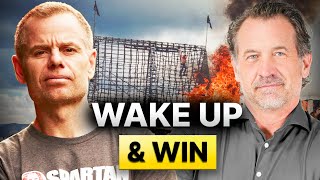
Joe De Sena, founder of Spartan Race, built a global obstacle-racing brand with 1.2 to 1.5 million annual participants across 45 countries. He argues that signing up for a race forces entrepreneurs to align their habits, sleep, and mindset, and that the physical challenges mirror business obstacles. De Sena's core values are prioritization, commitment, and discipline.
Chapters
Welcome to another episode of the Main street business podcast. We are so honored today to have a Main street business influencer all over the world, Frankly, Joe Decina. This is going to be a really interesting interview.
This guy's a serial entrepreneur. From selling fireworks at AJ that was his first little dose of entrepreneurism, to having the Spartan races, which is acquired. Tough mudder. These are endurance events, grueling, tough things to do. There's a lot of lessons for business owners in these races.
Oh, yeah, this. He's written multiple books, the most recent being the Spartan Way. His stories from Wall street being on ground zero during 911 to moving up to Vermont and building a lifestyle with core values that really translate into small business.
Yeah. So we'll dive into some of those core values through the podcast. It was an awesome interview Mark and I had. And let's get to Joe.
Well, Joe, thanks for being here. This is such an honor to be able to interview someone that's helping mainstre business owners around America in such a unique way. This Spartan way is so incredible and impactful for small business owners. Matt, you've done a spartan race, and I know you got the first question for Joe here. Joe, thanks for being here.
Yeah. So if you guys have been living under a rock and you don't know who Joe Decina is, he's done a lot of stuff. We're going to dig into that today. But the Spartan races are what a lot of people know. And I know your company's also acquired the tough Munter races and like in that category of adventure racing, endurance racing. Hard, hard, you know, I mean, it is. They're tough and we've done them as a company here and we'll talk about that in a little bit. But I want to start back 8 year old Joe selling fireworks. I heard that was like your first little dip your toe in the entrepreneurial waters was selling fireworks at age 8.
Is that true?
Y that is absolutely true. I grew up in a neighborhood in Queens. I'm hoping you don't hear the dog in the background, but if you don't, that's great.
Hands are all good.
I grew up in Queens. If you saw the movie Goodfellas, I grew up ground zero for that. So everybody was a hustler. Everybody was getting after it. You were either a business owner or you were doing bad things at a very young age. You either got sucked into it or didn't. And somehow fireworks were exciting to me. I could buy a pack of firecrackers for a penny and sell them for 3 cents.
Oh, my gosh.
You know, it was, it was nice. It was nice margin, right? Nice markup, but it wasn't a lot of money. My mom and dad get divorced. My mom moves to Ithaca, New York, takes my sister and I with her. I get up there and I realize, oh, my God, there is no supply here of fireworks. I could buy a pack of firecrackers and sell them for a dollar.
Yeah, this is. You were destined to be an entrepreneur, right? You, like, knew the market dynamics immediately.
It's unbelievable. And before you know it, like, my speaker, I had a speaker in my room. Remember the big speakers we used to have with stereos and, and there was a hole in the speaker, and I would just stuff dollar bills in there. The whole speaker was stuffed with money until I got caught selling fireworks and got in trouble and thrown outta school.
Oh, my gosh.
But for a while, my dad was actually proud. He patted me on the back, he said, good job, but you need to sell things that are legal, not illegal. And I played around then with, like, bubble gum and other stuff, but the margins were just not as good once I got a taste of the illegal stuff.
Well, speaking illegal stuff, you did a lot of time in Wall street. And what was the, what was the, the, your most memorable experience of working on Wall street and why'd you leave? I, I, those are maybe a paradox. I don't know. Vanda, Vermont, we love the story of your farm up there, but you had a great experience there. What made you could leave, too?
Yeah, well, I got there. And, and for anybody from Queens, landing on Wall street, that was, that was like landing in Buckingham Palace. I mean, it was a big deal getting across the river, being on Wall street, big man on campus, stuff that you read about or watch the movies. So that was awesome. I would say, as you asked the question, what was the most memorable experience? I mean, there were thousands of them, but obviously the one that jumps out was my wife and I, who at that time was a girlfriend for two weeks. We're gonna go have breakfast in the Trade center one morning. And we pivoted. We didn't. She decided to go back to Boston that day, and I decided to go into the office, which was a block and a half away, and I watched a plane fly into the tower.
Oh, my gosh.
And then I watched a second plane fly in. And then I watched both buildings go down. And I was on the phone with the American Stock Exchange while one of the buildings was going down, and the phone went dead. It was A crazy, crazy day. It's also crazy to reflect on it and think about. We were back in the. We never let. We didn't leave the office till midday. When I left, it was a scene from Armageddon. There was ashes that were, you know, six inches deep on the street. The. The coffee and bagel vendors were still there without the vendor. The money was there, the coffee was still percolating. But there was no. Like everybody had vanished. And then to be back in the office, you know, three work days later and get handed. We got handed two way radios by. By Merrill and Goldman and more. And that's how we were communicating. Like, it was just. It was a crazy moment and I didn't realize how crazy it was until I'm talking to you so many years later. Right. 24 years later. That was crazy. That might have. Look, that might have been some of the impetus for. I had a red barn hung on my desk that I looked at every day because in my mind, I never wanted to sit at a desk. I never wanted to type. At that time, when I was thinking about my work, there were typewriters, but I didn't want to sit and type in an office all day. That wasn't me. I liked being outside. I liked getting after it. And so I had this picture of this barn. 911 happened. It could be that, that, you know, that was the reason where I said I got to get the hell out of here and go do something.
Well, it's interesting that I didn't expect this, the most memorable experience, to be the one that also took you away and up to Vermont. That's amazing.
Well, let's talk about Vermont. So you move up to Vermont. And I want to also try to understand where did the Spartan race concept start? Help us understand that for the audience too. I think it's. It was kind of unique. I mean, I don't think these. I never remember these things growing up. I remember there's marathons, you know, and bike racing and stuff like that, and did all that stuff.
But like.
Or triathlons, like, this is new.
I've never heard of it. Yeah. Have you seen the movie 300? A big reveal. You might want to.
I have seen the movie 300. So look, let's go way back. A lot of people don't know this, but back in Queens, my mom's mother had cancer, early 70s, before my parents got divorced. She walked into probably the only health food store on the east coast at the time. Let's. Let's call it 1973. 74. She walks in, she meets a yogi who just landed at JFK airport who's visiting this health food store again. There was no Whole Foods back then. There was no yoga journal, no Lulu, gnc whatever. No gnc. She walks in, yogi's there, yogi says, okay, you want to save your mom's life, these are the steps you need to take. Start practicing yoga, start meditating, become a vegan, blah blah blah, Cold showers, believe it or not, was. And long distance running. And so this particular yogi started a race in Queensland not far from our house, called the Transcendence Run. 3,100 mile run around a one mile loop. Definitely one of the craziest races in the world. Imagine 50 to 60 days of just going in circles. And, and so I saw that at a very young age. And I saw my mom running 10 miles a day and eating healthy and fasting for 30 days straight once on water.
Oh my word.
So I had that in the back of my head. I wanted no part of it. I thought it was nuts. I didn't know why there were monks in my living room chanting like the whole thing was crazy. My friends used to laugh at me and say, oh what, are you going to go have branc sandwiches at your house? Like we wanted eggplant parm and Frito lay chip. Like the whole thing was so weird. But fast forward, I'm sitting on the trading desk, I'm feeling unhealthy like most people that sit, you know, indoors all day. And I went and did a yoga class and then I went and did a race and I started training and I was like, oh my God, my mom was right. Started eating healthy. And so that's really where Spartan was born. Spartan is a yogi with a spartan helmet on and a cloak, a cape, you know, so that's where it was started. And it didn't work. Most businesses fail. This one was destined to fail. Did not work. I had to put enormous money into it. Market non stop, try to convince. I used to lie to people. I used to say, come over my house this weekend on the farm in Vermont. Come over my house, we're going to have a barbecue. But really I was planning on putting on a race and putting them through it. And they would get there and I'd wake them up at 5am and I'd say, hey, let's get up. And why would we get up at 5am for like a barbecue? And I'd say, well, we got to carry the barbecue up the mountain. They didn't know they were the ones being barbecued. But anyway, fast forward many years later, and it started to work.
Well, this goal of yours to get 100 million people off their couches. And if anybody needs it, I'll. I'll say it. I think it is the entrepreneur, the business owner, the person that's just grinding it out. And like on a trading desk, isn't. It seems like a paradox that the business owner would be. I've got so much on my plate. I'm so stressed. You want me to go do what?
And.
But then it actually sets them free. I don't know how to explain that. You see that constantly that they don't.
Oh. What it. What it does is it forces prioritization. It forces commitment. It forces discipline. So what I mean by that is when you put a date on the calendar, when a boxer. When a boxer is out of shape, not optimal. He gets a date, or he or she gets a date on the calendar. And all of a sudden they're training, they're waking up early, they're going to bed early. They're not drinking the wine, they're not taking the cookie. They're very focused on the goal at hand. So whether it's a boxer, an entrepreneur, a mom, you name it, we have to have dates on our calendar that the test has to be due on a certain date, otherwise the kids don't do the studying. So it just. That's just the way life works. That's the way our species works.
So.
So you take a business owner who's very busy, who's stressed out, and you make them do something like this. It gets every. It gets all the stars aligned in their life.
You know, I also think, just as my own personal experience, why I'm into this stuff personally, you know, as a business owner and someone who's busy, got a lot of stuff, you know, and I love some of these spartan core values you have. You mentioned a few of them. Prioritization, commitment, discipline. But even the training for some of this stuff, and you put it out there, it helps clear your mind and doing a little bit of, you know, physical work and letting your mind kind of focus on that and not processing a million things you got to do and what am I going to do next? And it's almost like, for me, a lot of that training is. It's like my. My meditation. It's how I can kind of relax for a moment.
Going to church, it's. Yeah, it definitely slows down the mind. You know, I learned at a very young age, if you're cold, tired and hungry. That's a really comfortable place to be. As crazy as that sound, because you're not. Your mind is not racing with all the nonsense, superficial stuff. You're really honed in on being human. And so the closer you can get to cold, tired and hungry, the happier you'll be.
For a lot of people. They may not know even what a Spartan race typically is like and what the spartan way is. Would you mind explaining what a spartan race is and that way you're trying to teach?
Sure. Spartan race is a military inspired obstacle course. So you're running, you're jumping, you're crawling, you're climbing. Crawling under barbed wire, climbing ropes, throwing spears. You're getting back to your primal self. It's something you would see if we were graduating from buds in the military. And so we're operating across 45 countries. We'll get about 1.2 to 1.5 million participants a year. They're every size and shape from entrepreneurs to CMOs to Serena and Venus Williams, Gerard Butler, Jeff Bezos. You go down the list. Like Greg Norman. I just found out, did a few of our races. A golfer. So it's everybody you can think of comes out and does this stuff and they feel alive when they do it. I feel alive.
And then there's the lifestyle that goes with that. Like you're teaching these core values, but also the healthy eating. And what are those other pieces that I guess they'd just be natural as you're training for the race anyway.
Or it goes back to that 1970s story I said about my mom. Right. Like it's. It kicks you into gear, into not eating that cookie, into eating more salad and to take. And it's all the things we preach. Right. More. More cold water, get to bed earlier. So all we have to do is just give you the clues when you sign up. But then, but then people take it from there and they find out how to optimize their own life because they've got. They've got a date coming with the devil.
Yeah.
Well.
And I think, you know, as a business owner, you get in a certain tempo in how you have to operate, to stay efficient, to make money, to grow your business and. Right. And so you're. There's a lot of things you have to do, a lot of people and things just. There's a lot to do. Right. And I think for preparing for these races, these challenges, I think you have to also hit a certain tempo. Eventually that turns into a habit, which turns into a lifestyle that's why I've like these races. And I think a lot of people, you have people that do, they're like addicts on this. They're doing multiple races a year, you know, and I saw them.
We just found out an 83 year old finished two of 200 of our events. 83 years old. So yeah, there's 50,000 plus tattoos out there. They are all bought in. And it's good. It's a healthy addiction. Like we rather.
Yeah, that's a great.
Rather than do that than something else.
Yeah. And I think, I think it's also something great to do as a group too. And I know our company's done one of these together as a group and I know we talked about this before we got started on the show. That that is awesome team building activity. Our CFO is actually the one that wanted to do it and wrangled a bunch of people in. There's a lot of people reluctant to do it and some of the other employees kind of helped train together to get ready for it. But it was a great team building experience and going through that together was like, we, we even joked after that was like better than 100 happy hours. Like just doing that together.
Yeah, you've explained that. The, the bond that occurs when you do it with someone, can you describe,
look, we can go to happy hour, we can go play golf, whatever. But when you do something hard with your brothers and sisters, you become just like they say in the middle. Like it's a band. It becomes a band of brothers or band of sisters. Because when you do hard together, you build unbreakable bonds. But the other special thing for business owners that I, I learned after applying it on Wall street term was for the 90 or 100 days preceding the event and the 90, 100 days post event. It gives you something to talk to your people about your tribe, your clients, your would be clients, your employees. Would you eat today? What time did you go to bed? How'd you train? What are you doing late? We now have something in common. Leading into the battle and coming out of the battle. And you typically don't see that same thing if you're doing a dinner or you're going to play golf or you're going to happy hour, it's not the same.
Well, if I may, I had a question for you too. Down at the granular level too of some of these activities, this cold water that you mentioned, I have a cold plunge at our place. But the debate is how long is too much or too little or whatever. And how often do you cold plunge? And what's the benefit of this cold water? You've said it a couple times.
Yeah. So you want to shock the body as much as possible. If this was 10 or 15,000 years ago, I would be preaching here that we need more couches and more penicillin and indoor plumbing and indoor climate controlled rooms. But we have all that, we have every amenity. And so it's softening and weakening us and making us fragile. And the body only grows, the mind only grows when it gets shocked in a healthy way. So you do curls and you grow your biceps. It's no different than the immune system, no different than the Vega nerve between the brain and body. It needs a little jolt. It doesn't need perfect temperatures where you're never shocking the system again. If you didn't shock the system in the gym, you wouldn't grow. If you didn't get out of your comfort zone and study new languages or math or piano or cooking, you wouldn't grow. If you're not growing, you're dying. So there's no difference in taking a cold plunge or a cold shower relative to that. The science shows 1000% without, you know conclusively that you will get sick a lot less, you will get healthier, you'll get a tremendous dopamine boost. You know this. If you get in that cold plunge and you don't, you only need a couple of minutes in the morning. I get in right away, by the way, there are people listening, I'm sure, that are saying, well, why what morning? Why do I have to get early in the morning? A lot of people push back on that with me, and I heard it so elegantly yesterday, which was hunters get up early, hunters get up early. Hunters don't wake up at noon. And if you're an entrepreneur, you're getting after it. Assuming you don't have a business that requires you're working till three in the morning, but assuming you're on a regular schedule, get up early and fucking hunt.
Shock the body, get going.
I love it. Yeah, gatherers get up at 9.
I know I should have cold plunged this morning. Yeah, gatherers get up at 9 or 10.
Yeah, the hunters are up a little earlier than that. You know, it's a different game.
Oh my gosh.
Well, let's talk about some of the things. I think there's a lot of parallels to these races and your values that you talk about. Mark and I have just, you know, we've worked with 10,000 plus small business owners. We have Multiple businesses, ourselves. And I just relate to a lot of these Spartan core values that you talk about. I don't know if you can walk through some of these. I think parallel specifically to entrepreneurs or business owners or maybe some of the things you've learned in growing your own businesses. I mean, you've had a lot of businesses. You started from the fireworks we talked about to the pool business. You have the NBC TV show, you got a successful podcast. You have the Spartan races. And there's so many things that you've done. But what are some of the things that you think stand out particularly for these values for business owners?
Look, I think if you've got these values, if you've got the ability to look in the mirror and know that you've been honest with yourself, that you've been disciplined, that you've held the commitments no different than an ancient businessman or woman that would shake somebody's hand and make a deal and go across the Silk Road, right, to bring back something they promised they were going to bring and held true to it through heaven and hell. Imagine those logistics and transportation issues back then with a camel and everything that could go wrong, going wrong. You feel good about yourself. You gain conf. You're attractive to partners, customers, employees. We, the three of us, are incredibly attracted to people that work hard. We're attracted to people that hold firm on commitments, that hold firm on standards. So holding yourself accountable to a bunch of principles like this, like an Olympian would hold themselves accountable to, just does more business, just feels better, just is happy. Like, there's so many benefits. If I answer the question correctly. Like, that's, that's the benefit.
I want to encourage all of our listeners to pick up a copy of Joe's book, the Spartan Life or the Spartan Way. I love the Spartan fit. Spartan up. These are just so inspiring. And please, if you're listening, take the time to reevaluate your. Your goal setting for your exercise program. I love that you said set a date. When's the date? When. What are you. What are we doing ours? When did you say?
Well, the next one's in Phoenix in November. It's in Avondale.
Okay.
Which is where they've done them before, actually. It's out by, like the Phoenix Raceway.
I want all your. You can look up tough mudder or Spartan. I want all your clients, all your friends, all your family, whatever, because of our friendship, you're going to give away a bunch of free entries. Just collect them on a spreadsheet and I'll hook you guys Up. But I think it'd be great for your business. It's great for everybody. Underused business. And I'll come out there and we'll have some fun.
Oh, so much.
I love it.
Before we let you go, and thank you again for taking some valuable time with us, I want to know what is your favorite obstacle in one of the races and why it's your favorite? Maybe it's the hardest. I don't know what's fun for you in the race?
Yeah. The obstacle is the way. I think that's all the stuff we talked about here. Let's embrace obstacles and not shy from them. People send me notes every day. They say, I hope you have a shitty day. What do you mean? That will encourage you to face some challenges and deal with them. But when out on the course, those are easy options, obstacles relative to what we all face in business and life. And I would say the spear throw is my favorite because it's so delicate in the sense that most people miss it. And when you do, you've got to do 30 burpees, and burpees suck. And I love that idea. I just love that idea of, like, you know, flipping a coin.
Yeah.
And hope you don't lose.
Yeah.
Wow. Wow.
But also embrace the idea that, yeah, I hope I do lose.
Well, yeah. I don't know. I don't know if I ever wish I get to do 30 burpees. But that throne of spear, it takes you back to when you're 8, 10 years old selling fireworks. Man, I want to throw a spear.
That'd be a cool thing.
Well, we're gonna. We will definitely put a link here in our description for any listeners that would like to do a race and you're serious and you want to gear up, we'll have a link there that you can.
We can collect the names, right? We'll collect them and get them to you guys.
It.
It'd be cool.
We'll do it as a group.
I want you to get, you know, a thousand people. It's on us. Oh, my. Any. Any race you want. You guys could set up a tent. You could. Actually. We could add a. An obstacle if you want. Somebody could have to fill out tax forms while they're out there on the court.
Yeah.
I love it. Give him a pencil. And. And you got to sharpen the pencil as fast as you can to get.
There you go.
10:40.
Done.
Thank you so much.
You know what? And if they screw up, they're going to have to pay some more tax, and they're gonna have to, like, run an extra mile or something. You know, we're gonna.
If you do it wrong, tax burpees. Well, Joe, thank you so much. What can we do for you? What. What are you really emphasizing now? And, oh, there's our sound effect right there. Oh, my gosh.
Look at that guy.
We gotta hear him gnawing on that bone. I'm like, oh, my gosh, that sounds delectable.
Oh, for me, for me. Look, at the end of the day, all I want to do is change lives. And so if you can bring out a bunch of people, even though we're not going to charge them, that's absolutely fine. Because if I get. If I get every day an email that says, hey, I'm back with my husband, I'm back with my life, my wife, I lost £200. I gave up drugs, I gave up drink, like, that's my currency. So help me find more of those stories.
Well, thank you so much. We appreciate you taking time with us. And every Main street business owner in America needs to have the spartan values in their life, and they'd be far more successful. We truly wish you the best. Thank you.
Thank you.
Yeah. Thanks, everyone for listening the Main Street Business podcast. We'll, of course, be back next week with another amazing episode. And thanks to Joe. I really do appreciate. It was awesome and honor to meet you and have you on the podcast. We'll see you guys all next week.
More from MARK




The secret to managing your family's future #financialfreedom #estateplanning #shorts



Moving Property to an LLC: What They Don't Tell You #realestate #investing #tips


