Why The Rich Put EVERYTHING In Their Living Trust
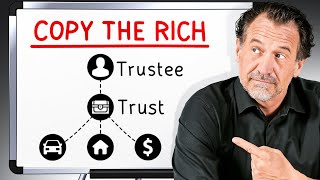
Mark Kohler and Matt Sorenson explain why a revocable living trust is essential for everyone. A living trust avoids probate, keeps your estate private, lets you control how heirs spend money after you're gone, and protects your family if you become incapacitated. A basic trust costs around $2,000 to $3,000.
Chapters
Because you know you're going to die and you want to take care of your family.
I'm going to say finally, young or old, rich or poor, kids or no kids, married or single, you all need a trust.
If you don't have an estate plan at all, the state that you live in does have a plan for you when you die. That is not what you want. The worst plan is no plan.
The reality is when you dump money and assets on family members that aren't prepared to receive that money, you can actually ruin their lives, ruin relationships. Money does weird things.
They end up fighting over it. This trust protects them. It it doesn't let the money come and harm them.
Matt's drafted over a thousand trusts in his career, as I have. But we don't do our own. We need brain on brain. Welcome to a special edition of the Main Street Business podcast where we want to talk about what is a living trust and what are the four major benefits. My name is Mark Kohler, cpa, attorney, author, influencer in the tax and legal space, and I'm here with the infamous Matt Sorenson, author of the self directed IRA handbook, senior partner at KQS Lawyers. This is such an exciting topic.
This is such an exciting topic. And I am resigning my own estate plans tomorrow. This is also estate planning month in our law firm, KQS Lawyers. We love to run a special to get you excited about doing estate planning because we all know there is one thing certain in life. There's two. The one for today is death. We talk a lot about the other one. Taxes.
Yes.
But today we're talking about death. It is going to happen to you. Spoiler alert. But we want to talk about the plan you need and how this comes together. We're going to get into the living trust, which is the number one trust we want to recommend for our clients. Everybody needs to know this.
Even if you're uber wealthy, the billionaires out there have a living trust. The living trust is the foundation. Maybe we start there. Let's just explain quickly what is a living trust, and then we'll get into these four benefits. I'll just say in general. Okay, so the living trust is a document you sign and it's in a binder with a bunch of other pieces and parts what we'll get to. But it's the backbone of what's called an estate plan. Like what's going to happen to you and your assets when you die. And so this living trust does not get filed with the feds. It doesn't get filed with the state. You don't have to record it at the county. It's very private, it's very internal. You're going to appoint some key people like trustees, guardians of children, executors. That's all part of the plan. But the living Trust is just a self executed with notaries and some witnesses, but a document that you're going to have for many, many years to come. And you can modify it and I guess edit it because it's a revocable living trust. So that's basically what it is. It's just this. It's like a will on steroids. Would that be fair to say?
Will on steroids? Yeah. And it does a lot more for you than a will does. Because we're going to get into that today on why this is different from a will. Should I just do a will, Matt? Do I have to do a trust? We're going to answer that question. You're going to see the of why you should have a living trust. But this is not just for the billionaires. Every American should have a trust. When we go through the reasons why, you're going to realize this. Now, when we get to death, I think one of the things a lot of people think about is, oh, well, I have life insurance. Okay, good. And how much are you paying for that life insurance every month, every year of your life until you die? And life insurance is important and you've decided to buy that because you know you're going to die and you want to take care of your family. But what about all the other assets you have in your life that you haven't planned for or thought about or created any document to say what's going to happen to them? Well, that's where the Living Trust is. And I'm telling you, it's like 1/100 of the cost of life insurance over your lifetime. It's not that expensive. We're talking two grand to get this cranked out with lawyers. We even have discounts going on right now in our law firm. So this is very affordable to get done. I don't want you to think that this is going to cost you tens of thousands of dollars and a lot of lawyers will charge five grand plus for this. But you can get it done affordably. We want to make it accessible to everyone because this is going to benefit everyone. Everyone needs to have this.
Yep. And now one last statement before we get into these four benefits is think about the 401k. Think about your Roth IRAs. Think about rental property, your home Guns, pets, personal property, the wedding dress, the piano, all these little things that we don't want to think about, but we have to have a plan, and it can be really quite easy to take care of. So we want to think about all these little assets. Now, I'm going to say finally, young or old, rich or poor, kids or no kids, married or single, you all need a trust. In fact, some of the people that are single with no kids, it's even more complicated because where's your stuff going to go? And the state's going to come in and tell you or your family where it goes. And it may not be anything near what you really wanted if you would have taken the time to plan. So, Matt, let's get to number one benefit of having a living trust.
The number one benefit to having leaving a trust is no court or probate. It is private. The difference between a trust and just having a will. Now, great, those are both plans. We've at least said what we want. But the huge benefit of the trust over the will is no one's got to go to court. See, when you die and you leave a will, your heirs have to take that will and go to court. It's on public record. They have to give notice to anyone that wants to make a claim on your estate. This is all public. Everyone gets to see your assets if they want, and it can be contested. But if you have a trust and you pass away, your family's not going to court. You've appointed a trustee who takes over the assets and is going to follow all of your wishes. And we're going to get into that and how it works and all the benefits and the cool things you can do, but from a foundational standpoint is it's private. And it's also going to cost you less money because how expensive is it to go to court later in life with your family trying to figure out what the hell you wanted with a simple will that didn't get into all the details. So you. It actually saves you a lot of money in the long run, too, because you're not having to go hire lawyers and go fight it out in court.
Now, some of you may be thinking, I don't care, I'll be dead. Well, this is a chance for you to think about maybe your parents or grandparents and go, you know what? They need a trust because I don't want the train wreck. I don't want the mess. Do you know how many clients we've had around Father's Day, Christmas, their birthdays, they'll go to their parents and grandparents and go, I am going to pay for your estate plan. That's my gift to you. I don't want to do it. You're going to do it. And so some of you may not care as much if you leave a mess, but you may be the one getting that mess thrown on your doorstep. So you want to maybe take that initiative to keep it organized and affordable when you have a family member that could be nearing death. Now, last point is, you have to keep the trust funded, you have to keep it up to date. And that's an important piece of this, but it doesn't require a lot of lawyers and it can be very easy to do moving forward. So, okay, so that's benefit number one. Now benefit number two is, can I
do a little subpart B to one?
Yeah, yeah.
About. Because we got. The other thing I want to say about this is you have a plan. Want to make sure understands this. If you don't have an estate plan at all, the, the state that you live in does have a plan for you when you die. It's in the law. Like that is the backup plan if you don't make one. And do you know what that is in your state? Do you know who's getting your assets? Do you know how that's going to pass? That is not what you want. Trust me, that is the worst plan is no plan. Because the state's plan is what's gonna happen and your family's just gonna get the default. And I'm just telling you, no family wants that. I've never met anyone that's came in to plan an estate that says, yeah, just give me the default. That's in state law. If I didn't have a plan, no one wants that. Okay, so get a plan for your assets and your estate. Be intentional about it and don't leave a mess for your frickin family. Okay?
I love it. I love it. Now the second benefit is a very broad benefit and we're gonna give you some ex. And it's called control from the grave. A famous Supreme Court justice back in the early 1900s, his name was Learned Hand, believe it or not. And he called it Dead Hand Control. When his hand comes out of the grave and just messes with your family, this is your chance to be up on a cloud up in heaven, just laughing down at your family, going, ha, I got you. So you're putting carrots and sticks out there, leaving instructions for your kids of and family members of what you would want them to do with that money. Now, some of you may think that's very haughty or not appropriate to do, but the reality is when you dump money and assets on family members that aren't prepared emotionally or financially to receive that money, you can actually ruin their lives. You can make it very, very for hard for them to go to the next level. And we want to help our family members on their journey and progress and grow. And throwing money on their laps without any parameters could actually really hurt them. So I'd like you to all have the look or perspective that I'm doing them a favor. I'm not just trying to make their life miserable. And I think that's a great approach to take down. Matt, what'd be some of the examples that you would. Yeah, you're signing yours tomorrow.
I know.
Are you any of these in there?
All of those are in there, actually.
I like it. We've got a list of like five or six things.
Okay, so we'll hit those. But let me say one other thing on this control from the grave. And I want to just do a little mindset shift here, and then I'll give one and we can go back and forth here. But you do need to have a mindset shift about this. I want you to think about your estate plan as an opportunity to plan your legacy. Like, how is all this work that I've put in over my life, the assets I've accumulated, maybe the business or real estate I've done, the money I've set aside, whatever it is, how is that legacy going to get passed on to my kids in the next generation? How are they going to be better because of all this hard work that I have done. And if you don't make a plan for it, you're not intentional about it. We've seen it. Even if your kids think they know what you want, they end up fighting over it if you do not create a plan for how this legacy is going to transfer on. So think of it as transferring on your legacy and how it's going to benefit your family or the charities, other things that are important to you as you pass on. But let me get to just like the practical stuff, okay? Because you talked about how money can ruin people. What if you have a child or an heir that you want to give some of your estate to and they have a drug or alcohol addiction? Do you think some money's going to help them? No. But maybe you have a provision in your estate plan that says they don't receive any inheritance until they, they resolve that issue. That's the carrot, right?
Yeah.
They've got to go to rehab and we have a standard clause on that. And that's very common. That happens. Like I have clients that have estate that this has happened, they've had to use this and it matters. And so. And these are some. There's a lot of things on this list here. And by the way, we have a list of ideas that we give you when you trigon estate plan with us, of stuff we've done with clients for over two decades now.
Yeah, yeah. And I like sticking with that carrot and stick on this point is the stick might be if you've got a problem, we're not going to just give you that money. You've got to go through some steps to get your life in order. But the carrot could be go to college if you get a certain GPA or if you want to get a graduate degree or you want to buy a home or you want to get married or you want to start a business. So you can put to me, those would be carers, say, bring a business plan to the trustee. And a lot of times we have clients and I've done this in my own estate is the kids get money at age 25, 30 and 35. So they're getting financial benefits and stages where they can practice and learn how to be a responsible financial adult. And those are wonderful ways to kind of divvy out this money over time. All right, so next, kids, minors. What do you do with minors?
Yeah, minors is really important. I mean, there's a separate aspect of this too. If you pass away with minors and having a guardian designated, we're going to come back to that. So hang tight. But just in terms of the money and the finances for this is we want to hold that money in trust. So if I have a trust that says I passed away and I have a kid that's 15 years old, let's say at the time, well, one, we need to determine who the guardian is, we'll come back to that. But all that money that would otherwise be theirs when they turn 18, if I didn't plan for that and have provisions in my trust about how that gets distributed over time, you've got a train wreck coming. Not only is your 15 year old had to deal with you not being in their life, they've got a windfall of money coming at 18. And how many of us would have been ready for that? It would have been a disaster for me, I tell you.
Yeah, I wouldn't don't give me any money right now. I'm out of here. I'm out of here.
And so this stuff matters, you know, and so we want to have the initial. For those of you that have minor children, this is even more important for you because this trust protects them. It doesn't let the money come and harm them. And I love the 25, 30, 35 age. You could do whatever works in your family. Maybe you've got older kids already that are all, you know, you feel good about them getting inheritance and that's good for you. And that's why I say that's why this living trust is so important for you. Everyone doesn't just take the default state plan because it doesn't work for everybody.
Well, on this minor children, I'll just add, this is the chance to say how much I'm going to give the guardian to raise the child to. Are we paying for private school? Are we, where are they going to live? And if you're going to plop the kids on grandma's doorstep or heaven forbid, or whoever this guardian is going to be, how are you going to help them financially carry out that role? Okay. Number three I like is the business continuation plan. Many of our clients have investment property or a small business or a side hustle of some. To some degree. This is a chance in your estate plan to go. Here's how I want the business to live on. It's going to go to some of the employees, it's going to go to kids. I want to create a board of directors. When I die, I want to leave the business to this kid, but I'm going to leave the real estate to this kid and then equal it out with some cash so you can be very, very creative so that this legacy Matt talked about that you've created, or I mean these assets and wealth that you've created leaves a legacy and it's just not dissipated and destroyed. So I think that's a great opportunity. Yeah.
Another benefit is creditor protection. So we're generally going to add what's called a creditor protection clause or credit shelter clause in the trust. See, if I just had a will or no will and I pass away and my kids are going to get $100,000 from my estate and let's say that they have a credit card judgment against them for $30,000. Well, guess what? That hundred K off the T30 grand's going to pay that creditor and then your kid's going to get their 70 grand inheritance from you. If I Have this passing through instead. In a trust with a creditor protection clause, what will happen is that 100k is going to sit there and the trustee is going to be like, nope, not distributing this until that creditor goes away. Because I'm not going to cut a check to 30 grand to visa to cover this, you know, judgment that the child has. So there's protections in there to protect the estate from being wasted by creditors if your children or other heirs may have them.
Yeah, the heirs could have IRS debts, credit card debts, judgments, and those creditors would love them to inherit some money and then they have a claim to it. So these creditor protections are super important. Last one. And as Matt said, in this area of dead hand control, if you will, we have a couple pages of ideas we give clients. But another one that I think is important to mention is the personal property. 60% of Americans have a pet. I was going to say own a pet. Their family. You don't really own a pet, Right. Especially not a cat. They own you. But anyway, so 60% of Americans have a household pet. And so who's going to raise that pet? Are you going to leave money to a guardian of the pet? Clients have guns, pianos, wedding rings, art cars, collectibles. And so cryptocurrency with keys somewhere. You know, there's a lot of things out there that if you don't leave in an organized way, could be fought over, ruin relationships. Money does weird things. And when you were saying just a minute ago, I cringe when you said, some people feel like, well, my kids, they're better, they're 21, but they're really good with money. You know, you drop a million dollars in their lap, they might be a little different on day two. And so you've just got to have a realistic point of view. And these personal property items, you can really have some fun with. How that sounds crazy, but how you want to distribute that to your family in creative ways, What I'll say this
is, I think maybe it's fun, but I think there's a lot of satisfaction in getting it done. You know, like I said, I'm signing my estate plans tomorrow with my wife. And one of the things about it is there's going to be a lot of satisfaction tomorrow when it's signed. Because we do have a plan. We've thought through it, we've talked about it, we had the planning sessions together. I communicated that to our lawyers who drafted the estate plan for us.
And.
And when you sign that, you're like, all right, I'VE got a plan in place. There's a certain amount of, like, satisfaction and just knowing you've got this in place.
Am I in it?
Yeah, you're in it.
I get something.
Yeah, you get something. Wow.
Wow.
Who do you think was getting the suit? No, it was the cat. Oh, it's the cat.
Damn it.
I get Duffy. You get Duffy the cat now.
But you know what the interesting that Matt said there is, he had lawyers draft his. Matt's drafted over a thousand trusts in his career, as I have. But we don't do our own. We need brain on brain. And here's how. Funny. We've got people out there that don't even have legal experience and they're gonna go Download something off LegalZoom and do their own estate plan. I don't even do my own estate plan. Cause I know I will jack it up in some way. Because you're in the weeds and it's very emotional and you need someone to look at it in a third party, arbitrary way and go, mark, I don't think that's a good idea. And you're like, oh, yeah, you're right. Because we always treat our own stuff a little. Yeah, I'll stick with stuff. Our own stuff doesn't smell. And so we're. Oh, yeah. You know. But we really forget the big picture when we're doing our own thing. So that's very impressive. Yeah. Why didn't you call me? I could have taken.
You were booked out.
I was booked out. Okay. All right. Now, number. Okay, now remember, we had four benefits. Number one was the privacy and avoiding court and having a plan. Number two was this control to get very, very creative. And we gave some examples of that. Number three, some of you that are young may not think this is a big benefit, but for your parents or grandparents, it's a big one. And that is incapacity, the inability to manage their own finances later on in life. That's a big worry for a lot of grandparents. They're like, who's going to take care of my stuff? Who's going to pay my bills and who's a signer on my checkbook? And because they're worried that one minute they could fall and who's going to take care of them financially? And so the living trust has that provision, has that trustee that'll step in, collect Social Security, collect retirement money, pay bills, manage rental properties. And so as you get older, believe it or not, that's going to be a bigger deal. And so benefit number three is this life why is it called a living trust is even while you're alive, the trust can be taken care of you.
Yeah. And we're going to get into some of the other things that are connected to this. The powers of attorney, a living will, too, which is the pull the plug device, you know, if you're incapacitated. So the estate plan and your living trust. The living trust is the primary document. You know, this is the main character, so to speak. The main character energy is your living trust. But in the estate plan, we do have a supporting cast. We still do a will.
Did you just come up with that on the fly?
Yeah, it's very good. Yeah, we got the living will. This is, you know, maybe best supporting actor. You know, we got the powers of attorney, you know. You know, and then we got the
extras comedic relief, you know, that that's personal property declaration, property memorandum.
So there's some other documents that go with this. And some of these can matter during your lifetime if you are incapacitated or you need someone to start making financial decisions for you. If you have an elderly parent. Many people have already had to deal with this, working with an elderly parent who's needed help over their finances, who's had to go to a hospital or a nursing home where they've asked for these health care directives and these health care powers of attorneys, so they know who has authority to make decisions here. And think about this for yourself too.
Right.
Like, we will need these items someday. And so this is part of it and part of the package you're going to get.
Yeah, and that's number four, because they really did interrelate with each other. And so the fourth main benefit is you're going to have an overall plan. And this package of documents that the living trust is the backbone of is called the estate plan. And I like what Matt said early on here is that you really should have a budget of $2,500, no more than that, or maybe three grand. And it is really does not have to be an expensive process. And it's be careful for some of you out there, I know some of you, it's hurts when we say that because you're like, I already spent five grand on this and I okay, what's water under the bridge? Maybe you need to update it, add some things that weren't included in that. You don't have to go to the same lawyer. Any lawyer can do an amendment to your current trust. And for those of you that are out shopping, do not get caught up in this perceived value Issue. Well, you're worth $10 million. You know your estate plan is going to be a $10,000 project. No, they're just value billing. You know, that's an attorney talking crap. And I'm sorry, some estate planning attorneys out there are going to go, you have no idea all the work I have to do. Yeah, you can do a lot of work on an estate plan. You can also create something that's very straightforward and just put in the belt, the boilerplate provisions at least gets it done. Yeah, we could spend 10 hours at the table getting super creative. Yeah. Then it's going to cost that much. But I don't think it's necessary for 95% of the American public. And so be careful when you're out there shopping and don't get taken advantage of. And amend your trust. If some of the things we've said are outside the box for you, it's okay, you can amend. You don't have to scrap the whole thing.
Yeah, and I think that's one of the really important parts of a trust a lot of people get hung up on. Well, I don't want to get my estate plan done because I'm not exactly sure what I want. Guys, remember, there is an estate plan in place for you. It's what the state that you live in has decided is going to happen to your assets when you die. That is the plan. Trust me, that thing ain't perfect. It's better to get a plan in place, think through it, put some thought into it and get it done and get it signed. If a month later you've like been simmering on it and you're like, ah, I really don't want to do it that way. One page amendment, pretty simple. Six months later, a year later, we have lots of clients that will amend stuff here and there. And sometimes family situations change. Certain heirs or assets may change that require an amendment that should be happening, but don't feel like you have to get it all right and all figured out to get started. I think that's frankly an excuse a lot of you have put into place to not do your estate.
You mean they don't want to talk about their mortality and they might die?
That's not their favorite thing.
No, it's just about to. Now, if you guys want to talk about taxes, we can do that. But we are going to now end this video, this little podcast here, and tell you thank you for listening. It is so important to take care of this piece in your overall wealth building and legacy plan. And it doesn't have to be expensive. It doesn't have to be hard and painful. And we want to say thank you to all of you that are our listeners and followers over the years. Please continue to believe in, in the American dream and work hard and don't give up. We Main Street America is the backbone of this country and these little things really do matter. So thank you for listening, watching, and we'll see you next week for another episode of the Main Street Business podcast.
More from MARK




The secret to managing your family's future #financialfreedom #estateplanning #shorts



Moving Property to an LLC: What They Don't Tell You #realestate #investing #tips


