Write Off Your Rv This Summer - How To
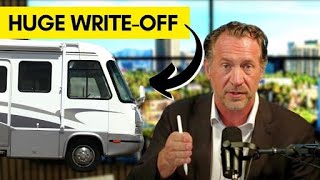
Mark Kohler, a CPA-attorney, explains how to deduct an RV as a business expense by renting it out or using it for work. You need to document business-use percentage, which drives depreciation and write-offs. Full-time RVers can relocate to tax-friendly states; part-timers keep a primary home and deduct proportional expenses.
Chapters
That's going to save you thousands. At least I hope it will. I know how hard it is to make ends meet and build wealth and save time, save the on the biggest cost in our lives, taxes. My name is Mark Kohler. I'm a cpa, attorney, author, senior partner in accounting, law firm, helping clients around the country and just love to talk about ways to save money and people. A lot of times it's easier to save money than it is to make money. So we're going to talk about the RV today. And millions of Americans have RV and sometimes they're just sitting on the side of the house not getting used. Other people are living full time in their RVs. So I really want to talk about ways to write off or how to write off your rv. And I'm going to get into the details and help all I can and point you tax advisors in the right direction to make sense of this. It can be a little complicated. It's kind of a unique strategy and if any of you love this topic and hire them right off things like an RV or dining or travel or the kids or using your escort Properly, I've got 70 plus strategies in my tax advisor certification program. The only one in the country that has all the pieces and parts of real exams, real life training, video workbooks, everything you need to succeed as a tax advisor, consultant, cpa, enrolled agent, all the above. So if you're liking what I'm talking about here, click down below. Check out getting certified on this topic and others. All right, so we're going to talk about the RV and we're going go to the whiteboard here in a minute and talk about I'm sorry, my studio producer is so on. I say the word whiteboard, bam, they're there. All right, so but thank you everybody for being here and thinking about the summertime and RVs and saving taxes. Man, you throw a little Kentucky Fried Chicken, you got the perfect storm. So what I need to say before we talk about riding off the RV is let's talk about kind of the baseline, some things you've got to have in the mix. So if you're an advisor, I'm going to you. I'm just going to assume you're talking to a client, but I'm just going to talk to all of you out there that may be an RV owner anywhere from a pop up to a class A. In order to write off your rv, we need a small business platform. We need you using the RV in a small business in some form or fashion or we need to be renting out the rv, like outdoorsy. One of the top platforms for this. I was hoping to get their president CEO on the for the live interview today, but they couldn't make it. But this is a very common strategy now where more and more people rent out their RV and that turns it into a business asset. And that's you could cash flow your RV and now it opens the door to writing it off. Some of you are like, I don't want people in my rv. Well that's cool. Just leave it on the side of the house and that asset making you nothing. Maybe you can just simplify it and create lock offs and ways to use that RV when you want to use it. But you're making cash flow and writing off the RV along the way. So that's one method. But then another example, I have clients that get in their RV and travel to their rental properties or they park it near the rehabs they're working on. If they're in real estate, they may drive it to conferences or events, the state fair, the county fair, the different, oh gosh, what do you call this? Tristan, on Saturdays you go to the market, you know, the little farmers markets. Yeah. And you're parking your RV out there and you're selling goods and services. And so if you can find a way to use the RV as a business vehicle to transport equipment, supplies or work out of when you're in your small business. And we're going to talk about those of you that want to be full time RVers as well.
So.
But the first point is if you want to write off your rv, you need to put it into a rental pool of some sort, like outdoorsy. And there's others, a lot of little local operations as well. We've got to turn it into an income producing opportunity or we got to make sure we're using that RV to move around and transport and work on our businesses. Now I'll give a big shout out to Steven Coop down in Athens, Texas doing the RV Inspection association and the RV Repair Association. I probably get some of those titles wrong. Forgive me. I love going down to Texas and talking to these salt of the earth wonderful people that are out there creating businesses, working out of their RV, inspecting RVs that people are buying or selling or repairing RVs. Constant battle, making sure all the pieces and parts in our RV work. And then we've got the work camper organization down in Arkansas. I love the work campers. Get a work camper. I'm going to live in my camper and go work somewhere. A lot of people jump in their RV and go work at an Amazon campus or in the Christmas time and holidays or, or in the summer they may go volunteer or work and get a 1099 at a state park or maybe even an amusement park Six Flags. And a lot of these places love to bring in RV owners that come and work part time and they create a space for them to work. They don't want to hire the local 16 year olds that are screwing around more seasoned, well adjusted adults that can help run the tilt a whirl while they're sleeping in their RV at night out in the back 40. So there's a lot of ways to use that RV to create income. You use it in your small business and that's, that's going to be a baseline issue here. Now I'm going to take your questions. So if you have a question, please keep it to RVs today. That's our topic. Type it down in the chat below. And also everyone ignore any of those posts about freaking some sort of investment opportunity, money making opportunity or bitcoin or so who knows what the hell these, you know, bots or whatever they are out there drive me crazy. Now I'm verified on all the social media platforms so you should see a check by my name if it's me and I'm not making any comments on my platform during this live broadcast. So just listen, write in your questions and if I don't get your question, repost it so that we can see it on the feed and make sure we hit it also again, if you want to get certified more strategies like this, please get in touch. All right, so here's, let's go to the whiteboard now. Tristan, thank you. I want to say thanks to Patrick in our Idaho studio and Tristan here in our Phoenix studio making this happen. So when we come to writing off the rv, I want to create two categories and we're going to talk about those that are a part time. Boy, how do I want to say that? Part time RV use. And if I'm going to, oops, sorry, my little thing here is not working. Okay, so I'm going to be a part time RV user and that might mean in our, as I speak at conferences on this you have sticks and bricks. So you have a home you live in and then you use your RV kind of part time in your business and weekend warrior. I like that. Okay, now over here we have people that live full time in their RV and they're hitting the open road as a Vagabond and they love it and they may still be doing business but they're like, how can I write off my rv? Well, in both of these situation, there's pros and cons. And so as we go through this here, we're going to use this line as kind of our separation here. So we're going to go like this. We're going to do pros and cons. All right, so here's the first thing. Let's just deal with the most common. I think the most common is millions of Americans have this RV on the side of their house and they're over here and they're like, how can I write off this rv? Well, the pro to having a part time RV is that you can actually write off the rv. We can find out some sort of. And in fact I'm going to erase this right here, go back here. Part time user, this is a full time RV user. Almost like sounds like I'm a drug user of some sort. But when the RV is, you know, gateway drug to enjoying life. So we've got our write off of the RV as a part time user. So that means I have a sticks and bricks home, that is my domicile. So I live in a home and the RV's parked next to it. Well, when I can use that in my business, I get to write off the RV in my business. And we're going to find out what business use percentage and if you use it, 10. So if you have your days of use or like say you, you use the RV yourself 10 times and personally and you used it 40 times in your business, you're going to come up with a ratio of 50 use days and 10% of it was you personally. So that means it's 20% personal and 80% business. So then I can write off 80% of the cost of the RV with depreciation and write off 80% of the operational costs, gas, fuel, repairs and maintenance. So you want to find out this use percentage based on a ratio. Now we'll come back and talk about the rental RV strategy. So you're going to rent out your RV and what's going on there. But this is, I'm using my RV part time in my business, I'm going to come up with a use percentage and the benefit is I get to write off that rv. That's one of the big benefits here. And people love that. The con of not being a full time rver and a lot of people get frustrated with this is they're like, well I want to move my domicile, I want to like show that I live in one of these tax free states like Texas or Florida or Nevada or Wyoming. Well, the con is, is you're stuck with your kind of your sticks and bricks location. So you're stuck in your state, wherever that might be. So if you normally live in California, you're still going to be a California resident. But if I go, well, I'm out in my RV driving around the country. Oh, so you're a full time rver. We'll come back to that. But you can't just write off your RV if you're a part time user and you have a home. And you're also. The con is you're going to have overh on your home. You're still going to be paying for brick and mortar home property tax and, and all those things. And so a lot of people hate this and they're like, man, I want to get rid of my, I want to get in a tax free state and I want to get rid of my home and I want to live in a way where I can live more affordably. So but they don't want to sell their house and so they're in this quandary. So you have to kind of realize you can't have your cake and eat it too or you can't have your RV and ride it off too. You gotta figure we gotta find a balance here. Now, over on the full time rv', ers, here's what they love is, oh my gosh, I can change domicile. So that means I can sell my house in Maryland and say, now I'm a Texas resident, so they're gonna set up residency in another state and they're gonna sell their house and move on. Now the beauty of this is they're gonna reduce their living costs too because they don't have this brick and mortar home. I'm going to come back to here because I think there's two ways to get at this, A and B. And I think there's a smart way and kind of a lazy way. Now the cons of making the RV your primary home, where you live, you're a full time RVer is now you can't write off the RV because it's your home. The IRS is very clear on this and some people say, well, I've got a home office in my RV and all, but there's a couple of court cases on this that pretty much shoot that down. It is not going to, it's not going to happen. So you can't write off the RV when the RV is really your primary residence, when RVing full time just and most CPAs and enrolled agents are going to draw a line there. Now when I come back to these pros like of when I go to live full time in my rv, which I think is great, it's wonderful. What a lot of times what people will do is just sell their home. They just sell out and go buy their RV and hit the open road. I don't think that's the smartest way to do it. I think you can rent your home, even use a HELOC if you have to to go buy your rv. And for crying out loud, don't go out and buy a 300,000 fricking $rv when you're coming right out of the gate. Take your time, work through the fifth wheel, process a Class B, learn about RVs before you go out and spend your life savings on a frickin monster going down the road. But anyway, rent your home and you could even Airbnb your home and you're like well I don't want people using my home. So you're going to sell your home, what are you going to do? You're going to sell it or rent it? Well we're just going to leave our home and you're going to go be full time rv. Good luck selling that to the state tax, you know, the tax authority because you're going to say well we don't live in our home anymore. Really? How many months did you spend there? Either you got to sell it or rent it in order to show that separation that you're now living out on the open road. So rent your home, make some cash flow and get learn how to be a landlord and people there are so much money in real estate and the groups that are buying some of these full time RV experiences don't aren't used to entrepreneurship or real estate investing. Expose yourself to get excited about learn about it. This is how the rich get richer. Let's create cash flow with your rental income, with your property and create rental income. So very, very important now if you want to make your RV a business in and of itself. Now we've got even a more unique strategy here because your RV itself is creating cash flow which I love and the write off is actually even better because the denominator and numerator. See up here when I'm going to say be a part time RV user, I have to look at total days used. In fact I'm Going to. Here's what it would look like. So these are the personal days and then total days available or days used. So you're looking at your personal days and your business days. And if I used it for 10 personal days for a total of 50 days that it was used, then I've got a 20% personal use or an 80% business use and that. And so you've got to do that math. Well, over here we're saying, well, when you rent your rv, if you make it available for rent, that's a business day. So if you put it in an outdoorsy rental pool all year long, your denominator is 360 days. And if you say, well, I only used it 15 days personally, all the other days it didn't have to be rented, but it was available for rent. So if you say, well, I used it 15 days personally, we're going to be around a 5% personal use. Oh boy, this is cool because now I can write off 95% as business use and it's all based again on the days available for rent by putting it in a pool. And it better be fair market value and reasonable, not just got it in there and throw it at this highest price that no one uses. I better see some revenue. And we want to see this as an active business. So if you can create cash flow with your RV. Now I'm writing off, in this example, 95% of my RV and I'm also creating cash flow. That's wonderful. And some of you are like, well, I'm going to use the RV in my business. Great, let's go over and look at those pros. And if you're going to live in your RV full time, turn your home into a cash flowing rental property, change domicile and hit the open road. We can save state tax, we can create cash flow with our home and cut down on all of our living costs because I got rid of that house hanging over me. So there's lots of options here. And this summer when you start to use the rv, I hope you're going to remember this presentation. We can talk more about it. Okay, Tristan, let's go off the whiteboard and Patrick, let's start hitting some questions. See what people have out there and see if we can help help them down through the process.
Right. This is from Avery. Do you have any clients who rent out RVs full time and how well do they do?
Oh, I, yes, I do have clients that rent out their RV full time. I've rented an rv. In fact, I Went on our outdoor outdoorsy a month and a half ago. We were going to rent an RV and head up to Sedona and we ended up having a conflict so we canceled the reservation. But I have clients that are cash flowing these RVs. And think about it, if you're renting out the RV for a hundred to $200 a night and you're getting 15 nights a month, wow, okay. I'm going to be generating two to three grand in gross revenue. And this is just like Turo. Some of you may have heard of Turo, where you rent out your car. I have clients that rent out their car on Turo five to seven days a month and it pays for their car payment. This rv, you could rent it out five to ten days a month and it pays for itself. So very, very common. And I guess, you know, again, some of you might live in an area where most people are like, I'm not renting an rv. I'm gonna, I want to go to Yellowstone or Yosemite or you know, the Ozarks or wherever. So you want to make sure some of you got to do some analysis, find out. I'd get on outdoorsy and see what other RVs are for rent in your area and do some research on it. But it's better than nothing, right? It's RV sitting on the side of the freaking house. Let's go make some money on it. All right, Patrick, next question.
All right, this is from Tom. If I took my RV to a location for taking photographs of our products for my business social media account, can I consider it a business trip? Is this considered business use for riding off the rv?
Well everybody, based on that very carefully crafted question so that he thinks I'm going to say yes, I will say yes. But there's some caveats really. I'm going to go take pictures for my social media. Yeah, I really like a picture of the Niagara Falls for my social media. That's a write off so I can go get a picture of the Niagara Falls. Now on another point, you may say no. We have products, we sell. Let's say I do four wheeler attachments or items for a Jeep. Maybe you're selling aftermarket jeep parts and you're going to drive in your RV to a rock. A lot of times they're called these, what are they called? Rock crawler. Rock crawlers. Yeah. So I'm going to go to a rock crawling event, I'm going to take my RV and I'm going to take pictures of other four wheelers Aftermarket parts. I'm going to hand out my business card, I'm going to consummate some sales. Hell yeah, that's a write off. You're going to write off the RV the whole time. But if you say, yeah, I'm a dentist and we took the RV down to the Grand Canyon and I took some pictures of me smiling with my new veneers overlooking the Grand Canyon, no, that's not a freaking write off. So the pictures better directly relate to the business that directly rate to generating income and that you couldn't take anywhere else. And there's a direct correlation to the benefits of your business. I know influencers are like, well, I mean, I make money, you know, traveling here and so I got write off that trip because I'm an influencer and I get to write all that off. You know, be careful. And I know a lot of accounts are like, I'm not. I got another classic. I'm, I can write my book so much better when I'm in Italy and Europe. Oh, I need to write off my trip to Italy so I can write my book better. No, you can write your damn book in your basement in New Jersey. Now you want to go to Italy, you better be going to conferences, meeting with customers, meeting with clients and networking and selling stuff. Not just in your Zen, writing your book. Not going to happen. Now, I'm not saying that's what was that, Tom. I'm not saying that's what you're doing, Tom, but just taking pictures for your social media in your rv. I need a little more direct correlation maybe. So be careful. Next question, Patrick.
All right, this is from Aaron. My disabled grandmother wants to rent my parked RV for summer and I'll provide daily services to her such as groceries and sheet changes. Is that okay up there? Market value,
First of all, it's okay. Yes. If any of you want to rent your RV to your grandma or your neighbor or a contractor, you might find a contractor in the area building a fix and flip. And they want to park the RV near the project so they can sleep there at night and start at 5 in the morning like contractors do. Which blows my mind. I never know why a contractor can't start at 8am, but. So if you got a contractor that's dying to start at the crack of dawn, you might rent your RV to this guy or you might rent it to your grandma. Can you do that? Sure you can do that. Maybe the question is, what's the write off? Or how is that income taxed when you start providing Daily substance of substantial services is the word we use in the Airbnb world. Once you start providing, providing daily concierge services, this is going to go on a schedule C as in Charlie, when you go on to schedule C, the money your grandma's paying you is going to be reported and subject to self employment tax after all the write offs. Now I'm not saying again that's a bad thing. Hell, you can rent out your RV every day and you provide turn down service and put a mint on my pillow. I may how much I'm in. You know, bring me some s', mores, start my fire for me. So I mean, glamping is very alive and well. So if you want to provide a glamping experience with RVs, knock yourself out. But if you provide concierge type daily services, it's going to get taxed more, but you're also going to be able to charge more. Now if you put grandma on the RV for a month and you stop by once a week, do some cleaning, okay, we can hopefully keep that on a schedule E as in echo, not C as in Charlie. We want to be on schedule E as an echo, it's going to be a lower tax impact to you. So do some planning with your tax advisor. And if any of you need a tax advisor, you're like, holy crap. I need an accountant that thinks like Mark. Go to my website, markjkohler.com and I've got a network of certified tax advisors around the country. I don't make any money on my certified advisors, I just train them. So if any of you want to get trained or you're looking for as tax Advisor, get to markjkohler.com and you will freaking love it. You'll be able. And many business owners are getting certified themselves. They're like, I captain my own ship. I'd like to learn these strategies. And then you get to network with other CPAs and enrolled agents and find someone that speaks your language and you communicate well with. So get over there to learn about that. Next question. Patrick.
Okay. Are all our RVs always depreciated at five years from Avery?
Well, the RV, you know what's funny is you bring up the useful life. It can depend on the type of rv. But also we're gonna, we're gonna lean on bonus depreciation. So I really like bonus depreciation, which I'm able to write off the bulk of the RV all in one shot. Now it's this year it's limited to 80%, so that's one of the big benefits of the RV is that ability to immediately deduct 80% of it on your tax return. And that loss that you might have in the first write off can be used against your W2 day job and other income. The remaining amount will go over the useful life of the RV, 5, 7, or 15. And different accounts will take different positions on that. I'd like to know more facts before I, you know, lay that down in stone. But five years is quite common. Airplanes are seven. So things like that. Meet with your accountant on the useful life. But really, I don't even go there. I just stick with bonus depreciation and 179. And if you're making a lot of money renting out your RV or have a good, profitable business, you're going to be bonus and 179 that sucker. And it's going to be a good deal. So next.
All right, Mark, I don't have any more questions, but I do want to give three books away.
Yeah, let's do it. You got some names, some winners?
I do. So our first winner is Aaron A R o n from YouTube, Tom from YouTube and also Rick from YouTube. So Tom E. Rick Greyer.
And.
And sorry, Aaron. Just Aaron.
Okay, now I'm going to write this on the whiteboard, folks. If Patrick called out your name, go to mark @markj. Well, no, here's what I'm going to have you do. Email diane.diane@markj kohler.com Patrick will verify who you are. Make sure that you were truly the winner. Don't try to game the system. And please let Diane know that your name was Red. She'll confirm with Patrick and we'll get you a free book. We love it. In this last few minutes, any final questions come in, you can pull that whiteboard.
No. No more questions as of now.
Okay. All right. All right. Well, I want to thank everybody for being here. And man, enjoy your rv. Find ways to make money with it. Hit the open, write it off in your small business. So many different options. If you have a friend that's an RV owner, please send them this video. And I hope that you continue to live your American dream on your terms and have a great summer.
More from MARK




The secret to managing your family's future #financialfreedom #estateplanning #shorts



Moving Property to an LLC: What They Don't Tell You #realestate #investing #tips


