Your Living Trust Should Own Everything | Why Most Americans Get This Wrong
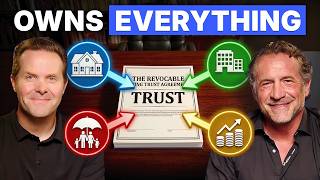
Mark Kohler and Matt Sorenson explain why a revocable living trust should own your real estate, business entities, investment accounts, and life insurance policies. Half of Americans lack even a basic will, leaving assets exposed to probate and taxes. Most trusts cost $2,000 to $4,000 and bypass probate in every state.
Chapters
50% of Americans don't even have a will. That means 50% of you listening, if you don't have a plan, a lot of the assets, seriously, that you've worked so hard for are going to be subject to waste, taxes, family bickering. The list goes on and on. Dropping money in their lap could be the worst thing for them. You want to be rich? Do what rich people do. And it's not that expensive.
A law in every state says you can just set up a trust and bypass that.
How big of a pain in the butt is this? Does it need a tax return? Do I need a tax ID number? And what do you mean put everything into it? Welcome everyone to the Main Street Business Podcast. My name is Mark Kohler. I'm here with the illustrious Matt Sorenson. We are here talking about estate planning. One of the topics all of you have been dying to talk about. What to do about a will and a trust. Maybe, maybe not. But we've got some important info and it's going to be so good.
I like how you said we're dying. Everyone's dying to talk about it. No, they're just not wanting to die. And they don't want us to be talking about how they're going to die. But that's what we're doing today. We want you to be safe and protected and really your family and loved ones after you pass on, 'cause you're not immortal and all of us will die one day. But this is important 'cause we want to talk about how everything needs to be in your trust. Your trust is this one document in your life that needs to be comprehensive about what's going to happen when you pass on, and your trust should own everything.
Now, this what we just said is actually a debatable statement 'cause I'm getting lit up on YouTube right now, by the way. Ah, there's my Rockstar for the bid morning. I only get one a day. Yes, my doctor, I just need to tell you that. But this is something that people do debate. What is everything? Is it your vehicles? Is it your crypto wallet? Is it your stock brokerage account?
I mean, there's a lot. Your retirement account, you know?
Yeah.
What about beneficiary designation? We're going to dig into it.
Yep, we're going to tell you because we've been doing this for 20+ years. We've kind of seen front, Beginning, ending, in between, train wrecks, all at all. So we're going to hit it. Why don't you give the basics here so everyone's on the same page?
Let's hit a few things. Just, we want to get everybody up to speed on this. What we're talking about is your revocable living trust. We're not talking about some crazy trust or constitutional trust or stuff to avoid, you know, the IRS and all that BS. We're talking about the basic family revocable living trust. We're using this trust to pass on our assets when we die. A lot of people think, well, I have a will, Matt. Yeah, great, you have a will. Congratulations, when you pass away, your family, your surviving spouse, your kids that are dealing with the mourning of you being gone, are going to have to take this will to court in every state where you own real property, by the way, to get an approval from a judge to say, "Okay, we can pass that will on," after a contest period. Most states have fees for probate.
Yeah.
You don't want to do that. The law in every state says you can just set up a trust and bypass that. Easy peasy. That's why we like this trust. We can avoid probate and you can bypass having to go to court after you pass on.
Yeah, and a lot of other people are going to say, "Well, I have a will. Why do I need to worry about this?" Well, you may have a taxable estate and I'm not just talking about millions of dollars for federal estate tax. There are 7 states that have estate tax that kicks in at $1 million. And so now we have methods to get around estate tax, possibly with a trust. And we need to make sure we've got a trust that has a plan. We're just not dumping money into in the kids' laps. Yeah, the will might say, here's who gets what, but I'd like to put in some when and how. So this is about that trust. And I want to reiterate one last time, this is not an asset protection trust. Some trust that you're going to hide or lock down assets, whole other topic. This is the trust everyone should have. I argue everyone now.
Yeah, everyone should have it. At least if you own real property, like you own your home, you should have this, or maybe you have more than $250,000 of other assets, You need to be having a trust.
Oh, but I'm not married.
For that, you need it even more.
But I don't have—
That's where it's gonna get your estate.
But I don't have kids.
Also, you need it even more.
But I'm in my 20s.
Well, maybe not.
Well, oh, but I'm kicking ass. I got a business, I got a rental property. Oh, I agree with you. I don't know, you see, that's what I'm saying.
Yeah.
Everybody's got these excuses. Come to find out, I think 99% of people should have a trust.
I do too, I do too. And we're doing an estate plan special, by the way, at our law firm, KQS Lawyers, right now. This is why we wanted to talk about this. You can save a couple hundred bucks $100 at least on your estate plan to get it done. We want to incentivize you to get this across the finish line. So hopefully you'll learn something today, but even more importantly, hopefully you take action and get your estate plan done. If you're someone sitting there that's like, oh, I haven't done this yet, let's get it done. We can get it, our law firm, done quickly and affordably with amazing attorneys that are helping clients across the country.
Yeah. And I want to just add one last thing. 50% of Americans don't even have a will. And That means 50% of you listening, your dad does not have a will, and it is Father's Day. And I would love if you would give your dad the gift of an organized estate. And you're actually kind of being passive-aggressive because it's going to help you.
Yeah, he's doing it for yourself.
You really are. You really are. And so I just think, um, this is such an important opportunity to remind your parents that you can help them get organized. No one wants to talk about their mortality, especially Grandpa. So Let's do it for Father's Day at the very least. So, okay, let's say you get your trust. You're like, "All right, Mark, I'm going to do this trust thing. How big of a pain in the butt is this? Does it need a tax return? Do I need a tax ID number? And what do you mean put everything into it?" Matt, can you please lay out how easy it is?
The trust is pretty dang simple. It's a document that's going to have some decisions in it. Who gets what? You can put restrictions on whether they can get it. You're going to list maybe your kids, your spouse's beneficiaries, You can put restrictions on, maybe they have a drug or alcohol condition, they're bad with money, they got judgments against them and creditors chasing them. You can restrict it so they don't get distributions and the trust doesn't get wasted.
That's the when and how.
Yeah, that's the when and how. So it's this document that says all this stuff, who gets what, under what conditions. And you also appoint someone called a trustee who carries out all of your wishes, who has the authority without having to go to court or have some judge say this is okay to distribute your assets according to your wishes in this trust document. But the trust, it's not filed with the state. It's not recorded in your house. This is a private document you get to keep. Your bank or financial institution, some people may want this as you're starting to add assets. We'll get to that here in a second. But it's simply a document, no tax return, no tax ID. Don't stress about that stuff.
I know, and it's so hard 'cause we'd like to talk more about the functionality of this trust, but the goal here is to tell you what you should put in it and what that means. I do want to take away this initial concern many people have. Well, this is expensive. I'm not rich enough. People, you're going to spend $2,000 to $4,000, somewhere in there, maybe to do it right. If someone's quoting you $10,000 or more, get a second opinion.
Unless you got a very large estate, yeah, get a second opinion.
Yeah, seriously. And this is something that can live with you the rest of your life. I had the same trust, I'm a lawyer, and I had the same trust for 20, 25 years until I modified it after a divorce. It's really, you got some situations with family, you might, amend it, but you get to. It's a revocable living trust. So it's very affordable to implement. You can always change it later. But once you die, it's locked down.
So. I think that point about always being able to change it later is important to get people across the finish line because a lot of people think, "Well, I don't know everything that I want to happen. I don't want to make a mistake." Well, just get it done. Not knowing everything and doing nothing means you solve for nothing.
And it's far worse.
And so, yeah, just like get it done. And get the 99% of it figured out. And if you change your mind next week or next month, you have an epiphany, you're like, "Oh, I meant to do this," add an amendment. It's simple and easy.
Okay, now before we talk about what goes in your trust, maybe just say how. Your trust is going to get a name. Let's call it the Green Tree Trust dated July 4th, 2026.
Okay.
250th anniversary of the country. You want to remember the date you did your trust? Fine, you get to choose the date. The day you sign it may be a little different than the date the trust is dated. That's okay. Some lawyers are anal about this. "Well, we got to date it the day you sign it." No, you don't. You can date it reasonably close to when you execute it and give it a unique name. I typically don't like it to be your name. Call it something innocuous. There might be some privacy benefits in some of these assets. So you give it a name, you give it a date. Moving forward, anytime you buy an asset or open an account, We're going to talk about those types of assets. You're going to say, "Oh, put it in the name of my trust." That's it. That's how you did it. The trust is now funded with that brokerage account, that crypto account, whatever it is, piece of real estate. An LLC is now in the name of the trust moving forward because you used the trust name, not your own name. Assets you already own, we've got to transfer in. And that could be through a special document like a stock transfer agreement, a membership transfer, a deed. Calling up the brokerage, calling the insurance company and do a change of beneficiary. We can get into, but how you do it, don't stress about. Every asset will have a little different procedure. But you're going to have a name for your trust.
Yeah, and I thought you were, I didn't, Green Tree Trust. I thought we usually like the Treadstone Trust, Blackbriar Trust.
Blackbriar, yeah. That's good, Blackbriar. That's where it's all at.
If you know, you know.
But they shut that down. They shut down Treadstone or Blackbriar?
I think they're both shut down. I think Jason Bourne, you know, he made sure that it was all shut down.
What was the one on Wall Street first? Blue, blue.
Oh, Blue Sky? No, not Blue Sky.
We'll get it before. Angel, our producer, we need to know the name of the company in Wall Street.
With Charlie Sheen.
Charlie Sheen.
Yeah.
Okay. All right.
Okay, so we can— Before he went crazy.
How to put these things in. And this is probably a good point to make too. We have so many podcasts on the different details of getting this trust up and going. When you do a trust with our company, you're going to meet with a real attorney on Zoom no matter where you're at in the country and get all your questions answered too. Don't feel like you have to AI this, learn it all on a podcast. You want to trust the process to be handheld with you, with your attorney. Let your attorney help answer these questions. We just want to give you some framework here.
Yep.
Okay, what assets do you like to see in the trust?
All right, I think the very first one is going to be your home. Okay, your home is likely deeded into your personal name. We want the home deeded into the trust.
But I have a mortgage.
The mortgage company does not care. There's something called the Garn-St. Germain Act that says you can deed it out of your name into your trust. I love him. Yeah, Senator Garn from the state of Utah.
Yeah, that's true. I mean, he's right. I forgot about that.
Guy went to the moon. He was an astronaut, okay?
There you go. I'll do whatever he says.
You weren't expecting that amount of knowledge there, were you?
Whoa. Open up my old piano mouse.
Okay.
Wow. Pray tell, go ahead, you have the floor.
Yes, yes.
I'm done.
Stay over there, I'm talking, okay?
Okay, all right.
All right. Okay, so, but that law was important 'cause it said, hey, the banks can't call your note due 'cause you transferred title out of your name. We put it into your trust. And that is the number one asset we want to get in your trust name. I just bought a new home, actually, this is interesting. And when I was getting the mortgage, I was talking to the bank. They assumed I would have a trust on title. They're like, "What's the trust name that's going to be on title?" I'm like, "Maybe they don't—" They went directly there? They went directly there.
Wow.
They knew me, you know, so I was, maybe they were like, "Okay." Well, you are a big deal. Yeah, you know, if you want to flex on people, be like, "I'm doing this in my trust." They're like, "Oh, that must be somebody." So anyways, but look, you can either buy the property directly into the trust if you're buying new property and you have your estate plan already in place, or if you already bought something or the mortgage company's being a pain in the butt, Just close on your personal name and deed it over the trust later.
Home, number one. I'm going to actually go broad here too and say, I think there's four main assets, your home and any other real estate that it could be a piece of land.
Yeah.
It could be— Grandpa and grandma. Yeah, cabin or ranch, something you're not renting. It's personal use, second home, anything like that. That would be category one, just like real estate. And your home is going to be the primary. Number 2 would be any business entities like an LLC or a corporation, LLC that owns rental property. Even if it's an operational company, the IRS does not care. It's called the see-through trust. So you're still going to report the business operations on your 1040.
Yeah.
Or on the business return. Don't worry about tax returns. It does not affect any of this. Number 3 would be investment accounts. We'll get in more detail there. And number 4 would be life insurance. So that's, I kind of want to give that roadmap here. Those are the big 4. Personal property is that one we'll debate at the end, like cars, RVs, stuff like that. But number 1, real estate.
Real estate, and that's just going to be a deed, 'cause those are personally in your personal name right now. You're going to deed them from your personal name into the trust. Let's hit the business entities.
Yes.
Here, 'cause you might have the rental property, but that rental property is not deeded in your name. The rental property is in the name of your LLC.
Which again, mortgage companies do not care.
Yes, and so—
You don't worry about the due dates.
The title's already in the name of the LLC, but what are we going to change? We're going to change the ownership of the LLC. We want to update that so the LLC is not owned by you, it's owned by the trust. And that's simply a membership transfer. It is not a complicated change to the LLC. In most states, it's just an internal document change that we're doing with something called a membership transfer. Transferring ownership from you or you and your spouse over to your trust.
Now I have to digress and say this too because, If some of you set up your LLC online and called it member managed, you, now you've got to file an amendment with the state to let them know the member changed. This is why doing your estate plan can be a great time to get better organized.
Yeah.
Let's look at your LLCs. They should all be manager managed. You might clean 'em up, get the right corporate book, do your minutes, get the right ownership done. And some of you are like, "Yeah, that one sheet of paper in the drawer probably needs to get looked at anyway." And so, this estate planning process, it's really a good time to look at your overall picture. And I'll just quote infamous Kevin Costner, "If you build it, they will come." You know, if you're trying to build wealth, you gotta have some infrastructure.
I always thought that line was total BS, you know?
Well, it is a sci-fi movie. You knew it was sci-fi, right? Or did you really think the Yankees showed up in the field? Yeah, I was like—
I was pretty sure that was not, you know, it was fiction, right?
Yeah. Yeah. Sorry.
Sorry about the spoiler alert there. That was not really nonfiction.
You really thought the 1920s Yankees—
Based on a true story.
Yeah, I know.
Based on a true story.
Right. No, no. Yeah. So yeah. But no, this is a great time. Get organized, people. You wanna be more successful and build what— this is what rich people do. You wanna be rich? Do what rich people do. —And it's not that expensive to get organized.
Mm-hmm. All right. Okay. Well, let's get to—
Investment accounts.
Investment accounts. And let's break these investment accounts up into two different categories. I think category A is brokerage accounts, basically non-retirement accounts. You might have an annuity you personally own. These are investment assets, typically with a brokerage company or an investment company. And this is through an account. Let's say it's a— TD Ameritrade, all right, or Charles Schwab. And the name on the account is actually you. It's your name. It's on the account. You log in, it's your name on it, but you'll have something called a beneficiary on it. And this could be a bank account too. We should have—
I'm sorry, we got CDs, your regular credit card.
Your savings account, money market account.
It could be crypto.com, crypto.
Well, let's come to crypto separately.
Oh yeah, we should because keys and wallets can be weird. So.
Now if you have a crypto account at like Coinbase or an institution, Gemini, places like that, I kind of lump it in this category. But basically, all of those institutions will have something called a payable-on-death or beneficiary designation that basically says, whoever is listed as the beneficiary on this form is going to inherit this account. We don't care what's in a will or what's in a trust. We're distributing this asset that you were holding with us based on what's on the beneficiary designation. And it's the same for your IRA or 401(k). 401(k). What's on this, sometimes called POD, not POS, payable on death beneficiary designation. That's a different thing.
Yeah, that's right. Some may call it a POS, but it's really a POD.
That was our cars in college. Yeah. So, um, but these payable on death forms that you're putting on your account, and many times it's something when you set up the account, it was on the application, who gets the account when you die. If you're like unclear on that, this is a great opportunity again to look in on this. But the point here is This is where you list your trust. You can be the owner during your lifetime, but the best way to just manage this when you pass on is list the trust as the beneficiary upon your death.
And you may say, well, I referred to it in the trust or referred to it in the will. And Matt kind of alluded to that, that, well, I wrote it down over here. Obviously the family will honor that. Yeah, well, your son and daughter, they still hate each other and are fighting. They're not going to deal with that properly. You need to designate on this form so Merrill Lynch knows, "Oh, it goes to the trust." You can't say it in the trust, you have to say it on the account so that Merrill Lynch knows you, while you were alive and well, signed here and said, "That's where I want it to go." You can't just wish it so on a napkin and put it in the drawer and Merrill Lynch is going to honor that. That's what probate's for, which you're trying to avoid. So, okay. All right. Number 1, again, let's review, real estate in any way, shape, or form. 2 are those invest— business entities, LLCs, corporations. Number 3 are these investment accounts in any way, shape, or form, and retirement accounts are kind of like that, kind of all lumped in there. Now, life insurance. This is one that gets debated 'cause people are like, "Well, life insurance avoids probate. I can designate my kids on my life insurance application that they're the beneficiary." Yeah, you can, but that was 10 years ago or 5 years ago. How's your kids doing? Are they able to receive this money and handle it properly? Wouldn't you like to have some strings, some guidelines? Yeah, sure, it could avoid probate, but is that in their best interest? And I think even dropping $500,000 or $1 million, 'cause life insurance comes in chunks of $500,000 or $1 million or more. Do you really want to dump that on your kids' life at age 30 when they're in a bad marriage or going through a difficult time or maybe have an addiction they're dealing with? Yeah. Dropping money in their lap could be the worst thing for them.
Or maybe you have minor children. Maybe you're in your 30s or 40s or 50s even. You got minor children. I guess you can be in your 60s. Why am I qualifying that? But you have minor kids.
You've been to Vegas lately? There's so many grandpas there with their daughters. I just love it.
That's true. I see them.
They're adorable.
In Scottsdale too. They're there too.
Like, man, these old guys with their young daughters out there having dinner, they're so nice.
And they get all dressed up for it.
Daddy-daughter time. Yeah. Yeah, it's so special. But anyway, no, you can have minor children that do not need to receive money at age 18. So I prefer name your spouse primary beneficiary if you're married, fine. But contingent beneficiary on that life insurance application, put the trust. And if you already have life insurance, it's called a COB, change of beneficiary form. You just call Mutual of Omaha, whatever. Mutual of Omaha must be around.
It's a thing, I think. Yeah, it's still a thing.
I love that show in the '80s. It was so good watching the lion in, eat the antelope, you know.
The commercial for it?
No, the Wild Kingdom. Did you ever watch Mutual of Omaha's Wild Kingdom? I don't remember. You're too young. Oh my gosh, I'm embarrassed. Someone else? Okay, anyway, you call the life insurance company, whoever, and you say, I want to change the beneficiary to my trust. And they're like, okay, sign here. Done. Are you alive? Yes. Okay, you can sign this. So I think life insurance is important to go in the trust.
Okay. Let's hit your personal assets.
Ooh, this is going to be a fight.
Yeah, well, this is a tricky one. I think there's some of these personal assets that are, let's say personal property, are assets for the most part that don't have a title. Now you might have the boat or the car or the RV that has an actual piece of title that you could update and put it into the name of the trust. And we can debate that. I would not put them in the name of the trust. Let's just take our stand now.
Okay, I would put it in the trust. May I give an example? Go for it. Okay. You've got a kick-ass Malibu ski boat. Now, back to the '80s again, you could get a ski boat for 50 grand, something like that. Have you been to the boat stores lately?
What I do know, what I do know is that you could go on a pontoon boat with your dad, or you can ride and suck my wake with Uncle Roman. Which one do you want to do?
That's right, that's right. Oh my gosh. Well, I just, if you haven't been out shopping for a boat—
Suck my wake, sorry, Dad. Yeah, yeah, sorry, Dad.
Oh my gosh. If you haven't been out boat shopping lately, they are more expensive than a house. I mean, these ski boats with the racks and the wave this, and you know, you're gonna surf behind it, whatever. You gotta have all these wake adjustments and blah, blah, blah, blah. You can spend half a million dollars on these ski boats. So you buy this ski boat, And of course, you put it in your own name. Maybe there's a loan, maybe there's not. And you're lucky enough to have one of these cool ski boats that you put on the matching truck. Have you seen these going down the freeway on a Saturday morning? Unbelievable. There's probably like $750,000 driving down the road with this F-350. But anyway—
Am I going to see you pulling a boat here soon? No, no, no. You're buying a boat.
Not a prediction.
I can hear it.
Not a prediction.
I can just see Patty. She's like, you're getting the boat.
She's already got a boat. But it's not one of these.
Okay. Okay. All right.
All right. She does love boats. Way too much information about the boat. Yeah, you're like, sounds a little personal. We gotta move this along. Yeah, yeah. Okay, so you have this boat.
Yeah, we got it.
We got it. Okay.
There it goes.
And you die. You die. Sorry. You just, the Snoop boat, you don't get to enjoy it. Sorry, you can watch from heaven and see the family, you know, go out on the lake on Saturday, but you're a goner. Boom, out of the way. Okay, now, your son— there's a point here that's very important. Your son loves this boat, and he— and ironically, so does your other son or your other daughter. You got kids that are like, oh my gosh, if Mom or Dad were to die, I want that boat. Now it's a race to the DMV.
Okay.
Because whoever gets to the DMV first with that death certificate, they're going to title that boat in your name. 'Cause the DMV is like, "Oh, they died? Show me a death certificate. And you're next of kin? Great." Guess who title just transferred to? $32.19, whatever. This boat now transfers to the next of kin and outside the trust. Maybe it wouldn't hurt to have the trust own it and say, "Hey, when it comes to this boat, I want to put that cool boat in an LLC. I want the kids to share it. Everybody gets 3 weeks out of the year, they can sign up for it.
The manager's going to rotate." And you have a game plan for the use of this boat.
And it stays in the family with proper rules of use. And no one's going to rush over and steal it out of the estate by getting to the DMV first. This is a big deal. We're not talking about a $250, you know, e-bike. We're talking about cars that could be collectibles, these expensive cars or boats. I think they need to go into the trust.
Yeah.
Your turn.
This is one of these things where is the juice worth the squeeze, okay? So is the hassle of going to the DMV, a place known for convenience and doing things very easily, Is this— do you really want to spend your time updating the title?
That hurts, that's a little low blow. Or do you want to be out on the lake actually enjoying it?
Okay, all right.
You're going to be dead anyway, who cares?
Exactly.
Let him title it.
Let him have that. So for most assets, obviously, like we've just talked about the main 4 categories, let's get them in the name of the trust. I think it's debatable on this. I probably wouldn't do it. I haven't done it for my own, even cars and stuff like that. Because as Mark said, next of kin, surviving spouse or kids can go to the DMV, MVA, whatever in your state, show a death certificate and say, "I'm next of kin." Sometimes they check ID and they kind of look into it and they're going to transfer title into your name. Yeah.
I will ask them—
Actually, yes. And yeah, okay.
And I will say per asset decision.
Per asset decision, yeah. Now you would say though, in your trust, there's a section and you have a declaration of personal property where you say, My daughter gets the boat, my son gets the guns, so-and-so gets the piano or the musical instruments or the jewelry or whatever. You can specify that. It's not that the trust needs to transfer title or anything, or the title needs to be in the trust. The trust still controls.
And so if you— With personal property.
With personal property.
If you were listed as the one that gets the boat in the trust, even though the boat was still in your name, you're going to have a legal, and the trustee's going to be obligated to say, "Oh, we got to get the trust over, or we got to get the boat over to you." Yeah, and now I want to address something that's, I've got to, and we're going to wrap it up on this point, but I am doing a post today on YouTube 'cause I've got some haters that are saying, "Whoa, whoa, whoa, Mark, you don't want to put the boat," staying with that example, "in the trust name 'cause you just made the trust, you know, if anything goes wrong with the boat, all the assets in the trust are now at risk." You know, you're just, exposed all the assets of the trust because now you've got this boat in the trust. And so, oh, all the liability of all the assets in the trust are now at risk. And people, this trust does not give you any asset protection anyway, whether it's in the trust or not. And the boat freaking runs over someone that was waterskiing. Hold up the little orange flag. You got to hold up the little orange flag. I'm familiar. Patty's a— she's strict.
Is she on the flag?
Oh my gosh. You got to have that flag up because you don't want some guy with his big old boat You know, Rodney Dangerfield coming by. I get it. Yeah, it's scary, it's dangerous. So you don't want that liability, but if it were to happen, you're going to get sued anyway, whether it's in the trust or not. A trust is not for asset protection. Did you guys hear that? This is for avoiding probate, planning for your assets for the next generation, business and asset continuation plans, keeping life simple, getting organized, maybe some privacy, No asset protection. Putting it in the trust doesn't matter. Keeping it out of the trust doesn't matter. You get sued, doesn't matter.
Yeah, yeah, and yeah, the trust is something that's— the legal purpose of it is it's passing on. It's passing your assets down once you pass away. During your life, the IRS, a court, they act like the trust isn't there. It's just you. Okay, there is no legal function of it really. It really triggers in and takes effect and is built for when you pass on to get your assets to your loved ones with the proper restrictions. So we want to make sure your trust owns everything, or I'd say mostly everything. And if it doesn't directly own it, we had a plan for it in the trust at least.
Okay, now here I'm going to give my best shot at a call to action. Then you can take it to the— Clean it up. Clean it up, yeah. Okay, people. And I'll bear the, I'll break the bad news.
I appreciate that.
You're all going to die someday. Sorry.
But you're going to heaven. I'm good cop.
Oh, okay. You're a bad cop. Boy, everybody goes to heaven. Okay. Wow. In your little world, everybody goes to heaven.
All of our listeners.
You're watching other people's stuff. There you go. I don't know. You heard it first here on the Main Street Business Podcast.
If you listen to this podcast and you're on this channel, you're going to heaven.
You're probably going to heaven.
You're welcome.
Yeah. Yeah. You're welcome. Send yourself, send a self-addressed envelope to, with your thank you card and some cash. So you're all going to die someday. And if you don't have a plan, a lot of the assets, seriously, that you've worked so hard for are gonna be subject to waste, taxes, family bickering. It, the list goes on and on. And if you, do you really want some of those assets ended up in some lawyer's bank account or the government's bank account? No, you do not. Please get your estate plan done. You can always change it, modify it, improve on it. And having nothing is worse than something that maybe needs a little update once in a while. It's okay. Call our office. We got a killer discount once a year between Memorial Day and Father's Day. This is it. You call up quick, you can grab it, you're off to the races. Then you can enjoy your lake time on Father's Day and not worry about this.
And Mark's going to help you.
I brought that all together. I brought that all together.
And I like how you used a killer discount just in time because you have an estate plan now.
If not, be worried this weekend. Lightning, you know, gonna happen. Bam. All right.
Well, thanks everyone for being on here. Make sure you're subscribed, giving two thumbs up, kudos, whatever, sharing it. And let us be of service to you if we can. Enjoy Father's Day for all the fathers out there. Thank you for all that you do for your families. And we'll see you next time on the Main Street Business Podcast.
More from MARK




The secret to managing your family's future #financialfreedom #estateplanning #shorts



Moving Property to an LLC: What They Don't Tell You #realestate #investing #tips


