Future of LMN Software with Granum CEO Mark Sedgley
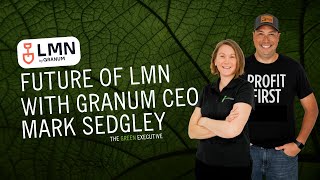
Granum CEO Mark Sedgley outlines plans for LMN software through 2026, including AI features like voice-to-text and note cleanup, a unified CRM connecting estimates through job management, and mobile improvements with potential Apple CarPlay support. He emphasizes customer feedback drives development and customers must adapt their processes to the software.
Chapters
Good afternoon or good morning, everyone. This is Adam Lineman here, the green executive, and Sarah with us, the Green executive as well. We have special guest Mark Segli with us here today from Granum. Mark, thanks for joining us.
Thank you. Obviously, very happy to be a part of the show, Mark.
So really we just wanted to kind of get some more background on yourself and Granum, element by Granum, and kind of hear where that's going within the next maybe six months and then in the next few years and then just kind of get to know you a little bit more. And so we'd love to kind of dig into some of that if we can, sir.
Happy to. Thank you.
Go ahead and tell us a little bit more about yourself. You've been in this position here with, on the LMN side for just maybe about what, a year or so at
this point in time? Yep, 14 months. And then I was the CEO of Single Ops kind of singularly for about a year and a half. And so I guess I've been in the green industry. This is my third year, so I'm a relative rookie in comparison to most people that I meet. And I've been in software for most of my professional life. You know, long story short, like, similar to a lot of folks that probably started in the industry, like, I started off my very first kind of like, job, I put a lawnmower in the back of my trunk and a weed whacker and a bungee cord to keep the trunk closed and went door to door and, you know, asked people if I can mow their yard. And I think at that point I realized, like, hey, I really enjoy kind of, like doing my own thing, you know, and that just stuck with me. Went to college, got the single most useless degree you could ever imagine for what I do, which was an English and East Asian philosophy major.
So what was your intention? What did. What did you want to be when you grew up?
At the time, my dad is a solo practitioner for, as a lawyer, a general counsel, and Big Rick Sedgly, and he's like a dying breed. Do you need a will, he's your man. You need a divorce, he's your man. If you got caught shoplifting, he's your guy called Big Rick, you know, and so he kind of does it all. And so I think I would have thought in the back of my mind somewhere that I was going to go to law school and potentially take over as practice and kind of grow it into something a little bit more modern, for lack of better terms. But life kind of Happens. And so I started work. I helped start a school for English and Krakow, Poland, which is where my wife is from. I've been with my wife Dorota since I was 18. And we moved back to Poland. We didn't intend on moving back, but we went to go for her sister's wedding. And then the American government said, hey, she has this visa stipulation. She's got to serve out a two year kind of return to her home country thing. And so we ended up.
Surprise.
Yeah, exactly.
That's a big surprise.
That is a big one. And so we ended up staying in Krakow for about two years. I helped start a school for English there, and my partner and I, we built it from the ground up, literally. And we opened the school with about 300 students, and it was a really good business. And that's kind of where I got, I think, exposed to like all the ins and outs of starting a company, building a company, the ebb and flow of that experience. Then we came back to America. I went to work for a huge corporation called Cardinal Health. And as a Fortune 15 company at the time of many billions in revenue, 60,000 plus employees. And I got put in their kind of sales management, you know, track. All I've ever done is sales, you know, and marketing. And so I did very well there. And then kind of two years into my career there they. There was a big change in leadership and all that stuff and I was asked to leave. I was fired. And so I thought it was the end of the world. Came home, looked my wife in the face and said, hey, I don't have a job. You know, surprise again. Yeah, exactly. So maybe we should move back to Poland and kind of start something. Maybe I should think about like, my network, maybe I should go back to law school, you know, etc. And then literally the next day I got a guy that I went to college with called me and said, hey, we've got this startup called Member Clicks. We can't sell the software to save our life. Would you come take a look? And so I went and took a look, helped them get it off the ground. And then 18 years later, and many, many millions in revenue later, and hundreds of employees, we sold it to a strategic. I took over a CEO kind of 10 years before we sold it. And ever since then, I've taken over for founders. And that's how I found myself here. I took over for nine founders in the towing industry in a company called Tracthera. Helped them combine with another company and then my former investors and Member clicks were a minority investor in single Ops and they asked if I would come take a look. Fell in love with the green industry in general. Single ops was more tree care focused than landscape focused. And looked at the thesis and you know, at the end of the day our mission in life is to grow, you know, software companies or that's my mission is to grow the software companies. And so you know, landscape, the landscape market is much larger than the tree care market and very under penetrated still to this day, which is good. And so I said we can either build a software that works well for landscapers or we can buy it. Obviously I chose the second one and we bought Element last year in October. And the reason why I love Element so much and single ops is they serve, we serve small to mid sized businesses and I have a deep passion for small to mid sized business entrepreneurs and I think they're the heartbeat of our society, I think they're the fabric of our economy and I think without small to mid sized businesses, you know, nothing really works very well in capitalism. And I'm a huge capitalist and I absolutely adore the green industry. It's just such an incredible mix of humans that are hardworking people. Focus, gracious. I've been welcomed into this community with open arms and you know, I'm terribly grateful to be in the position that I'm in. And we fast forward a year, you know, we had elements, single apps in Greenius and internally we were really focused on creating one company, one team, one mission. And it led to we need to restate who we are to the marketplace. And it's also very much in line with the green industry. Has a lot of players, Service titan through Aspire, work wave, real green, you know, explorer, service, autopilot, boss, jobber, etc. I think the one thing that we really wanted to make sure we said to the green industry is like all those companies are awesome companies and they serve a really big purpose in the greater ecosystem of contractor led businesses because they, they really do focus on construction and home services. We focus on green. And so the launch of granum, which the origin of the word granum is speed in Latin, is designed in large part to say to this community, to you, we're here, this is where we're planting our roots. And we're not building for H vac or roofers or electricians. Those are great hardworking human beings, right? But we think the competition can build software for them. We're building for landscapers, we're building for arborists, we're building for irrigation specialists. We're building for snow and ice. And it doesn't matter if it's residential maintenance or commercial maintenance. Design build. We're building for the green industry. And that's our vision, is for granum to become synonymous in the green industry. When people think about the tools that they need in order to succeed, a lot of our customers immediately go to like Caterpillar or John Deere or like, I need a great skid steer or a ditch witch or, you know, you name it, bucket, truck, crane. We really want them to think about granum in that same breath. You know, it's like, yeah, but if you really want to be successful, you need to implement a software platform like Granite, you know, and that could be through our LMM platform or single ops platform, or greenhouse platform for educational development, tree or landscape. And I think ultimately they'll start to blend together into one kind of singular platform.
Awesome. AI has been a hot topic lately in the green industry.
What's that?
What's AI? Will AI be integrated into the LMN platform? Or really for any of the others, Greenius and single ops? But we're wanting to focus a little bit more on the LMN side today. Will that be integrated in the near future? Or is it maybe now that some users don't know about?
Well, I think most consumers don't realize they've been using AI for years and years and years. You know, if you bought anything on Amazon or you've done a Google search, you're using AI, Right? I think when most people are talking about AI today, they're talking about that consumer experience of like a chat, GPT companion or anthropic, whatever your chat, your GPT du jour is, your model is. And so in a lot of ways, yeah, AI is already at work in the platform. You know, when we talk about route optimization, like those are algorithms that are at work based off of inputs and data, and it's collecting that data and spitting it out. But in relationship to the question that's being asked today and the consumer's experience with AI, like directly, yes, Element will start to incorporate AI centric functionality and features. And actually our first AI rollout is happening in beta in the next two weeks, which is essentially a note prompt cleanup tool. A lot of our customers, their folks go out into the field. It could be an estimator, it could be somebody on the site. And you know, you're dealing with elements, right? And so you want to be able to put notes in. It doesn't matter how you put them in or what language you put them in, or whatever. But the people in the back office want them a certain way, like, hey, format these notes on customer issues, gotchas, supplier issues, property issues, whatever it may be.
Formatting is so important.
That's right. And so there's no way to structure that, like, dictate structure today in the platform. So the first AI tool that we'll roll out is a way for our customers to say, like, hey, whenever the notes get taken, streamlight it into the structure once they hit submit. Right. And then that'll eventually evolve to they can just voice it into the phone and they can speak whatever language they want into the phone, and it'll still do the notes in the appropriate structure and format.
I know you just made a lot of people really happy when you mentioned the language, because that comes up fairly often. We know we can put the app structure in a different language, but to translate the notes, you're going to make a lot of people cheer for that one.
Yeah. And so it's an iterative process. We'll roll out the structure first, then we'll bring out the language, and then we'll bring out the voice to text, which is how we like to do things. Like, we like to start with the smallest thing and then build out from there. Because if you try and roll out the whole thing at once, it's guaranteed to have a bunch of bugs. It's also not what people really wanted. And we like to get our customers feedback along the way versus saying, here, this is it, it's done. You know, and so that's really important. And that'll be the first experience. There'll be much more along the lines of that throughout the course of 2026. And, you know, a data companion, you know, the kind of experience that you've gotten used to anywhere you go now is like, hey, I'm your AI companion. Ask me anything. The trick to that, though, is you got to be really, really thoughtful about that AI companion, because if it gets it wrong once, you're not going to use it, and so you're not going to trust it. And so I think granum and Element in particular is taking a very methodical approach to make sure we've got really good data that's piping through to the AI experience. We've got really organized structure so that the data that shows up can actually be acted upon, because it's no good to source up data if you can't actually do anything with it. AI is one component of an overall strategy to improve the end to end experience for our customers. Starting from how you consume a potential customer or prospect and so building out a much more robust CRM experience where you can kind of manage that account, you know, in a centralized way. Communications, estimates, proposals, invoices, et cetera, all being centralized into a true CRM type tool all the way to building your budget and your estimate, which we do pretty well, like I would say the best in the industry for the type of customer we serve to building that estimate into a proposal and then converting that proposal into an invoice and then getting paid and scheduling the job and managing the job. We think all of those are like key inflection points along our customers, customers journey with them. And we want to make each one of those inflection points, you know, the moment they contact you, to the moment they pay you, along that continuum, a much better experience. And so that's what we're focused on in 2026, is that end to end experience, dramatically improving it along the spectrum of your customers experience. Because when I go visit people in the field, the feedback I always hear is like, well we really like for you to change this. Why? Well, because like when I send it to my customer, or when my customer gets it, or when I have to manage a customer's expectations, it all revolves around in some way, shape or form looking good for the customer. Right. And so I think if we think about it that way from a development perspective and engineering perspective with like how does this translate to the end customers experience? We'll build a much better platform for whether you're residential maintenance design, build commercial snow or ice, like you know, it doesn't matter. It's like just make this experience way better for that end customer. And if you do that, you'll probably end up with a lot better product. Simpler to use, fewer clicks, easier to train new employees on, which is a constant kind of thing in our customers lives. And so I think the general theme and the platform is it'll get much simpler, much easier, much more powerful and much more insightful in 2026.
We're ready for it.
We all are.
We're ready for it. Bring it. Happy to hear it.
You know, so 2026 is going to be here in a month, less than a month, and then we're going to be right through that year. Is there anything that you would like to see the software progress to in the next two to three years?
I know that's pretty far out and
that's kind of maybe, maybe it's not even something we're getting, but something that you're like, man, I would really like to do this, but it's just not on the table right now.
Oh, there's like a million things like that. But like, I do think at the end of the day the type of customer we focus on, the overwhelming majority of our customers are over 15 million in revenue or less. Right. And the overwhelming majority of our customers do some form of residential maintenance or residential design build. Like that's just who we serve. Right. I would tell you, like if folks could view the element platform as a true CRM platform over the next two years, like, oh, this is actually my like system of action. I can do everything with a customer's profile centrally. Like, I can see all the communications, I can schedule their work, I can see all the invoices, I can get the communication history, I can communicate to the customer. Like if that becomes really powerful over the next 24 months, I think we will dramatically improve our customers, our customers experience because I just see it over and over and over again. It's like what, what's happened is, is there's like really good like bits and pieces of the solution, but there's no like connective tissue all the way across, like to simplify our customers experience.
And so I think, I think users would agree with you that there's a lot of disjointed or clunky components right now.
Yeah. And I think the majority of that though, if you really distill it down and this is kind of our job, right? When we go out and listen to customers and talk to customers and you guys have seen us out in the field personally, is like, what is everybody really asking for? Like, if I told you that everybody I went to was pounding a table and said I really want a good CRM, that's not what they're asking, but that, that is actually what they're asking for. And so when you, when I dig deeper and ask them like, well, what are you trying to like where, what is, what are some of biggest pain points and centralized data? Better reporting, better visibility. Right. Easier to convert because to me and a lot of your, you know, viewers, slash audience members will probably relate to. This is like an estimate and a proposal and an invoice is just a stage. Right. But in our system today, they're treated as like three separate kind of like experiences. But to me, like that's all just a stage in a custom, their customer's life cycle with them. Right. And in order to manage that well, like you need to have A strong CRM. It's like, okay, they're in estimate. They're in the estimate stage. Let's convert the stage now to a proposal. Great. Like that everything, everything seamlessly translates over, that gets recorded in the, you know, customer's activity and history and then they've approved. Great. Let's make all that super easy for them. So, like, one of the things we're rolling out this already rolled out in beta this quarter, was web proposals. It's like, okay, you don't have to download anything to PDF, you don't have to do anything, just sign right on the screen. You can do it on your phone or your PD, you know, iPad or your desktop, whatever, and you can approve it. And then the next phase will be able to. You'll be able to select and deselect services that you want and don't want, which is huge for, like, our kind of maintenance customers when they're selecting enhancements, et cetera, and just making that. And then now that's all been approved. Great, Convert it now to a job. Like, that's just a stage, you know, like, now they're in the job stage and we need to be able to manage that and schedule it. And so I think if you think about it as like, this is just a customer's journey with our customer, like, it gets a lot easier. And if, if the software starts to represent that in 2026, you'll know we've done a good job.
You've been out in the field, literally riding along, maybe even picking up a shovel. I don't know, but I know you've been out there with landscapers.
Yeah.
What were some of the aha moments that you're like, oh, we need to solve this, or, you know, crap, I had no idea this was a pain point for them. Is there anything that you can think of that kind of came to mind or comes in?
Yeah, I mean, I think, I think to me, like an area where I decided to point the gun from an investment perspective was we have to make the mobile application great. And so we've poured a ton of resources in there and there's been a ton of things being rolled out in the mobile application. And it's just going to get better and better and better, especially when we think about, like, you know, language synthesis and, you know, that experience. Right. The mobile experience is like, really, really important because it's the connective tissue of the field to the office and getting that connection really tight, which AI will help with, by the way, is really important. And so doing software for 20 plus years. My whole ethos is get out and meet with your customers and like actually see how they're using the platform. So the things that aren't surprising to me are like those things, it's like, hey, this is really hard to do this. Got it? Yep. I can see how that would be. Like you're going to find 100 of those and the only way you do that is by the way, going out and getting in the truck and seeing how somebody's like, you know, cramped on their iPad, etc. And so I think those things are like kind of like easy things to. But the big aha moments are the areas where we're already investing heavy, create a bit like a end to end experience for our customers. Customer and make the mobile experience great. Right. And there's a lot of stuff in that end to end experience. It's like heavy, you know, like big stuff. Right. And, but like that's the stuff you got to focus in on. Like go back to basics, build the foundation. Once the foundation is strong, then you can do all kinds of like bells and whistles and trinkets and fireworks, you know, from a feature and kind of razzle dazzle perspective.
Mark, kind of an ongoing criticism has been support. And we're talking about a lot of things that we're going to be getting which are super exciting and we want to, we definitely want to get them. How are we going to manage making sure that us as users are going to be fully aware of what's coming out and be trained on that. And you know, it's, it's been maybe a hyper criticism the last couple years of support and it's, it's an ongoing thing that is a growing concern and for a lot of reasons, not only new stuff, but existing things that current users aren't necessarily digging in and taking advantage of.
I mean, I think the good news there is I think customers always expect this magical moment where everything is different.
Yes.
That's not how it works. Right. And so like, you know, it's like it's not. I wish it was as like, kind of like transformational as like a backyard renovation. It's like, oh, it started off really bad and then nine months later when we got the project done, it's like Disneyland. That's not what it's like with software. What software is, is like this like long marathon that never ends. Right. And so, and the question will be is like, does the race get easier for our customers every step of the way? And that's how I think about investing in the soft. The platform because we're making major investments in our infrastructure. Like, I've shared that we've hired a bunch of engineers, a bunch of people. And Sarah, the kind of idea is like, well, sheesh, if you're going to start rolling out a bunch of new stuff, especially iteratively, like, small chunks, like, regularly, like every four weeks, how are we going to get trained on that? Like, how are people going to know it's there? Well, that's part of, like, understanding how to run a software company, for one, is like, well, you need a big product marketing team to make sure that you're putting together all the materials and training and guides for how to use that stuff. And then embedded in the app as well. You need a customer success initiative that's paired in tandem with that product marketing team that's like, oh, we need to have webinars and training for all this new stuff that's coming out, like, set up and communicated to our customers. The support team has to be trained and equipped to answer how to and why questions. You need more of those people, which we've been investing heavily in. We've hired more support and success people over the last six months to build out that team. And then I think what folks will feel over a course of time, which I know, like, we're getting a lot of feedback that they do feel it already, which is good. Which is, wow. We are getting new features and functionality and key areas where we've given you feedback. Thank you. It is easier to get a hold of people when we call now. Like, thank you. Right. And the training and webinar stuff that we're seeing, like, you see adoptions and utilization rates, it's slowly going up and to the right, which is what you want to see. Right. But all that stuff is just like a methodical march to a finish line that never finishes. Right. And so. And in order to be good at software, the customers just need to feel like the race is getting easier and easier and easier and easier. There's never this moment as well. Like, oh, shit, it's done. You guys did it. Like, it's all over now. Like, no, you know, because 12 months from now there's gonna be something else, and 12 months from now there's gonna Be something else, and 12 months from now there's gonna be something else. Like, that's the thing that you learn to kind of fall in love with with software, I guess you could say
it's a love hate for your users. Because we want that Finish line as a user. But I totally agree with you. You're. You're always just like in life, you're always learning, same as the software. And I think it's easy for us as users to get our tunnel vision. Like, hey, I come in and this is what I do. I do this and then all of a sudden, six months after a there, I realize, hey, that button might help me out.
Exactly. Or where did this come from?
Oh, it's been there a year.
Yeah, exactly.
I want to switch gears back to the tech. And you were talking about like, you know, working with an iPad, like out inside the field in the truck or whatever. One of, one of the users actually asked that I mentioned to you, and it was is they want to know if there's a way to get the crew app on Apple CarPlay for inside their trucks. I thought that was a great idea. I was like, that is really cool.
So get the actual app presenting in their truck so they can leverage it there. Yes, that's an interesting idea. Part of me chagrins with the liability of that concept, but if you're parked, I could see that being a good thing. But yeah, those are the types of ideas that, for example, if you're out in the field and you saw somebody messing with their iPhone, it would be easier if I could just go hands free and do it through the CarPlay experience of Apple. Right. So, yeah, I welcome all those ideas. We have this whole thing called product board and people submit ideas. We have a whole team that reviews us. We have a very large product management team now, which is really important to building a good product is a bunch of people thinking about and listening to and going out and talking to our customers. Because it's not just me that's going out to talk to customers. You know, that's the last thing you want is just, you know, the CEO going out and talking to folks. But you guys actually met Andrew, he's our head of product. But we also have a lot of team members that are going out and meeting with customers that are running point on key areas of the platform. And they're spending a lot of time with our customers seeing how they use those particular areas of our platform. So I love that type of. Yeah, that type of feedback is like, important that informs us.
And I saw some of the team just literally, you know, if they're in the area, just popping in, you know, for a few hours here or there and just visiting with. With some of the users. So that's. That's awesome.
Yeah, it's really important to us.
Question I have.
Okay.
Where do you see the landscape industry heading in terms of tech adoption? Realistically though, do you think that they're moving as. As fast or fast forward as much
as what they should be?
Should they be really embracing it much more than what they are? You know, we hear a lot at some of these industry events that we're going to that, like, if you're not leveraging that and whatnot, you're going to be like behind the eight ball and you're going to be slowing your company down for growth and also for value of your business.
Yeah. So I always steer clear of shoulds. You know, like I learned in life, like, when you say to somebody should, it can come across as a little. A lack of understanding of what that person potentially is going through. Right. And so I think about tech adoption as a curve versus like a linear line. Right. And so do I think landscape companies can benefit by adopting technology faster? Yeah, but I think that's true of almost any company. Right. Do I think people get to software when they're supposed, when they're ready? Yeah, I do. Like, and like, forcing them into that faster, I think it probably ends up backfiring. I've learned that in my career. We have over 5,000 customers on our platforms. Right. But thousands of customers have left our platforms as well over that period of time. One of the most vexing things as a software CEO is like, God, why, why did they leave? Like, why did they go through the process of. Because they weren't ready. Right. And it's because they went to an event or they got advice or they were talking to one of their buddies or, you know, they were in a peer group. And I think all those things are awesome, by the way. Like, they, they exist for a reason, but they weren't personally ready to take that, that dive. Right. And of course there's also like, well, you know, they may have been oversold. Right. We take responsibility for that part. And the product didn't do exactly what you needed them to do. But I think in general, people come to technology when they're supposed to. And the moment you try and force people to adopt technology is typically where you're going to fail to launch type of experience. And so I think folks, you know, I think if you're, your business would definitely benefit from adopting technology if you're ready to adopt technology, your business would benefit from adopting technology. If, in fact you're looking for more efficiency, if, in fact you're looking for more organization, if you're looking for more systemization of your business. If you're perfectly happy running a business that makes half a million dollars a year and you know, you really enjoy doing the work and you don't intend on growing and like you did this because you didn't want to leverage technology. You just wanted to be outside and you know, like more power to you brother or sister, like do that, like that's okay, you know. But for companies that are like no, I want to grow and I have an intended goal of actually exiting this business to somebody else one day. Yeah, you should probably start really thinking about how can technology maximize my exit, make my operation more efficient and allow. Allow me unlever me. Right. To be more impactful throughout the organization.
I think that's what led us to a robust system LMN because in our own operations we were very much chained to the business. Even just like running payroll, getting invoicing out, running to the mailbox every day. At the time we were very much changed in the business and didn't have much life outside of that and needed a solution. We were approaching or right at a million dollars at the time and there were just too many moving parts for us to manage the way we had been. So we had to find an alternative. Luckily we had already had LMN for estimating and budgeting only because at that time that was an option and looked at it to fill the rest of our needs. And it was. We went to actually a two day class in Nashville, Tennessee at the time and really explored what the system can do. We went home and said, you know what, this is going to solve our problems, but only if we all go all in with it. Because like you said.
Right.
We knew that if we don't really feed and pour into it, it's not going to solve. We're going to be right back chasing our tail. Right back having the same frustration. So we had. We were ready, you know, we had enough pain in our life that we were ready for it, but our team was as well. So we were all ready to go in together on this endeavor and streamline things and open our eyes to a lot of things that we didn't see without this tool that we now are making use of.
Yeah, I think Sarah, that nails that. It's like the most. The people that are the most frustrated with any software that I've ever built over the years end up being the people who are trying to recreate their same manual processes in the software itself. And I really don't want to change. Right. Like Those are the people that are typically the most frustrated with software.
You're fighting it. I call that fighting it. You're fighting the system.
Yeah. But also too, like I always remind customers, it's like, why did you recreate the same process you had before? Like, because you sought out software because it wasn't working to begin with. Like, just putting that process into a different, like, container doesn't make it better. Right. It's like, most people need to understand. And this is what I mean by your. When you're ready, you have to adapt your business to the software, not the software to the business. That's the only way software will make your business more efficient is like, hey, especially because most people don't really, like, they don't do the equation of like, oh, this is an off the shelf software. Like, I'm not customizing this for you. This is the same software everybody uses. And the reason why that's highly beneficial is like, we've learned a ton of lessons over thousands of customers experiences. Like, this is kind of the, like, most efficient way to do this. Right. And so now people will argue with that. And a lot of times software companies get it wrong. We've gotten it wrong in certain areas for sure. And like, we constantly pick. That's why I say it's a marathon that never ends. You got to keep seeking feedback to make it better. But most people that are very successful, like software and the customers that sing our praises loudest, like, I've dug in and looked at this. It's like, yeah, it's because you've built your business operations around the software, not the software around your business operations. And so. And they know the shortcomings. It's like, yeah, I know. Like, so I don't do that. Like, I'm not going to try and force it to do that. Like, so I don't do that. Right. And it's like, okay, good, great. That's smart. And it's. By the way, it's the same for me. Like, we have a lot of software in our company, but I can tell you right now, I've built my entire sales and marketing organization around Salesforce. There is no other way. Like, because it's the main platform for how I leverage my go to market strategy. Like, how do you sell? How do you market? How do you track? How do you attribute? Like, how do you connect? How does the customer go from quote to cash? Salesforce. And so my entire organization, for the most part is built around the way Salesforce works. Go ahead.
I find it so interesting because whenever I'm engaging with a company, if someone reaches out and says hey can you come help us really put our element to use for us. And a lot of those nowadays are brand new to element. They're just finishing their onboarding and we're, I always tell them hey, we're going to translate what you're doing as a company into the software. I, I really look at it as I don't want you to change what you're doing unless what you're doing is not working because this is opportunity to change that then. So, so when I'm working on onboarding a company or a company that's had it for a decade and just really refocusing on utilizing this tool, I say we're, we're going to take what you're doing and translate it into the software. And I think what I'm missing out on is that second part of how you say, you know, you're gonna, you're going to. In my head then you kick in like you said of the you're going to change what you do as a business. And we very much found that with ourselves too. Like we don't mow anymore. Now it was a while we didn't go from A to B, you know, just overnight. But the software helped us really see where we were making money where we were absolutely. Might as well lit money on fire at the time we transitioned over and really over the course of time dial into where we were profitable and what made sense for us as a company. So by using that tool and translating what we did as a company it showed us what we were doing wasn't necessarily working. In some places it was, in some places it wasn't.
Yeah, yeah. And I think the other like to take that to the next level, it's like just because this is how you've done your scheduling before, like that doesn't mean. And that's what I mean is a lot of people trying to shoehorn the way they've done things operationally. Like the tactical stuff to say like oh well, we want to do it this way and we want the invoice to look this way and we want it to go out X, Y.
Like it's like they're very particular about that.
Yeah. Which I totally and I deeply appreciate. It's like, I get it. But if you want to go to a software that gives you efficiency across your entire operation, there's going to be little trade offs along the way. And I really have stressed to our sales team and by the way, our retention's gotten better and onboarding is the single most critical juncture in any software journey, by the way. But I've really stressed our sales team. It's like you've got to understand there's going to be trade offs along the way. You have to see the bigger picture of the beneficial value that we're bringing across the board. Not, you know, in one on one on one on one, like these little point, you know, in time across your operation. And so I think that's like the key thing. Like this is a really long answer, by the way, Adam, to your question. It's like do it. And then the second part of your question is like, hey, I think people should adopt technology as they see fit and as they're ready. Do I think the landscaping industry in general is adopting it fast enough? I would say yes. Now, today it's probably been a laggard up to this point. But it's not just landscaping, it's kind of, I would say home services, contractor, construction kind of, you know, contractor based businesses were slower to uptick technology but now it's like rapidly changing both in terms of software utilization, but also in terms of autonomous mowing and thinking through how to create an agentic experience, you know, for the day to day operations and stuff. Like I actually think our customers are asking us really interesting questions and I think our prospects are very eager. I mean we had our best year on a combined basis ever in the history of the company. So that tells me that people are really adopting technology at a higher level. And that for me, I would say then that tells me that both the tooling and the appetite are there now. Right. And some people might make the argument the tooling's been there for a while, but I would say it's probably just now starting to get to a point where it's like really usable and leverageable and easy to adopt. Easier to adopt. Okay.
Anything else that you want to.
Yeah, Mark mentioned earlier, you know, the system's not an, you know, this is a system, it's out of the box. But I think that there's so many nooks and crannies in there that allow us to customize it. That that's a double edged sw. It's awesome because we can do it how we want to do it and what works well for us. But at the same time that's a big hurdle for onboarding, I think for a lot of people is how do I make it do what I want to do? Because there are so many nooks and crannies and so many ways I can customize it, it can get overwhelming. So how do we combat that as a software company for users like us?
I mean, I do think that part of our process and streamlining and creating a stronger, more fortified foundation, the simplification process, will remove some of the crooks and crannies, to use your term. Right?
Nooks and crannies or options. Because if you're going to take away my options, I might get a little nervous.
Most people will. And so I think what the important part of that is, are we actually building it based off of the feedback of customers? That optimizes an experience versus, you know, detrimental to an experience. Right? And so the hardest thing about software, you know, is A, getting people to adopt it up front, but also B, getting our customers to adopt all the new stuff that we bring to the table. Like, that's the hard. Like, that's really hard, actually, because once you get the software going and you're using it, it's kind of like, I don't want to mess with this. You know what I mean? It was like, it was such a painful process to get it to this point. And there's a famous, like, quote that one of our customers sent us, I don't know, maybe two years ago that I was like, yep, that's it right there in a nutshell. It's like, your software sucks, but whatever you do, don't change it.
That is great.
It's perfect, right? It's like, God, dude, I know exactly how you feel, right? It's like, you know, I've gotten so used to how to leverage this the way it is. If you change it, my life is ruined forever. You know, I totally get it. I think, you know, we'll continue to be super thoughtful about that. Right? And that's the challenge. You know, it's. And that's why you do small, little iterative changes versus these big changes, right? It's like, hey, we made it a lot easier for you to convert your estimate to a proposal. Check it out, you know, and if you like this process, third, do it. Adopt it. You know, we made it a lot easier for your customers to pay you. And we'll keep making it easier. Check it out. You know, hit the Pay now button instead of, you know, going through nine clicks and sending them a PDF on how to get to the payment portal and all that good stuff, right? And so I think there was going to be like, an overwhelming amount of, like, thank you for changing that. That's so Great. You listened to. And then there's gonna be like 10%. Like, oh, I can't believe you changed this. Like,
because we get in our comfort zones, you know?
Yeah, it's like a kitchen redo. It's like, hey, I know what you really want is a bigger kitchen because you want to put all this cool stuff in, but that means you're gonna have to switch from a gas stove to an infrared because it just won't work, you know, with the new. And you're like, no, I've cooked with gas my whole life. I'm not switching to an infrared. It's like, well, you're really focused on this one thing versus, like, the really big picture. You just got an incredible new kitchen that's going to improve your life significantly. But, yeah, but I don't have a guest, so it's like, I get it. But, like. And there'll be that for a lot of folks. Like, yeah, my guest stove is gone. I'm. I'm not. I'm not happy. And then there'll be people that are like, oh, my God, look at this kitchen. This is great. You know, so that's just the way it goes.
I love that that quote, the famous quote of your software sucks, but don't change it. I love that it came from a customer and that it stuck with you. But I think they bring up a really, really good point that we are ingrained in Element as users. So when you go into a software, especially one like LMN Single Ops, when you're using Greenius, you're. You're really entrenched in it, and a lot of your company information is tied to it. So for us to change it would take a lot. It really would. So we are very much attached to Element as users. Of course we. We like the software, but should we ever want to change or should something happen? Like if. If Element shut down tomorrow, we'd be in a bad way. What can users do to kind of insulate themselves? You know, we should always kind of game plan the what ifs for our companies. If one of those what ifs is what happens if LMN goes away tomorrow? What we do?
Sheesh. I don't really like thinking about negative possibilities, Sarah. Like, I'm a CEO, but we could. I'm an optimist. But no, your. Your point's well made. It's like, I think the easy answer to that, though, Sarah, is kind of what I said before. It's like, have you over engineered all your processes to where they can't be replicated and systemized in a simple way. And if you have, that's probably a good sign for you to say, like, I need to think this through. Because if, if element did go away, how would we replicate onboarding a new customer and building an estimate for them and then converting that to a paid account? Right. It's like, what would it take? And I think that's good. You know, catastrophe planning. Right. You know, element going away is like a very, very, very long shot, you know, like possibility where highly profitable, we're backed by huge investors. And so I think that's the good news. But like could element go down? Sure it did. It went down for four hours, you know, earlier this year. And so that probably created like a really negative environment. I spent a lot of time with customers, like saying I'm sorry, you know, because I know how important element is to the day to day operations of our businesses. Right. And so I think the place I would start is kind of where we started in the beginning is like of this conversation about technology adoption. Look at your processes, what can be replicated, what cannot be replicated, if it can't be replicated, why? Right. And, and then identify like an escape hatch for those processes, you know, data. But one thing you said though, Sarah, that I do think is interesting is the biggest thing that we have to fix at Element is actually adoption and utilization. Because across our customers, it's very like specific what customers use and don't use. Like you know, from, from a pharma graphic perspective. Right. It's like if you look at the data across all customers, it became pretty clear to us once we put the tooling in place to like see how our customers were using the product, where they were dropping off what they use and what they don't use and why. It became pretty clear to us like, oh, this is why, like we need to make it better and easier for our customers to adopt the platform all the way through. And so a lot of customers actually don't use us for everything. They use us for very specific things. And you know, my job is to change that. Our job is to change that. Because if you go talk to those customers, which we have, they desperately want to use us for everything because it would just make their life easier. And that's the whole point of the small to mid sized market is like, I don't want five to 10 different software tools to do, you know, what one should be able to do at the 80th percentile. Right. And so that's kind of our mission Right now is like to make it to where it's a platform that people want to use all the way from start to finish. And then.
Mark, thanks for your time.
Of course. Thank you.
Appreciate it.
I really appreciate it. Yeah, you guys are awesome.
One more one minute question. This is totally off the wall, but it's gonna be fun. If you had to pick to be one superhero, who would you pick and why?
Super power or actual natural hero?
Yeah, natural hero.
The irony in that is that the LMN support, I know, they used to
have, they used to have these superhero percentage. I, I, I've been, I've been told over and over again about that. So I thought a lot, I thought
a lot about power.
I've thought a lot about superpower. I haven't a lot thought a lot about a specific superhero. So I'll do, I'll do both. The ability to heal, like, I like that concept, you know, or, or time travel, I do like that as well. So maybe Dr. Whatever that guy's name is, Strangelove, or whatever the kind of guy is that can do time travel. And then, like, it kind of feels like Superman would be the best superhero to be because he can do almost everything right. So I do like dexterity. I like people who can do like the Swiss army knife type field person. It's like you're not just like a, you know, one trick pony. So I think Superman, because he can do a lot of stuff.
All right, good enough.
Yeah.
Mark, thanks again for your time. I really appreciate it.
Yeah, thank you.
And we will keep in touch and, and hopefully maybe we can do this again, you know, in six months or a year. Can I get another update?
Yeah, for sure. You can hold me accountable. So the changes. All right.
Always good to hang out.
All right.
All right, take care. Bye.
Thank you.
More from Mark
Inside the Mind of a CEO: Mark Sedgley on Leading Two Companies and Driving Growth