Balancing Business Growth, Family, and Hockey Ownership with Kyle Braatz
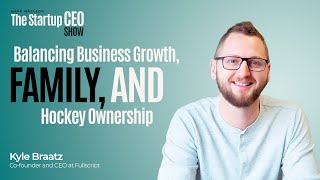
This is a recorded interview (YouTube) between host Mark MacLeod and Kyle Braatz, founder and CEO of FullScript. Braatz describes FullScript as a practitioner-focused B2B2C tech platform serving over 100,000 practitioners and ~6 million patients that enables clinicians to prescribe and manage whole-person treatment plans (supplements, lifestyle, non-pharmaceutical interventions). He recounts building the company mostly capital-efficiently (self-funded/bootstrapped early), growing to profitable scale (bootstrapped to ~$50M revenue before taking growth equity), evolving product-market fit (from a Shopify-like storefront to a vertical clinical tool), pursuing M&A and partnering with growth/private equity to accelerate consolidation and profitability, and ultimately scaling toward enterprise-level ambitions (mentions approaching/beyond hundreds of millions to near-billion scale). Leadership themes include transitioning from founder to entrepreneurial CEO, hiring “10 yards ahead” not “100 yards,” no-ego culture, board and coach usage, and designing his CEO role around his strengths. He emphasizes family priorities and work–life balance, and describes joining an ownership group of the NHL’s Ottawa Senators (consummated in September during the discussed process).
Questions this video answers
Over 100,000 practitioners.
About 6 million patients.
Bootstrapped to about $50 million in revenue before taking growth equity.
2022.
Consummated in September (year not specified in transcript).
Chapters
I think it's because we always, like, think a lot of us will think way too big on the hire. So every time I've thought, like, I got to get someone who the company will scale with forever versus I need someone who's like 10 yards ahead of me, who, who's just done this, and I'm okay, if in one year we grow out of them, that's fine because they're going to get the job done now. They're going to do their tour of duty, and I see potential for them to scale. They never have, but they'll be there. When you start trying to get someone who's 100 yards ahead of you, that's when it, like, it just falls flat on its face. Because to your point, they come with a perspective of what they've done and are not able to evolve to the scale and size and where you're at today.
Welcome to the Startup CEO Show. I'm your host, Mark McLeod. This week I sit down with Kyle Braatz, founder of FullScript. I first met Kyle back in 2012 when I was a venture capitalist. Kyle has quietly gone about building his company to 1 billion in revenue. Along the way, he became a part owner of an NHL team. But he is still the exact same grounded human that I met 12 years ago. Lots of great lessons in this chat. If you enjoy it, please like and subscribe. And let's get to the episode. Kyle, welcome to the Startup CEO Show. It's a true pleasure to have you here today. How are you doing?
Hey, good man. Thanks for having me. Looking forward to it.
Yeah, it's good. Last time you and I saw each other in person was a long time ago. I feel like maybe 2018, 2017.
That's it. It was right before we did one of our big acquisitions or right after. I can't remember. I know I was speaking to you about it and getting some perspective.
Yeah, that's right.
Yeah.
And I definitely want to talk about that, but maybe before we jump into questions and I guess maybe just further background, you and I first met when I was at Real Ventures, like in the super early days. Like I remember being in Notman House, I feel like it was 2012. So it's been. Yeah, it's been a real journey for you and I'm really excited to get into that and learn more. But maybe just before we get into questions, just tell folks what FullScript does.
FullScript services over a hundred thousand practitioners and about six million patients, and we're the the leading tech platform for practitioners to prescribe and manage treatment plans for optimal health outcomes. So really focus in the world of, you know, whole person medicine.
And does that include prescription drugs or. It's everything else.
It's basically everything else. Yeah. When you think about, you know, going to see a practitioner and they're, they're looking at the root cause of what's going on and they're saying, you know, you know, you may need a pharmaceutical, but that pharmaceutical may deplete nutrients and you need some supplementation to support that. You need to change your diet, you need to exercise differently, you need to change your lifestyle. All of those different components that are going to help someone get better. We take, you know, that, that component and make it really easy for the doctor and for the patient.
Amazing. That to me is the most important component. I'm actually not a giant fan of western medicine and try and avoid it whenever humanly possible. So it's great to see that there's a platform there for a natural alternative.
Often it should be kind of the last resort, right? It's like figure out the kind of that root cause and Almost, you know, nine times out of 10, it's something that we're doing to ourselves rather than something, you know, being, you know, being done else, you know, So I think, I think it's the, it's the way to go.
So as, as I mentioned, you and I first met very early in my days as a vc and ironically, you actually skipped venture capital. So maybe. And I think lots of folks who are starting companies just assume by default, oh, I need to raise capital, I need to raise venture. I think venture takes up a disproportionate amount of oxygen in like our headspace for us because we just think that's the thing and you skipped it. So, yeah, talk to us about that.
That's right. I think when I first started the company, kind of the allure of venture was there, right? You watch this week in startups and you're like, okay, that's what you got to do. And then as I think when we identify the opportunity, so if I, if I back up and you know, describe the opportunity that we identified and the problem of the market, it'll kind of, and then how we went about trying to solve it, I think it'll frame up, you know, why VC didn't work for us. So back in 2012, you know, seeing the tailwinds behind whole person medicine, right, what I described to me as an entrepreneur made logical sense like this is the way healthcare should be delivered. Whole person medicine should simply Be medicine. That's the future that we see in 2012. I don't know if that future was, you know, seen by everyone else, but the problems that we identified was that whole person medicine. There was literally no infrastructure to support it. So you think about the doctors that are out there. They're taking 25, 30 minutes to just figure out what to recommend, right? Because they're looking at all the research, they're trying to figure out, you know, what products, what all these different components. Then instead of delivering an E prescription like they have in traditional health care, they're writing it on a piece of paper or they're putting it in this PDF or this email and it's time consuming there. Then they're giving it to the patient. The patient has this treatment plan. I remember when we first started, I was speaking to someone battling cancer who is following an integrative care protocol. And they said following this protocol is like a part time job. So again, you get this protocol as a patient and you have all the anxiety around where do I go get this product? Am I following it appropriately? And then you have, you lose the complete feedback loop with a doctor. So it's just so fragmented and disconnected and there is no infrastructure. So we said, okay, like we can solve this problem. And we looked at solving that problem. There's kind of two paths we could have taken. One is do everything so, you know, really be the full script on day one, which I think might have been a little bit more enticing to vc, but for us it was like, no. There's one core problem that is really a large problem for these practices. Let's focus on solving that really, really well and gain market share and then, you know, have the right to basically go into these other adjacencies, if I remember correctly. Sorry to drop.
Were you a dispensary on day one? Like I seem to remember that was the thing.
Yeah, I think on day one we, we basically tried to copy. We just basically built Shopify with the backend distribution built in and realized that actually practitioners don't want an E commerce store where they're, you know, have their own brand, their own payment processor. We didn't listen to our customers at all. And that was kind of the identification of they need a clinical tool. And so we've actually rebuilt the software from the, from the ground up. But I think being really kind of verticalized in this like market of practitioners and you know, within, you know, being a clinical tool for supplements and nutraceuticals and professional grade supplements, I Think from a VC lens. The TAM story just was really hard to resonate. And every time I said it, it almost felt like, I know there's going to be a lot of friction here. And so as I started to feel that friction I'm like, this just isn't going to work and I'm going to be wasting cycles. And I think the other, the other thing that we identified is the market we were entering was so niche and so unsophisticated when it came to technology and building great user experience. That unsexiness of it all was like, I feel like we can do this in an extremely capital efficient way in order to get market leadership. This focus on really really good product and really, really good customer support that no one else has in this market because there's really no leader. We can be the market maker with very little capital. Especially with the co founders I had. We were the kind of the trifecta of myself, a front end developer and a backend developer. We could get to market really quick. We could, you know, be in revenue on day one. So that was the approach and we just realized VC wasn't right for us. So the other side is before I started Full script, I had started an animated video company. So as we were starting full script, we had the animated video company. We put a CEO in place and any of the dividends we'd get, we, you know, pour into Full script and any, you know, all of our credit cards. So we, we self funded with whatever we could to kind of get it off the ground.
You know it's funny, you thought the TAM was too small there. That's actually the number one reason why people were rejecting Shopify back in the series A is everyone thought that the TAM was too small. Right? Well that was wrong.
Exactly. Well, yeah, yeah, especially when they're what they're over like millions and millions of merchants now and powering commerce around the world. You know, we do have a similar story, right. When you think about Shopify, like they're there to empower merchants to, you know, build great companies and sell product, you know, that's for us, like we're empowering, you know, the best practitioners in the world to deliver the best care in the world. So it's a very similar B2 B2C model.
So even though I've known you for a long time, I decided to throw you into the Google last night and came up with an article written when you won CEO of the Year in Ottawa I think in 2022. And there was a quote in there that I'd love for you to expand on where you said that this has been a transition from entrepreneur to entrepreneurial CEO, which is a very different role. And that completely resonated with me. But I wish I'd love it if you could speak to that.
Yeah, I think when you're in the early days and you're an entrepreneur and you have no scar tissue, no experience, you're chasing every shiny object. You're, you really don't have any operational rigor at all. It's all gut feel and intuition as things evolve and the, the business changes and you know, leaders that you've had in certain positions, you start to grow out of them and you have to get to this place where like you have to say bye to co founders or you have to realize at certain points of your business, an executive that got you from or a leader that got you from 1 to 100 is not going to be the person that gets you from 100 to 500. And so it's just a different type of mindset that you have to move from like every day just blocking and tackling to really seeing how you're going to scale. But you never want to lose kind of that founder mentality. Right. So I think that's actually what makes the entrepreneurial CEO a little bit special is because, you know, you stay connected to the front lines, you're still in the details enough, you still use enough of that gut, intuition and vision that, you know, most CEOs don't come with. I also think you, you don't have the ego. Right. Like I'm still an entrepreneur before I'm a CEO, so I'll always do what's best for the business. I, you know, even if the best for the business was me leaving the company, I'd be all up for that because it's all about building something great at the end of the day as a, as a builder and a founder. So I think that that entrepreneurial CEO is a bit of a competitive advantage as you, as you learn kind of the scale and the ability to scale and operate compared to the early days where it is very erratic, there's still erratic stuff going on and you want to keep a little bit of that, but not at the same level where every day you're wondering if you're going to make it or not.
Well, it's no shock that the biggest outcomes tend to be founder led, start to finish. Right. There is a special magic there. And right. I posted, I feel like it was on Twitter or something. Kind of recapping Fred Wilson from Union Square Ventures, definition of the CEO role. This is like from way, way back where he says like three things, basically, you know, communication, building the right team, and never running out of money. And I kind of talk to my, my CEO clients about that all the time, trying to get them to raise altitude. And Toby actually weighed in and he said, yes, but you still have to go deep into the weeds all the time, which completely reinforces what you're saying, right? You know, just that like which a professional CEO might, might not do.
And it's trial and error. Like you kind of learn, right? At first. When I started scaling and bringing leaders in who've scaled before, kind of the right next person to bring in, a lot of my expectation was, okay, I should step back, I should get out of their way. And you kind of like, you know, there's this pendulum of moving back and forth until you get into the center and you know exactly when to do that and when not to. But it takes some trial and error, like anything.
I see that a lot, right. You hire someone from the big company, and a lot of CEOs, you know, have. You're going to hire someone who's better than you in that function, and then you have this natural tendency to defer to that person. But they've never operated in your company today. They don't have your context. I don't know. I've got a pretty spotty track record with people come from, like, big public companies because their definition of execution is different. It's not. I'm going to put my arms in the pile of shit. I'm going to hire a bunch of people to put their arms in the pile of shit. And I'll manage, you know, I'll oversee them. But like, very different definitions.
I think it's because we always, like, think a lot of us will think way too big on the hire. So every time I've thought, like, I got to get someone who the company will scale with forever versus I need someone who's like 10 yards ahead of me, who, who's just done this and I'm okay, if in one year we grow out of them, that's fine, because they're going to get the job done now. They're going to do their tour duty and I see potential for them to scale. They never have, but they'll be there. When you start trying to get someone who's a hundred yards ahead of you, that's when it, like, it just falls flat on its face because to your point they come with a perspective of what they've done and they're not able to, to evolve to the scale and size and where you're at today often.
So have you gone through many iterations of your leadership team?
Yeah, I mean, I think along the, the road here it's almost like every, we've done a couple big acquisitions which naturally create, you know, and then they were like, you know, almost every time we did them, they were ones where you're transforming the company because you're bringing two companies together that are almost the same size and there's two leadership teams. And so when you go from call it a 300 million dollar company to a $600 million company, instantly you've outgrown some people and you got to think about, okay, what's that next type of leader you need? So, yeah, I think throughout that time, I would say that's actually one of the things that has been the biggest driver of success is knowing. And the way we do it in full script is like, it's not like, hey, your time is done, see you later. It's like we celebrate those individuals and people know they're coming in for that tour duty and they know when they've gotten to a point where I don't scale. But you know, their owners of this business, they built it for the last two years to where it is. Couldn't get here without them. And that message is really clear and they, they participate on all the value we're going to create in the future. So if you bring people in who don't have egos and who know that like what we're trying to do is something great and they realize that like passing the torch is the right thing to do and it's actually not as hard as you'd like. I mean, the early days was a lot harder because there was so much emotion. You know, when you're in the trenches with your best people, you know, like literally tears are flowing at certain situations that you've had and then you have to say goodbye, like that's really hard. But as you start to scale and you set those expectations of that's what you know what fullscript's all about. And you do have to grow faster than the company and if you don't but you've contributed, like, you'll always be an owner here, you'll always benefit from everything we're creating here and you'll always be a full scripter is the mindset we have.
What have you done to grow faster than your business?
Yeah, I mean, I think the first deal we did was I was still kind of that really. I wouldn't call it arrogant because I've never had like a big ego, but I still like this really scrappy startup entrepreneur. You know, we do this merger, we've got two different executive teams. I get in the boardroom and I would be so abrasive and so like this is the right way and so direct to a point of like I was getting nowhere. I started working with a coach who was very, you know, he was more focused on just the psychology of, of everything and it was so basic and so common sense of things. He would talk to me about and help me through that. He really helped me go. You know, he was probably one of the big kind of keys of going from like that entrepreneur to entrepreneurial CEO is just saying like, like, you know, you, you don't need to win that way you can actually get everyone bought in by being a little bit calmer, understanding, having a little bit more empathy so that, that coach. And then over time I really felt like I understood the psychology side of things and I moved into a more tactical coach. So a CEO who's been there, done that, still working as a CEO today so that I can really work through, hey, I'm facing this big problem, like help me work through this. And that's been super helpful. When we, when we got some private growth equity into the business, I do port co tours so I have them connect me with all of their portfolio. CEOs go through one to like get some feedback on, you know, being a portfolio company in growth equity and what to expect to also understand how to deal with, you know, new investors and a new board. So that, that's been super helpful. I think also like building a great board and looking at the board is a value add. I think often people look at boards and be like, this is annoying, this is frustrating, etc. Etc. I look at it as like a forcing function to one, make sure my shit's together and then to like, if I put the right people on the board, it's actually a value add and they're there to support and help the company. And I talk to most of my board members just because I want to, because I need support, advice and if you build the right board, they're there to help you. I mean it's a, it's a huge level up. Probably the last thing I'd say is, and it's just again that founder mentality, like you stay connected to the front lines. You, if you're spending time with every teammate at every different level. If you're doing skip levels as far as you can, you know, imagine, you're going to continue to evolve because you see the things in your business that, you know, most people don't see when they, when they, you know, lead from the ivory tower.
I love that, especially your comments around the board. Right. Because for most people, they dread their board meetings. It's a thing they have to dread it deal with. Whereas Jeff Lawson, unfortunately recently ousted from Twilio, he refers to his board as like his second team. Right. I've got my management team and then I've got my board. That's my second team. And that's what you want, right?
Yeah, 100%.
So there's a few things that you've done that are not out of central casting. Right. One is you skipped vc. Second is you went more the private equity route and then you've done what are ostensibly mergers. It sounds like even though there was sort of one acquirer at the end of the day, which was you. So maybe, and there's lots that written is written about vc, but I think private equity is a bit more opaque for folks. So maybe tell us about that journey and what it's been like for you to have that relationship.
The background, you know, we bootstrapped our company to, you know, a $50 million revenue company. And again, like the principles were B2, B2C. Be really good at product, Be really good at customer support. The business model is, you know, get as many practitioners onto the platform as possible. Build a tool or a clinical tool that they want to use with every single one of their patients and keep their patients adherent. It's pretty, it's a pretty simple model and it's kind of compounds on itself over time. We were the software layer and the customer layer and the user experience layer. But as part of our model, when a practitioner prescribes certain products, you know, the patient gets them delivered to their door. And what we did is we partnered with, you know, professional grade nutraceutical supplement distributors to make sure that we could drop ship these products to the door. So the first kind of deal we did was very focused on, you know, really looking in. Okay, the economic model doesn't make sense. Like we can't build a good economic model if we don't, you know, own a little bit more of the, of the experience. But most importantly for us, it was like when we were losing touch with that user experience, a lot of like we wanted to own the customer experience. From end to end, like we had to in order to create a really good business, especially in B2B2C because you lose one patient and you run the risk of losing the entire practitioner if you create a bad patient experience. So we ended up doing this transaction before we even did any kind of growth equity and brought these two companies together, both the same size with completely different profiles. So we're this high growth, you know, thousand percent year over year growth and then there's, you know, or 100% year over year growth at that time and another one that was more of a distributor running, you know, very, you know, growth slowly. But good, good margins brought those two companies together and then we, we ended up doing a series B with a growth equity company. And I think for me that was, I think they operate much like a VC in some ways, but what they brought to the table was, look, we just want it three times our money. The expectation is not to shoot for the fences and, and potentially risk everything. You've worked your ass off for the last, you know, what was it, eight years, right? Like I've been working my ass up for eight years. I had, you know, at some point, you know, $50,000 in credit card debt, mortgage payments missed, to get this thing to where it was. You bring a VC in and potentially they want you to 10 times, 15 times, and make risks that I just wouldn't have been prepared to make because everything was in, in this business and quite frankly I don't think it would have been right. So Kane came in, great partner, but I think they operated very similar to a vc. You know, they're on the board, I can text Leon, the partner over there, whenever I want and you know, help me think through how we get to the next level from there. What happened was we still had kind of the multi pronged leadership from the two companies and it wasn't really, it just wasn't really working effectively. And I think I had a different vision for the business than the other CEO.
Were you co CEO?
And so we just.
Sorry to interrupt.
We basically. Yeah, basically he was a CEO, I was the president, I was running all the commercial product engineering and he was running all the stuff that he'd run before and the operations and stuff that I didn't love doing at the time. And it was definitely not the perfect situation. It got us to where we needed to get to. So we decided to, you know, run a process with an investment banker. And you know, I think part of it is obviously too, I shouldn't leave this out as We've been a profitable business for a long time.
Sorry, profit.
When we decided to build profit, I don't know, you know, it's funny because yeah, part of it was like you almost couldn't help but be profitable again. Like being such a capital efficient business in a market that we could penetrate so quickly without spending a lot of dollars. It allowed us to just focus on that and it was very natural. I think we invested a lot more than other people in our industry. Again like that niche market and under, you know, unsophisticated market in this type of user experience was like really, really allowed us to do that. So you know, being profitable is, was, it was almost like be, it's sexy now. We were doing it before it was sexy and private equity demands it. And so you know we, we took our, we went with an investment banker who didn't think we could get the multiple, you know, we ended up getting. But I was selling the vision of like, you know, what, what we were going to be building. We went through a process which is super interesting and there was one group that kind of positioned themselves as the nice guys of private equity. And at fullscript we always talk about, you know, kindness being a competitive advantage and like to me kindness isn't being nice to everyone. It's like you be direct but that's actually going to help. That's actually a kind thing to do to a lot of people. But anyways, I'm digressing. They position themselves that way so throughout the process they actually didn't have the highest bid at the end of the day. But I really connected with them. They were the right partner and they were going to recap the business and allow us to kind of move with a new executive team and a new vision for the business business. And they actually came exactly as advertised. Like they underwrote the thesis, they underwrote the management team and they truly are like our partners. So I don't think they're traditional private equity. Like when you think of private equity and the stories you hear and I've spoken to a lot of, you know, poor co CEOs it can be hell because they're, you know, they control, they can control a lot of decisions that you make. Ours are completely different. They're hands on as we want them to be. They know the business inside and out but they're not, you know, the traditional private equity where they're, you know, they're just tipping, tipping the scale of where you got to go. They're, they're really a partner which is great.
That's amazing. You know, first of all, congrats on the profitable growth. That's awesome and rare.
Well, what, what Mark, before you. Sorry. One thing I should add on with private equity too is, you know, they, they are very focused on, okay, how do you create enterprise value? You know, maybe more like not just trump growth. Growth's important, right. We're still growing 20% year on year. But how do you actually grow it through M and A and through different things that, you know, are, you know, not so natural for someone like myself. And when they came in, that was actually the first thing we did is we acquired, you know, our biggest competitor, which is also a very similar company to our first, you know, merger. But the thesis was completely different. It was like, let's bring these two companies together, let's get market leadership on day one, and let's, you know, realize all of the synergies associated with those and accelerate our profitability, which allows us to now invest in the future. And it's kind of like the perfect timing because, you know, with it we're cash flow generating, you know, every single quarter profitable. And we're able to invest in a time where with generative AI and what we're doing today, it kind of gives us that license to now enter all those adjacencies that I spoke about at the start of the story. So now we're at a point with this scale that we can actually realize the full vision of full screen.
Amazing. You know, I did a bunch of private equity deals in my brief time in banking and I thought they were great. There are definitely horror stories. Like I coach a couple of private equity CEOs now and you know, one of them has that traditional like highly levered model and interest rates have skyrocketed and so their interest payments are crushing them. And so that's putting a lot of tension on the relationship. But otherwise I just found there's just so much more alignment. Right. They're trying to get a triple on everything versus a couple of home runs to pay for the failures. Right. I remember speaking to a tier 1 VC years ago who told me, quote, I would rather my company go into a brick wall at 100 miles an hour trying to achieve escape velocity rather than play it safe. That was great for the vc. With a portfolio and multiple funds and billions under management, it's pretty horrible for the CEO.
So there's no founder alignment or CEO alignment on those things. Right. And you can sell the bill of goods and get everyone excited about it, but then when shit hits the wall and you're sitting there with your life's work about the crumble because of a decision that you could have played it safe and built a really great, great business that you would have been so proud of. It's kind of sad. I often talk to, you know, when I'm talking to founders, I, I'm. To your point, the allure of VC is there and it could be the right thing for your business. But you have to realize there's lots of different paths you can take. Especially today when I think it's just. It's easier to start a business in a capital efficient way.
Yep, that was then. The other thing I loved about private equity is their whole pitch about two bites of the Apple. Right? You're going to sell a chunk of your business today through some combination of operational excellence and corporate development. We're going to build a far bigger company than you would have been able to do on a standalone basis. And then when we sell that. You sold your company twice. And I've seen that play out.
Yep, yeah, 100%. 100%. Yeah. The, the. There's a. If you, if you deliver and you. There's a path to keep going, you can continue to re up and sell the company twice. Three times. If, if you have kind of haven't been yet.
I was catching up with Joel Lessam, who's a friend who was a CEO and founder of firmex, the data room company. And this is public knowledge, but he's.
I think we used them for our series.
Well, they. He sold that company three times. He just keeps getting a new sponsor and keeps growing and flipping and off we go. Now he's finally done and retired, but he sold that company three times, which is pretty wild.
It's actually like to me, I didn't even know this was possible. In all honesty, as a founder, it's one of those things that's just not clear that that's an option out there that private equity offers you this perspective. The other reality though is some founders just aren't built to private equity either. Some founders are built to get it to a certain stage and pass it on to a CEO to take it to the next level. So everyone's a little bit different.
Yeah, that's. That is 100 true.
Back to.
So last night I was searching on Google and I also went on to Instagram and I noticed a really interesting thing which is like, I don't know, maybe 25% of the photos on your profile have you in them. And I'm wondering if that is actually a metaphor for how you lead. Like, is where it's less about you. Because fullscript's pretty under the radar. Right. You know, and yet you're a giant company. So I just. Yeah. Wondering what your. Your reaction is to that.
I mean, maybe not on purpose, but innately who I am is I lead by propping everyone else up because that's just how I feel naturally. Like, I enjoy. When I thought about the success of fullscript, like, what got me excited about building Full Script was obviously helping a lot of people get better. You know, making a difference in the impact in the world or whole person, not as simply medicine. But a lot of it was also like imagining the day when we sell the company or we go IPO and there's a hundred of my best friends, you know, becoming multi billionaires. Like, that literally is what motivates me throughout the day. This journey right now. Like, I wouldn't do this journey right now if I wasn't doing it with people that I love being with every single day. I. I don't see, like, I'm. I'm lucky to be in the place that I am where I could talk, stand up and talk about how great the people are that work at fullscript, how great, you know, the team is. But it just feels really unnatural for myself. I've always just been. Even when I played hockey, you know, I. I was the grinder that, you know, worked my ass off as hard as I can to help the goal scorer score goals or whatever else. I just never been the guy that wants the limelight. Maybe not skilled enough to even have the limelight in a lot of ways. So. And I think a lot of it's just no ego. Like at Fullscope, we always talk about no ego. And I always looked at things like, what benefit does it get me to be in the limelight? What benefit does it get the company? It literally, I could never see the, the value for myself or the business now, you know, as the business grows and we're at a place, you know, we're talking to investment bankers again just to say, hey, look, this is Full Script. We're out here. It's. It's different now because we're a large business and no one knows about us. And so now it's like, hey, when I want to hire the best people, I want to make sure people know who fullscript is. If I want to, you know, strike partnerships with the biggest companies in the world, we need. They need to know who FullScript is. So there's a bit of a different goal in mind right now. And so there will be a little bit more of me getting out there. But I also hired someone. It's funny. Like, I am nowhere near Toby, but when you look at the relationship that Toby and Harley have at Shopify, it's magic. Right. And I think what drives me every day is like being in the trenches building, like we're launching a new product in a few months and we're doing a Sprint ad office every single day. And I'm here every day. And that's what gets me jazzed up and motivates me. And I think that's where I'm at my best. And quite frankly, the, you know, the new CFO and head of strategy here, she's incredible and she's a perfect external face. She's perfect at doing all of the, the stuff that I hate doing. So it's a real complimentary relationship and we get along, so that's helpful as well.
Amazing. So you have, you have brought up a few themes that come up in my coaching conversations all the time. One is related to your value of no ego. You know, when I think of the number one trait that I look for in CEOs to coach, it was also the number one thing that I looked for as an angel investor. It's self awareness.
Right.
Because that is the thing that enables you to actually grow faster than your business. Right. If you believe your own hype, if you have ego, you're not open to feedback, you're not learning, you're just not reading the tea leaves. And so I deeply believe that not having an ego is actually key to going all the way. And I actually correlate self awareness quite highly with introversion. I think you're definitely introverted. You brought up Toby. Toby is definitely introverted. I think it, it really helps. Right. If you're that charismatic, broad shouldered, swashbuckling rainmaker and you like walk into the room like, here I am, it might just go to your head, you know, and then over time, you don't go that way.
That's right. You know, so you believe it. Yeah. I always refer to myself as an introverted extrovert because if you're one of my best friends and I, I know you well, like, I will open right up. But if you, if I walk into a room full of people, I, I sit in the corner and hope to God I can see someone that I know so I can go latch on.
That hasn't even, that hasn't changed as the company has Scaled.
Not really. It's just like. Yeah, for some reason I haven't, I mean, I think it, I shouldn't say it hasn't changed. I mean, you start to learn a little bit, get some self confidence and the ability to just strike up some conversation. But it's definitely an evolution. And I'm not going to be the person that walks into the room to your point, has that, that charisma where everyone just gravitates towards you because you're there. Yeah.
And then the other theme that you brought up, you didn't use this word. Right. But when you talked about how complimentary your new CFO is, it made me think about superpowers. And a big thing I, I like to do with my CEOs is, okay, what is your superpower? And then how do we design your role so that you're spending the maximum amount of time just doing the thing that is your superpower and the thing that is your kryptonite? Let's hire somebody for it. So I love that you've done that. And I'm wondering like, was that an explicit awareness on your part? Did you say, like, here's what I love doing. Let me design my job around that?
Yeah, I mean it's, it's probably here's what I love doing and what I'm good at. And then in order to be successful, like literally I need people to do all those other things where this company doesn't, doesn't exist. And the things that I love doing, like, I actually love building like right now at full script. I love building startups within big companies and I actually think you can like startup size everything. Like literally every initiative we set up co founders in place and those co founders hit in certain inflection points. And there's new co founders, right. So you start to think about like building a new product while the co founders that need to get it to the next stage are a product designer, a front end developer and a backend engineer. Those are going to be your co founders. They're going to get it to a certain inflection point. And the reason you need to do that is because as you get really big as a company, you get this like hamster wheel of decision depth where it's like, hey, I got this idea and then I got to run it by the vp and then they run it by another VP and another VP and another director. And then this bold idea turns into this very diluted, you know, simple, safe path. So we started saying like, well, what we need to do Is look at like, where do we need to get to in the next three months? Put a team of people who you trust to go make those decisions and make bold decisions without the dilution. And then when you get there, who are the next co founders? So maybe the next co founders are a product marketer and a salesperson. Okay, you got to go find product market fit with this so you can start to build a lot of this, you know, muscle memory into even large organizations. And that's kind of what I where I just love being a part of that. And then to your point, like, where are all the things that I suck at? Well, mostly everything else. So you bring. And quite frankly, as a, as a CEO, the most liberating thing that ever happens is when you hire that perfect execration and all of a sudden you're sleeping at night and all the things that bothered you day in and day out are all of a sudden taken off your plate. It's so freeing. And once you've experienced it once, then you have the muscle memory to just keep doing it. And as soon as you feel something uncomfortable, obviously you don't want to add overdad to the business, but you start to find ways around, how do I outsource this to the right person who's going to take it to where it needs to go?
That's your leverage. Right? You go from in the beginning to when there's just the three of you. You do anything that needs to be done, but then over time, you succeed through others. And so, yeah, that leadership team is your leverage. You're only as strong as your leadership team. Let's switch gears and go back to the acquisition again. Very often the most natural buyer for a company is someone who might be competitive in some way. And so there's this trust barrier to get through. Like, how do I open the kimono? And you literally merged with direct competitors. So like, how did you get past that? How did you get through the mutual level of trust to actually consummate a deal?
I haven't thought about that a whole lot. I think it comes down to authenticity. And like, really I'm, I'm transparent and authentic by nature. Right. It just is. I can't help myself. And I think it, it creates, it helps people kind of unguard themselves. When you can describe your flaws and your warts and all the things that you see as wrong, all the things that are great about them, all the things you think, you can just kind of create this connection by being authentic and open. And I think that's who I am naturally so. And I don't try to pretend I'm something that I'm not. So I think just that that kind of relationship at the top was key.
Right.
Both times we did this, the CEO, myself and the other CEO, we were able to create that relationship where we trusted each other first. And then as soon as you do that and, and you can tell that, you know, there is authenticness on both sides and you're happy breaking bread with them. And you, you know, it even gets down to like, knowing who they are as a human, like the, their family, the, the. All these different things really matter to then break down into the, you know, making sure the business was comfortable. So, you know, thinking about it, I would say that's probably the most important thing is just really creating that relationship at the top. And those are relationships I nurtured for some time. They weren't, you know, ones were just randomly, hey, we're going to get, get together and do this. Right? Cause I don't think it would have worked that way. They got to see me as a competitor and how I operated and the respect we had for each other and no burn bridges. I think that's another thing that entrepreneurs forget. Like, you can get angry and you can, you know, do things that. Because at the moment, you know, you feel slighted. But sometimes when you burn those bridges, that can come back to haunt you versus, like, understanding that maybe a decision that was made that slighted you is actually just a business decision. And if you have empathy, you put yourself in that CEO's position. Like, I probably would have made that same call. So it hurts, but it was the right call for them and for their business. So, you know, don't spite them. Just respect them and then move on. So I think keeping those relationships strong, regardless of how things go in a competitive, you know, situation is really important.
I feel like that goes back to your value of no ego. It's really easy to get slighted when you have a big ego.
Yeah, exactly. It's, it's like just use. It's just daily put yourself in someone's shoes and would you make that call? Yes. So why are you blaming them for making that call? It's a pretty simple equation.
You know, you talked about going for 300 to 600 million as like a historical statement. And when I was reading about the CEO of the year thing, that article referred to you as kind of approaching a billion. And so you may even have surpassed that now. And you don't have to disclose it. That's Fine. But obviously it's a very large company. Like, what is the end state? Am I going to see you with a suit on, ringing the bell, like, what's your dream for this?
So it's funny, I'm not motivated by going ipo. I always, I always said like, if that's what's best for the company, the company should do it. Do I see myself as a public company CEO sitting here right now? I, I don't. But it's funny, like one of my board members about a week ago said, you should really consider, you know, reconsider that kind of perspective. And he's actually putting a one pager together for me around how you could still be the CEO of a public company and, and not hate your life. That's kind of like the message. So interesting. I mean, I don't know. I mean, I, I think, yeah, we'll always do what's best. I always just look at, I will always do what's best for the company and for my team. And if it means going public and me being the CEO of that company, great. If it means someone else, you know, coming into the business and being the CEO, that's great too. Like, it really doesn't matter to me. I'd say probably the most important thing for me, for me at this stage of my life is being a good father and a good husband. You know, like my wife and I both sacrifice so much to get to the stage. Like it's, she gets, she doesn't, she's not at the front of all of this, but when you look at the sacrifice that you make over a 12 year or 10 or 11 year period, building something from the ground up, and she's been there for the, that entire time. We celebrated our 10 year anniversary in December. You know, I want to keep my eye on the ball there, right. And, and really not, not jeopardize that part of my life and enjoy it. Know, we put so much into this that I just want to enjoy that part of the life alongside of it. So I think as long as you can have that balance, which I think you can, you know, then that's what I want to prioritize while also making sure I always do what's best for the company. Right. So it's a, that's probably the, the most important thing for me right now.
I really love that so much and it's actually really rare. Right. You know, startup world's pretty male. Most of my CEO clients are male as a result and I always ask them about their marriage and they always tell me it's their most important thing. But when you look at how you allocate your time and especially your presence, that's not true. And that was absolutely the case for me in my first marriage.
And I.
You're just so grounded. Like, when I reached out to reschedule last week, you know, you were grateful because your kids were ill and you could. That way you could just take care of your kids and like, you're running a giant company like, like that it'd be so easy for you to be like, you're just so above that. You know, that's for your wife to deal with. So I really love how grounded you are. And then, you know, so, yeah, you're in your second decade of full script, but your intention when you married your wife is that you're going to be with her for the rest of your life. It's actually far more important. Right. So, yeah, I really love that.
And we, you know, we, we sacrificed. I mean, we. I'm. I'm going to be 40 this year, and, you know, my first kid's going to be five. And, you know, we've been married for 10 years. We, we purposely sacrificed together, you know, not having kids, because we knew, you know, those early stages, there was no way. Right. Like, it just. I was not around it. She knew the sacrifice I was making there, and she was the person I'd come home and complain to and, you know, be upset about, you know, whatever happened that, that day. She'd always listen. So, like, all of those sacrifices along the way allowed us to get to the stage. And I always admire, you know, like, the Mike Myers type, you know, like where he, he was the best at his craft. But then at some point along the way, he said, my next kind of, My next piece of work that I want to do is raising my children. And he, I think he was out of the business for 17, 18 years. Still might be just doing that. Not, you know, there's not a lot of people that do. So I respect stuff like that more than, And I mean, I respect, I respect the people that want to go build and, and motivated by that. But I kind of, I always joke there's, there's three people in the world. There's people motivated by power, there's people motivated by money, and there's people just motivated by impact. And that's, you know, the best to me. The, the, the builders, the people that just like to create, they're always motivated by, by the impact. And that impact can have huge scale like, what if we're trying to do it full script, but it can also have like, smaller scale, but huge to me, like, my daughter growing up straight is really a big impact for that matters more to me than anything. Right.
So I love it, honestly. Yeah. It's a message I'm trying to bring to the CEOs that I work with because they do sacrifice everything. And when you're in a company, it can feel all encompassing. But then back in my operating days, their companies, when I was at FreshBooks, I used to joke about having fresh mares, which are FreshBooks nightmares. Right. Because you're so all in. But now it's just a distant memory. So, yeah, you've really got the right perspective there. Maybe as we start to kind of wrap things up, I want to go to a passion. So you talked about being a hockey player earlier, and now you're part of the ownership group of the Ottawa Senators. That's absolutely fascinating to me. I would love to learn more about that.
Yeah. You know, it's funny if you talk to all my childhood friends, none of them thought that I would make the NHL based on my skill, and I would have agreed with that.
Were you trying, Were you like, really a serious hockey player?
You know what, I played competitive and some junior hockey, but I was never even close to good enough. And I never really had the perspective that I just loved, love the game and I love the camaraderie of it and I love, you know, a lot of different components of it, just the, the competitiveness of it. You know, I say there is a lot of, like, similarities to building a business around building a great team, like the competitive nature of wanting to win on a, on a day by day basis, etc. Etc. But ultimately for me, like, the opportunities once in a lifetime. And when I heard the, you know, Ottawa Senators were for for sale, I actually messaged my buddy there, Harley Finkelstein, and I said, like, you probably know there's, there's probably a local group trying to get involved and if you, if you have your ear to the ground, you hear anything, please connect me. And he instantly did. And I was lucky enough to kind of go on this ride where I was, you know, aligned with a small group here in Ottawa who got to see the whole process happen in real time. I remember going through this process just being blown away because, you know, I'm run a couple processes now with, you know, full script, and this was like a whole new world. And it was just really interesting how my mindset of, like, loving the Game to like, as we were going through this process when the draft was on or free agency came on, my passion level and my adrenaline around it all all of a sudden went to a completely different place where I was. I would just loved it. And so I knew the deal was right, right for me. We ended up consummating in September. And it's funny, I almost dropped out a couple times, and my wife was the one who said, you will regret this. You will regret this. And I would say the best thing about being involved right now in that ownership group is what it's done for my relationship with my wife. We live out in AR prior, we're like 45 minutes, 25 to 45 minutes out of Ottawa, depending where you want to go. And so the idea of, like, getting out with three kids under five, so the idea of, like, getting out of doing things is really challenging. But this has been a forcing function to us having, you know, call it 45 different date nights every single year. And she's gotten the same passion for the auto centers. There's the concert she hated. Yeah, it's funny, like, no, she's the one. She's the one slamming, you know, slamming the, the. The table when they don't, you know, when. When they get scored on. Like, it's funny how she's also got that same sort of passion now, and we just love that part of it. And to me, like, this is an investment that will never. It made for my children. It's not a ROI from a monetary perspective. For me, it's an ROI from like, just a lifestyle perspective. And maybe the last thought I had as we were doing it was like, sure, I'm never going to monetize this, but it may parlay into a lot of other things, because the network that I'm now involved in and the people that I get to see and interact with on a regular basis are. Are just a completely different network than I would have ever been connected to if I hadn't done it. So I'm. I'm just super grateful. I actually changed from a Habs fan to a Sense fan, which I never thought was possible. You know, like, I heard a podcast with Bill Simmons where he's talking about how, you know, it's so funny how it's so easy for us to be like, yeah, you know, it's not working out. You, we should go get a divorce. And you divorce your. Your partner. But with a, With a hockey or a hockey team or a sport, professional sports team, it's like, it hasn't worked out for 20 years, but this is our year. You're always committed, no matter what. So this is the only thing that could have got me to change.
Was that a difficult decision for you?
I thought it would be, but the first, like, moment that they played, there was no kind of. It was like, I'm all in. And I think it's because you start to feel a part of the community. Right. Like, I was a Habs fan because my dad was a Habs fan. And you're. That's just your team. You got loyalty. But then, you know, with the Auto Senators, we are a part of a community. I love the culture. Michael Anlauer, the. The owner of the team, who's. Who's the face of the organization from a leadership perspective. It's just. He is an entrepreneur. He is the person. When I. When I. I don't see myself working for anyone, but when I met him and I understood his values and his perspectives, I'm like, this is one of the. The guys or the people in life that I would. I would run into battle with and I would follow. And so I think just, you know, just being a part of that, it just changes your perspective, you know, really quickly.
Amazing. That feels like the perfect place to end, because where do we go from here?
I don't know. Maybe I invite you up to a hockey game. I don't know if you're into hockey for sure.
You can't be Canadian and not watch hockey. No. That's really, really special. Well, Kyle, this has been a true pleasure. It's amazing to, you know, from the guy I met in Notman House at Real Ventures a very long time ago, to see the scale of what you built. But you haven't lost yourself along the way. You're still Kyle. And, like, even, I don't know like, that if I owned a hockey team, I might let it get to my head. And you haven't, you know, so it's. It's awesome.
Well, thank you. Well, I appreciate it. It's funny, as I. As I reflect back on the journey here, you were actually one of the only VCs who actually understood our market and believed in it, which is, like, very different than the majority of individuals I spoke to. I think it's because, as you said at the start of the program, it's just kind of innately who you are and what you believe when it comes to healthcare and everything else.
So thank you. All right, Kyle, it's been a real pleasure. Thank you so much. Hey, thanks for listening. To the Startup CEO Show. If you'd like to connect with me, be sure to visit my website at Mark McLeod me or follow me on LinkedIn at the Mark McLeod or Twitter arkmcle cloud underscore. And if you want to tune in again next week, be sure to subscribe on YouTube, Spotify, Apple, or wherever you get your podcasts. We'll see you next time.
More from Mark





The Burnout Breaking Point - How Strategic Breaks Actually Increase Productivity


Emotional Debt - How Avoiding Hard Conversations Compounds Into Company Killing Resentment


The Death of the Specialist - Why AI Is Creating a New Professional Class Called Scalers