Building a Mission-Driven Brand: Lessons from Knix Founder
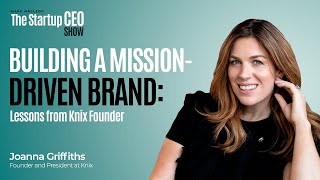
Interview (March 10, 2025) between host Mark MacLeod and Joanna Griffiths, founder & CEO of Knix (women's intimate apparel). Joanna describes founding Knix in 2013 to solve leaks with period/leak-proof underwear, building a mission-driven brand focused on customer-led product innovation, expanding into bras and activewear (notably a sports bra launched in 2018), and acquiring substantial IP. She recounts fundraising biases faced by women founders, closing a funding round three days before giving birth to twins, later negotiating a strategic sale (Joanna sold 80% to a strategic buyer) while retaining upside, and reflects on leadership, product-first strategy, community-building, and personal development (e.g., hypnotherapy).
Chapters
So I started saying no to a lot of money. I mean, that's what happened. You know, I was just like, why do I need this? What's the point? We're profitable, we're growing. We have, like a negative working capital cycle because our inventory turns like 12 times a year. We don't have any of these issues that we just started to kind of like, keep focused on building the business. And every time someone said no to me, they would give me a metric as to what the reason was. They'd be like, oh, well, everything's good but this one metric. And I remember my, like, right hand at the time, we just kept a list of those metrics and then we hit and exceeded every single one. And it got to the point where, like, we had probably some of the strongest metrics of any direct to consumer brand in the business. And I was just like, if they say that's it, then we're going to do it. If it's this, this, this. And our scorecard was unstoppable.
Welcome to the Startup CEO Show. I'm your host, Mark McLeod. In this episode, I sit down with Joanna Griffiths, founder and CEO of women's clothing brand. Joanna started this business in 2013, focused on a very unique initial category, and she's expanded to create a giant women's brand since then. In this episode, we walk through all of that journey, including raising around three days before she gave birth to twins. Navigating building a complex consumer brand as a solo founder. Challenges that women founders experience, especially when it comes to fundraising. And then we talk about her massive decision to sell 80% of the business to Essade for $320 million. I really hope you enjoy this episode and I hope you subscribe. Joanna, welcome to the Startup CEO Show. It's a true pleasure to have you here. How are you doing today?
I'm doing well. Thanks for having me.
It's my pleasure. So I've been following your progress from afar for many years. You won't remember, but many, many years ago, we sat beside each other at a founders and funders dinner.
Yes. Yep.
I do remember back when that was a thing. And I feel like I was super early in your journey. And you've got one of the more unique journeys out there. You know, very often I've got, I don't know, B2B SaaS founders on here, and it's very rare that I have a women's fashion brand, you know, CEO on here. So I'm guessing all the women who are listening know what Nyx Is, but maybe just for anyone who doesn't just tell us what Nyx is and maybe just tell us the origin story because it sounds like a, you know, a pretty unique idea.
Sure. So Nyx is a women's intimate apparel active and swimwear brand. I started the company in 2013. That's when we launched so a little over 12 years ago and had a really kind of simple idea to create a product that didn't exist at the time, which was leak proof underwear, also known as period underwear. Saw a big gap in the market, a problem that over half of the population faced, and no suitable products that were designed specifically for a lot of the people that were experiencing leaks. And so set out to create that net new product, that net new category, and at the same time made it sort of my mission and mandate to make a different kind of intimates brand. So I think that the nature of the conversation that we were trying to have, getting folks to talk to us about something that they weren't really comfortable speaking about publicly, warranted a different kind of brand than what was popular at the time. You know, like the Victoria's Secrets of the World. And so set out to really reinvent what intimates could be, starting with that first product and to create a different kind of brand. And those two things have been pretty constant over the past 12 years. Everything else has changed, but those two kind of pillars of our, of how we look at the business and look at what's important has stayed the same.
Amazing. Why is it you think that this product hadn't been invented before, given that this is like a timeless issue for.
For women, it's a tale as old as time. So when you, ironically enough, if you were to look at the intimate apparel category 12, 15 years ago, it was almost exclusively run by men. And so you had a lot of people creating products for women through the male gaze. It was a lot about, you know, what it looks like on the person and less about how the person felt. And I remember being in business school and this is like mainly when I was working on the idea and hearing that the unsexiest problems get solved last. So people always solve the like, salacious, sexy, you know, cool problems first and then it's the, the unsexier problems that often get overlooked. And I think this was just something that no one really talked about. So unless you were actively listening and understanding what was happening in women's lives, you wouldn't necessarily know that this was such a big issue.
Well, my wife's been a customer for many Many years and raves about the product. Couldn't imagine life without it.
That is great to hear. Well, tell her I say thank you.
I will. So my understanding is, and maybe you alluded to this already when you were talking about making the brand more approachable, but, like, you've grown Nyx by attaching yourself to, like, a larger mission, like improving women's lives, maybe Just tell us about that.
You know, in my previous life before Nyx, I spent a lot of time in media and entertainment. And so I was working, you know, at the forefront of popular culture, working, you know, with some of the biggest names in music, film, and television, and really got a front row seat to kind of, like, the pressure and expectations that we put on women and had a lot of time to kind of reflect on what that, in turn was doing to me and how much wasted time and energy I put through all of my adolescence. Definitely my. My early 20s, into focusing on stuff that just, like, ultimately didn't matter. And so really felt like if I were to make a brand, I would want to make a brand that, that did something else in the world. And it's been probably years of reflection where I've, like, come full circle on this. But two things that stand out to me is, one, I had a really early lunch date with someone who ended up joining my board. His name's Mark Maybank, and he is one of the founders of Mavericks, the private equity firm, if you're familiar with them. And so I was talking to Mark about what I was going through as a small business owner and startup founder and really feeling like everyone wanted something from me, like I was being pulled in a million different directions. I wasn't used to being cold called or sold to or dealing with employees or, like, any of the different things. And so, and I was finding it hard. Like, I was finding it hard to stand up for myself, to advocate for myself, to be the one that was kind of front and center because I'd spent so much of my life behind the scenes putting other people forward. And so Mark gave me some really great advice. And he said, joanna, you have to, like, reposition this in your brain. You're never going to fight just for you. But I know you, and I know you'll fight for something that's bigger than you. So instead of feeling like, you know, when you're pushing back on a vendor or renegotiating terms or you're trying to negotiate a fundraising round, instead of feeling like that's something you're doing in your own self interest, Feel like you're doing it in support of something bigger. And so I made that change pretty early on to have that be the focus. And then upon reflection, if you like, look back at my childhood and the way that I was raised, there's really no one in my family that works in pursuit of financial gain. So I come from both. My grandfathers were ministers and missionaries. It's completely acceptable in my household to be a doctor, to be a teacher. But the notion of like doing something for your own self good was inherently against my like, internal programming system. And so that mission piece just kind of made it all make sense for me. And it was probably the best decision I ever made as a founder because it ended up giving me motivation to get out of bed when things were hard. It creates this fire and hustle inside of you where you feel like the work is never done and you're always just getting started because you're barely scratching the foot surface of what's possible. And then it also set us apart from a brand perspective. But we attracted a lot of people who wanted to work at Nick's for that same reason. I remember in 2023, looking at our stats from the previous year, and we had 40,000 people apply for jobs at Nicks.
Oh my God, that's wild.
No, it's wild. 40,000 people. And I like to think it's because the underwear is that good. But like no one is that a physical product doesn't drive that kind of desire to work somewhere. And I think a lot of it had to do with the mission.
That's amazing. And by the way, I love like the power of one conversation. I'm sure it was more than that, but like, like that one interaction just reframed this thing for you and then off you went. And I'm certain all those challenges that you listed, kind of everyone wanting a piece of me. Like you said them in the past tense. But I'm guessing they haven't gone away in any shape or form of anything. They've probably gotten worse.
Yes, yes. Those things never go. It's the new normal. As the founder, I think you're constantly feeling like you're being pulled in a lot of different directions and there's specific outcomes that people have that they want to get out of interacting with you.
And yeah, I should know this, but are you a solo founder?
I am, yes.
How's that experience been? And do you regret doing it by yourself?
This is such a funny question. The grass is always greener. I feel like you ask any social solo founder, and they say they wish they would have had a partner. And you ask any kind of founding team, and they are always a little bit jealous of what it would be like to be a solo founder. So I think it's the only thing that I've known. I definitely think it's true that no one will work harder or care more than you do. So if you have a couple of those people on the team, it's extremely powerful. But it's the only thing that I've known.
Fair enough.
I wouldn't do it again.
No, I'm sure not.
I would try it different the next time, if that says anything. But, yeah, I think it's hard, it's lonely, it's tricky.
If you had known it would be this difficult, do you think you would have started?
Never. No. Ignorance is bliss. Come on. Well, actually, that's. That's maybe a loaded answer. I definitely think that there was something. There's something beautiful in the. In. In. In being naive about how hard it's going to be. But I also think that your definition of hard changes over the course of building a business. And, you know, I look back at things that 10 years ago would have had me, you know, on the floor physically kind of a complete mess, and now it brushes off like Teflon. So I think, like, you grow with it. You know what I mean? And the level of hard gets harder oftentimes because you're pushing to grow more and more and more. And so I probably still would have done it. I think I still would have done it. Yeah. But I had no intention to build what I built, which is really interesting.
Tell me about that. Meaning you didn't think it would be anywhere near this big or.
Yeah, my first business plan, I was like, I'll run this for four years. We'll sell to one of these four companies. We'll get to $10 million in revenue. I'll have a team of, like, five people. It was not at all what this has turned into or. Or become. So I think, like, I'm. I'm a big fan of small, measurable steps in moving the goalpost versus, like, setting something so far out that then it's. It's hard to find the way.
That sounds important. So let's. Let's talk about that for a second. So I do want to talk about fundraising separately, but. So it's less about that, but more like, when you were fundraising, did you have to articulate a big vision? And was that at a disconnect with what you just said about how you actually like to run this company?
I think I did have to, yeah, for sure. You have to articulate a big vision. One of my angel investors who like is quite connected to the, the VC world, said that I was one of the most disarming pictures that he'd ever seen.
Okay, because that sounds positive. Yeah, it was intended to be positive.
I think I would go in and I would communicate what was possible and communicate all the reasons why it could be something large. But then I was also very self aware of the potential setbacks and what would make it challenging to get there. And I think that that is very untraditional for people who are going into pitch. I think most people go in kind of bulletproof, like sell the, you know, sell the rocket ship to the moon. Nothing's going to get in the way. And I never really approach things that way.
You know, I don't want to make this discussion about gender, but obviously most companies are founded like startups that are venture backed are founded by men. And if I stereotype, men maybe are great at the bravado, whether they believe it or not, and maybe women are harder on themselves. Do you think that was a factor in what you just said?
For sure, I think it was a factor. I also, I forget what year it was. I think it was maybe 2018. There was this study that came out by the, by the Harvard Business Review that showed that women get to ask different questions in financing rounds than men do.
No doubt. No doubt.
Yeah. The questions towards, the questions towards women are rooted in very much you having to defend the concept. Like, you know, instead of saying like, who could your potential competition be? Would be like, isn't this market already really crowded? Like it's just a different kind of, of, of question set. And so by the time that study came out, I had probably pitched 500 people and I'm sure that I was getting asked those kinds of questions, you know, and so you just like learn to anticipate what the questions are and have answers for them. And I think that was probably the tactic that I was taking.
So let's go into fundraising for a minute. You know, so the investor community's pretty male and therefore that audience would not have a firsthand appreciation for what you were building. So how did, like how hard was that? How did you get them to, to get over the hump? At a certain point, traction would do it, right? Once you're going. But maybe the initial round, like how did that come together?
Um, initial round of pitching was confusing. Is the best way to describe it, um, had a lot of experiences and this is when we would do everything in person as well. So, like every pitch you would do in person, right? Um, so I would go to Sandhill Road and you know, the different spots and go from meeting to meeting. And I remember especially in the early days, like 2013, 2014, without fail, every conversation went the same. I would enter into the pitch at some point within the first 60 to 90 seconds, the person across from me would realize what I was there to talk to them about, which was leak free underwear for women who like leak on their period and pee themselves a little bit. There would be a moment of horror mark. They would interrupt the meeting, they would go run into the hallway and grab one, whatever woman they could find.
That's awesome.
Serious. This is every meeting. Sometimes I might not even convince the person worked there. It could be just anyone, the person from the front desk, it could be an associate, it could be an intern. It could be like any woman would do. They would come into the meeting and then it would become focus group of one where they would ask the woman who had been dragged into the meeting, do you experience this issue? Like, do you pee yourself when you laugh? And it would become like, extremely embarrassing for all parties involved. Or they would then go home and they would talk to their partner about it. But again, we were really early on this concept. And so depending on the nature of the relationship, people aren't always, like, open to talk about these things, especially knowing that the average person would wait seven years before even talking to a doctor when they would experience this. So there was like a lot of shame and stigma around it. And so it became less about the market opportunity and more about the focus group of one. And whatever that person said. And so we get a lot of feedback. You know, this is, this is a great lifestyle business. This is like a really interesting niche idea. We think the market's too small. And then, you know, I'd read an announcement that like Uber for pets would get like a hundred million dollars in financing. You know what I mean? Like, and so that was kind of the, the process. And eventually I just stopped going. It's like I just, I just stopped going. I, I think there was like a four year period where I didn't step foot in San Francisco because I was like, this is not worth it. This is a waste of my time. The most offensive fundraising meeting I ever had was talking with a pretty successful consumer VC who had actually backed a lot of female founders. And I remember him asking me if I had posted my outfit on Instagram that day and done an outfit of the day. And I said I hadn't. And then he told me that I was lazy and, and not maximizing the opportunities for the business because I wasn't leveraging my potential to be a spokesperson slash influencer.
How obnoxious.
Seriously, can you imagine? And it's not like we, I mean, at that point we were probably doing well over 30 million in revenue. Like, we had great traction. And he wasn't even interested in the metrics. He was just interested to know if I posted my outfit on social media. And that felt really broken to me.
Truly, truly broken.
So I started saying no to a lot of money. I mean, that's what happened. You know, I was just like, why do I need this? What's the point? We're profitable, we're growing. We have like a negative working capital cycle because we are turning. Our inventory turns like 12 times a year. We don't have any of these issues. And so we just started to kind of like keep focused on building the business. And every time someone said no to me, they would give me a metric as to what the reason was. They'd be like, oh, well, everything's good, but this one metric, and I remember my, like, right hand at the time, we just kept a list of those metrics and then we hit and exceeded every single one. And it got to the point where, like, we had probably some of the strongest metrics of any direct to consumer brand in the business. And I was just like, if they say that's it, then we're going to do it if it's this, this, this. And our scorecard was unstoppable.
So is this fuel? It was just like, I'm going to spite these naysayers.
I don't think it was fuel, but I think it was like, okay, what can we take from this? What are we missing that they think other brands have that we don't? And how do we, how do we just add that to our scorecard? I think, you know, you mentioned you have a lot of B2B SaaS founders on the, on the show and that it's very rare you have a female consumer founder. I mean, I just didn't know a lot of people that were building at the scale that I was building at as we were doing this. And so I took those chances as opportunities to learn and to understand, you know, what things look like for other brands and to, to build the best company that I could. That was kind of the focus.
You know, my understanding is, you Closed a funding round three days before giving birth.
Yes.
That is mental.
To twins.
To twins.
Of course, that's just one baby, too.
That is insane. How was that experience?
That was interesting. Um, that one was actually. That was a. Like, if I'm. If I'm honest, that was a pretty heart wrenching experience for me. Um, I obviously had a lot of conviction that our business was, like, strong enough to raise that kind of money. Um, even though I was pregnant and set some pretty ambitious timeline goals to do it. And it was extremely disappointing to have, you know, built a brand that had all of those metrics and had all of those things and to still be questioned about my ability to. To build the company. And so.
It.
Yeah. I remember talking to Sean at the Globe and Mail about this when we did the fundraising announcement. And, you know, he asked me about that and I shared the rule that I made, which was, if anyone brings this up, if they make any kind of disparaging comment about my pregnancy or me, then they're no longer in the running. I don't want them as investor. I don't want them on the cap table. I don't want to sit in a board meeting with them. It was 2021. If someone felt comfortable saying that out loud, I can't even imagine the things that they thought that they didn't say out loud. And so we set that rule. And I remember that ended up being the headline of the article. And I was terrified about it coming out. I wanted them to change it. I was worried that people were going to think that I was an entitled bitch, like, that there was going to be a lot of negative rhetoric around it. And my dad was the one who was like, this is really important. A lot of women face this and you should let them run with it. And then Sean said it became the most shared article in the history of the business section of the Globe and Mail. It went viral, like, all over the world. And the one thing I wished was said in that article that wasn't said was how hard it was for me to stand up for myself. And that it still hurt my feelings. Like, it sounded like an extremely empowered choice. And it was. But even making empowered choices doesn't mean that you don't. It doesn't affect. It doesn't hit you in some way.
Yeah, you're still on the receiving end of that bias.
Yeah, I'm still human. It still hurts, you know, but we did it. We, like, literally did the impossible. And I closed around. The money came in the bank at like 4pm on the Friday and at 8am on the Monday, I was being induced with my twin girls and they were born on International Women's Day, thanks to my doctors.
Come on.
Yes, yes, yes.
Good planning, good planning.
Yeah, yeah. And then the Tuesday afternoon when I was still in the hospital, I got the email from Estad saying that they were interested in acquiring the company. And I was like, your timing could not be worse. But I think that's just, that's like what you sign up for when you're an entrepreneur. You know, you go along with the ride a bit.
Now, you didn't say this explicitly in that story, but it's clear that you had the luxury of choice, which not everyone has. Right. And you. And therefore you had capital, efficient growth. Right. There's so many people who know, regardless of gender, I'm compromising on either alignment fit or values fit or something, you know, So I just wanted to call that out. It's really important that you, you know, you had that.
You're not wrong, Mark and I had raised around while pregnant with my son and I did, I didn't have as much choice at that moment and I did let like one or two folks in that had made some similar comments. And so I think it was more like a commitment to myself that I wouldn't let that happen again. Because sometimes you're not entirely in the driver's seat. Sometimes you have to make compromises.
Are you still taking your own meeting notes? Let me tell you about an AI tool that I'm using to take meeting notes. 1. It's called Fellow. It's an AI meeting assistant. It takes human level AI notes, it tracks my action items and decisions and keeps everything in one place. Built with security and privacy. At its core, Fellow is the only AI meeting assistant that leaders trust to capture meeting notes and recordings while keeping your data safe. Thousands of organizations are consistent consolidating tools and relying on Fellow to capture their meetings. The team at Fellow is so confident that you'll love it, they're offering an insane deal to startup CEO listeners. 90 days of unlimited AI powered note taking and recording completely free. Visit Fellow App CEO to sign up today and experience the AI meeting assistant trusted by leaders everywhere. Going back to the product for a second again, I had associated the brand with that, that initial product right for, for women's cycles. But I actually completely get that other use case around peeing when you laugh. You know, I'm, I'm in, I'm a crossfitter and I train with a lot of women who especially Women who are mothers and we're doing double enders, which is where you jump once and the rope goes around twice, you have to jump a little bit higher. And they're always complaining about that. So it's like going back to tam. I mean, that feels like a pretty universal need. I guess it's just around timing. Right. Like I own this, I. Because my wife uses it just, you know, when she's on her menstrual cycle. So it's just a few times a month. But that's like actually an everyday use case.
Totally. And it's a massive market and it's. The stats are one in three women. It's probably higher. It's much higher. If you're a runner, if you're a gymnast, if you play tennis, if you're a crossfitter, if you're doing anything with like high intensity spurts of effort, it's like super, super, super. No pun intended. It's very common. And it can start as young as like 7, 8, 9 as well, which is really interesting. So like most gymnasts experience this from a really, really, really young age.
There's like a clear sort of unique value proposition there. Can you talk about how. Because the product lines expanded kind of way beyond that now. Like how did you navigate that and. And have the other products just become fashion or do they still sort of tie back to the value proposition in some way?
Yeah. So it started with that leaf groove underwear. Then we went into wireless bras. This saw the opportunity to create like really comfortable, functional wireless bras that supported women of all cup sizes. And that really hadn't been done at the time. So we were first to market with these like bonded bras that you'll now see everywhere if you go into a lingerie store. And then we kind of developed this muscle of like taking everyday products and then re engineering them so that they would be really designed for the wearer and bringing something new to the equation. And so that started with in bras. Then we started making more like tank tops and things that incorporated that innovation. The biggest win we probably had from a product development standpoint was the first sports bra that we launched in 2018. I remember the design brief that I gave, like when we would talk about it is I was like, I want people to look at this and feel like they're seeing an iPhone for the first time and they've been holding like their Nokia brick phone. Like it was just like we wanted it to be that different.
Even though you were focusing on function over form.
Yeah. Because they were. There were so many different things to sell for in sports bras that had been overlooked. Did you know that the sports bra was invented in 1976?
I did not.
We literally put a man on the moon before we figured out what to do with women's breast bouncing and exercise. Like that in and of itself is nuts. Right. And the first sports bra was two jock straps sewn together.
It was not.
It was. Yes. That's mental. We interviewed the inventor of it for the launch of our sports bra and got the original one pulled out from the Smithsonian and held this event in New York City. And so we worked really hard on that product. And when we put it up against third party testing, it outperformed over 800 bras on the market, including the number one leading bras from all of the major players. So we just like, became relentless about product and really felt like there was a lot of room to improve people's everyday lives by tackling these products, which are the first thing that they put on, the last thing that they take off that they spend a lot of time in. And that has been like a core pillar of our strategy from the very beginning. Occasionally we'll do, like, a little fluff fashion here or there, for sure, but it's like 80% of the business comes from these, like, hardcore innovation pieces.
So this sounds like the anti Victoria's Secret is. Is victorious. Like, is there a trend to move, like, not buy products that are for the other sex or for look, but are really actually just for function.
Yeah. And I think you're seeing it beyond just intimates, to be honest. I think you've seen it a lot of decisions put across fashion, where women are dressing for themselves. They're making choices for how they want to feel. Even if you look at the. The sneaker business, which is now, like, booming for women. Right. Like, a lot of people are making choices first and foremost for. For themselves and then. And you're seeing, like, big shifts in how people are showing up.
I love it.
Yeah. Yeah. And athleisure help too. Like the. The athleisure movement certainly helped as well in terms of, like, just a shift in a whole component of people's wardrobes that 15 years ago really didn't exist. You know, I'm curious.
Going back to that original product meant that maybe that first bra, like, was there room to patent there and just sort of own that category or not so much.
Yeah. We have 36 patents and 18 patent pending. Like, we have filed a lot of IP. The challenges enforcing it now with so much and especially now that there's such a big business drop shipping via Sheen and team you and dropshippers directly on Amazon. It's like whack a mole when it comes to enforcement. So we have a lot of ip, we have a lot of patents. I think anytime that something we find that something is like takes a lot of time and energy to find a solution for it. We often try to file IP around it. Where's that going to go? I'm just like so curious where it's going to go in the long run, you know, because you just, it's the enforcement is. Is so tricky.
And you manufacture in China, right?
We manufacture, yeah. In different parts of Asia, but a lot of it is in China.
Certainly a lot of. Not a big enforcement of IP rights in China.
Sure. No, yeah, exactly, exactly.
Maybe last product question and then love to talk more about the CEO role and the asset Edo. My understanding is a decent amount of your innovation has come from customers. Can you maybe just talk about that?
Yeah, I, again, it's been ingrained in our company DNA since the very beginning. So I think I didn't have a product background, never made a physical thing before in my life. And so the whole idea came from listening to women and what it was that they were looking for. And then we started with crowdfunding. So again you kind of like put the system in place where you're really like collaborating with your customers on how to make things and we, we get something happens actually when you listen to people and you make things that they. They want is that more and more good ideas come forward. So the number of times there's probably like one message I get a week at least in my own personal Instagram DMs that is like, I'm sharing this with you because I think you actually might make it. And so I think that's like such a gift, you know, when your customers are actually willing to take the time and energy to tell you what it that they want and to tell you where their pain points are. And then our job becomes, you know, how do you decipher that? And we've got this feedback system everywhere. I mean I get store notes at the end of every single day from every retail location that we have that has like customer wins and opportunities and product feedback. And so the, the job that I have is sort of like how do you filter that and then prioritize towards like the biggest, the biggest projects that you can that are going to have the biggest impact.
Yeah, I love that evolution because that initial product, I don't know. It's almost like Steve Jobs launching the iPhone. People didn't know that this was even an option until you made that first one. But then afterwards, yeah, you're. You're incorporating that feedback. You have to be. Nix has to be one of the larger outcomes to have started via crowdfunding. I haven't checked that stat, but you've got to be up there.
I think so. Especially in terms of, like, still existing, you know, 12 years later. I would be curious as well, maybe.
Moving on to you. I talk to lots of CEOs who make decisions through deep, rational, Vulcan thought, and they're going to Gantt Chart things and do two by two matrices. My understanding is you use your gut to make decisions a lot, so I'd love to hear about that.
I've never made a Gantt chart in my life. It's not going to. It hasn't happened yet. I don't think I can. I know what it is. I mean, I like, you know, took those courses. I think I am in a unique position where I see a lot. I'm obsessed with my business. I read constantly about it. I look at every social media post that goes up. I read every single comment. I review the store notes. I just get inundated constantly with data and feedback where I'm able to triangulate, like, what the best next move is. And so you can call that instincts. I just think it's like an obsession. And it certainly involves data. Like, there's no question. I mean, we have so much data here at Nyx, but it. It's like. It's a bit more nimble, I would say.
Are you familiar with. Lots of CEOs practice this, but Brian Chesky from Airbnb is the one who kind of popularized the concept of Founder Mode.
Yeah, it's very familiar with Founder Mode.
Yeah, it sounds like what you were describing.
Yeah. The interesting thing about Founder Mode is it's a female founder, historically, that gets you fired from your job and publicly canceled through major media outlets. As a man, you're, like, celebrated.
You're celebrated.
Yeah, yeah. A visionary. And, you know, and as a woman, you're called a micromanager, like, toxic boss. Um, so I think. I don't think I'm, like, as extreme as what Brian proposed, but I think I've probably had to tone that down over the years, knowing that if not delivered the right way or if not harnessed properly, that it can lead to negative outcomes. Like, you disagree with this? I know it, Mark. We, like, we have talks about this all the time. Full disclosure. You are my. You are my coach, and you give me advice, and I'm like, yeah, if I had a penis, I could do that too. I just, like, it's a little bit different over here, you know, I get.
It, I get it. I mean, I don't truly get it. I'm not in your shoes.
No, no, no. For sure, for sure, for sure.
I feel like. But what you're saying needs to be heard, and people need to just get over their discomfort and their biases. Like, you, not to make this too grand, but, like, you see what women are doing and resisting and rising up in Iran right now, and they're finally speaking right, and sticking up for themselves. And, like, if you have the right instincts, which I'm certain you do, your success speaks for itself. Ideally, you don't filter yourself, and people just have to deal with the discomfort on their own.
I think a lot of it has to do with gender stereotypes and norms and how we, like, historically have bucketed women and the expectations that we've put on them. You know what I mean? And so I think Founder Mode can go against some of those stereotypes that we like to uphold as to what makes, like, a good female leader, you know? And so I think. I think there's an interesting. There's just a lot of unpacking there that has to take place. Like, we're taught to get along, you know, build consensus, care for other people. Right? Like, be highly empathetic, coach and develop. Like, there's a lot of things there that being the. That kind of mercenary CEO just doesn't align with.
Ideally, when defining the attributes of what makes a good CEO, gender would have absolutely no role to play whatsoever.
I agree. And we're coming a long way. I still remember in 2017, with the emojis, if you put CEO into your phone, a man showed. Like, a man showed up.
Oh, yeah.
Yes, yes. So we're coming a long way there. There are changes that are taking place, and I think it's exciting, you know, because even for the funding gap to change, we need more success stories. Like, it's. It's a known. Even a lot of VCs say that they try to pattern match, right? Like, they're looking for similarities across what made someone successful before. Right. And so we need to establish new patterns.
You mentioned before, you know, you're obsessed with the business. You're reading all the time. Like, what else have you done to grow yourself so that you're growing faster.
Than this business, you know, it's funny, I think like as much as I harp on everything I just said about the expectations and the pressure that comes with being a female leader, I also think that it's forced me to be extremely self aware. And so you can't really afford to have a lot of blind spots around what it is that you're doing and how you're showing up and how you're behaving. Um, and so I think hypnotherapy has been a huge thing for me that I've been doing for the last four and a half years. Really trying to rewire my brain and get over some things that were very much holding me back. Um, so that has been, has been huge. The network that I.
And can I just dig into that for a second? Is that literally. Is it sort of like cognitive behavioral therapy, the next level of that, like literally like triggers, you're starting to go down a spiral and there's, you're, you have a built in, like, I'm not going to get triggered by that. Is it literally that or how does it work?
Yeah, so I, I work with a hypnotherapist who's kind of like a coach and I've been working with her since 2020. And it's sort of like guided meditation or visualization is the best way I would describe it. But you actually do a session and you are put into your theta state. So you're hypnotized. And then you try to rewire your brain and work on some of the things that, that would take a very long time to work on in therapy. So the idea is you can do in six hours of hypnotherapy what you can in 600 hours of traditional therapy. Because your brain isn't in this like mode when you're talking about things that are upsetting or triggering. You're actually like in that theta state where you can then kind of let your subconscious really lead the way and lean into instinct and, and rewire.
Wow, that sounds amazing.
It's cool. It's very interesting. It can help deal with like a lot of fear based issues, if that makes sense. So, you know, not making decisions out of fear about what's going to happen, you can, you can deal with that childhood trauma that's maybe affecting the way that you show up as an adult. You can work on those things. Super interesting. That's probably the biggest thing that I've invested in personally. That's had a big impact for me.
That's amazing.
Other than that Just pure peer group who I surround myself with and staying humble. I mean, sometimes, you know, you and I have talked about this, maybe to a fault, but it's like feeling like fear is always. You can always grow and evolve and be better.
Well, I love that. And I love that you started that response with self awareness. I think that's everything. Right. Like, if you think your shit doesn't stink, you stop receiving the signals. Right. You stop receiving the feedback, you know, and then you. You fall behind inevitably.
And you also, like, you can't, you know, you can't control what's going to happen in a situation. You can only control how you react. Right. And so doing some of those things too, just like, helps control what your reaction is. And yeah, it's been great. It's been, it's been huge for me. And I've. Now, if I have team members who are really, like, you know, going through a challenge at work, I'll, like, give them sessions and they'll do it. Yeah. So it's pretty, pretty cool.
I might try it, to be honest.
Yeah, you should try it. You should try it. It's great. It's great. You would love it. You would love it. Yeah.
Especially if it's that much. I've. I've done therapy on and off for years and I find it useful, but super slow.
Really slow. Really slow. Yeah, maybe.
Let's fast forward. You know, you brought up SD back when we were talking about that funding round, and you have, you've sold 80% of your company, so you're in a unique position. Right. Like, often when I have founders on, they're either still midstream in the journey or they have exited, but it's like, like it's done, you know, and then they're on. So maybe walk us through, I guess, first of all, how that kind of came to be and your decision to sell, since presumably you didn't have to. And then maybe also your decision to sell not in its entirety, but to kind of keep upside.
Yeah. So I had gotten to know the SD team over the past several years, so I first connected with them, or they connected with me in 2016. Wow.
It's way back.
We'd spoken about the category. It was so early. And what ended up ultimately happening was we parted. We parted ways, which is a hard choice at the time for a lot of different reasons.
Was that an acquisition discussion right out of the gate?
It's like early discussions about that.
Yeah.
They ended up launching the category on their own, which is really interesting. And so I remember seeing the post from the woman who'd been my counterpart during those discussions, you know, five years earlier. And I saw that she had. We launched the product. And so, you know, as a founder, when you see like a big strategic competitor launch into your category, kind of have like two reactions. And I must have been having a good day because I commented on our LinkedIn and I was like, you know, congratulations. So great to see this finally come to market. I know you've been working on it for a long time. And then five days later, they reached me to talk about what? About re engaging in conversations. And I'd really, really. And I spent a year and a half talking with them. As we led up to the actual sort of close of the transaction, I really got to know the team. I saw that they believed in the category, they knew it was important, and that they had tried it on their own and recognized that, you know, we were building something very different from what they would have been able to build. And we shares companies, we share very similar missions, which I think is kind of rare. And so I found myself in this unique position to have a strategic partner that had a lot of experience in areas that we don't. You know, one of the interesting things that's happened for me as I built next is I built an apparel company, but we're now regulated like a medical device. And so there's a lot of changes and pieces that come with that that are very different from every other apparel company that operates. And so saw kind of this. This chance to work with someone where I knew that they would give us time and space to continue to build on our own terms. So I wasn't, like, so worried about integration or. Or, you know, what was going to happen because we shared the same values and we shared the same end goal, but we were operating in almost completely different universes, which is a pretty rare opportunity if you think about it. And it was also the same time that just like there was so much instability in the world. Go figure, that hasn't gone away. A lot of things were changing in the marketing landscape. I'd done a private equity deal. I realized I really wasn't going to get a lot out of the partners in terms of help or support either. So I was essentially on my own. And this just felt like the right decision to do. And I did a hypnotherapy session.
Truthfully, you walk into the board, my hypnotherapist tells me I should sell the company.
The answer became clear. The answer became clear about what I really wanted. And yeah, so then, so then. It is an unusual situation though, I have to say, like, at the same time the people in my forum group think there were seven of us and five of us sold our businesses like in the same 12 month period, all for like pretty significant amounts of money. And I was the one who was like, I want to hold on to as much as I can and I want to stay as long as I can. And like, these are the things I care about. And they're like, joe, it doesn't sound like you want to sell your business. And I was like, I don't. I actually just found a partner that I want to work with that I think could be a good long term partner. And so it's a bit of an.
Untraditional setup since you had, you had so much history getting to know each other and the fit was so good. I'm guessing you didn't run a standard process and it was just like one exclusive discussion, much to your horror.
Didn't use a banker. I negotiated the transaction on my own and I didn't run a process. No, because the business wasn't really for sale. And so that was an interesting one. My board actually supported that, which was great. Like they understood why these were the people I wanted to work with. And it wasn't like, let's go get the highest bidder. And then because of the timing and it was so close to that fundraising round I'd done, I just ran a huge private equity process. So everything was sort of there, ready to go.
You know, what was the timeline in between closing the PE and then closing.
The sale three days after close for first outreach. So I think my like first month check in with my new partners, I had to tell them that this was kind of on their horizon. And then I think it was 15, 14 months to the announcement and then we had to go through regulatory clearances, so that added another three. But start to finish, it was like less than a year and a half.
So quick IRR for your private equity investor.
I think they did quite well.
So you have all this history, you know, maybe as we start to wrap up 2013 to now, if you had to distill and by the way, realizing that landscapes change, but if you had to distill that down into advice for like the person starting the business, a direct to consumer business today, what, what advice would you give them?
See, I'm not in a SaaS business, so I think it's a little bit different. Um, one thing about running a consumer company is that every single year you have to re. Earn your audience and you have to rearn your consumer base. And so I think, like, there's no clear playbook and there's no, like, rinse and repeat strategy as the world changes and as preferences change and as the way that people consume media change and what they wear changes. And, you know, we have to change and evolve too. So I think that knowing that I know that now, not having a whole lot of history in the category actually has been very helpful because there was no playbook when I started this. I had to make it up on my own. And so the way that I've built things in, the way that we've responded has been different. But I think that that is definitely something that I, that I want people to know that it, it's hard and it continues to be hard, you know, and you, like, have to have to rear in your place, like every single day. And you can't take that for granted. The other piece, and, you know, we talked a little bit about it, but that has fully clicked into me now is that the only person that's or thing that's had to keep up with Nick's growth has been me as a, as an individual. And so, like, the amount of energy and effort it takes to make sure that you are constantly growing and that like, you deserve your seat as the company grows is, is huge. Um, and so I think in the early days, I didn't do as much coaching and I didn't put as much time and energy into that. And now I put a big emphasis on it because I see that it's important. Um, those are two main takeaways. And you know, to go full circle back to the point before that mission thing was huge. Like, I don't think that there's ever. It's never like. I think it's always a good idea to align yourself and your company to a common purpose and a common goal. And for us, that mission meant that it became really clear when the right acquirer came along that they were going to be the right people. Like, it really has been that much of a North Star. And I think that when you're inundated with everyday decisions and you're overwhelmed with choice, having like a very clear North Star can help declutter and provide clarity where you can then lead a lot more with instinct and, and make better decisions. So that would be another standout for me.
That's really powerful. And I, I say when you talked about re earning your audience every year, that brought up the Word community for me. Cause that's sort of like what maybe makes them just show up again and again because they feel like they're part of you. So is that a thing?
Totally. Yes. I feel like the definition of brand is, like, the relationship that you build between, like, your business and your consumer. And so much of that now is built around community. It's been a huge part of our strategy. You know, we photographed, like, thousands of people at this point in time in our product. We, like, have co created products with them, and I think it sets us apart. And there's a lot of competition out there for what we do. I mean, I always joke, like, I compete against Kim Kardashian and Skins. That was not on my bingo part that, like, I would be up against these kinds of people, you know? But one thing I think we've always held true at NYX is that authenticity is one of the rarest things in the entire world, and it's one of the few things that money can't buy. And so, like, when you build an authentic community that's rooted in. In. In shared, like, values and in. In a mutual way, I think it's pretty powerful. Mm.
I love that. You can't fake authenticity, that's for sure.
Definitely.
No, your final question, and maybe you can't answer this because you said the landscape's evolving, but what's the future of nyx?
More of what we've done? I mean, like, I think there's a reason why that, you know, making great products, building a brand that really speaks to people, putting our customer at the center has been the one constant over the past 12 years. Because I think that's, like, the winning formula. You know, everything else can change. Our channels are shifting. We're doing more in retail. We're, like, adding new products. But if those three things remain constant, I think ultimately we'll continue to grow and win.
Well, it's an amazing success story, to be honest. This is a really difficult business. You're not just shipping bits, you're shipping atoms with fickle consumer tastes, and you're dealing with tariffs now. And anyway, I just thought inventory, deeply applied inventory. Inventory, yeah. Actual inventory. Yeah, exactly. So kudos to you, honestly. So much respect.
Thank you. Thank you.
And thanks for coming on the show. I really appreciate it.
No problem. Thanks for having me.
Hey, thanks for listening to the Startup CEO show. If you'd like to connect with me, be sure to visit my website at markmcloud me or follow me on LinkedIn at the Mark McLeod or Twitter arkmcleodore and if you want to tune in again next week, be sure to subscribe on YouTube, Spotify, Apple, or wherever you get your podcasts. We'll see you next time.
Sam.
More from Mark





The Burnout Breaking Point - How Strategic Breaks Actually Increase Productivity


Emotional Debt - How Avoiding Hard Conversations Compounds Into Company Killing Resentment


The Death of the Specialist - Why AI Is Creating a New Professional Class Called Scalers