Building a Sustainable Smart Home Empire: The Ecobee Story with Stuart Lombard
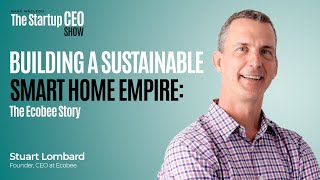
Stuart Lombard, co-founder and CEO of Ecobee, built a smart thermostat company from a 2009 idea through dozens of VC rejections, competition with Nest, and unconventional customer financing. He eventually sold to Generac instead of going public, and made sustainability a core business advantage rather than a cost center.
Chapters
I remember being, you know, outside of First Canadian Place. It was February, it was freezing cold. And then, you know, I'd just been rejected for I don't know how many umpteen time. And I got that message about fail fast, life is short, you know, do something useful with your life. And standing outside, I, you know, the building, I bombed a cigarette off somebody on the street corner. Not that I smoked, but I was like, that's how stressed I was. And I was like, like, wait, should I quit? Should I quit? I said, like, you know what? Forget it. I'm not quitting. Like, you know, when, if I die, I die. But you know, I'm not quitting.
Welcome to the Startup CEO Show. I'm your host, Mark McLeod. In this episode, I sit down with Stuart Lombard, co founder and CEO of Ecobee. Over 16 years, Stuart and his team built Ecobee to be a market leader in the smart thermostat space, eventually selling it for $770 million to Generac. In this episode, we walk through the highs, lows, inflection points, you know, the whole process of building a consumer company. And then we focus on some of Stuart's core beliefs in terms of sustainability and just some core themes that he lives by, both as a human and CEO. I really enjoyed this episode and I hope you do too. Stuart, welcome to the Startup CEO show. It's a true pleasure to have you here. How are you doing today?
I'm great, thanks. Thanks very much for having me.
A real pleasure. So Stuart and I are OGs of the Canadian venture startup scene and if time permits, we'll go there. But I really do want to focus more on your journey with ecobee. But you and I, you probably not aware of this, but I first met you way back in the 90s when you were a partner at JLA Ventures and my first startup, Solanas Technology, was pitching you guys and I was completely scared shitless and completely intimidated. I remember that screwed it up and we didn't get money from you guys. Company turned out fine, but. Yeah, and, but I followed your journey from afar, so it's, it's really great to catch up. As mentioned, what I really want to get into is, is, is EchoBee and you know, like a 16 year journey there. And we'd just, you know, love to talk through what that journey looked like from your perspective. Kind of the highs, the lows, the inflection points, the key decisions. Maybe let's, let's start there super broad and then see where the conversation takes us.
Yeah, I think it was, you know, definitely a, you know, a winding road, you know. You know, I think, you know, we were always, you know, optimistic and. But it was not. It didn't turn out the way that I expected to, or the road was not the. The one that I expected it to be. You know, and there were a lot of, you know, interesting and hard lessons along the way, and some of those things that, you know, that. That sort of adage that, you know, that didn't kill you, made you stronger. You know, there were some unlikely things that I think really helped us. And then there were some interesting things, too. And, you know, I thought, for example, like, when I started, you know, I thought, if we just get to 10 million in revenue, everything will be easy. Right? I mean, I guess when we were like, at zero, it was like, get to 1 million, 1, it was like get to 2. And when we were, it was like, get 10. And then like. But actually what happened was things got harder and harder in different ways, you know, and, you know, not that I want to scare any startup CEOs, but the challenges get harder, but in different ways. Maybe.
Could you talk about that?
Is this.
Things like organizational design, the way you used to communicate no longer works? Is it that kind of thing?
Yeah, absolutely. So I think, you know, when we were starting, we just, you know, my focus was, can we keep the doors open? You know, can I make payroll? Like, how do we keep, you know, the wheels on the bus? You know, and then as we got bigger, you know, things became more complicated. And I remember, you know, sitting in my. At my desk and, you know, we were in a single room. I didn't have an office or anything like that. So we were all like, kind of back to back. And I overheard someone say, like, you know, I don't know what our strategy is and what we're doing anyway. And, you know, and that just hit me like a dagger in the heart because I always assumed that everybody knew.
Yeah.
How bad it does, everything that was going on in my head. And if they did and they just like, kind of pivoted their chair around and said, hey, Stuart, like, what's going on? But, you know, I think it's a Dunbar number at about 150 people where, you know, not everyone knows you or doesn't have a, let's say, a one degree of separation from you. You know, all of a sudden people don't know you and they don't necessarily understand everything that's going on and all that kind of stuff. And so how you communicate and what you communicate and when you communicate is all different. And they're all kinds of. For me anyway, there were all kinds of like new learning muscles that I had just taken for granted when we were a startup. Because, you know, when you're 20 people, basically you're a single team and, you know, everybody knows what's going on because you're just interacting with each other all the time, every single day.
Yeah, no, it's a common challenge and I think you're right. It's definitely about 150 people. Sometimes sooner. Yeah, just the way you used to communicate completely breaks down. And of course, communication is one of the three core jobs of a CEO. And I would argue as the company gets bigger and bigger, it's more or less a communications role.
Yeah, totally. I mean, I think the other thing that was really interesting is I tell people we were like seven year olds playing soccer, right? And so in the early days, right, it was kind of like, you know, wherever the soccer ball went, like the management team, the brain trust kind of like, you know, ran to the ball, right? And then all of a sudden, you know, the business becomes a bit more complicated. You know, maybe you start like new grocery initiatives where you're like, okay, we're going to launch some new products or some new services or something like that. And then all of a sudden, like, you can't, you know, you can't do that. You can't tip. Keep the, the pots on the lid, the lids on the pots. There's that. Great. I don't know if people remember Lucille Ball, but she was a comedian in the whatever, 50s, 60s and 70s, very famous. And she has this thing where she's at the chocolate factory and her and Ethel are putting chocolates into chocolate boxes. And then the, you know, semi line keeps speeding up and speeding up and speeding up and they're like, you know, eating the chocolates and sticking them down their shirt and all that kind of stuff. And. And you know, I often felt like that as, you know, as the CEO, as, as things became, you know, bigger, more complicated, faster the pace of decisions you have to make. You know, maybe it's a bit like the game Asteroids. So those were the two analogies that I thought of. Like, you know, all of a sudden, the beginning, it's pretty easy. You can peg off all the Asteroids. But then all of a sudden it just like, you know, they're coming at you so fast that you're like, oh my God, how do I manage all this? And so thinking about, you know, how you change your management style, or for me anyway, how I change my management style to be able to accommodate that acceleration in speed was something that I totally didn't expect.
You definitely could have picked an easier business to create than a consumer hardware device startup, that's for sure. What was the, what was the origin of ecobee?
So it was really a simple idea. I mean, at the time I was trying to reduce my environmental footprint. And so I went out, I spent $26,000 on solar panels. I was on my way to buy a Toyota Prius, and my wife was like, hey, honey, like, this going green thing is going to, is going to break us. And so that started a journey for, you know, looking for more accessible ways or easier ways to reduce your environmental footprint. And the insight we had was that heating and cooling is 40 to 60% of your home's energy use. So actually, better managing your heating and cooling is the easiest, simplest, cheapest thing you can do to reduce your environmental impact. And at the time, the devices on the market were, you know, dumb as a doorknob and, you know, hard to use and not Internet connected. And so, you know, said, what if we could make this device smart? What if we could use data like weather and, you know, energy prices, you know, connected on your phone like everything else in your life, like, how much better could we do? And so that was 2009. We invented the smart thermostat.
I should have done this research before, but did you come before Nest or were you guys sort of around the same time?
We did, we did, yes, we did.
Yeah.
So we were the originals. And actually Tony Fadell, I think, was one of our very first customers. And we had a big following at Apple when we launched originally. And actually it was quite cool. Like before Nest launched and all that stuff, we were, you know, they used to have those ads, there's an app for that. And so ecobee was in the very, one of the very first iPhone ads that, you know, when they were featuring, there's an app for that. And, you know, you think about some of the highs and lows. And I remember when the ad came out and we were like, you know, high fiving and all that kind of stuff and it was, you know, super awesome. And then clearly, you know, Nest came out and that was, you know, it was both very good and very bad. So I'll start with the very bad and then I'll go to the very good. You know, the very bad was, you know, I remember that day and I remember, like, you know, people were like, oh, we're so dead right. And. And probably like a few swear words in there too. And, you know, for a while it was like, you know, you had this twin, but that twin was, you know, smarter, you know, better looking funnier, you know, more popular. And so, you know, that was the painful period. I think the good news about it is that, you know, Jim Collins in Good, Great, talks about a worthy adversary. And, you know, really, I think what Nest did for us was, you know, they were that worthy adversary. And for me anyway, you know, really made me reset, you know, what I thought good was or what great was. And, you know, I use the analogy that, you know, at the time we were like, hey, we were in the iPhone ads. And hey, we were like, you know, kicking Honeywell's butt. And hey, we were like, you know, the. The only smart thermostat. And we were growing and, you know, things were good. They weren't awesome, but they were good. And then Nest came out and it was kind of like, hey, we're champions of the North Toronto Minor Bantam Hockey League. You know, we're not playing in the NHL. And so that really kicked off the journey about what does it take to actually really be world class and to think about, you know, not competing with whoever our competitive set was at the time, which was like, Honeywell and Emerson and those people. But how do you compete with the best in the world? And this idea that we compete with Apple, not because Apple sells thermostats, but because the experience that consumers expect when they use your device is the same one that they get on their iPhone. And if it's not as good as my iPhone experience, then it's shit, right? And so how do you change the company? How do you evolve the company to give consumers that iPhone like, experience, you know, given all the other challenges that you have and, you know, that really put the company on a different trajectory.
I'm curious, this reaction, right? So Nest launches were screwed. Like, if I, I'm going to give a sweeping generalization here and then let's see the extent to which this describes your reality or not back then, like, so my generalization is that, like, the best and worst thing about the Canadian startup scene is its proximity to the US if we weren't right next to the world's largest kind of technology industry, we wouldn't compare. We'd be less insecure. We just kind of do our own thing. But because we're right next door, all we do is compare. And they're like 10x our size. And, you know, certainly in the Enterprise space. You know, Canadian customers don't adopt until US ones do. You know, they've got more money. The point of all this is like, were they like legitimately better than you or was this Canadian insecurity?
Oh, they were legitimately better than us. I mean, Tony Fadell, you know, he was the father of the ipod. He had a direct line to the development of the iPhone. You know, I call him the Sergey Bubka of consumer electronics. Like, you know, there was an Olympics for consumer electronics. Like he's the gold medalist and if he's not the gold medalist, he's maybe the silver medalist, but he's definitely up there. And you know, they were hugely, they are continue to be. They were also hugely capable. And you know, and really I think what it taught me was, you know, I had rationalized a bunch of things that were reasons why we couldn't be like Apple or we couldn't create the same types of consumer experiences as like an Apple or Google would for their other products. Right. All of a sudden you have this product that's in your category and now you can't ignore it and you can't rationalize it. And if you're going to stay in the market and you're going to be here, you know, you're going to have to do something about it. You have to deal with it. And that sort of, you know, just made us better, to be perfectly honest. I mean, as much as I dislike giving Tony Fry credit for anything, not credit for anything, it's upright thing, but you know what I mean, like that concept of the worthy adversary, you know, and he, he forced us to, you know, to move faster and to kind of confront, I think some of the rationalizations that certainly I had made, you know, about what we were doing and how good we were. And maybe it's your point about the good news and the bad news is, I mean, I try not to think too much about it, about, you know, Canadian versus American. I think at the end of the day, like, you know, you have to think about what your, you know, what your aspirations are and what you want to create. And you can create like you can beat you a good restaurant in Toronto, as in Snap as an example. But if you want to get a Michelin star, like what does that take? Or if you want to be the best restaurant in the world. And the same thing I think is true for these businesses, like if you want to be like a good, you know, it services company that services companies in Toronto and you know, you're 30 to 40 million in revenue, and that's really great. But if you want to build like a Google or an Amazon or a, you know, whatever, you know, salesforce, you know, workday, whatever, it's really a different problem. And you have to think about it like. Or the way that I came to it is think about it like the Olympics. What does it take to be the Olympic champion? And there's only one, right? And so, you know, what does it take to be Simone Biles? Like, you know, and when you put it in that context for me, anyway, it totally changed the way I thought about building the business from like, oh, this is pretty good, and this is good enough. And you know what? It's okay if it's not perfect or like this, or we better get it out to market quickly, or whatever it was. It totally changed the way that I think certainly I thought about the business, and probably we as a management team thought about the business.
So NEST entering the market sounds like it was both a high point and a low point. Any other low points along the journey?
There were certainly a number of low points there. You know, I tell people, you know, we were rejected for venture capital something like 172 times. And I think, you know, it started off, you know, in the beginning. This is one of my favorite stories. One of my favorite quotes, actually is from Scott Adams, which is like, you know, venture capital is the only industry where you get paid an outrageous amount of money to be wrong 90% of the time. And so, you know, when we started, people were like, you know, Stuart, you know, no one cares about thermostats. You know, and no one's going to pay $249 for a thermostat. You know, maybe when it gets to $50, we'll talk. And then, of course, NEST came out, and, you know, all the VCs told us, of course everybody wants a $249 thermostat, but, you know, the market's already been won, and there can only be one winner. And so, you know, life is short. Pack up and go home. And, you know, I remember being, you know, outside of First Canadian Place. It was February. It was freezing cold. And then, you know, I'd just been rejected for I don't know how many umpteenth time. And I got that message about, fail fast. Life is short. You know, do something useful with your life. And standing outside, I, you know, the building, I bombed a cigarette off somebody on the street corner. Not that I smoked, but I was like, that's how stressed I was. And I was like, like, great. Should I quit?
Should I quit?
And I said, like, you know what? Forget it. I'm not quitting. Like, you know, when. If I die, I die, but, you know, I'm. I'm not quitting. And that, you know, sort of kicked off a whole bunch of things. But one of the things it did was, one of the things we did, which was maybe unconventional, is we got financing from some of our largest customers. And I think a lot of CEOs, when they're having trouble raising capital, you know, don't want to go to their customers and ask for financing because they're worried that it makes them look weak. And one of the things, because, you know, part of necessity, you know, you know, is the mother. Invention is we, you know, we needed to raise capital. And so we went to some of our largest customers and we were very lucky that just Energy was loyal and saw the vision and believed in us and wrote us a check for $5 million, which, if we hadn't had that capital, we wouldn't have survived. And Carrier did the same thing. And so that really got us through, I think, some of the lean years when we were trying to catch up to Nest. And then once we were there, then things really spiraled. I think the other thing, too, about when you compete with Google, as an example, because Nest was shortly acquired by Google, is trying to think about how you compete with the giants. And one of the challenges that Google, Amazon, Apple, as an example, have is some of their greatest strengths are the greatest weaknesses. And so how do you exploit those greatest weaknesses? And so, for example, you know, the enemy of my enemy is my friend, right? And so we spent a lot of time, for example, working with Apple because we knew that, you know, there were sort of two phone ecosystems, a Google ecosystem and an Apple ecosystem. And it was. It should have been very hard for GOOP to win in the Apple ecosystem. So how do we make ourselves, you know, the friend of, you know, both Amazon and Apple and use their strength and their leverage to help us be bigger than we were, help us get more customers, you know, be closer into their ecosystems? You know, we also thought about things like privacy as an example, and we thought privacy was a place where, you know, very difficult for Google, you know, to really lean into privacy, given what their main business model was. And same with Planet Positive was another area, you know, which there was some anxiety about because you're kind of worried about, you know, not everyone cares about Planet Positive, and people are worried about greenwashing and all that. Kind of stuff, but we felt it was an area in our brand where we could really lean into Planet Positive and differentiate ourselves from Google. And I think that proved successful.
This episode is brought to you by Thelo. Tell me if this sounds familiar. You wake up, you take a look at your calendar and you see it's filled with meetings, standups, weekly check ins, one on ones, town halls. And those are just your internal meetings. Some are productive, but some are definitely slowing you down. Be honest with yourself. How many times have you thought this meeting could totally have been an email? Now consider that in the US alone, there are 55 million meetings each day and 85 to 90% of those don't have an agenda. Fellow is on a mission to solve the meeting problem by offering the only AI meeting management solution that that covers every part of your organization's meeting workflow. And As a startup CEO, show listener, you get 300 free minutes of AI recordings if you sign up today, go to fellow app CEO to start your free trial and start having better meetings.
You know, I had a couple, I've had a couple of CEOs of consumer brands on the podcast recently. I had Mike from well Simple a couple of weeks ago and most recently Drew from Indochino. And in both cases, you know, we were talking about how difficult it is to fund consumer stories in Canada.
Right.
You know, wealthsimple wouldn't have happened without a very unique deal with Power Corp. Where they sold control right out of the gate. And you know, Drew, they did have some initial capital, but the thing that really blew them up was he did a $40 million basically post media gave them 40 million worth of media in exchange for equity. And then their, their main manufacturer invested. You know, there was basically no Canadian venture appetite. Now, I'm guessing with 179 rejections that that was in, not limited to Canada. So you had those objections in the US as well?
Yeah, absolutely. And I think, you know, I'd encourage people to go to the US to raise capital because it's such a bigger market, you know, more check writers, bigger checks, you know, more diversity. And so I think, I think you kind of have to, I think about a third, if I'm not mistaken, 30 to 40% of the Canadian venture capital market comes from south of the border anyway. And so, you know, if you don't go south of the border, you're kind of excluding 40% of your customer base, if you will. And so I think you really have to.
So I'm curious, you know, you talked about, you know, the Enemy of my enemy is my friend. And I would imagine, like becoming friendly with Apple and maybe in particular Amazon is challenging. You know, I remember when I was an investment banker, I was sort of hesitant to let my companies talk to Amazon because they had a real reputation for just soaking you up for all kinds of information and then just building your thing. And I know you weren't looking to be bought by them, but I'm just wondering for other folks who, for whom those are just super relevant stakeholders, how did you make that work given just the vast difference in size and power, et cetera?
Yeah, I mean, I don't know that we made it work. I mean, Amazon, you know, ended up competing with us in the smart thermostat business. And, you know, we had some, we had some stressors. I mean, I tell people like, you know, I have stress with my family, I still love them. You know, we had stress with Amazon and I still love them too. But, you know, one of those was that, you know, they ended up getting into the smart thermostat business. You know, Apple did not. I don't know that we navigated that perfectly. You know, I think in the, you know, in the, in the sort of that 2015-2020 period, you know, the Amazon relationship was very good for us. We invested heavily in the Alexa, in this Alexa ecosystem, you know, they helped us significantly, you know, and I think that paid off. I don't know. You know, I think if they were going to get into the smart thermostat business, they would get into it anyway. And I think, you know, they would tell you that too. They would have said, like, you know, if we want to be in the business, we're going to be in the business with you or without you. So you think about, I think, whether the insights you're giving them are really that novel or not, and maybe hold back on the things that you think are the secret sauce. But I think if you don't give them enough or you don't, you know, you don't engage, then you're not going to, you know, you're not going to, you're not going to play in the game either. Right. And so, you know, we felt it was better to play with them. And, you know, you don't know what happens on the path you didn't take. But I do think that, you know, given where the company was and given the momentum that, you know, both Amazon and Apple gave us, you know, I think it was the right thing to do at the time.
No, totally makes sense now. There's a chicken and egg dynamic here at play because there's not a ton of appetite from investors for consumer stories. I struggle to think about, you know, executives, consumer executives who've kind of been there, done it, got the T shirt. And so I'm just curious how you built your leadership team. Were you forced to kind of go outside of Canada and just, you know, bring in leaders who had consumer experience, regardless of where they were? Like, how did you do that?
Yeah, I mean, I think, you know, we, we, we did and we had some hit and misses along the way there. Right. And so I don't know that that was like a, you know, a straight line path, certainly. I think, you know, we felt like consumer marketing was a really important component of, you know, what we needed to be good at. Right. One of the, you know, there were a few things that were, I think, transformational, maybe not obviously transformational. One of them was adopting a strategy framework called Playing to Win, which is written by AG Lafley, who was the CEO of Procter and Gamble, and Roger Martin, who was the dean of U of T Business School. And, and really, it goes. It's really a framework for thinking about how you think about strategy. And part of that is articulating what you need to be good at. Right. And so consumer marketing was one of those things and, and why the strategy was powerful because it sort of identifies, you know, what are your aspirations, where do you want to play, and then what do you need to do or how do you need to organize in order to achieve those aspirations. And so consumer marketing was, was really great. I mean, there are great consumer marketers here. Kevin Banderk, who was most recently our, you know, chief marketing officer, chief revenue officer was, you know, came from Telus. He was fantastic, is fantastic and, you know, gave us a way of, you know, thinking about branding. I have that Jerry Garcia quote on my LinkedIn page, you know, which is, I think, yeah, I want to talk.
To you about that.
For me, sort of like the, you know, how I think about, about branding. Right. Rightfully or wrongly. And I think, you know, the quote is something to the effect of, you know, you don't want to be considered merely the best of the best. You want to be considered the only one who does what you do. And so, you know, very early on in our, you know, career or in our, in our journey, we might have tried to be like someone else. You know, very quickly we pivoted to being like, how are we? You know, rather than saying how we're the same like, how are we different? Right?
And.
And trying to create a real difference for consumers. And I think if you think about the brands that you love, generally speaking, those are brands that aren't the same as four other companies. They've kind of crafted their own way. And so what is it that makes your brand unique?
Did Nest kind of make you consider changing that approach or you were just running your own race anyway?
Well, I think Nest actually kind of made us more like the same. Right. And I think, you know, there was that period where Nest launched, and people were kind of like, why can't you be more like Nest? And, you know, employees were like, we should be more like Nest. Right.
And.
And I mean, it was interesting because people would say things like, you know, why don't you make your thermostat beautiful? And it. And it wasn't that we weren't trying to make our thermostat beautiful. We didn't know how to make our thermostat beautiful. And so, you know, a real difference, I think, between wanting to be good and being good. And so. But I think that quickly pivoted to, like, we can't just be, you know, Nest or Google, because otherwise people will pick Nest or Google because, you know, they were already the incumbent. You know, they had bypassed us. They were, you know, and it was kind of like that old adage, you know, you never get fired for. For buying IBM, right? And so you can't, you know, you can't just be equal to them. You have to. You have to give some consumer something different. And so we really tried to focus on doing that.
So I think about Procter and Gamble and playing to win. What comes to mind. And I haven't read this framework, but what comes to mind immediately for me is owning the shelf. I walk into the store and all I see is the P and G products right at the eye level. And so I'm just curious, kind of how competing against a Google who's got all the resources and the relationships, how did you make sure you were prominently displayed? Like, how did you. How did you go about distribution?
One of our core strategic elements, I mean, Google at the time was, you know, doing super bowl ads and NFL ads and TV ads. I remember, you know, one day I. I came home on the subway and, you know, they. The whole subway was wrapped in Google Nest ads, right? And every bus shelter on the way home was, you know, was a Google Nest ad. And I was like, damn, they know where I live and they're just messing with me, right? And of Course it turns out that nothing to do with me, they had taken my, like every, you know, bus shelter, like in the whole North America or whatever it was. It was just, you know, crazy, the amounts of money they were spending. And so, you know, part of our strategy was, you know, how do we intercept customers, right? So if they're going to create awareness when customers, you know, arrive on the shelf or about to make a choice on an online platform, how do they pick us and how do we, you know, how do we intercept that customer in the last three feet? And so, you know, rather than spending on ads and trying to match them on ads, for example, we did spend money on merchandising, right? And we made sure that we were in, you know, good locations, in retail locations, but we had a much smaller retail footprint than that, right? So they were at the time trying to be in every single store. And you could, you know, they were in Indigo Bookstores, for example. And you know, it was another choice where it's like we can't match them, trying to be everywhere all the time. But what are the retailers that we think really matter? And so Home Depot, Lowe's, you know, Amazon, Best Buy, you know, those were our core. Costco was the other one. Costco is incredible. You know, those were our core retailers. And so, you know, funnel more of your money into fewer number of like high potential retailers, intercept in the last three feet, you know, those were all parts of the strategy.
Is it true that a rising tide lifts all boats? Did you benefit from their investment?
Yeah, I think, you know, just the incredible awareness that, you know, was created in the category, you know, absolutely help this immediately. But one of those things that gets harder as you, you know, as you grow, you know, in the beginning, you know, you're kind of cutting the week from the herd, right? And you know, and you might have a lot of startup competitors and, and you know, you out compete those. And so, you know, your market share comes that way. And it also comes from a high market growth rate. Once your market growth rate starts to slow down and the market is consolidated, now you're stealing share from people like Honeywell and Google. And like, that's hard, like, because those guys are, you know, very talented and very smart and they have, you know, great systems and processes and good products and you know, and so, you know, one of the reasons it gets harder as you get bigger is, you know, you tend to brush up against the limits of market growth. And then the question is, how do you grow faster than the market and stealing share from you know, a consolidated market is much more difficult.
Did all of this follow that Geoffrey Moore tech adoption life cycle thing? Like, when I hear you talking about nest blanketing, like trying to be in every store and marketing everywhere, that tells me your category had gone mainstream. You know, it had gone to, I guess, early majority to follow that framework. Did you find it followed that you had those kind of early adopters who cared about the environment and then it kind of grew from there. Like, how did that all play out?
Yeah, absolutely, Absolutely. And I think it, you know, it became, you know, became a product that, you know, that people just, you know, it was kind of an obvious choice, right? So I think, you know, one of the things I love is focus groups, right? And, you know, and again, one of the things I have my LinkedIn page that you asked about was this idea of, you know, building a company, being a contact sport. And, you know, I think getting from customers and listening to customers creates so much value. So one of the customers in one of our focus groups, this was sort of like in 2010, you know, she's like, you know what? I love my husband, but I really love my iPhone. I'm going to be buried with my iPhone, right? And, you know, that was just the, the sort of the, the iPhone euphoria, which is kind of like died down a bit. It's not the same, but at the time it was like so new and so life changing and all that kind of stuff. And, and this is a person who knew nothing about technology, right? Who, they weren't a geek, they weren't a, you know, environmentalists. They just understood like, how technology could make their life better. And so really being able to get to our team and have them understand this is not about features and, you know, more buttons and twiddles and knobs and all that kind of stuff. This is about how do we create experiences that customers just makes their life better. And, you know, they're easy. It's like your iPhone. It's like Netflix. It's like, you know, I have no idea how those things work, but if you took them away from me, like, you know, Instagram, Twitter, whatever it is, I have no idea how they work. But if you took them away, my life would be much worse. Right? And, and so really getting into that kind of mindset about how you, how you think about your customers, I think is a really big deal.
I should know this, but I'm curious if you, did you run a consumer company before? And if not, how did you train yourself to lead other than Putting the reps in and, you know, making mistakes and figuring it out. Like, how did you train yourself to lead a consumer company?
I read a lot, right. And so I think, like, it's funny because you said that when we. When we started the company, there were literally four founders and John Metzilar, who was the person who, you know, ran all our hardware teams. We went out to meet him in. In Brantford, and we had never met before. And he's like, okay, which one of you guys is the consumer electronics expert? When we look at each other, nobody.
Puts their hand up.
Nobody. Which one of you guys knows, you know, H Vac? And it's like, nobody, you know. But I think we felt like, you know, if you could pick up a book, if you can learn, if you're willing to put in the time and effort, you know, you can learn anything. And, you know, and that helped us a lot, I think, because, you know, one was an attitude of, you know, again, when we thought about who we hired, learning was a big component, like, what is the interest of this person in learning new things? And, you know, continuing to kind of push the envelope. But it also kept us out of, I think, what are like some traditional, you know, groupthink that already existed in the heating and cooling industry, which was like, you know, who cares? You know, these things can never be better than they are. You know, why are you doing this? Like, all that, you know, things should be as cheap as possible. You know, all that kind of stuff. You know, we avoided a lot of that mentality.
So maybe switching gears, let's move, you know, towards the exit. I always had it in my mind, like, that this would be a company that would ring the bell and go public someday, but you ended up selling to Generac. I would love if you could just tell us about that process, how it came to happen. Were you also considering going public? You know, walk us through that. There's so much written about fundraising, and yet often CEOs struggle to fundraise. There's almost nothing written about how to exit. It's just like this black box for people. So we'd love to. Anything that you can reveal about how that process all unfolded.
Yeah, I think maybe the first point on that is it's counterintuitive. So I think the first thing, and it was a bit of a surprise to me, is that it's called an exit. And so people think of it as exactly that. It's an exit. And that means when this thing happens, everything ends and you start all over again. And and really, the way that we were thinking about it was a continuation, right? And so if you think about, you know, our mission, which was, you know, how do we create a more sustainable world? How do we help people, you know, live simpler and better lives? You know, that's a mission that's, you know, that's ongoing. And then the question is, you know, what are the resources you need to like, execute on that mission? And, and so we knew that we had to be more than, than thermostats, right? And, you know, we wanted to do things like solar and storage, but that would require more capital. And so, you know, we were in the process of doing an ipo. You know, really we had SPAC IPO raise a private round, or as it turned out, get acquired. And, you know, I think through that process of our, you know, pre IPO journey, you know, we met Generac and they were interested in, you know, potentially participating in, in an ipo. You know, I think they could see the synergies. And what we realized, I think, was that they had a very similar vision as we did as to where the future was going. And so, you know, they made an offer for the company and I think it made a lot more sense for us to be part of Generac. They already were working on solar and storage. You know, they had a, you know, incredible installation team through their home standby generator business. You know, they could see the energy transition. You know, they understood resiliency. And so I think for a lot of reasons, I think the other thing was that, you know, they understood that, you know, everything was going to be connected. And so creating a digital platform where you have, you know, a consumer experience and connected devices that, you know, can get, that consumers can get more value out of because they are connected, that was all sort of part of, you know, their thinking. I think it still is part of their thinking. And so it just felt like there was a lot of synergy, I think, you know, and we felt really good about, you know, where they were going. And we thought frankly that it would get us there faster. And, you know, if our goal is to achieve the mission, then, you know, getting there the fastest way possible is, you know, is the best way. And so that's really what we thought about. I mean, conversely, you know, I'd sold my two previous businesses or the two previous businesses that I ran with Osama, and, you know, watched them go into the ground like literally six months later. And you know, the first time it was like, woohoo. You know, I got a big check and you know, I was like, it was totally unexpected, right? I was thought, like, you know, I didn't think anything amazing was going to happen and, and, and, and it did. And so, you know, I was ecstatic and, and I got the big check and I was like, wow, this is fantastic. And then, you know, I watched it going to the ground like literally six months later. And you know, you put so much work and effort into it. And I thought like, you know, we were on, you know, we, we built one of Canada's first and largest, you know, Internet service providers. And this was still like in the, you know, mid-90s, you know, before cable and, you know, fiber and all that stuff, DSL had taken over. And so there was, you know, tremendous opportunity. And like, literally they, they put it into the ground that it was so crazy. Someday we should do a podcast just on how crazy it was because you would not believe how crazy it was anyway. And so, you know, next time around I was like, you know what? I don't, you know, we worked too hard, we built too much. You know, the ending of this thing is as important as the beginning. And the money isn't actually all that helpful or all that meaningful compared to everything that was built and that you put into it and all those kinds of things. And so really being thoughtful about what creates the best long term outcome for the business that you've built, I think is pretty important.
Back when I was a banker and even in my coaching practice now, we talk about exits a lot. I've coached three of my CEOs through to an exit already. And we often talk about how strangers rarely get married. You know, that the chances of like someone reacting to an inbound SIM from a banker and paying a strategic multiple are just super low. So like, how long was that kind of courting relationship with Generac? And was it part of like, did you have a banker just doing like a broad strategic review of all the options or did you begin building relationship even before that process?
Yeah, I mean, I think the. So we did. So the relationship was probably over about a year, you know, from beginning to end. So it was a relatively, you know, long relationship. You know, I think we, you know, there was a period of probably, you know, four months where, you know, we, there was a lot of back and forth between the teens, and I think we really kind of solidified the relationship. So there are probably four months that were the most important part. We certainly had bankers involved and I think they were helpful in terms of deciding the different alternatives, you know, and each of Them came with pros and cons. Right. And I think the, you know, the. We could stay private. I think, you know, one of the challenges that we had was staying private was, you know, we had a capital stack. We were, you know, at that time about 14 years old. So, you know, we'd had some investors who'd been in a long time, you know, and some of those different share classes, their interests start to diverge. Right. And, you know, the thought of putting another, you know, stack on the cake, if you will, I don't know what the right expression is from that layer.
Layer. Another layer.
Yeah, another layer of, you know, rights and, and. And needs and wants and. And, you know, just. I don't know that that felt quite right. Obviously, going public is a whole different animal. And. And, you know, you know, you clean up your capital stack. That's one of the benefits. I think the no potential disadvantage is the public scrutiny. And, you know, what is the risk that, you know, you misstep early on and you become a fallen angel and kind of move into obscurity as well as all the overhead that you have. And so in that context, with the right acquirer, where we felt like we had lots of synergy and we could continue to build the business on a path that we felt was part of our mission, you know, just felt really good. And I think, you know, the people at Generac were, you know, were and are amazing. I shouldn't say it in the past tense. You know, they did everything they said they were going to do. You know, they were good to their word. You know, they were very thoughtful, they were very receptive to our ideas. You know, they were a really great partner and I couldn't have wished for anyone better.
Yeah, those stories don't always turn out that way, so I really do love it. You made a comment to me as we were exchanging notes before the show that sustainability was really important in building a better business. Maybe just tell me about that.
Yeah, I think, you know, one of the things that's misunderstood, I think, is that, you know, green in general and maybe sustainability is thought of as, you know, costs more and probably doesn't work as well. Right. And I think the reality is, is that, you know, done right, sustainability is really about, you know, doing more with less because you're doing more with less. Generally speaking, you create a better business. And there's a great book called Confessions of a Radical Industrialist by a guy named Ray Anderson. And he built the world's largest carpet business based on sustainable principles. And what he realized early on is that carpets are one of the most polluting businesses in the world. And there's a lot of cost in that pollution. And if I can, you know, reduce that pollution, I can reduce my costs. And I get the benefit of also being more sustainable, which helps me with my employees, it helps with my customers. And so he went on this journey and he sort of replicates it. And I think, you know, the main lesson that you take from it is that, you know, when you're making a choice, right, let's say you're deciding on a, on a contract for a manufacturer for a part or for a something, right? Usually have things like cost, quality, lead time, you know, just add sustainability as one more category. And once you start doing that, you start making choices that usually create benefits all the way across. And so, you know, simple things like, you know, we went from air freight to ocean freight, which, you know, saved us something like $6 a unit, reduced our carbon footprint by 95%, also enabled us to negotiate, you know, 120 day terms with our contract manufacturer. And so we got all these benefits that made us a better business out of that one. Sort of like just tweak, you know, and all along the way we were able to find these ways that, you know, either reduced our costs, you know, and what we call people is like, if we can find ways that it makes us a better business, you can continue to invest. So it's kind of like a dividend that keeps paying. Whereas if you do things like, you know, we could plant trees, for example, for every thermostat we do, we'll plant a tree. But it doesn't make us a better business, it just adds cost. And so we can't continue to invest and to do it because it makes us less competitive. But there are other things that we can do that have as big an impact but allow us to, you know, invest over and over and over again. And we, we were continually finding things, you know, that, that just made us a better business.
That's amazing. I'm curious, that Ocean Freight example, did that force you to carry more inventory? Just because of now the increased shipping time, where that was off, that didn't matter because you had the increased payment terms.
Yeah, it wasn't, it, it didn't hit our books until it hit North America. So that was our, our, our new deal with our contract manufacturer. And so, you know, certainly there was a, you know, there was a liability there, but it wasn't on our books until, you know, technically it hit North America. But we Were willing to take that given the other benefits that we got. And it actually, you know, we had 60 day terms, we went to 120 day terms. Shipping times are usually 30 days. There was about a 30 day benefit that we got.
How about that? Negative working capital requirements as you scale.
And so, you know, but, but that again, forces you to be kind of innovative and look at like, what are the challenges and opportunities. And you know, the, the clear challenge was, you know, increased inventory and increased lead times, which is a negative. Right. So how do we offset that? Well, can we neg negotiate better terms as an example? And that was one of the things that we were able to do. But we did it with packaging. There's simple things like volume of packaging. You pay for not just weight, but volume. And so if you shrink your packaging, your packaging is less expensive, but your freight charges are also significantly less. You can fit more on a pallet. You know, there's a whole bunch of stuff like, like that there was the materials that we used, you know, all kinds of different things that, that, that really got into, you know, how were we able to reduce, you know, costs over time. I mean, clean power was another one like, just like, you know, asking our manufacturers to use clean power. Clean power is actually cheaper than normal power. So, you know, once they started, you know, using clean power, our bill actually for, you know, power in our manufacturing facilities went down and it was cleaner. But again, if you don't get the, if you don't ask the questions, you don't get the response. People just kind of do the same business as normal.
I've known you for a long time, but of course I LinkedIn stalked you to prepare for this and you had some quotes that you put up that I found were fascinating and I'd love to maybe just share them and ask you to maybe expand on why of all the things you've read over all the years, these ones made it onto your bio. So first, one, I believe that there is no challenge that human empathy and human ingenuity cannot overcome. Tell me about that.
Yeah, I think, you know, one is, I'm optimistic by nature, so I'll start there. Two is, I think, you know, we live in a period of quite a bit of anxiety, right? And yet, you know, there's probably never been a better time to live. Like, we are healthier, we are better educated, we are richer, we are less likely to die in a war or a conflict or, you know, of some form of violence. You know, and you know, we have better rights, we have more Balance, you know, better human rights, generally speaking, certainly if you were born in a Western democracy. And so, you know, I think the first thing is really around, you know, people. I think people feel anxiety, there's reason to be anxious, but the human race is always kind of muddled through. Right. And, you know, when you think about, you know, my grandparents, I guess, would be great grandparents for a lot of, you know, your listeners. You know, you were likely to die of pneumonia or, you know, scarlet fever or whatever the case might be. You know, as. As recently as kind of, you know, just Pre World War II. And then there's a whole generation that went through World War II, and it seems like a long time ago. And obviously there are lots of nations in conflict, which is horrible today. But. But World War II was, like, an amazing thing that was devastating to, you know, so many hundreds and hundreds of millions of people, and clearly the conflicts now. But generally speaking, those of us living in Western democracies are freer, safer, we have more rights, we're wealthier than we've ever been. And so I think part of it is it's the best time to live. And part of that is that human empathy and human ingenuity have overcome many of these issues that we faced. Right. And so it's driven things like better medicines, as an example, driven things like, you know, better energy efficiency. I mean, people forget that, like, in the 60s, the Ohio river was so polluted that it lit on fire. Right. And, you know, we have different issues and different challenges, but, you know, humans have generally done the right thing. They're generally resourceful. And I think if you give people the opportunity to do the right thing and you make it easy for them, generally, that's what they'll do.
Amen. I love it. Yeah. I don't think that positive outlook is shared enough.
You know.
I watch my parents and my wife's parents watching the news all the time. And of course, the news only gives the negative. Right? Never. There's so much good in the world, and it. It never gets covered. So I love that you brought that up. Maybe one more quote from your LinkedIn profile, and maybe you covered this already when you were talking about sustainability, but perhaps there's more to it. So here's the quote. I believe corporations are citizens in our communities, and, like, all citizens have a duty to enrich those communities. Tell me about that.
Yeah, I think. Yeah, I think comes sort of from two parts. So one is, I think people often talk about companies or government, like, there's some, like, inanimate you know, object. That's like a, that's not part of us, right? And, you know, companies and governments are, are run by people, right? And it is the people in those businesses who make choices. And so it's you and me and everybody. When you go about your job, you know, whether you're a teacher or, you know, police person or, you know, it doesn't matter, you know, whatever it is, you're making choices, and you're, you know, making choices on behalf of your. Of your customer. It's not all, you know, the person at the top who makes all the choices. And so the first part of that is really around, you know, individuals who work in these businesses has significant power, significant impact on what those corporations do. And then second is, you know, as corporations, you have this responsibility, I think, to do good, to, first of all, think about yourself as a, as a citizen of the world. And so one of the tenets we had was that, you know, if everything we did appeared on the front page of the Globe Mail or the Wall Street Journal or, you know, your favorite Instagram feed or, you know, a podcast or whatever it was, would be okay with it. And if you, if you, you know, if you're in a situation where you're unsure, you know, ask that question and, and, and, you know, if it, if the, if the answer passes the test, then we're probably okay. The other thing is that, you know, you can do some amazing things. So one of the things we did was we had this program called Donate youe Data to Science. And so we. We allowed our customers to donate their data to science. We anonymized the data, and we shared it with researchers all around the world doing all kinds of energy efficiency studies and things like that. And it didn't really cost us anything, but it enabled us to have a multiplying effect. And so it was amazing what people did with that data. So they used the data, for example, to prove that they didn't need to build a Gaspard Electric generating station in Indiana. Saved over a billion dollars for the ratepayers of Indiana, as well as all the greenhouse gases. People used it to, you know, help seniors live longer in their homes. You know, all kinds of amazing things that, you know, we would have never thought. Some to do with energy, some not. And it all came from the realization that when we built the company, there really wasn't any data on how people use energy in their homes. Right? How do you create more efficient homes? And so we said, like, hey, this is something that we can give out we can give back. And I think there's lots of great examples like that where, you know, corporations can, you know, can and should act like citizens in their community and do great things.
Stuart, there's so many more things I could ask you, but maybe we're going to have to save that for round two. In particular, deconstructing your ISP blood path. I had some friends who worked there back in the day, and, yeah, it was. It was definitely sad.
Yeah, I'm still in therapy.
I'm sure it's your baby, right? You build your baby and then watch that happen.
It's.
It's awful. Yeah, it's. Anyway, you know, we've been a proud Echo B customer for a long time, and I'm thrilled to see the outcome. And, you know, as we were talking about before we went on air, I had good colleagues who worked with you, and so it's always, I love it when the good guys win. And so I really appreciate you sharing the Ecobee story with us today. Thank you so much for joining.
Awesome. Thank you very much.
Hey, thanks for listening to the Startup CEO show. We'll see you next time.
More from Mark





The Burnout Breaking Point - How Strategic Breaks Actually Increase Productivity


Emotional Debt - How Avoiding Hard Conversations Compounds Into Company Killing Resentment


The Death of the Specialist - Why AI Is Creating a New Professional Class Called Scalers